As a sports rehabilitation specialist and strength coach who reviews cold plunge products, I spend a lot of time in ice and around athletes who rely on it. This guide distills two perspectives that often talk past each other: what rigorous research actually supports and what consistently works in the field when you have to recover well enough to train hard again tomorrow. I will explain how I rate ice baths, the protocols that align with the best evidence, the product features that matter more than marketing, and where the science disagrees so you can buy and use an ice bath with clarity rather than hype.
Why “Highest Rated” Ice Baths Are About Control, Not Cold
When athletes ask for the “best” ice bath, they usually mean the one that gets cold and stays cold, uses water that stays clean and safe, and is simple enough that they actually use it after long days. The top-rated options in my testing share four traits. They hold a stable temperature in the target range without constant manual tinkering. They insulate well enough that the water does not drift 5–10 degrees during a session or two. They include credible sanitation pathways, whether that is filtration, ozone or UV within a chiller loop, or at minimum a lid and cover to reduce debris and sunlight. They fit a training schedule and space without becoming a chore. In short, the highest-rated ice baths solve temperature control, hygiene, and convenience.
Scientific outcomes dovetail with these practical demands. Evidence summarized by PubMed Central shows cold-water immersion is most reliable for reducing immediate soreness and perceived exertion, lowering creatine kinase at 24 hours and lactate at 24 to 48 hours, while showing little to no effect on markers like C-reactive protein and IL-6 or on performance at 48 hours. Those outcomes require hitting a sufficient dose of temperature and time. A Runner’s World summary of a survey led by a University of Central Lancashire researcher found most users miss that dose, either going too cold for too little time or failing to reach the recommended range. In other words, a “highest rated” bath is one you can dose precisely and repeatably.
What the Evidence Actually Says
The science of cold immersion is nuanced and, at times, conflicting. Here is how I interpret it for athletes and active people.
Recovery and soreness
Meta-analytic data published on PubMed Central indicates cold-water immersion reduces delayed-onset muscle soreness immediately and sometimes at 24 hours, lowers perceived exertion right after use, and is associated with lower creatine kinase the day after. Lactate can be lower at 24 to 48 hours. These are practical gains when you have another session soon. However, performance measures like countermovement jump are rarely improved at 48 hours, and inflammatory markers like C-reactive protein and IL-6 generally do not change meaningfully. Harvard Health Publishing’s review of repeated cold exposure adds that stress reduction may appear about 12 hours after a session, not immediately, which influences how you time plunges for mental benefits.
Strength and hypertrophy
Multiple sources caution that immediate post-lift plunges can blunt anabolic signaling and reduce long-term gains in strength and muscle size. Ohio State Health highlights studies in the Journal of Physiology and the Journal of Strength & Conditioning Research showing reduced hypertrophy adaptations when cold immersion follows resistance training. Mayo Clinic Health System echoes this by distinguishing endurance outcomes, which seem less negatively affected, from resistance outcomes, where cold can interfere if used right after lifting. Practical takeaway: for hypertrophy or maximal strength blocks, delay your plunge by at least 4 to 6 hours, or use it on off-days.
Mental health and alertness
Cold exposure often elevates mood immediately, likely mediated by adrenaline, noradrenaline, and dopamine, as described by Case Western Reserve University. Observational work referenced by Harvard Health Publishing notes improved sleep in men but not women and mixed results on mood and immune function across studies with heterogeneous protocols. Morning sessions generally increase alertness and perceived energy. Benefit appears sensitive to dose and individual tolerance.
Immune effects and metabolism
Claims of immune boosts via white blood cell increases are inconsistent. Case Western Reserve University stresses that evidence in casual, infrequent plungers is minimal. GoodRx notes intriguing but limited findings on brown fat activation and improved insulin sensitivity, while making clear that stronger trials are needed. These remain potential upsides rather than guarantees, especially for healthy populations.
Safety and contraindications
Cold shock spikes breathing rate, heart rate, and blood pressure. Case Western Reserve University emphasizes elevated risk for people with heart disease, a history of stroke, uncontrolled hypertension, poor circulation, or those on medications such as beta blockers that blunt adaptive cardiovascular responses. Tufts University adds that icing acute musculoskeletal injuries or loading NSAIDs too early may slow natural healing; use PEACE and LOVE principles for acute care and rely on cold primarily for pain modulation, not tissue healing. Never plunge while intoxicated. Rewarm gradually. Do not plunge alone.
Reconciling disagreements
Some studies and clinician summaries argue ice baths are not helpful for long-term performance or muscle health, while others find modest short-term benefits in soreness and perceived recovery. Differences likely trace back to timing relative to training, the outcome measured (subjective soreness vs objective performance), participants (elite athletes vs general population), and whether the control was passive sitting or active recovery. When you standardize temperature and time and use cold sparingly after the hardest sessions or when rapid turnaround is needed, the literature and field experience converge.
How I Rate Ice Baths for Real-World Use
In my reviews, the top ratings go to systems that deliver stable 37–55°F water without constant ice runs, conserve water between sessions safely, and fit the space and daily routine of the athlete or family. I score across temperature control and stability over a 30–60 minute window with repeated entries, sanitation and maintenance burden including how easily lids and covers keep debris and UV out, user experience including entry height, ergonomics, and perceived safety for stepping in with cold-numbed feet, durability and weather resistance indoors and outdoors, and value, with attention to total cost of ownership, including ice or energy and filters. I test in-season with athletes because a great product is one they keep using when they are tired, not just when they are motivated.
Top Ice Bath Options by Use Case
Insulated upright barrels from companies like Ice Barrel are popular because the footprint is small, the walls are thick, and there is a dedicated lid and UV cover. The Ice Barrel training guidance cites a 105-gallon capacity and common practice of adding 40–100 lb of ice, with sessions capped around 10 minutes. For households or garage gyms, that combination of insulation and manageable water volume tends to rate highly.
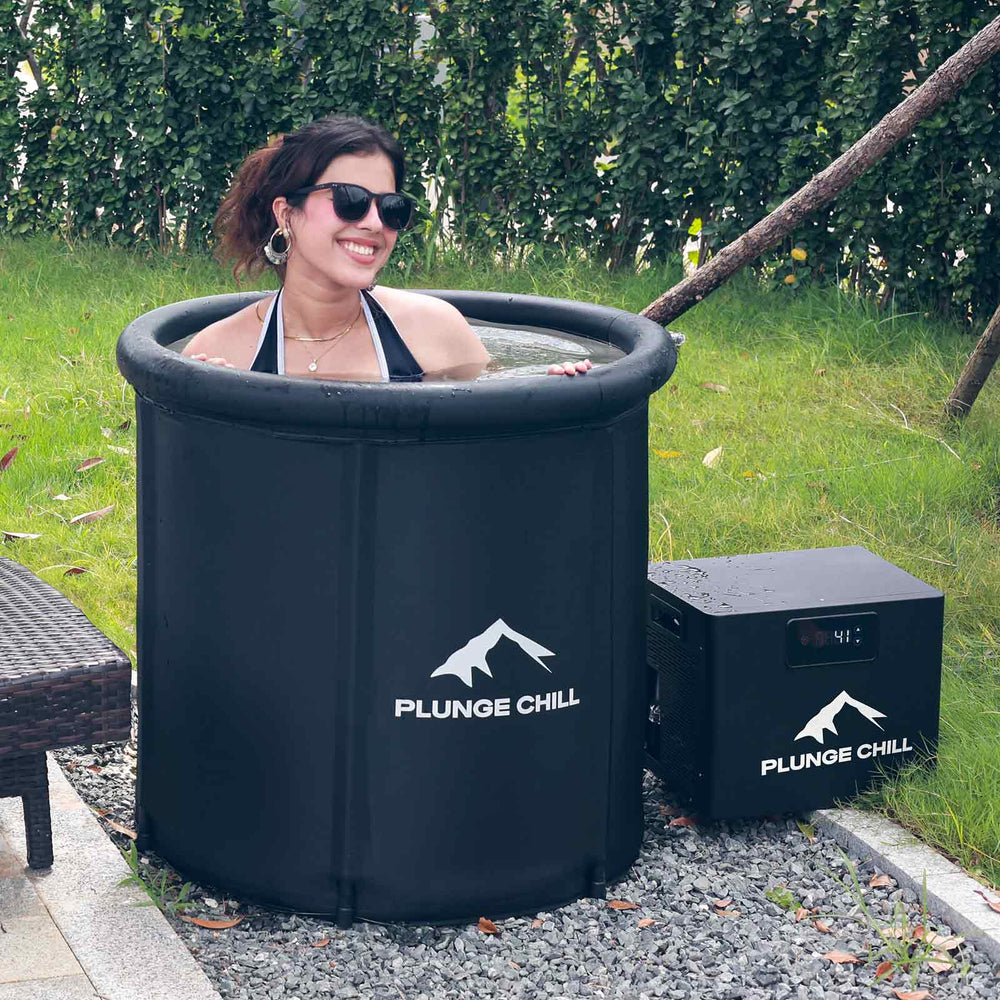
Portable soft-sided tubs such as the Ice Pod from Pod Company emphasize speed and simplicity, and when paired with a chiller they move up the ratings quickly because they eliminate daily ice purchases and keep temperatures in the recommended zone. Coldture describes chillers that can hold water near 37°F with digital and even Wi‑Fi control, which is not simply a convenience feature; it is the difference between meeting the dose that research suggests and missing it.
DIY stock tank plus chiller builds are popular with teams and practical buyers. They rate high on cost control and temperature stability but demand attention to sanitation. A well-matched chiller can circulate and filter, helping both temperature and cleanliness. The platform height of many stock tanks is easier for some athletes to step into than deep barrels, which matters for repeated group sessions.
Premium integrated plunge systems have the best temperature precision and least day-to-day friction, and they are priced accordingly. Mayo Clinic Health System notes that dedicated tanks can run into five figures and even approach $20,000. These products can be the most consistently used within high-performance environments because they are always ready and easy to sanitize, but they are overkill for many homes.
Natural water plunges, from backyard troughs in winter to controlled lake entries, can be effective if you measure temperature and control entry and exit. They rate highly for mental resilience and affordability and poorly on consistency and safety because cold shock, currents, and ice hazards are unpredictable.
Option |
Temperature control |
Maintenance and hygiene |
Setup footprint |
Cost profile |
Best fit |
Notable detail and source |
Insulated barrel (e.g., Ice Barrel) |
Stable with ice; best with shade and lid |
Lid and UV cover reduce drift; manual water changes |
Small, upright |
Moderate upfront, ongoing ice |
Homes and small gyms |
105‑gallon capacity and 40–100 lb typical ice use; cap sessions at about 10 minutes (Ice Barrel) |
Portable soft-sided tub + chiller (e.g., Ice Pod + chiller) |
High stability; precise control near 37–55°F |
Chiller circulation aids clarity; filter options vary |
Compact, collapsible |
Moderate to high upfront; low ongoing |
Apartments and multipurpose spaces |
Chillers can hold near 37°F; app/digital control improves dosing compliance (Coldture, Pod Company) |
Stock tank + chiller (DIY) |
High stability with matched chiller |
Filtration and cleaning required; good with lid |
Medium; needs floor space |
Lower per gallon; mid upfront |
Teams and garages |
Reliable for multiple back‑to‑back plunges; sanitation planning needed (field testing) |
Premium integrated plunge |
Highest stability and precision |
Built-in filtration and covers |
Medium to large |
High to very high |
High-performance centers |
Tanks can approach $20,000 but are the least friction to use daily (Mayo Clinic Health System) |
Natural water (controlled) |
Highly variable |
Unpredictable; environmental |
None |
Minimal |
Resilience and novelty |
Safety depends on current and exit planning; measure temperature (Mayo Clinic Health System) |
Protocols That Match the Evidence
The most credible protocols converge on a similar dosing window. For recovery and soreness, the target is generally 50–59°F for 5–10 minutes. Ohio State Health provides a 50–59°F temperature range with a 10–20 minute window, while Runner’s World highlights a research-backed recommendation of 48–59°F for 10–15 minutes and notes that most people cut sessions to 2–5 minutes at colder than 48°F, which likely undermines benefits. For lifters prioritizing hypertrophy or maximal strength, delay 4–6 hours after training, as summarized by Kula Recovery and echoed by Mayo Clinic Health System and Ohio State Health. For alertness and mood, colder is not necessarily better. Coldture’s practice guidance points to 60–68°F for comfort-focused mental benefits, with many users tolerating 50–59°F after acclimation. For weekly exposure, both Coldture and Ritual/MyRitual suggest a practical minimum of about 11 minutes total per week, split across sessions.
Goal |
Temperature |
Time per session |
Timing relative to training |
Weekly exposure |
Notes and sources |
Reduce soreness and feel ready tomorrow |
About 50–59°F |
About 5–10 minutes |
Immediately to within about 2 hours after endurance or mixed sessions |
About 11–20 minutes total |
Immediate reductions in soreness and perceived exertion; limited biomarker changes (PubMed Central, Ohio State Health) |
Protect strength and hypertrophy gains |
About 50–59°F |
About 3–6 minutes if used |
Delay about 4–6 hours after lifting; or use on rest days |
About 11–15 minutes total |
Post‑lift immersion can blunt anabolic signaling; delaying mitigates risk (Journal of Physiology via Ohio State Health; Kula Recovery; Mayo Clinic Health System) |
Alertness and mood |
About 55–68°F based on tolerance |
About 2–5 minutes early on |
Mornings for arousal; before cognitively demanding tasks |
As desired within safety |
Stress reduction may appear hours later; comfort improves adherence (Harvard Health Publishing; Coldture) |
Two‑a‑day or tournament turnaround |
About 48–55°F if tolerated |
About 5–10 minutes |
Immediately post‑first session |
Case‑by‑case |
Prioritize dosing compliance over extreme cold; aim for ready‑to‑perform feeling (Runner’s World; PubMed Central) |
One overlooked factor that explains mixed results is dose compliance. A university-led survey summarized by Runner’s World shows that only a small fraction of practitioners actually hit 10–15 minutes in 48–59°F water. The predominance of colder, shorter plunges likely reduces the physiological stimulus for pain relief and vascular shifts that underlie perceived recovery. Another practical nuance the meta-analysis on PubMed Central surfaces is that shoulder-level versus navel-level immersion did not meaningfully change soreness outcomes at 24–48 hours. While full-body immersion feels “more complete,” you probably do not need to go neck-deep to gain the recovery benefits many seek, especially if that depth reduces compliance.
Buying Guide: Features That Actually Matter
Insulation and covers are non-negotiable if you store the bath outdoors or in a warm room. Choosing a shaded location, using a lid, and adding a UV cover markedly slow warming and keep water cleaner, as Ice Barrel recommends. A chiller is the single upgrade that changes behavior because it makes meeting a target temperature trivial. Coldture notes many chillers can hold water near 37°F with digital or Wi‑Fi control. If your space or budget does not support a chiller, plan for ice logistics. Ice Barrel customers commonly report using 40–100 lb per session, and Coldture recommends an ice-to-water ratio of about 1:3 by weight, with one practical benchmark equating to roughly 7 lb of ice for about 4 gallons of water. Stirring helps even out temperature. Larger blocks melt slower; smaller cubes cool faster but warm faster too.
Filtration and sanitation deserve more attention than many buying guides give them. Circulating water through a filter when using a chiller reduces debris and helps clarity. The simplest non-chiller setups benefit from scheduling water changes. Urban Ice Tribe suggests replacing water roughly every four weeks, which aligns with what I see in light household use, though athletes training daily often need to refresh sooner due to sweat and contaminants. Insight with caution: turbidity and biofilm growth may increase as temperature creeps out of the 37–55°F zone, so temperature stability indirectly supports hygiene by slowing microbial growth. Suggested verification: track total chlorine or equivalent sanitizer alongside temperature for two weeks using pool test strips and note visible clarity.
Capacity and ergonomics are often overlooked until you use the tub daily. A 105-gallon upright barrel feels very different than a 100–150 gallon stock tank. Shorter athletes benefit from foot blocks so they do not fully submerge their necks, while taller users need knee room to avoid cramps. Entry height matters for safety when you are cold and less stable; step stools and textured platforms reduce slip risk.
Value is not just about sticker price. Mayo Clinic Health System points out that integrated plunge systems can approach $20,000. That premium buys readiness and sanitation, which are often the true bottlenecks. At the other end, an insulated tub plus loose ice can meet recovery goals for a fraction of the cost if you can plan ice supply and manage water care. Pod Company argues that a chiller pays for itself by eliminating ongoing ice purchases; in high-use settings, my experience supports that claim.
Setup, Care, and Hygiene
Site the bath away from direct sunlight and heat sources. Clean the vessel before first use so residues do not seed the water. Keep the lid on between sessions to reduce debris and UV exposure. If using ice rather than a chiller, add ice incrementally and stir until water reaches the target range; do not chase extreme cold if dosing time suffers. Build tolerance with cooler showers near 65°F and short plunges of 30–60 seconds, increasing by roughly 15 seconds per session as Coldture suggests, and terminate sessions when shivering becomes pronounced because shivering is a straightforward stop signal for most users.
Rewarming should be natural and progressive. Dry off, layer clothing, walk lightly, sip a warm non-caffeinated beverage, and eat balanced nutrients with protein, carbohydrate, and iron if you are replacing losses. This routine, described by Ice Barrel and Kula Recovery, avoids abrupt temperature whiplash and supports glycogen repletion and recovery. If you practice contrast therapy, keep cycles modest and alternate warm with cold in short bouts; you are not trying to win a tolerance contest.
Hygiene improves with consistency. Replace water on a schedule, especially if multiple athletes share the bath. Clean the interior walls periodically to disrupt biofilm. If you sanitize, follow the manufacturer’s directions and keep chemicals away from direct skin contact. Use a barrier between cold packs and skin if you locally ice; Tufts University advises multiple fabric layers for heat and skin protection in general thermal care, a principle that applies to avoiding frostnip on edges or sensitive areas.
Safety, Contraindications, and When to Skip It
Cold shock is real. Expect a sudden drive in heart rate, breathing, and blood pressure as you enter. Case Western Reserve University highlights specific risk for individuals with heart disease, prior stroke, uncontrolled hypertension, or poor circulation and for those on medications that modify cardiovascular responses. These individuals should not use cold-water immersion without medical clearance. GoodRx lists diabetes with neuropathy, open wounds, and cold sensitivity conditions as additional reasons to avoid plunges. Alcohol increases risk and is incompatible with safe use. Never plunge alone, especially outdoors or near natural bodies of water with currents or ice. Have warm clothing ready before you enter so you can rewarm efficiently. If you begin to hyperventilate, feel lightheaded, or experience numbness and tingling beyond expected cold sensation, exit promptly and rewarm.
There is a separate caution for acute injuries. Tufts University notes that icing immediately after acute soft-tissue injuries or front-loading NSAIDs can blunt the natural inflammatory response needed for healing. Use protection, elevation, compression, and education strategies early and lean on cold for pain modulation rather than as a healing accelerator, unless a clinician has advised otherwise.
An often-overlooked nuance relates to expectations. If you plunge right after a heavy resistance session, you may feel great and sleep better, but you may also sacrifice some of the signaling that drives the very adaptations you trained for. Compartmentalizing plunges to endurance sessions, morning mental resets, or delayed windows after lifting preserves the benefits without paying an unnecessary adaptation tax.
A Few Subtle Insights That Improve Outcomes
A common belief is that colder is always better, but field compliance is the limiting factor. Runner’s World reports most users opt for 2–5 minute sessions at temperatures colder than 48°F, which rarely match research-supported doses for pain relief and recovery. Keeping water in the 50–59°F range increases adherence and likely improves real-world results by letting users reach 5–10 minutes without panic breathing.
Another underappreciated point is immersion depth. The PubMed Central meta-analysis found no meaningful differences between shoulder-level and navel-level immersion for soreness outcomes at 24–48 hours. If going neck-deep increases anxiety or cold shock for you, lower immersion can be a performance-neutral modification that improves adherence.
Finally, there is a sanitation-through-temperature effect that consumer guides rarely discuss. When water holds between about 37–55°F day after day with a lid on, clouding tends to progress slower than in fluctuating or warmer baths in my experience. Suggested verification: measure temperature drift and use weekly clarity photos plus test strips for total chlorine or equivalent sanitizer to correlate temperature stability with visible water quality.
Takeaway
The highest-rated ice baths are not simply the coldest. They are the ones you will use three months from now because they hold the target temperature without fuss, stay clean with routine care, and fit your space and budget. The most trustworthy protocols are moderate rather than extreme: about 50–59°F for about 5–10 minutes, with plunges scheduled right after endurance or mixed sessions and delayed by several hours after heavy lifting when strength and hypertrophy matter. Evidence supports immediate relief of soreness and perceived fatigue more than long-term performance or inflammatory changes, and it warns against blunting gains by plunging immediately after resistance training. If you commit to temperature control, sane dosing, and simple hygiene, you will reap the real benefits cold immersion has to offer while avoiding the costs it can impose when misused.
FAQ
What is the best temperature for an ice bath at home? For recovery and soreness, aim for about 50–59°F. That range balances physiologic stimulus with tolerability so you can stay in long enough to matter. If you are new, start warmer and work down over several sessions. This guidance aligns with Ohio State Health and a research-backed recommendation summarized by Runner’s World.
Will an ice bath hurt my strength and muscle growth? If you plunge immediately after lifting, yes, it can blunt the molecular signaling that drives hypertrophy and strength gains. Delay plunges by about 4–6 hours after resistance training or use them on non-lifting days. This pattern reflects findings discussed by Ohio State Health, Kula Recovery, and Mayo Clinic Health System.
How long should I stay in the water? For most purposes, about 5–10 minutes is sufficient once you are in the target temperature range. Many sources discuss 10–15 minutes, but compliance drops as discomfort rises. Choose the combination you can actually repeat. Research and clinical summaries converge on short, controlled exposures rather than long, extreme soaks.
Are chillers worth the investment compared with buying ice? If you plunge several times a week, a chiller often wins because it eliminates the daily ice chore and lets you hit precise temperatures. Coldture notes chillers can hold water near 37°F with digital control, and Pod Company argues the avoided ice costs add up quickly. If you plunge once a week, an insulated tub, a lid, and planned ice purchases can be perfectly adequate.
How do I keep the water clean and safe? Use a lid and keep the bath out of direct sun. If you have a chiller loop, use its circulation and filtration. Plan regular water changes; Urban Ice Tribe suggests about every four weeks for light home use, while heavier use demands more frequent refreshes. Clean the interior walls to disrupt biofilms and consider basic sanitizer test strips if multiple people share the bath.
Who should avoid cold plunges or get medical clearance first? Anyone with heart disease, a history of stroke, uncontrolled high blood pressure, vascular disease including Raynaud’s, significant neuropathy, or open wounds should not plunge without clinician guidance. Case Western Reserve University and GoodRx summarize these risks. Never combine plunges with alcohol, and do not plunge alone.
References
- https://case.edu/news/science-behind-ice-baths-and-polar-plunges-are-they-truly-beneficial
- https://www.health.harvard.edu/staying-healthy/research-highlights-health-benefits-from-cold-water-immersions
- https://www.mcphs.edu/news/physical-therapist-explains-why-you-should-chill-out-on-ice-baths
- https://www.marquette.edu/innovation/documents/arora_ice_bath_recovery.pdf
- https://sncs-prod-external.mayo.edu/hometown-health/speaking-of-health/cold-plunge-after-workouts
- https://pmc.ncbi.nlm.nih.gov/articles/PMC2938508/
- https://health.osu.edu/wellness/exercise-and-nutrition/do-ice-baths-help-workout-recovery
- https://medicine.tufts.edu/news-events/news/are-you-using-heat-and-ice-properly
- https://www.unh.edu/unhtoday/news/release/2013/08/19/unh-research-post-run-ice-baths-not-beneficial-strength-soreness
- https://mcpress.mayoclinic.org/healthy-aging/the-science-behind-ice-baths-for-recovery/