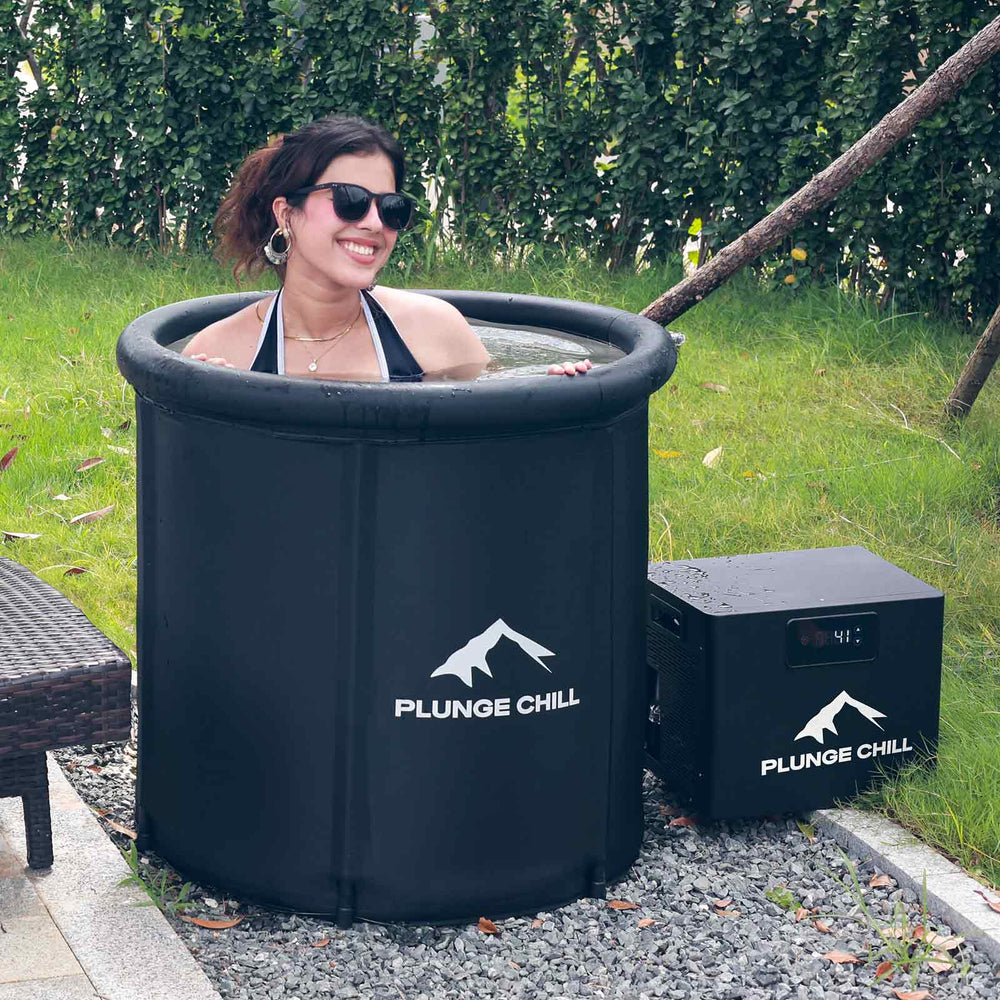
Finding an affordable cold plunge tub is easier today than ever before. With the rise of portable ice bath systems, athletes and wellness enthusiasts can build an effective home cold plunge setup without spending thousands of dollars. From inflatable cold plunge tubs to budget-friendly chiller systems, there are several options that deliver reliable cold therapy while keeping costs low.
What Is an Affordable Cold Plunge Tub?
An affordable cold plunge tub isn’t simply the cheapest option available. Instead, it’s a system that balances cost, durability, and temperature control while still delivering the core benefits of cold water immersion.A practical budget cold plunge setup typically includes:
- A durable tub or insulated container.
- A reliable method to cool water (ice or a chiller)
- Basic filtration or water sanitation.
Enough insulation to maintain stable temperatures
When these elements work together, even a lower-cost system can provide the same recovery benefits as much more expensive cold plunge setups.
The goal is consistency rather than luxury.
Why More People Are Choosing Cold Plunge Therapy
Cold immersion rapidly constricts peripheral vessels, spikes breathing and heart rate, and shifts blood toward the core—the classic cold shock response described by Case Western Reserve University. Upon exit and rewarming, circulation rebounds, which many people perceive as a recovery boost. Mechanistically, cold exposure can temporarily reduce local inflammation and metabolic activity, and it elevates catecholamines such as norepinephrine; these shifts plausibly support perceived energy, alertness, and mood.
The broader evidence is mixed and depends on context. The Ohio State University Wexner Medical Center notes that cold immersion helps some athletes feel better the next day and may reduce soreness, but frequent post‑lift plunges can blunt strength and muscle‑growth adaptations. A 2015 Journal of Physiology paper and a 2014 Journal of Strength & Conditioning Research study—referenced by OSU—echo that caution. Harvard Health highlights that pooled research suggests stress reductions appear several hours after immersion and that mood benefits are inconsistent across studies. Stanford Lifestyle Medicine summarizes immediate self‑reported mood improvements and plausible neuroendocrine mechanisms while emphasizing the need for more long‑term data. The University of Oregon reports acute drops in heart rate, blood pressure, and cortisol after a single 15‑minute immersion in college students, with clear limits on generalizability.
Several practical conclusions follow. If you train primarily for strength or hypertrophy, delay cold plunges by about one to two days after key lifts to avoid blunting adaptations, a timing caveat reiterated by OSU Wexner. If your priority is next‑day readiness for endurance or mixed‑modal training, a same‑day plunge in the 50s °F can help you feel better without materially harming long‑term gains. For mental health and stress regulation, short, consistent exposures may help mood and perceived resilience, but they are not replacements for proven therapies. Across goals, begin conservatively, respect contraindications for cardiovascular disease and uncontrolled hypertension, and never plunge alone.

Best Affordable Cold Plunge Tub Setups
There are several ways to build a budget cold plunge tub, each with different trade-offs.
An inflatable cold plunge tub is one of the most popular entry points for beginners.
Advantages include:
Portable and easy to store.
Lower upfront cost.
Simple setup for indoor or outdoor use.
Inflatable tubs are especially useful for people who want a portable home cold plunge without committing to a permanent installation.
They also pair well with compact chillers if you want to maintain consistent temperatures without relying on ice.
How Cold, How Long, and How Often on a Budget
Temperature targets for beginners cluster around the 50–59°F range. That aligns with Stanford Lifestyle Medicine’s definition of uncomfortable but safe exposures and with the OSU Wexner recommendation of roughly 10 to 20 minutes at 50–59°F for trained users. Dr. Susanna Søeberg’s weekly time target—about 11 minutes per week broken into several short sessions, cited by Chilly GOAT—offers a practical consistency cue. Case Western’s context that tap water in many U.S. homes hovers near the mid‑50s °F suggests that an ice‑free, starter routine may be feasible while you evaluate the need for a chiller. For strength‑gain blocks, delay cold exposure by 24–48 hours post‑lift and keep sessions brief. For mental recharge, very short durations at higher cold temperatures or even facial immersion to tap the diving reflex can be effective, per Stanford Lifestyle Medicine.
Tub Types and Trade‑offs You Can Live With
There are several affordable paths that preserve the essentials. Inflatable and drop‑stitch tubs pack small, set up fast, and can pair with entry‑level chillers. Stock tanks are durable and mod‑friendly for pump, filter, and chiller ports. Acrylic and fiberglass tubs bring rigidity and easy cleaning but cost more and weigh more. Stainless looks premium and is durable but can lose heat faster; Icebound Essentials notes that 316 stainless resists corrosion better than 304, which matters for water chemistry and longevity. True plug‑and‑play units simplify setup and sanitation, but the initial cost is higher.
A chest freezer conversion sits in many budget forums. However, Icebound Essentials warns these appliances are not designed for human entry, require sealing and circulation retrofits, and absolutely demand GFCI protection. In my practice, I do not recommend chest freezer builds for non‑experts due to electrical and water safety risks and frequently poor hygiene unless engineered meticulously.
A concise comparison helps frame realistic options.
|
Option |
Typical Total Cost |
Cold Control |
Filtration/Sanitation |
Best For |
Compromises |
|
Inflatable plus ice bags |
400.00 upfront; ongoing ice cost |
Variable; tap in mid‑50s °F, ice to low‑50s to 40s |
Minimal unless you add a pump and filter |
Infrequent plungers testing the habit |
Time, temperature variability, more frequent water changes |
|
Inflatable or stock tank with 1/3–2/3 HP chiller |
About 1,500.00 for many kits; ozone/UV add‑ons vary |
Holds 37–45°F in many conditions if sized correctly |
Real 5–20 micron filtration; optional ozone/UV |
Regular use at home without premium pricing |
Pump priming, hose management, ambient heat limits |
|
Used or entry plug‑and‑play unit |
Often 6,000.00 on deals; new can exceed $5,000.00 |
Stable 39–45°F; some reach mid‑30s |
Integrated filtration; often ozone and sometimes UV |
Families, heavy use, simple maintenance |
Heavier, delivery path, dedicated 120V circuit |
Pricing ranges reflect Colderatti’s under‑$100 to $5,000‑plus landscape, Amazon‑typical kit pricing for inflatable‑plus‑chiller bundles, and consumer reviews indicating plug‑and‑play thresholds. The purpose is to anchor expectations; verify current pricing for your region and gear.

Filtration, Sanitation, and Temperature Control That Don’t Break the Bank
Water at 40–55°F slows bacterial growth, but it does not sterilize the tub. You still need circulation, filtration, and a sanitizer plan. Icebound Essentials recommends running circulation several hours daily and filtering at 5–20 microns, with regular filter cleaning to maintain flow. Coldture and Colderatti converge on using fitted covers, pre‑use showers, and weekly filter attention to prolong clarity. Hydrogen peroxide, bromine, or chlorine can all work, but confirm compatibility with your tub shell and chiller materials to avoid corrosion; Icebound Essentials cautions against “mystery” formulations that can damage pumps and seals. Ozone and UV reduce pathogen load and chemical demand; Coldture notes that ozone is less suitable indoors and that UV requires a GFCI outlet. In practice, I find ozone plus a moderate sanitizer residual is a sweet spot for multi‑user households.
Cooling is the other half of the equation. Ice is cheap initially but expensive in time and inconsistency. A 1/3 to 2/3 HP chiller matched to volume and ambient temperature stabilizes the experience and reduces water waste from frequent refills, as Icebound Essentials and Chilly GOAT emphasize. BarBend’s buyer guidance to confirm the lowest temperature you actually need is critical; many athletes thrive in the mid‑40s to low‑50s °F, and pushing to near‑freezing is unnecessary for most goals and increases equipment cost. If you opt for a chiller, confirm electrical specs—many residential units are 120V and may require a dedicated 15A circuit, as the Plunge product page specifies—and provide clear intake and exhaust airflow.
Sizing, Ergonomics, and Placement
Fit determines whether you actually use the tub. Upright barrels are compact and economical for small footprints; reclined shells feel more spacious and may help longer exposures by reducing tension. BarBend’s testing highlights that taller users can feel cramped in smaller, strictly seated shells, whereas longer acrylic units accommodate full submersion and shoulder width more comfortably. Measure your space and your body, and remember that water weighs about 8.34 lb per gallon. A 100‑gallon tub approaches 834 lb before adding the tub and a person. Indoor installs need floors rated for the combined load, good ventilation, and a plan for accidental spills; Haven of Heat advises waterproof flooring, GFCI outlets, and reliable drainage.
Noise and heat exhaust belong in your decision. Integrated systems tend to present a cleaner package but can be heavier and vent heat into the room. External chillers offer placement flexibility but need hose runs and airflow. Consumer impressions summarized by BarBend and product pages for plug‑and‑play units often report quiet operation, yet room acoustics and placement matter; plan positioning before delivery to minimize surprises. Outdoors, prioritize shade and a fitted, insulated cover to reduce energy use and debris load.

Routine Maintenance That Preserves Water and Gear
Cold tubs demand proactive hygiene. Colderatti and Coldture recommend showering first, skimming debris, keeping a fitted cover on, and changing water on a cadence that reflects use. Fire Cold Plunge suggests deep cleans every one to three months; Colderatti recommends full changes every three to four weeks; Coldture notes two to four weeks, possibly stretching clarity with high‑quality filters. These intervals diverge because sanitizer choice, ozone/UV presence, bather load, and ambient conditions vary widely. The practical solution is to monitor clarity, feel, and sanitizer residuals and to escalate cleaning when water turns cloudy, slimy, or odorous. Icebound Essentials provides targets for pH, total alkalinity, sanitizer levels, and calcium hardness; even in cold water, chemistry matters because low pH can corrode components and high calcium can scale heaters and chillers.
A minimal, effective cadence looks like a daily glance for clarity with skimming as needed; a weekly check on filters and sanitizer residuals; a two‑to‑three‑week filter deep clean; and a full drain, scrub with a mild non‑abrasive cleaner, rinse, refill, and rebalance at roughly three to six weeks depending on load. Non‑chlorine shock can help when the tub sees heavy use without locking you out for long. Ozone or UV can stretch intervals, but neither is a license to neglect testing.
A simple table can anchor that routine.
|
Task |
Cadence |
Practical Notes |
|
Visual clarity check, skim, cover on |
Daily |
Reduces biofilm and filter load; outdoor tubs need more skimming on windy days |
|
Test pH, alkalinity, sanitizer |
Weekly or at water change |
Targets near pH 7.2–7.8 and alkalinity 80–120 ppm support sanitizer efficacy and comfort |
|
Rinse filters; rotate or deep clean |
Every 1–3 weeks |
Follow manufacturer instructions; colder water slows reactions, so filters do more work |
|
Full drain, scrub, rinse, refill, rebalance |
Roughly every 3–6 weeks based on use |
Sooner if water turns cloudy, slimy, or odorous; keep mild cleaners tub‑safe |
One low‑cost practice I recommend is placing an absorbent mat at entry and requiring a quick rinse for feet and hands. It dramatically reduces grit and oils, and it costs very little.
Buying Guide: Where to Spend and Where to Save
Start with purpose. If you plan three short sessions per week for stress regulation and general recovery, a chiller‑ready inflatable with a real filter pump and a fitted cover may suffice, especially if your ambient water starts in the 50s °F. If you are managing a rehab case that benefits from precision and easy sanitation for multiple household users, prioritize a chiller that can maintain low‑40s °F reliably, a 5–20 micron filter, ozone or UV, and quick‑drain hardware. If you lack outdoor space and will place the unit indoors, favor rigid shells that are easier to wipe down and ensure the room has ventilation and a floor drain or pump plan.
Verify the electrical path. Many consumer chillers run on 120V, but they may require a dedicated 15A circuit. Avoid sharing that circuit with high‑draw appliances. Confirm intake and exhaust clearances and use a GFCI outlet; Haven of Heat and Icebound Essentials both emphasize these safety basics. Match chiller capacity to water volume and ambient heat. Manufacturers list BTU per hour or cooling horsepower; bigger is not always better if your tub is small, but too small a unit will fight and waste energy.
Water care deserves scrutiny. Ask brands to specify filter micron ratings, turnover times, and ozone/UV details. Icebound Essentials recommends full turnover every 30–90 minutes depending on traffic. A true 20‑micron or finer filter is manageable, whereas mesh strainers alone are insufficient for regular multi‑user setups. Chilly GOAT and Coldture highlight the practical advantage of built‑in filtration and a clear sanitation protocol; scrutinize maintenance instructions and warranty language so you know the expectations, not just the claims.
Ergonomics are not a luxury. BarBend’s testing framework underscores posture and fit. If you are over six feet tall, confirm interior length and shoulder width, not just outside dimensions. An uncomfortable shell leads to tension and shorter exposures, undermining your routine.
Finally, understand fulfillment and support. Free curbside delivery is common for mid‑range units, while in‑home placement typically costs extra. Return windows, warranty lengths, and parts availability vary. Colderatti encourages choosing U.S.‑designed units with clear warranty and returns; that advice is pragmatic regardless of brand preference.
Two Budget‑Responsible Setups That Work
A practical starting point for many athletes is an inflatable or drop‑stitch tub paired with a 1/3 HP chiller that includes a small pump and a real cartridge filter. Kits in this category are widely available at roughly $420.00 to $1,500.00, consistent with typical retail snapshots, and many can hold water in the low‑40s °F for a 100‑gallon volume if ambient temperatures are reasonable. Add an anti‑slip entry mat, a fitted insulated lid, and a simple test kit. This configuration reduces ice runs, stabilizes temperature, and keeps sanitizer demands predictable.
For those with a bit more room and a fixed outdoor spot, a poly stock tank plumbed with a pump, filter housing that accepts 5–20 micron cartridges, and a 1/2 HP chiller is a durable, cleanable alternative. The tank itself is inexpensive relative to acrylic shells and is easy to drill for ports. Insulate the exterior and pad the base to cut heat gain. Pair with ozone if outdoors to reduce chemical load, as long as local conditions and electrical protection are appropriate. Build a drainage plan to move spent water to the garden when sanitizer levels are near zero, an eco‑minded tip echoed by Build a Hot Tub.

Use It Wisely for Strength, Rehab, and Mindset
Cold plunges can be an excellent tool when used intentionally. If you are peaking for strength, keep cold away from the 24–48 hours after heavy sessions, an adjustment that aligns with OSU Wexner’s caution about blunted hypertrophy signaling. If your priority is rapid turnaround between endurance or mixed sessions, use 50–59°F exposures for a few minutes in the hours after training to nudge perceived recovery without chasing the coldest possible number. For stress management, consistency matters more than extremity; Stanford Lifestyle Medicine suggests that repeated exposures blunt cortisol responses over time, which may generalize to other stressors.
Safety sits at the center. Case Western emphasizes that the first seconds of immersion are the riskiest due to cold‑shock hyperventilation; enter slowly and regain breath control before submerging the chest or face. People with heart disease, poorly controlled blood pressure, or a history of stroke should consult a clinician first, a point echoed by Mayo Clinic and Harvard Health. Use a GFCI outlet, non‑slip surfaces, and adequate lighting. Keep warm clothing and towels ready for rewarming, and never plunge alone.

Three Overlooked Insights That Save Money and Headaches
Chemical reactions slow dramatically in cold water, which means sanitizers last longer but also act more slowly. Icebound Essentials explains that temperatures under 50°F change how quickly sanitizers work and dissolve. The practical takeaway is that you still need a measurable residual and real circulation even in very cold tubs, or you risk clear‑looking but under‑sanitized water. This is a common gap in budget builds that rely on cold alone.
Warranty and specification claims conflict across marketing sources more often than buyers realize. For example, consumer content sometimes lists different warranty durations for the same product family, likely due to updates over time or differences between models and regions. One sensible verification step is to capture the manufacturer’s current warranty PDF before you purchase and match it to your model and serial number.
Indoor ozone use is often discussed as a universal good, but Coldture notes it is not ideal indoors. The reason is simple: ozone is a potent oxidizer that should be managed with ventilation and appropriate containment. This does not mean you cannot use ozone; it means you should weigh UV and mechanical filtration more heavily when the tub must be inside a smaller, poorly ventilated room and lean on a fitted cover to reduce off‑gassing. A quick verification step is to check the equipment’s installation manual for indoor ventilation requirements.

Reconciling Conflicting Advice
Guides vary on how often to change water, with recommendations stretching from two to four weeks to one to three months. The most likely reasons for discrepancies are sanitizer type and level, the presence of ozone or UV, filter quality and turnover time, and bather load. Instead of choosing a single interval, combine a target range with objective checks: clear appearance, neutral smell, a stable pH between about 7.2 and 7.8, and a sanitizer residual appropriate for your method. When in doubt, reset more often; skin irritation and biofilm costs more in the long run than a fresh fill.
Similarly, recommended protocols differ on time and temperature. Stanford Lifestyle Medicine and OSU Wexner lean toward the 50s °F for several minutes, while performance‑chasing communities tout mid‑30s °F. The likely cause is different definitions of benefit, varied populations, and ambient constraints. For recovery and stress regulation, you do not need near‑freezing water to get an effect; Harvard Health’s pooled analysis found stress reductions after cold immersion that did not require the coldest possible temperatures.
Takeaway
An affordable cold plunge that does not compromise on essentials is absolutely achievable. Think in terms of systems rather than shells. A chiller matched to water volume, a real filter that turns the tub over in a reasonable window, a sanitizer plan that fits your space, and basic safety features like GFCI power and non‑slip entry matter more than brand gloss. The physiology supports perceived recovery and mood in many users, with caveats for strength adaptations and cardiovascular risk. Start in the 50s °F, be consistent, test the water, and keep the routine simple enough that you will actually use it week after week.
FAQ
What is the cheapest way to build a cold plunge tub?
The cheapest way to create a cold plunge tub is by using a stock tank or inflatable tub filled with ice and water. While this setup requires regular ice, it can still provide effective cold immersion.
Do I need a chiller, or can I just use ice?
You can begin with tap water and ice to learn your response and confirm the habit, especially if your ambient water starts in the mid‑50s °F. If you want consistent temperatures, less water waste, and a lower time burden, a properly sized chiller with a real filter becomes cost‑effective quickly for regular users. Brand‑agnostic buying guides from Icebound Essentials and Chilly GOAT prioritize chillers for sustainable routines.
Are inflatable cold plunge tubs durable?
Most modern inflatable cold plunge tubs use reinforced multi-layer materials and can be surprisingly durable when used on flat surfaces and maintained properly.
Will cold plunges hurt my strength and muscle gains?
Cold exposure right after lifting can blunt the cellular signals that drive hypertrophy. To protect gains, delay cold plunges by about one to two days after heavy strength sessions, as summarized by OSU Wexner. If you prioritize next‑day readiness over long‑term size, brief post‑training plunges in the 50s °F can still be appropriate.
Do you need a chiller for a cold plunge tub?
A chiller is not required, but it makes maintaining cold temperatures much easier. Many regular users prefer a cold plunge tub with a chiller because it eliminates the need for large amounts of ice.
What is the cheapest setup that still checks the safety and hygiene boxes?
A chiller‑ready inflatable with a fitted insulated cover, a small pump with a 5–20 micron filter, and a starter sanitizer plan is the minimum I recommend for regular use. Prices vary, but many kits land in the low hundreds to around $1,500.00, which is far less than high‑end integrated units yet delivers consistency and cleaner water than ice‑only approaches.
If you want help sizing a chiller to your tub volume and space, or you need a quick sanity check on a parts list before you buy, I’m happy to run through the numbers with you.
References
- https://knightcampus.uoregon.edu/plumbing-benefits-plunging
- https://case.edu/news/science-behind-ice-baths-and-polar-plunges-are-they-truly-beneficial
- https://www.health.harvard.edu/staying-healthy/research-highlights-health-benefits-from-cold-water-immersions
- https://lifestylemedicine.stanford.edu/jumping-into-the-ice-bath-trend-mental-health-benefits-of-cold-water-immersion/
- https://sncs-prod-external.mayo.edu/hometown-health/speaking-of-health/cold-plunge-after-workouts
- https://health.osu.edu/wellness/exercise-and-nutrition/do-ice-baths-help-workout-recovery
- https://www.utmb.edu/news/article/utmb-news/2025/06/18/cold-water-immersion-rising-wellness-trend
- https://www.garagegymreviews.com/best-cold-plunge-tub
- https://www.amazon.com/cold-plunge-tub/s?k=cold+plunge+tub
- https://barbend.com/best-cold-plunges/