As a sports rehabilitation specialist and strength coach who reviews cold plunge products and runs recovery protocols with athletes from college sprinters to master's lifters, I get one question more than any other: when should I take an ice bath to get the most benefit without harming training adaptations? The answer is not one-size-fits-all. Timing and dose depend on your primary goal, the type of training you just did, the temperature you can actually hold safely, and whether you need to perform again soon.
This article translates the current evidence and clinical practice into a practical schedule you can apply today. It defines what counts as an ice bath, shows when to plunge for specific outcomes, reconciles conflicting advice you may have seen, and closes with product care and buying tips drawn from hands-on testing of consumer cold plunge units.
What Counts as an Ice Bath
In sports medicine and physical therapy, an ice bath is cold-water immersion in roughly 50–59°F water for minutes rather than tens of minutes. Compared with cold showers, immersion provides uniform cooling and mild hydrostatic compression. Most reputable clinical and coaching guidance converges around that 50–59°F band, with cautious exposure times that start very short and build across sessions. Cleveland Clinic emphasizes keeping sessions brief and avoiding extremes, capping beginners near three to five minutes and advising against temperatures below about 40°F, especially early in your journey. Other clinical and team-sport guidance, including Ohio State Health and Ivy Rehab, supports 10–15 minutes in the 50–59°F range for experienced users who have acclimated and can monitor carefully. Across sources, a consistent principle emerges: time and tolerance, not extremity, drive safety and benefit.
The Physiology Behind Timing
Cold water initially causes vasoconstriction, which reduces local blood flow and dampens inflammatory signaling and nerve conduction, so soreness feels smaller and swelling less dramatic. After you get out, rewarming and vasodilation help restore circulation. A less discussed but real contributor is hydrostatic pressure: head-out immersion increases cardiac output and shifts fluid centrally, which may aid clearance of metabolites with minimal energetic cost, as highlighted in a review hosted on NIH’s PubMed Central. On the neurochemical side, cold exposure acutely raises noradrenaline and can lower cortisol after the session, with small human studies suggesting mood and alertness improvements; Stanford Lifestyle Medicine provides a clear overview of these responses. This physiology is why timing matters. A well-placed plunge can make a sore back-to-back training day possible, while a poorly timed plunge can blunt the very adaptations you want from strength training.
When to Cold Plunge: Match Timing to Your Goal
If your goal is endurance recovery, especially in tournament or two-a-day contexts, plunging within the first couple of hours after the session is a reasonable way to reduce delayed-onset muscle soreness over the next day. Health.com summarizes a 2021 review of randomized trials showing that cold-water immersion within about an hour after exercise reduced muscle pain up to 24 hours. Cleveland Clinic clinicians likewise see perceived recovery benefits in the short term. In my field work with collegiate distance squads, finishing a hard interval day with a brief 50–55°F immersion aligns with this weight of evidence and athlete experience.
If your goal is muscle size or maximal strength, the equation flips. Ohio State Health cautions that plunging right after lifting can blunt hypertrophy and strength signaling, a point also echoed by Mayo Clinic Health System. For lifters prioritizing adaptation, I schedule cold exposure away from the anabolic window. Waiting at least four to six hours is a defensible compromise when soreness control is necessary; waiting 24–48 hours is even more conservative during strength blocks. The disagreement between “as soon as possible” advice in some popular guides and “delay it” advice from strength-focused clinicians likely arises from differences in training type, outcome measures, and the time horizon of interest. Short-term soreness relief is not the same as long-term hypertrophy. Healthline’s push to plunge as soon as possible fits an analgesia-first approach; OSU and Mayo’s caution fits an adaptation-first approach.
If your goal is to feel calmer, focused, or to prime your day, a short morning plunge can be a useful mental tool when scheduled away from heavy training keys. Stanford Lifestyle Medicine notes robust noradrenaline spikes with cold exposure and identifies facial cold immersion as a fast, lower-risk way to trigger parasympathetic tones via the mammalian diving reflex. In practice, a two- to four-minute dip at about 55°F after breakfast but before desk work is more than enough for most professionals I coach. A quick facial immersion in a bowl of cold water before bed can also reduce pre-sleep arousal; this is more of a neurophysiology hack than a training protocol, and it’s easy to trial safely.
If heat, humidity, and core temperature are your immediate problems, pre-cooling has a niche role. Healthline mentions that entering hot environments with a lower core temperature can help performance. I only use pre-cooling as a situational tool for events in oppressive conditions, and even then I keep it brief and warm up thoroughly afterward so muscle function is not impaired.
For acute injury management, local cold is still the first line for symptom relief. Len Kravitz, PhD, at the University of New Mexico reviewed a controlled study showing both immediate cold and immediate heat reduced strength loss after an eccentric squat protocol, with immediate cold providing slightly better perceived pain relief. That protocol involved local application, not whole-body immersion, a nuance that explains why whole-body results don’t always match. Early cold helps pain and swelling control, but don’t use whole-body immersion to mask significant pain after suspected structural injury; get evaluated.

How Long and How Cold: Safe Dosing
A safe dosing rule is simple. For beginners in the 55–59°F range, two to five minutes is plenty. With experience and reliable temperature control in a home unit or training facility, 50–55°F for up to 10 minutes is a common ceiling. Some protocols allow 10–15 minutes at 50–59°F in acclimated athletes under supervision, as noted by Ohio State Health and Ivy Rehab, while Cleveland Clinic advises keeping it shorter and strictly above about 40°F. At very cold exposures near 40–45°F, even robust people should think in two- to three-minute bouts, if at all. The goal is to dose the minimum effective dose for the outcome you need, not to win a cold-tolerance contest.
Here is a practical reference you can print for your training room.
Water Temperature (°F) |
Typical Continuous Duration |
Practical Notes |
58–60 |
3–10 minutes |
Good starting band; beginners stay near three to five minutes; extend slowly as tolerated. |
55–57 |
3–8 minutes |
Common team-sport range; monitor breathing; exit if shivering escalates. |
50–54 |
2–7 minutes |
Reserve for acclimated users; have warm layers and a warm drink ready. |
45–49 |
1–4 minutes |
Advanced only; useful between events with supervision; increased cardiac and nerve risk. |
40–44 |
1–3 minutes |
Not recommended for most; Cleveland Clinic discourages going below about 40°F. |
These ranges reconcile apparently conflicting guidance. Cleveland Clinic’s short, strict guidance prioritizes medical safety across the general public. Ohio State Health and Ivy Rehab’s longer windows assume coached athletes and tightly controlled 50–59°F conditions. Differences in risk tolerance, temperature accuracy, and whether the person is supervised explain much of the gap.
Weekly Schedule by Goal
The best schedule reduces soreness when needed without stealing from long-term gains. A straightforward template works well in most cases.
Goal |
When to Plunge |
Days per Week |
Dose Target |
Notes |
Endurance recovery and back-to-back sessions |
Within 30–120 minutes post-session |
Two to four on hard weeks |
50–59°F for three to eight minutes |
Evidence from a 2021 review summarized by Health.com shows less soreness for up to 24 hours; scale down as racing approaches. |
Strength and hypertrophy |
Separated from lifting by at least four to six hours, preferably 24–48 hours |
One to three as needed |
50–59°F for three to six minutes |
Ohio State Health and Mayo Clinic Health System caution about blunting adaptations with immediate post-lift exposure. |
Tournament or two-a-day formats |
Right after bout one to prepare for bout two |
As scheduled events dictate |
50–55°F for two to six minutes |
Prioritize function tomorrow over adaptation next month. Keep it short, then rewarm and refuel. |
Mood, focus, stress management |
Morning or non-lifting days |
Three to five brief dips |
55–60°F for two to four minutes |
Stanford Lifestyle Medicine highlights sustained noradrenaline rises and lower post-session cortisol; use breathing to manage the cold shock. |
Acute pain and swelling (local) |
Immediately and at 24 hours |
Brief daily bouts for several days |
Local cold packs for about 20 minutes |
University of New Mexico review shows immediate cold reduces perceived pain; local modality, not full immersion. |
A compelling but debated weekly heuristic proposes about 11 total minutes of cold exposure per week for general wellness, mentioned in runner-oriented coverage.
Evidence Check: What the Studies Actually Say
The literature is mixed, which is why smart scheduling matters. A 2021 review summarized by Health.com found that plunging within about an hour after exercise reduced muscle pain for up to a day. A 2015 paper in the Journal of Physiology and a 2014 paper in the Journal of Strength & Conditioning Research associated regular immediate post-lift cold immersion with reduced long-term muscle mass and strength, reinforcing the timing guidance for lifters. The NIH PMC review on post-exercise immersion underscores that mechanisms and outcomes depend on temperature, depth, and contrast methods, and it documents meaningful hydrostatic effects that are not always captured in simple “cold reduces inflammation” summaries. Cleveland Clinic presents conservative, safety-first temperature and time guidelines suitable for broad audiences and highlights the risk of going too cold or too long. Harvard Health remains circumspect about sweeping health claims and frames ice bathing as low-risk to try but modest in evidence for broad benefits. Stanford Lifestyle Medicine walks through neuroendocrine responses, including cortisol reductions after exposure and persistent noradrenaline increases with repeated sessions. Mayo Clinic Health System warns that daily post-training immersion can dampen long-term gains, especially for strength and hypertrophy, and suggests cold as a strategic rather than chronic tool.
There are also disagreements worth naming. Cleveland Clinic’s three-to-five-minute ceiling contrasts with the 10–15 minutes frequently cited by Ohio State Health and rehab clinics. The likely causes include differences in assumed temperature accuracy, supervision, and risk thresholds. Healthline’s recommendation to plunge as soon as possible after exercise reflects a short-term comfort focus, while Ohio State Health and Mayo Clinic Health System prioritize long-term adaptation. Reconciling these differences means matching the timing to your actual goal on that day.
Practical Protocol You Can Use Tomorrow
In the clinic and at team facilities, I coach athletes to think through preparation, entry, and rewarming. Before the plunge, drink water and confirm the temperature with a reliable thermometer. Avoid entering right out of a sprint finish; take a few minutes for a gentle cool-down and controlled breathing. If you are new, settle on a two- to three-minute target in the high 50s and keep your upper body clothed with a beanie or a thin long-sleeve top to make the session more tolerable without reducing lower-body cooling.
On entry, sit calmly and breathe slowly through your nose with longer exhales than inhales to blunt the cold-shock gasp. Keep hands out initially if the sting makes you tense, then submerge them once your breathing steadies. End the session before shivering escalates, dizziness appears, or numbness spreads. If you are using cold to prepare for a second session later in the day, keep the exposure on the short side and begin rewarming promptly.
For rewarming, dry off, layer warm clothes, and sip a non-caffeinated warm drink. I favor light movement such as a short walk while you refuel with a balanced meal that includes protein and sufficient carbohydrate to restore glycogen after hard work. Avoid jumping straight into a very hot shower; allow your body to come back toward normal smoothly, which generally feels better and prevents lightheadedness. Stanford Lifestyle Medicine’s discussion of post-exposure cortisol reductions squares with the subjective calm athletes report during this rewarming window.

Overlooked Insights Embedded in Scheduling
Full-body immersion is not the only lever. Brief facial immersion in cold water can produce a vagus-mediated calming response via the diving reflex. This has a different autonomic signature than full-body immersion and can be helpful for pre-sleep downshifting without imposing a large thermal load, as described by Stanford Lifestyle Medicine. The practical implication is simple: if you want a quick, non-fatiguing reset at night, a basin and a towel may beat a tub.
Hydrostatic pressure matters more than most guides admit. The NIH PMC review notes that immersion depth, even with your head out, increases cardiac output and central blood volume, which may mimic some benefits of active recovery without the energy cost. This could explain why cold immersion sometimes outperforms cryotherapy chambers for between-event recovery even when temperatures match, because air does not provide the same hydrostatic effect.
Local cold and whole-body cold are not interchangeable. The University of New Mexico review on immediate cold versus heat after eccentric loading suggests that local interventions can reduce perceived pain and modestly protect function, but they do not automatically translate to whole-body protocols. That nuance helps reconcile the warm-and-cold contrast therapy tradition in rehab with the performance-focused debate over whole-body cold.
Pros and Cons in the Real World
The upside is clear for short-term soreness control, perceived recovery, mood, and cooling in heat. Team staffs and clinic clients describe feeling lighter the next morning, and the evidence supports small but tangible reductions in soreness for about a day. The downside is equally clear in strength blocks, where immediate cold after lifting may shave off some of the adaptive signal. There are also medical risks, including cold shock with rapid breathing, cardiac stress in people with heart disease or uncontrolled high blood pressure, nerve irritation, cold-related rashes, and hypothermia with prolonged or very cold exposure. Harvard Health, Cleveland Clinic, and Banner Health converge on a practical safety posture: keep it cold but not freezing, short rather than long, and supervised until you know your responses.
Equipment, Care, and Buying Tips
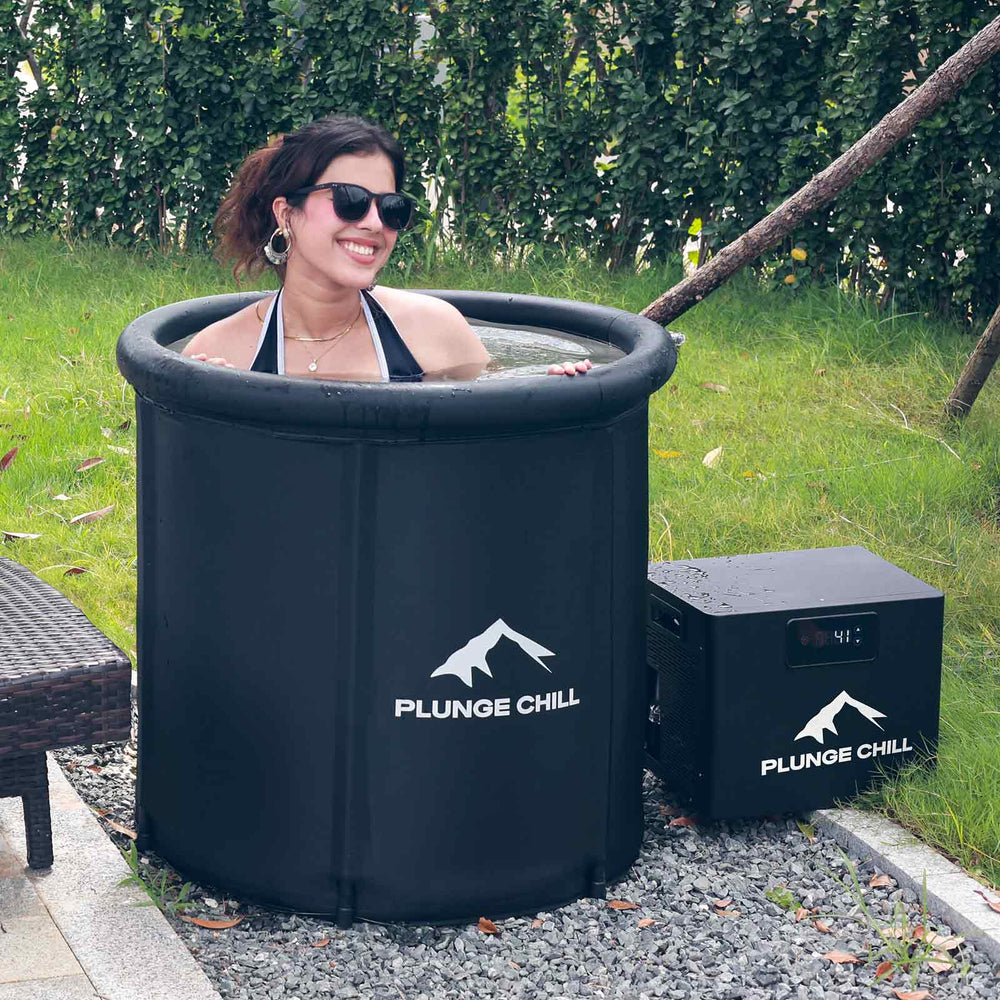
If you plan to plunge more than once a week, convenience and cleanliness dictate what you buy. A simple bathtub filled with cold tap water in winter can land near 60°F, which is a fine place to start. Adding a five-pound bag of ice typically nudges a full tub to about the mid-50s, which matches user experiences reported by mainstream health outlets. For dedicated home units, choose a tub big enough to submerge your hips and thighs comfortably without extreme contortion. If you add a chiller, ask the vendor for its BTU rating and the ambient temperature at which it can hold 50–55°F; this reveals whether it will keep up during summer. Look for a GFCI-protected outlet, a cover to retain temperature and keep debris out, a drain that will not soak your patio, and a filter system that you know how to maintain.
On sanitation, decide whether you will drain after each session or operate the tub as a small pool. If you operate continuously, use a filter, measure disinfectant regularly, and wipe biofilm from the waterline. Some manufacturers suggest changing water every month; the Urban Ice Tribe advice to change every four weeks assumes proper filtration and disinfection and may be too infrequent for higher-traffic homes.
Finally, test temperature honestly. Many low-cost digital thermometers are off by a couple of degrees. In product testing, I place two independent thermometers in opposite corners and average them. I also have athletes log temperature, time, shivering onset, and perceived cold to fine-tune dose safely.
Safety and Contraindications
Cold plunges are not appropriate for everyone. If you have heart disease, uncontrolled hypertension, Raynaud’s phenomenon, peripheral artery disease, neuropathy, or diabetes, talk with your clinician first. Cleveland Clinic, Mayo Clinic Health System, and Harvard Health all advise caution with cardiovascular risk because cold triggers acute increases in breathing, heart rate, and blood pressure. If you are pregnant, if you have open wounds, or if you have impaired sensation, avoid immersion. Regardless of health status, do not plunge alone the first few times, and stop immediately if you feel chest pain, confusion, or a loss of motor control. Rewarm deliberately and avoid driving if you feel chilled or groggy.
Takeaway
Timing your cold plunge to your goal is the difference between help and hindrance. If you need to feel better for tomorrow’s endurance work, a short dip within a couple of hours is reasonable. If you are building muscle or maximal strength, move your cold away from the lift by several hours or a day. Keep the temperature in the 50s, keep sessions short, and log your response. Viewed this way, an ice bath is not a magic bullet or a threat; it’s a dose-dependent tool that belongs in a broader recovery plan alongside sleep, nutrition, active cooldowns, and smart programming.
FAQ
How soon after a workout should I take an ice bath?
For endurance or mixed sessions, aim for within about 30 to 120 minutes if soreness control for the next day is the priority. If you lifted for strength or hypertrophy and care about long-term gains, delay the plunge by at least four to six hours, and preferably 24 to 48 hours. This reconciles short-term analgesia evidence summarized by Health.com with adaptation cautions from Ohio State Health and Mayo Clinic Health System.
How cold should the water be and for how long?
Staying in the 50–59°F band is both effective and scalable. Beginners can start at three minutes near the high 50s. Acclimated users can progress toward five to eight minutes around 50–55°F when supervised or using a reliable home tub. Cleveland Clinic warns against going below about 40°F and favors keeping exposures shorter in any case.
Is a cold shower good enough if I don’t have a tub?
Cold showers can provide a milder stimulus and are easier to control, though immersion is more uniform because your whole body is surrounded by cold water. Cleveland Clinic acknowledges the practicality of cold showers when a tub is not feasible. If you use showers, direct the spray to the legs and hips, control your breathing, and set a timer just as you would in a tub.
Will cold plunges help me sleep better?
Some people report deeper sleep when they finish a short plunge a few hours before bedtime, and Stanford Lifestyle Medicine outlines how post-exposure cortisol can drop for some time afterward. Others feel too stimulated if the session is too cold or too long. Start modestly, finish your plunge earlier in the evening, and evaluate your own response over a week.
Can ice baths help with weight loss?
Cold can raise calorie burn while you rewarm, and there is interest in activating brown fat, as discussed by Ohio State Health and other consumer health outlets. The human evidence for meaningful body-composition change from cold exposure alone remains limited.
Are cryotherapy chambers interchangeable with ice baths?
Both are cold, but the water’s hydrostatic pressure is unique and may help explain why some recovery outcomes differ. The NIH PMC review suggests immersion’s fluid shifts can mimic elements of active recovery without additional energy cost. If you have access to both, choose immersion for between-event recovery and cryo for a brief mental lift with less logistical burden.
References
- https://lms-dev.api.berkeley.edu/cold-baths-benefits
- https://www.health.harvard.edu/staying-healthy/the-big-chill
- https://thewell.northwell.edu/healthy-living-fitness/ice-bath-benefits
- https://lifestylemedicine.stanford.edu/jumping-into-the-ice-bath-trend-mental-health-benefits-of-cold-water-immersion/
- https://aquila.usm.edu/cgi/viewcontent.cgi?article=21812&context=fac_pubs
- https://sncs-prod-external.mayo.edu/hometown-health/speaking-of-health/cold-plunge-after-workouts
- https://pmc.ncbi.nlm.nih.gov/articles/PMC2938508/
- https://health.osu.edu/wellness/exercise-and-nutrition/do-ice-baths-help-workout-recovery
- https://medicine.tufts.edu/news-events/news/are-you-using-heat-and-ice-properly
- https://www.unm.edu/~lkravitz/Article%20folder/MuscleSorenessHotCold.html