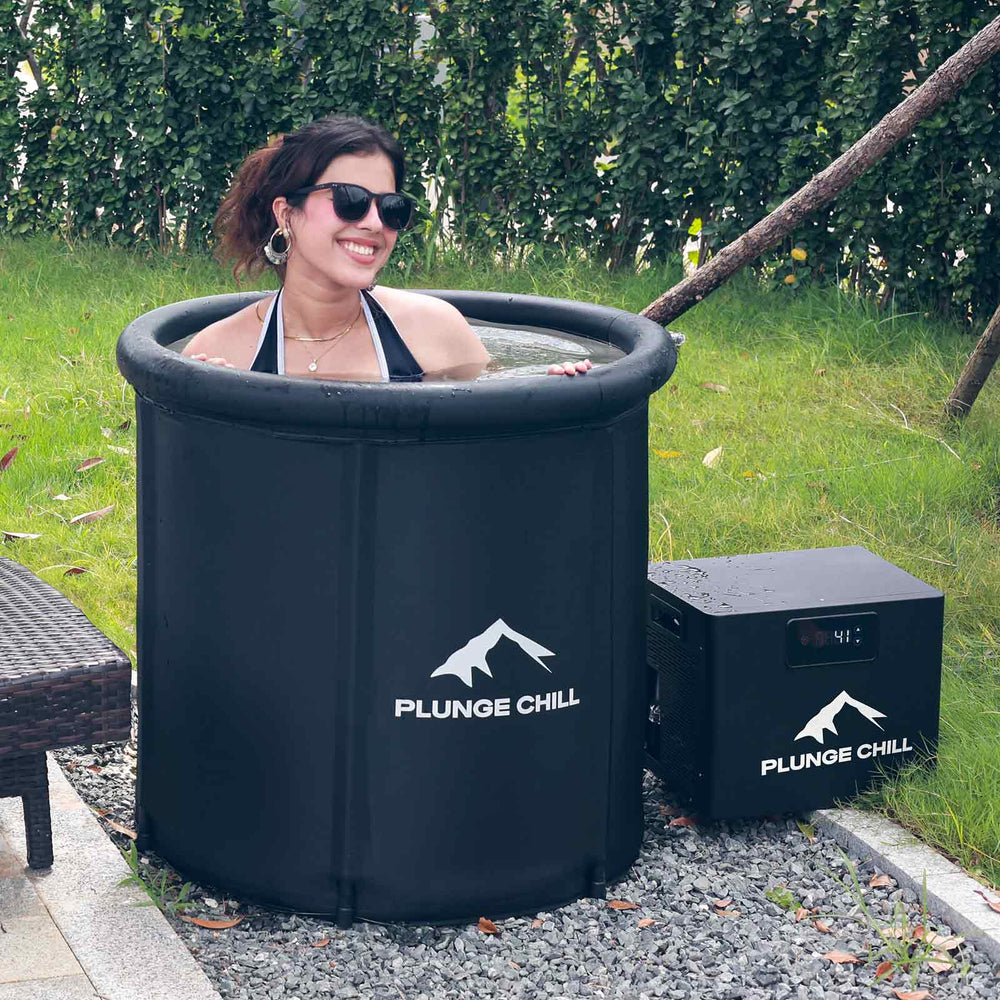
As a sports rehabilitation specialist and strength coach who routinely reviews recovery equipment, I am frequently asked whether a two-a-day cold plunge routine is worth the effort. The short answer: it can be a potent performance multiplier for the right athlete during demanding training blocks, but only when dosage, water temperature, and training timing are dialed in with precision.
Plunging twice daily requires balancing acute recovery needs with long-term neuromuscular adaptations. This guide breaks down the underlying physiology, details an advanced timing matrix, highlights periodization strategies, and shows how a dedicated cold plunge tub maintains the consistent temperatures needed for complex daily protocols.
Table of Contents
- Who Should Consider a Twice-Daily Plunge?
- The Physiology: Acute Recovery vs. Adaptation Tradeoffs
- The Advanced Two-a-Day Protocol Framework
- Decision Matrix: Timing, Doses, and Temperatures
- Safety, Medical Screening, and Natural Rewarming
- Periodizing Twice-Daily Cold Across Training Blocks
- Equipment Considerations: Consistency and Chiller Performance
- Protocol Variations: Contrast and Localized Cooling
- A Worked Example: Endurance-Strength Hybrid Athlete
- Frequently Asked Questions (FAQs)
- Summary Takeaways
- References
Who Should Consider a Twice-Daily Plunge?
A twice-daily cold plunge protocol is strictly an advanced tool. It is suited for experienced plungers, multi-session competitive athletes, or individuals managing extreme thermal stress—such as summer two-a-days, tournament brackets, or high-mileage running blocks.

Cold Plunge Chiller + Tub (XXL)
Prior medical clearance is non-negotiable. Individuals with pre-existing cardiovascular conditions, cardiac arrhythmias, uncontrolled hypertension, peripheral neuropathy, diabetes, Raynaud's phenomenon, venous stasis, or cold agglutinin disease should avoid extreme cold immersion. Medical guidance from institutions like the Cleveland Clinic, University of Utah Health, and Harvard Health emphasizes that sudden cold exposure drives intense sympathetic activation that can compromise vulnerable circulatory systems.

The Physiology: Acute Recovery vs. Adaptation Tradeoffs
Stepping into cold water initiates profound, instantaneous peripheral vasoconstriction, shunting blood volume toward core organs while depressing superficial tissue temperatures. Upon exiting, reactive vasodilation increases fresh microvascular perfusion, which accelerates the clearance of cellular debris and calms subjective muscle soreness.
However, cold therapy presents a clear biological tradeoff depending on the target timeframe:
- Acute Performance & Soreness: A meta-analysis in sports medicine literature demonstrates reliable reductions in delayed-onset muscle soreness (DOMS) and perceived exertion following immersion. Furthermore, trials in the American Journal of Physiology highlight that a 10-minute plunge at 50°F can enhance same-day submaximal work capacity hours later.
- Long-Term Strength & Hypertrophy Blunting: Conversely, sports science research reviewed by the OSU Wexner Medical Center confirms that routine post-lift cold immersion blunts satellite cell activation, amino acid uptake, and downstream mTOR signaling. If muscle hypertrophy or maximum force production is your primary objective, plunging immediately post-lift actively sabotages your gains.
- Delayed Stress Down-Regulation: Research in PLOS One reveals that systemic stress markers drop significantly approximately 12 hours post-immersion rather than immediately. This delayed parasympathetic rebound explains why an evening plunge often improves next-morning readiness and sleep metrics.
The Advanced Two-a-Day Protocol Framework
To implement two sessions per day without inducing chronic systemic fatigue or compromising strength gains, anchor your routine around four rules:
- AM Session (Neural Priming): Keep morning immersions brief (2 to 5 minutes) at 54°F–59°F. The goal is sympathetic arousal, dopamine elevation, and mental clarity without driving deep core temperature depression.
- PM Session (Soreness & Decompression): The late afternoon or evening plunge can run slightly longer (5 to 10 minutes) to manage heat load and lower resting stress levels before sleep.
- The Strength Buffer: If your training day includes heavy compound resistance training, keep cold exposure completely away from the post-workout window—delaying immersion by 24 to 48 hours or placing it well before the session.
- Circadian Alignment: Match session timing to natural core temperature rhythms. Evening sessions should occur at least 1.5 to 2 hours before bed so natural rewarming is complete before sleep onset.
Decision Matrix: Timing, Doses, and Temperatures
Tailor your parameters directly to the day's primary training demands using this research-aligned reference table:
| Goal | Best Timing | Water Temp (°F) | Duration | Frequency | Key Considerations |
|---|---|---|---|---|---|
| Endurance Multi-Session Recovery | Between sessions or late afternoon | 50°F – 59°F | 5 – 10 min | Daily during high-volume weeks | Lowers core heat and restores submaximal work capacity. |
| Heat Stress Mitigation | Immediately post-workout | 52°F – 58°F | 5 – 8 min | As needed in summer blocks | Rapidly reduces internal thermal load to baseline. |
| Mental Alertness & Primer | Morning upon waking | 54°F – 59°F | 2 – 4 min | 3 – 5 days weekly | Drives norepinephrine release without core cooling fatigue. |
| Strength & Hypertrophy Preservation | Rest days or 24h–48h post-lift | 55°F – 59°F | 3 – 5 min | 1 – 2 days weekly | Never plunge immediately following heavy hypertrophy lifting. |
| Brown Adipose (BAT) Activation | Separated from lifting sessions | 48°F – 55°F | 2 – 3 min | Accumulate ~11 min weekly | Allows natural shivering to maximize thermogenic signaling. |
Safety, Medical Screening, and Natural Rewarming
Entering cold water triggers an initial gasping reflex. Always enter smoothly with feet first, submerge to the clavicles while keeping your head dry, and immediately lengthen your exhales through the nose to quiet sympathetic alarm.
How you rewarm is equally critical. Research from the University of Utah Health recommends allowing your body to rewarm naturally. Shivering is a healthy, metabolically active thermogenic response. Rather than rushing into a boiling hot shower—which triggers rapid peripheral vasodilation and can induce dizziness or fainting—towel dry thoroughly, pull on warm fleece layers, sip a warm beverage, and walk lightly for 5 to 10 minutes.
Clinical Caution on Injury: Never use cold immersion as an analgesic shield to numb acute pain and train through a structural injury. Blunting sensation invites severe muscle tears or tendon damage, while prolonged icing can suppress early macrophage-mediated tissue repair.
Periodizing Twice-Daily Cold Across Training Blocks
Twice-daily immersion is a seasonal, periodized tool—not an indefinite year-round habit. Layer it into your periodization cycle strategically:
- Hypertrophy / Off-Season Strength: Scale back to single sessions on non-lifting days, or eliminate cold plunges entirely to maximize muscle fiber adaptation.
- In-Season / Multi-Event Blocks: Deploy twice-daily immersions across congested tournament weekends or back-to-back competition days where next-day physical readiness supersedes long-term growth.
- Pre-Competition Taper: Use short, warm-leaning immersions (55°F–59°F for 3 minutes) once daily to enhance sleep quality, sharpen central nervous system tone, and clear mental tension.

Equipment Considerations: Consistency and Chiller Performance
Executing a reliable twice-daily protocol is nearly impossible with manual bags of ice. When you plunge morning and evening, hauling 80+ pounds of supermarket ice daily creates massive logistical friction, and tub temperatures rapidly swing out of the therapeutic 50°F–59°F window.
Investing in a dedicated cold plunge tub with chiller solves these issues completely:
- Continuous Precision Cooling: Automated commercial-grade chillers hold your target temperature within a single degree, ensuring your 6:00 AM priming dip and your 7:00 PM recovery soak deliver identical, repeatable physiological stimuli.
- 24/7 Mechanical Filtration: High-frequency use demands clean water. Multi-stage micron filtration combined with continuous ozone or UV sanitation keeps water clear and bacteria-free without constant dumping and refilling.
- Durable Thermal Insulation: High-density drop-stitch construction paired with an insulated cover retains chilled water efficiently, drastically reducing chiller compressor cycle times and power draw.

1HP Cold Plunge Chiller + Tub(Pro)
Protocol Variations: Contrast and Localized Cooling
Contrast water therapy (alternating between a hot sauna or hot tub and a cold plunge) is popular in collegiate and professional facilities. While evidence showing contrast therapy outperforms cold immersion alone for muscle damage clearance is limited, contrast provides superior subjective comfort and vascular pumping effects.
If you prefer a contrast routine, always maintain a 3:1 or 4:1 heat-to-cold ratio (e.g., 12 minutes in the sauna followed by 3 minutes in the cold plunge), and finish cold if you want lingering vasoconstriction and reduced swelling.

A Worked Example: Endurance-Strength Hybrid Athlete
Here is how a real-world hybrid athlete successfully periodizes a twice-daily routine across a high-volume week:
- Monday (AM Track Intervals / PM Upper Body Hypertrophy): Take a 4-minute plunge at 55°F after morning track work to cool down and clear lower-body heaviness. Skip cold therapy entirely that evening to protect upper-body hypertrophy signaling.
- Wednesday (Lower Body Heavy Squats): Zero cold exposure post-lift. Allow natural inflammatory cascades to drive tissue remodeling.
- Thursday (Aerobic Base Flush): Evening plunge of 8 minutes at 52°F to reduce leg stiffness and lower central stress before bed.
- Saturday (Long Trail Run / Heat Session): AM plunge of 6 minutes at 50°F post-run for immediate thermal relief. Optional PM 3-minute dip at 56°F to promote evening parasympathetic sleep readiness.

Frequently Asked Questions (FAQs)
Will two cold plunges a day double my rate of recovery?
No. Biological recovery does not scale linearly. Cold exposure triggers specific autonomic and vascular resets that hit diminishing returns quickly. Two-a-days are best reserved for multi-session training days or managing severe heat stress.
What is the absolute safest water temperature for twice-daily plunges?
Stay firmly between 50°F and 59°F (10°C–15°C). Dipping into the low 40s twice a day introduces unnecessary cardiovascular strain and increases hypothermia risk without providing superior recovery outcomes.
Can I plunge twice daily if my goal is building maximum muscle size?
No. Frequent cold immersion blunts anabolic signaling pathways (mTOR and satellite cell activity). If muscle hypertrophy is your priority, restrict cold plunges to non-lifting days or wait at least 24 to 48 hours post-workout.
Can cold showers replace a second plunge session?
Yes. A brisk 2-minute cold shower provides an excellent, low-stress mental reset for your morning session, saving your dedicated cold plunge tub for deeper post-workout immersion later in the day.
Summary Takeaways
A twice-daily cold plunge routine is a precision recovery tool. Keep morning sessions brief for mental priming, use evening sessions for thermal decompression, and keep cold exposure far away from your heavy strength training. Prioritize stable water temperatures between 50°F and 59°F, rewarm naturally, and let objective performance metrics dictate your schedule.
References
- https://www.health.harvard.edu/heart-health/cold-plunges-healthy-or-harmful-for-your-heart
- https://www.mcphs.edu/news/physical-therapist-explains-why-you-should-chill-out-on-ice-baths
- https://pubmed.ncbi.nlm.nih.gov/36744038/
- https://journal.parker.edu/article/120141-the-efficacy-of-icing-for-injuries-and-recovery-a-clinical-commentary
- https://www.rutgers.edu/news/what-are-benefits-cold-plunge-trend
- https://news.uoregon.edu/content/cold-plunging-might-help-heart-health-new-research-suggests
- https://sncs-prod-external.mayo.edu/hometown-health/speaking-of-health/cold-plunge-after-workouts
- https://health.osu.edu/wellness/exercise-and-nutrition/do-ice-baths-help-workout-recovery
- https://healthcare.utah.edu/the-scope/mens-health/all/2024/04/171-cold-hard-facts-about-cold-plunging
- https://health.clevelandclinic.org/what-to-know-about-cold-plunges