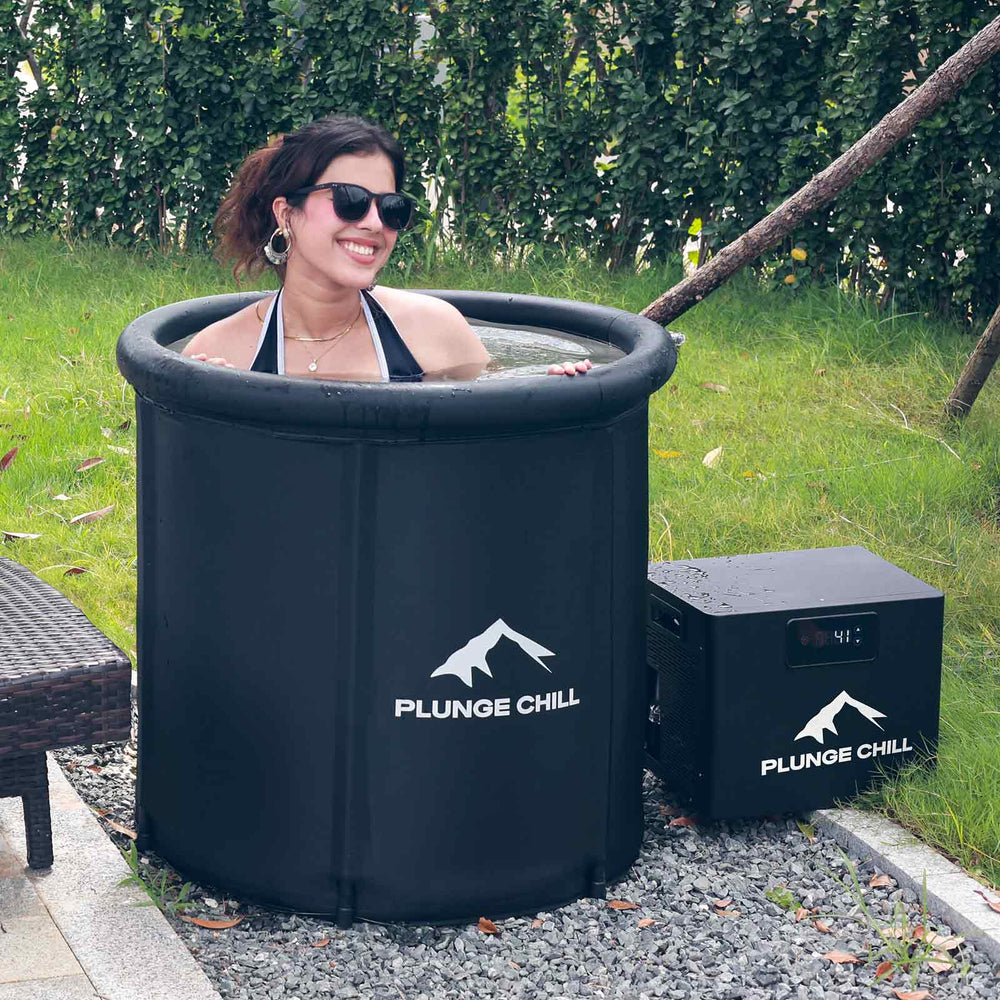
As a sports rehabilitation specialist and strength coach who also tests cold plunge products, I’ve learned that the same tub can deliver very different results depending on how you use it across the calendar. Seasonal context matters: ambient temperature, training goals, recovery windows, and even your mood rhythms shift from winter to summer. This guide distills the science and practical know‑how behind year-round cold plunge programming so you can optimize benefits, manage risks, and make smarter buying and care decisions.
Cold Plunge Fundamentals
Cold plunge therapy is deliberate immersion in cold water, typically between 50 and 60°F, to create a manageable physiological stress that drives adaptation. During immersion, blood vessels narrow and shunt blood toward the core; upon exit, vessels reopen and oxygen-rich blood returns to the working tissues. This “pump” can help moderate inflammation and facilitate recovery while the cold shock increases alertness and sympathetic drive. Bayshore Fit describes these mechanisms for everyday users in clear language, while Experience Life emphasizes that the benefits come from the stress-adaptation, not the heroics of extreme temperatures. Renu Therapy and Strength Warehouse USA converge on the 50–60°F range as a practical sweet spot for most people.
Evidence is broad but heterogeneous. University and medical sources suggest mood, soreness, and recovery can improve, but not every benefit claim is equally strong. A University of Oregon study in 2023 reported reduced heart rate, lower blood pressure, decreased cortisol, and better mood several hours after a single 15‑minute immersion; the authors called for more research and cautioned against miracle framing. Harvard Health recently reviewed a PLOS ONE analysis and urged caution about heart-specific benefits, noting mixed or small effects across stress, sleep, and quality-of-life endpoints, with protocols that varied widely. Mayo Clinic Health System and Ohio State’s health content highlight short-term soreness relief and recovery support but warn that immediate post‑lift plunges can blunt strength and hypertrophy adaptations over time.
This is the lens we’ll use: blend first-hand programming experience with reasonable temperature and timing targets, then layer in seasonal context and equipment choices to maintain safety and consistency.

Benefits and Trade-offs You Can Actually Use
The strongest near-term signals span soreness reduction, exercise recovery, and mental clarity. Bayshore Fit and Mayo Clinic Health System outline how vasoconstriction curbs swelling while reperfusion supports tissue nourishment. Many users report an endorphin-driven lift in mood and motivation, consistent with gym and spa anecdotes and popular press summaries. Ohio State’s coverage discusses recovery benefits after endurance activities, and NPR has explained how cold exposure may boost insulin sensitivity and energy expenditure in the short run, especially when shivering occurs. These may relate to thermogenic activation of brown fat and tighter control of glucose, but the evidence is early and inconsistent, and it is not a weight-loss plan in isolation.
There are trade-offs. Cold exposure immediately after strength sessions can mute the inflammation signals required for muscle remodeling, a caution echoed by Experience Life, Harvard-affiliated commentary, and Mayo Clinic Health System. If you are peaking for power or hypertrophy, hold your plunge 24 to 48 hours after heavy lifting or place it on an easy day. People with cardiovascular disease, arrhythmias, Raynaud’s, or peripheral artery disease should avoid cold plunges or seek medical clearance, as emphasized by Harvard Health and Mayo Clinic Health System.
One nuance that matters in practice is the timing of benefits. Harvard Health’s summary of pooled studies suggested that stress reduction may present roughly half a day later rather than immediately. In my teams, we plan evening or next-morning evaluations for mood and sleep after daytime plunges; this avoids mislabeling the benefit window.
How Season Changes the Dose
Below Zero Cryo Spa explains that cold plunging “works” in both winter and summer but meets different needs. In winter, mood, stiffness, and immune resilience are frequent motivators; the ambient cold amplifies the physiological response. In summer, heat relief and post‑sport recovery usually dominate.
Here is a concise seasonal playbook you can adapt. The ranges assume healthy individuals cleared for cold water immersion and already tolerating 50–60°F. If you are newer or returning from a break, slide toward warmer and shorter exposures first.
Season |
Primary goals |
Suggested water temp |
Typical duration |
Timing notes |
Winter |
Joint comfort, mood support, circulation, resilience |
55–60°F for general users; 50–55°F if well acclimated |
1–3 minutes for most; extend cautiously if warm-up access is assured |
Favor midday when ambient cold is harsh; prioritize thorough rewarming and avoid wind exposure |
Spring |
Gradual acclimation, training ramp-up recovery |
55–60°F early; move to 50–55°F as tolerance returns |
2–4 minutes as progress allows |
Pair with light movement warm-ups and breathing to manage early-season cold shock |
Summer |
Heat relief, post‑sport recovery, sleep rhythm support |
50–55°F for cooling; experienced athletes may go 45–50°F for shorter exposures |
2–5 minutes; get out when skin feels numbed rather than refreshed |
Schedule post‑exercise on hot days; rehydrate and include electrolytes; avoid right before sleep if you feel too alert |
Fall |
Consistency, immune-season prep, deload comfort |
50–55°F for experienced; 55–60°F for general users |
2–4 minutes |
Use as a checkpoint for winter tolerance; maintain frequency while decreasing aggressiveness |
In practice, I see winter’s ambient cold magnify the stress response. For many, this means choosing warmer water and shorter stays in December through February, then re-expanding in spring. In August, plunges double as a fast cooling intervention after hikes or workouts; people often tolerate slightly colder water for short durations because their core temperature starts higher, but hydration and gradual rewarming remain critical.
Temperature, Time, and Weekly Dose
Multiple reputable sources converge around 50–60°F as the practical range for most people. Renu Therapy, Strength Warehouse USA, and Bayshore Fit all place general guidance there. Experience Life suggests 45–55°F for trained users and argues that there is little benefit to going below about 45°F, while Plunge’s educational content describes an “activation zone” of 45–55°F and warns that above roughly 60°F may not trigger the same stress response. Advanced users sometimes push into the high 30s for short bouts, but extreme cold raises risk without clear added gains for general wellness.
Typical exposure time depends on your goal and acclimation. In coached environments, I progress people from 30 to 60 seconds toward 2 to 5 minutes in the 50–60°F band, with a firm cap at 10 minutes. Experience Life notes limited evidence of additional benefit beyond about 5 minutes, while Ohio State content has referenced 10 to 20 minutes in the 50–59°F range in some protocols. The discrepancy likely reflects different endpoints and populations: performance recovery and soreness relief may be achieved with shorter exposures, whereas studies that report longer times often aim at broader physiological measures and include varying depths of immersion or intermittent bouts. Given the safety profile and real-world adherence, I prioritize consistency over duration and rarely exceed 5 minutes unless under supervision and with strong tolerance history.
Weekly dose targets also vary. Coldture’s content and several commercial summaries cite about 11 minutes per week across several sessions as a practical benchmark. I treat that as a starting heuristic rather than a rule because training load, sleep, and season all modulate tolerance. Think dose over time rather than chasing single “hero” plunges.
Here is a compact goal-to-dose grid you can use as a baseline, then personalize based on response and season.
Goal |
Temperature |
Duration per session |
Timing guidance |
Reduce post‑sport soreness |
50–55°F |
2–5 minutes |
Use after endurance or mixed sessions; for heavy lifting, wait 24–48 hours |
Mental reset and focus |
50–60°F |
1–3 minutes |
Morning or pre‑workout; emphasize controlled breathing in first 30 seconds |
Heat relief in summer |
50–55°F |
2–4 minutes |
Post‑exercise with hydration; rewarm naturally afterward |
Hypertrophy priority periods |
50–60°F |
1–3 minutes or skip |
If used, place on rest days or at least 24–48 hours after lifting |
Joint comfort in winter |
55–60°F |
1–3 minutes |
Midday when ambient conditions are less extreme; extend only if rewarming is easy |
Timing Within the Training Week
When you plunge matters. Pre‑workout dips can sharpen focus via sympathetic activation and give a clean mental start; I keep these short and not overly cold. Morning plunges can also replace a second cup of coffee by boosting alertness, as covered by Experience Life and others. Post‑workout immersions are best reserved for endurance or mixed sessions when the goal is next‑day readiness; both Ohio State and Mayo Clinic Health System suggest that regular immediate post‑lift plunges can blunt strength and hypertrophy signals over the long term. If you are chasing strength, place cold exposure later in the day or the following day. In the evening, some people sleep better after a plunge, while others feel too alert; Experience Life recommends experimenting and allowing at least a couple of hours to rewarm naturally before bed.

Safety Screening and Smart Progression
Cold shock is real: heart rate and blood pressure can spike on entry, and rapid breathing may follow. Harvard Health advises people with arrhythmias or cardiovascular disease to avoid cold plunges; the same caution applies to Raynaud’s and peripheral artery disease. Mayo Clinic Health System highlights risks of hypothermia, frostbite in icy conditions, and environmental hazards like currents or unstable ice in open water. In clinics and home settings, I prefer controlled tubs with known temperatures, a partner nearby, and a clear rewarming plan that includes dry clothing and light movement. Clean water matters; Renu Therapy emphasizes filtration and maintenance, and Coldture highlights practical water-care kits with sanitizer, oxidizer, alkalinity control, and test strips. Hygiene is basic but often overlooked: shower first and avoid lotions that foul filters.
Progression should be intentional. Start warmer within the 50–60°F band, use short exposures, practice slow nasal inhales with long exhales to settle the first 30 seconds, and rewarm gradually rather than jumping straight into a hot shower. Measure how you feel two to 12 hours later and the next morning, not just on exit; some benefits show up on a delay, as suggested in the Harvard Health summary.
Equipment, Setup, and Care
There are three common routes: DIY with ice in a tub, inflatable or portable systems with partial insulation, and self-contained plunge tanks with built‑in chillers and filtration.
DIY is inexpensive to start but can become surprisingly costly and inconsistent. The Plunge blog estimates that buying ice for a home tub can run about $200 per month for multiple weekly plunges at around $3 per bag, and temperatures fluctuate as ice melts. In my testing, temperature stability is the biggest performance variable. Many users focus on dropping the thermometer number, but repeatable temperature within a narrow band matters more. Plunge suggests holding within a 2 to 3°F range; it’s smart advice that aligns with how I evaluate equipment session to session.
Self-contained chillers bring precision, stability, and time savings. Brand content from Coldture describes filters that keep water clean for up to 45 days and remote control features. Treat those as manufacturer claims and verify against user reviews and maintenance guides in your region. Regardless of brand, key buying criteria are the chiller’s temperature floor and holding capacity in your climate, filtration and maintenance workflow, insulation quality, ease of cleaning the interior, available covers to reduce heat gain and debris, and whether temperature can be set and maintained to the exact degree. Haven of Heat covers practical tricks for DIY users, including insulating the tub, pre‑chilling water, using frozen bottles, shading, and choosing a cool room to reduce ice use.
Placement matters in every season. Indoors or in shaded, ventilated spaces reduces energy needs and keeps temperatures stable. Keep electrical requirements and drainage practical. A solid cover is mandatory if pets or children are around and helps with sanitation and evaporation control.
For care, follow the manufacturer’s maintenance cycle, test sanitizer levels regularly, and change filters on schedule. Renu Therapy emphasizes water quality and following the maker’s instructions to prevent bacteria growth. In my experience, daily towel wipe-downs of surfaces and weekly quick filter checks solve more issues than any fancy gadget. Cold water slows but does not stop microbial growth, so do the basics well.

Contrast Therapy and When to Use It
Alternating heat and cold can create a pronounced circulatory “pump.” Several sources describe simple templates: for example, five minutes hot at about 100–110°F followed by one minute cold around 50–59°F, repeated for 20–30 minutes, or sauna blocks of roughly 15 minutes paired with two to five minutes cold, repeating two or three times and finishing cold. I reserve contrast cycles for heavy competition weeks and late‑season recovery because it is stimulating and time-consuming, and I scale durations down in winter to avoid excessive afterdrop when moving outdoors.

Overlooked but Practical Insights
A small but useful nuance is that temperature consistency often matters more than achieving the lowest possible reading. With a stable 52°F soak repeated across sessions, adaptation and outcomes are easier to track than sporadic plunges anywhere from the high 40s to the low 60s because the physiological stress is more reproducible. This point appears in Plunge’s education and matches what I see when athletes log their data.
Another quietly important consideration is sex-specific starting temperatures. One spa education piece argues that women may do better starting around 55–65°F due to differences in body composition and hormonal milieu, then progressing lower only as needed. This is plausible and aligns with subjective reports from teams I coach, but it is not strongly verified in large trials.
Finally, sleep benefits are not universal or immediate. Experience Life notes that some people feel too alert after a plunge, and Harvard Health’s summary of pooled studies suggests stress changes may emerge many hours later. If sleep is the goal, schedule earlier in the evening and track your heart rate, time to sleep onset, and sleep continuity over a couple of weeks before deciding if plunges help or hinder your nights.
Conflicting Guidance, Reconciled
You will see disagreement about “how long” and “how cold.” Experience Life recommends avoiding temperatures below about 45°F and sees little added benefit beyond five minutes, while Ohio State has referenced 10–20 minutes at 50–59°F in some recovery contexts. Harvard Health remains skeptical of heart-specific claims. The likely reasons include differences in definitions and protocols, outcome measures (subjective soreness versus objective performance or cardiovascular signals), immersion depth and movement, participant training status, and even climate and facility variability. When the literature reads like apples and oranges, default to conservative, repeatable doses, then iterate based on your own data.

Buying Tips: Matching Gear to Your Use Case
If you plunge once or twice a week and are temperature tolerant, a DIY setup can suffice, but expect inconsistency and recurring ice purchases. If you plunge several times per week and dislike hauling ice, look for a tub-and-chiller system with precise setpoints, closed-loop filtration, and an insulated cover. Temperature stability within a narrow band, ease of sanitation, and practical placement often influence adherence more than headline minimum temperature. High‑end plunge systems can approach $20,000.00 according to Mayo Clinic Health System; weigh that against your frequency, training goals, and the value of your time. If you do buy a chiller, ask about maintenance intervals, filter costs, noise levels, and real‑world energy draw in your climate.
For measurement, use a submersible digital thermometer for accurate water readings. Infrared guns only capture surface temperature and can mislead if the tub stratifies. Floating thermometers provide continuous visibility but move around; use them as a redundancy rather than a primary tool.

Care and Maintenance Across Seasons
When ambient temperatures drop, protect the tub and hoses from freezing and keep a consistent schedule for filter checks because colder air can invite condensation issues around fittings. In summer, sanitation needs tighten as usage often increases after outdoor workouts; test sanitizer levels more frequently, rinse off sweat before entering, and use the cover when not in use to reduce heat gain and debris. A simple rule in every season is to rewarm with light movement and layers rather than jumping straight to very hot water, which creates a fast blood pressure swing that not everyone tolerates well.
Takeaway
Year‑round cold plunge success is not about suffering through the lowest possible temperatures. It is about applying the right dose for the season and your training context, maintaining stable and measurable conditions, and stacking safety and care practices that make your routine sustainable. Most of the time, 50–60°F with two to five minutes of exposure gets the job done if you place it intelligently in the week. If you need more precise and convenient control, invest in a system that holds temperature within a couple of degrees and simplifies filtration. Keep medical cautions front-of-mind, especially for cardiovascular conditions, and let your own training logs be the judge of what actually helps.
FAQ
How cold should my water be if I’m new to cold plunges?
Start in the warmer end of the range around 55–60°F and keep your first sessions short, about 30 to 60 seconds, progressing toward two to three minutes as your breathing stays calm and your after‑effects remain positive. Several sources, including Renu Therapy and Strength Warehouse USA, recommend this range as both effective and safe for most beginners.
Can I use a cold plunge after lifting weights if I want to gain muscle?
You can, but it is likely counterproductive if done immediately after lifting because cold exposure can dampen the inflammatory signaling that drives strength and hypertrophy. Harvard Health and Mayo Clinic Health System caution that routine post‑lift plunges may blunt adaptations. If you still want the mood or soreness benefits, place your plunge on a rest day or at least 24 to 48 hours after heavy sessions.
What is the ideal session length for general recovery?
In applied settings, two to five minutes at 50–60°F is a practical standard that balances benefit and safety. Some protocols reference longer durations in the same temperature band, but much of the real-world recovery benefit shows up with shorter exposures, especially when used consistently across the week.
Is cold plunging better in the morning or at night?
It depends on your response. Morning plunges amplify alertness and can prime you for training. Evening plunges help some people relax and sleep better, but others feel too stimulated. Experience Life suggests experimenting with timing and allowing a couple of hours to rewarm before bed if evenings are your preference.
What setup should I buy if I plunge three to four times a week?
Look for a tub with a chiller that holds temperatures precisely, a strong filtration system, an insulated cover, and easy cleaning access. The Plunge blog emphasizes that stable temperatures within about a 2–3°F band are more reliable than chasing the lowest possible number. High‑end systems can approach $20,000.00 as noted by Mayo Clinic Health System, so balance convenience and consistency against cost and usage.
Does cold plunging boost immunity in winter?
Evidence is mixed. Below Zero Cryo Spa suggests regular plunges may support resilience to colds and flu, while medical summaries from Harvard Health and NPR note heterogeneous results and small studies. It is reasonable to consider cold plunges as one supportive practice among many, not a singular immune solution.
References
This article draws on education and reporting from Bayshore Fit, Experience Life, Below Zero Cryo Spa, Mayo Clinic Health System, The Ohio State University Wexner Medical Center, University of Oregon, Harvard Health, NPR, Renu Therapy, Strength Warehouse USA, Plunge, Haven of Heat, and Coldture Wellness. Links will be added in a separate References section.
- https://www.health.harvard.edu/heart-health/cold-plunges-healthy-or-harmful-for-your-heart
- https://www.mcphs.edu/news/physical-therapist-explains-why-you-should-chill-out-on-ice-baths
- https://news.uoregon.edu/content/cold-plunging-might-help-heart-health-new-research-suggests
- https://digitalcommons.liberty.edu/doctoral/7380/
- https://sncs-prod-external.mayo.edu/hometown-health/speaking-of-health/cold-plunge-after-workouts
- https://pmc.ncbi.nlm.nih.gov/articles/PMC11872954/
- https://health.osu.edu/wellness/exercise-and-nutrition/do-ice-baths-help-workout-recovery
- https://www.mayoclinichealthsystem.org/hometown-health/speaking-of-health/cold-plunge-after-workouts
- https://www.npr.org/sections/health-shots/2023/10/08/1204411415/cold-plunge-health-benefits-how-to
- https://bayshorefit.com/from-beginner-to-iceman-a-step-by-step-guide-to-safe-and-effective-cold-plunging/