Cold water immersion has moved from pro training rooms into everyday homes, including apartments. As a sports rehabilitation specialist and strength coach who reviews plunge products and has personally set up non-permanent plunges in tight spaces, I’ve learned that renters can achieve clinical-quality cold therapy without drilling holes, breaching leases, or angering neighbors. This guide distills what works in real apartments, how to keep it safe and hygienic, and how to choose gear that you can pack away when it’s time to move.
What Counts as “Non-Permanent” for Renters
Non-permanent installations deliver the recovery effect without altering the property. In practice, that means tubs you can inflate, fold, or reposition; drains that empty into a shower or tub; faucet adapters instead of hard plumbing; and chillers that plug into a standard 110V outlet without special circuits. If you can move it in an afternoon without leaving marks or holes, it qualifies. The goal is to control temperature, hygiene, and workflow while keeping the footprint and landlord risk low.
The Physiology and When to Use It
Cold-water immersion shifts the body into vasoconstriction, lowers local metabolic activity, and attenuates swelling; the post-immersion rewarm phase promotes vasodilation that restores oxygenated blood flow for recovery. Those mechanisms are consistent across sources, but recommended exposure varies by goal. Ohio State Health summarizes evidence that 50–59°F for 10–20 minutes supports endurance recovery but may blunt strength and hypertrophy signaling if used immediately after lifting; delaying by 24–48 hours post-strength session preserves adaptation while still harnessing recovery benefits. Everyday Health highlights practical safety guardrails for home users, including short exposures when water is under 59°F and extremity protection with neoprene boots and gloves. Stanford Lifestyle Medicine emphasizes mental health benefits and a conservative practice approach with an “uncomfortable but safe” temperature band, generally avoiding water below 50°F for most new users. These positions can look conflicting at first glance. The differences owe largely to the target outcome (strength adaptation versus next-day soreness relief), user training age, and how “benefit” is defined in trials. For renters programming their week, the simple rule that aligns these views is to save colder and longer immersions for rest or cardio days, and hold off 24–48 hours after heavy strength work if muscle growth is a priority.
Renter-Friendly Setup Types
Inflatable and Foldable Ice Baths
For most apartments, an inflatable or foldable tub solves 80% of the problem with minimal hassle. A representative example from Master Spas’ Chilly GOAT line lists an inflated footprint around 34 inches by 13 inches and a weight under 40 pounds, which is trivial to carry upstairs. In practice, I place a waterproof mat under the tub, attach a faucet adapter to a bathroom sink, and fill with the coldest tap water before topping with ice. The brand guidance to keep water under 60°F is consistent with recovery protocols, and the point that going colder than 40°F offers diminishing returns tracks with clinical practice for the general population. The insulated lid slows heat gain between sessions and reduces ice consumption. Expect to drain after one or two uses to maintain hygiene, especially indoors, and use a small utility pump to move water cleanly into a shower or bathtub.
Upright Barrels and Stock Tanks
Purpose-built barrels remain popular because they are compact for the volume and easy to step into. Ice Barrel outlines three sizes: a shorter, wider 300 model that prioritizes accessibility, a taller 400 that helps taller users sit upright, and a larger 500 with built-in stairs and seat. For renters, the upright footprint saves space and moves without hard plumbing. The trade-off is mass when full and the need to plan drainage logistics. In my experience, barrels are ideal in ground-floor apartments with patios or in garages; in upper floors they require more thought about total load and spill management.
Bathtub-Plus-Ice, Done Right
If your unit has a bathtub you can logistically share, this can be the simplest route. Chief Ice Officer outlines a practical rule: fill roughly three parts cold water to one part ice to reach immersion-level cold quickly. Their worked example of a partial fill using around 25 gallons of water plus about 66 pounds of ice brought water to roughly 41°F in a medium tub. Keep in mind the costs and friction. You will be hauling or making ice constantly, sharing a bathroom, and draining after each session. For short-term protocols and travel, it’s a handy fallback; for daily routines it becomes labor-intensive and expensive.
Portable Pods Plus Add-On Chillers
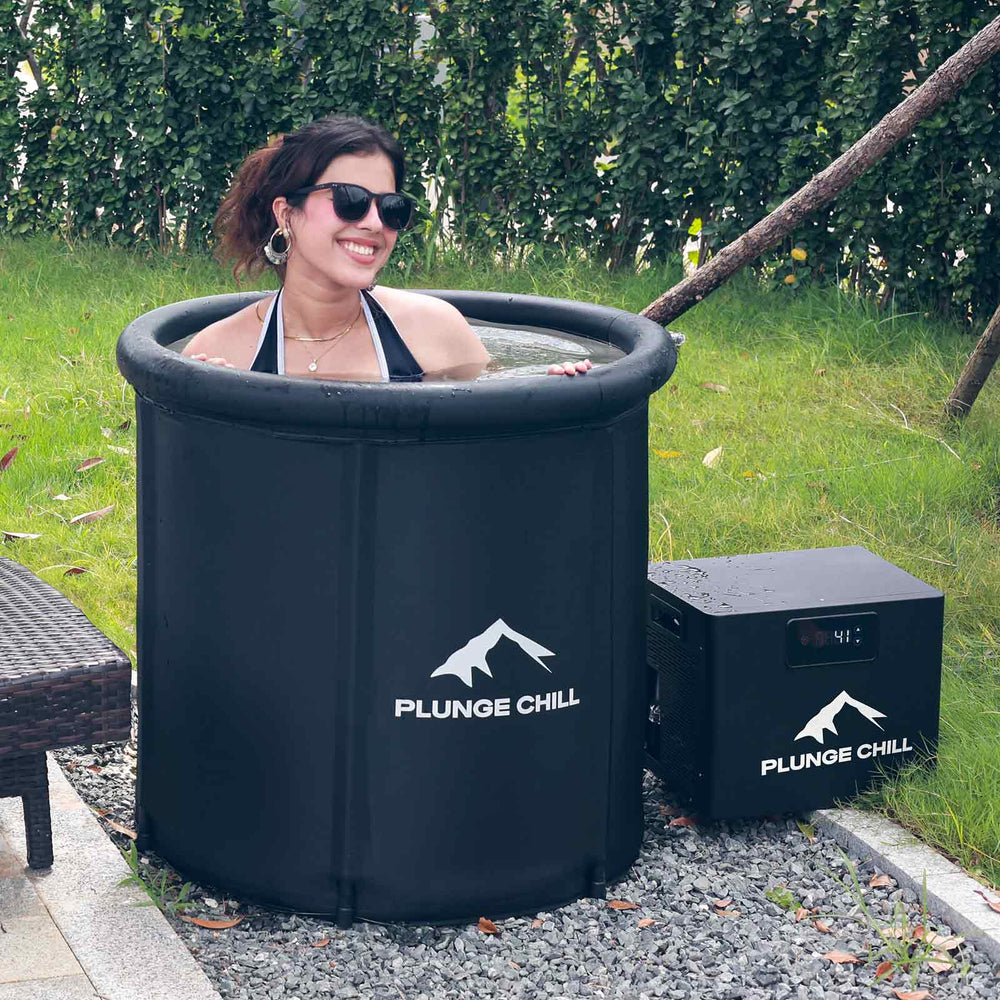
A growing middle path marries a collapsible pod with a compact chiller. When a pod has a good insulated shell and lid and the chiller includes filtration and sanitation, you can maintain consistent 39–59°F without constant ice runs. Fun Outdoor Living reports that modern integrated systems often operate for about 1.00 per day, comparable to a small freezer, which fits many renters’ utility budgets. This approach still avoids permanent plumbing but adds hoses, a pump, and an appliance that needs airflow. In practice, I stage the chiller near a window or bathroom door for ventilation, place the pod on a mat, and route quick-connect hoses carefully to avoid trip hazards. It is fully movable but heavier-duty than a pure inflatable.
Chest Freezer Conversions and Large Containers
DIY chest freezers are inherently insulated and, per Chief Ice Officer’s notes, can hold cold below 41°F with relatively low running wattage once stabilized. I do not recommend these in apartments. Mixing water and electricity introduces electrocution risk, and any leak or condensate issue in a rental is a high-stakes problem. Similarly, IBC totes and grazing troughs offer huge volume with built-in drains, but the footprint, mass, and industrial look are poor fits for most renter scenarios.

A Quick Comparison for Renters
Setup Type |
Typical Volume |
Footprint and Weight Notes |
Cooling and Hygiene |
Mobility and Storage |
Pros |
Cons |
Renter Fit |
Inflatable/foldable tub |
About 60–100 gallons |
Compact footprint; under 40 lb empty common |
Tap plus ice; drain after 1–2 uses; insulated lids help |
Deflates into a closet or under-bed bin |
Fast setup, low cost, no tools |
Frequent ice and drains; soft walls less durable |
Best all-around for apartments |
Upright barrel |
About 77–105 gallons |
Narrow footprint; heavy when full |
Ice or optional chiller; drain via hose; insulated variants exist |
Moves without tools but bulky |
Stable entry, simple workflow |
Load and drainage planning required |
Good if you have patio or ground-floor access |
Pod + add-on chiller |
About 75–100 gallons |
Pod stores small; chiller needs airflow |
39–59°F without ice; filtration and ozone common |
Fully portable; more components to place |
Consistent temperature, lower daily friction |
Higher upfront cost; pump/chiller noise |
Strong choice for frequent plungers |
Bathtub + ice |
About 40–70 gallons |
Uses existing tub; no footprint |
Ice each session; full drain every time |
Nothing to store |
No purchase required |
Inconvenient if shared; recurring ice costs |
Good stopgap or infrequent use |
Chest freezer conversion |
Over 100 gallons |
Large, very heavy when filled |
Programmable cooling; sanitation is DIY |
Difficult to move |
Precise temperature control |
Electrical safety risk in wet use |
Not recommended for apartments |
Volumes and costs are representative and vary by brand. Where brands cited include Master Spas/Chilly GOAT, Ice Barrel, and product testing summaries from Verywell Fit and Science for Sport.

Sizing and Space Planning That Actually Works
Chief Ice Officer recommends round shapes for efficiency and sets practical minimums of around 180–200 liters with an ideal zone near 300–500 liters. Converted to renter reality, that means a minimum of about 47–53 gallons, with a sweet spot near roughly 79–132 gallons depending on your height. Heights around 28–39 inches and diameters at or above about 28–31 inches accommodate most users without the need to hunch or fully recline. In my small-space setups, a tub height around 24–30 inches balances immersion to the neck and manageable entry. Plan walking clearance so that doors swing freely and you can towel off without dripping across living areas. A dense rubber mat under the tub contains splashes and adds grip.
An overlooked but essential step is accounting for total mass. Water weighs roughly 8.3 pounds per gallon. A 100-gallon fill is about 830 pounds of water alone, plus the tub and your bodyweight. My practice is to place tubs on grade or over load-bearing walls when possible and to avoid balcony edges.
Water, Ice, and Temperature Management for Apartments
Ohio State Health’s typical protocol is immersion in 50–59°F water for 10–20 minutes, while Everyday Health cites a weekly cap near 11–15 total minutes for entry-level users and advises keeping individual immersions very short when water is under 59°F. Master Spas/Chilly GOAT’s guidance to keep water under 60°F and not chase benefits much below 40°F reflects real-world adherence in apartments, where shorter exposures at moderately cold temperatures are easier to sustain week after week. For athletes chasing the strongest cold stimulus, some home guides target around 41°F based on Chief Ice Officer’s examples; if you go that cold, lower session times accordingly and prioritize supervised sessions.
A practical ice strategy uses a one-to-three ice-to-water ratio by volume during summer fills, as Master Spas describes. In plain terms, for every three gallons of water, plan about one gallon of ice, with a “gallon of ice” weighing around 7.6 pounds. If freezer space is tight, reusable gel packs cut down on bags of ice, and they refreeze between sessions. For renters, the most time-efficient approach is to keep the insulated lid on between one or two daily plunges, drain into a tub or shower when the water becomes cloudy, and clean the liner before refilling.

Hygiene Without Hard Plumbing
Filtration and sanitation keep maintenance realistic. Fun Outdoor Living recommends pairing a filter with a sanitizer such as ozone to reduce chemical loads and stretch water life. That aligns with my home use; a small, inline filter paired with an ozone loop or periodic oxidizer keeps tub walls clean and odors low. Without filtration, expect to drain and wipe after one or two uses, as the Master Spas inflatable guidance notes. Foldable PVC tubs are budget-friendly, but seams can be a wear point in frequent use; regular rinsing and gentle non-abrasive cleaners extend their life. For higher-use households, purpose-built systems that include filtration and a chiller deliver dramatically less day-to-day friction at the cost of a larger appliance footprint.
An overlooked consideration is where drained water can legally go. Many apartments require that gray water from equipment be discharged into approved drains rather than onto planters or common areas.

Safety, Landlord, and Neighbor Realities
Several themes cut across the medical guidance. Everyday Health’s experts advocate gradual progression, an exit plan, and additional caution for anyone with cardiovascular disease, hypertension, or neuropathies; consult a clinician first if you have known risk factors. Stanford Lifestyle Medicine encourages starting warmer and shorter, using the exposure as an “uncomfortable but safe” stimulus rather than a test of will. Ohio State Health cautions that frequent post-lift plunges can blunt long-term strength gains; hold off a day or two after heavy lifting if hypertrophy is a goal. From the product side, Master Spas reminds apartment users to protect floors with a mat, use faucet adapters for clean fills, and keep a pump handy for controlled drains. I add basic common sense: avoid mixing electricity and water beyond manufacturer designs, keep cords and chiller units elevated from splash zones, and ensure airflow around chillers for safe operation.
Noise is often overlooked. Compact chillers include fans and pumps that can transmit vibration through floors and walls. In practice, placing the chiller on a dense foam pad and decoupling hoses reduces perceived noise.
Buying Checklist for Renters
Focus on footprint, drainage, and hygiene. A good renter-ready kit includes a tub with an insulated lid, a waterproof floor mat, a faucet-to-hose adapter, a short discharge hose or small pump that reaches the nearest shower, and a basic thermometer. If you add a chiller, prioritize models with integrated filtration and ozone and a true 110V plug. Fun Outdoor Living reports typical operating costs around 1.00 per day for modern insulated systems, which is comparable to a small freezer and far less than buying bags of ice daily. Ask the vendor about weight when full, maximum user height, and whether the cover buckles to prevent evaporative heat gain. Read return policies and warranties; apartment use can be more demanding on soft tubs in tight spaces. Verywell Fit’s testing highlights that smaller-footprint options can still fit tall users when designed well, but verify interior lengths and depth-to-shoulder measurements rather than overall dimensions.
Maintenance and Care in Tight Spaces
After each plunge, cap the tub and wipe up splashes to protect floors. After one to two uses without filtration, drain fully, wipe down walls with a mild cleaner, and let the liner dry open before storing. With filtration and ozone, set a weekly cadence to clean or swap the filter, and plan a water change to coincide with your deeper clean. Keep supplies together in a tote: pump, hose, thermometer, spare filters, and a small towel. For foldable tubs, store fully dry to avoid mildew. With chillers, vacuum dust from vents monthly to maintain airflow and efficiency. The simplest sustainable habit is to drain into the shower, rinse the tub with warm water, and towel dry the liner; this prevents biofilm and keeps water crystal-clear on the next fill.
Protocols for Recovery, Adaptation, and Mental Health
Match protocol to your training block. If you prioritize next-day readiness during dense competition or high-volume cardio phases, a brief 50–59°F immersion on those days aligns with Ohio State Health and Everyday Health guidance. If muscle size and strength are your priority, delay immersion by 24–48 hours after heavy lifting to protect the inflammatory signaling that drives adaptation, as Ohio State Health notes from research on cold exposure’s blunting effect. When the goal is mood and stress regulation, Stanford Lifestyle Medicine reports benefits with conservative exposures and cautions against very cold starts. Taken together, the throughline is deliberate programming: slightly warmer and shorter is easier to adhere to and safer for most renters, and colder exposures belong farther from strength sessions or in specialized phases.

Cost of Ownership and Ice Planning
A non-chilled inflatable tub is the lowest upfront cost but can become ice-intensive in warm months. The Master Spas apartment guidance suggests a one-to-three ice-to-water ratio to reach target temperature from tap cold. That becomes predictable once you track your tap temperature seasonally. Reusable ice packs reduce weekly expenses. Chief Ice Officer’s estimate that a small chest freezer uses roughly 1 kWh to cool a fresh fill gives a sense of the energy budget the first day; modern self-chilled plunge systems then maintain set temperatures at comparatively low daily costs per Fun Outdoor Living’s 1.00 per day estimate. Chilly GOAT’s DIY comparison also flags that uninsulated stock tanks can consume 50–100 pounds of ice per use, which adds up to hundreds of dollars per month; that’s precisely why renters often graduate to an inflatable plus lid or a pod with a small chiller.

Subtle Gaps, Explained in Context
You will see temperature recommendations ranging from “avoid below 50°F” (Stanford Lifestyle Medicine) to “target around 41°F” (Chief Ice Officer examples) and “stay below 60°F” for general wellness (Master Spas). The divergence reflects different endpoints. Mental health and conservative-risk protocols lean warmer; athletic recovery tolerates colder water for shorter durations; DIY guides pattern after outdoor winter swims or high cold tolerance communities. Start warmer and shorter, adopt breathing control as Everyday Health suggests, and step colder only when you can hold a relaxed breath pattern and a quiet mind. If you lift for hypertrophy, accept the trade that same-day plunges may blunt gains and schedule accordingly per Ohio State Health.
A second gray area is balcony suitability. Engineers use load ratings that vary by building and jurisdiction. Rather than guessing, calculate your water mass as above and ask your property manager where you can safely place a 500–1,000 pound concentrated load.
A third nuance is indoor humidity. Repeated cold plunges with open lids add moisture to small apartments, potentially feeding mold on cool surfaces. In practice, I’ve mitigated this with a tight-fitting insulated cover and by running a small dehumidifier during and after sessions.
Takeaway
Renters do not need a backyard or a renovation to unlock the benefits of cold-water immersion. Inflatable tubs with insulated lids, upright barrels placed on mats, or pods paired with compact chillers all deliver practical, landlord-friendly solutions. Choose a footprint that fits your space, plan clean drainage into a shower, and respect safety and training timing. Keep the temperature modest to begin with, prioritize hygiene, and progress as your tolerance grows. With deliberate setup and programming, the cold becomes a reliable recovery and resilience tool, not a project that takes over your living room.
FAQ
Is an inflatable cold tub safe on a second-floor apartment? Safety hinges on total weight, placement, and water management. Calculate water mass at about 8.3 pounds per gallon, add the tub and user, and avoid placing concentrated loads near balcony edges. Place a waterproof mat under the tub and drain into a shower with a pump.
How often should I change the water without a filter? Indoors, plan to drain after one or two uses, then wipe and dry the liner. This aligns with the apartment-focused guidance from Master Spas and keeps biofilm and odors away. With filtration and ozone as described by Fun Outdoor Living, you can extend change intervals while maintaining clarity.
What temperature should I target as a beginner? A conservative and widely supported starting point is 50–59°F with short exposures, elevating time and reducing temperature gradually as you adapt. Stanford Lifestyle Medicine’s cautious stance and Ohio State Health’s recovery protocols both land comfortably in that band for most new users.
Will cold plunges hurt my gains if I lift weights? They can if mistimed. Ohio State Health notes that post-exercise cold immersion can blunt long-term strength and hypertrophy signaling. To protect gains, delay cold plunges by 24–48 hours after heavy strength sessions. If your priority is immediate soreness relief or dense competition schedules, brief, moderate plunges can still have a role.
How loud are small chillers, and will my neighbors hear them? Compact chillers include a fan and circulating pump that produce constant low noise and occasional vibration. In my apartment setups, a dense pad under the chiller and thoughtful hose routing reduced vibration through floors and walls.
What’s the most renter-friendly setup if I want daily use? An inflatable or foldable tub with an insulated lid is the fastest to adopt. If you plunge most days, a compact chiller with filtration and ozone greatly reduces ice runs and water changes while staying non-permanent. This aligns with product guidance from Master Spas and operating cost insights from Fun Outdoor Living.
References Mentioned
Chief Ice Officer; Master Spas/Chilly GOAT; Ohio State Health; Stanford Lifestyle Medicine; Everyday Health; Ice Barrel; Verywell Fit; Science for Sport.
References
- https://lifestylemedicine.stanford.edu/jumping-into-the-ice-bath-trend-mental-health-benefits-of-cold-water-immersion/
- https://www.marquette.edu/innovation/documents/arora_ice_bath_recovery.pdf
- https://sncs-prod-external.mayo.edu/hometown-health/speaking-of-health/cold-plunge-after-workouts
- https://health.osu.edu/wellness/exercise-and-nutrition/do-ice-baths-help-workout-recovery
- https://www.utmb.edu/news/article/utmb-news/2025/06/18/cold-water-immersion-rising-wellness-trend
- https://www.garagegymreviews.com/best-cold-plunge-tub
- https://icebarrel.com/?srsltid=AfmBOooGihQfIedmAoZo-Vaymd-uP_xVLxhGYLdYZsOrMfSrJzYunRC6
- https://www.verywellfit.com/best-cold-plunge-tub-8646750
- https://michaelkummer.com/best-cold-plunge-tubs/
- https://mycoldtherapy.com/collections/all-cold-therapy-coolers?srsltid=AfmBOoqOLpyClXpbwRPnE3Zp3NaEE5hMg9KWxzPT30KP1q9jyahFwZO2