


As a sports rehabilitation specialist and strength coach who also reviews cold‑plunge products, I care about protocols that actually help people sleep better without compromising training adaptations or safety. Cold exposure can be a useful tool for improving sleep quality, but its effects depend on timing, dosage, and individual physiology. Below, I explain what the science says, what tends to work in practice, how to choose and care for a plunge setup, and where to be cautious.
How Cold Influences Sleep Physiology
Cold water immersion lowers skin and core temperatures and triggers a suite of autonomic and hormonal responses. When the skin cools rapidly, the body reflexively constricts blood vessels, breathing rates change, and catecholamines such as norepinephrine rise. After you exit, rewarming accelerates circulation and a parasympathetic rebound promotes calm. In practical terms, this can shorten sleep‑onset latency and deepen early‑night sleep if you time it correctly.
Two mechanisms deserve plain definitions. The parasympathetic nervous system governs rest‑and‑digest activity and helps the body settle after stress. Slow‑wave sleep is the deep, early‑night phase when restoration—tissue repair, immune support, and memory consolidation—peaks. Cold can activate the parasympathetic system via the cold‑shock and “diving reflex,” especially when the face and neck are strongly cooled, which may set the stage for more slow‑wave sleep in the first sleep cycle.
Some consumer articles claim cold exposure increases melatonin, the hormone that signals the brain that it is time to sleep. Sources such as Chill Tubs and Fox Valley Pool & Spa describe this pathway. The direct evidence for a sustained melatonin rise from cold immersion near bedtime is not robust in the clinical literature. One simple way to verify is to use a repeated evening salivary melatonin assay on nights with and without cold exposure while holding light exposure constant.
A final nuance is arousal. Cold exposure acutely increases alertness and can raise body temperature during the rewarming phase. That is why the timing window matters: you want the alertness spike to dissipate and your core temperature to trend downward by the time you start your pre‑sleep routine.

What the Evidence Says
The most sleep‑specific trial in the notes comes from a controlled study of well‑trained male endurance runners. Full‑body cold water immersion for about 10 minutes at approximately 56°F increased deep sleep during the first three hours of the night, reduced arousals, and lowered limb movements compared with partial immersion or control. This protocol included head and neck immersion and occurred after an early‑evening run with bedtime several hours later. The authors concluded that faster cooling with whole‑body immersion improved early‑night sleep architecture without measurable gains in next‑day neuromuscular recovery. Source: National Institutes of Health (PMC article).
A systematic review and meta‑analysis in PLoS One pooled randomized trials and found that cold‑water immersion influences wellbeing markers with time‑dependent effects. Inflammation increased acutely, while perceived stress decreased roughly 12 hours after exposure. Sleep improvements were noted in narrative syntheses, but heterogeneity of protocols and measures limited firm conclusions. This is important for scheduling: a plunge that ends too near bedtime may still coincide with the tail of the arousal phase, whereas a plunge that ends earlier may allow the delayed stress‑reduction effect to align with your sleep window. Source: PLoS One.
Medical centers emphasize individual variability and safety. Cleveland Clinic recommends beginner temperatures near 50–59°F and brief exposures of 1–3 minutes, with strong caution against long immersions or extreme cold. Harvard Health’s summary of the PLoS One analysis reported that improved sleep was seen in men and not women in the pooled data, while quality‑of‑life improvements were observed for cold showers. These discrepancies likely stem from differences in definitions, protocols, and samples. The runner study used whole‑body immersion after vigorous evening exercise in young men, whereas the meta‑analysis included a broader mix of cold showers and baths, more diverse populations, and variable timing. Sources: Cleveland Clinic, Harvard Health.
In practice‑oriented pieces, Ice Barrel and Chill Tubs advise finishing the plunge one to two hours before bedtime, noting that cold can initially boost alertness and that immersion depth and timing require experimentation. That guidance aligns with clinical safety advice and the time‑course findings above. Sources: Ice Barrel, Chill Tubs.
A related but crucial training caveat comes from sports‑performance literature. Cold‑water immersion close to strength training can blunt long‑term hypertrophy and strength gains, even if it reduces soreness in the short term. If your primary goal is muscle growth or strength, do not place a plunge immediately post‑lift; delay it by six to eight hours or reserve cold for non‑lifting days. Sources: Ohio State Wexner Medical Center, Huberman Lab Newsletter.

Timing, Temperature, and Duration That Favor Sleep
For sleep benefits, the goal is to lower core temperature and nudge the autonomic system toward parasympathetic dominance as your evening wind‑down begins, while avoiding a carryover of the alertness spike into bedtime. That typically means finishing your cold exposure one to two hours before lights‑out. Short exposures often work surprisingly well. Cleveland Clinic’s general guideline to start low and go slow with one to three minutes at 50–59°F is sensible for sleep‑focused users, and Chill Tubs notes that only a couple of minutes can be enough to shift temperature for sleep.
Advanced users sometimes tolerate colder water for brief periods; however, beginners should avoid very cold plunges and never exceed five minutes until they have built tolerance and verified safety. Some performance articles mention 10–20 minute immersions at 50–59°F for workout recovery; those are not necessary for sleep outcomes and may be counterproductive if done too close to bedtime. The simplest progression for sleep is this: keep the water in the low‑50s to high‑50s, limit time to one to three minutes, finish one to two hours before bed, and track how you feel and perform the next morning.
The debate about daytime versus evening plunges also has a straightforward resolution. If cold makes you too alert to fall asleep easily, keep it earlier in the day. If you train in the evening and want sleep benefits, place a short, moderate‑temperature plunge in the early evening and allow a full hour or two to rewarm and settle before your pre‑sleep routine.
Practical Protocols at a Glance
Goal |
When to Finish |
Water Temp |
Duration |
Implementation Notes |
Sources |
Improve sleep onset and early‑night deep sleep |
60–120 minutes before bedtime |
50–59°F |
1–3 minutes |
Keep bedroom at roughly 59–68°F; allow rewarming naturally or with light layers; avoid stimulants; dim lights |
Cleveland Clinic; Chill Tubs; PLoS One (time dependence) |
Post‑endurance recovery without strength goals next day |
Within two hours after session if not chasing hypertrophy |
50–59°F |
3–5 minutes |
Reduces soreness; do not exceed brief exposures; hydrate and rewarm gradually |
Cleveland Clinic; Ohio State Wexner Medical Center |
Maintain strength and muscle gains while experimenting with cold |
At least 6–8 hours after lifting or on non‑lifting days |
50–59°F |
1–3 minutes |
Prioritize adaptation window first; use cold for sleep or general wellbeing later |
Ohio State Wexner Medical Center; Huberman Lab Newsletter |
Maximize early‑night deep sleep after hard evening runs (trained men) |
Several hours before bedtime following exercise |
About 56°F |
~10 minutes |
Whole‑body including head and neck increased slow‑wave sleep vs partial immersion; advanced and supervised only |
National Institutes of Health (PMC article) |
A Coach’s Protocol You Can Try
If you are primarily sleep‑focused and new to cold exposure, start with an easy, measurable routine. Pick a water temperature around 55–59°F and sit in the tub for one to two minutes one to two hours before your usual bedtime. Afterward, rewarm slowly with comfortable clothing rather than a hot shower so your core temperature continues to decline into the first sleep cycle. Keep your room cool between roughly 59–68°F and dim lights to support melatonin release. Do this three evenings per week for two weeks while you track your bedtime, time‑to‑sleep, wake‑ups, and morning energy. A simple sleep journal or a wearable can help you see patterns.
If cold makes you wired, move the plunge earlier in the day and shift your sleep routine toward dark, quiet, and cool, letting evening relaxation practices—gentle stretching or slow nasal breathing—carry more of the load. If the plunge consistently shortens your time‑to‑sleep and deepens the first part of the night, maintain the timing and consider a marginal increase in duration by 30 seconds, but only if you feel you need more effect. People with cardiovascular or metabolic conditions should consult a clinician first.
For athletes, place cold strategically around training. On days focused on strength or hypertrophy, leave at least six to eight hours between the lift and any immersion. On endurance‑dominant evenings, a brief plunge in the early evening can serve both recovery and sleep goals as long as it is not immediately before bed.
Safety and Contraindications
Medical centers caution that cold immersion can spike breathing rate, heart rate, and blood pressure, and in longer or uncontrolled exposures can progress to hypothermia, numbness, or frostbite. People with heart disease, high blood pressure, diabetes, peripheral neuropathy, poor circulation, venous stasis, or cold agglutinin disease should get medical clearance and consider alternatives. Never plunge alone. Do not perform deliberate hyperventilation or breath holds in or near water. Enter slowly, maintain controlled nasal or pursed‑lip breathing, and exit if you feel dizziness or chest discomfort. If you enjoy sauna use, fifteen to thirty minutes of heat after a short plunge is a reasonable way to rewarm and stabilize temperature, assuming your clinician approves. Sources: Cleveland Clinic; Mayo Clinic Press.
A specific note on head immersion: the runner study that showed the largest early‑night deep sleep benefit used whole‑body immersion including the head and neck. Most consumer plunge manufacturers advise against head submersion due to gasp reflex and drowning risk. If you are exploring head and neck cooling, do so only with professional supervision and never perform breath holds. An intermediate option is to immerse up to the neck and briefly splash cool water on the face to trigger the diving reflex without submerging the head. Source: National Institutes of Health (PMC article). A reasonable verification step would be to compare slow‑wave sleep from neck‑only immersion versus brief, supervised face cooling while holding all other variables constant.
Pros and Cons for Sleep Seekers
When a plunge is brief, moderately cold, and properly timed, many people report falling asleep faster and experiencing fewer early‑night awakenings. Early‑night slow‑wave sleep may improve in trained men following evening endurance exercise. Cold can also serve as a mental reset that helps some users leave daytime stress behind before their evening routine. On the other hand, cold is a stressor. It raises arousal acutely and, for part of the population, leaves lingering alertness that competes with sleep if timing is tight. Discomfort is non‑trivial for beginners. There is also a non‑sleep trade‑off: placing cold too close to strength training can blunt adaptation. Finally, people with cardiovascular risk factors or neuropathies may face higher adverse‑event risk and should avoid unsupervised plunges. Sources: National Institutes of Health (PMC article); PLoS One; Cleveland Clinic; Ohio State Wexner Medical Center.
Buying Advice: Choosing a Plunge if Sleep Is Your Goal
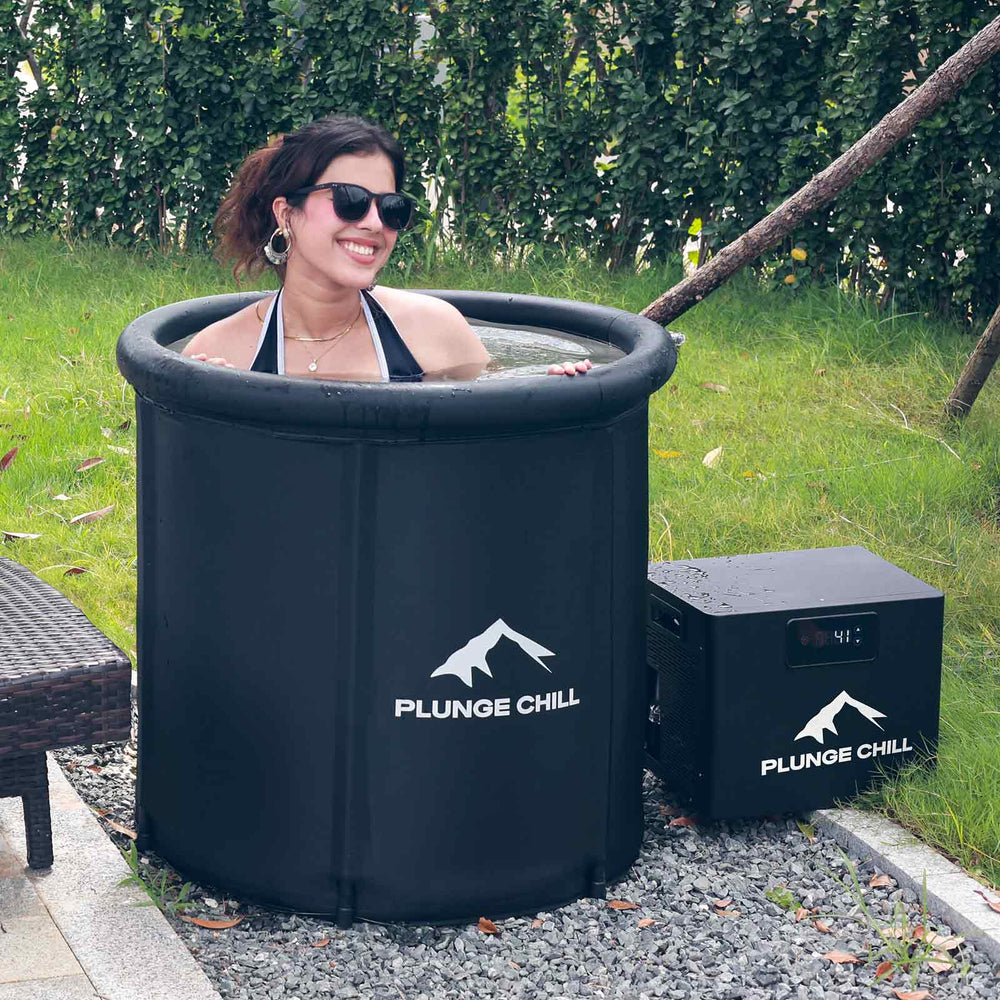
For sleep‑focused users, the best plunge is one that makes it easy to control temperature precisely in the 50–59°F range, run short sessions, and keep water clean with minimal fuss. Dedicated chillers with insulated tubs maintain steady temperatures and reduce the need for daily ice runs—iCoolsport describes compact chillers that can hold water near about 35.6°F for volumes up to roughly 132 gallons, while Kula Recovery markets a “Super Chiller” with precision temperature control and ozone treatment. Those features are more than sufficient for sleep protocols targeting the 50s. Sources: iCoolsport; Kula Recovery.
When testing and reviewing systems, I look for several attributes. Capacity should fit your body size comfortably without requiring you to curl tightly; this matters for a calm, repeatable pre‑sleep routine. Temperature control should be accurate, with a reliable readout and the ability to hold temperatures in the high‑50s without large swings. Filtration and sanitation are critical; integrated filtration with UV or ozone simplifies care and allows fewer water changes, though you still need a maintenance plan. Noise matters if your plunge lives near a bedroom; chiller decibel levels vary widely. Installation details such as drains, quick‑connect hoses, GFCI outlets, and covers affect daily usability and safety. Finally, consider where it will live. Indoor setups need spill containment and ventilation, while outdoor tubs need insulation and weatherproofing.
You do not need an extreme machine for sleep. A basic insulated tub with a stable chiller that easily holds the mid‑50s is ideal. If you prefer entry‑level options, a sturdy barrel or tub with a thermometer and bags of ice can work, provided you can repeatedly hit and verify the temperature you want and keep water hygienic.
Care and Maintenance That Keep Sleep Gains Coming
Good water care is non‑negotiable. Rinse or shower before plunging and use a regular cleaning cadence based on your system’s filtration and sanitization. Ozone, UV, and simple filtration reduce biofilm and extend water life, but you still need to drain and scrub on a schedule. Always verify temperature with a separate thermometer; chiller readouts can drift. Cover the tub between sessions to keep debris out and maintain temperature. Plan rewarming deliberately after each plunge. For sleep, gentle rewarming with clothing rather than a very hot shower supports the desired downward temperature drift into bedtime. If you use sauna, limit heat to a comfortable window and rehydrate.
Overlooked Nuances That Change Results
Three subtleties stand out when coaching people through sleep‑oriented cold exposure. The first is immersion depth. The strongest slow‑wave sleep benefits in controlled data involved whole‑body cooling including the head and neck, yet this is rarely practical or safe at home; neck‑level immersion and brief facial cooling may be a compromise that retains part of the autonomic benefit via the diving reflex. Source: National Institutes of Health (PMC article).
The second is sex differences. Harvard Health, summarizing the PLoS One meta‑analysis, noted improved sleep in men but not women in the pooled data. Several factors could explain the discrepancy, including differences in study protocols, smaller numbers of women enrolled, and hormonal stage effects on thermoregulation and sleep architecture. This is not a reason to avoid trying a brief, safe protocol; it is a reminder to personalize timing and monitor results rather than assume a uniform effect. Source: Harvard Health.
The third is the timeline of stress reduction. The PLoS One analysis found stress reductions emerging about 12 hours after immersion. That implies two workable strategies: end evening plunges early enough for the alertness phase to pass before bed, or use morning plunges and let the delayed stress‑reduction window overlap the evening. Either approach can be compatible with better sleep, provided the rest of your sleep hygiene—consistent schedule, reduced evening light, limited caffeine and alcohol—is in place. Source: PLoS One.

Takeaway
For many people, a brief, moderately cold plunge placed one to two hours before bedtime can improve sleep onset and stabilize early‑night sleep, especially after an evening endurance session. The most reliable sleep‑focused routine stays in the 50–59°F range for one to three minutes, avoids head submersion, and pairs with a cool, dark sleep environment. Respect individual variability, train around strength‑gain blocks to avoid blunted adaptations, and prioritize safety. When buying a plunge for sleep, choose stable temperature control, low maintenance, and quiet operation over extreme cold capability. Track what you do and how you sleep; your data will tell you if cold is helping.
FAQ
How long before bedtime should I finish an ice bath if my goal is better sleep?
A practical window is to finish one to two hours before lights‑out. That timing lets the initial alertness and rewarming phase subside so your core temperature can drift downward into the first sleep cycle. Sources: Ice Barrel; Chill Tubs; PLoS One.
What temperature and duration are best for beginners focused on sleep?
Start with water around 50–59°F for one to three minutes. Short is often enough when the goal is sleep rather than hard recovery. Increase exposure only if needed and tolerated. Source: Cleveland Clinic.
Will a cold plunge near my workout hurt my strength or muscle gains?
Cold‑water immersion soon after strength training can blunt hypertrophy and strength adaptations, even if it reduces soreness. If building muscle is a priority, delay cold by six to eight hours or place it on non‑lifting days. Source: Ohio State Wexner Medical Center; Huberman Lab Newsletter.
Do I need to submerge my head to improve deep sleep?
The strongest sleep‑architecture effects in a controlled study used full‑body immersion including head and neck, but head submersion raises safety risks. Most home users should avoid head submersion and may approximate some autonomic benefits with neck‑level immersion and brief facial cooling. Source: National Institutes of Health (PMC article).
Are ice baths safe if I have high blood pressure or diabetes?
Cold exposure acutely stresses the cardiovascular system and may be unsafe for people with heart disease, high blood pressure, diabetes, neuropathy, or circulation issues. Get medical clearance and consider gentler temperature exposures or non‑immersion options. Source: Cleveland Clinic; Harvard Health.
Can ice baths increase melatonin and make me sleepy right away?
Some consumer sources suggest a melatonin increase after cold exposure, but clinical evidence is mixed. Many people feel alert immediately after a plunge, which is why finishing one to two hours before bedtime works better than plunging right before bed. Sources: Chill Tubs; Fox Valley Pool & Spa; PLoS One.
References
- https://www.health.harvard.edu/staying-healthy/research-highlights-health-benefits-from-cold-water-immersions
- https://digitalcommons.liberty.edu/cgi/viewcontent.cgi?article=8439&context=doctoral
- https://www.academia.edu/articles/10.20935/MHealthWellB7937?source=academia-journals-articles-highlight
- https://pmc.ncbi.nlm.nih.gov/articles/PMC8044518/
- https://health.osu.edu/wellness/exercise-and-nutrition/do-ice-baths-help-workout-recovery
- https://health.clevelandclinic.org/what-to-know-about-cold-plunges
- https://journals.plos.org/plosone/article?id=10.1371/journal.pone.0317615
- https://mcpress.mayoclinic.org/healthy-aging/the-science-behind-ice-baths-for-recovery/
- https://www.hackensackmeridianhealth.org/en/healthu/2023/06/15/the-truth-about-ice-baths
- https://www.wimhofmethod.com/regular-ice-baths




Leave a comment