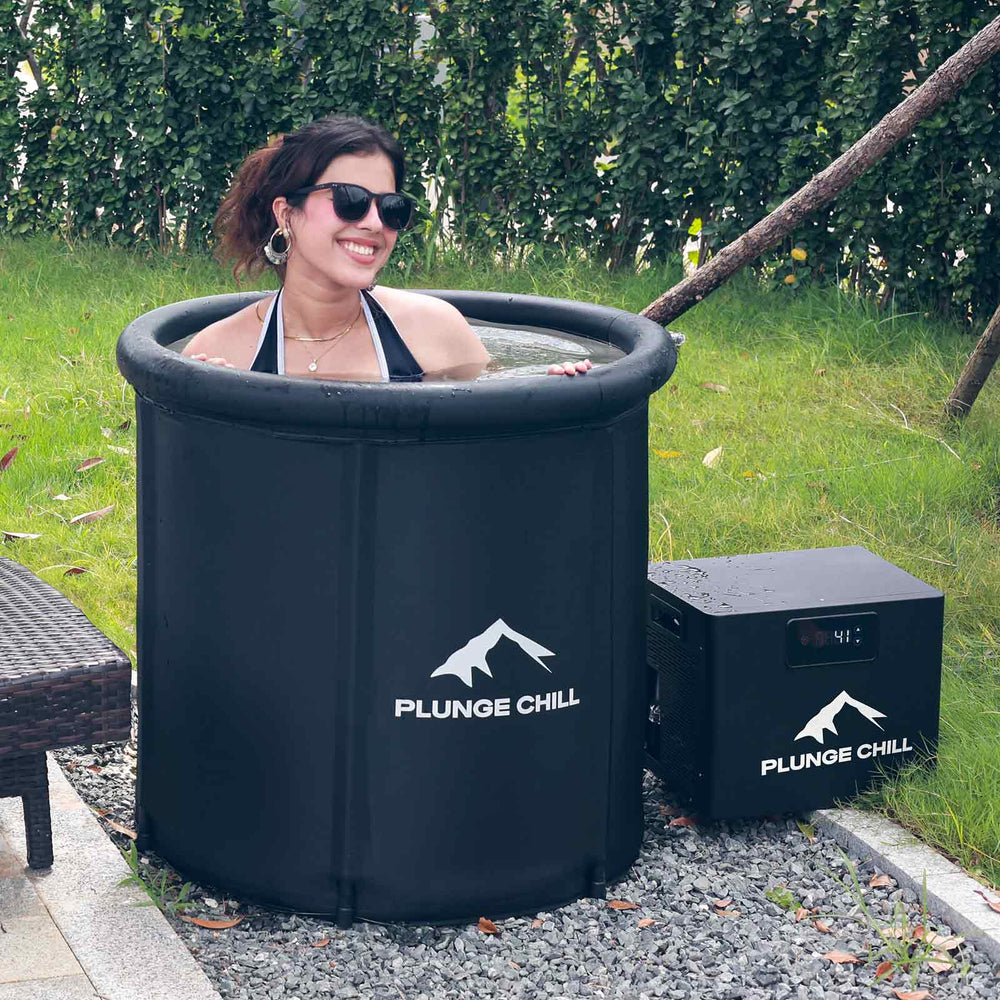
As a sports rehabilitation specialist and strength coach who also reviews cold plunge products, I evaluate plunges the same way I do training equipment: by how reliably they deliver the intended adaptation, how safe they are under real-world use, and what the true lifetime cost looks like. This analysis compares home and commercial cold plunges on purchase and installation, operating and maintenance costs, sanitation and water quality at low temperatures, safety and compliance, and return on investment for athletes, clinics, and fitness businesses.
What “Home” and “Commercial” Really Mean
For clarity, a home unit is a temperature-controlled tub designed for a single user or small household, typically insulated, filtered, and chilled to maintain water in the 39–60°F range. A commercial unit is purpose-built for multi-user facilities such as performance centers, physical therapy clinics, boutique studios, and health clubs. The commercial setup may be a single tub or a small basin with integrated filtration and chiller, or a custom-built plunge pool with external equipment. Both run colder than standard pools or spas, and both target short, time-limited immersion.
From a training perspective, most protocols center on purposeful exposures around 45–59°F for two to five minutes with progressive tolerance, consistent with guidance reported by Experience Life (Life Time) and Cleveland Clinic. Athletes and everyday users should remember that colder than about 45°F is not necessary for most benefits, and that timing matters after strength training if hypertrophy is a goal.

Physiology and Performance Context in One Minute
Cold drives an immediate vasoconstriction, shunting blood centrally; after exiting, vessels re-dilate, which may help clear metabolites and reduce perceived soreness. There is credible evidence for reduced post-exercise soreness and faster next-day readiness in some contexts, but the broader health claims remain mixed. Harvard Health and Cleveland Clinic both caution that while cold exposure can feel invigorating and reduce inflammation, it carries cardiovascular stressors and should be approached deliberately, especially by anyone with heart rhythm disorders or poor circulation. For strength development, several sources suggest delaying plunges after heavy lifting because dampening post-lift inflammation can blunt hypertrophy signaling; a post-lift delay of roughly four to six hours is a practical compromise supported by coaching practice and highlighted by Kula Recovery.
Upfront Costs and Installation Variables
Cost ranges vary dramatically with materials, capacity, and the degree of automation. A fully featured cold plunge tank can cost up to $20,000 according to Mayo Clinic Health System. Seasonal Concepts describes DIY builds in the low hundreds to $1,000 range, pre-fabricated units in the 10,000 range and up, and custom builds starting around $10,000 and scaling with design and finish. Commercial-grade options add costs for robust filtration, turnover, and durability, and custom stainless or copper designs from manufacturers such as Diamond Spas sit at premium price points.
Site preparation and utilities drive cost variance. A home unit may need a dedicated electrical circuit, a level surface, a drain path, and enough airflow for the chiller. Commercial installations add code compliance, appropriate drainage, accessible service space, reliable power, and, often, staff training on chemical handling and sensor calibration.
Category |
Home Plunge |
Commercial Plunge |
Purchase price |
DIY a few hundred–$1,000; many pre-fab 10,000+; premium units and fully featured tanks up to ~$20,000 (Seasonal Concepts; Mayo Clinic Health System) |
Similar entry for single commercial tubs; custom basins and integrated plant rooms escalate above premium home; stainless and copper finishes command premiums (Diamond Spas) |
Footprint and siting |
Small footprint; fits garage, basement, patio; requires level surface and drain path |
Larger or multiple basins; equipment room or enclosure; robust ventilation and service clearances |
Electrical and plumbing |
Dedicated circuit common; hose fill and gravity or pump-assisted drain |
Dedicated circuits standard; code-compliant drainage and accessible water supply and backflow prevention |
Permitting and code |
Typically none beyond household electrical safety |
Health department oversight in many jurisdictions; signage, turnover, sanitizer documentation required |
Aesthetics/materials |
Molded composites, liner, wood-clad, or stainless; consumer finishes |
Heavy-duty liners, tile, stainless or copper; anti-slip edges, anchors, and industrial fittings |
Operating Costs and Maintenance
Energy use depends on water volume, insulation, ambient conditions, and cover quality. In practice, well-insulated tubs with rigid locking covers conserve significant energy, especially outdoors. Plunge Pools and Sun Home Saunas emphasize winter packages, insulated covers, equipment sheltering, and automation to reduce cold-weather losses and protect equipment during power outages. In clinics and gyms, equipment runs longer hours and works harder under higher bather loads and frequent lid openings, so energy and wear both increase.
Water Care at Cold Temperatures
Water that is very cold changes the rules of sanitation. Chemical reactions slow down and some secondary disinfection technologies lose efficacy. Clear Comfort summarizes tradeoffs across methods that are relevant to both home and commercial buyers.
Sanitation Method |
Works at Cold Temps |
Strengths |
Limitations and Caveats |
Notes (Source) |
Hydroxyl-based AOP |
Effective even in freezing water |
Lowest chlorine need, gentle feel, protection against chlorine-resistant pathogens, simple care |
Higher upfront cost; still requires a residual sanitizer |
Clear Comfort |
Ozone |
Strong oxidant |
Softer feel, lower odor |
Loses effectiveness outside roughly 40–77°F water; requires degassing; can corrode gear; needs residual sanitizer |
Clear Comfort |
UV |
Non-corrosive secondary disinfection |
Reduces chlorine demand |
Ineffective below ~40°F; does not oxidize, so water may stay cloudy; higher energy and upkeep |
Clear Comfort |
Ozone + UV AOP |
Combined advantages |
Lower chlorine, often affordable vs other AOPs |
Not effective below ~40°F; maintenance time and degassing; adds wear |
Clear Comfort |
Salt-chlorine |
Convenience |
Gentler feel, algae control |
Not effective below ~50°F; corrosion/scaling risks; no protection from certain by-products or chlorine-resistant illnesses |
Clear Comfort |
Traditional chlorine |
Residual protection |
Low cost, familiar |
Odor/irritation potential; material wear; no protection from chlorine-resistant pathogens; price volatility |
Clear Comfort |
In colder water, sanitizer kills more slowly but may persist longer. That paradox is why a measured, light-touch approach helps home users, while commercial operators pair residuals with robust circulation and turnover. Aquatic Facility Training & Consultants recommends regular testing of pH, alkalinity, calcium hardness, free chlorine, and TDS, and highlights that colder water stabilizes pH yet slows chemical reactions. Icebound Essentials notes that for roughly 100-gallon home plunges, bromine at 3–5 ppm can perform well in cold water, chlorine at 1–3 ppm is common, and hydrogen peroxide at approximately 30–50 ppm can be used effectively when paired with ozone. Regardless of method, consistent residuals matter, especially below 50°F where sanitizer action is slower.
Chemistry Targets, Filtration, and Turnover
The heart of clean, clear, and safe water is balanced chemistry, adequate filtration, and sufficient turnover. Several sources converge on practical ranges and timeframes.
Parameter |
Typical Targets |
Notes and Source |
pH |
7.2–7.8 |
Colder water stabilizes pH; adjust gradually (Aquatic Facility Training & Consultants) |
Total alkalinity |
80–120 ppm |
Buffers pH; slower reactions at low temps warrant close monitoring (Aquatic Facility Training & Consultants) |
Calcium hardness |
200–400 ppm commonly cited; 100–250 ppm also cited for small vessels |
Different targets reflect materials and LSI aims; small acrylic/liner tubs may run lower hardness than tiled or stainless installs. Likely cause of discrepancy: vessel materials and manufacturer guidance (Aquatic Facility Training & Consultants; Icebound Essentials). |
Free chlorine |
1.0–3.0 ppm |
Maintain residual and shock periodically to break down chloramines (Aquatic Facility Training & Consultants) |
Bromine (if used) |
3.0–5.0 ppm |
Often preferred in cold water in small vessels (Icebound Essentials) |
Hydrogen peroxide (with ozone) |
~30–50 ppm |
Dose carefully; verify with test strips; ensure ventilation if any ozone odor is detected (Icebound Essentials) |
Home about 60 minutes; commercial about 30 minutes |
Adjust for bather load, pool size, and water temperature; consult local code for commercial (Aquatic Facility Training & Consultants) |
Filter care intervals vary by bather load and media. Icebound Essentials outlines removing, rinsing, and soaking filters every two to three weeks in home use. Pool Day suggests monthly cleaning for many consumer setups. For commercial facilities, the same frequency often compresses to weekly or faster, with bi-weekly backwashing and media replacement per manufacturer guidance, as described by Aquatic Facility Training & Consultants. Across settings, thorough surface scrubbing at least every other week keeps biofilm from gaining a foothold.
Workload: What You Actually Do Each Week
Realistically, home owners test weekly, top up sanitizer and balancing chemicals as needed, keep the cover on when not in use, and clean or swap filters on a two- to four-week cadence, with full drains and refills every two to four weeks depending on usage and water clarity, per Pool Day and Icebound Essentials. Commercial operators document daily chemistry, maintain circulation to meet turnover targets, deep-clean surfaces on a set cadence to disrupt biofilms, and schedule lamp or cell service on UV and ozone systems as manufacturers recommend. Sensor calibration for pH and ORP is a recurring task in facilities, a point stressed by Aquatic Facility Training & Consultants.
Safety, Compliance, and Risk Management
Cold shock elevates heart rate and blood pressure, and can precipitate arrhythmias in at-risk individuals. Harvard Health and Cleveland Clinic both advise caution for anyone with cardiovascular disease, arrhythmias, Raynaud’s, or poor circulation, and recommend medical consultation before starting. For commercial operations, safety extends to signage, time guidance, emergency egress, slip-resistant access, and robust supervision. Legionella control rests on consistent residual sanitizer, biofilm disruption, and adequate turnover; those priorities are highlighted for cold plunge operators by Aquatic Facility Training & Consultants. For outdoor units, winter operating protections matter: freeze-protection sensors, insulated covers, and proactive ice management protect equipment and linings, according to Sun Home Saunas.
User Experience and Training Outcomes
A well-designed plunge balances three variables: target temperature, duration, and timing relative to training. Many users thrive at mid- to upper-40s for two to five minutes with full neck-level immersion, breathing control, and a gradual rewarm. Life Time’s Experience Life and Cleveland Clinic both emphasize that colder is not necessarily better and that adaptation comes from consistency, not extremity. For strength gains, a delayed plunge several hours after lifting or on rest days preserves anabolic signaling, which is consistent with Kula Recovery’s timing recommendations and my own field observations with athletes. Endurance and team sport recovery often benefits from immediate post-session cold exposure when the goal is rapid turnaround for the next day.
A practical tension exists in shared facilities. A single commercial plunge serves users with different tolerances and schedules. That reality pushes operators toward moderate temperatures that the many can tolerate, shorter occupancy windows, and stricter turnover. A home unit can be tuned precisely to one person’s protocol, which supports habit formation and program fidelity.
Overlooked but Impactful Insights
Colder water can undercut certain “low-chlorine” technologies. UV and ozone-based systems lose efficacy below roughly 40°F, and salt-chlorine systems drop off below about 50°F, according to Clear Comfort. Yet marketing often showcases setpoints of 39–40°F. That mismatch forces operators to rely more on residual sanitizers and turnover to maintain safety at very cold setpoints. The more conservative approach is to run mid-40s to mid-50s when using UV or ozone as a main secondary system, or to select technologies that retain efficacy in near-freezing water if the plan is to operate at the lower end.
Commercial turnover targets compress contact time. A 30-minute turnover target means pumps, plumbing, and return placement matter to avoid dead zones, especially in small basins with multiple users entering and exiting. Aquatic Facility Training & Consultants highlights circulation design as a quality driver; in practice I’ve found that baffle placement and return angles are decisive in cooling uniformity and chemical distribution.
“Light-touch” chemistry is usually better for small, very cold home units than “pool-style” treatment. Icebound Essentials emphasizes that cold slows bacterial growth and chemical reactions, so over-chlorinating a roughly 100-gallon home plunge is unnecessary and can be counterproductive for comfort and equipment. This is a reasonable correction to typical pool maintenance instincts and aligns with user adherence: gentler water increases daily compliance and reduces skin irritation.
Longevity, Warranty, and Downtime Risk
Commercial plunges live harder lives. Colder setpoints, lid openings all day, wet traffic, and heavy turnover degrade seals and gaskets faster; low temperatures can harden elastomers and increase condensation, which Aquatic Facility Training & Consultants notes can sweat on filters and systems. Materials and build quality determine whether those stresses lead to chronic downtime. Stainless and tile installations last for years in professional environments when maintained; Diamond Spas positions stainless and copper as durable finishes for that reason. Pro-grade hydrotherapy suppliers such as HydroWorx, whose units see daily use by professional teams, illustrate how robust circulation, replaceable components, and service access mitigate downtime costs.
For home owners, the main lifetime risks are freeze damage, neglected filter changes leading to pump strain, and chemical mismanagement shortening gasket and cover life. Plunge Pools and Sun Home Saunas both reinforce winterization details and insulated covers as key to longevity for year-round outdoor use.

ROI Model: Home vs Commercial
A home plunge returns value primarily through adherence, time saved, and the ability to execute a precise protocol that serves a training or recovery goal. The purchase price and modest recurring chemical costs are weighed against the daily convenience, better sleep for some, and faster recovery between high-load sessions. If your training hinges on high-frequency workouts, the practical ROI shows up in session quality and consistency rather than a spreadsheet.
For commercial buyers, ROI is straightforward to calculate. Revenue comes from memberships, day-pass add-ons, or bundled recovery services. A simple model multiplies expected daily cold-plunge usages by price per use and occupancy rate, then subtracts incremental utilities, maintenance time, and consumables. The asset also carries brand value: pairing a plunge with sauna or contrast therapy is now part of the wellness vernacular and can drive premium positioning. The risk side is regulatory compliance, downtime impact on member satisfaction, and staff training needs. A conservative breakeven plan should include a reserve for chiller and pump service and lamp or cell replacements if UV/ozone is used.
Buying Guidance by Use Case
For a single athlete or household, favor insulation, a rigid locking cover, and dependable temperature control in the mid-40s to mid-50s with enough flow to eliminate cold spots. Choose a sanitation approach you will actually maintain. If you prefer minimal chlorine odor, a bromine program or peroxide paired with ozone can be effective in cold water; test solutions regularly and document doses as Icebound Essentials recommends. If you train for strength, plan your protocols so plunges follow lifting by several hours or move them to non-lifting days.
For a clinic, studio, or club, start with code requirements. Aim for a 30-minute turnover at expected bather loads, specify industrial components with easy service access, and design circulation to avoid dead zones. Build a chemical and maintenance SOP that includes sensor calibration, filter change logs, and biofilm disruption routines, consistent with Aquatic Facility Training & Consultants’ guidance. Align sanitation with your setpoint: if you promise 40–45°F, choose a secondary disinfection technology that retains efficacy there or accept a higher chlorine/bromine residual in practice. Winter operations outdoors demand insulated covers, equipment sheltering, and power continuity planning per Plunge Pools and Sun Home Saunas.

Care and Operating Schedule You Can Live With
Daily or each use, keep the cover on when idle, skim debris, and verify the setpoint before entry. Weekly, test pH, alkalinity, sanitizer, and, where applicable, peroxide or bromine levels; adjust gradually because cold water slows chemical reactions. Every two to three weeks in home use, remove and soak the filter as Icebound Essentials describes, or at least monthly per Pool Day; commercial settings compress these intervals. Every two to four weeks, evaluate whether clarity, odor, and scum lines justify a full drain, wipe-down, and rebalance; commercial operators schedule surface scrubs to stay ahead of biofilm. Seasonally, inspect seals and gaskets, calibrate meters, and prepare for freezing conditions with insulated covers and, if necessary in harsh climates, winterization steps like draining and protecting plumbing, as detailed by Sun Home Saunas.
Reconciling Conflicting Sources
Calcium hardness targets differ: 200–400 ppm is common in facility guidance, while small consumer units sometimes cite 100–250 ppm. This likely stems from different vessel materials, finish types, and the Langelier Saturation Index at colder temperatures. Tiled or stainless basins in facilities often run higher hardness to prevent corrosive water, whereas acrylic or liner tubs can tolerate lower ranges if pH and alkalinity are stable.
Evidence for performance benefits is uneven. Harvard Health and Cleveland Clinic emphasize mixed research and cardiovascular caution, while HydroWorx and training-facing publications highlight recovery gains in specific use cases. Differences in protocols, timing relative to training, temperatures, and study populations likely drive the discrepancies. Applying the data with intent solves this tension: use cold for acute recovery windows and heat for relaxation, and treat cold exposure as a tool, not a cure-all.

Recommendations by Profile
If strength and hypertrophy are your main goals, use cold exposure away from lifting sessions, aim for two to five minutes at mid-40s to mid-50s, and prioritize sleep, protein, and progressive overload. If you’re managing endurance training or heat stress, cold immediately post-session supports rapid recovery and thermoregulation. For facilities, invest in circulation design, sanitizer reliability at your setpoint, and maintenance training; for homes, invest in insulation, a rigid cover, and a sanitation program you can maintain consistently.
Takeaway
A home plunge is a behavior-change tool that, when insulated, covered, and easy to keep clean, delivers outsized value through consistency and customization. A commercial plunge is a systems problem that demands circulation, sanitation that truly works at low temperatures, documented maintenance, and clear safety standards. Match your sanitation method to your temperature, your turnover to your bather load, and your protocol to your training goal. Do that well and both home and commercial investments pay off in the metric that matters most: reliable recovery you can repeat week after week.
FAQ
What temperature should I set for daily use at home?
Most users thrive between about 45 and 55°F for two to five minutes. That range is supported by practical protocols in sources such as Experience Life and Cleveland Clinic. Colder than roughly 45°F is rarely necessary for adaptation and increases risk and sanitation challenges.
Does a cold plunge right after lifting hurt muscle gains?
Cold can blunt hypertrophy signaling when taken immediately after heavy strength work. A compromise that protects strength is to delay the plunge four to six hours or save it for non-lifting days, as highlighted by Kula Recovery and consistent with coaching practice.
Is saltwater a good option for very cold plunges?
Salt-chlorine systems become less effective below about 50°F, which makes them a questionable choice for 40–45°F operation. Clear Comfort notes that in very cold water, plan on a residual sanitizer that remains effective at your setpoint or select a technology designed for near-freezing water.
How often should a home plunge be drained and refilled?
Many home setups run two to four weeks between full drains depending on usage, filtration, and chemistry, with filter cleaning every two to three weeks or monthly based on Icebound Essentials and Pool Day. If water turns cloudy or develops a persistent tub ring, drain sooner and rebalance from scratch.
What turnover rate should a facility target?
For commercial basins, a 30-minute turnover is a practical target; residential can extend to 60 minutes, per Aquatic Facility Training & Consultants. Adjust based on actual bather load and environmental conditions, and follow local code where it applies.
Are there health risks I should screen for before plunging?
Yes. Individuals with cardiovascular disease, arrhythmias, Raynaud’s, or poor circulation should consult a clinician before starting, as emphasized by Harvard Health and Cleveland Clinic. Cold shock raises heart rate and blood pressure and can trigger unsafe responses in at-risk users.
References
Cleveland Clinic; Harvard Health; Mayo Clinic Health System; Experience Life (Life Time); Aquatic Facility Training & Consultants; Clear Comfort; Icebound Essentials; Kula Recovery; HydroWorx; Sun Home Saunas; Plunge Pools; Seasonal Concepts; Pool Day; Diamond Spas; Goodall Pools & Spas; J.S. Brown Company; Integrity Pools.
- https://www.health.harvard.edu/heart-health/cold-plunges-healthy-or-harmful-for-your-heart
- https://sncs-prod-external.mayo.edu/hometown-health/speaking-of-health/cold-plunge-after-workouts
- https://healthcare.utah.edu/healthfeed/2023/03/cold-plunging-and-impact-your-health
- https://health.clevelandclinic.org/what-to-know-about-cold-plunges
- https://integritypools.org/cold-plunge-pools
- https://mcpress.mayoclinic.org/healthy-aging/the-science-behind-ice-baths-for-recovery/
- https://www.mayoclinichealthsystem.org/hometown-health/speaking-of-health/cold-plunge-after-workouts
- https://www.garagegymreviews.com/cold-plunge-maintenance
- https://www.abathhouse.com/journal/cold-therapy-and-how-to-cold-plunge
- https://clearcomfort.com/health-cold-plunge-benefits/