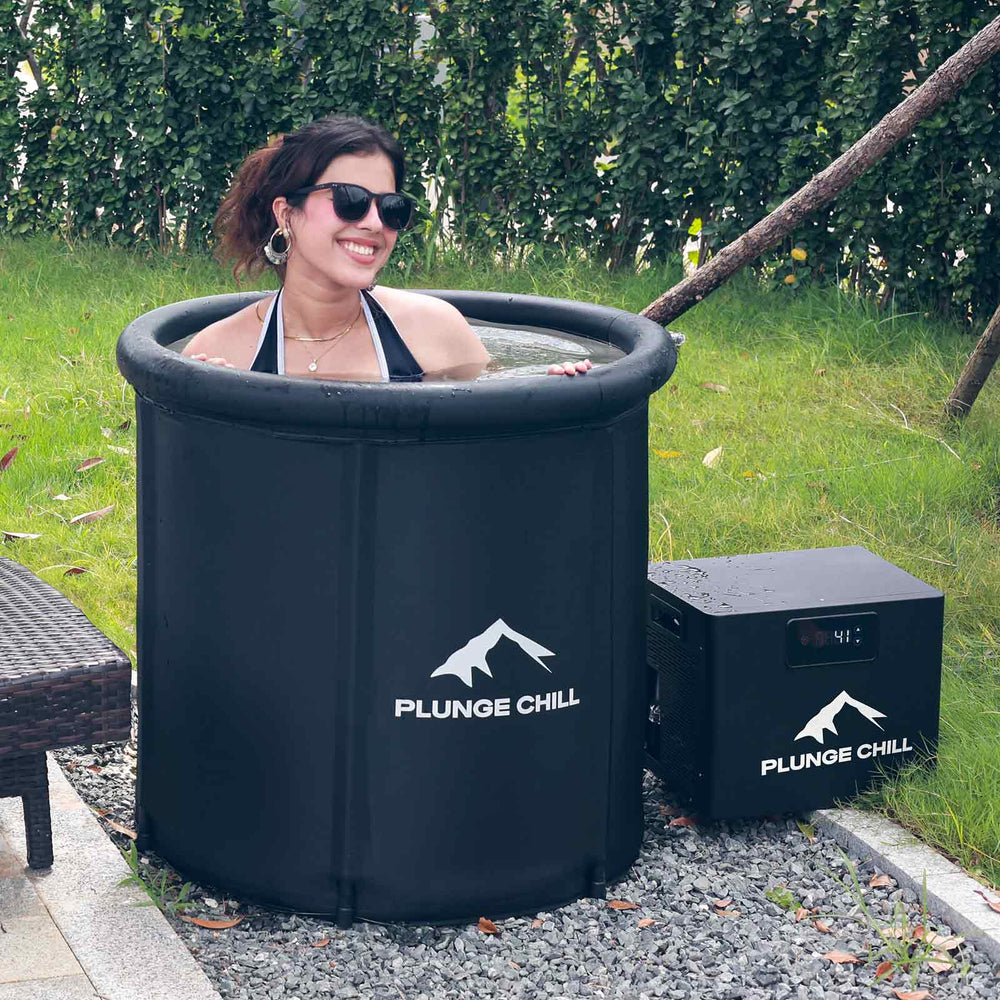
As a sports rehabilitation specialist and strength coach who also tests cold plunge products in daily practice, the most common question I hear is not “Should I cold plunge?” but “How long should I stay in?” The honest answer is that time is a function of temperature, goal, training context, and your personal tolerance. The right dose can accelerate recovery, improve mood and focus, and build resilience. The wrong dose can undercut strength gains, agitate the nervous system, or simply be unnecessary risk. This article translates the research into practical time guidance you can use immediately, and it shows you how to adjust the clock based on temperature, goals, and your training calendar.
What “cold plunge time” actually means
Cold plunging refers to brief immersion in cold water that is typically between about 39°F and 59°F. Most consumer setups live around 45–55°F because that range provides a potent stimulus without forcing impractically short exposures. Depth matters as well. Neck‑level immersion drives the strongest autonomic and thermal response; chest‑level immersion is still effective and often more manageable. Showers are colder at the skin for a moment but are less uniform; they work as an accessible entry point and a maintenance tool when a tub is not available.
Two rules frame all timing decisions. The first is colder water requires less time for a similar physiological effect, a principle frequently emphasized by the Huberman Lab newsletter. The second is weekly dose matters as much as any single session. A simple, evidence‑informed anchor is about eleven total minutes per week spread across two to four sessions in water that feels uncomfortably cold yet safe to remain in for a few minutes. Shorter exposures at colder temperatures and longer exposures at warmer temperatures both count toward the weekly total.
Note that therapeutic protocols for exertional heat stroke are different. In that emergency, literature in PubMed Central demonstrates that rapid whole‑body immersion at colder temperatures is lifesaving, with highly specific procedures. That is not the dose we use for recovery or wellness.
Evidence snapshot on duration and dose
Several lines of research inform time choices. A Cochrane Review led by Bleakley found that cold‑water immersion reduces perceived muscle soreness at twenty‑four to ninety‑six hours compared with passive recovery; many of the included protocols used total immersion durations around eleven to fifteen minutes at up to 59°F. A practical overview by Science for Sport aligns with those durations for post‑exercise recovery and notes the trade‑offs of very cold water: analgesia and edema control rise while hydrostatic benefits may be altered by extreme vasoconstriction.
Consumer and clinical guidance from Cleveland Clinic and WebMD, focused on safety and home use rather than lab endpoints, encourages starting around thirty to sixty seconds and progressing to two to five minutes, with caps of about five to ten minutes per session depending on temperature and experience. The Huberman Lab newsletter suggests eleven minutes total per week, distributed in short exposures across multiple days. In team‑sport performance settings, season‑long periodization resources from Sportsmith and similar groups emphasize that routine cold immersion immediately after strength sessions can blunt hypertrophy signaling, while use between same‑day competitions or after hot‑weather exposure remains advantageous.
There is also dose‑timing conflict in the literature. Some strength‑specific trials reported reduced long‑term strength and muscle growth when cold immersion is used immediately after lifting, a finding echoed by Ohio State guidance and Mayo Clinic Health System commentary. Conversely, systematic reviews on delayed‑onset muscle soreness and perceived fatigue repeatedly show short‑term benefits across twenty‑four to seventy‑two hours. The divergences likely arise from different endpoints (molecular signaling versus perception and near‑term function), different temperatures and immersion depths, participant training status, and the timing relative to training.

Time recommendations by goal
If your aim is to improve mood and mental clarity, you will often get the effect with very short exposures. Two to four minutes at about 45–55°F reliably produces the catecholamine surge that lifts alertness, while remaining easy to recover from afterward. People who are new to cold exposure should begin at the shorter end and add thirty seconds per session across several sessions only if breathing stays under control and post‑session shivering is manageable. The Huberman Lab newsletter highlights that brief exposures in very cold water raise epinephrine and norepinephrine rapidly; if the water is closer to the upper end of the cold range, you can stay a bit longer to achieve a similar effect.
For post‑workout recovery, the goal is to reduce soreness and swelling without sabotaging adaptation. After endurance or mixed sessions, two to five minutes at 50–59°F soon after training supports next‑day readiness for many athletes. After heavy resistance training, delay cold exposure by about four to eight hours or reserve it for off days. This timing preserves the beneficial inflammatory signaling needed for hypertrophy while still allowing you to accrue weekly cold minutes. Cochrane data and clinician guidance from Cleveland Clinic both support two to five minutes as an efficient session length for most people, while the Science for Sport synthesis notes that research protocols frequently used eleven to fifteen minutes at around 52°F for recovery markers; in practice, multiple shorter exposures across the week can achieve similar subjective outcomes without keeping you cold for a quarter hour in one go.
If you are exercising in hot conditions and want a pre‑cooling effect before competition, single exposures between one and ten minutes at 50–59°F reduce thermal strain without leaving you numb, and research summaries suggest that pre‑cooling can aid performance in the heat. An American Physiological Society conference abstract even suggested that hot water immersion may better preserve muscle power in some back‑to‑back scenarios while cold is still preferable for swelling and fatigue.
For metabolic stimulation and resilience training, keep sessions in the two to five minute range at 45–55°F and accumulate about eleven minutes per week. Ending with cold and allowing the body to reheat naturally for a period—rather than jumping straight into a hot shower—can amplify thermogenesis, a principle popularized by the Huberman Lab newsletter and cold‑adaptation research. Cold exposure is not a fat‑loss plan by itself, but its thermogenic effect can complement nutrition, sleep, and training.

Temperature, time, and experience level
The relationship between water temperature, session time, and experience level is the most practical way to prescribe cold plunge time. The table below consolidates the ranges applied most often in clinics, gyms, and research reports.
Water Temperature (°F) |
Beginner Suggested Time |
Intermediate Suggested Time |
Advanced Upper Limit |
About 55–59 |
1–3 minutes |
3–7 minutes |
10–12 minutes maximum |
About 50–55 |
1–2 minutes |
3–5 minutes |
8–10 minutes maximum |
About 45–50 |
30–90 seconds |
2–4 minutes |
6–8 minutes maximum |
Below about 45 |
Not necessary for most users |
1–3 minutes with caution |
5–6 minutes maximum, only if highly acclimatized |
These ranges reconcile consumer safety guidance from Cleveland Clinic and WebMD, practical coaching guidance, and research practice from Science for Sport and the Cochrane Review. They also respect the “colder needs less time” rule and the weekly dose anchor of about eleven minutes. If you prefer to mimic study designs more closely for soreness endpoints, a single immersion of eleven to fifteen minutes at about 52°F is defensible; however, many athletes and patients find two to three sessions of three to five minutes more tolerable and easier to periodize across a week.

Weekly dose and frequency
Most healthy people do well with two to four plunges per week. A simple default is two to three minutes per session for four sessions to reach approximately eleven minutes weekly, as popularized by the Huberman Lab newsletter. Another common pattern is three to five minutes per session, two to three times per week, which aligns with consumer and clinical advice from Cleveland Clinic and Mayo Clinic Health System. If you are deep into a hypertrophy block, reduce immediate post‑lift cold immersion frequency to avoid blunting long‑term strength and muscle growth. In congested competition windows, you can use brief plunges daily for acute relief and sleep support, then return to the regular pattern once scheduling eases.
Timing relative to training and competition
Cold exposure interacts with training stimuli. Immediate cold after lifting blunts some of the molecular signals that drive growth. Cold between events on the same day is often helpful when you need to reduce swelling and restore neural freshness. In hot environments, pre‑cooling can aid performance; after competition, short cold exposures support recovery even when used more frequently than usual. The table below summarizes how timing and time on the clock change with the goal.
Situation |
When to Plunge |
Time and Temperature |
Notes |
Heavy resistance session focused on hypertrophy |
Delay 4–8 hours or use on rest days |
2–5 minutes at about 50–59°F |
Protects adaptation while preserving weekly dose |
Endurance or mixed training |
Soon after training if needed |
2–5 minutes at about 50–59°F |
Supports next‑day readiness |
Same‑day back‑to‑back competition |
Between events as needed |
2–4 minutes at about 50–59°F |
Prioritize swelling and neural freshness |
Pre‑cooling in heat |
Within 10–30 minutes before start |
1–10 minutes at about 50–59°F |
Helps lower thermal strain |
Morning resilience or mood session |
Early day outside training |
2–4 minutes at about 45–55°F |
Earlier in the day reduces sleep disruption risk |
One overlooked nuance is how much movement in the tub alters perceived cold and dosage. Staying completely still allows a thin boundary layer to warm slightly around the skin; gentle paddling breaks that layer and increases conductive heat loss at the same temperature. This is an easy way to increase stimulus without lowering the setpoint. This technique advice comes more from practitioner experience and education sources than from randomized trials.

Safety, stop criteria, and rewarming
Cold shock is real and time‑critical. In the first minutes of sudden immersion, breathing spikes and a reflexive gasp can occur; panic and impaired decision‑making are common, and heart rate and blood pressure jump. The National Weather Service’s cold‑water safety guidance underscores that early seconds and minutes carry outsized risk. Keep your head above water, avoid natural waters with current, and never go alone. In a home setup, a controlled entry, a visible thermometer, and a timer reduce risk. Stop immediately if you experience chest discomfort, uncontrolled breathing that does not settle within about a minute, lightheadedness, or color changes in fingers and toes, as emphasized in consumer and clinician guidance from Cleveland Clinic, WebMD, and cold‑exposure education sources.
Rewarm gradually. A warm towel and layers, light movement, and a warm beverage are enough for most plunges. If your goal includes metabolic adaptation, consider ending with cold and allowing the body to reheat itself before using hot water, a practice often referred to as the Søeberg principle. This does not mean remaining wet and cold indefinitely; it simply means avoiding an immediate hot shower after every session.
People with cardiovascular disease, uncontrolled hypertension, peripheral neuropathy, Raynaud’s, or conditions that impair thermoregulation should consult a clinician before cold exposure. Pregnant individuals and those taking medications that alter blood pressure or heart rate should also seek medical advice first. This caution appears consistently across Cleveland Clinic and Mayo Clinic Health System guidance.

Two brief conflicts in the literature, and how to resolve them
You will see a five‑minute cap in many consumer articles and a fifteen‑minute protocol in many research summaries. The five‑minute guidance (Cleveland Clinic and similar sources) prioritizes home safety and an acceptable risk‑to‑benefit ratio for the general population. The eleven‑to‑fifteen‑minute protocols reflect research that sought statistical power to detect changes in soreness and fatigue, often in supervised settings with controlled temperatures and athletic participants. When translating research to practice, consider spreading exposure across a week rather than extending a single session; this respects safety and arrives at similar weekly doses.
A second conflict appears in pre‑ versus post‑workout usage. Mayo Clinic Health System and Ohio State materials emphasize that cold immediately after resistance training can blunt hypertrophy signaling, while recovery reviews highlight reduced soreness and perceived fatigue soon after training. This is not a contradiction so much as a reminder that soreness is not the same as adaptation. If your priority is long‑term strength and size, delay cold a few hours after lifting. If your priority is feeling fresher tomorrow for an endurance session or for competition, use short, moderate cold immediately after and accept the minimal adaptation trade‑off.

Small but important nuances most guides miss
Circadian timing subtly shifts how cold “feels” and how it influences your day. Core body temperature and arousal are lowest in the morning; many people experience stronger invigoration from a morning plunge and better tolerance of daytime stress afterward. Late‑evening plunges can raise core temperature during rewarming and may disturb sleep for some people even if a quick cold shower does not. These patterns align with circadian physiology and coaching practice and are echoed by coaching‑focused resources such as Arsenal Health and science‑education sources discussing neurotransmitter rhythms.
Body composition and acclimatization affect both tolerance and time. Higher subcutaneous fat slightly blunts perceived cold and can tempt users to stay longer than necessary. If you are more insulated, avoid extending time simply to match a partner; match the breathing and recovery metrics, not the stopwatch. This is a practical inference from the physics of heat transfer and clinic observation rather than a randomized trial.
Care and buying tips that make timing easier to control
Choose a setup that reaches and maintains a reliable 45–55°F without large swings. A built‑in chiller with digital control, a durable insulated tub, and a clear, accurate thermometer make time‑based dosing consistent. A stable step or bench and grab points matter more than they appear when you are shivering. For home care, filtration plus periodic sanitation keeps water clarity and reduces irritation; a cover preserves temperature and cleanliness between uses. A simple, visible countdown timer is not a luxury. It is safer than trying to count breaths with numb fingers.
If you are using natural water, scout the entry, verify temperature, avoid current, and appoint a buddy whose job is to watch your first minute to ensure breathing settles. Time windows shrink rapidly when cold shock strikes in open water, a reality stressed by public safety guidance from the National Weather Service.
Sample protocols you can adopt today
For mood and focus on a training‑neutral morning, set the tub to about 50–55°F, breathe calmly as you enter, and stay for two to three minutes. Exit, towel quickly, layer up, and allow your body to reheat naturally for several minutes before a warm shower. Repeat three to four times per week to total about eleven minutes across the week.
For endurance or mixed training recovery, after finishing your session, immerse at about 50–59°F for two to four minutes. Pair this with light mobility, carbohydrates and protein, hydration, and sleep. If you are entering a block that emphasizes strength or size, shift the cold two to three times per week to later in the day or to off days while keeping your weekly minutes.
For hot‑weather pre‑cooling, immerse at about 50–59°F for one to five minutes within a half hour of your start. If a tub is not available, a cold shower finishing burst can substitute. Keep the immersion shorter than your recovery protocol so you are not numb when you begin.

Takeaway
Cold plunging is not a contest. It is a dose. If you keep your water near 45–55°F and your sessions near two to five minutes, and you accumulate roughly eleven minutes per week outside the four‑hour window after heavy lifting, you will capture most of the benefits with minimal downsides. Extend or shorten only when your goal and temperature justify it. Control your entry, watch your breathing in the first minute, and rewarm gradually. The stopwatch serves you; you do not serve the stopwatch.
Frequently asked questions
How long should beginners stay in a cold plunge? Start with about thirty to sixty seconds at 50–59°F and build by thirty seconds per session as your breathing becomes controllable and you shiver mildly but recover within minutes. Most people settle into two to three minutes as an effective default within a few sessions, consistent with Cleveland Clinic and Mayo Clinic Health System guidance.
Is there a maximum safe time per session? At typical home temperatures of about 45–55°F, a practical ceiling for healthy, acclimatized users is six to ten minutes depending on the exact temperature and depth. Some research protocols ran eleven to fifteen minutes around 52°F for recovery outcomes; however, shorter sessions repeated across the week arrive at a similar total dose with less thermal strain. When water is below about 45°F, shorter exposures are advisable and not necessary to gain benefits for most users.
How often should I cold plunge each week? Two to four sessions weekly work well for most people aiming for general recovery, mood, and resilience. A simple anchor is about eleven total minutes per week in uncomfortably cold yet safe water, spread over several sessions as emphasized by the Huberman Lab newsletter. In congested competition windows or hot environments, you can increase frequency temporarily and then return to your baseline plan.
Should I plunge before or after workouts? If your priority is long‑term strength and size, avoid cold immersion for about four to eight hours after heavy lifting. If your priority is acute recovery for endurance or mixed training, short cold immersion soon after the session helps next‑day readiness. In the heat, short pre‑cooling can help; between same‑day events, cold reduces swelling and restores neural freshness. This timing guidance synthesizes clinical commentary from Mayo Clinic Health System and strength‑sport literature summarized by Ohio State.
What are the stop criteria during a session? Exit immediately if breathing does not settle within roughly a minute, if you feel chest discomfort, lightheadedness, or if your fingers or toes begin to discolor. Keep your head above water, avoid current, and do not plunge alone. These are consistent with consumer guidance from Cleveland Clinic and WebMD and public safety messaging from the National Weather Service.
Does ending cold with a hot shower undo any benefits? If your goal includes metabolic adaptation, consider ending with cold and allowing your body to reheat naturally for several minutes before adding external heat. This “end with cold” practice is supported by cold‑adaptation education and the Huberman Lab newsletter. If your priority is comfort or you are chilled, gradual rewarming remains the safer choice.
Sources, in brief
Cochrane Review (Bleakley et al.) summarizes soreness reductions over twenty‑four to ninety‑six hours with cold‑water immersion. Science for Sport provides practical parameters, including eleven to fifteen minutes for recovery in research. Mayo Clinic Health System and Ohio State discuss post‑lift adaptation trade‑offs and practical temperature and time advice. Cleveland Clinic and WebMD give conservative consumer guidance on session length, temperature, and stop criteria. The Huberman Lab newsletter frames a weekly dose of about eleven minutes spread across two to four sessions and notes the colder‑needs‑less‑time rule. Public safety guidance from the National Weather Service explains cold shock and the critical first minutes of immersion. Coaching‑oriented sources such as Arsenal Health add useful nuance on time of day and circadian effects.
References
- https://mndnr.gov/coldwater
- https://koreystringer.institute.uconn.edu/heat-stroke/
- https://www.weather.gov/safety/coldwater
- https://sncs-prod-external.mayo.edu/hometown-health/speaking-of-health/cold-plunge-after-workouts
- https://pmc.ncbi.nlm.nih.gov/articles/PMC2938508/
- https://health.osu.edu/wellness/exercise-and-nutrition/do-ice-baths-help-workout-recovery
- https://dnr.alaska.gov/parks/boating/kdf/ambassador/kdfambassadorguidebook.pdf
- https://doh.wa.gov/sites/default/files/2024-04/333-347.pdf
- https://health.clevelandclinic.org/what-to-know-about-cold-plunges
- https://mcpress.mayoclinic.org/healthy-aging/the-science-behind-ice-baths-for-recovery/