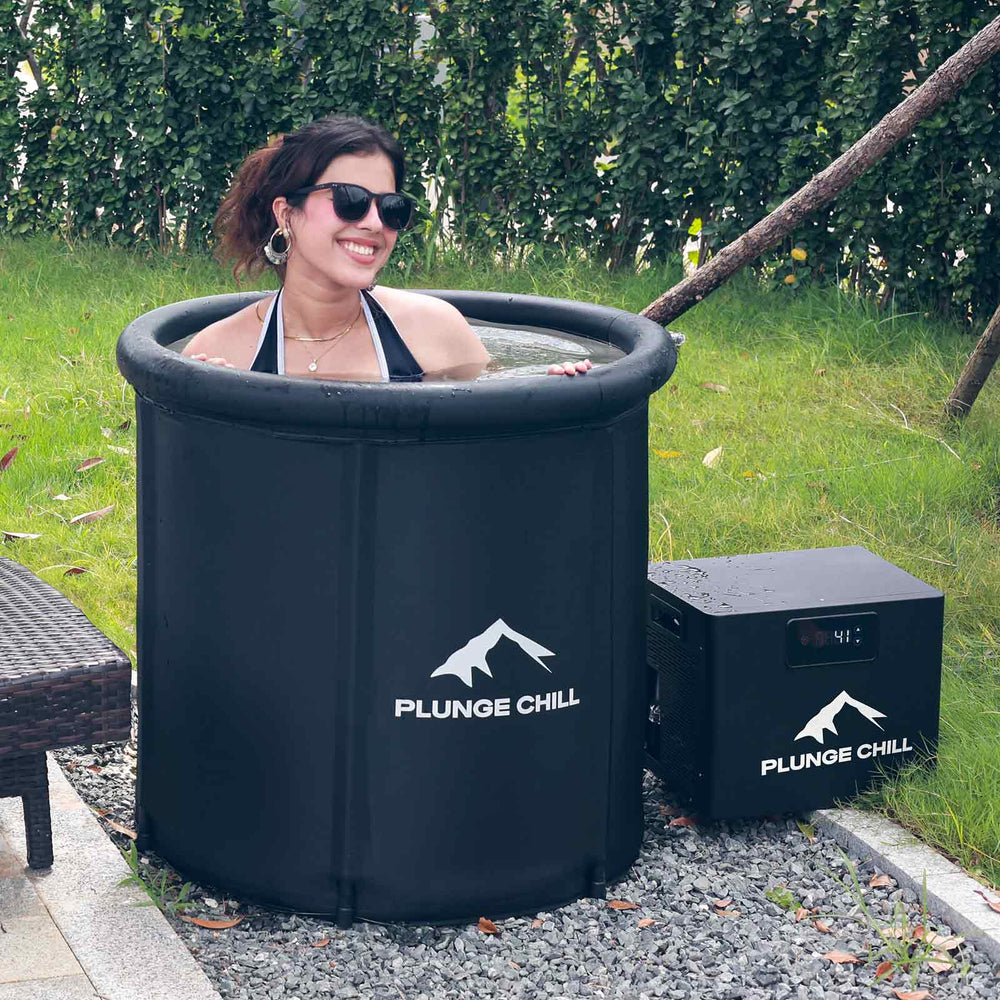
As a sports rehabilitation specialist and strength coach who evaluates recovery gear for teams and high-performance individuals, I look at cold plunge equipment through two lenses: what the evidence says about cold-water immersion for performance and health, and how the hardware performs day in and day out in real-world training environments. This guide synthesizes current research with hands-on product assessment to help athletes choose the right cold plunge—and use it safely and effectively.
Why Cold Plunge Belongs in an Athlete’s Toolkit
Cold-water immersion is deliberately brief exposure to cold water to help control soreness, manage inflammation, and prepare for the next session. Research from Cleveland Clinic characterizes typical beginner ranges at 50–59°F with short exposures and cautions that advanced protocols below 50°F require care and progressive acclimation. Ohio State notes that immersions around 50–59°F for 10–20 minutes are commonly used for endurance recovery, while also warning that immediate post-lift plunges may blunt strength and hypertrophy gains. Mayo Clinic Press takes a conservative view: small, heterogeneous studies limit definitive conclusions, and cold exposure is best treated as a helpful garnish rather than the entrée—training, nutrition, sleep, and stress control do most of the heavy lifting.
The balance of evidence suggests cold plunges can reduce perceived soreness and help athletes feel more ready for the next session, particularly in tournament settings or during blocks with high training density. Harvard Health highlights a review of 11 studies indicating stress reductions and possible sleep improvements in men but no consistent immune or mood benefits; protocols varied widely, which explains why outcomes differ across programs. When to plunge, at what temperature, and for how long are all goal-dependent decisions rather than one-size-fits-all prescriptions.
What the Evidence Says—and Doesn’t
Cold immersion reduces tissue temperature and causes vasoconstriction, which can limit swelling. On exit, vasodilation restores flow, which is one reason athletes report a “flushing” effect. The physiology of immersion itself, independent of temperature, also matters: older work summarized in PubMed Central describes hydrostatic pressure shifting fluids centrally and increasing cardiac output substantially during immersion. That mechanistic backdrop helps explain why immersion may mimic some benefits of active recovery without energy cost.
Not all data point in the same direction. Cleveland Clinic describes mixed evidence overall. Ohio State cites studies showing that routine post-resistance plunging can dampen the signaling pathways that drive muscle growth and strength. PubMed Central reports performance decrements in short-term cycling tests following cold immersion and notes that very brief cold exposures after warmth may not sufficiently reduce muscle temperature to achieve the intended physiological effect. Mayo Clinic Press likewise cautions that benefits outside immediate soreness control are preliminary, and more rigorous trials are needed. Taken together, cold plunges are best used strategically, with protocol adjusted to the training goal and the phase of the season.
An overlooked distinction often missed in casual advice is that duration targets diverge by goal and tolerance. DiscoverMonk outlines recovery-focused exposures of roughly 5–10 minutes at 50–55°F post-competition, delayed immersions for hypertrophy blocks to avoid blunting growth, and pre-cooling for endurance in hot conditions 30–60 minutes before effort. In contrast, several clinical sources for beginners emphasize starting with 30–60 seconds and capping early sessions at 3–5 minutes until tolerance improves. Those differences are more about intent, training status, and risk management than contradiction.
When Cold Can Help—and When It Can Hurt
Immediate post-event plunges can be useful between competitions to control swelling and perceived soreness so athletes can perform again within hours. During strength or hypertrophy phases, delaying cold exposure by 6–8 hours (or even 24–48 hours as Ohio State recommends for lifters) respects the inflammatory and temperature-dependent processes that build muscle and strength across a season. For endurance athletes training or competing in heat, pre-cooling at 50–57°F for several minutes may help reduce thermal strain, particularly before long efforts.
Safety and contraindications are non-negotiable. Cleveland Clinic and Mayo Clinic Health System advise caution or medical clearance for people with heart disease, high blood pressure, diabetes, neuropathy, poor circulation, or cold agglutinin disease. Hyperventilation, rapid heart rate and blood pressure spikes, hypothermia, nerve or skin injury, and loss of motor control are real risks. Cold plunges are not a pain-masking tool for suspected injuries and are never a replacement for medical care.

How to Choose a Cold Plunge
Selecting equipment should begin with intended use. A single athlete seeking occasional post-run relief needs different features than a team executing fifteen post-practice rotations with strict hygiene requirements.
Temperature control and chillers determine whether you can truly set and hold the target temperature. Integrated chillers bring convenience and consistency but add cost and complexity. Budget tubs depend on ice, which is fine for occasional use, travel, and try-before-you-upgrade seasons. A lid and insulation make chilling more efficient and extend water life.
Filtration and sanitation separate home-friendly convenience from high-maintenance chores. Systems using multi-stage filtration and ozone or UV help keep water clear, particularly in shared settings. Cleveland Clinic encourages thermometer checks for safety; reliable readouts and simple controls reduce operator error.
Size, ergonomics, and access matter more than they seem. Taller and broader athletes will feel constrained in narrower or vertical designs; spacious horizontal setups reduce hip flexion and allow scapular movement that can make longer sessions tolerable. Consumer Reports found the Cold Pod XL notably roomier than similarly priced options; measured diameters and real interior space can deviate from marketing claims, so verify specs before you buy. Safe entry and exit are also critical; vertical barrels may require a step and higher balance demands, while some lids—like the 16 lb cover reported for Nordic Wave—are heavier than expected.
Operating costs, water management, and placement will determine how often you use the tub. Integrated chillers generally live best in clean, ventilated, weather-protected spaces; Forbes testers flagged that a chiller without a weatherproof cover complicates outdoor placement. Consumer Reports measured water use around 100 gallons per fill for a popular portable tub; a lid reduces debris, extends clarity, and makes reuse more practical. Drain design and access to a hose bib simplify maintenance in garages and on patios.
A brief practical note from team settings: Benedictine University Mesa selected professional-grade Plunge Chill units for precise temperature control, filtration, and reliability—features that ensure clean, repeatable cycles for many athletes in a day. Those priorities generalize to any shared or high-frequency environment.
Top Equipment at a Glance
Model |
Type |
Capacity (gal) |
Dimensions (in) |
Cooling |
Notables |
Approx. Price |
Sun Home Cold Plunge Tub (Forbes) |
Horizontal portable |
95 |
76.8 × 27.6 × 25.2 |
1 HP integrated chiller |
Fast to sub‑50°F, insulated, filtration; chiller not weatherproof |
$5,000.00 (about) |
Plunge All‑In (Forbes) |
Horizontal premium |
105 |
76.75 × 31.5 × 28.75 |
Integrated system |
Fiberglass shell, phone holder, lighting, quiet mode |
High-end |
Nordic Wave Viking (Forbes) |
Vertical compact |
95 |
36 × 30 × 44 |
0.8 HP chiller |
Multi-stage sanitation + ozone; Wi‑Fi; sloped floor; lid ~16 lb |
Premium |
Cryospring Portable Ice Bath (Forbes) |
Portable drop‑stitch |
135 |
58 × 32 × 27 |
Ice by default |
Air‑gap insulation; locking lid; travel kit |
<$900.00 |
Ice Barrel 300 (Men’s Health) |
Vertical barrel |
77 |
Shorter height |
Ice by default |
Easier step‑in; built‑in seat; outdoor‑durable |
~$1,000.00 |
Ice Barrel 400 (Men’s Health) |
Vertical barrel |
105 |
Taller height |
Ice by default |
Athlete‑endorsed; requires step |
Mid‑range |
Cold Pod XL (Consumer Reports) |
Portable tub |
~100 per fill |
35.5 in diameter |
Ice by default |
Roomy; includes lid; spigot drain; utilitarian look |
Budget |
Pro IcePod 2.0 (Consumer Reports) |
Portable tub |
Not stated |
~30 in diameter measured |
Ice by default |
Easy setup; smaller interior than claimed |
Budget |
Susbie Icedoo Recovery Pod (Forbes) |
Fabric/aluminum |
129 |
46 × 23 × 23 |
Ice by default |
Light; insulated; parts wear reported |
~$130.00 |
All specs and prices reflect publisher reports and may change with model revisions or promotions. Verify current specifications with the manufacturer before purchasing.
Hands-On Impressions and Fit Recommendations
For athletes who want the reliability of a set-and-forget system without the footprint of a permanent install, the Sun Home Cold Plunge Tub hits an attractive middle ground. In testing referenced by Forbes, the 1 HP chiller cooled hose water to below 50°F in about three hours, which is fast enough for daily use even in warmer garages. The horizontal orientation grants enough length to keep hips and shoulders relaxed. The main caveat is outdoor placement: the chiller isn’t designed for heavy rain or snow, and no cover was included, so plan on a protected space or aftermarket protection.
If you are committed to daily practice and aesthetics matter—say in a high-traffic performance center or a premium home gym—the Plunge All‑In’s fiberglass shell, integrated components, and small touches like underwater lighting and a phone holder make the experience smoother. The key advantage is how little fiddling you do between sessions. The tradeoff is cost.
The Nordic Wave Viking’s compact vertical footprint saves floor space but changes the user experience. Integrated sanitation with ozone and a quiet 0.8 HP chiller are strong features, especially in a small apartment or where you want minimal ice handling. The taller step-in height and the heavier lid deserve consideration if you have mobility constraints or plan to operate solo.
For portable needs—race weekends, traveling squads, or small spaces—the Cryospring Portable Ice Bath offers a more structured geometry than typical inflatables, with drop-stitch walls, air-gap insulation, and a locking lid that preserves cold between sessions. It still requires ice but packs under 30 lb with accessories, making it practical to deploy and store.
Barrel designs are polarizing but durable. Men’s Health reports that the Ice Barrel 300 retains the rugged build of the 400 while lowering the step-in height, which materially improves entry safety after hard workouts. At roughly $1,000, it’s a long-term alternative to inflatables, especially for outdoor placement where puncture risk and repeated setup are concerns.
Budget tubs are a legitimate on-ramp. Consumer Reports favored the Cold Pod XL over another popular model for interior space and a measured 35.5 in diameter that matched its claim. The included lid helps keep debris out and extends water clarity. With either the Cold Pod XL or the Pro IcePod 2.0, expect about 100 gallons per fill and plan to reuse water responsibly. The rim is not a handrail—set up a stable step or bench to get in and out. If you simply want a low-cost trial, Forbes’ pick, the Susbie Icedoo Recovery Pod, gives you room at a very low price; just accept that fabric parts may wear faster and that aluminum posts bear the structural load.
An overlooked reality for teams is throughput and hygiene. Benedictine University Mesa’s adoption of professional-grade Plunge Chill units underscores how precise temperature control, reliable filtration, and easy turnover determine whether multiple squads can plunge consistently after practice. In my experience, dependable filtration and sanitation are non-negotiable as usage scales.
Protocols That Match Training Goals
For soreness control between competitions, a post-event immersion around 50–55°F for roughly 5–10 minutes can help athletes feel ready for the next bout. When the priority is building muscle or strength, delay the plunge several hours, or avoid same-day cold entirely on key lifting days, to preserve the inflammatory and temperature signals that drive adaptation. For hot-weather endurance training and racing, pre-cooling 30–60 minutes before the effort—again in the 50–57°F range for a handful of minutes—may reduce thermal strain and perceived exertion. Cleveland Clinic advises new users to start with 30–60 seconds and progress gradually, exiting early if pain goes beyond the expected intense cold.
A brief note on rewarming: passive warming with dry clothes and ambient heat is sufficient for most; sauna can be paired judiciously after exercise to normalize temperature. DiscoverMonk points to evidence that short sauna bouts complement training adaptations, though those benefits hinge on the broader training plan.
Care, Sanitation, and Setup
Water clarity and skin safety hinge on filtration, sanitizers, and good housekeeping. Lids prevent debris ingress, lengthen the time between full changes, and reduce the need for heavy sanitizer dosing. A spigot or drain hose simplifies changes on patios and in garages; have a clear outflow path and avoid dumping chlorinated water into landscaping. In shared settings, establish posted temperature targets, maximum times, and rewarming stations. Never plunge alone, never mix plunges with intoxication, and avoid moving water such as rivers, where current and sub-surface hazards elevate risk.
A maintenance rhythm that works well in practice is daily skimming and test strips, weekly filter checks, and a bleach-compatible wipe-down of handles and step-ups. Ozone and UV reduce, but do not eliminate, the need for residual sanitizers in high-use tubs.

Evidence Gaps and Practical Nuance
The research base still has gaps. Harvard Health notes that methods and outcomes vary, which confounds cross-study comparisons. PubMed Central reports that immersion itself can double cardiac output independent of temperature, a reminder that not all “recovery” effects attributed to cold are purely thermal; hydrostatic pressure is doing work too. Meanwhile, Cleveland Clinic points out that sleep improvements are often anecdotal and not well proven, even if many athletes swear by a calming effect before bed.
Two practical insights are often missed. First, posture matters. Horizontal tubs let tall athletes relax hips and shoulders without bracing, which can make five–ten minute exposures more tolerable and reproducible across sessions. Second, chiller placement and weatherproofing are not trivial. Testers at Forbes noted uncertainty about storing a non-weatherproof chiller; in real facilities this means you need a protected, ventilated alcove or you will lose uptime to the elements.
A few inferences deserve transparency. Barrel geometry may feel subjectively “colder” than horizontal designs at the same temperature because more upper body is immersed and less can be tucked near the torso for warmth.
Ozone-based sanitation may age elastomeric gaskets and some liner materials faster than expected if concentrations are high and exposure is prolonged.
Immersion-related fluid shifts benefit recovery even at neutral temperatures, implying some perceived “flush” could be achieved with warm or contrast water when cold is contraindicated.
Reconciling Conflicting Advice
Durations and timing vary across sources for good reason. Cleveland Clinic’s early-session caps at five minutes prioritize safety for new users. Ohio State’s 10–20 minute window at moderate cold targets endurance recovery and assumes acclimated athletes. DiscoverMonk’s competition vs hypertrophy timing mirrors the strength and conditioning reality that we periodize recovery tools around adaptation targets. Disagreements often stem from different goals, athlete populations, and methods, rather than fundamentally incompatible views. Match the protocol to the training objective, the season, and the athlete’s risk profile, and document responses.
Buying Guidance in Plain Terms
If you plunge occasionally, travel with your setup, or want to test your tolerance, start with a portable tub and a lid. For weekly use at a consistent temperature, budget for an integrated chiller; you will use the tub more if you can turn a dial instead of buying ice. If several athletes will share a tub daily, filtration and sanitation must be robust, replacement filters should be easy to obtain, and the drain should be foolproof. Taller or heavier athletes will prefer wider diameters and horizontal layouts with clear exit paths. When shopping, verify actual interior dimensions, check warranty and replacement part availability, and decide where the chiller will live before you buy. Forbes, Consumer Reports, and Men’s Health offer measured dimensions, build notes, and practical caveats that align with what I see in the field.
Takeaway
Cold plunges are a valuable, goal-driven tool when you control temperature, timing, and safety. The science supports soreness relief and perceived recovery, particularly in multi-event windows, while cautioning against routine post-lift immersions that may blunt strength and hypertrophy signals. Equipment choice should follow your usage pattern: ice-and-lid for occasional and portable, integrated-chiller with filtration for frequent, shared, or structured programs. Pay attention to fit, access, sanitation, and where the chiller will live. Start conservatively, track how you feel and perform, and adjust protocol to the realities of your training and competition calendar.
FAQ
How cold should the water be, and for how long?
Beginners do well starting around 50–59°F for 30–60 seconds and progressing gradually to a few minutes as tolerance improves, following Cleveland Clinic’s guidance. Endurance recovery protocols often target 50–59°F for 10–20 minutes for acclimated athletes, as noted by Ohio State. For soreness control between competitions, many athletes stay near 50–55°F for roughly 5–10 minutes. Exit sooner if numbness or pain exceeds the normal intense cold sensation.
Will a cold plunge hurt my strength or muscle gains?
If you plunge immediately after lifting, the answer can be yes. Multiple sources, including Ohio State and Mayo Clinic Press, report that routine post-resistance cold can blunt the cellular signals that drive strength and hypertrophy. Delay cold exposure by several hours, or avoid it after key lifting days, and prioritize it during competition blocks when fast turnaround matters more than long-term muscle growth.
Do I need an integrated chiller, or will ice suffice?
If you plunge occasionally, travel, or want to test the habit, ice plus a well-insulated portable tub is adequate. If you plunge multiple times per week and want precise temperature control, a chiller reduces friction so you actually use the tub. Publisher testing at Forbes highlights how an integrated chiller enables fast pulls to sub‑50°F and stable holds, which are difficult to maintain with ice alone.
How do I keep the water clean and safe?
Use a lid to keep debris out, monitor sanitizer levels, and choose a system with effective filtration. Consumer Reports emphasizes that lids extend water life and that practical drainage simplifies changes. In shared settings, sanitation and filter changes must be scheduled and logged. Always measure water temperature with a reliable thermometer before entry.
Who should talk to a clinician before plunging?
Anyone with cardiovascular disease or risk factors, high blood pressure, diabetes, neuropathy, or circulation disorders should seek clearance first, as advised by Cleveland Clinic and Mayo Clinic Health System. Avoid cold plunges if you suspect an acute injury that needs medical evaluation, and never plunge alone.
References
- https://ben.edu/game-ready-ice-cold-how-plunge-chill-is-helping-redhawks-recover-smarter/
- https://digitalcommons.cedarville.edu/cgi/viewcontent.cgi?filename=1&article=1539&context=research_scholarship_symposium&type=additional
- https://www.health.harvard.edu/staying-healthy/research-highlights-health-benefits-from-cold-water-immersions
- https://www.mcphs.edu/news/physical-therapist-explains-why-you-should-chill-out-on-ice-baths
- https://digitalcommons.wku.edu/cgi/viewcontent.cgi?filename=0&article=2444&context=ijes&type=additional
- https://sncs-prod-external.mayo.edu/hometown-health/speaking-of-health/cold-plunge-after-workouts
- https://pmc.ncbi.nlm.nih.gov/articles/PMC2938508/
- https://health.osu.edu/wellness/exercise-and-nutrition/do-ice-baths-help-workout-recovery
- https://health.clevelandclinic.org/what-to-know-about-cold-plunges
- https://mcpress.mayoclinic.org/healthy-aging/the-science-behind-ice-baths-for-recovery/