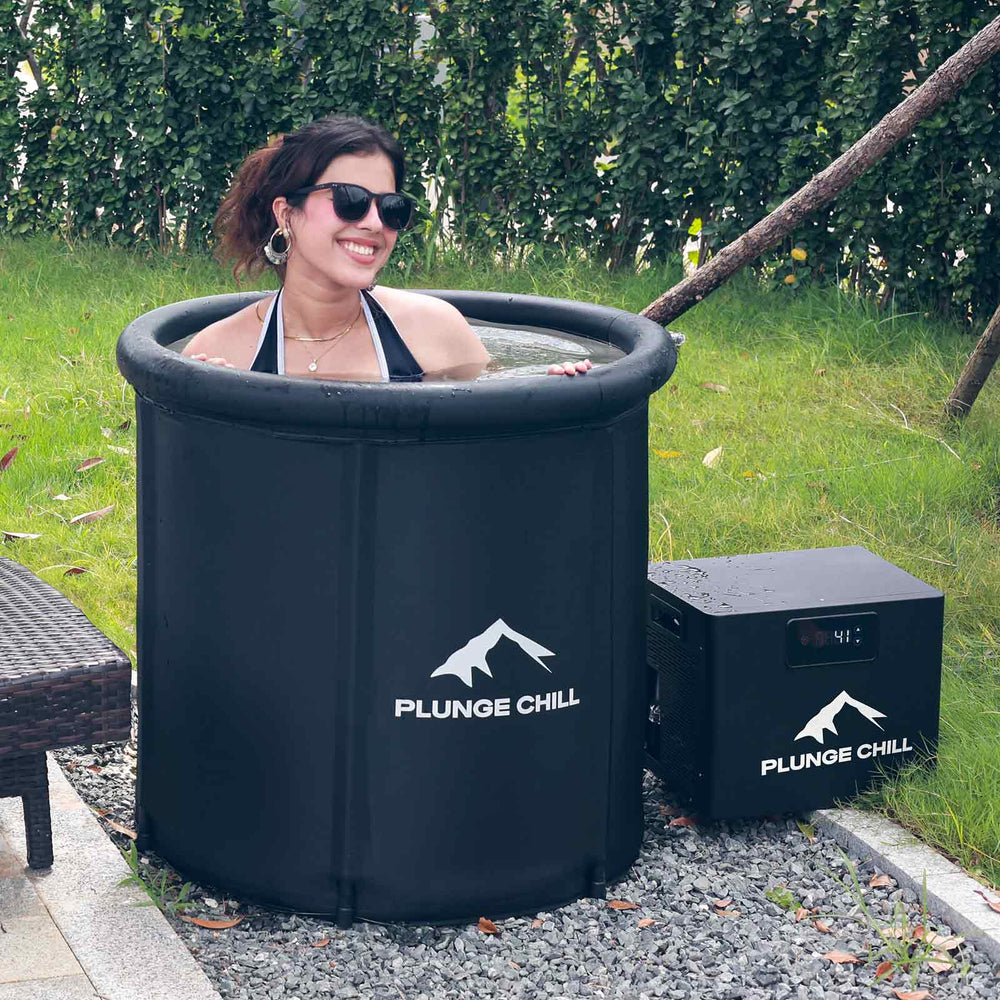
Cold plunging has moved from elite training rooms into garages, back patios, and even small apartment spaces. As a sports rehabilitation specialist and strength coach who also reviews cold plunge products, I see two reasons home installs succeed: the water stays cold and clean with minimal fuss, and the setup matches your training or wellness routine. This guide translates clinical considerations and field experience into clear installation paths—DIY and professional—so you can make confident, evidence‑based choices about basin type, chilling capacity, filtration and sanitization, safety, and budget.
What You’re Actually Installing
A functional cold plunge is not a one‑off ice bath. It is a recirculating, insulated basin that can reliably hold water in the 40–55°F range, with appropriate filtration and a sanitization strategy to keep biofilm, algae, and bacteria under control. That distinction matters. A cold tub filled from the hose and topped off with bagged ice is fine for experiments, but daily users quickly run into high ice costs, warm‑up drift, and hygiene challenges. Independent practitioners and DIY builders consistently report that chilling capacity, basin insulation, and filtration/sanitization are the non‑negotiables for sustainable home use, a point underscored by Andrew Conner’s detailed DIY work and by system-level DIY guidance from Build a Hot Tub and DIY Cold Plunge.
For physiology and outcomes, the evidence is nuanced. The Case Western Reserve University Newsroom frames cold immersion as a powerful acute stressor with a clear “cold shock” response; Harvard Health cautions that people with cardiovascular disease—particularly those with rhythm disorders—should avoid plunges; Mayo Clinic describes reduced soreness and next‑day performance benefits from cold immersion, while warning that frequent plunges right after strength training can blunt long‑term gains. The University of Utah’s men’s health program echoes that the evidence is mixed, with brown fat activation and mood benefits showing up more consistently than generalized performance enhancement. The takeaway is direct: install a system you can operate safely, then use protocols targeted to your goals.
DIY or Professional? Start With Use Case, Space, and Budget
If you plunge several days a week and want 40–50°F on demand, an actively chilled, insulated setup pays for itself in energy use, time saved, and water quality. If you are experimenting two days a month, a stock tank with ice can be perfectly adequate. Small yards or patio installs benefit from compact, above‑ground units or insulated coolers; larger yards open the door to precast or custom in‑ground plunge pools. Costs range widely, and so does complexity. The summary below aligns real‑world ranges reported by product reviewers, residential pool sources, and consumer media.
Option |
Typical Cost (USD) |
Install Complexity |
Ongoing Care |
Notes |
Stock tank + ice (no chiller) |
2,000.00 plus ice |
Low |
Moderate |
Fast to start; poor insulation; ice cost scales quickly; hygiene demands frequent draining (U.S. News Real Estate; Lowe’s general guidance). |
DIY insulated cooler + chiller |
~2,000.00 |
Moderate |
Low–Moderate |
Andrew Conner’s build landed near $1,700.00 and maintained ~40°F efficiently; insulation and lid control energy use. |
Ready‑made portable plunge |
~9,000.00+ |
Low |
Low–Moderate |
Consumer tubs cluster around 9,000.00 with some under $3,000.00 (U.S. News Real Estate; Andrew Conner). |
Above‑ground precast plunge pool |
From ~$24,500.00 |
Moderate |
Moderate |
Precast concrete systems can double as hot/cold; premium finish with faster placement (Yardzen; Soake pricing note). |
In‑ground custom plunge pool |
~60,000.00+ |
High |
Moderate–High |
Excavation, permits, and finishes drive cost; typical range per The Pool Nerd, with Yardzen noting many projects in the 50,000.00 band. |
These ranges can conflict at first glance. The differences arise from category definitions and scope. U.S. News Real Estate focuses on at‑home tubs and portable units; The Pool Nerd covers full pool builds with excavation, permits, and multi‑trade coordination; Yardzen’s design work often pairs pools with decking and landscape packages. Clarifying whether you want a small appliance‑like tub or a permanent yard feature will reconcile most price discrepancies.

Site Planning, Codes, and Safety You Should Not Skip
Good site planning prevents the most expensive mistakes. Before buying anything large, check local setbacks and easements, locate utilities, and confirm where equipment can sit for service access. Building codes in many jurisdictions require barriers for water features, anti‑entrapment drain standards for plumbed basins, and electrical bonding/grounding for pumps and chillers. Better Homes and Gardens Real Estate emphasizes permits, fencing, and equipment placement, while Renu Therapy’s safety guidance highlights GFCI protection, waterproof fittings, and professional electrical work.
Outdoor equipment makes noise. Place chillers and pumps away from bedrooms and property lines, or tuck them in a ventilated shed, to keep neighbors happy. Variable‑speed pumps reduce both noise and energy; a rigid, insulated cover cuts debris and heat gain, and it improves safety if lockable. If you live where pipes can freeze, Plunge Pools’ advice is practical: insulate vulnerable lines, protect equipment indoors or in a shelter, and consider backup power to keep circulation and temperature control active during winter outages.
An overlooked planning detail is sun versus shade. One design article suggested partial or full sun to “maintain temperature naturally,” which aligns with warm soaking or mixed‑use plunge pools; cold‑plunge‑specific guides recommend shade and insulated covers to keep heat out. The apparent conflict reflects different goals and climates: a cold plunge in Phoenix benefits from deep shade; a mixed‑use, heated plunge in Vermont may welcome shoulder‑season sun. Matching siting to your primary temperature target resolves the discrepancy (Radelli Designs; CasaBlui).
Components and Sizing: The System That Keeps Water Cold and Clean
For daily home use, three elements do the heavy lifting: basin insulation, chilling capacity, and water care. Each piece can be scaled up or down based on basin volume and climate.
Basin choice drives everything else. Insulated coolers hold the cold exceptionally well and pair efficiently with smaller chillers. Andrew Conner documented that a well‑sealed, large insulated cooler chilled roughly 2°F per hour and, with pump and chiller off, gained only about 1–2°F per day at 75°F ambient; a reader with a metal stock tank needed a 1 HP chiller that ran nearly continuously in summer, but after switching to an insulated cooler, the system ran under an hour per day. This is the clearest real‑world demonstration I’ve seen that insulation and lid fit are primary energy levers. Stock tanks remain popular because they are cheap and available, but thin metal acts as a heat sink and quickly erodes chiller headroom unless you add external insulation and a tight cover.
Chiller sizing is where many buyers over‑ or under‑shoot. DIY Cold Plunge and Andrew Conner converge on a practical rule: an insulated cooler can work with a 1/4 HP unit, while stock tanks generally need at least 1/2 HP and sometimes 1 HP depending on lid, insulation, and climate. The oft‑advertised cooling rates on spec sheets do not reflect real‑world heat gain from sun, warm air, plumbing losses, and bather load, so pair chiller horsepower with your basin’s insulation and your hottest expected ambient temperatures rather than brochure curves. DIY Cold Plunge notes that Active Aqua style 1/4–1/2 HP units can hold near 39°F, with some users pushing into the mid‑30s with tweaks; the big picture is that insulation can be traded for horsepower and energy draw, and insulation usually wins.
Pumps and filtration handle clarity and circulation. Danner Mag‑Drive pumps in the 700–1,200 GPH range are commonly used in DIY builds, with realistic flow falling after plumbing losses. Whole‑house style filter housings with 3/4‑inch ports and pleated 50‑micron cartridges strike a good balance: finer filters clog fast; coarser filters miss small debris. For hoses and fittings, builders report fewer leaks when using thread sealant paste rather than Teflon tape, and 3/4‑inch tubing with NPT bulkheads has become the de facto standard for hobbyist‑scale builds.
Sanitization is not filtration. You can filter out debris and still have microbial growth. Options include low‑dose chlorine or bromine, UV, and ozone with a venturi injector. DIY Cold Plunge favors ozone for minimal residuals and reports multi‑month clarity; in practice, results vary with bather load, water temperature, and enclosure. If you use ozone, consider verifying oxidation potential with an ORP meter and maintain a conservative backup sanitizer plan if the tub gets heavy use. For traditional pool chemistry, general residential ranges for free chlorine (about 1–3 ppm), pH (about 7.2–7.8), total alkalinity (about 80–120 ppm), and calcium hardness (about 200–400 ppm) remain applicable and are reflected in general plunge‑pool maintenance briefs from consumer home services sources.
For permanent, in‑ground systems, Build a Hot Tub’s specifications are clear: plan a pump, filter, two suction drains, and two returns plumbed through the chiller for continuous turnover and hygiene, and embed plumbing cleanly through concrete or block walls. Construction methods vary—poured‑form concrete for monolithic strength and clean penetrations, CMU with a filled cavity and rebar for durability and cost‑effectiveness, and insulated concrete forms for speed and energy performance. Choose based on your crew, budget, and timeline; all can produce robust results if engineered and waterproofed correctly.
Material selection for basins affects insulation, lifecycle, and aesthetics. Sun Home Saunas outlines the tradeoffs: acrylic offers good inherent thermal retention and low maintenance; stainless is exceptionally durable and hygienic but typically needs added insulation and texturing for slip resistance; concrete is long‑lived but not insulating and demands professional labor and curing time; tile allows maximal design control but installation is meticulous and can be sensitive to substrate movement and freeze–thaw. Indoor placements favor acrylic’s weight and finish; outdoor placements benefit from UV protection or shading if using acrylic and from added insulation for steel or concrete shells.

A DIY Insulated Cooler Build, In Practice
When I help athletes and busy families set up their first daily‑use plunge, I often start with the insulated cooler pattern because it punches above its weight for cost, energy, and maintenance. The workflow is straightforward. Order a large, well‑insulated cooler early, since freight timing can be irregular. Map the layout on paper to place pump, filter, ozone injector if used, and chiller with short, clean hose runs. Drill clean holes for the bulkhead fittings—Andrew Conner’s build used 1‑5/8‑inch holes—and thread NPT fittings with a proper sealant paste to reduce micro‑leaks. Plumb with 3/4‑inch tubing, keeping bends wide to reduce head loss. Place the pump and filter so you can swap cartridges quickly; a clear canister helps you see loading. Keep the lid closed between uses to reduce heat gain and contamination. From a performance standpoint, expect chilled rate in the low single digits (around 2°F per hour is realistic for the well‑insulated builds I’ve seen) and very modest warm‑up drift if the room stays near 70–75°F and the cover is tight. These numbers are consistent with the independent stats reported by Andrew Conner.
For a stock tank conversion, budget extra horsepower or invest time in insulation. Wrapping the tank with foam board or flexible insulation and installing a rigid, fitted cover go a long way. If your climate is hot, moving the water loop through a short run of shaded, insulated hose and shielding the chiller from direct sun helps the system cycle rather than run continuously.

Professional Installations: Precast and In‑Ground
Homeowners who want a permanent feature with hardscape integration should plan a professional pathway. Precast, above‑ground plunge pools deliver fast placement and high‑end finishes, with entry prices commonly reported around $24,500. In‑ground custom plunges often land between $30,000.00 and $60,000.00 depending on access, excavation, finishes, and automation. Expect a sequencing of permitting, inspections, fabrication, and site preparation; choose licensed, insured installers with references and clear warranties. The equipment pad should allow for sheltered placement of pumps, chillers, and controls, and planners should design for drainage, splash‑out management, and safe, non‑slip surrounds. If you like cold in winter and warm soaks in shoulder seasons, ask about insulated shells, automation, and locking, ASTM‑rated rigid covers to manage energy and safety.
Water Care and Routine Maintenance
Clarity and safety live or die by your maintenance cadence. Even with ozone or low‑dose sanitizers, you will skim debris, swap or rinse filter cartridges, and refresh water on a schedule tied to bather load and temperature. Consumer sources for plunge tubs often suggest monthly drains for small, 100‑gallon tubs, though ozone and good pre‑shower hygiene can lengthen intervals. For traditional pool chemistry, the general home pool ranges noted earlier are reasonable anchors; test 2–3 times per week in shared tubs and after heavy use, and shock when indicated. Keep towels and warm clothing close to reduce exposure time in winter, and warm up with gentle movement rather than immediate scalding showers to prolong the cold‑adaptation effect described in sports medicine and lifestyle medicine channels.

Energy, Noise, and Weatherization Details That Matter
Insulation and covers reduce both chiller runtime and sound. Andrew Conner’s reader example—1 HP chiller nearly continuous with a stock tank in summer versus under one hour per day after switching to an insulated cooler—illustrates a common pattern in hot climates. Variable‑speed pumps and strategic equipment placement further cut audible noise. For year‑round reliability, Plunge Pools recommends insulating shells and plumbing, moving equipment indoors or into a ventilated shelter, upgrading to locking rigid covers to minimize heat loss and debris, and adding backup power to ride out outages without freezing damage.
A small but useful indoor note: water is heavy. A 100‑gallon tub holds roughly 834 lb of water before a person gets in. Most modern residential floors are designed for typical live loads, but concentrated loads in older structures can vary. If you plan to place a plunge on an upper floor, distribute weight across joists and consider an engineer’s opinion.

Placement and Temperature Management: Reconciling Conflicting Advice
Design guides sometimes celebrate sun‑splashed plunge pools, yet cold‑plunge owners chase shade. CasaBlui recommends shaded placement to help maintain cooler water, while a design‑centric article highlighted sun exposure to “maintain temperature naturally” across days. These statements are both true in context. For strictly cold systems targeting 39–50°F, shade plus an insulated lid almost always lowers energy use and stabilizes temperatures; for mixed‑use pools that double as warm soaking features, shoulder‑season sun can trim heating costs. The conflict stems from different definitions of “plunge” (ice‑bath cold versus cocktail‑pool warm), different climates, and different goals.
Evidence, Recovery, and How to Use Your Plunge Without Undercutting Training
The physiology is not controversial: immersion triggers a cold shock response with rapid changes in breathing, heart rate, blood pressure, and peripheral vasoconstriction; shivering and thermogenesis follow. Differences appear in outcomes. Case Western Reserve University Newsroom takes a skeptical view of long‑term muscle benefits, suggesting that reduced blood flow could slow protein synthesis. Harvard Health warns about potential blunting of power and hypertrophy gains when cold is used immediately after strength sessions. Mayo Clinic recognizes reduced soreness and inflammation, aiding next‑day performance, while also noting the same adaptation risk for strength work. The University of Utah’s men’s health programming frames brown fat activation and mood benefits as the more consistent findings, with overall evidence quality mixed.
The practical compromise for lifters is simple. If your priority is strength and size, avoid plunging right after lifting and schedule cold exposure later or on rest days. If your priority is back‑to‑back performance and readiness—tournaments, travel, work blocks, or high‑frequency training—using the plunge for short bouts in the 50–59°F range can be helpful for soreness and sleep, with the understanding that the long‑term “adaptation tax” is still being quantified. For people with cardiovascular disease, arrhythmias, peripheral artery disease, or Raynaud’s, the safest choice is to avoid cold plunges altogether or proceed only under medical guidance, as emphasized by Harvard Health and echoed in sports cardiology.

Buying Tips From the Field
A few recurring insights have saved my clients time and money. First, do not overbuy horsepower because a chart promised rapid cooling; prioritize insulation and lids, then size the chiller to the basin you actually own. Second, confirm the availability of filters, O‑rings, and hose fittings before you lock in on a pump or housing; the best setup is the one you can service in ten minutes on a weeknight. Third, keep equipment standard and replaceable; proprietary parts in some all‑in‑one units fetch premium prices and complicate repairs, a concern raised by DIY Cold Plunge in its critique of combo chiller/pumps. Finally, follow manufacturer instructions for any pre‑built tub you choose; even within a price band, brands vary in electrical requirements, winterization procedures, and warranty conditions, a point consumer groups and owner communities emphasize.
Care, Protocols, and Sensible Progression
For beginners, target the 50–60°F range and start with one to three minutes, progressing gradually toward five to ten minutes as tolerance improves. Experienced users who have medical clearance sometimes prefer 39–45°F for short bouts. The standard advice from multiple clinical and coaching sources is to let the body rewarm naturally, avoid breath‑holding during the first minute, and exit immediately for numbness, chest discomfort, or dizziness. If you are alternating hot and cold—sauna to plunge—respect the cardiovascular load; those with heart concerns should avoid aggressive contrasts without clinician input. These parameters reflect consistent consumer and clinical guidance from CasaBlui, Mayo Clinic, and University of Utah Health.
A Few Overlooked but High‑Yield Details
Insulation outperforms brute‑force cooling in almost every small‑basin scenario. Andrew Conner’s field data and DIY Cold Plunge’s sizing notes both point to the same conclusion: an insulated cooler with a 1/4 HP chiller can achieve what a stock tank might need 1/2–1 HP to match. Another subtle point is filter selection. In small tubs, pleated 50‑micron cartridges reach a sweet spot between capture and cleanability; finer cartridges look attractive on paper but clog and drive owners back to bleach‑and‑dump cycles. And while ozone can keep water sparkling with minimal chemical smell, it is not a magic shield; plan to verify oxidation potential and be ready with a gentle residual sanitizer if guests or family create heavier bather loads.

Takeaway
Great cold plunges are built, not wished into existence. Insulation and a well‑fitted cover reduce the load on chillers, right‑sized pumps and filters keep water clear, and a modest sanitization plan prevents biofilm and off‑odors without turning your tub into a chemistry experiment. If you need a permanent focal point, hire licensed pros for precast or in‑ground work and plan for codes, access, and winterization. If you want daily function at the lowest total cost, an insulated cooler with a 1/4–1/2 HP chiller is hard to beat. Whatever you choose, match your installation to your physiology and goals: lift first, plunge later if hypertrophy matters; use short, appropriately cold sessions for soreness, sleep, and mood. Finally, if you have cardiovascular disease or rhythm disorders, heed conservative medical guidance and avoid plunges or pursue clinician‑supervised alternatives.
FAQ
What temperature should I target for a home cold plunge?
Most daily users sit between 40–55°F. Beginners do well starting around 50–60°F and building time tolerance before chasing lower temperatures. These ranges are consistent with consumer and coaching guidance summarized by CasaBlui and Andrew Conner. If you have medical conditions, discuss a starting point with a clinician.
Will a cold plunge help my training or hurt my gains?
Cold immersion reduces soreness and can improve next‑day readiness, which is helpful during dense schedules. For muscle size and strength, plunging right after lifting can blunt long‑term adaptations, as noted by Harvard Health and Mayo Clinic. A practical approach is to place cold exposure away from strength sessions, or on rest days, while using it more freely around endurance or mixed training blocks.
How big a chiller do I really need?
Insulation decides horsepower. An insulated cooler can maintain cold with a 1/4 HP unit in many garages and basements, while stock tanks often need at least 1/2 HP and sometimes 1 HP in hot climates. These guidelines reflect field reports from DIY Cold Plunge and Andrew Conner. If you live where summer temps soar, shade the basin, use a rigid lid, and size up one step.
Do I need chemicals if I run ozone?
Ozone oxidizes contaminants and can keep water clear for extended periods, but it provides no residual protection. Many owners still use a gentle residual sanitizer and monitor water quality, especially with family or guest use. DIY Cold Plunge reports long intervals with ozone alone, but your results will vary with use and temperature.
Is an in‑ground plunge worth it over a portable tub?
It depends on priorities. In‑ground plunges integrate beautifully and can be more energy stable, but they require permits, excavation, and higher budgets, commonly in the 60,000.00 range. Portable tubs run from roughly $2,800.00 to $9,000.00 and set up quickly with minimal site work. The Pool Nerd, Yardzen, and U.S. News Real Estate all describe these tradeoffs; choosing between them is mostly about permanence, aesthetics, and total project scope.
Can I install a plunge indoors?
Yes, but plan for water weight, drainage, GFCI‑protected power, and humidity. A 100‑gallon tub weighs about 834 lb before a person gets in. Many owners place tubs in garages or basements for easy hose access and floor drainage. If you’re considering an upper‑floor location, consult a structural professional about load paths and add dehumidification for comfort and mold prevention.
References
- https://case.edu/news/science-behind-ice-baths-and-polar-plunges-are-they-truly-beneficial
- https://www.health.harvard.edu/heart-health/cold-plunges-healthy-or-harmful-for-your-heart
- https://lifestylemedicine.stanford.edu/jumping-into-the-ice-bath-trend-mental-health-benefits-of-cold-water-immersion/
- https://news.uoregon.edu/content/cold-plunging-might-help-heart-health-new-research-suggests
- https://sncs-prod-external.mayo.edu/hometown-health/speaking-of-health/cold-plunge-after-workouts
- https://healthcare.utah.edu/healthfeed/2023/03/cold-plunging-and-impact-your-health
- https://www.backyardboss.net/should-you-add-a-cold-plunge-tub-to-your-backyard/
- https://www.thepoolnerd.com/plunge-pools
- https://andrewconner.com/cold-plunge/
- https://bhgrebeyond.com/blog/What-You-Should-Know-Before-Putting-In-a-Plunge-Pool