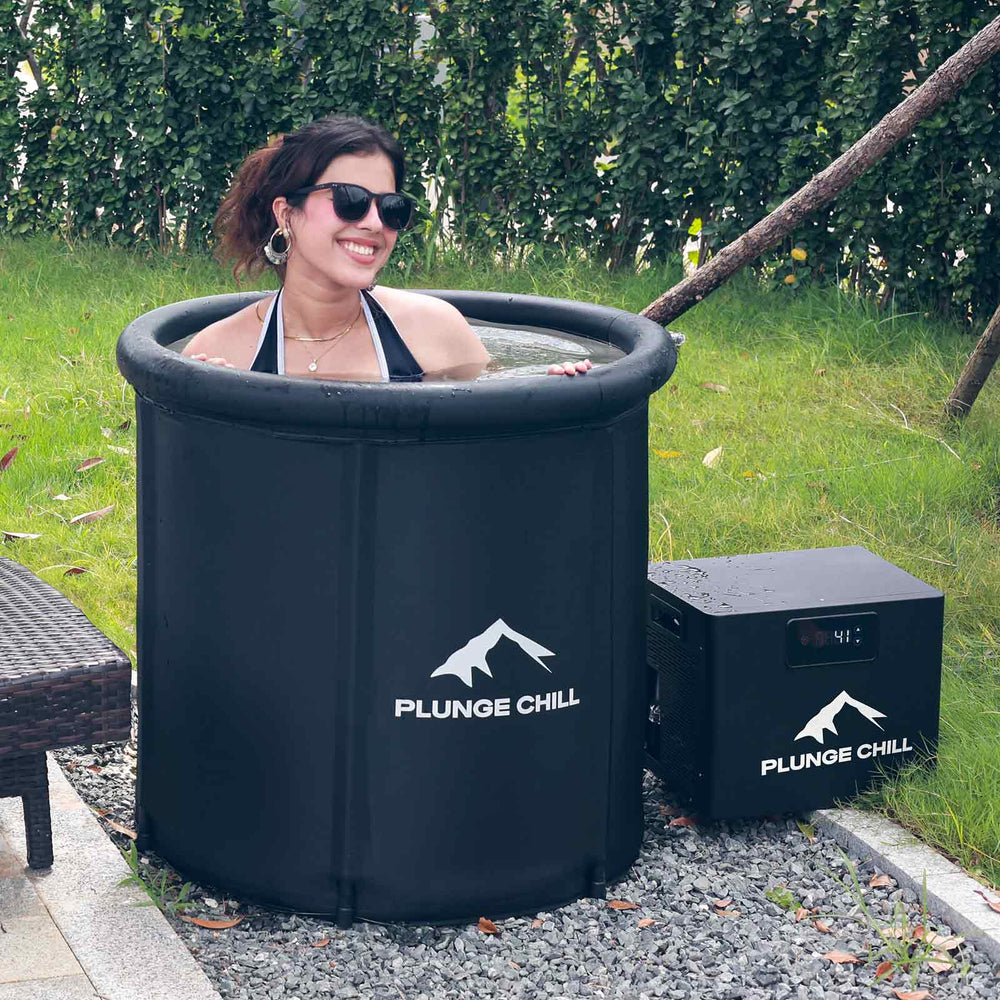
Cold-water immersion has moved from locker-room folklore to a staple in high-performance recovery rooms and home setups. As a sports rehabilitation specialist and strength coach who also tests cold plunge products, I use cold strategically to help male athletes turn around soreness and heat strain without undermining the strength and size they work hard to build. This article distills what the evidence supports, where findings conflict, and how to select and care for a plunge you will actually use.
Physiology in Plain Language
Drop your body into 50–59°F water and several predictable things happen. Blood vessels in skin and muscle constrict, shunting blood to the core. Tissue temperature falls and nerve conduction slows, which dampens pain signals and the sense of soreness. When you rewarm, vessels dilate and blood flow rebounds, helping clear metabolites and deliver oxygen and nutrients to muscle. Sports medicine sources like the Mayo Clinic Health System and Cleveland Clinic describe this vasoconstriction–vasodilation cycle as the working engine of cold-water immersion. Hydrostatic pressure in water also shifts fluid from the limbs back into circulation, which may reduce edema and perceived fatigue even before temperature effects fully kick in.
Cold triggers a brisk neurochemical response. Epinephrine and norepinephrine surge, which explains the alert, energized feel during and after immersion; dopamine may stay elevated longer than with many other stressors. Laboratory studies reviewed by Harvard Health and Ohio State Health note that these changes can sharpen focus and, for some, improve mood and perceived resilience. Thermally, cold exposure increases heat production and can recruit brown adipose tissue, which slightly raises energy expenditure during rewarming. That bump is real but modest relative to the calorie cost of exercise. For heat-stressed athletes, cold plunges are also a proven rapid cooling method in sports medicine.
Two important nuances rarely emphasized in short guides are worth noting. First, a registered analysis of randomized trials reported a transient increase in inflammatory markers immediately and one hour after immersion; stress was lower about 12 hours later. In practical terms, cold is a stressor before it becomes a recovery tool. Second, improved heart-rate variability after cold exposure has not consistently translated to better cardiovascular outcomes according to Harvard Health; treating HRV as the outcome can be misleading when the performance target is training or competition.
When Cold Helps—and When It Can Hurt Adaptation
The acute recovery picture is clearer than the long-term performance picture. A meta-analysis of post-exercise cold water immersion found immediate reductions in delayed-onset muscle soreness and perceived exertion after immersion, lower creatine kinase about 24 hours later, and lower blood lactate at 24–48 hours. Those consistent short-term benefits do not reliably carry over to objective performance tests such as countermovement jump beyond the same day, and results across studies were heterogeneous. In real training blocks, that means cold works best when the goal is to feel and move better for the next session, not to beat your personal record the day after a maximal lift.
For strength and hypertrophy, several controlled studies and clinical summaries from Ohio State Health and physical therapy reviews converge on a caution: routine cold plunges after lifting blunt the molecular signals for muscle growth and can reduce long-term strength and size gains. That effect does not seem to be as pronounced for endurance adaptations. These differences likely come from divergent end points and protocols across studies. Strength and size gains rely on localized inflammatory cascades and protein synthesis; blunting those signals post-lift logically reduces adaptation. Endurance studies often emphasize heat stress and repeated efforts where rapid cooling can help turn around readiness. Methodology, training status, and whether the test is immediate or 24–48 hours later also change the answer.
Hot water immersion complicates the picture in a useful way. A recent physiology report presented at a national meeting found that hot water preserved immediate power output better than cold after high-intensity running, while markers of muscle damage did not differ much among hot, cold, and control conditions. The practical, male athlete takeaway is simple: if you need power again within the next hour, warm water can be a better immediate bridge; if you need soreness relief by tomorrow, cold helps but should be timed away from hypertrophy sessions.
An overlooked but relevant detail for men is sleep. An evidence digest from Harvard Health summarizing a recent analysis reported that men, but not women, experienced better sleep after ice baths. The likely drivers include a delayed calming effect and normalized body temperature later in the evening, but definitions and timing varied across the included studies, and more direct research is warranted.

Evidence Snapshot
Outcome |
Typical effect |
Time course |
Certainty |
Key sources |
Soreness and perceived fatigue |
Lower immediately after immersion; CK often lower at 24 hours |
Minutes to 24 hours |
Moderate |
PubMed meta-analysis; Cleveland Clinic; Lake Nona Performance Club |
Objective performance next day |
Inconsistent; small or no gains under random-effects models |
24–48 hours |
Low to moderate |
PubMed meta-analysis |
Immediate power right after recovery |
Hot water can preserve power better than cold |
Within an hour |
Emerging |
American Physiological Society report |
Systemic inflammation (acute) |
Transient increase soon after immersion |
0–1 hour |
Moderate |
PLOS One analysis summarized by Harvard Health |
Sleep and mood |
Lower stress about 12 hours later; sleep benefits reported in men |
12 hours to overnight |
Low to moderate |
Harvard Health; PLOS One analysis |
Long-term strength/size |
Blunted with routine post-lift immersion |
Weeks to months |
Moderate |
Ohio State Health; physical therapy consensus |

Protocols by Goal, With Tradeoffs
No single temperature–duration recipe serves every goal. In practice I choose the cold dose to match the outcome, always balancing comfort and adherence against evidence.
Goal |
Temperature |
Duration |
Timing |
Notes |
Turnaround after games or two-a-days |
50–55°F |
5–10 minutes |
Within 30–60 minutes post |
Prioritize soreness relief and readiness; accept that objective performance gains tomorrow are not guaranteed. Sources: PubMed meta-analysis; Mayo Clinic Health System. |
Preserve hypertrophy and strength |
50–59°F or skip |
2–3 minutes if used for mental reset |
Separate from lifting by at least 6–8 hours; 24–48 hours is safer for mass phases |
Cold immediately after lifting can blunt growth signals; if you want the mood boost, time it away from lifts. Sources: Ohio State Health; Huberman Lab. |
Heat-stress cooling in summer |
50–59°F |
3–8 minutes |
Pre-session or immediately post in hot conditions |
Useful for core cooling; shorter pre-cooling dips reduce thermal strain. Sources: Cleveland Clinic; Mayo Clinic Health System. |
New to cold or returning after a break |
54–59°F |
1–2 minutes |
Morning or post-easy session |
Start warmer and shorter; increase slowly. Safety first. Sources: Cleveland Clinic; Lake Nona Performance Club. |
Mental reset and stress regulation |
50–59°F |
3–5 minutes |
Morning or midday |
Mood and alertness benefits come from catecholamine and dopamine responses. Sources: Harvard Health; Huberman Lab. |
A network meta-analysis comparing durations and temperatures suggests that 41–50°F for 10–15 minutes is commonly studied and effective for soreness and creatine kinase, but that range is uncomfortable for many users. Adherence matters; tolerable water around 52–59°F for similar durations is a pragmatic compromise. Differences across trials likely reflect inconsistent definitions of “recovery,” varied exercise protocols, and timing windows.
Where data are thin, I flag it. The popular weekly target of about 11 minutes total across several sessions appears in public-facing science summaries; generalizing it to all men and all goals remains unproved. A simple verification step is to log four weeks of your own subjective recovery and training metrics while standardizing cold exposure, then compare to a four-week non-cold block.

Timing With Training and Body Clock
Timing shapes outcomes as much as dosage. If the session is heavy resistance work focused on strength or size, I keep cold out of the two to eight hours post-lift window, and often push it to the evening or the next day. When the block emphasizes endurance or repeated sprints in heat, a brief pre-cooling dip or a post-session plunge improves how athletes feel and perform later in the day.
Circadian rhythm also matters. Morning plunges feel colder because core temperature is naturally low, which can be used to amplify the wake-up effect. Afternoon plunges often feel more tolerable and can soften residual soreness once core temperature is higher. This pattern aligns with gym-floor experience and gym guidance, and it is consistent with the physiological rhythm described by coaching content from Arsenal Health and similar guides. Verify by testing perceived effort, sleep quality, and session RPE across morning versus afternoon plunges over two weeks.
Safety, Contraindications, and Rewarming That Works
Cold exposure demands respect. Men with known cardiovascular disease, uncontrolled hypertension, arrhythmias such as atrial fibrillation, peripheral artery disease, or Raynaud’s phenomenon should get medical clearance before trying a plunge. The initial cold shock spike in adrenaline and norepinephrine raises heart rate and blood pressure; it can also trigger involuntary gasps and hyperventilation. Clinical sources at Harvard Health, the Mayo Clinic Health System, and Cleveland Clinic converge on the following safety principles: never plunge alone the first times, know the water temperature before you get in, limit exposure to prevent hypothermia or frostbite especially outdoors, and have warm clothing ready.
Rewarming depends on the goal. If your aim is a small metabolic nudge, allow a gradual natural rewarm with light movement, dry off, add layers, and sip a warm drink. If your goal is readiness and comfort, you can rewarm more actively, but avoid hot showers immediately if you want to extend the afterdrop and shiver-induced thermogenesis. Several practical guides recommend letting the body do more of the reheating work for a stronger thermogenic stimulus. For heat illness or exertional hyperthermia, follow established rapid cooling practices supervised by professionals.
How I Program Cold for Male Athletes
In tournament settings with back-to-back matches, I use 50–55°F for 6–8 minutes within an hour after play. The goal is very simple: reduce soreness and perceived fatigue, cool the core, and preserve confidence for the next start. We do not expect measurable strength or power gains the next day from cold alone; we build that with sleep and nutrition.
In hypertrophy phases, I keep cold away from lifts. If an athlete wants the mental lift of cold, we shift it to off-days or to evenings on conditioning days, leaving at least several hours between the lift and the plunge. During summer conditioning, I front-load a two- to three-minute pre-cooling dip at about 54–59°F to take the edge off heat, and follow with a short post-session dunk only if the session was more about aerobic work than mechanical tension.
For stressed executives and recreational lifters asking for a general plan, I recommend morning plunges of three to five minutes at 50–59°F two to three times per week for alertness, leaving heavy lift days cold-free. We reassess after four to six weeks based on training logs, soreness diaries, and sleep tracking. When the stakes are high—a title game, a marathon in heat—we individualize everything, including the water temperature that feels “uncomfortably cold yet safe.”
Buying a Cold Plunge: Features That Matter
A cold plunge you do not use is a bad investment. Fit and feel drive adherence, and adherence drives benefits. The right unit should balance a steady, verifiable temperature with easy maintenance and a footprint that fits your space.
Water quality and filtration decide whether you enjoy week twelve as much as day one. Look for a system with filtration sized to the tub’s volume, and a sanitizing strategy you are willing to maintain—commonly ozone and ultraviolet, possibly paired with low-dose oxidizers. Smooth interior surfaces, accessible drains, and quick-disconnect hoses make cleaning easier. I strongly prefer insulated tubs with fitted covers to reduce heat gain and contamination; in garages and patios this also lowers workload on the chiller.
Chiller capacity and noise matter more than most buyers expect. A unit that reliably holds 50–55°F all day under your local ambient conditions is far more useful than a “colder on paper” setup that cycles constantly. Ask for flow rate and acoustic data if you are sensitive to noise in a small apartment. Electrical requirements should be clear and compatible with a grounded outlet; outdoor installations should use appropriate protection.
Ergonomics change user behavior. If you are tall or broad-shouldered, submerging to the clavicles without awkward curling reduces fidgeting and shortens the learning curve. A stable step, a non-slip deck, and a secure handhold reduce mishaps during the cold shock phase when coordination can dip.
The table below summarizes common options without vendor endorsement.
Option |
Typical setup |
Upkeep |
Best fit |
Large tub plus bags of ice; no chiller |
Frequent drain and clean; variable temperatures |
Occasional weekend use; budget; experimenting before upgrading |
|
Insulated soft or hard tub; compact chiller; basic filtration |
Regular filter changes; monthly deep clean; cover use |
Consistent users who want 50–59°F daily without wrestling ice |
|
Fixed hard tub with robust chiller |
Rigid insulated shell; powerful chiller; multi-stage filtration; fitted cover |
Scheduled filter service; periodic sanitizer maintenance; lowest drift |
Daily users; multi-athlete households; patios and garages with space |
Care recommendations vary by product and water chemistry. In my own setups, I schedule a weekly quick clean of surfaces when I change or rinse filters, and a deeper clean every few weeks depending on bather load and whether users shower first. Verify with water test strips and by inspecting biofilm risk points like seams and returns.
Practical Setups and Timing in Real Life
Morning routines suit men who want mental sharpness and an appetite reset without compromising later lifts. Afternoon plunges often feel more tolerable and are easier to fit between meetings and family time. In-season athletes see the clearest short-term win: reduced soreness so they can practice tomorrow. Off-season lifters trying to add five pounds to their squat can still enjoy cold, but moving it to rest days keeps the growth machinery intact.
For travel and hotel gyms without a plunge, a cold shower finishing block works as a bridge. Stand under the coldest stream you can tolerate for 30–60 seconds, step out for a few breaths, then repeat twice; breathe slowly and focus on long exhales to blunt the gasp reflex. Cold showers offer a weaker, more variable stimulus than full immersion but deliver some of the same perceived benefits with minimal setup.
Short FAQ
Is a cold plunge safe if I have high blood pressure or a past heart issue?
Cold shock raises heart rate and blood pressure and can disturb cardiac rhythm. Men with hypertension, arrhythmias, coronary disease, or peripheral vascular disease should consult a clinician before trying a plunge. Clinical guidance from Harvard Health and the Mayo Clinic Health System advises screening and supervision in these cases.
How cold should the water be and for how long?
For most men, 50–59°F for three to five minutes after exercise is a reasonable starting target once you are acclimated. New users can start warmer and shorter and build tolerance gradually. Some research protocols use 41–50°F for 10–15 minutes, but that range is uncomfortable for many and not necessary for most goals. Conflicting advice reflects different goals, time frames, and populations.
Will I lose muscle if I cold plunge?
You will not “lose” muscle from an occasional plunge, but frequent cold right after lifting can blunt the cellular signals that drive strength and hypertrophy over time. If size and strength are your priority, separate cold from lifts by many hours or move it to rest days. This recommendation is supported by university and physical therapy sources and several controlled studies.
Is hot water immersion better than cold?
For immediate power output in the next hour, hot water can preserve power better than cold in some tests, while longer-term markers of damage may not differ much. For soreness reduction by the next day, cold remains helpful. Choose based on the performance window you care about.
Do men sleep better after a plunge?
An evidence digest summarizing an analysis of trials reported improved sleep in men but not women after ice baths. Definitions, timing, and doses varied, so this should be treated as preliminary. Verify by logging your own sleep quality for two weeks with and without evening cold exposure.
Is the “11 minutes per week” rule real?
It is a simple heuristic emerging from public-facing science communication, not a standardized clinical dose across sports. It can be a helpful starting target for general use, but men with performance goals should adapt timing and dose to training priorities. Test your own response with training logs.

Takeaway
Cold plunges help men feel and function better between demanding sessions by reducing soreness, perceived fatigue, and heat strain. Those are meaningful recovery wins. The same cold dose can undermine the very strength and size you train for if you drop into a tub right after heavy lifting, so timing matters. Keep post-lift windows cold-free, lean on cold when calendars are congested or weather is punishing, and let goals drive protocol. Choose a plunge you can keep clean and at a steady, verifiable temperature, and respect the safety basics if you have cardiovascular risks. Recovery is a system. Cold is one useful tool, not the whole toolkit.
References
Cleveland Clinic.
Ohio State Health.
Mayo Clinic Health System.
Harvard Health.
Frontiers in Physiology network meta-analysis on cold-water immersion dose.
PubMed meta-analysis on cold-water immersion and post-exercise recovery.
American Physiological Society conference report on hot versus cold immersion.
Lake Nona Performance Club guidance on cold plunge.
University of Oregon research note on mood and cardiovascular markers.
Huberman Lab newsletter on cold exposure protocols and neurochemistry.
Arsenal Health coaching guidance on timing and circadian rhythm.
Carrell Clinic commentary on cold versus heat for muscle recovery.
Science for Sport review on cold-water immersion mechanisms and practice.
University Hospitals sports medicine overview on cold therapy considerations.
Runner’s World review on cold-water therapy for runners.
Rutgers University perspective on the cold plunge trend.
- https://www.health.harvard.edu/staying-healthy/research-highlights-health-benefits-from-cold-water-immersions
- https://www.mcphs.edu/news/physical-therapist-explains-why-you-should-chill-out-on-ice-baths
- https://pubmed.ncbi.nlm.nih.gov/39879231/
- https://sncs-prod-external.mayo.edu/hometown-health/speaking-of-health/cold-plunge-after-workouts
- https://health.osu.edu/wellness/exercise-and-nutrition/do-ice-baths-help-workout-recovery
- https://paintrail.pmr.med.ufl.edu/2024/08/05/cold-water-immersion-therapy-unraveling-the-benefits-and-risks-with-evidence/
- https://health.clevelandclinic.org/what-to-know-about-cold-plunges
- https://mydoctor.kaiserpermanente.org/mas/news/health-benefits-of-cold-water-plunging-2781939
- https://mcpress.mayoclinic.org/healthy-aging/the-science-behind-ice-baths-for-recovery/
- https://www.mayoclinichealthsystem.org/hometown-health/speaking-of-health/cold-plunge-after-workouts