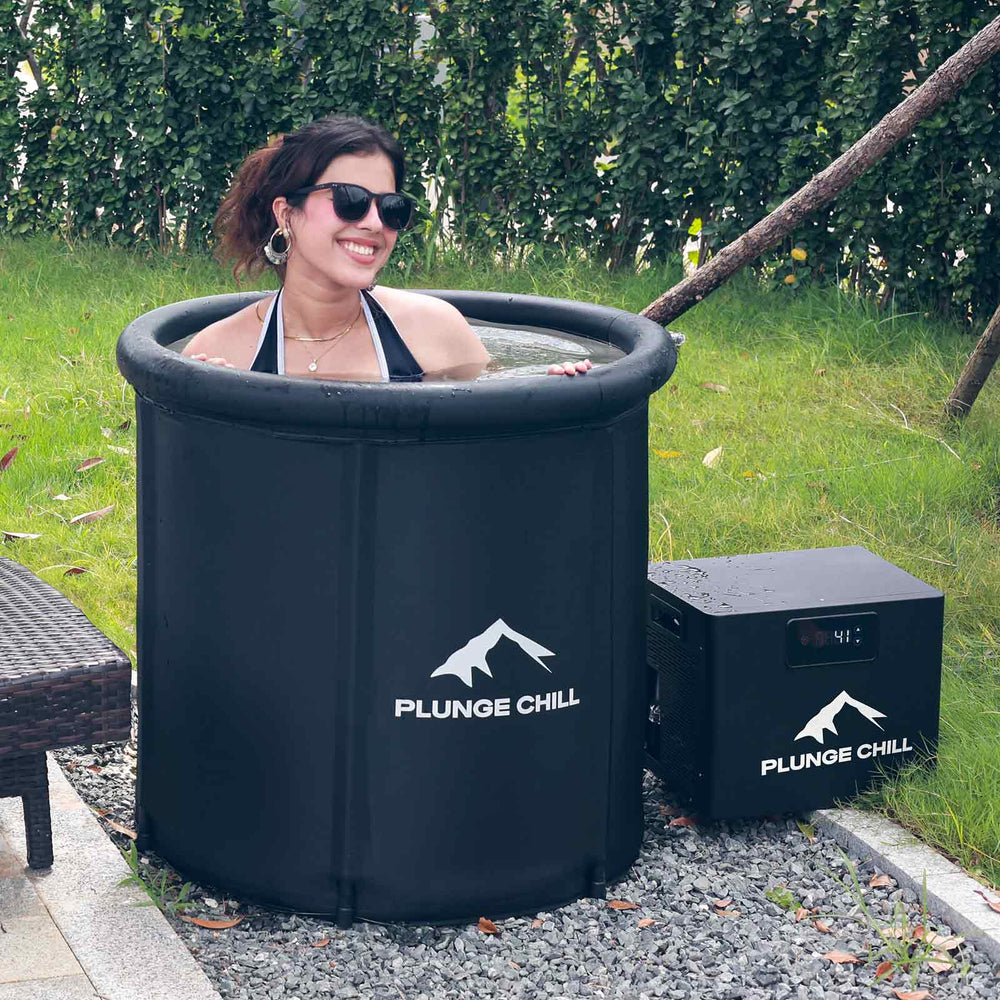
As a sports rehabilitation specialist and strength coach who also reviews cold plunge products, I see a consistent pattern: people stick with cold immersion when the experience is calm, controllable, and quiet. The physiology of cold exposure demands focus, breathing control, and a sense of safety. Excessive compressor hum, fan rush, or splashing can undermine that mindset. This guide explains what “quiet” really means in a cold plunge context, how to set up a tub for low-noise operation without sacrificing performance, and what to look for when you’re buying.
Why Noise Levels Matter in Cold Plunge Tubs for Home Recovery
Cold exposure triggers a powerful autonomic response. The initial gasp reflex and sympathetic surge are normal; trained breathing and a still environment help athletes and patients shift toward control rather than fight-or-flight. A quieter tub makes that transition easier, both perceptually and physiologically, because you can hear your breath, your coach’s cues, and your own internal signals. Harvard Health reports that stress reduction effects from cold immersion were detected about 12 hours after ice baths, not immediately, in a review of 11 studies involving 3,177 participants. That is a reminder that while the downstream benefits can be delayed, the immediate experience still matters for adherence and perceived recovery. If the session feels chaotic or loud, people are less likely to return consistently.
Cold Plunge Evidence on Recovery and Practical Temperature & Time Ranges
The published evidence around cold water immersion is mixed but informative. Harvard Health summarized an analysis published in PLOS One that reviewed 11 studies with protocols ranging from brief exposures to longer routines over several weeks. Most participants sat in chest-level ice baths with water between 45°F and 59°F, and exposure times mostly spanned 30 seconds to 15 minutes. Findings included reduced stress detected 12 hours after immersion, better sleep reports among men but not women, improved quality-of-life scores in people taking cold showers, and no consistent signal for mood or immunity. The authors emphasized variability in methods and called for more high-quality studies.
From a practical coaching perspective, the temperature and exposure windows many programs already use align with mainstream wellness guidance. A consumer-facing summary from a spa retailer recommends holding water between 50°F and 59°F for short, controlled sessions, starting around one to two minutes and progressing toward five to ten minutes, about three to four times per week. This range balances stimulus and safety for most healthy individuals. A clinical wellness source that discusses cold exposure in the context of addiction recovery similarly frames cold plunging as brief submersion for physical and mental well-being within a broader, supervised plan, especially for people with comorbidities.
There is also a safety throughline across sources. Harvard Health advises anyone with heart disease, high blood pressure, diabetes, or poor circulation to consult a doctor first. Wellness sources add cautions for pregnancy and cold-related conditions, and common-sense guidance such as not plunging alone and warming gradually afterward.

What Makes a Cold Plunge Tub Quiet? Noise Levels Explained
Quiet in this context is not just an advertised decibel rating. It is the combined experience of compressor tone, fan airflow, water agitation, and how sound reflects off nearby surfaces. A tub might be technically quiet in a lab, yet sound intrusive on a hard patio corner next to a glass wall. In practice, a quiet system is one that keeps the chiller’s workload stable, moves air efficiently, minimizes vibration, and reduces water slosh when you enter and exit. Since most manufacturers publish temperature and power specs more readily than acoustic measurements, you will often get farther by optimizing placement, airflow, and operating mode than by chasing a single noise number.

Design Factors That Affect Noise in Cold Plunge Tubs
Chiller workload is the first lever. Real-world cooling tips from a cold tub manufacturer highlight how ambient heat, direct sunlight, and airflow restriction make chillers work harder to reach and hold target temperatures. In hot conditions, the chiller ramps up and stays on longer, which you hear as more compressor and fan time. Shading the tub, avoiding reflected heat from window tints, and ensuring generous ventilation all reduce thermal load and, by extension, audible load. The same source recommends at least 3 ft of clearance around vents to allow proper airflow and lifecycle protection. That spacing also limits the harsh, choppy sound you get when a fan exhales directly into a wall or furniture.
A second lever is operating mode. Some consumer tubs offer an auto mode designed to optimize cooling behavior as ambient conditions change. Running auto mode instead of manual extremes can limit short-cycling. The subjective effect is fewer abrupt start–stop episodes that draw your attention, though a rigorous acoustic comparison remains to be done.
A third lever is water management. Covers are not only for insulation and debris control; they can also dampen splashes and pump sounds when used during pre-cool or idle periods. In very hot weather, adding 60 to 100 lb of ice at initial fill when water is above 80°F reduces the time a chiller must run at full output to reach target. Less time at maximum effort often means less time at maximum noise. On triple-digit days, some manufacturers note that maintaining very cold water may be difficult without supplemental ice or relocating the tub to a cooler, shaded area. From a noise perspective, relocation reduces both sound and heat load at once.
The following table translates these ideas into actions, evidence anchors, and ways to verify quietly at home.
|
Quiet factor |
Why it changes noise |
Practical action |
Source or rationale |
Verification tip |
|
Ambient heat load |
Higher heat makes compressors and fans work longer and harder |
Place the tub in shade, avoid reflected heat from windows, keep it out of direct sun |
Manufacturer operations guidance and basic HVAC principles |
Log chiller on/off time across a week in shade vs sun; note perceived loudness |
|
Ventilation clearance |
Restricted airflow increases fan effort and turbulent noise |
Maintain about 3 ft of clearance around vents and avoid pointing exhaust at a wall |
Manufacturer placement guidance |
Hold a paper strip near exhaust; if it whips, adjust orientation and distance |
|
Operating mode |
Short-cycling can be more noticeable than steady operation |
Use auto mode so the unit modulates with conditions |
Manufacturer app/mode instructions |
Compare start–stop counts over 24 hours in manual vs auto modes |
|
Pre-cool with ice on hot days |
Reduces time at full compressor output during initial pull-down |
Add 60–100 lb of ice if starting above 80°F |
Manufacturer hot weather tips |
Track time to reach 50–59°F with and without ice assist |
|
Use the cover strategically |
Damps splashes and contains pump hum during idle or pre-cool |
Keep the insulated, locking cover on between sessions |
Manufacturer care guidance |
Listen for sound differences with cover on vs off during idle |
Several of these are inferred noise benefits from thermal and airflow management advice meant to improve cooling performance. Suggested verification step: measure perceived loudness through simple A–B comparisons in your own setting and, if available, use a phone-based sound meter at the same distance for consistency.
What to Consider When Buying a Quiet Cold Plunge Tub
When reviewing cold plunge tubs for quiet sessions, I look beyond price and temperature range to how the system manages heat and airflow. One manufacturer notes a 2.1‑HP chiller with a 40°F to 104°F range for year‑round use. That kind of headroom can be helpful in extreme heat or for contrast therapy routines that shift from cold to warm. More power does not automatically equal more noise if you avoid max loads by siting the unit well and letting it operate steadily. The quietest setups I encounter are often those with adequate capacity, shaded placement, and smooth, unimpeded ventilation rather than underpowered systems straining in full sun.
Ask for noise-related details even if a formal decibel rating is not available. You want to understand where the chiller intake and exhaust sit relative to where you will be seated in the tub, whether the cabinet has meaningful insulation, how the unit handles defrost or rapid setpoint changes, and whether the compressor sits on isolation feet. If the chiller can be positioned a few feet away from the bather’s head without compromising hose runs or safety, that often pays immediate dividends in perceived quiet. Suggested verification step: request a brief in-person or showroom demo, positioning your ear at the seat height where you would breathe, and compare units at the same target temperature.
Ease of control also matters. A system that can be monitored through an app lets you pre‑cool during daytime hours and arrive at a quiet, steady setpoint by the time you want to plunge, avoiding the audible ramp‑up while you are trying to focus on your breath. Some units integrate with a general SmartLife app so you can track temperature trends and anticipate whether you need to add ice, relocate temporarily, or adjust your session timing.
Here is a concise buying framework to evaluate quiet performance without sacrificing function.
|
Criterion |
Why it matters for quiet |
What to look for |
Notes |
|
Thermal capacity and range |
Headroom reduces time at max output |
Year‑round range near 40–104°F with appropriate chiller power |
A 2.1‑HP class chiller is one example; capacity alone is not a guarantee of quiet |
|
Ventilation design |
Efficient airflow reduces fan effort |
Clear intake/exhaust paths and space to give vents about 3 ft |
Avoiding recirculation also improves cooling reliability |
|
Placement flexibility |
Distance and orientation affect perceived sound |
Ability to orient exhaust away from the bather and nearby walls |
Even small changes in placement can be audible |
|
Control and scheduling |
Avoiding peak load during sessions limits noise |
Auto mode and app-based temperature monitoring |
Pre‑cooling during off-hours is practical |
|
Cover and cabinet |
Insulation helps both heat and sound |
A well-fitting insulated, locking cover and a solid cabinet |
Better covers retain temperature and dampen splashes |

Setup and Maintenance Tips for a Quiet Cold Plunge Tub
Start with location. Pick a shaded, well‑ventilated spot with around 3 ft of clearance around vents and free airflow above and below the exhaust path. Avoid placing the exhaust against a wall, under a low shelf, or close to reflective glass; some window tints can bounce heat back toward the unit and reduce cooling performance. Keep the insulated cover closed between sessions to reduce heat gain and keep debris out. In very hot weather, especially at initial fill or after a heat spike, adding 60 to 100 lb of ice helps the chiller reach target temperature faster and reduces noisy high‑output run time. If you live with long stretches above 100°F, consider moving the tub indoors to a covered area, garage, or a shaded patio where ambient temperatures are more manageable. In extreme heat above roughly 110°F, holding very low water temperatures can be difficult without supplemental cooling.
Use auto mode so the system can modulate with ambient shifts. Check temperature in the app so you can time your session when the tub is already at setpoint rather than waiting through a loud pull‑down. Maintain the vent inlets and louvers; remove leaves, dust, and pet hair so the fan does not fight against clogged airflow. A clean, well‑ventilated machine is almost always a quieter machine.
Quiet Cold Plunge Sessions Without Reducing Recovery Benefits
For first‑timers and returners, begin at 50°F to 59°F for about one to two minutes, then progress toward five to ten minutes as your breathing and tolerance improve. Three to four sessions per week is a practical cadence for many athletes and patients. These ranges reflect widely used practice guidance in consumer wellness contexts and align with the temperature and duration ranges summarized by Harvard Health. If your immediate goal is better sleep, be aware that the observed stress reduction effect in the Harvard‑summarized analysis appeared a half‑day later. That does not mean you cannot feel calmer afterward; it suggests that measurable stress changes may not be instantaneous. Because a loud tub can undermine the pre‑sleep routine, plan sessions when the chiller is idling rather than ramping.
When strength and hypertrophy are priorities, avoid routine cold immersion directly after lifting. This scheduling precaution is based on a concern that immediate post‑lift cold could blunt some adaptive signals. Suggested verification step: track multi‑week progression on key lifts with and without immediate post‑session immersion, keeping all other variables constant, and decide how to time cold exposure for your goals. Many lifters choose to plunge on rest days, after endurance sessions, or several hours away from heavy lifting.

Quiet Cold Plunge Tubs: Pros and Cons for Home Use
A quiet cold plunge can make sessions more sustainable by reducing environmental stress, improving focus on breath control, and making the practice compatible with home life where family members or neighbors share the soundscape. The perceived quality of recovery often improves simply because the session feels intentional rather than disruptive. Units designed for year-round ranges and controlled operation can enable contrast therapy routines, pairing well with a sauna or hot tub, and they support consistent practice no matter the season.
There are trade‑offs to weigh. Increasing capacity to hold low temperatures in summer may raise cost and complexity, and a powerful chiller can still be loud if it is starved for air or baking in direct sun. Placement can be constrained by the need for ventilation clearance. Filters, sanitation, and covers require upkeep. On triple‑digit days, even well‑designed systems may struggle to hold the very coldest temperatures unless you supplement with ice or relocate the tub, and running at full output for extended periods can be audibly noticeable.
Cold Plunge Safety and Who Should Avoid It
Cold immersion is generally safe for most healthy people when introduced gradually, but it is not appropriate for everyone. Harvard Health advises anyone with heart disease, high blood pressure, diabetes, or poor circulation to talk with a physician before starting. Wellness clinicians commonly add cautions for Raynaud’s phenomenon, cold‑related hematologic conditions, pregnancy, severe neuropathy, and open wounds. Begin with short exposures, avoid plunging alone, and warm gradually afterward. People working through addiction recovery or other complex health issues should fold cold exposure into a broader, trauma‑informed plan under professional supervision, as suggested by behavioral health sources that integrate mind–body practices.
Overlooked but Practical Insights
Ambient heat management doubles as a noise management strategy. Manufacturers emphasize shade, avoiding reflected heat, and maintaining ventilation clearance to preserve cooling performance; as a side effect, those steps tend to reduce audible compressor and fan time during sessions. Suggested verification step: record temperature and perceived loudness for a week in two locations, one shaded and one in direct sun.
Cold showers can be a low‑noise alternative on days when household quiet is paramount. Harvard Health notes that cold showers improved quality‑of‑life scores in one subset of participants. If a chiller is likely to run loudly during your preferred time slot, a cold shower can maintain your habit without the acoustic footprint of a compressor cycle. Suggested verification step: alternate a week of cold showers with a week of tub sessions timed during idle chiller periods and compare subjective calm and adherence.
Auto mode may reduce perceptible “startle noise.” Some tubs include app‑guided auto control meant to match environmental conditions. The intended benefit is thermal efficiency, but the experiential upside is fewer abrupt starts while you are focusing on breath. Suggested verification step: log start–stop events with auto on versus manual setpoint swings for several days.
Takeaway
Quiet cold plunge sessions are not an accident. They are the outcome of good siting, sensible thermal management, and realistic operating expectations, supported by protocols that fit your training and health status. The evidence base points to potential benefits for stress and sleep in certain groups, with conservative guidance on temperature and exposure. Combine that with shade, ventilation clearance, a thoughtful schedule, and a cover that stays on between sessions, and you can make your cold practice calm enough to keep doing week after week.
FAQ
What temperature and duration should beginners use for quiet, effective sessions?
Most healthy beginners do well starting around 50°F to 59°F for one to two minutes, then progressing toward five to ten minutes over several weeks while practicing calm breathing. This range reflects common wellness guidance and falls squarely within the temperature and time windows described in summaries of the research. If you have cardiovascular or metabolic conditions, consult a clinician before starting.
Are quiet tubs less effective at cooling?
Not necessarily. In practice, a well‑sited unit with adequate capacity can run more quietly because it avoids extended high‑output duty. Shaded placement, free airflow, and a good cover allow the system to hold setpoint with less effort, which you hear as a steadier, softer sound profile.
Can I put the tub indoors to reduce noise?
Yes, moving the tub into a shaded or climate‑controlled area can reduce both thermal and acoustic load, provided you can maintain the ventilation clearance the manufacturer specifies and manage condensation and drainage safely. Avoid exhausting warm air into a tight corner or against a wall where it can recirculate.
When should I plunge relative to workouts?
Many athletes place cold exposure several hours away from heavy strength training or on non‑lifting days to avoid potential interference with hypertrophy signaling. Suggested verification step: track strength progression with and without immediate post‑lift cold exposure and choose the timing that best supports your goals.
Do cold showers offer similar benefits with less noise?
Cold showers can deliver a useful stimulus with virtually no compressor noise. Harvard Health notes improved quality‑of‑life scores among people taking cold showers in one analysis. If quiet is the priority on a given day, a shower can help you remain consistent when the tub would need a loud pull‑down cycle.
References
Harvard Health, Matthew Solan. Research highlights health benefits from cold‑water immersions. Summary includes PLOS One analysis of 11 studies and notes on stress, sleep, and quality‑of‑life findings.
Chilly GOAT Tubs. Practical guidance on keeping a cold tub cold in summer, including shade, ventilation clearance of about 3 ft, use of an insulated cover, auto mode, app monitoring, supplemental ice at initial fill above 80°F, and performance considerations during triple‑digit heat.
Defining Wellness. Overview of cold plunge therapy in a holistic recovery context with emphasis on gradual exposure, safety, autonomic regulation, and supervised use for people with complex health needs.
UF Health PainTRAIL. Academic framing of cold water immersion’s benefits and risks, signaling the need for evidence‑based protocols and individualized safety considerations.
- https://www.health.harvard.edu/staying-healthy/research-highlights-health-benefits-from-cold-water-immersions
- https://www.mcphs.edu/news/physical-therapist-explains-why-you-should-chill-out-on-ice-baths
- https://sncs-prod-external.mayo.edu/hometown-health/speaking-of-health/cold-plunge-after-workouts
- https://paintrail.pmr.med.ufl.edu/2024/08/05/cold-water-immersion-therapy-unraveling-the-benefits-and-risks-with-evidence/
- https://health.clevelandclinic.org/what-to-know-about-cold-plunges
- https://mcpress.mayoclinic.org/healthy-aging/the-science-behind-ice-baths-for-recovery/
- https://www.mayoclinichealthsystem.org/hometown-health/speaking-of-health/cold-plunge-after-workouts
- https://www.garagegymreviews.com/cold-plunge-maintenance
- https://chilltubs.com/how-to-keep-ice-bath-water-clean/
- https://www.fieldmag.com/articles/cold-plunge-guide