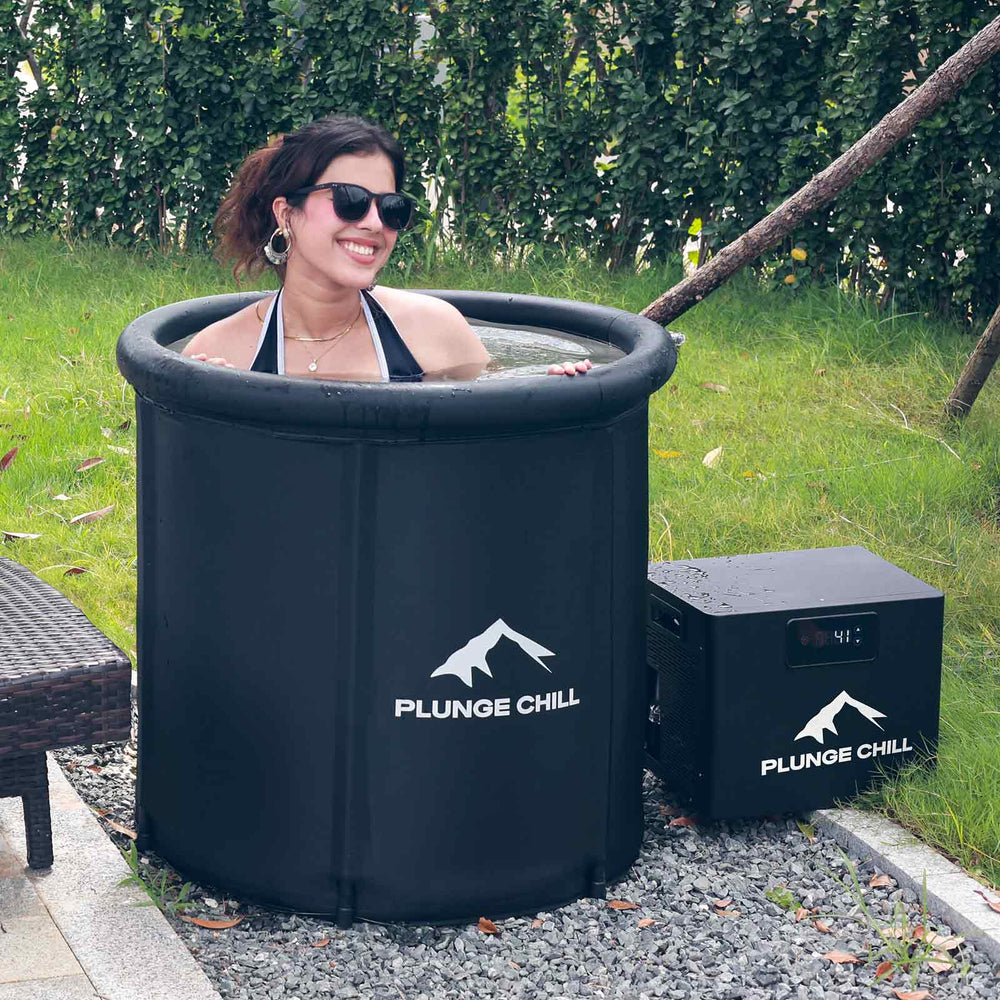
Cold exposure has moved from post‑game folklore to a mainstream wellness habit. As a sports rehabilitation specialist and strength coach who also tests cold‑plunge hardware, I see two parallel stories unfolding. One is physiological: what cold does to the body, for better and worse. The other is technological: how at‑home plunges have evolved from bathtubs packed with ice to smart, self‑cleaning, app‑controlled systems. This guide translates both stories into practical decisions—how to use cold safely and effectively, and how to choose and care for a plunge that fits your goals and space.
What “Cold Plunge” Means—and How It Differs From Showers and Cryo
Cold‑water immersion is purposeful submersion in cold water to the neck or chest for a short bout, usually a few minutes, to trigger a brisk cold shock response. The first seconds matter: heart rate, blood pressure, and breathing spike, and uncontrolled hyperventilation can last for minutes before settling. Peripheral blood vessels clamp down to conserve core temperature, and shivering ramps heat production. These changes are normal, but they also explain why the entry is the riskiest phase and why deliberate breathing before and during the plunge is not optional (Case Western Reserve University).
Not all cold exposures cool the same compartments. Showers mostly chill the skin and extremities and are less effective at lowering core temperature. Full‑body immersion and whole‑body cryotherapy drop core temperature more readily, but by very different mechanisms: water conducts heat far more efficiently than air, while cryo uses extremely cold air down to about −200°F for very short bursts (Case Western Reserve University). If your goal is systemic cooling to dampen acute soreness or heat stress, immersion accomplishes it more reliably than a cold shower at the same nominal temperature.
The Evidence: Real Benefits, Clear Limits, and Important Trade‑offs
Soreness and Recovery Feel
Aggregated trials show cold immersion can reduce immediate soreness and perceived exertion after hard efforts, with small effects that often fade by 24–48 hours. One meta‑analysis found lower delayed onset muscle soreness right after immersion and a modest reduction at 24 hours that disappeared when statistical models accounted for study differences. Muscle damage markers such as creatine kinase sometimes dip at 24 hours, whereas inflammatory markers like C‑reactive protein and interleukin‑6 do not show consistent changes (Frontiers in Physiology; PubMed Central meta‑analysis). In practical terms, cold can make you feel better fast, but it is not a guaranteed anti‑inflammatory “reset,” and the signal is modest and variable.
Performance Within Hours vs. Over Weeks
The short‑term performance picture is mixed, and the details matter. In a randomized crossover study of recreational runners, 15 minutes of water immersion at about 59°F after a taxing session “likely” improved a 5‑kilometer time trial four hours later compared with sitting still, while warmer immersion was neutral or worse; the small sample and statistical approach require cautious interpretation (PubMed Central). Court‑sport and resistance protocols show inconsistent effects: a controlled study found that cold between same‑day resistance bouts lowered heart rate and skin temperature and attenuated muscle oxygenation declines, but did not improve torque output or total work in the next bout (Lippincott Williams & Wilkins). Conference data reported that hot‑water immersion at roughly 104°F after high‑intensity intervals preserved explosive jump performance one hour later better than cold or no immersion, with next‑morning endurance unaffected (American Physiological Society). These differences likely reflect protocol specifics—exercise type, turnaround time, immersion temperature and depth, and whether the next test emphasizes power or pacing.
Across weeks to months, a consistent caution emerges for lifters. Regular post‑lift cold can blunt the normal signaling that drives hypertrophy and strength gains, with multiple studies and reviews flagging reduced long‑term strength or muscle growth when cold follows resistance training sessions. Endurance adaptations appear less sensitive to this interference (Ohio State University; Harvard Health). If muscle size or strength is your primary goal, separate your plunge from heavy lifting by a day or at least many hours.
Mood, Stress, Metabolism, and Immunity
Many people report improved mood, focus, and mental “reset” right after cold exposure. Norepinephrine rises for hours, and endorphin‑like effects may contribute to the subjective boost; how long those benefits last remains uncertain (Case Western Reserve University; Harvard Health). Claims about cold‑induced fat loss lean heavily on brown adipose tissue, but adult BAT depots are small, and realistic daily energy contributions appear modest—on the order of tens of calories rather than hundreds in typical routines, based on physiological estimates of BAT mass and thermogenesis. That perspective helps temper weight‑loss promises that rely on brief plunges alone (Psychiatry & Psychotherapy Podcast). The immune story is also thin: once‑a‑year polar dips have no convincing benefit, and even regular immersion shows uncertain effects outside narrow contexts (Case Western Reserve University).
A useful overlooked nuance is cognitive cost. Cold can transiently impair processing speed and executive function during or right after exposure, especially if the dose is longer or the water much colder. For tasks that demand rapid, high‑stakes decisions or fine motor control shortly after a plunge, strategic timing matters (Psychiatry & Psychotherapy Podcast). A simple verification step is to run a brief reaction‑time or working‑memory test before and after your usual session to see whether that cost applies to you.
Safety First: Who Should Modify or Skip Cold Immersion
The first seconds in the water carry the highest risk because the gasp reflex and hyperventilation can disrupt breathing control and trigger panic; cognitive impairment adds decision risk in open water. People with prior heart attack or stroke, arrhythmias, uncontrolled hypertension, poor circulation, or Raynaud’s should avoid cold plunges unless cleared by a clinician. Beta blockers alter cardiovascular responses and can mask warning signs; seek medical advice first (Case Western Reserve University; Harvard Health; Cleveland Clinic). Practical safeguards include measuring water temperature rather than guessing, entering gradually while controlling breaths, never going alone, planning rewarming in advance, and steering clear of rivers, under‑ice scenarios, or any moving water you cannot fully control (Mayo Clinic Health System). For most healthy athletes and motivated adults, a supervised, progressive approach is safe and manageable, but screening and planning are not optional.

Cold Plunge Generations: How Hardware Evolved
Consumer plunges have moved quickly from improvised tubs to integrated systems. Thinking in “generations” clarifies what you gain as you move up the ladder.
Generation |
Typical Form Factor |
Temp Capability (°F) |
Filtration & Sanitation |
Controls |
Who It Fits |
Gen 0 |
Natural water access or basic bathtub with ice |
Uncontrolled outdoors; bathtub typically 40–55 with ice |
None |
None |
Outdoor swimmers, minimalists, first trials at home |
Gen 1 |
DIY stock tank, chest freezer, or barrel with ice |
About 39–55 depending on ice input |
Manual drain and scrub only |
None |
Budget DIYers; occasional users who accept manual care |
Gen 2 |
Stock tank with external chiller and pump |
About 37–55 with thermostat |
Inline filter; basic chemical care needed |
Dial or simple digital |
Regular users wanting repeatable temps without smart extras |
Gen 3 |
Integrated plunge with insulated tub and chiller |
About 37–55, more stable |
Cartridge filtration plus ozone and/or UV |
Digital control; scheduling |
Households sharing a plunge; reduced daily maintenance |
Gen 4 |
Smart contrast units and commercial‑grade tubs |
Cold about 37–50 and hot about 100–204 |
Multi‑stage filtration; self‑cleaning cycles |
App, Wi‑Fi, remote monitoring |
Gyms/teams; enthusiasts alternating hot–cold with high uptime |
These categories describe function rather than specific brands and help frame trade‑offs. Ice‑driven setups demand more labor per session and do not sanitize between uses. Chillers with basic filtration reduce ice cost and stabilize temperature, but still rely on owner‑managed sanitation. Integrated systems add convenience and consistency, which often translates into more frequent, shorter, safer exposures without the friction of setup. Dual‑zone or contrast rigs simplify alternating hot and cold and support higher usage environments with better water clarity.
If you want to validate a manufacturer’s temperature claim, place a calibrated thermometer in the flow stream after at least 10 minutes of circulation; many onboard sensors read air or internal coil temperatures and can differ from true water temperature at the seat (Confidence: Low; verify using a standalone digital thermometer and compare at multiple points in the tub).

Choosing the Modality That Fits Your Goal
Your goal should dictate both hardware and dosing. For a lifter chasing hypertrophy or strength, cold right after lifting is counterproductive. It is better used later that day or on non‑lifting days for mood, stress management, or general recovery. For endurance or mixed‑sport athletes juggling congested schedules, cold can be a helpful tool to feel and perform better in the next session, especially in the heat. Pre‑cooling before a hot‑weather session can help if exposure lowers core temperature without numbing coordination; limited data suggest cold immersion before training may outperform drinking ice slurries for pre‑cooling in some contexts, but real‑world gains vary and the evidence base is small (Confidence: Low; verify by comparing time‑to‑task failure or time trial output with and without pre‑cooling under the same conditions). If your main aim is mental clarity and stress relief, a repeatable routine that you enjoy and can sustain matters more than squeezing out another few degrees.
A concise way to compare options is to look at temperature, dose, core cooling impact, and typical use‑cases side by side.
Modality |
Typical Session |
Core Cooling Impact |
Best Uses |
Notable Limits |
Cold shower |
About 30–90 seconds, 50–60°F at the tap if attainable |
Mostly peripheral |
Habit‑building, quick reset, breath control practice |
Less reliable core cooling; variable flow and temperature (Case Western Reserve University) |
Cold plunge tub |
About 2–5 minutes, commonly 35–50°F |
Stronger core cooling |
Next‑day soreness relief, heat‑stress recovery, mental reset |
Interferes with hypertrophy/strength if done right after lifting (Ohio State University; Harvard Health) |
Open water |
Time varies; temperatures often 32–60s in lakes/sea |
Variable; can be strong |
Outdoor immersion communities, mood/social uplift |
Safety risks with currents and visibility; temperature fluctuates (Mayo Clinic Health System) |
Whole‑body cryotherapy |
2–3 minutes, roughly −200°F air |
Lower tissue conduction vs water |
Time‑efficient sympathetic arousal |
Expensive; mixed data on recovery vs water immersion (Case Western Reserve University) |
Hot‑water immersion |
About 10–15 minutes, roughly 100–104°F |
Warmth and perfusion |
Preserving power output in short turnarounds; rewarming |
Does not address heat illness; not a replacement for hydration/cooling (American Physiological Society) |
These are not rigid prescriptions; they are starting points to personalize.

Dosing That Respects Physiology—and Reconciling Conflicting Advice
Beginners do best starting warmer and shorter. Water in the 50–60°F range for roughly 30–60 seconds is a manageable entry point. From there, progress toward two to three minutes in the mid‑40s to about 50°F if your goal is acute soreness relief, heat‑stress cooling, or a mental reset. Experienced users sometimes dip to the high 30s for briefer exposures, but colder does not automatically mean better; the impulse to push extremes raises risk without clear added benefit. Cleveland Clinic guidance highlights one to two minutes building toward about three minutes and a practical cap around five minutes for most healthy users; a sports‑medicine perspective from Ohio State University notes ten to twenty minutes at 50–59°F in some recovery protocols, which typically involve partial immersion and less extreme temperatures. Those two frames are not contradictory when you consider water temperature, immersion depth, and whether the aim is systemic cooling versus comfort‑oriented recovery. If your exposure is chest‑deep at 39–45°F, briefer is safer and sufficient; if your water is around 55°F with legs immersed to the hips, staying in longer is both tolerable and often necessary to achieve comparable effects.
When gains in muscle mass or strength are priorities, delay cold for twenty‑four to forty‑eight hours after the session to avoid blunting training adaptations (Ohio State University; Harvard Health). A compromise for mixed goals is to reserve immediate post‑workout cold for congested competition weeks and taper phases, while favoring sleep, nutrition, and low‑intensity movement the rest of the time.
Care and Maintenance: Water You’d Actually Want to Sit In
Clean water is non‑negotiable for safety and skin comfort. Showering before entry, skipping lotions or oils that shed into the water, and covering the tub when not in use go further than most people expect to keep water clear. Cartridge filtration that captures fine particles, paired with ozone and/or UV sanitation, reduces reliance on heavy chemical dosing and keeps smell down in frequently used tubs. Even with robust sanitation, a weekly or bi‑weekly quick clean of the skimmer and filters and periodic water replacement keep things simple. For DIY tanks without filtration, draining and scrubbing on a frequent schedule is the only way to stay ahead of biofilm and debris. Some owners use low‑residue oxidizers to “shock” water after heavy use; consult your manufacturer for compatible agents and avoid mixing chemicals without guidance (Confidence: Low; verify by following the tub’s official maintenance manual and testing free sanitizer levels with a basic water test kit).
In my gym installs, the highest‑leverage habits were the simplest: a pre‑plunge rinse station, a rigid insulated cover that actually stays on, and a weekly five‑minute filter rinse. Those three steps extended water life dramatically and cut skin complaints to near zero.

Buying Tips You Can Trust
Match the tub to your space, power, and tolerance for maintenance. Chillers draw meaningful power and generate fan noise and warm exhaust; placing the unit in a ventilated area and confirming whether it runs on a standard household circuit or requires a dedicated line prevents surprises. Insulation and a tight‑sealing cover matter in garages and cold climates, both for comfort and energy use. Flow rate and water turnover affect how evenly chilled the tub feels at the seat; systems with robust circulation maintain a more uniform temperature envelope. Look for multi‑stage filtration and a sanitation method that does not require daily owner intervention, especially if multiple people will be using it. If you plan to alternate hot and cold in one session, a dual‑zone contrast unit simplifies workflow far more than shuttling between separate devices.
Finally, trust but verify temperature. Onboard displays are helpful, but what you feel is the bulk water temperature where you sit and breathe. A quick check with an independent thermometer prevents a gap between “set to 39” and “feels like 45” that can throw off your dosing and expectations.

Where the Sources Disagree—and Why
You will see conflicting advice on “ideal” temperature and duration, and on whether cold helps or harms subsequent performance. Harvard Health, Cleveland Clinic, and Ohio State University converge on safety and prudence but diverge on dosing details. The most likely reasons are differences in definitions (partial vs. chest‑deep immersion), sample populations (recreational vs. elite, young vs. mixed ages), and endpoints (power within one hour vs. endurance four hours later). When you pull in the conference report favoring hot water to maintain jump performance within an hour and pair it with the time‑trial data suggesting colder immersion might help four hours later, a coherent pattern emerges: match the method to the next performance demand and the time you have to recover.
A second thread concerns metabolism and fat loss. Influencers often imply large calorie burns from short cold sessions. Physiologically, cold can raise energy expenditure via shivering and brown fat activation, but realistic daily contributions from BAT in adults are modest. The most likely cause of the gap between laboratory estimates and popular claims is extrapolation from tightly controlled cooling studies to casual home use without equivalent dose and duration (Psychiatry & Psychotherapy Podcast). If weight management is the goal, cold belongs in the “nice‑to‑have” tier behind diet, strength training, and daily activity.
First‑Hand Field Notes From the Rehab Room
In post‑match settings with ninety minutes or less to the next effort, many athletes report that three minutes around 45–50°F quiets soreness enough to move better in warm‑ups. Power athletes who tried cold immediately after heavy lifting consistently reported feeling “less pumped” the next day—mirroring the lab concern about blunted hypertrophy—and did better when saving cold for off‑days. In summer two‑a‑days, pre‑cooling with a two‑minute immersion around 50°F before outdoor sessions improved perceived exertion in the first thirty minutes, but not always total session output. Those patterns do not replace controlled trials, but they map well to what the better studies already suggest: context rules.
FAQ
What temperature should I use if I am new to cold plunging? Start conservatively around 50–60°F for less than a minute. As breath control and tolerance improve, work toward two to three minutes in the mid‑40s to about 50°F. If the water is below 40°F, keep bouts very brief and proceed only if you already tolerate mid‑40s comfortably.
Will cold plunges help me build muscle? Cold can reduce soreness and help you feel better, but when done right after lifting it likely blunts the cellular signaling that drives hypertrophy and strength over time. If size or strength is your top goal, save your plunge for another day or at least twenty‑four hours later (Ohio State University; Harvard Health).
Are cold showers a valid substitute for a plunge? They are a valid starting point for breath control and habit building and can boost alertness. They are less reliable at lowering core temperature than immersion, so they are not equivalent for systemic cooling or heat‑stress recovery (Case Western Reserve University).
Is whole‑body cryotherapy better than water immersion? Cryotherapy is faster and drier but uses cold air, which transfers heat less effectively than water. The recovery evidence is mixed. For most home users, water immersion is more accessible and at least as effective for the common goals of soreness relief and a mental reset (Case Western Reserve University).
Could a hot soak ever be better than cold? If you need explosive power within about an hour, hot‑water immersion around 100–104°F may restore power output better than cold in that short window. For heat‑stress cooling or soreness damping, cold still has advantages (American Physiological Society).
Does cold exposure burn enough calories to matter for fat loss? Cold can increase energy expenditure, but the contribution from brown fat in adults appears modest in typical routines. It is best viewed as a small add‑on behind nutrition, strength training, and daily steps (Psychiatry & Psychotherapy Podcast).
Takeaway
Cold plunges are a potent stimulus with real, if modest, recovery and mental‑state benefits, and just as real trade‑offs. The strongest safety message is to respect the first seconds of entry and your cardiovascular profile. The smartest training message is to time cold away from heavy lifting if you care about muscle growth. And the most practical buying message is to match the tub to your space, sanitation tolerance, and goals: smoother controls and better filtration often turn a once‑a‑week stunt into a sustainable, safe habit. Use cold as a precise tool, not a cure‑all, and it will earn its place in your recovery toolkit.
Conflicts and gaps across sources mostly trace to differences in temperature, immersion depth, timing, and endpoints. That is not a flaw; it is a reminder to test, measure, and personalize. A thermometer, a timer, and an honest training log remain the best “smart” features you can own.
References
- https://case.edu/news/science-behind-ice-baths-and-polar-plunges-are-they-truly-beneficial
- https://cupola.gettysburg.edu/cgi/viewcontent.cgi?article=2078&context=student_scholarship
- https://www.health.harvard.edu/heart-health/cold-plunges-healthy-or-harmful-for-your-heart
- https://lifestylemedicine.stanford.edu/jumping-into-the-ice-bath-trend-mental-health-benefits-of-cold-water-immersion/
- https://sncs-prod-external.mayo.edu/hometown-health/speaking-of-health/cold-plunge-after-workouts
- https://pmc.ncbi.nlm.nih.gov/articles/PMC11872954/
- https://health.osu.edu/wellness/exercise-and-nutrition/do-ice-baths-help-workout-recovery
- https://health.clevelandclinic.org/what-to-know-about-cold-plunges
- https://mydoctor.kaiserpermanente.org/mas/news/health-benefits-of-cold-water-plunging-2781939
- https://mcpress.mayoclinic.org/healthy-aging/the-science-behind-ice-baths-for-recovery/