As a sports rehabilitation specialist and strength coach who helps clients recover in real-world constraints—often small apartments, shared homes, and tight garage gyms—I see the same friction points come up again and again. People want the recovery benefits of cold exposure, but space, water management, power, and landlord rules get in the way. This guide distills small-footprint options that I’ve deployed or tested, explains what the evidence actually supports, and offers practical buying and care tips to help you build a sustainable, space-smart cold routine.
What Counts as an Ice Bath Alternative in Tight Quarters?
Cold exposure is any deliberate practice that drops tissue temperatures enough to create a physiological response. Traditional ice baths do that by full-body immersion. In small spaces, alternatives can mimic some benefits while reducing footprint, installation, and water-care demands. These include inflatable or foldable plunge pods you can store in a closet; upright, barrel-style tubs that trade length for height; portable tubs paired with external chillers; your existing bathtub with the right adapters; cold showers, face plunges, and bucket pours; cooling vests; and facility-based options like whole-body cryotherapy or gym plunges that offload the footprint entirely.
When I structure plans for clients with limited space, I prioritize four factors: floor footprint and filled weight, setup and teardown time, temperature control and noise, and water-care complexity. Each solution below is framed through those constraints.
Evidence Snapshot: What Cold Exposure Can and Cannot Do
The most reliable short-term effects of cold-water immersion are reductions in soreness and perceived fatigue, with better next-day physical readiness reported in multiple summaries. Mayo Clinic’s sports medicine guidance notes reductions in exercise-induced muscle damage and soreness and recommends short initial exposures that build gradually in duration and intensity. Harvard Health Publishing reviewed a PLOS One meta-analysis and found stress reductions and some sleep improvements, with limited evidence for broad mood or immune benefits and no consensus on ideal protocol. Both sources caution that cold exposure soon after strength training can blunt long-term strength and hypertrophy signals, while endurance training appears less affected.
Academic clinical writing reflects similar nuance. A PubMed Central case-based review describes mixed findings: hydrostatic pressure and vasoconstriction can mimic some benefits of active recovery, yet randomized trials show inconsistent effects on delayed-onset muscle soreness and even transient decrements in subsequent high-intensity performance. Contrast water therapy can hasten lactate clearance, but generalizability and optimal ratios remain unsettled.
There is real disagreement on the size and scope of benefits. In practice, these conflicts often come from differing goals and methods. Mayo’s clinician guidance focuses on pragmatic, short-term recovery outcomes in healthy users. Harvard’s synthesis weighs broader claims like mood and immunity and highlights heterogeneity across studies. Academic reports frequently examine immediate performance and adaptation signals after defined training blocks using tightly controlled but small samples. When you are tight on space and time, interpret claims by the outcome you care about—short-term soreness relief is more consistently supported than sweeping wellness claims—and schedule cold away from the key strength stimulus to avoid blunting adaptation.

Space-Saving Options and How to Choose
Your Existing Bathtub with Smart Add-ons
For renters or anyone who cannot commit floor space, the simplest solution is the bathtub you already have. A faucet-to-hose adapter lets you fill quickly with the coldest tap water, and a small transfer pump makes draining to the tub or shower controlled and mess-free. A waterproof mat reduces slip risk and protects floors outside the tub. The most practical temperature workflow is to fill cold and add ice as needed; a one-to-three ice-to-water ratio is an efficient starting point. For every three gallons of water, roughly one gallon—or about 7.6 pounds—of ice helps you reach target temperatures. Keep sessions short and use a digital thermometer to track water temperature. If you plan two plunges in a day, covering the water between sessions helps retain cold and reduces total ice.
A realistic limitation is water turnover. Without filtration, you will drain after one or two uses to avoid hygiene issues. On the plus side, there is nothing to store, and plumbing is the easiest of any option.
Inflatable and Foldable Plunge Pods
Portable, inflatable tubs are purpose-built for small spaces. In my experience these are the lowest-friction way to start a consistent at-home routine when you lack a patio or garage. The pitch is compelling: under-bed or closet storage, sub–40-pound carry weight when dry, room-to-room portability, and inflation with a budget electric air pump that many online retailers sell for under twenty dollars. Apartment-focused guidance from a leading inflatable brand emphasizes routine-friendly practices like keeping a basic kit with a pump, hose, and thermometer; filling from a bathroom or kitchen faucet; and draining with gravity plus a small pump if needed. An insulated, buckled cover can meaningfully reduce ice use between sessions, and reusable ice packs offer a practical substitute when freezer space is limited.
A concise protocol that fits most small-space use is to keep water below 60°F and avoid pushing colder than 40°F, since benefits drop off while discomfort rises. The main tradeoffs are water turnover, as most portable tubs are drained after one or two uses, and less precise temperature control than chiller-based systems. There is also a quiet sizing caveat worth verifying before you buy. One prominent portable model lists approximately 34 inches long by 13 inches wide when inflated. That sounds extremely compact, but it may be too tight for full shoulder immersion in larger athletes. Suggested verification: request interior dimensions and a photo of a user of your height submerged to the shoulders before purchase.
Upright Barrels and Compact Vertical Tubs
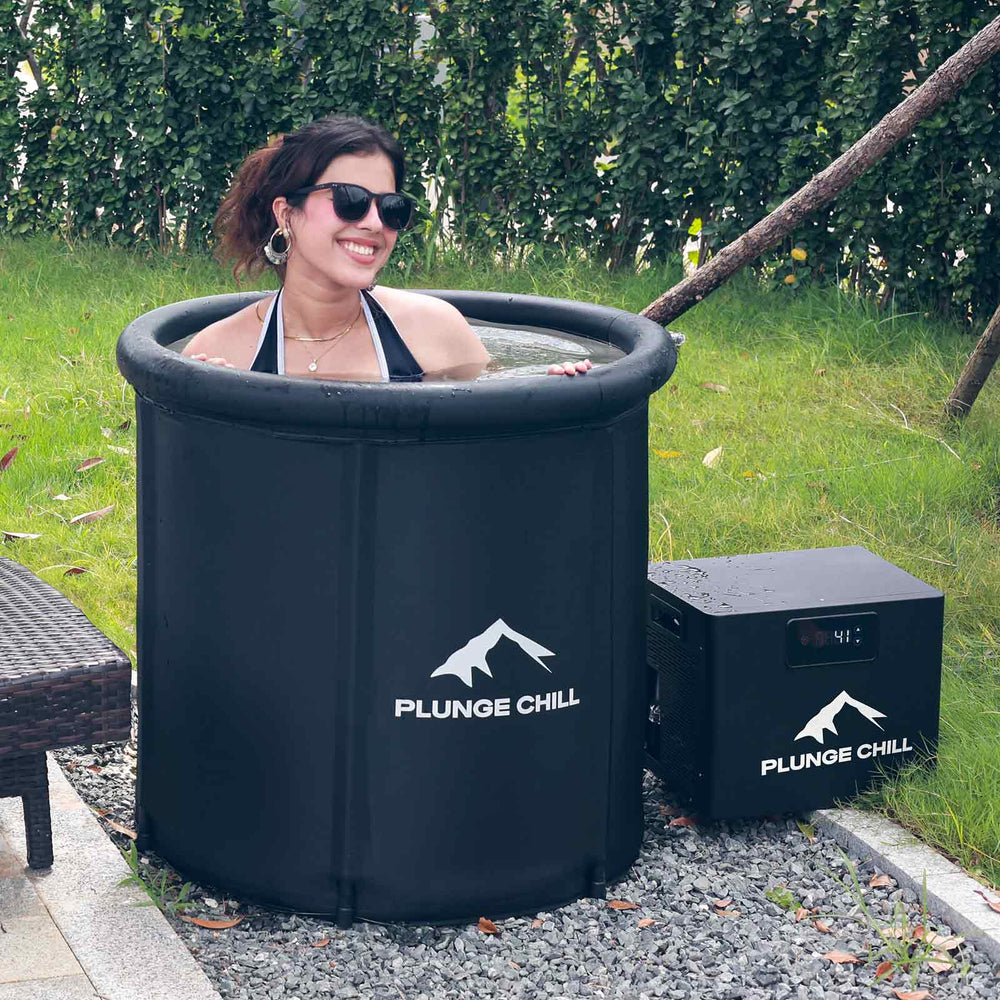
When floor length is the constraint but you can spare some height, upright designs minimize footprint while still allowing deep immersion. Options like barrel-style tubs and compact vertical systems concentrate the body in a smaller circle, often around 31 to 36 inches wide with heights near 41 to 42 inches. Testing notes from independent reviewers highlight that vertical tubs can feel cramped compared to lie-back designs, sometimes requiring a crouch or squat to submerge the shoulders, and many include a step stool which slightly extends the effective footprint. On the upside, these designs bring you shoulder-deep despite occupying a small square on a patio or near a window, and they drain easily through a low port.
Be mindful of power. One compact vertical system uses a standard 120-volt outlet but may trip a shared circuit during aggressive cooling; a dedicated line is recommended. That recommendation aligns with specifications from other chiller-based brands that call for a dedicated 120-volt, 15-amp circuit to avoid sharing load. Upright tubs often include filtration with ozone, which extends water life and reduces the frequency of full changes compared to ice-only barrels.
Portable Tubs with External Chillers
This class offers the best of both worlds for many small-space athletes: a soft-sided or inflatable tub that stores easily and an external chiller you can position against a wall for airflow. In practice, the tub may weigh around fifteen pounds empty, while the chiller can come in closer to eighty to ninety pounds, which is still manageable for one strong person or two people. Well-regarded setups target 32 to 37°F at the low end, and some even heat to hot-tub temperatures, which increases year-round utility if your climate swings widely. App control and self-priming circulation are common on modern units, and warranties of one year are typical in this category.
The tradeoffs are power, noise, heat exhaust, and footprint. You need a dedicated outlet and enough clearance for the chiller to breathe. Expect a small hum that may be noticeable in a quiet apartment at night, and plan for heat exhaust that can warm a tight room. Energy costs are surprisingly modest in many cases, on the order of about fifty cents to one dollar per day for efficient, well-insulated chiller systems according to retail guidance, but that varies with ambient temperature and usage.
Off-Site Cryotherapy and Gym Plunges
If floor space is nonnegotiable or lease terms are tight, you can outsource the footprint. Whole-body cryotherapy chambers expose you to extremely cold dry air for very short sessions, and many gyms now offer cold plunge access by appointment. Sessions are brief, highly controlled, and require no at-home water care. They are also relatively expensive per use and less accessible for daily routines that hinge on immediate scheduling after specific training sessions. Cryotherapy carries specific contraindications—hypertension, heart disease, and Raynaud’s among them—so pre-participation screening is essential.
Non-Immersion Options That Help in a Pinch
Cold showers, bucket pours, face plunges, and cooling vests do not require substantial space or water management. A cold shower that finishes with thirty to sixty seconds of the coldest water you can tolerate is the gentlest entry point and can be extended to a total of five to ten minutes over time. Bucket pours are short and intense; face plunges harness the diving reflex with fifteen to thirty seconds of immersion and are particularly useful when the goal is acute stress modulation rather than full-body recovery. Cooling vests holding about 55 to 65°F against the skin for one to three hours provide a low-intensity stimulus you can wear while moving around your apartment. These approaches do not replicate the full hydrostatic effects of immersion but can meaningfully reduce perceived stress and improve adherence because they fit the space you have.

Comparison Table: Small-Space Alternatives at a Glance
Option |
Typical Footprint |
Temperature Control |
Water Care |
Setup and Storage |
Relative Cost |
Best For |
Bathtub with adapters |
No additional footprint |
Ice and cold tap; manual |
Drain after 1–2 uses |
Fast setup; no storage |
Low |
Renters who want zero gear |
Inflatable/foldable pod |
About a yoga mat when in use; closet-sized when stored |
Ice and cold tap; insulated cover helps |
Drain after 1–2 uses |
Inflates in minutes; stores under bed |
Low to moderate |
Apartment users who value portability |
Upright barrel/compact vertical |
Roughly 31–36 in wide, 41–42 in tall |
External chiller common; down to about 37–38°F |
Filtration and ozone extend water life |
Fixed placement; step stool included; small square footprint |
Moderate to high |
Small patios or corners; deep immersion in tight space |
Portable tub + external chiller |
Tub near a small sofa’s footprint; chiller against wall |
App-controlled; 32–37°F; may heat to hot-tub temps |
Filtration and sanitation reduce changes |
Tub light, chiller ~88 lb; needs ventilation |
Moderate to high |
Frequent plungers who need precise temps |
Cryotherapy sessions |
No home footprint |
Extremely cold dry air; 2–4 minutes |
None at home |
Reservation-based |
Per-session cost |
Users who cannot keep equipment on site |
Showers, face plunges, vests |
No added footprint |
Shower cold; face basin 50–60°F; vests 55–65°F |
None |
Instant; wearable or bathroom-only |
Very low to low |
Adherence and daily stress modulation |
Practical Placement, Plumbing, and Power
Space-smart cold setups rise or fall on the small details. If you plan to use a balcony, confirm it is permitted and physically reinforced for the filled weight of your setup. Suggested verification: request the balcony’s live load rating from building management and compare it with the filled weight of your tub, which for many rigid tubs can exceed 700 to about 1,020 pounds based on product tests summarized by independent reviewers. Indoors, a waterproof mat under any portable tub protects floors and reduces splash risk. A faucet adapter that threads onto a bathroom or kitchen tap makes filling effortless. When draining indoors, a compact transfer pump that routes water to a tub or shower keeps things controlled and fast. For portable ice workflows, reusable ice packs save freezer space and lower ongoing costs.
Electrical planning matters more than most small-space buyers expect. Compact vertical or chiller-based systems often specify a dedicated 120-volt, 15-amp circuit. Brand documentation and hands-on testing from product reviewers have noted that running on a shared circuit can trip breakers during aggressive cooling, an annoyance you can avoid with a dedicated line and careful outlet selection. Leave space around any chiller intake and exhaust, both for performance and to keep noise lower.
Safety and Programming with Training
The safest small-space protocol starts conservatively. Begin with thirty to sixty seconds and grow toward five to ten minutes as tolerance improves. Keep water below 60°F, and understand that going colder than 40°F is not necessary for most recovery goals and adds discomfort for marginal returns. The best schedule separates cold exposure from heavy strength training by hours to avoid blunting hypertrophy and strength signals; many clients place cold on off days or in the evening after morning lifting. For endurance-focused training, the risk of blunting appears smaller, but I still avoid immediate post-interval plunges when the goal is long-term aerobic adaptation.
Medical clearance is appropriate if you have cardiovascular disease, poorly controlled blood pressure, circulation problems, or a history of arrhythmia. Safe entry and exit matter more in tight spaces, so plan handholds, steps, and a stable mat. Avoid using portable tubs alone the first few times and rewarm gradually with dry clothing and light movement rather than blasting hot water onto cold skin immediately.
Care, Cleaning, and Water Management in Tight Spaces
Water hygiene is the hidden constraint in small apartments. For bathtubs and ice-only portable tubs, the realistic cadence is to drain after one or two uses and wipe dry to prevent biofilm. Skimmer nets and covers help keep debris out. Chiller-based systems with filtration and sanitation—such as sediment or micron filters combined with ozone or ultraviolet—extend water clarity and reduce full changes. Independent reviewers have reported cleaner water for months at a time in well-maintained chiller systems, with a caveat that leaving circulation off invites buildup. For portable tubs without filtration, the cover still helps retain cold between same-day sessions and cuts total ice use. Expect an energy profile similar to a small freezer for efficient chillers, in the ballpark of about fifty cents to one dollar per day as noted by retail guides, which is often lower than people assume. That estimate shifts with climate and set temperature.

Buying Tips for Small Spaces
Start with placement. Measure the exact rectangle or square you can allocate and include doorways and turns in your plan. Ask brands for exterior and interior dimensions and a filled weight estimate. For inflatable or foldable options, verify interior depth and length relative to your height to ensure you can submerge to the shoulders without hunching excessively. For vertical barrels, accept the crouch tradeoff for the minimal footprint, or look for models with ergonomic contours if you tend to cramp in deep knee flexion.
Temperature control separates effective routines from aspirational ones. If daily plunges are your goal, integrated or external chillers with precise control make adherence easier than constant ice runs. Look for filtration plus ozone or UV to extend water life. Noise and heat exhaust should be considered if the unit will live in a bedroom or small living room. Electrical needs are non-negotiable; a dedicated 120-volt, 15-amp circuit is standard for many consumer chillers, and some brands explicitly recommend it to avoid nuisance trips. Warranty terms of a year are common; serviceability and replacement filter availability will matter more over time than a flashy temperature claim. Financing is available from some brands, but compare total cost of ownership, including filters, sanitizer kits, energy, and any accessories like steps, mats, and covers.
An underappreciated decision lever in apartments is water management. If your tub will be drained after most uses, prioritize fast fill and drain with a faucet adapter and transfer pump. If you will keep water for weeks, choose a model with robust filtration and sanitation and budget time for quick filter maintenance. The best cold plunge is the one you can use consistently without stressing your living situation.
Overlooked Practicalities That Change Outcomes
A compact inflatable tub can advertise a very small footprint, but interior fit drives actual usability. If the listed dimensions seem too small to submerge your shoulders comfortably, ask for interior photos or try a demo before purchase. Suggested verification: measure your sitting hip-to-shoulder height and compare it to the tub’s interior depth.
Power reliability is a day-to-day issue in older apartments. Product testers have noted that 120-volt chillers can trip shared breakers when the compressor ramps. A dedicated circuit aligns with brand guidance and preserves the experience. It is a small planning step with outsized impact.
Finally, evidence conflicts are not a reason to avoid cold entirely. They are a reason to match the tool to the goal. Harvard Health Publishing and Mayo Clinic draw different lines around global wellness claims versus pragmatic recovery. If your aim is less soreness tomorrow, the case is stronger. If your aim is long-term strength development, schedule cold thoughtfully or choose gentler alternatives like cold showers and cooling vests on heavy lift days.
Takeaway
In small spaces, the best cold exposure strategy is the one that fits your square footage, your power and plumbing reality, and your training objectives. Bathtub conversions and inflatable pods minimize cost and storage but require frequent draining and ice. Upright barrels and portable tubs with external chillers shrink footprint while offering deep immersion and better water life, at the cost of power planning and higher upfront spend. Cold showers, face plunges, and cooling vests are legitimate, low-friction tools for daily stress modulation. Across all options, keep water under 60°F, schedule cold away from heavy strength work, and plan water and power logistics up front so your routine is sustainable and neighbor-friendly.
FAQ
Is a cold shower a meaningful alternative if I live in a studio?
A cold shower that starts warm and finishes with thirty to sixty seconds of the coldest water you can tolerate is a practical, adherence-friendly entry point. You can extend to a total of five to ten minutes over time. It does not replicate the hydrostatic effects of immersion but can reduce stress and perceived soreness with zero footprint. This guidance aligns with clinician advice summarized by Mayo Clinic and consumer testing norms.
Will cold plunges hurt my strength or muscle gains if I train hard?
Cold exposure immediately after resistance training can blunt signals related to muscle growth and strength adaptations. That risk is smaller with endurance training. Schedule cold several hours away from heavy lifting or on off days if long-term strength is the goal. This programming approach is supported by Harvard Health Publishing and aligns with sports medicine guidance.
What temperature and duration should I target in a small-space setup?
Most healthy users do well beginning with thirty to sixty seconds and progressing to five to ten minutes, keeping water below 60°F. Colder than 40°F is rarely necessary and increases discomfort without clear added benefit for recovery. This range is reflected in both brand protocols aimed at adherence and clinician summaries.
How do I keep the water clean in a portable tub?
For ice-only portable tubs and bathtubs, plan to drain after one or two uses and wipe surfaces dry. Covers and skimmers help reduce debris. If you choose a chiller-based system with filtration and ozone or UV, water can stay clear for weeks to months with routine filter care, as independent product testing has observed. Expect better water life if you keep circulation running.
Can I put a cold plunge on my apartment balcony?
Some brand guides suggest balcony placement if the structure is reinforced and allowable by building rules. Because filled weight can range from several hundred to over one thousand pounds depending on the model, verify your balcony’s live load rating with building management before setup. Suggested verification: request documentation of live load limits and compare to the manufacturer’s filled weight estimate.
Do I need a special outlet for a chiller-based plunge?
Many consumer units specify a dedicated 120-volt, 15-amp circuit, and testers have reported that aggressive cooling can trip shared circuits. A dedicated outlet reduces nuisance trips and protects other devices. This requirement is noted in brand documentation and independent test summaries.
Sources Cited in Context
This article references clinical summaries and product testing from Mayo Clinic, Harvard Health Publishing, PubMed Central, and independent reviewers with hands-on cold-plunge testing. Product and setup practices reflect apartment-focused guidance from an inflatable cold tub manufacturer and specifications from compact vertical and portable chiller systems. Detailed brand links are provided separately in the References.
References
- https://www.health.harvard.edu/heart-health/cold-plunges-healthy-or-harmful-for-your-heart
- https://sncs-prod-external.mayo.edu/hometown-health/speaking-of-health/cold-plunge-after-workouts
- https://pmc.ncbi.nlm.nih.gov/articles/PMC2938508/
- https://www.ie.edu/center-for-health-and-well-being/blog/the-wim-hof-method-extreme-stress-management-with-remarkable-benefits/
- https://www.apartmenttherapy.com/6-best-water-filter-solutions-ive-tested-206928
- https://www.coldtub.com/
- https://www.garagegymreviews.com/best-cold-plunge-tub
- https://www.thespruce.com/best-cold-plunge-tubs-7550015
- https://www.verywellfit.com/best-cold-plunge-tub-8646750
- https://bluewavespas.com/cold-plunge-vs-ice-bath-which-is-best-for-recovery/