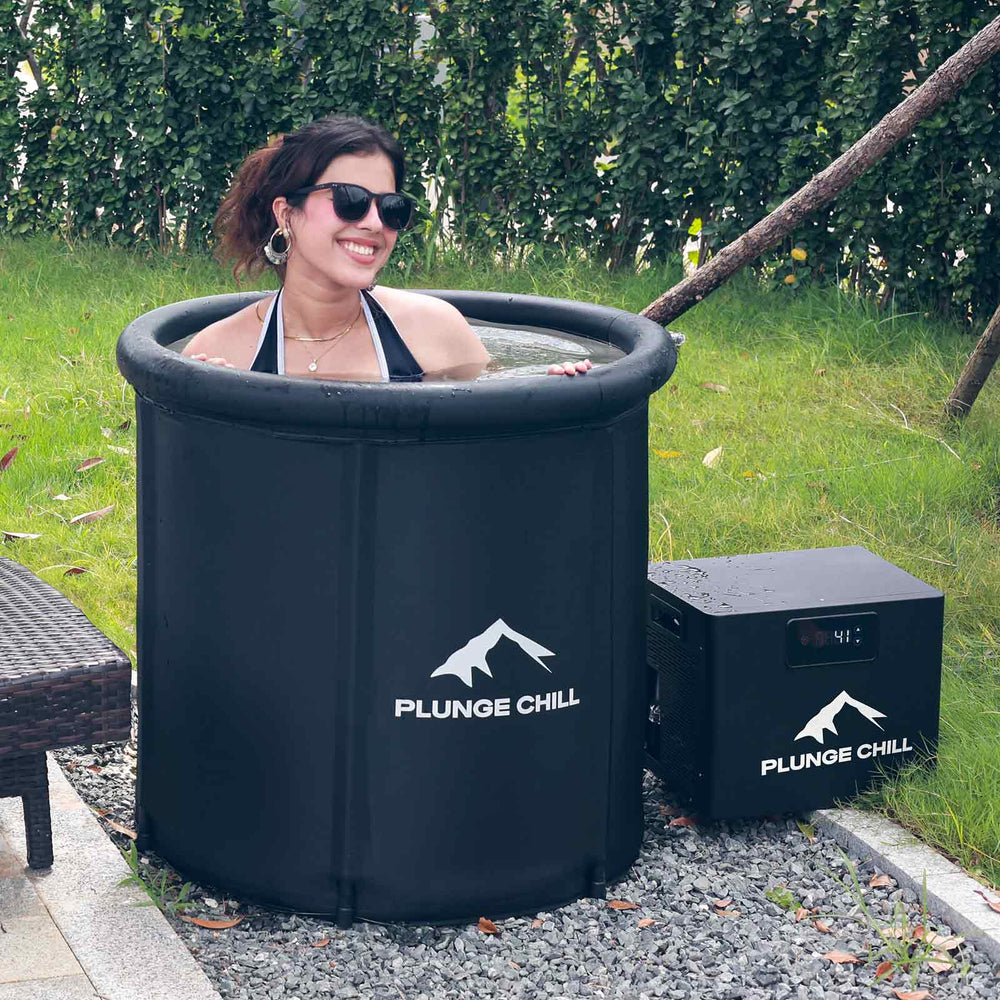
Cold-water immersion has moved from locker rooms to garages and patios across the country. As a sports rehabilitation specialist and strength coach who also reviews cold-plunge products, I see two questions dominate the conversation. First, does it actually help recovery and resilience? Second, which tub, barrel, or chiller is worth your money, your space, and your maintenance time? This guide answers both with an evidence-forward perspective and practical, firsthand advice so you can choose an option that fits your training goals, home setup, and safety profile.
What “Cold Plunge” Means and How It Works
Cold-water immersion is deliberate submersion in cold water for a short period to provoke predictable physiological responses. The cold constricts blood vessels and reduces local metabolic activity; when you exit, rewarming increases circulation and often eases the sensation of soreness. Those mechanisms are broadly described by sports medicine and academic sources and align with practical guidance from Mayo Clinic Health System and Ohio State Health.
Benefits remain mixed and depend on the outcome you care about most. For perceived soreness and next-day readiness after endurance or high-volume training, reductions are commonly reported. For strength and hypertrophy, the picture is different. Several controlled trials have shown that immersing too soon and too often after lifting can blunt the molecular signaling that drives muscle growth and strength over time. Ohio State Health and Mayo Clinic Health System both note this trade-off and suggest placing cold exposure away from heavy strength sessions when long-term gains are the priority.
There is growing interest in mental and autonomic benefits. Harvard Health summarizes a 2025 review showing short-term stress reduction and potential sleep improvements in men, but little consistent evidence for mood or immunity. A University of Oregon study reported lower heart rate, blood pressure, and cortisol and better mood after a single 15-minute immersion, but it focused on healthy college students and immediate outcomes. Differences in population, duration, and endpoints likely explain why lab results vary from consumer experiences. It is reasonable to expect modest acute benefits for stress and alertness, with larger effects most commonly reported for soreness relief rather than performance enhancement across the board.
Safety, Dosing, and Timing you can Trust
Safety comes first, especially around the first 60 seconds of immersion when cold shock elevates breathing rate, heart rate, and blood pressure. Harvard Health and the American Heart Association caution anyone with atrial fibrillation, other rhythm disorders, peripheral artery disease, Raynaud’s, or uncontrolled blood pressure to avoid plunging or to seek medical clearance. Do not plunge alone, avoid alcohol, use a grounded GFCI outlet outdoors, and have a clear rewarm plan before you start.
Two dosing approaches are sensible. A clinic-style protocol often used in research and hospital guidance is 10 to 20 minutes at 50–59°F with supervised rewarming. A more conservative fitness approach begins warmer and shorter, for example 30 to 60 seconds and building toward a few minutes as tolerance improves. Frequency can be daily for resilience and alertness, but I avoid placing cold exposure immediately after heavy lifting. For strength and muscle gain, 24 to 48 hours of spacing from the lift mitigates interference while preserving perceived recovery benefits, consistent with guidance from Ohio State Health and Mayo Clinic Health System.
There is also a weekly “dose” concept popularized in the training world. Chilly GOAT cites researcher Susanna Søberg’s suggestion of about 11 minutes of total cold per week split across sessions. Because this appears in brand materials rather than a systematic guideline in the notes set, consider it a practical starting point rather than a rule. Verify by reviewing Søberg’s primary publications or a summary in a peer-reviewed outlet to confirm the weekly total and recommended temperatures.

Your Choices: From Ice-in-a-Tub to Integrated Chillers
You can create cold exposure with a bag of ice and a stock tank, or with a purpose-built, chiller-driven system. The practical differences come down to temperature control, convenience, and cost. An ice bath is inexpensive upfront and effective for occasional use, but the temperature rises as ice melts, and the recurring bagged-ice expense adds up. A cold-plunge tub with an integrated chiller maintains a set temperature and filtration automatically, which is essential for consistent daily use and predictable dosing.
Form factors vary. Upright barrels save space and suit quick dips. Reclined, full-length tubs allow horizontal immersion and more relaxed breathing mechanics. Inflatable tubs prioritize portability and storage. Some units heat as well as cool, enabling contrast therapy in one chassis. There are even couples-oriented designs with seats on both ends.
Costs span a wide range. Men’s Fitness and Inergize Health describe manual or inflatable setups in the low hundreds of dollars, add-on chillers in the mid hundreds to low thousands, integrated compressor units from a few thousand dollars upward, and pro-grade or commercial units that can exceed $8,000. Mayo Clinic Health System notes premium tanks can approach about $20,000. This spread reflects materials, insulation, horsepower, sanitation technology, and warranty support.

Representative Models and When They Fit Best
The market is crowded. The profiles below reflect specifications and observations reported by reputable reviewers and manufacturers in the notes set. Where information conflicts, I highlight it transparently so you can verify before buying.
Model |
Type & Form Factor |
Temperature Range (°F) |
Capacity (gallons) |
Dimensions (L×W×H) |
Weight Empty (lb) |
Notable Features |
Price (USD) |
Redwood Outdoors Alaskan Cold Plunge |
Upright cedar barrel |
Cold only by default; optional chiller kit |
Not stated |
Not stated; height 30 in |
About 140 |
Western red cedar with steel interior, steps included, built-in seat, outdoor-friendly, assembly required |
Chiller add-on about $3,700 more than base |
Sun Home Cold Plunge Pro |
Full-size tub, indoor/outdoor |
Listed 37–104; separate claim of 32 low |
95 |
Length about 78 in; width/height not stated |
180; testers also noted a heavy frame near 345 |
Stainless-steel interior, app controls, ozone/UV sanitation, wheels |
About $10,499 |
Nordic Wave Viking Gen 2 |
Elevated barrel with external chiller |
37–104; insulation reportedly holds near 35 |
About 85 |
53 × 30 × 24 in |
Tub about 60; chiller about 55 |
¼ HP chiller with touchscreen, sloped interior for drainage, standard outlet, compact footprint |
Not stated |
The Plunge |
Reclined tub, indoor or outdoor |
39–60 |
100 |
67 × 43 × 24 in |
Not stated |
Ozone and 20‑micron filtration, underwater light, optional app, plug‑and‑play |
Not stated |
Plunge All‑In (outdoor) |
Outdoor integrated-chiller tub |
Down to about 37; heated variant available |
One user |
Length 76 in; width/height not stated |
About 270; filled about 1,100 |
App control, underwater light, dedicated circuit recommended |
About $8,990 |
COLDTUB Icebreaker |
Two‑person, seats at both ends |
Not stated |
110 |
96.5 × 30 × 42.5 in |
Not stated |
Couples layout; plan for nearly 8 ft install space |
Not stated |
Passion Ice Baths Revive Pro |
Premium, heated and cooled |
About 37.4–104 |
Not stated |
Not stated |
Not stated |
Ergonomic seating, constant filtration, customizable look |
Not stated |
Chilly GOAT Alpine |
Integrated heated/cooled |
About 40–104 |
Not stated |
Not stated |
Not stated |
Nonslip flooring, armrests, dual‑flow jets to reduce thermal layering, app control |
Not stated |
Two details warrant extra scrutiny. Sun Home’s unit is listed with a 37–104°F range, but separate messaging claims chilling to 32°F. The difference could reflect how the range is defined under load versus no-load minimums. Verify by checking the manufacturer’s spec sheet for “operating setpoint” and “minimum attainable” under typical ambient conditions with lid closed. The other is weight. Sun Home is described as 180 lb empty, yet testers also reported a heavy frame around 345 lb. That discrepancy could be the bare tub versus the full assembly including chiller casing and frame. Verify with shipping weight and component breakdown from the brand.
Fit, Ergonomics, and Space Planning
Comfort affects adherence as much as temperature. Upright barrels such as the Redwood Outdoors Alaskan work well when space is tight, and the built-in seat and steps reduce the strain of entry and exit. BarBend testers described the footprint as compact but noted that assembly can be finicky, which is common with wood-and-steel barrels that ship in panels. Elevated barrel designs like the Nordic Wave Viking compress the footprint while enabling full-body submersion with careful positioning. That said, very tall users can feel cramped. A tester who is 6 ft 4 in described limited legroom; this aligns with the reported 53-inch length. If you prefer to recline and stretch out, the Plunge and Plunge All-In offer longer layouts, with the All-In reported to fit users up to 6 ft 9 in according to Wanderlux.
Consider real-world body dimensions and movement constraints. Athletes with lumbar stiffness often prefer reclined positions that allow posterior pelvic tilt. Individuals with knee osteoarthritis may find upright barrels easier because they avoid deep hip flexion and adduction on entry. In my rehab setting, I tend to recommend reclined designs for those managing back tightness and upright or elevated barrels for those who prioritize quick dips between sessions and minimal footprint.

Power, Placement, Delivery, and Installation
Most compressor-chilled tubs run on standard home power, but the details matter. Nordic Wave Viking’s chiller uses a standard outlet and can trip a breaker if cooling aggressively on a shared circuit. The Plunge All-In plugs into a standard circuit, yet the manufacturer recommends a dedicated line; Wanderlux’s long-term review underscores the wisdom of that advice. Outdoors, use a properly grounded GFCI outlet and plan for splash, condensation, and hose routing.
Floor load is easy to underestimate. Water weighs about 8.3 lb per gallon. A 100-gallon tub adds roughly 830 lb of water before you count the tub itself and the user. The Plunge All-In reportedly weighs about 1,100 lb filled and about 270 lb empty, so check joist orientation and spacing if installing upstairs and consult a contractor for peace of mind. Placement clearances for chillers improve efficiency and noise control. Leave room for easy access to drains and filter housings so maintenance does not turn into a project.
Freight delivery often includes curbside handoff with an appointment call. Redwood Outdoors notes that any adult at the address can accept delivery and that missed appointments can incur fees. Inspect the packaging upon arrival and photograph any damage before signing. If you live where winters dip below freezing, either buy a heated variant, plan for full winterization, or add a pipe-heater solution verified by the manufacturer so you do not crack internal lines.

Water Quality, Maintenance, and Reliability
Clear, safe water requires a system-level approach. Integrated filtration with an appropriate micron rating, plus ozone or UV, reduces manual intervention. The Plunge includes ozone and a 20‑micron filter. The Sun Home Cold Plunge Pro uses ozone and UV. Multi-stage schemes cut down on chemical load but do not eliminate the need for testing and balancing appropriate sanitizers for the tub’s materials. A simple schedule helps: shower before plunging, keep the lid on whenever the tub is idle, skim surface debris, and change filters on a consistent cadence. Wanderlux reported filter changes about every two weeks for Plunge All-In household use, periodic scrubbing of the waterline, and a full drain-and-clean every month or two.
Two practical reliability notes stand out. First, app-enabled features are convenient but rely on stable home Wi‑Fi and power. Wanderlux observed that power outages can reset setpoints and make Wi‑Fi finicky afterward. Keep your temperature settings documented and be ready to re-pair devices after storms. Second, thermal layering can make the water at the surface warmer than the bulk temperature. Chilly GOAT highlights dual-flow jets to disrupt stratification and deliver a more uniform temperature at skin level. This detail is often overlooked and becomes more important in rectangular tubs with larger surface areas. Verify by measuring temperatures at multiple depths and corners before and during a plunge and observing how jet orientation changes readings.

Ownership Costs and Value Over Time
Value depends on how often you plunge and how much you care about precise temperature. If you plunge daily for short sessions, an integrated chiller’s always-ready predictability saves time and ice costs while improving adherence. Sun Home’s unit sits at the top of the luxury spectrum around $10,499 with robust sanitation and indoor/outdoor durability. The Plunge All-In is reported around $8,990 and is positioned for outdoor daily use. Nordic Wave Viking offers a compact footprint with real temperature control and standard power. Redwood Outdoors Alaskan provides a traditional barrel experience at a lower base price, but adding a chiller increases the total by about $3,700 and moves the bundle into premium territory.
If your goal is occasional recovery after a long run in hot weather, a manual ice bath is cost-effective and gets the job done. For tournament settings where repeated bouts are planned, portable tubs paired with wheelable chillers can strike a balance of portability and control. Men’s Fitness notes that louder compressors, higher energy draw, and less insulation raise operating costs; good insulation and a tight cover pay for themselves over time.
How I Integrate Cold Exposure With Strength and Rehab
In athletes chasing strength or hypertrophy, I place cold exposure away from the training window so I do not mute hard-won adaptation signals. That usually means morning plunges on off-days or later in the day after a lifting session with at least a few hours of spacing. For endurance-heavy blocks or heat stress scenarios, I use cold exposure more liberally, as the interference risk is lower and next-day readiness matters. When a client is new to plunging, we start with warmer water near the top of the effective range and short durations to tune breathing and exit strategy. As resilience improves, we reduce temperature or extend duration a bit, but only as needed. These choices reflect the mixed evidence picture summarized by Harvard Health, Ohio State Health, and Mayo Clinic Health System.

A Few Subtle Points That Matter in the Real World
Different outlets disagree on optimal temperature and time for benefits, which can confuse buyers. The likely cause is heterogeneity: studies use different water temperatures, immersion styles, durations, and endpoints. Men’s sleep improvements reported in a PLOS One review contrasted with no consistent mood or immunity benefits, while the University of Oregon lab data focused on immediate physiological markers in young adults. These are not contradictions so much as different lenses. The practical solution is to align your dose with your goal and to track a simple metric you care about, such as next-day leg soreness after squats or heart rate variability trend lines over a month.
Electrical reality is another overlooked factor. Reviewers have documented breaker trips when a chiller competes with other appliances on the same circuit or when temperature is driven down aggressively on hot days. This is not a fault of the product so much as a mismatch with older home wiring. A dedicated 15–20 amp circuit dramatically reduces headaches and may be required to maintain warranty coverage. Verify on the product’s electrical nameplate and installation manual and confirm circuit capacity with a licensed electrician.

Buying Checklist in Plain Language
Before you buy, confirm you have the space for the tub and the pathway to get it into place. Verify your circuit capacity and whether the brand recommends a dedicated circuit. Decide whether you prefer upright dips or reclined immersion and test the posture with your height in mind; a 6 ft 4 in user will not experience a 53-inch barrel the same way as a 5 ft 8 in user. Look for integrated filtration plus ozone or UV if you plan to keep water in the tub for weeks. Ask for the minimum operating temperature under normal ambient conditions, not just the absolute minimum claim. Request the empty and filled weights so you can check floor load safely. Finally, read warranty and parts availability terms; filters and seals are consumables and should be easy to get.

Care and Cleaning Without the Headaches
Keep a cover on whenever the tub is idle to reduce debris and energy use. Shower before plunging to minimize organic load. Test sanitizer levels on a regular cadence, and match chemicals to the tub’s materials to avoid discoloration or seal damage. Clean the waterline with a diluted, manufacturer-recommended solution during filter changes. Use built-in drains when possible, but be ready to use gravity drains if the primary port is slow or unreliable; a simple downhill hose slope often speeds things up. Plan to change filters every couple of weeks in household use and more often with heavy traffic. Expect app disruptions after power outages and keep your temperature schedule saved for quick reset.
Pros and Cons by Situation
If you want the most consistent experience with the least friction, an integrated chiller is superior because it holds temperature and keeps water clear with modest ongoing care. The trade-offs are higher upfront cost and the need to plan for power, weight, and drainage. If you plunge occasionally and cost matters most, a simple tub with ice is effective and fast to set up, but you will spend time and money on ice and you will never truly know if the water is as cold as your last session. Upright barrels minimize footprint and simplify entry; reclined tubs maximize comfort for longer soaks and taller bodies. Inflatable options store away easily and travel well, but they trade away durability and thermal performance.
FAQ
How cold should a cold plunge be to see benefits?
Most practical protocols fall between about 50 and 59°F, where cold shock and vasoconstriction occur without undue risk for healthy adults. Several reviewers and hospital sources cite this range, and some premium units can go colder. There is no universal best temperature; start warmer, establish safe breathing and exit control, and then adjust downward as needed.
How long should a session last and how often should I plunge?
Hospital guidance often cites 10 to 20 minutes for controlled recovery work, whereas many athletes begin with 30 to 60 seconds and build toward a few minutes. Frequency depends on your goal. Daily plunges are reasonable for resilience and alertness if you tolerate them well. If you are pursuing strength or hypertrophy, avoid plunging immediately after lifting and consider spacing sessions by a day or two to protect adaptation, as noted by Ohio State Health and Mayo Clinic Health System.
Will plunging help me lose fat?
Cold exposure can increase energy expenditure during rewarming and is associated with brown fat activation. This mechanism is plausible and supported at a basic physiology level, but body-composition changes from plunging alone are not guaranteed. Use cold exposure to complement training, nutrition, and sleep rather than as a primary fat-loss tool.
Is cold plunging safe for people with heart conditions or Raynaud’s?
Harvard Health and the American Heart Association caution strongly against cold plunging for anyone with rhythm disorders such as atrial fibrillation, peripheral artery disease, Raynaud’s, or uncontrolled blood pressure. If you have cardiovascular risk factors or diabetes with neuropathy, get medical clearance first. When in doubt, do not plunge.
Do I need a tub that heats as well as cools?
Heating adds contrast therapy in one footprint. The utility is highest if you enjoy hot–cold cycling or live in a cold climate where a heater also prevents freezing. If your priority is quick cold dips with minimal maintenance, cooling and robust filtration matter more than heat.
Why do some reviews disagree about how cold a given tub can get?
Minimum temperature claims reflect different test conditions. Some brands quote the absolute minimum with the lid closed and no user; others cite a typical operating setpoint under ambient heat load. Look for the phrase “operating setpoint” and ask for temperature data at your expected ambient conditions. Verify by requesting a performance chart from the manufacturer showing water temperature versus ambient temperature at steady state.

Takeaway
Cold plunging is a legitimate tool for soreness relief, alertness, and stress resilience when used thoughtfully. It is not a cure-all and can interfere with strength and hypertrophy if placed immediately after lifting. Choose your hardware by matching your goals and constraints. An integrated chiller earns its keep for daily, precise cold exposure, while manual ice baths remain the simplest option for occasional use. Prioritize safety, verify power and floor load, and invest in sanitation and insulation so your water stays clean and your sessions stay consistent. When the tub you choose fits your space, your training plan, and your tolerance, the habit becomes easy to maintain and the benefits are far more likely to follow.
References
- https://www.health.harvard.edu/heart-health/cold-plunges-healthy-or-harmful-for-your-heart
- https://www.mcphs.edu/news/physical-therapist-explains-why-you-should-chill-out-on-ice-baths
- https://news.uoregon.edu/content/cold-plunging-might-help-heart-health-new-research-suggests
- https://sncs-prod-external.mayo.edu/hometown-health/speaking-of-health/cold-plunge-after-workouts
- https://health.osu.edu/wellness/exercise-and-nutrition/do-ice-baths-help-workout-recovery
- https://www.mayoclinichealthsystem.org/hometown-health/speaking-of-health/cold-plunge-after-workouts
- https://www.coldtub.com/
- https://www.garagegymreviews.com/best-cold-plunge-tub
- https://podcompany.com/?srsltid=AfmBOoqyNj1ttPjHDUHvo_hQzFl5_guM8YYlTY16_W1vPrC3T8Mkkckk
- https://www.amazon.com/cold-plunge-tub/s?k=cold+plunge+tub