As a sports rehabilitation specialist and strength coach who also reviews cold plunge products, I approach ice baths the same way I approach a new training stimulus or a pricey piece of recovery hardware: run a structured trial, evaluate outcomes you actually care about, and only then decide whether to keep it in your program or in your home. This article explains how cold-water immersion works, what the best evidence supports, how to design a two-week trial that respects performance goals and safety, and what to look for if you are considering buying a plunge unit. I will reference the strongest available sources, including the American College of Sports Medicine (ACSM), Cleveland Clinic, Case Western Reserve University, the National Institutes of Health repository (PMC), Mayo Clinic Health System, UNH Today, Stanford Lifestyle Medicine, and others.
What an Ice Bath Is—and How It Works
Cold-water immersion (often called an ice bath or cold plunge) is brief, deliberate submersion in cold water to reduce the sensation of soreness and accelerate between-session recovery. The immediate physiology is well-characterized: cold shock prompts rapid breathing, a spike in heart rate and blood pressure, and peripheral vasoconstriction that shunts blood toward the core. Shivering follows to generate heat. These processes are described clearly by Case Western Reserve University and Cleveland Clinic. The analgesic effect is partly neural—cold modulates pain pathways and slows nerve conduction—while vasoconstriction temporarily limits local swelling and leakage. Upon rewarming, reperfusion can increase nutrient delivery and may aid waste transport.
At the neuromodulator level, cold exposure elevates norepinephrine and often dopamine, which helps explain the “alert and uplifted” feeling many people report immediately after a plunge; ACSM and Stanford Lifestyle Medicine cite these responses. Metabolic rate can rise temporarily during and after cold exposure, and shivering activates muscle in a way that improves glucose uptake. Claims about immune enhancement exist but remain difficult to disentangle from confounding variables such as training status and regular outdoor swimming; Case Western Reserve University emphasizes the absence of large randomized trials in the general population.

What the Evidence Actually Says
The literature is mixed, but there are consistent patterns that can guide a trial.
Recovery and performance windows
A meta-analysis archived on the National Institutes of Health repository (PMC) reports that ice baths can reduce perceived soreness and subjective fatigue immediately after use. Creatine kinase—a marker of muscle damage—tends to be lower at 24 hours, and blood lactate is lower at 24–48 hours, while systemic inflammation markers such as C-reactive protein are generally unchanged. Jump performance gains are not consistent and often disappear by 48 hours. ACSM adds that neuromuscular performance benefits, when present, tend to sit inside a roughly 24-hour window.
Strength and hypertrophy caution
There is credible concern that cold exposure right after resistance training can blunt the very inflammatory signaling and blood flow you need for muscle growth and strength adaptation. ACSM summarizes a 2015 finding showing reduced gains with immediate post-lifting immersion, and Case Western Reserve University takes a similar stance that cold may slow protein synthesis. In practice, that means lifters who care about muscle size and strength should generally delay immersion for at least four to six hours after lifting, or use ice baths on non-lifting days.
Endurance and turnaround use cases
Evidence is strongest for whole-body endurance athletes or anyone facing dense competition schedules where fast turnaround matters more than small long-term adaptations. UNH Today reported no benefit after a damaging downhill run when using a very cold protocol; contrast that with meta-analytic data showing short-term soreness reductions across varied sports. These conflicts likely reflect different temperatures and timing, the choice of controls (passive rest versus active recovery), and whether the focus was subjective soreness versus performance at different timepoints.
Mood, stress, and sleep
Acute mood elevation is common and plausibly explained by catecholamine surges; Stanford Lifestyle Medicine highlights reductions in cortisol after immersion, particularly in the hours following. Cleveland Clinic notes many report improved focus and in some cases better sleep, but the evidence remains mostly anecdotal. ACSM warns that late-day cold may disrupt sleep for some individuals. I encourage athletes to test time-of-day systematically during a trial and track sleep quality rather than assuming a universal benefit.

Safety and Contraindications
Cold-water immersion is not trivial stress. Sudden entry to cold water can provoke hyperventilation and panic; people with cardiovascular disease, coronary artery disease, unstable angina, or uncontrolled hypertension should seek medical guidance first. ACSM lists additional concerns such as Raynaud’s disease, prior cold injury, certain thyroid conditions, cryoglobulinemia, and sensory or autonomic nervous system disorders. Cleveland Clinic adds diabetes with neuropathy, peripheral circulation issues, and cold agglutinin disease. Hypothermia, frostbite, and loss of consciousness are rare but real risks when time, temperature, and supervision are mismanaged.
From a safety operations standpoint, measure water temperature with a thermometer, avoid currents in natural bodies of water, plan a clear exit, and have warm clothing and towels ready for rewarming. Never plunge alone; supervise youth and novices.
Designing a Two-Week Trial That Respects the Science
A trial should reveal whether cold plunging meaningfully improves your recovery and readiness without sabotaging your training goals or sleep. Start by defining the goal you care about most today. If you need faster between-session recovery for a busy competition calendar, focus on immediate soreness and perceived readiness. If you are in a hypertrophy block, prioritize preserving anabolic signals and plan immersion far from lifting.
Begin with a conservative week. On two to three nonconsecutive days, use 50–59°F water for one to three minutes with head and neck out of the water. Pay attention to breathing control during the first 30 seconds, and exit if you experience chest tightness, dizziness, or uncontrolled shivering. Rewarm gradually with dry clothes and light movement. Track three outcomes each time: how sore you feel over the next 24 hours, how ready you feel for the next session, and how you sleep on the night of the plunge. Note the time of day of each plunge.
In your second week, if the first week was well tolerated, progress either time or frequency, not both. You can extend to three to five minutes at 50–59°F, or split the exposure into two short immersions separated by a brief ambient break. If your main goal is endurance recovery, consider scheduling immersion on the same day as long runs or hard intervals; if your main goal is strength, place cold plunges at least four to six hours away from lifting, or move them to rest days. If you have a reason for a longer exposure, keep the water slightly warmer, in the 52–60°F range, and rewarm slowly; this mirrors ACSM’s long-bout guidance at moderate temperatures.
The key to a meaningful trial is consistent training load during those two weeks and a stable routine. Avoid adding new supplements or changing sleep schedules on plunge days. If your baseline soreness is unusually low or high, extend the trial one more week at the same settings before concluding.
Protocol Options You Can Test During the Trial
Researchers and clinical groups use a range of time–temperature combinations. The table below summarizes common patterns and their use cases. Each cell reflects the reported ranges and intent from sources such as ACSM, Cleveland Clinic, Mayo Clinic Health System, Stanford Lifestyle Medicine, and the NIH-archived meta-analysis.
Protocol name |
Temperature |
Duration per session |
Primary goal |
Notes and sources |
Short, conservative start |
50–59°F |
1–3 minutes |
Acclimation, safety, breathing control |
Cleveland Clinic recommends starting brief and warmer; Stanford Lifestyle Medicine suggests beginning even at about 68°F for face or partial immersion and progressing. |
Two short immersions |
50°F |
Two 5‑minute bouts separated by ~2 minutes out of water |
Soreness relief on dense schedules |
ACSM lists a two‑bout protocol at 50°F; track readiness at 24 hours. |
Single moderate bout |
52–60°F |
11–15 minutes |
General post‑exercise recovery |
ACSM notes this range for reducing delayed soreness; consider this only after a week of successful shorter exposures. |
Daily micro‑exposure |
50–59°F |
3–5 minutes |
Mood focus, brief stress exposure |
Cleveland Clinic sets an upper bound near five minutes for many users; combine with gradual rewarming. |
High density training days |
50–59°F |
5–10 minutes |
Attenuate day‑to‑day soreness during camps |
Mayo Clinic Health System places typical sessions in the five to ten minute range; beware of blunting hypertrophy if used post‑lift. |
During your trial, consider testing intermittent immersion versus a single continuous bout. There is sport science commentary suggesting that splitting exposure (for example, two equal segments) can reduce muscle temperature more than a continuous bout at the same total time; this could be advantageous when the aim is cooling rather than tolerance training, but individual responses vary and the evidence is not definitive (Confidence: Low; verify by measuring perceived limb coldness and rewarming time across both patterns on matched training days, as summarized by Science for Sport).

Practical Safety During the Trial
Enter the water gradually to avoid a panic gasp and uncontrolled hyperventilation. Keep the head above water at first and use breath control. Do not exceed your planned time just to be tough, and do not chase the coldest possible water. Beginners should remain closer to 59–50°F and shorter durations; advanced cold exposure below about 40°F is reserved for highly conditioned users in controlled settings, and it is not necessary to realize typical recovery benefits. After you exit, dry off fully, change into warm clothes, and walk around; avoid abruptly jumping into very hot water to prevent lightheadedness, a point echoed by clinical guidance from Utah.
Schedule immersion so it does not destabilize sleep. Some users report feeling meditative calm after cold exposure; others feel wired. ACSM cautions that late-day dips may impair sleep quality for some. Use your trial to test morning versus early afternoon and capture next-night sleep notes.
Measuring Results Without Bias
Subjective data are still data if you collect them consistently. Use the same words to describe soreness at 12, 24, and 48 hours after the session, and keep a simple line in your training log about next-session readiness. The NIH-archived meta-analysis emphasizes that subjective soreness and fatigue improvements are most consistent immediately after immersion, with mixed persistence at 24 to 48 hours. If you are a numbers‑oriented athlete, you can also track a simple, safe movement—an unloaded squat jump or a steady‑state pace you know well on an indoor ergometer or treadmill—under fresh, nonfatiguing conditions at similar times of day. Avoid making large decisions from a single day; look for patterns across the trial.

Cold Plunge Buying Guide: Try Before You Buy
A two-week trial is just as much about evaluating hardware needs as it is about physiology. You might discover that a cold shower provides enough of the mental and thermal stimulus for your goals, or that you truly want the convenience of a dedicated plunge unit with an integrated chiller.
Open-water settings are free but bring safety variables. Lakes and rivers vary widely in temperature and hidden hazards. Mayo Clinic Health System advises avoiding currents and planning exits carefully, especially in winter.
A house bathtub plus ice is a low-cost starting point that lets you test your tolerance on your own schedule. Cleveland Clinic’s at‑home setup guidance is simple: fill a tub halfway with cold water and add ice as needed to reach about 53°F, using a thermometer rather than guessing.
Portable insulated tubs or stock tanks are the next step up. IcePassLA notes that durable, insulated tubs help maintain water temperature and that you should drain and sanitize to keep water clean. For casual users, manual water changes and basic sanitization are usually sufficient. You do not need to invent complex chemical regimens during a short trial; just keep the water clear and the tub clean.
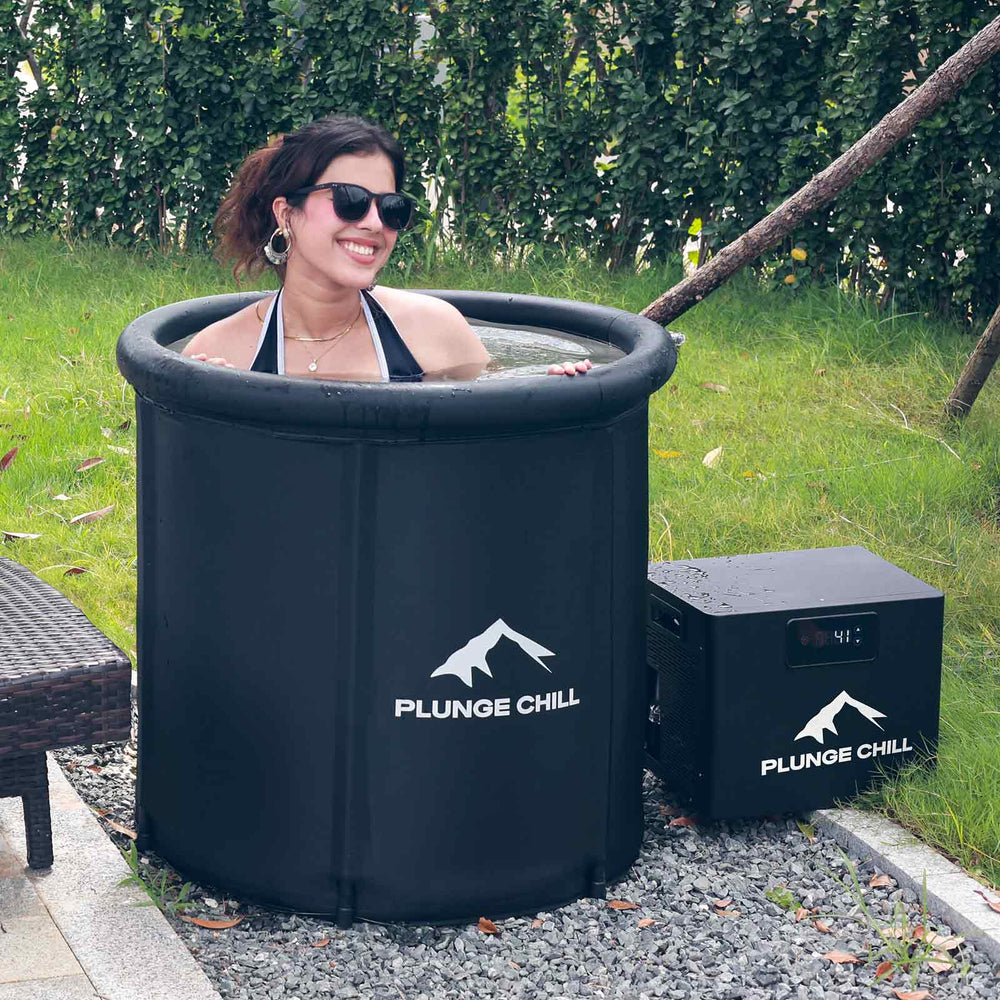
Dedicated plunge tanks with chillers are the most convenient and expensive option. Mayo Clinic Health System notes that fully featured units can cost up to $20,000. These systems precisely control water temperature and reduce the hassle of ice, which can improve adherence, particularly in hot climates or large households. Before buying, check the physical footprint, electrical requirements, indoor versus outdoor use guidelines, whether the unit is insulated, and how easily you can drain and sanitize it. Because this is a significant purchase, confirm serviceability in your area and ask about warranty coverage. You can reasonably expect a high‑end chiller to hold 50–59°F setpoints; if you require near‑freezing water, confirm that capability explicitly with the manufacturer.
Here is a concise comparison to focus your decision making.
Setup option |
Temperature control |
Ongoing effort |
Trial suitability |
Notable considerations |
Cold shower |
Limited, depends on tap water |
Minimal |
Excellent first step |
Provides uniform cold to fewer areas; less hydrostatic pressure than immersion; useful for mood and basic acclimation per Case Western Reserve University and Stanford Lifestyle Medicine. |
Bathtub + ice |
Manual; thermometer required |
Moderate (ice runs, cleanup) |
Good, low cost |
Reaches target 50–59°F if monitored; use a thermometer as Cleveland Clinic advises; plan water disposal. |
Portable insulated tub (no chiller) |
Manual; holds temp better than bathtub |
Moderate |
Good for two-week trial |
Drain and sanitize as IcePassLA recommends; keep head/neck out at first for safety. |
Dedicated plunge with chiller |
Precise setpoints and filtration |
Low to moderate |
Ideal if budget allows |
Expensive; up to $20,000 noted by Mayo Clinic Health System; confirm electrical needs, placement, and care routine. |
Open water |
Variable, can be extreme |
Low hardware effort, high safety planning |
Situational |
Avoid currents and measure temperature; plan exit and rewarming as Mayo Clinic Health System cautions. |
Care and Hygiene During the Trial
Treat your tub like training equipment that touches skin and sweat. Measure the water with a thermometer instead of guessing. Keep the area tidy and dry to prevent slips. Drain and sanitize water at reasonable intervals during a short trial, as suggested by IcePassLA, and consider neoprene booties or gloves in very cold setups to protect extremities, a precaution echoed by Utah. Exit slowly, rehydrate, and add gentle mobility work once warm if that helps you transition back to normal training and daily routines.
When an Ice Bath Makes Sense in a Training Plan
In the clinic and the weight room, I use ice baths most during competition blocks and heat‑stressed events. After a back‑to‑back competition day, a five to ten minute immersion around 50–59°F can reduce next‑day soreness enough for athletes to execute the plan. The NIH‑archived meta-analysis supports this immediate soreness relief. Marathoners and field sport athletes finishing in hot conditions also benefit from rapid core cooling, a use case Cleveland Clinic highlights for heat stress.
I am conservative during hypertrophy phases. Consistent with ACSM and Case Western Reserve University, I either avoid cold entirely or separate it by at least four to six hours from lifting. If athletes crave the psychological benefits of cold, we move cold to mornings on days without strength training, or to the day after a heavy lift.
Integrating Overlooked Insights
Body composition and surface area likely influence cooling rate, which suggests more individualized dosing than a one‑size‑fits‑all time prescription. Leaner or lighter athletes often cool faster and may tolerate shorter exposures to achieve similar thermal effects compared with heavier or higher‑body‑fat athletes. This perspective comes from sport science commentary on fighter recovery and is logical, but evidence in general populations is limited (Confidence: Low; verify by comparing shiver onset times and skin temperature changes across athletes of different sizes at the same water temperature and time, as discussed by Science for Sport).
Splitting immersion into two short bouts separated by a brief ambient break may reduce muscle temperature more effectively than a single continuous bout of the same total time, potentially improving the cooling effect without increasing total cold stress. This is a tactical option worth testing in a trial when cooling is the main aim rather than tolerance building. The theoretical support is present in sport science discussions, but broader validation is needed (Confidence: Low; verify by tracking perceived limb coldness and rewarming curves between intermittent and continuous exposures under matched conditions, as suggested by Science for Sport).
Timing relative to sleep deserves a personalized test. Cleveland Clinic reports that some users sleep better after cold, while ACSM cautions that late‑day cold can worsen sleep in some. I see both patterns in practice. The likely cause of disagreement is differing definitions of “late,” training loads on the same day, and individual differences in cold‑induced arousal. The simplest way forward in a trial is to place cold in the morning during the first week, then move a session earlier in the afternoon during the second week and compare next-night sleep notes.
A final sport-specific nuance concerns pre‑event timing. There are reports that plunging near competition may reduce joint stiffness for up to two days, which could slow reactivity in sports that rely on very stiff tendons and ankles even if jump metrics temporarily improve. This is mainly discussed in combat and field sport contexts and is not a universal rule but is worth cautioning against in the 48 hours before events where reactive stiffness matters (Confidence: Low; verify by comparing reactive hop stiffness or time‑to‑stabilization metrics with and without pre‑event immersion, as summarized by Science for Sport).

Reconciling Conflicting Sources
When similar studies disagree, look for differences in the exposure dose, the control condition, and the measured outcomes. UNH Today’s report of no benefit used very cold water for a long time and focused on a specific damaging run and simple outcomes across one to three days. The NIH‑archived meta-analysis spans many sports and aggregated immediate and short-term endpoints, which more often favored ice baths for soreness and fatigue. ACSM splits the difference by acknowledging individual variability and providing targeted protocols. Cleveland Clinic underscores that many benefits outside of recovery are anecdotal. These are not contradictions so much as different questions answered by different methods.
Another common point of confusion is how long a session should last. Cleveland Clinic’s general guidance rarely exceeds about five minutes for many users, which prioritizes safety, especially for beginners. ACSM’s longer 11–15 minute sessions are in a warmer range and are designed to reduce delayed soreness, but this assumes careful screening and supervision. Mayo Clinic Health System places most sessions in the five to ten minute range and emphasizes that daily post‑training plunges may compromise long‑term performance. For a trial, the safest, most conservative interpretation is to start with shorter sessions at moderate cold and, if needed, scale time only after a week of clear benefits.
FAQ
Q: How cold should my water be during a trial, and how long should I stay in? A: For most beginners and for safety, start between 50 and 59°F for one to three minutes and progress to three to five minutes if well tolerated. Use a thermometer, control your breathing, and get out sooner if you feel unwell. Athletes with experience and clear recovery reasons may extend time in slightly warmer water, around 52–60°F, up to ten or fifteen minutes under supervision and with a clear rewarming plan. These ranges synthesize guidance from Cleveland Clinic, ACSM, and Mayo Clinic Health System.
Q: Will an ice bath hurt my gains if I lift? A: It can if you plunge right after lifting. Cold constricts vessels and can blunt the early inflammatory and protein‑synthesis signals needed for muscle growth. ACSM and Case Western Reserve University both caution against immediate post-lift immersion. Separate cold by at least four to six hours from resistance training, or keep cold for rest days.
Q: Can cold exposure help with weight loss? A: Cold temporarily raises energy expenditure and activates brown fat, which helps the body regulate glucose and heat. Case Western Reserve University and Ohio State University summaries discuss brown fat activation and short‑term calorie burn. That does not guarantee meaningful long‑term weight loss on its own; treat it as a complement to nutrition and training rather than a primary weight‑loss method.
Q: Is a cold shower a good substitute for a plunge? A: A cold shower provides many of the same sensations and may be an excellent first step for mood and basic acclimation, especially if you do not have a tub. Full-body immersion adds uniform pressure and stronger thermal effects, which can matter for cooling and perceived soreness after hard sessions. Case Western Reserve University, Stanford Lifestyle Medicine, and ACSM describe these differences.
Q: When is the best time of day to plunge? A: Morning or early afternoon is a safer starting point during a trial. ACSM warns that late‑day cold may disrupt sleep for some, while Cleveland Clinic notes others report better sleep. Test both early and earlier‑afternoon sessions and track sleep quality to learn your personal response.
Q: How often should I plunge? A: Frequency depends on your training density and goals. During demanding competition stretches, brief daily or near‑daily use is common among athletes who prioritize quick turnaround, with the understanding that frequent post-lift plunges can blunt adaptations. On typical training weeks, two to three sessions are often sufficient. This guidance aligns with ACSM, Mayo Clinic Health System, and the NIH‑archived meta-analysis emphasizing short‑term recovery benefits.

Takeaway
Cold-water immersion is a powerful but blunt tool. The best evidence supports short‑term reductions in soreness and perceived fatigue, with performance benefits mainly inside a 24-hour window and with little effect on systemic inflammatory markers. It can also blunt hypertrophy signaling if used immediately after lifting. Safety is non‑negotiable: screen for cardiovascular and cold‑sensitivity risks, never plunge alone, and start with short exposures in moderate cold.
A two-week, well-structured trial is the smartest path before you rearrange your garage for a plunge tank. Define your goal, begin conservatively at 50–59°F for one to three minutes, schedule sessions away from lifting if muscle gain matters, and track soreness, readiness, and sleep. If you then want to buy, choose hardware that matches your tolerance, space, and budget, from showers or a bathtub with ice to a dedicated chiller unit, and keep maintenance simple and consistent.
I rely on ACSM for protocol scaffolding, the NIH‑archived meta-analysis for outcome expectations, Cleveland Clinic and Case Western Reserve University for risk framing and practical tips, Mayo Clinic Health System for safety and cost context, UNH Today for an important counterexample, and Stanford Lifestyle Medicine for mood and stress insights. Use these as guardrails, not dogma, and let your trial data decide whether cold plunges earn a permanent spot in your program or your home.
References
- https://case.edu/news/science-behind-ice-baths-and-polar-plunges-are-they-truly-beneficial
- https://www.health.harvard.edu/staying-healthy/can-ice-baths-improve-your-health
- https://news.hss.edu/do-ice-baths-work-why-most-people-can-skip-the-cold-post-workout-soak-according-to-athletic-trainers/
- https://www.mcphs.edu/news/physical-therapist-explains-why-you-should-chill-out-on-ice-baths
- https://lifestylemedicine.stanford.edu/jumping-into-the-ice-bath-trend-mental-health-benefits-of-cold-water-immersion/
- https://ideaexchange.uakron.edu/cgi/viewcontent.cgi?article=3606&context=honors_research_projects
- https://www.marquette.edu/innovation/documents/arora_ice_bath_recovery.pdf
- https://sncs-prod-external.mayo.edu/hometown-health/speaking-of-health/cold-plunge-after-workouts
- https://pmc.ncbi.nlm.nih.gov/articles/PMC2938508/
- https://health.osu.edu/wellness/exercise-and-nutrition/do-ice-baths-help-workout-recovery