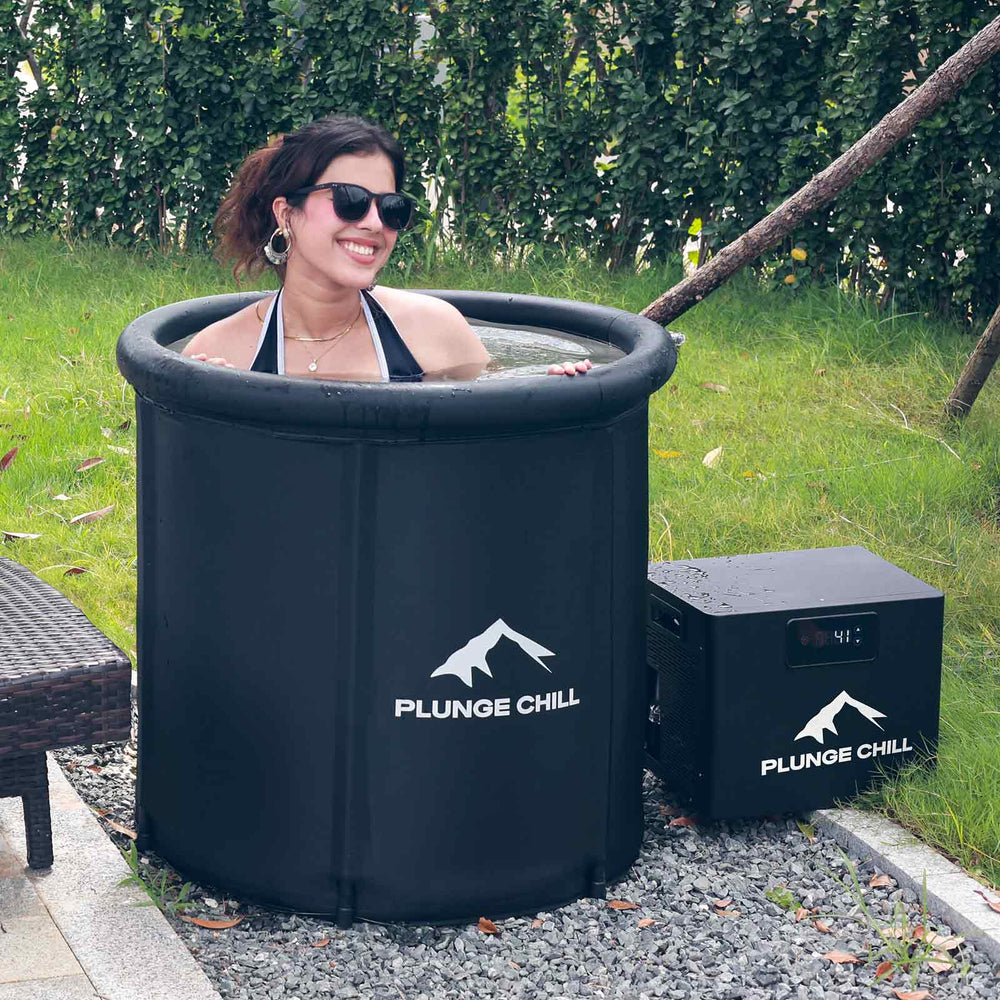
Cold plunge is more than a trend. As a sports rehabilitation specialist and strength coach who also reviews cold plunge products, I use cold-water immersion as a controlled stressor to support recovery, mood, and training adherence. The practical question for most readers is not whether cold exposure can feel invigorating; it’s how to design an outdoor setup that is safe, durable, and easy to live with year‑round. This guide assembles best practices and design inspiration from hands-on builders and reputable industry sources to help you plan a backyard plunge that you will actually use.
What Counts as a Backyard Cold Plunge?
Cold plunge therapy refers to brief immersion in cold water, most commonly in the 45–60°F band depending on experience and goals. Sources oriented to product use and consumer education place typical working temperatures between 45–55°F for recovery-focused tubs and 50–60°F for beginners, with advanced users sometimes targeting 39–45°F for short bouts. These ranges are consistently referenced by Nordica Sauna and Casablui, and align with DIY and vendor guidance that emphasizes starting warmer and progressing cautiously.
A cold plunge can be a compact prefabricated tub with a dedicated chiller and filtration, a DIY basin paired with a pump, filter, and chiller, a stock tank conversion, or even a custom in‑ground mini-pool. The right choice depends on your space, climate, budget, and tolerance for maintenance.
Evidence, Expectations, and Safety
Claims around inflammation, soreness, mood, and sleep are widely reported by vendors and users. At the same time, an ethnographic perspective from University of Chicago Press highlights that ice swimming is often framed as a “therapeutic body technology,” embedding breath control, mindset, and ritual into the experience rather than promising specific medical effects. This is a useful reminder to emphasize controlled exposure, breathing, and safety screening rather than chasing extreme numbers.
For new users, a careful progression is best. Casablui advises starting around 50–60°F for one to a few minutes and building tolerance gradually toward five to ten minutes if desired. The Cold Plunge Store notes many DIY guides use 37–59°F water, but also cautions that professional tubs offer surfaces, drain geometry, and rails designed for safety that ad‑hoc builds may lack. Design & Health further flags slip risk, overexposure, and heart strain. In practice, my advice is to set session rules before you build: calm breathing, deliberate entry and exit, and a firm policy to exit immediately if you feel dizzy, numb, or unwell. If you have cardiac or respiratory conditions, consult a clinician first.
Site Planning: Where and How It Fits
A cold plunge you use is one that is easy to reach, safe to enter, and unobtrusive to maintain. Landscape-focused sources like Hive Outdoor and Casablui recommend locating the tub near everyday circulation paths with good privacy, sightlines, and drainage. Shade helps hold temperature in warm climates, while wind shelter improves comfort after dusk. If you plan year-round use, place it close enough to the house to avoid icy walks in winter. Add non‑slip decking, a dedicated equipment pad, and lighting for safe night sessions. Screening with tall plants, trellises, or a pergola creates an “outdoor room” without sacrificing airflow.

Basin Options and What They Mean in Practice
A basin’s insulation determines your chiller needs, energy bills, and daily hassle. Andrew Conner’s long-term DIY reporting shows that insulation and lid quality dominate real-world performance, more than many shoppers expect. Stock tanks and thin shells bleed cold and drive larger chillers; highly insulated coolers or well-built tubs can run smaller chillers and hold setpoints with the lid closed.
Option |
Typical Working Temps |
Insulation & Heat Loss |
Filtration & Sanitation |
Chiller Guidance |
Notes and Sources |
Insulated cooler + external chiller (DIY) |
40–55°F achievable with modest chiller |
Excellent; thick walls and tight lid |
External filter housing with replaceable cartridges; add ozone/UV if desired |
Often 1/4 HP sufficient with lid discipline |
Efficient, inexpensive to operate; see Andrew Conner for parts, flow path, and measured heat retention |
Stock tank or inflatable |
45–60°F possible; more ice or larger chiller needed |
Poor to fair; metal acts as a heat sink; inflatables rely on air gap |
Add external pump, filter, and chiller or replace water frequently |
1/2–1 HP typical to overcome loss |
Simple to start; energy hungry without added insulation; Andrew Conner and user anecdotes |
Chest freezer conversion |
40–50°F common |
Good wall insulation but not water‑rated; extensive sealing required |
No built-in filtration; must add external loop |
Undersized compressors stressed by tank duty |
Cheapest chilled start but high risk profile and DIY sealing burden; Andrew Conner |
Ready‑made cold plunge tub |
39–55°F depending on model |
Varies widely; insulation quality is a key differentiator |
Typically integrated pump, filtration, and sanitation |
Sized by manufacturer; many use 120V, 15A circuits |
Examples include Plunge, Renu Therapy, BlueCube, Odin, Edge Theory Labs; vendor specs vary (Plunge lists a dedicated 120V/15A circuit and quick setup) |
Prefab plunge pool (small pool) |
Cold or hot with heat pump/chiller |
Pool shells vary; earth contact helps inground |
Full pool-grade filtration and control |
Heat pump or dedicated chiller sized to volume |
See The Pool Nerd and This Old House buyer guidance; higher cost but architectural |
Custom built (concrete/CMU/ICF) |
Any temp with proper plant |
Insulation must be specified; concrete not insulating by default |
Pool-grade systems |
Plant sized to volume and climate |
Build A Hot Tub outlines concrete, CMU, and ICF strategies; strongest but longest lead time |
Naturalistic plunge/pond |
Cool but not precise |
Large thermal mass; ecological filtration |
Plant-based biofiltration |
Not precise; not for exact setpoints |
Clarity Ponds covers natural pool zoning; beauty over tight temperature control |

Aesthetics and Layout Ideas
Modern minimal. A low-profile rectangle set flush with a deck reads clean and architectural. Hive Outdoor suggests aligning the tub with existing lines, hiding storage for towels and chemistry, and layering lighting to transition from daytime training to evening recovery. Durable composite or hardwood decking keeps footing secure and low-maintenance.
Rustic and natural. If the brief is “spa meets hot spring,” use stone coping, boulders, and gravel runouts. Casablui and Radelli Designs describe how stone and wood soften the basin’s presence and can modulate microclimate. When paired with native plantings, the plunge becomes a quiet retreat rather than a piece of equipment. One subtle benefit I see outdoors is that high-mass stone and shaded plantings can buffer daily temperature swings, particularly around thin-walled basins.
Small-space and urban. In tight yards, think vertical screens, narrow benches, and partial in-ground placements to reduce perceived bulk. Airtasker’s design tips for small pools translate well: short raised walls and a sheer descent add movement without enlarging the footprint. Portable systems like Edge Theory Labs allow seasonal rotation if permanent placement is not feasible.
Contrast therapy zones. Cold is easier to commit to when warmth is nearby. Casablui highlights pairing with saunas, and Yardzen’s client projects often tuck a cold tub beside a sauna or heated patio. The shortest, safest route between hot and cold reduces thermal shock outdoors at night. If you cannot add a sauna, a fire pit or radiant heat lamp placed upwind from the tub provides a comfortable transition.
Temperature Targets, Session Structure, and Risk Management
Beginners generally tolerate 50–60°F best, according to Casablui. Experienced users may explore 39–45°F for brief exposures, while consumer tubs marketed for recovery often run 45–55°F (Nordica Sauna). The Cold Plunge Store frames a practical operating band of 37–59°F but emphasizes gradual exposure and controlled breathing rather than “maxing out” cold. Keep footing and handholds secure, step in slowly, and exit at the first sign of dizziness or numbness. Do not use a plunge when you are ill, and strongly consider medical guidance if you have cardiovascular or respiratory concerns, as Design & Health and consumer product pages consistently advise.
An overlooked friction point is ambient noise and airflow. Integrated compressors like Odin run at fridge-like noise levels, which is quiet but noticeable on a still patio at night. Plan placement so sound reflects away from neighbor-facing boundaries and reserve space for an insulated cover to reduce evaporative cooling in wind.
Equipment That Matters Most
Insulation and lids. Andrew Conner’s daily-use DIY build documents minimal temperature loss with the lid closed and chiller off, on the order of 1–2°F per day in warm ambient conditions. This is not magic; it is the compounding effect of thick walls, tight seals, and disciplined lid use. The same principle applies to prefabricated tubs: an insulated shell and lid mean a smaller chiller can maintain setpoint with fewer duty cycles.
Chillers and horsepower. With a highly insulated basin, Conner found that a 1/4 HP chiller can be sufficient for solo daily use if the lid stays closed. In contrast, stock tanks often require 1/2–1 HP chillers because the metal shell actively conducts heat from ambient. This discrepancy explains why some vendors push “bigger chiller” messaging, while experienced DIYers report success with smaller units when insulation is maximized. The likely cause of disagreement is differences in definitions (recovery dip vs ice-bath intensity), sample basins, and lid discipline.
Basin Insulation |
Approx. Volume |
Practical Chiller Range |
Notes and Sources |
High (cooler-grade or well-insulated prefab) |
80–110 gallons |
1/4 HP often adequate |
Lid discipline crucial; Andrew Conner temperature tests |
Moderate (fiberglass/acrylic prefab with decent lid) |
70–100 gallons |
1/4–1/2 HP |
Vendor-specific; review real insulation details |
Low (stock tank, thin inflatable) |
80–120 gallons |
1/2–1 HP |
Continuous summer runtimes reported; Conner reader data |
Filtration and sanitation. Daily-use setups need both particle filtration and sanitation. DIY loops that route cooler → pump → filter → chiller → cooler are simple and effective. Conner’s parts list pairs a Danner Mag-Drive pump with a whole-house filter housing; non-hardening thread sealant on NPT fittings reduces leak headaches. Many ready-made tubs add ozone or UV; BlueCube, Plunge, and Renu emphasize ozone-assisted clarity with replaceable media filters. If you soak after training, skin oils and lint accumulate quickly; plan on filter checks weekly at a minimum in heavy-use periods.
Electrical and placement. Consumer tubs like Plunge specify a dedicated 120V, 15A circuit, clear of other loads. Outdoor equipment should sit on a level, well-drained pad with proper bonding and GFCI protection per code. Integrated compressors and external chillers both need airflow, so avoid tight enclosures unless the manufacturer explicitly permits them.
DIY, Prefab, or Custom: Cost and Outcomes
Cost spans from hundreds to five figures depending on scope. A carefully executed DIY insulated cooler with external chiller, pump, and filter can be assembled for less than many premium tubs. Andrew Conner reports a total around the price of a mid-tier consumer tub, with operating cost advantages due to insulation. Meanwhile, fully prefabricated tubs fold in delivery, integrated controls, and warranties. At the architectural end, prefab plunge pools or custom concrete/ICF mini-pools provide a built-in look but carry higher project budgets in line with small pools summarized by The Pool Nerd.
Path |
Typical Budget |
Timeline |
What You Get |
DIY insulated cooler + chiller |
Low four figures for a robust build |
Days once parts arrive |
Excellent insulation, low operating cost, modular components; requires assembly and basic plumbing skill |
Ready-made cold plunge tub |
Mid to high four figures depending on brand and options |
Days to a couple weeks |
Plug‑and‑soak convenience, integrated filtration and sanitation, warranty, clean aesthetics |
Prefab plunge pool |
Tens of thousands depending on shell and site |
Days to weeks from excavation to set |
Architectural integration, pool‑grade systems, multi-user capacity |
Custom concrete/ICF mini-pool |
Tens of thousands to premium budgets |
Weeks to months |
Full customization, highest permanence; requires insulation plan and skilled labor |
A second overlooked insight is that inflatable tubs, while portable and cost-effective, tend to suffer from higher heat gain/loss because the only barrier is an air gap between layers. Andrew Conner’s temperature testing discussions point to concern about cold retention in inflatable materials when compared to cooler-grade walls. The mechanism is straightforward conduction and convection through thin skins.

Maintenance and Water Care
Treat an outdoor plunge like a small pool. Change or clean filters on schedule, maintain sanitizer levels if used, and wipe down the interior to prevent biofilm. Vendors such as Renu Therapy and Plunge provide water maintenance protocols that rely on ozone plus mechanical filtration; review each brand’s guidance and warranty requirements. BlueCube, for instance, requires outdoor shading for certain models to keep warranties valid, acknowledging the thermal and UV realities of sunny decks. In shaded or cooler climates, a tight-fitting insulated cover is the single most powerful tool to reduce energy use and debris load.
If you choose a naturalistic biology-assisted system, Clarity Ponds recommends allocating ample regeneration zone area, specifying liners or EPDM where appropriate, and sizing circulation to avoid stagnation. This approach favors aesthetics and sustainability over precise temperature control and sanitation levels typically expected for athletic recovery.
Buying Tips and Brand Notes
Read spec sheets for insulation and electrical details rather than focusing only on temperature claims. Plunge lists a quick setup sequence and dedicated 120V/15A circuit; Renu highlights a five‑year limited warranty and ozone-based sanitation; BlueCube emphasizes high-flow circulation to disrupt the warm boundary layer around your body at low setpoints; Odin uses an integrated compressor to reach lower temperatures with a cedar and stainless build; Edge Theory Labs offers a portable drop‑stitch tub that can heat to 105°F for contrast sessions. Yardzen’s client choices suggest that owners prioritize matching materials and style to the surrounding landscape as much as raw temperature capability.
The Cold Plunge Store’s build‑vs‑buy framing is practical: professional units reduce slip and drain risks and consolidate maintenance and support, while DIY routes cut upfront costs and can be efficient if you build around insulation and sealing. There is no single “right” route—only clear tradeoffs.

Three Short Comparisons You Can Trust
Some consumer guides recommend large chillers as a default for daily use, while Andrew Conner demonstrates that robust insulation and lid use permit smaller chillers in solo setups. The likely reason is not that one side is wrong; it is that they are solving different problems with different definitions of “daily use,” different basins, and different climates.
Casablui presents 39–60°F as the practical operating range and suggests progressing from one to a few minutes toward ten minutes as tolerance improves, whereas Nordica Sauna centers on 45–55°F recovery use. This is not contradictory so much as audience-specific positioning. Lifestyle content often stresses accessibility for new users; recovery vendors focus on the middle of the range where many feel acute benefits without distress.
The Pool Nerd’s prefab plunge pools emphasize construction quality, access logistics, and realistic project totals in the 60,000+ band for installed small pools. This sits alongside Yardzen’s more tub-focused client shortlists in the low to mid four-figure product range. Category and scope explain the gap: a pool is a building project; a tub is an appliance with site considerations.
Quick Temperature and Session Table
User Stage |
Suggested Water Temp |
Session Notes |
Sources |
Getting started |
50–60°F |
Short exposures, build gradually with calm breathing |
Casablui, Design & Health safety framing |
Recovery routine |
45–55°F |
Brief dips after training; prioritize safe egress |
Nordica Sauna product education |
Experienced cold work |
39–45°F |
Short, controlled bouts with strong safety rules |
Casablui advanced guidance; The Cold Plunge Store range framing |
Takeaway
An excellent backyard cold plunge is ultimately a design problem. If you solve for insulation, placement, and safe, simple workflow, you will use it often and recover better from training. If you neglect insulation, lids, and shade, you will buy a bigger chiller, pay more every month, and use it less. The quiet excellence you are aiming for is an insulated basin with a tight cover, thoughtful lighting and privacy, a pump‑filter‑chiller loop sized to your volume and climate, and session rules that keep you safe. Work from those constraints and let the landscape style follow.
FAQ
How cold should my plunge be if I’m new to cold exposure?
Most new users do best around 50–60°F for brief exposures, focusing on steady breathing and calm exits. This range is consistent with Casablui’s guidance and safety-oriented product education. As tolerance grows, you can experiment with cooler water in short bouts, but avoid chasing extremes.
Do I need a chiller, or can I just add ice?
You can start with ice, but it is expensive and inconsistent for daily use. A chiller plus good insulation and a sealed lid produce reliable temperatures with less work. Andrew Conner’s data-driven DIY approach shows that insulation can reduce chiller size and runtime dramatically.
What size chiller do I need?
It depends on insulation and lid discipline more than raw gallons. Highly insulated basins commonly run well on 1/4 HP for solo use, while stock tanks often need 1/2–1 HP because they dump cold into the air. This difference across setups explains why some guides emphasize larger chillers. Define your basin first, then size the chiller.
Are portable inflatable tubs a good long-term option?
They are excellent for portability and quick setups, but they lose heat faster than insulated shells. If you need portability, plan on a slightly larger chiller or stricter lid use to compensate.
Can I integrate a cold plunge with a sauna or fire feature?
Yes, and it helps adherence. Place warmth within a few steps of the tub, ensure non‑slip surfaces, and add down-lighting to guide night moves. Many Yardzen and Casablui examples pair cold tubs with saunas for contrast therapy.
What routine maintenance should I expect?
Expect regular filter checks or swaps, wipe-downs to prevent biofilm, and sanitizer management if your system uses it. Keep the lid on whenever you are not plunging to reduce debris and energy use. Vendors like Plunge and Renu publish straightforward water care guides; follow their schedules to stay ahead of issues.
Buying and Building References
- Andrew Conner documents DIY insulated coolers with measured cooling rates and long-term use, and contrasts them with inflatables and stock tanks.
- Build A Hot Tub outlines structural methods for concrete, CMU, and ICF plunge construction, including bracing, rebar, and embedded plumbing.
- Casablui, Hive Outdoor, and Yardzen provide design placement, privacy, and accessory ideas that translate well to real backyards.
- The Pool Nerd separates appliance-like tubs from architectural plunge pools and flags true project costs, logistics, and materials.
- Consumer brands such as Plunge, Renu Therapy, BlueCube, Odin Ice Bath, Edge Theory Labs, and Polar Monkeys offer different chassis, sanitation, and temperature capabilities; compare insulation, electrical requirements, warranties, and service access before buying.
- University of Chicago Press offers a culture-and-mindset perspective on cold exposure, underscoring that ritual and breathing are not afterthoughts—they are part of why many users keep returning to the practice.
Finally, one design inference not often spelled out in product pages is that shaded placement can protect both surfaces and warranties while cutting thermal load, as BlueCube notes in shade requirements and several landscape sources encourage for comfort and longevity. If you are on the fence about where to place your plunge, choose a level, shaded pad close to daily foot traffic with clean drainage and swift access back indoors. It is a small choice that pays off every single session.
References
- https://www.academia.edu/82019836/Wind_driven_retreat_of_cold_water_pool_and_abrupt_sea_temperature_rise_off_the_southwest_coast_of_Korea_in_summer_2017
- https://scholarworks.gvsu.edu/cgi/viewcontent.cgi?article=1039&context=jti
- https://www.journals.uchicago.edu/doi/10.1086/714857
- https://ecommons.cornell.edu/bitstream/1813/17204/1/Pick%2C%20Robert.pdf
- https://repository.si.edu/bitstream/handle/10088/2718/ProceedingsColdwaterDiving.pdf?sequence=1&isAllowed=y
- https://www.aupool.net/blog/top-10-plunge-pools-customization-ideas.html
- https://www.thepoolnerd.com/plunge-pools
- https://andrewconner.com/cold-plunge/
- https://buildahottub.com/diy-cold-plunge-pool/
- https://designandhealth.com/collections/outdoor-cold-plunge-tub?srsltid=AfmBOopPqMcWZSkCvY1q-yVsZAut5GlgvgEMlt5flfPiHboCMskNg1V4