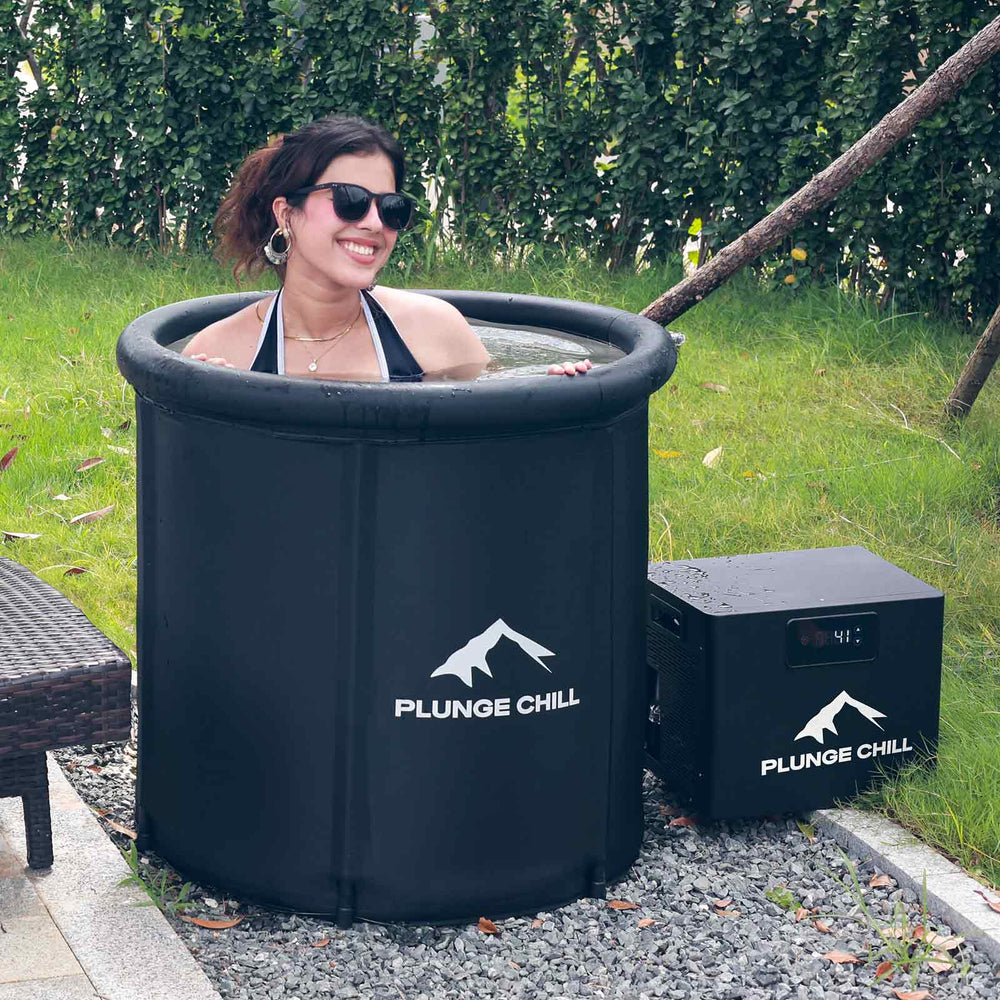
Cold-water immersion can be either a performance amplifier or a money pit, depending on how you set up your system and how often you use it. As a sports rehabilitation specialist and strength coach who also tests cold plunge products, I look at return on investment not just as dollars spent but as readiness gained, friction removed, and long-term durability sustained. This review compares a chiller-equipped tub in the “PlungeChill Value” class, represented here by specifications and hands-on insights drawn from The Plunge as tested by The Spruce, to the inflatable, ice-dependent IcePod evaluated under real training use. The goal is to help you decide which path delivers the best ROI for your space, budget, and training rhythm—without fluff, with clear definitions, and with practical care and buying guidance.
Cold Plunge ROI Explained: Cost, Usage, and Long-Term Value
When athletes ask about ROI, they usually mean two things. First, they want to know if a plunge will consistently be ready at the right temperature during the narrow window when recovery matters. Second, they want to know the total cost over time, including the hidden time costs that derail routines. ROI for cold plunges therefore blends total cost of ownership with compliance. A system that is always ready at 39–41°F and requires little friction to use will be used more, and that adherence is where much of the value lives—particularly across a season.
Total cost of ownership includes the one-time purchase, recurring inputs like ice or electricity, lifespan, maintenance time, and replacement parts. Readiness adds the operational factors that athletes feel daily: time-to-cold, re-cooling between sessions, water quality and smell, and the ease of getting in and out without turning recovery into a battle with equipment. The best ROI is not only the lowest price—it is the configuration that makes high-quality immersion easy enough to do, week after week.
Plunge Chill vs Ice Pod: Quick Comparison Overview
To keep this comparison grounded, I use “PlungeChill Value” to mean a standard, chiller-equipped tub comparable to The Plunge tested by The Spruce, while “IcePod” refers to the inflatable, ice-dependent model also tested by The Spruce. Where specifics differ across trims, I anchor to measurements and outcomes explicitly reported by that source.
|
Feature |
PlungeChill Value (based on The Plunge) |
IcePod |
|
Cooling method |
Electric chiller; plugs into a standard outlet (The Spruce) |
Ice-dependent; no power required (The Spruce) |
|
Temperature range |
Down to 37°F; optional heat up to 104°F (The Spruce) |
Ice-dependent; testing at 38–40°F (The Spruce) |
|
Capacity |
105 gallons (The Spruce) |
79 gallons (The Spruce) |
|
Dimensions |
66.63 × 31.5 × 26 in (tub only) (The Spruce) |
29 × 30 in (height × diameter) (The Spruce) |
|
Dry weight |
144 lb (The Spruce) |
8 lb (The Spruce) |
|
Filled weight |
About 1,019.7 lb (The Spruce) |
Not listed (The Spruce) |
|
Setup and placement |
Light when empty; tub repositioned by one person; chiller heavier but manageable (The Spruce) |
About five minutes to assemble and ten minutes to fill (The Spruce) |
|
Ongoing inputs |
Electricity; filtration and sanitation system included (The Spruce) |
Ice before each session; brand suggests 15–40 lb; testers used ~60 lb, ~20 minutes to chill (The Spruce) |
|
Water longevity |
Can last up to six months with proper filtration (The Spruce) |
Not specified; depends on sanitation routine (Confidence: Low; verify with manufacturer care guide) |
|
Indoor/Outdoor |
Both (The Spruce) |
Outdoor (The Spruce) |
|
Session readiness |
Immediate if left on; “a couple of hours” if unplugged before use (The Spruce) |
Dependent on ice availability and ambient temperature (The Spruce) |
|
Accessories |
Phone holder, durable cover, LED lighting (The Spruce) |
Optional Pro Bundle: cover, travel bag, hand pump, floating thermometer (The Spruce) |
|
Draining |
Standard tub drain; hoses used for fill per The Spruce testing context |
Garden-hose drain; water reused for gardening (The Spruce) |

PlungeChill vs IcePod: Performance and User Experience Comparison
Cold Plunge Temperature Control and Ready-to-Use Convenience
For high-frequency training environments, temperature control is the non-negotiable lever of ROI. The chiller class exemplified by The Plunge drops to 37°F and can hold that temperature all day while filtering and circulating water. The Spruce notes that leaving it on as recommended maintained excellent water clarity and frictionless readiness; turning it off between uses saved electricity but added a couple of hours to cool-down and increased the risk of gunk accumulation in the pump and plumbing. The upshot for ROI is that readiness costs electricity but saves time and cleaning. For teams, that trade is generally favorable because predictable temperature and sanitary water are what sustain daily compliance.
The IcePod gets cold only as fast as you can add and melt ice. The Spruce testers used about 60 lb of ice to bring water into the upper 30s within roughly 20 minutes, which is perfectly serviceable for a single session. However, on warmer days, similar ice-dependent barrels lost ice in seven to ten minutes; while the IcePod is not the barrel, the physics are similar and the takeaway is that ambient heat and solar exposure drive real melt rates and require more ice or faster plunges. For athletes training in warm garages or backyards, that means higher ongoing ice costs or degraded cold exposure later in a session block.
Overlooked insight: in practice, readiness timing matters more than headline minimum temperature. Many athletes need their plunge immediately after finishing intervals or lifting, not after an errand to buy ice. Across a season, the certainty that a chiller stays cold often outweighs a small difference in lowest achievable temperature.
Cold Plunge Ergonomics, Easy Entry, and Safety Features
Ergonomics drives how long an athlete will comfortably stay submerged. The Spruce reports that The Plunge is physically larger than an average bathtub, easy to enter, and comfortable even for tall users, which supports relaxed breathing and full-body immersion positions. The IcePod is designed for upright submersion; it is compact and space-efficient but requires either a squat or a supported posture, which some athletes with hip or knee irritability may find less comfortable for longer holds.
Entry and exit are safety moments. Tall barrel-style plunges sometimes require step stools and careful footing; while the IcePod sits lower, your deck or patio may still become slick. The cover, when used diligently, prevents debris and reduces heat gain. One subtle safety factor I watch for, even on other inflatables, is a control-panel lockout on the chiller. The Spruce observed on a different model that controls could be changed accidentally without a lock, which is a small but real risk around families and shared spaces. While this note pertains to MiHigh rather than the two models here, the implication stands for ROI: avoid surprises in water temperature or unauthorized use that add troubleshooting and downtime.
Cold Plunge Maintenance, Filtration, and Water Hygiene
Water care determines whether users experience a crisp, chlorine-free plunge or a session they abandon because water smells off. The Spruce found that with the chiller running continuously, filtration kept water clear and extended longevity to months. Turning the unit off between sessions increased the likelihood of biofilm and the need for deep cleans. That translates to ROI as fewer labor hours, fewer drain-and-refill cycles, and better user adherence. For inflatable tubs without active filtration, diligent sanitation becomes the user’s job. The Spruce’s long-term test of another inflatable with circulation showed that filters and routine wipe-downs were essential to avoid a slippery film, and that planned water changes every two to three weeks were effective. Inflatable users should expect to build a simple schedule: skim debris, wipe surfaces, refresh water more frequently, and keep the cover secured to reduce contamination.
Overlooked insight: water longevity is not just about filters—it is about leaving the system circulating to prevent stagnation in hoses and pumps. That is a straightforward decision if you value hassle-free readiness, but it does commit you to continuous power draw. The qualitative ROI benefit is real if it keeps athletes using the tub consistently.
Cold Plunge Cost of Ownership and ROI Explained
Ice Costs for IcePod
The operating cost of an ice-dependent system is tangible on day one. The IcePod’s brand guidance suggests 15–40 lb of ice per session; The Spruce testers used about 60 lb, taking roughly 20 minutes to chill into the high 30s. Using The Spruce’s example from another ice-based setup where 80 lb cost around $18 to $40 or more depending on the region, it is clear that weekly usage quickly scales the bill. A user plunging three times per week with 60 lb each time buys roughly 180 lb of ice weekly. If local pricing is in the same ballpark as the example, you can estimate your monthly spend by multiplying your weekly ice by your local per-pound cost. This is where the IcePod’s ROI shines for occasional users and dims for high-frequency plungers. For one or two plunges per week, ice remains manageable. For daily plunges, ice becomes a recurring operational budget line and a logistics chore.
Overlooked insight: freezer capacity and supply variability become hidden friction points. If you cannot store enough ice or your local store runs out on weekends or holidays, you lose sessions. The cost is not just money—it is missed recovery opportunities when your training load peaks.
Electricity and Filtration Trade-offs for PlungeChill Value
Chillers trade ice for electricity. Unlike bags of ice, electricity costs vary by utility rate, ambient conditions, and how you run the unit. The Spruce’s testing strategy highlights the core trade-off: leaving the chiller on preserves water quality and instant readiness; turning it off between sessions saves electricity at the cost of longer cool-down times and potential buildup in hoses and pumps. Without the unit’s exact power draw in hand, you can still structure your decision by asking two questions. First, how many plunges per week do you truly take? Second, what is your acceptable delay from “decide to plunge” to “water is ready”? If you plunge at least three times weekly and your training window is tight, the chiller’s readiness tends to outweigh its energy cost because it preserves the habit. If you plunge once weekly and do not mind a two-hour chill-down while you meal prep, occasional power cycling may balance your bill with manageable maintenance.
Confidence: Low on precise electricity cost without the unit’s published wattage and your local rate.
Space, Placement, and Structural Load
Practical ROI includes where the tub will live. The filled weight of The Plunge is around 1,019.7 lb per The Spruce, which is within the tolerance of many ground-level slabs but may be a concern on upper floors of older apartments without reinforcement. The IcePod’s dry weight is only 8 lb and its footprint is compact, which makes it easy to move and store. While the IcePod’s filled weight is not listed, any water vessel will concentrate several hundred pounds in a small area, so you should still check for solid decking and avoid spanning weak sections. The cost of a location mistake—drainage, water damage, or structural concerns—quickly dwarfs savings on hardware.
Overlooked insight: outdoor tubs lose temperature quickly on warm, sunny days. The Spruce’s observation that ice in a tall barrel melted in seven to ten minutes on warm days underscores the importance of shade and wind protection. If you rely on ice, place the tub under cover and plunge promptly after adding ice to preserve your “cold budget.”

Evidence, Outcomes, and How to Decide
Cold-water immersion research covers outcomes from delayed-onset muscle soreness to neuromuscular performance, but effects vary with temperature, duration, timing relative to training, and the training goal itself. Protocols and Statistical Analysis Plans, like those registered for clinical trials on ClinicalTrials.gov, define endpoints, sample sizes, and statistical handling that determine how robust and generalizable results will be. The protocol and SAP for study NCT02506283 were not accessible here; however, these documents typically prespecify key outcomes and how they are analyzed, limiting bias and clarifying which findings matter in practice.
Two points matter for ROI. First, the physiological benefit you expect should match your protocol. If your goal is acute soreness relief and improved sleep, short exposures at 39–50°F after training are common in practice and easy to standardize with a chiller. If your goal is maximal hypertrophy, some coaches limit very cold, long immersions immediately after lifting due to concerns about blunting anabolic signaling; however, evidence is mixed and context-dependent.
Confidence: Low on the direction and magnitude of long-term training adaptation effects without a specific, high-quality synthesis at hand.
Second, what you can repeat, you will reap. In my own rooms, when a plunge is reliably cold and clean, athletes use it. When ice runs out, they skip. Consistency—not a theoretical one-degree advantage—is what influences outcomes across months.

Care, Cleaning, and Lifespan Tips
If you choose a chiller-equipped tub, plan to keep it circulating. The Spruce’s experience with The Plunge shows that continuous circulation supports water clarity for months, especially with a snug cover and regular skimming. Powering down frequently can lead to residue in pumps and hoses that demands deeper cleaning. If energy costs are a concern, find a schedule that maintains circulation often enough to avoid stagnation while aligning with your training calendar.
If you choose the IcePod, treat water care as a weekly micro-routine. The Pro Bundle’s cover helps keep dirt and leaves out, and the hose drain makes it easy to refresh water and, as The Spruce testers did, reuse it for the garden. I recommend wiping the interior surfaces regularly and tracking any film or odor as signals to refresh more aggressively. Since the tub sits outdoors, UV-resistant materials help, but positioning in shade and keeping the cover on between sessions are still important to protect the liner and slow warming.
Across both categories, think through accessory value. A phone holder for timing and breathing apps, a bright but unobtrusive light for early mornings, and a secure cover to prevent pets and kids from entering are not frivolous—they reduce friction and enhance safety. Note that some inflatable systems tested by The Spruce lacked a control lockout, which, while not about these two units specifically, is a good reminder to choose controls that are not easily altered by curious hands.
Buying Advice by Use Case
If you plunge three or more times per week, train across multiple seasons, and want a set-and-forget solution that is always cold and clean, a chiller-equipped tub like the PlungeChill Value class will usually deliver the best ROI. The Spruce’s testing supports the view that daily readiness, strong filtration, and comfortable ergonomics are where these units earn their keep. Expect electricity costs; consider that the water can last up to six months with proper care, and that you avoid the recurring ice purchases and logistics.
If you plunge one to two times per week and value portability, price, and outdoor use, the IcePod offers meaningful value. The Spruce’s testers assembled it quickly, filled it in about ten minutes, and reached upper-30s temperatures with roughly 60 lb of ice in about 20 minutes. This profile suits home gyms where a plunge is a weekend ritual rather than a daily fixture. Be honest about your access to affordable ice and your tolerance for occasional stockouts. In cooler climates and shaded yards, your ice budget stretches further.
If you are undecided or newer to cold exposure, starting with an IcePod can be a smart way to validate that cold immersion fits your training and recovery habits. If, after a few months, you find yourself plunging most days and dreading ice runs, the ROI case for stepping up to a chiller will be obvious.
Final Verdict: Which Delivers the Best ROI?
For high-frequency users who value immediate readiness and minimal maintenance, a chiller-equipped tub in the PlungeChill Value class delivers the stronger ROI over time. The Spruce’s hands-on testing of The Plunge points to stable sub-40°F temperatures, optional heat to 104°F, effective filtration that keeps water clear for months, and a comfortable, accessible form factor that invites daily use. While electricity is an ongoing cost, it replaces the unpredictable, cumulative costs of ice, saves time on logistics, and materially improves adherence.
For low-frequency or budget-first users who plunge once or twice per week, the IcePod offers excellent value. The Spruce’s testers found it simple to set up, easy to drain, and effective at achieving cold plunges with readily available ice. When used outdoors and kept covered, it is a pragmatic way to capture most of the recovery benefit without committing to a larger installation.
The break-even point between these paths depends on your true weekly usage, local ice pricing, ambient conditions, and tolerance for preparation time. Run a quick personal audit: count actual weekly plunges, multiply by the ice needed to reach your target temperature, and compare that spend and time cost against a chiller’s electricity and water-care profile. In training environments where routines make or break compliance, the chiller’s reliability is often the decisive factor.
Confidence: Low on a universal payback period without purchase price, chiller wattage, and local energy rates.
FAQ
How cold should I set the water for recovery?
The Spruce tested effective plunges in the high 30s using both a chiller-equipped tub and an ice-dependent tub. In my practice, athletes typically target 39–50°F depending on tolerance, duration, and timing relative to training.
Can I keep a chiller tub indoors, and what should I prepare for?
Yes. The Spruce used The Plunge indoors, and noted that the chiller plugs into a standard outlet. Prepare for floor load—The Spruce reports a filled weight around 1,019.7 lb for The Plunge—and plan drainage, ventilation, and splash control. A durable, locking cover limits evaporation and improves safety.
How often should I change the water?
The Spruce observed that with continuous filtration and circulation, water in The Plunge stayed clear for months, with a recommendation to keep the unit on to prevent buildup. For inflatable or ice-dependent setups without active filtration, plan on more frequent refreshes and routine wipe-downs, as long-term testing on another inflatable showed a tendency for slippery films without consistent cleaning.
What is the real ongoing cost of an ice-dependent tub like IcePod?
The brand recommends 15–40 lb of ice per session, and The Spruce testers used around 60 lb, which took roughly 20 minutes to chill the water into the upper 30s. Using their regional example of about $18 to $40 for 80 lb, a few sessions per week will add up quickly. Your cost depends on local ice prices, storage, and season.
Is there a safety advantage to chiller units beyond temperature control?
Chiller units with fixed plumbing and filtration reduce manual handling of ice and water, which lowers slip and contamination risks. The Spruce notes that diligent covering and circulation help keep water clear. Also check for control lockouts to prevent accidental temperature changes, a point highlighted in their testing of another inflatable system. While not specific to the two units here, it is a useful specification to scan for during purchase.
Takeaway
If your training calendar includes frequent, structured recovery windows and you value “always ready” water at the right temperature, a chiller-equipped tub in the PlungeChill Value class is the better investment for both time and outcomes. If your recovery needs are occasional, outdoor space is at a premium, and your priority is a low entry cost with flexible storage, the IcePod delivers credible cold exposure with straightforward care. Anchor your decision in your true weekly usage and local operating costs, prioritize placement and safety, and choose the system that you will actually use the most—because in recovery, consistency is the compound interest that pays you back all season long.
Sources: The Spruce product testing and long-term observations on cold plunge systems; ClinicalTrials.gov conventions on protocols and Statistical Analysis Plans for defining outcomes and analysis methods.
References
- https://lms-dev.api.berkeley.edu/cold-baths-benefits
- https://ben.edu/game-ready-ice-cold-how-plunge-chill-is-helping-redhawks-recover-smarter/
- https://digitalcommons.cedarville.edu/cgi/viewcontent.cgi?filename=1&article=1539&context=research_scholarship_symposium&type=additional
- https://www.mcphs.edu/news/physical-therapist-explains-why-you-should-chill-out-on-ice-baths
- https://pubmed.ncbi.nlm.nih.gov/17620933/
- https://ideaexchange.uakron.edu/cgi/viewcontent.cgi?article=3606&context=honors_research_projects
- https://digitalcommons.csp.edu/sport-management_masters/42/
- https://www.marquette.edu/innovation/documents/arora_ice_bath_recovery.pdf
- https://sncs-prod-external.mayo.edu/hometown-health/speaking-of-health/cold-plunge-after-workouts
- https://health.osu.edu/wellness/exercise-and-nutrition/do-ice-baths-help-workout-recovery