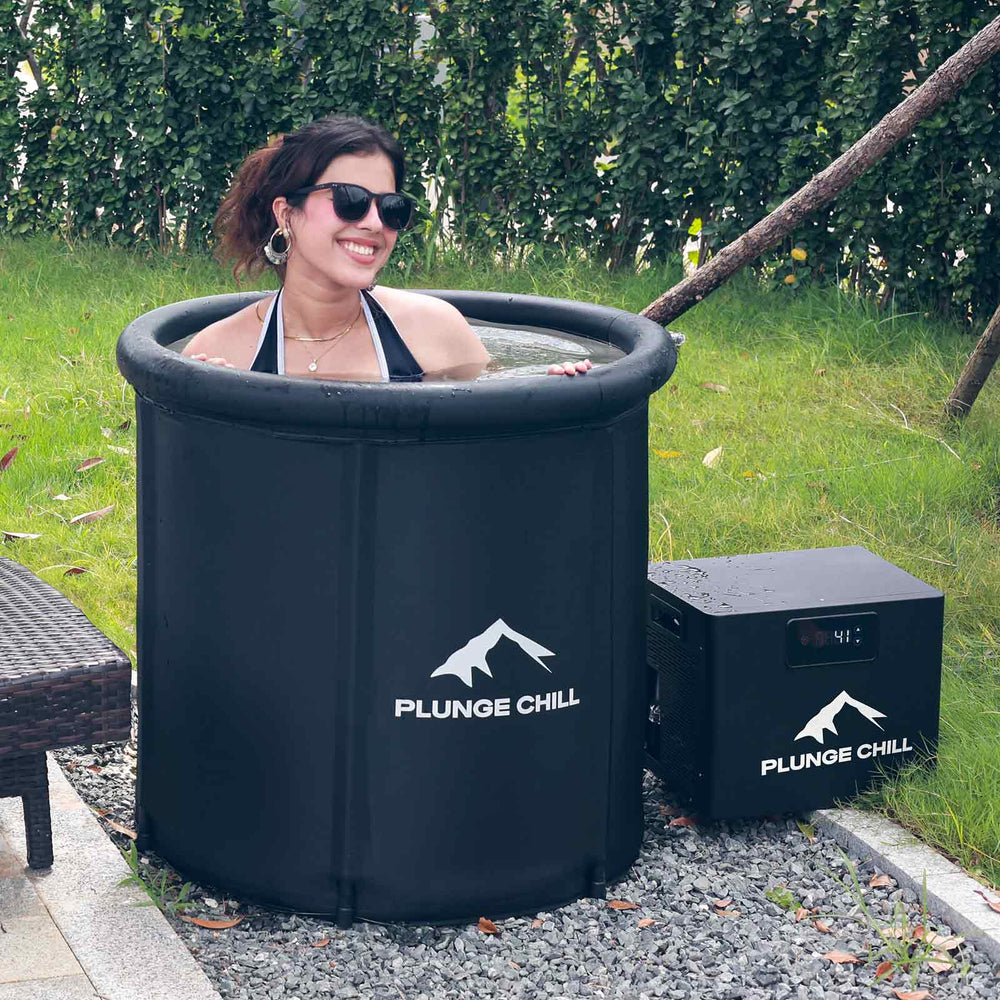
As a sports rehabilitation specialist and strength coach who reviews cold plunge products, I rely on the same principles I use with athletes on the training floor: be clear about the goal, match the method to the goal, and make safety non‑negotiable. Cold‑water immersion can be a potent recovery tool, but it is not a cure‑all. This guide explains how ice baths work, who benefits, who should avoid them, how to dose them, and what to look for if you are buying a home unit—grounded in current evidence and day‑to‑day practical experience.
What An Ice Bath Is—and What It Does
Cold‑water immersion is deliberate submersion in cold water, typically between 50–59°F, for a brief period after training or competition. The immediate cold shock response—rapid breathing, spikes in heart rate and blood pressure, and strong peripheral vasoconstriction—appears in the first seconds and minutes and can be the riskiest portion for unacclimated users, as explained by researchers at Case Western Reserve University. Physiologically, the cold constricts blood vessels and slows nerve conduction, which reduces pain signaling, swelling, and local metabolic demand. When you exit, reperfusion increases blood flow and may aid the movement of metabolites out of the tissue.
Meta‑analytic data show consistent short‑term reductions in soreness and perceived fatigue, along with lower creatine kinase and blood lactate at about 24 hours, but no robust improvements in vertical jump or systemic inflammatory markers. The American College of Sports Medicine notes that carefully dosed immersion can support neuromuscular performance for up to 24 hours after a session, especially in endurance‑type demands, with benefits beyond that window less clear. For heat stress recovery, cold immersion is well established in sports medicine for bringing down elevated core temperature rapidly, a point reinforced by Cleveland Clinic.
Mood, focus, and perceived resilience often improve immediately, likely mediated by surges in norepinephrine and endorphins; many users report a calm, steady state after re‑warming. Case Western Reserve University highlights that longer‑term mental health claims are still uncertain outside of acute effects.

Who Should—and Should Not—Use Cold Immersion
Cold immersion is not appropriate for everyone. Major medical contraindications include prior cold injury, Raynaud’s disease, cryoglobulinemia, hypothyroidism, significant cardiovascular disease (including coronary disease, unstable angina, and advanced heart failure), uncontrolled hypertension, and sensory or autonomic nervous system disorders, as outlined by the American College of Sports Medicine. People with diabetes with neuropathy, peripheral vascular disease, or poor circulation warrant extra caution, according to Cleveland Clinic. Case Western Reserve University further notes concerns for individuals with heart disease, poor circulation, prior stroke, or those taking beta‑blockers who may not mount normal adaptations to the adrenergic surge. In my practice, I require prescreening before full‑body immersions, I avoid unsupervised use, and I keep exposures conservative until tolerance and technique are demonstrated.
Even for otherwise healthy athletes, acute risks include uncontrolled hyperventilation, panic, lightheadedness, afterdrop (continued core cooling after exit), and, in rare cases, syncope. Utah Health recommends never plunging alone, keeping a visible timer, confirming a clear exit path, and warming gradually rather than jumping directly into very hot water. Outdoors, avoid currents and ice‑covered bodies of water; Mayo Clinic also reminds consumers to have towels and warm clothing ready before you enter.
The Big Question: Will an Ice Bath Help My Recovery?
The honest answer is that it depends on your goal, your sport, and your timing. For quick turnarounds—back‑to‑back matches or dense training camps—cold immersion can reduce soreness and perceived fatigue, sometimes preserving next‑day readiness more than passive rest. A large synthesis of post‑exercise cold immersion studies shows clear immediate relief of soreness and subjective fatigue, plus lower CK and lactate the next day. The American College of Sports Medicine adds that performance support is strongest in endurance contexts. Cleveland Clinic and Mayo Clinic echo that many athletes feel better and can resume training sooner.
However, several trials in runners and resistance training contexts report little to no benefit over control conditions for objective strength recovery. The University of New Hampshire study in downhill running is one example where soreness and strength outcomes did not differ between an ice‑bath group and controls. When we see disagreement, the likely causes include differences in protocol temperature and duration, when the cold was applied relative to training, the type of exercise stressor (eccentric running versus repeated‑sprint or team sport loads), and small sample sizes that make results sensitive to participant variability.
Two cautions consistently emerge. First, for hypertrophy and maximal strength blocks, immediate cold immersion can blunt molecular signaling for muscle protein synthesis and reduce long‑term gains; this finding appears across multiple studies and meta‑analyses and is summarized by sources ranging from the American College of Sports Medicine to Peloton’s evidence roundup. Second, claims about broad immune benefits remain uncertain; Case Western Reserve University notes that increases in white blood cells have been observed in cold‑water swimmers, but effects are confounded by exercise and selection bias.
In everyday coaching, I reserve ice baths for strategic windows—post‑competition, hot‑weather tournaments, pre‑season camps, or during congested fixtures—and I dial back or avoid them during heavy lifting phases when adaptation is the priority.
Dialing in Temperature, Time, and Timing
The best “dose” of cold is goal‑dependent. To reduce soreness and support next‑day readiness, the American College of Sports Medicine suggests either two five‑minute immersions at about 50°F separated by a two‑minute ambient break, or a single continuous 11–15‑minute immersion between roughly 52–60°F. Cleveland Clinic advises novices to target 50–59°F for about three minutes and to avoid going below about 40°F. When the priority is muscle growth or strength, the American College of Sports Medicine recommends delaying cold exposure by four to six hours; some sports medicine clinicians extend that window to a full day. The difference likely reflects the balance between athlete convenience and the desire to separate the early inflammatory signaling that drives adaptation from the anti‑inflammatory effect of cold. In endurance or mixed‑modal sports, immediate use is often acceptable because the interference effect is smaller.
If you use cold to enhance alertness or mood before skill work, a brief exposure at moderate cold can work in the morning; the American College of Sports Medicine cautions that late‑day cold may disrupt sleep for some, even though Cleveland Clinic notes that many people report better sleep. That disagreement probably arises from differences in timing, re‑warming habits, and individual sensitivity to catecholamines. Practically, finish at least several hours before bedtime, re‑warm gradually, and track your own sleep data before making it routine.
To put these ideas to work, the following table aligns common goals with reasonable starting points based on consensus ranges and clinical guidance. Adjust for your tolerance and consult a clinician if you have medical risks.
Goal/context |
Suggested temperature (°F) |
Exposure time |
Timing vs exercise |
Notes and sources |
Back‑to‑back games or dense training days |
50–55 |
10–15 minutes continuous, or two 5‑minute bouts with a short break |
Immediately post‑session |
Supports soreness and perceived recovery; evidence strongest in endurance/team settings (American College of Sports Medicine; PMC meta‑analysis). |
Heavy resistance training, hypertrophy priority |
50–59 if used |
3–10 minutes |
Delay 4–6 hours or longer; many lifters skip on lift days |
Immediate cold can blunt strength/hypertrophy signaling (American College of Sports Medicine; OnePeloton evidence summary). |
Heat stress or elevated core temperature |
39–50 for experienced users; novices stay ≥50 |
1–10 minutes total |
Immediately post‑exposure |
Rapid cooling is standard in sports medicine; avoid extremes without supervision (Cleveland Clinic). |
Morning mood/alertness boost |
50–59 |
1–3 minutes |
Before training or workday |
Short exposures can raise norepinephrine and perceived vigor; limit duration and re‑warm (Case Western Reserve University; Cleveland Clinic). |

Overlooked Nuances That Change the Dose
One practical factor I see missed is how body size and composition alter cooling rate. Leaner, lighter athletes with larger surface area relative to mass cool faster than heavier or higher‑body‑fat athletes, which means a “standard” two‑to‑three‑minute exposure can hit much harder for some people. Science for Sport highlights this point for combat athletes; the implication is simple: adjust dose to the athlete, not the other way around.
A second nuance is that splitting cold time into two short bouts separated by a brief ambient break can lower muscle temperature more effectively than one continuous exposure of the same total duration. Science for Sport describes this intermittent strategy; in my experience with tournament schedules, this approach feels more manageable and still “gets the job done” without escalating risk.
A third nuance is the gap between showers and immersion. Showers help with alertness and perceived recovery, but immersion produces greater hydrostatic pressure and more uniform tissue cooling. A peer‑reviewed analysis notes that showers often fail to meaningfully lower muscle temperature right away, which is expected given the lack of compression, the smaller water mass, and the intermittent contact. That does not make showers useless, but it sets expectations correctly when you are choosing a modality for a specific goal.
Managing Risks the Way Pros Do
I treat first exposures like skill sessions. I start with a thermometer, confirm water temperature in the target range, and rehearse calm nasal breathing before entry. I cue athletes to enter slowly, keep their head above water, and focus on long exhales to blunt hyperventilation. Cleveland Clinic’s “start low and go slow” guidance is wise: two minutes at about 50–59°F is plenty at first. Utah Health suggests protective gear such as neoprene booties or gloves for people who feel intense pain in the hands and feet. After the plunge, I have athletes towel off, change into dry clothes, sip a warm drink, and do gentle movement for a few minutes. Utah Health’s caution about avoiding an abrupt very hot shower aligns with my experience; jumping straight to intense heat can produce lightheadedness.
If the bath is outdoors, I avoid rivers or currents entirely. Mayo Clinic reminds users that large commercial plunge systems can be expensive and heavy; plan logistics and have a straightforward path back inside. In all settings, I do not allow solo plunges. A training partner, a coach, or a family member on standby is a basic safety net I never skip.
Buying Smart: What to Look for in a Cold Plunge
If you are shopping for a dedicated unit rather than using a bathtub with ice, I evaluate systems the way I would a recovery room build‑out.
I look first at temperature capability and recovery behavior. If your climate is warm, a unit that reliably reaches the high 40s in the summer without excessive strain is more valuable than one that claims extreme temperatures that you will never actually use. I ask brands to disclose time‑to‑temperature from ambient water to the setpoint and whether the unit maintains temperature well during repeated use. I verify these claims in independent, hands‑on testing when possible.
Filtration and sanitation come next. The cleaner the water, the less frequently you will need full drain‑and‑refill cycles. A combination of mechanical filtration and a sanitizer (for example, ozone or UV in many systems) is much easier to live with than relying on manual shock treatments alone. I follow the manufacturer’s sanitation protocol and, in team settings, add routine water testing, because hygiene is the first line of defense against skin irritation.
Insulation and covers matter more than most buyers think. An insulated tub and a well‑fitting, easy‑to‑handle cover are the unsung heroes of temperature stability and energy cost. I pay attention to materials that hold up to outdoor sun and to handles and hinges that feel sturdy rather than flimsy.
Footprint, comfort, and ergonomics are the difference between a tool you use three times and a tool you use three hundred times. I check the interior length and depth for real‑world fit, evaluate how easy it is to get in and out without slippery steps, and favor non‑absorbent materials that dry quickly. If you are over 6 ft tall, a full‑length tub often beats a compact barrel for comfort.
Noise and power are real‑life constraints. I ask for stated noise levels and listen in person; a chiller that sounds fine in a showroom can be intrusive in a small apartment. I also confirm power requirements and whether a dedicated circuit or GFCI outlet is specified by the manufacturer. If you do not have that capacity, plan the electrical upgrade before you buy.
Warranty, service, and parts availability are where the value of premium units shows up over time. I read the fine print on what is covered and for how long. As Mayo Clinic notes, high‑end plunge systems can cost as much as $20,000. In that price range, I expect a responsive service network and easy access to replacement filters, gaskets, and fittings.
A simple bathtub with a few bags of ice remains a sensible starting point. Cleveland Clinic suggests filling a tub halfway with cold water and adding ice to reach about 53°F, with beginners starting warmer. Start there, validate that cold exposure helps your specific goals, and only then decide whether to invest in dedicated equipment.
Confidence: Low on optimal maintenance interval claims for all brands; verify by reading the user manual of your specific unit and asking the manufacturer for water‑testing guidelines.
Setup, Hygiene, and Care
I keep a basic kit near the plunge: a floating thermometer, clean towels, a warm hat for cold outdoor sessions, and a timer visible from the tub. I label maximum exposure times for different temperatures, so athletes do not guess. I standardize re‑warm protocols to reduce afterdrop and keep people feeling steady. For water care, I monitor clarity and smell every time I open the lid and follow the sanitation schedule recommended by the manufacturer rather than improvising. When in doubt, I err on the side of changing water more frequently and cleaning interior surfaces with the recommended non‑abrasive agents.
At home, one simple habit avoids most mishaps: set a timer before you step in and place it within reach. Accidental overexposure usually happens when people “wing it” and lose track of time because the first minute feels exhilarating and the next two go by faster than expected.
Cold Showers, Ice Baths, and Cryotherapy: Choosing Your Modality
A cold shower is a practical, accessible option when you want a brief arousal effect or a low‑risk introduction to cold. It has less uniform tissue cooling and less hydrostatic compression than immersion, so it is not a one‑for‑one substitute for post‑game recovery, but it can still improve perceived recovery and alertness. Full‑body immersion gives the strongest dose of both cold and pressure, which is helpful when the goal is to affect limb swelling and local muscle cooling more meaningfully. Whole‑body cryotherapy is an entirely different stimulus—extremely cold air for a brief duration—and its effects on core and muscle temperature differ from water‑based immersion. Case Western Reserve University notes that whole‑body exposures drop core temperature differently than showers, while practical comparisons to cold immersion vary with the device.
To keep these differences straight, here is a quick comparison you can scan before you commit to a routine.
Modality |
What it does best |
Main limitations |
Best fit |
Cold shower |
Quick arousal and mood boost; easy habit anchor |
Lower and less uniform tissue cooling; minimal hydrostatic effects |
Daily alertness practice; light recovery on easy days |
Cold‑water immersion |
Strong pain modulation, local cooling, and hydrostatic support |
Requires setup, supervision, and hygiene; higher acute risk without acclimation |
Post‑competition soreness management; heat stress recovery; dense training blocks |
Whole‑body cryotherapy |
Short, tolerable cold exposure; less logistical mess |
Different thermal profile; variable evidence for recovery outcomes |
Novelty or adjunct stimulus when immersion access is limited |

Sport‑Specific and Timing Considerations
In sports with congested schedules—tournaments, fight camps, two‑a‑days—ice baths are most useful as a means of reliable soreness control and perceived readiness. Combat sport guidance summarized by Science for Sport describes protocols from eight to ten minutes at 50–59°F or 50°F depending on the intensity needed, with intermittent exposures sometimes lowering muscle temperature more than continuous baths. They caution against cold immersion within roughly 48 hours before a fight because reduced joint stiffness may transiently slow reactivity. In my team settings, I avoid late‑stage cold for similar reasons and prefer a final active recovery session with sleep and nutrition optimized.
For resistance training, I rarely use immediate cold unless the block emphasizes skill work under fatigue rather than hypertrophy. If athletes insist on plunging after lifting, I separate the sessions by many hours; this advice is consistent with the American College of Sports Medicine and echoed in practical guidance from Peloton’s evidence review. For endurance athletes, I am more permissive, as the interference appears smaller, but I still look to the next day’s training to decide whether the recovery boost outweighs any potential adaptation cost.
Putting It All Together
A realistic plan begins with clarity on your goal. If you have back‑to‑back efforts and want to feel fresher, target about 50–55°F for 10–15 minutes or split that time into two short bouts with a brief warm‑room break. If you are in a strength phase, delay cold exposure for several hours, and consider skipping it on heavy days. If you are simply exploring potential mood benefits, aim for one to three minutes at 50–59°F in the morning, re‑warm gradually, and track your sleep before making late‑day plunges a habit. Throughout, run a safety checklist—never alone, visible timer, thermometer confirmed, easy exit, and measured re‑warm.
Brief Notes on Conflicting Guidance
You will see variation in recommended times and temperatures across clinical and athletic sources. Cleveland Clinic’s beginner focus leads to shorter durations and higher temperatures for safety, while the American College of Sports Medicine references protocols used in athletic settings that are somewhat longer or colder. Meta‑analysis places the strongest benefits in subjective outcomes and a next‑day biochemical snapshot rather than in long‑term performance, which aligns with the idea that cold immersion is excellent for acute relief and less convincing for chronic adaptation. Differences in study populations, exercise types, and timing relative to training largely explain the disagreements.
FAQ
How cold should my ice bath be if I am new to this?
A sensible starting point is about 50–59°F for a very short exposure. Cleveland Clinic recommends brief sessions and avoiding water at or below about 40°F until you have experience and a clear reason to go that cold. I begin at the warm end of that range, use a thermometer, and add time only after two to three calm, uneventful sessions.
How long should I stay in?
For beginners, one to three minutes is enough to learn the breathing and safely sample the response. Athletic recovery protocols often use 10–15 minutes at about 50–55°F or two five‑minute immersions separated by a short ambient break, as summarized by the American College of Sports Medicine. I cap total time at the conservative end until athletes show consistent tolerance and control.
Will ice baths hurt my strength or muscle growth?
Immediate cold immersion after lifting can reduce the signaling that drives strength and hypertrophy. The American College of Sports Medicine and multiple reviews report this interference. If gaining strength or size is your priority, delay cold by four to six hours or more, or reserve it for rest days and competition windows where faster recovery is more important than adaptation.
Are cold showers good enough?
They can help with alertness and perceived recovery, and they are far easier to fit into daily life. For lowering muscle temperature and managing limb swelling after hard field or court work, full immersion delivers more uniform cooling and hydrostatic pressure. A peer‑reviewed overview notes that showers often do not lower muscle temperature immediately; that does not make them useless, but it sets expectations appropriately.
Is it safe to plunge every day?
Frequency depends on your goals and health status. Daily cold can be tolerated by healthy, acclimated individuals, but Mayo Clinic and Cleveland Clinic emphasize that daily post‑training immersion may compromise long‑term performance adaptations in some contexts. I periodize cold use around training blocks, increasing it in tournament periods and dialing it back in heavy strength phases. If you have cardiovascular, metabolic, or neurologic conditions, seek medical clearance first.
Can ice baths help with weight loss or immunity?
Cold raises calorie burn acutely and may temporarily improve glucose handling due to shivering and muscular activation, as discussed by Case Western Reserve University. However, broad claims about immunity or long‑term metabolic health are not well established and are often confounded by exercise habits in cold‑water swimmers. I treat these as possible bonuses rather than primary reasons to plunge.
Takeaway
Cold‑water immersion is a targeted tool—excellent for acute soreness relief, perceived recovery, and heat stress management—when the dose and timing match the goal. It is not a substitute for sleep, nutrition, and intelligently programmed training, and it can interfere with strength and hypertrophy if used immediately after lifting. Start conservatively, measure temperature and time, never plunge alone, and adopt a re‑warm routine you can repeat. If you decide to invest in a home unit, evaluate temperature capability, filtration and sanitation, insulation and cover quality, ergonomics, noise and power requirements, and warranty and service as carefully as you would any high‑use training tool. Where evidence conflicts, look first to your sport demands, the timing relative to training, and your individual response; those three variables explain most of the mixed messages and will guide you to a protocol you can sustain.
Confidence: Low on the best water maintenance frequency across all brands; verify by consulting your unit’s manual and, if needed, performing a simple weekly water test for sanitizer levels and clarity.
References
- https://case.edu/news/science-behind-ice-baths-and-polar-plunges-are-they-truly-beneficial
- https://cupola.gettysburg.edu/cgi/viewcontent.cgi?article=2078&context=student_scholarship
- https://www.health.harvard.edu/staying-healthy/can-ice-baths-improve-your-health
- https://www.mcphs.edu/news/physical-therapist-explains-why-you-should-chill-out-on-ice-baths
- https://lifestylemedicine.stanford.edu/jumping-into-the-ice-bath-trend-mental-health-benefits-of-cold-water-immersion/
- https://sncs-prod-external.mayo.edu/hometown-health/speaking-of-health/cold-plunge-after-workouts
- https://pmc.ncbi.nlm.nih.gov/articles/PMC11872954/
- https://health.osu.edu/wellness/exercise-and-nutrition/do-ice-baths-help-workout-recovery
- https://www.cilexlawschool.ac.uk/fulldisplay/j3KznF/1S9023/RecoveryPlusColdTherapy.pdf
- https://health.clevelandclinic.org/what-to-know-about-cold-plunges