As a sports rehabilitation specialist and strength coach who outfits unit recovery rooms and reviews cold plunge systems for field gyms, I see tactical athletes use cold-water immersion to stay mission-ready under high load, heat, altitude, and sleep disruption. Cold plunges can accelerate how you feel by the next session, but they are not a cure-all. The strongest evidence supports short-term reductions in soreness and perceived fatigue, with important caveats about when to use cold—especially if you are building strength or muscle. This article distills what the research actually supports, where experts disagree, and how to deploy cold plunges as a tactical tool with safety, logistics, and buying considerations in mind.
What Cold Plunge Is—and Is Not
Cold plunge, or cold-water immersion, is partial or full-body submersion in cold water for a short time to support recovery or resilience. Unlike a cold shower that cools non-uniformly, immersion delivers even cooling and adds hydrostatic pressure, which shifts fluid centrally and can mimic a low-cost, passive “active recovery” in some respects. The best-studied protocols in athletes use water around 50–59°F for about 10–15 minutes, or split exposures totaling 10 minutes at about 50°F with a brief break in ambient air between immersions, as summarized by the American College of Sports Medicine (ACSM).
It is not the same as local icing. Much of the medical debate about “ice blunts healing” comes from localized cryotherapy and prolonged icing of an injury. Whole-body immersion has different fluid and hemodynamic effects and is generally applied for shorter, standardized durations. That difference helps explain why some sources reach opposite conclusions about “ice” versus “immersion” in recovery contexts (Parker University; ACSM).
Physiology 101 for Tactical Athletes
Submerging in cold water triggers rapid vasoconstriction that reduces blood flow to the limbs and helps limit swelling and tissue breakdown after hard efforts. On exit and rewarming, vasodilation increases circulation and may help flush metabolites while delivering oxygen and nutrients to recovering muscle. Hydrostatic pressure from immersion shifts fluids from the periphery toward the core, raising preload and stroke volume without adding training stress. That passive cardiovascular loading is one reason some athletes feel better after immersion even when objective performance changes are small (Science for Sport; Post-Exercise Ice Water Immersion commentary).
Immersion also changes how you feel. Studies report lower heart rate and blood pressure shortly after a single cold-water session, along with lower cortisol and improvements in negative mood states (Journal of Thermal Biology; University of Oregon). Many athletes describe a clear-headed, alert state after cold exposure, and consumer-facing medical sources tie this to changes in the autonomic nervous system and hormone output (Temple Health; Mayo Clinic; Ohio State Health).
Metabolic effects are plausible. Cold exposure increases energy needs and may recruit brown adipose tissue, which burns calories to generate heat. Ohio State Health notes potential weight implications via caloric burn and brown fat activation, and academic work shows brown fat lipids shift dynamically under cold exposure, although responses vary across people.
One overlooked interaction matters in tactical settings. Very cold water can depress cardiac output even as hydrostatic pressure raises central blood volume. This means going extremely cold may counteract some of the passive “active recovery” cardiovascular benefits that moderate immersion temperatures provide. A practical compromise is to stay in the 50–59°F range for most recovery immersions to keep hydrostatic benefits while avoiding the steepest cardiovascular and thermal stress (Science for Sport; Post-Exercise Ice Water Immersion commentary).

What the Evidence Actually Says
Across controlled studies and meta-analyses, cold-water immersion reliably reduces soreness and perceived exertion immediately after use and into the next day. A meta-analysis reported lower delayed-onset muscle soreness immediately after immersion, lower perceived exertion, and reduced creatine kinase and blood lactate at about 24 hours, but no consistent improvements in countermovement jump performance at 24–48 hours. In short, you tend to feel better soon, yet measurable performance changes are modest and inconsistent across studies (meta-analysis in a peer-reviewed journal).
Sport and goal matter. For endurance or back-to-back event contexts, several clinical sources report less soreness and better next-day readiness, which is often the mission-driven goal for tactical athletes on compressed schedules (Mayo Clinic; Ohio State Health; ACSM). For resistance training and hypertrophy, however, both meta-analyses and controlled studies indicate that immediate post-lift immersion can dampen molecular signaling needed for muscle growth and strength development over weeks to months. Evidence suggests the effect is small-to-moderate but meaningful if muscle-building is a top priority (Sports Medicine and European Journal of Sport Science summaries; Journal of Physiology 2015 signal).
There is also a scientific debate about acute injury healing. A clinical commentary argued icing can blunt the early inflammatory phase of healing, delaying regeneration and potentially increasing tissue damage if overused, while acknowledging cryotherapy’s consistent analgesic effect (Parker University). Importantly, those conclusions come mostly from localized icing and prolonged cold applications, whereas the athlete-focused evidence for whole-body immersion highlights short, standardized exposures that may limit those risks. Divergent definitions, small samples, timing differences, and heterogeneous measures likely explain part of the conflict.
Two practical takeaways stand out. First, cold immersion is a credible tool to feel and function better in the short term, particularly for endurance-heavy or heat-exposed work. Second, it should be programmed carefully around resistance training to avoid blunting long-term adaptation. Daily plunges immediately after strength sessions are not advised when hypertrophy and strength are the main objectives (Mayo Clinic; ACSM; meta-analyses).
Protocol Decision Matrix for the Field
The following matrix aligns missions and training goals with immersion options, temperatures, durations, and the trade-offs most relevant to tactical units.
Mission/Context |
Primary Goal |
Suggested Timing |
Water Temperature |
Duration |
Notes on Evidence and Trade-offs |
Sources |
Back-to-back operations within 24–72 hours |
Reduce soreness and be mission-ready |
Immediately post or within 2 hours after the effort |
50–59°F |
10–15 minutes; or two 5-minute bouts at 50°F with 2 minutes at ambient temperature between |
Reliable reductions in soreness and perceived fatigue; limited objective performance changes; useful when turnaround is tight |
ACSM; meta-analysis; Mayo Clinic; Ohio State Health |
Resistance training block emphasizing strength or hypertrophy |
Preserve adaptation |
Avoid immediately post-lift; use morning immersion on non-lift days, or 24–48 hours after heavy resistance work |
50–59°F |
5–10 minutes |
Immediate post-lift cold can blunt growth signaling; delayed immersion maintains benefits with less interference |
ACSM; Mayo Clinic; Journal of Physiology; European Journal of Sport Science |
Hot climate pre-mission heat mitigation |
Lower core temp and perceived heat strain |
About 30–90 minutes before extended efforts in heat, allowing safe rewarming and gear-up |
50–59°F |
5–10 minutes |
Pre-cooling can improve comfort and may aid performance in heat; ensure rewarming of hands to preserve weapon handling |
European Journal of Sport Science; Temple Health |
Acute lower-limb swelling after long ruck |
Control swelling and discomfort while moving toward active recovery |
Post-event within 2 hours |
50–59°F |
10–15 minutes |
Analgesia and edema control reasonable; early heavy icing may slow inflammatory repair; progress to movement as tolerated |
Parker University; Science for Sport |
Mental reset without training interference |
Mood, alertness, perceived stress |
Early morning on days without strength training |
50–59°F |
2–5 minutes |
Reports of improved alertness and lower cortisol; schedule to avoid sleep disruption later in the day |
Journal of Thermal Biology; ACSM; Mayo Clinic |
Protocol specifics deserve context. ACSM summarizes that two five-minute exposures at about 50°F with a short ambient break, or a single 11–15 minute exposure around 52–59°F, are commonly studied recovery options. For units in heat, a brief pre-cooling immersion has plausible benefits for comfort and thermal strain management; rewarm the hands and ensure full dexterity before handling weapons or gear (European Journal of Sport Science; Temple Health).
Safety, Contraindications, and Risk Management
Cold immersion stresses the cardiovascular and respiratory systems. Contraindications cited by ACSM include prior cold injury, Raynaud’s disease, hypothyroidism, cryoglobulinemia, uncontrolled hypertension, serious cardiovascular disease such as advanced heart failure or unstable coronary disease, and sympathetic or sensory nervous system disorders. Consumer medical sources add diabetes with neuropathies as a higher-risk situation (Ohio State Health; Mayo Clinic). Injury risks include frostbite in extreme environments, asphyxiation, and loss of consciousness if unsupervised. Field leaders should require a buddy system, a thermometer for water verification, dry towels and warm layers staged within arm’s reach, and a safe, non-slip entry and exit.
Natural water adds hazards such as currents, entanglement, and unseen debris. Avoid rivers and under-ice environments. In austere settings, consider a controlled container or portable tub with a ground-fault protected power source for chillers. Rewarm gradually with light movement and clothing; avoid reflexively jumping into a very hot shower, which can produce afterdrop discomfort and dizziness (Temple Health; Ohio State Health; Mayo Clinic).

Integrating Cold Plunge into Periodized Military Programming
Think of cold immersion as a targeted tool inside a larger recovery and readiness system that also includes sleep, nutrition, hydration, and movement. On base, I program immersion in microcycles when the unit’s mission demands quick turnarounds—after heat-exposed land nav, long rucks, or multi-day field lanes. During strength-emphasis blocks, we move immersion away from lifts, often to mornings on non-lift days, keeping cold exposure short and moderate.
Environmental physiology matters for tactical units. Cold exposure increases total energy requirements, and high altitude shifts fuel selection and hormone balance in ways that can complicate recovery. Operational rations in cold or at altitude need adequate energy density and protein to sustain work capacity; iron status should be monitored to support acclimatization and performance (National Academies Press). There is exploratory evidence that the amino acid tyrosine may mitigate some cold-related behavioral depression, though this is not a prescription for immersion or for nutrition without medical oversight.
Heat versus cold decisions can be strategic. Recent conference data in exercise physiology suggest hot-water immersion right after high-intensity work better preserved short-term power output than cold water in young male recreational athletes, while next-morning running capacity did not differ. For same-day or next-hour explosive tests, choosing hot over cold may be advantageous. For soreness control under congestion, cold still has a role. This underscores the importance of matching the modality to the tactical timeline (American Physiological Society report on hot-water immersion).
Product Buying Guide for Units and Home Gyms
In a military context, your cold plunge system must be safe, durable, portable, and manageable in shared or improvised spaces. The market ranges from bathtubs with ice to purpose-built tanks with powerful chillers and integrated filtration. Consumer medical sources note that fully featured dedicated tanks can cost up to $20,000, so budget and mission profile drive choices (Mayo Clinic).
Purpose-built systems typically offer precise temperature control, robust filtration, anti-slip tubs, and safety shutoffs. Some commercial systems cited in industry materials can cool to about 37°F and heat to roughly 68°F, giving flexibility across seasons and users.
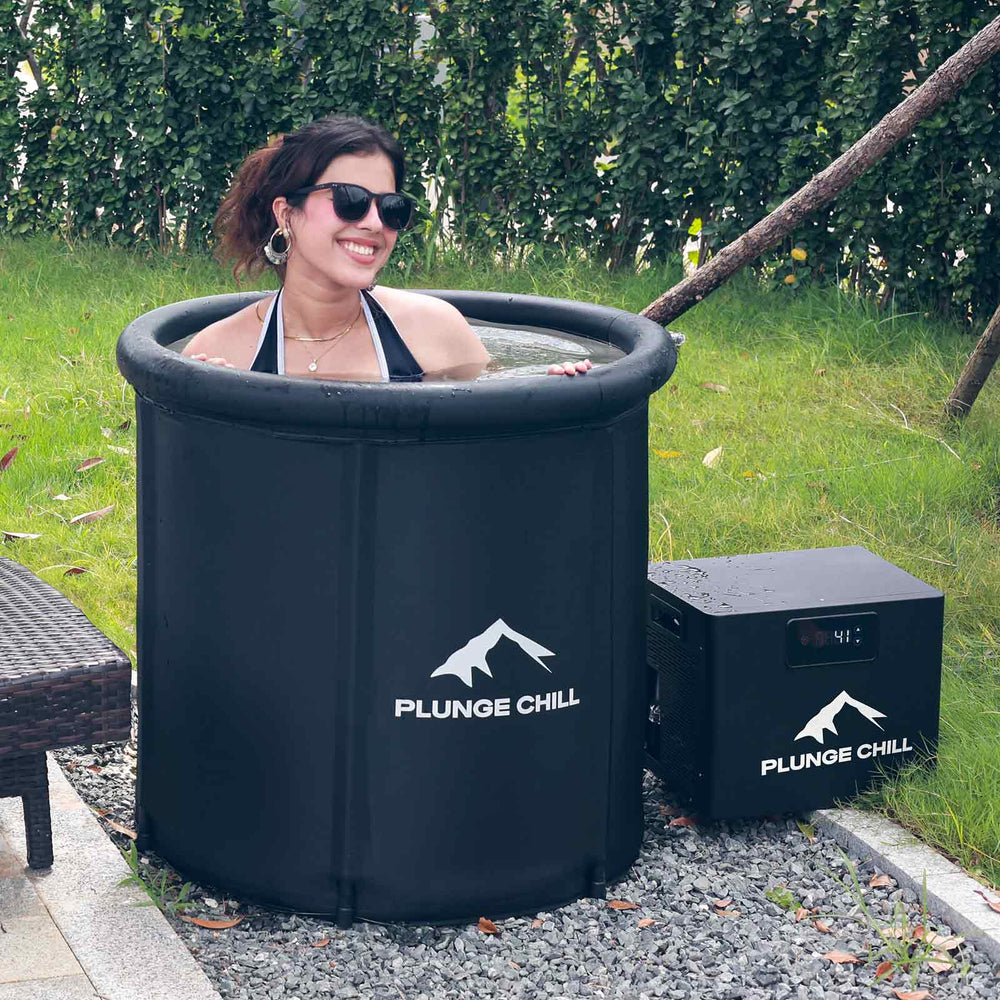
DIY setups—stock tanks, portable tubs, or bathtubs—are inexpensive and flexible but demand manual ice management, vigilant sanitation, and more time to achieve and hold target temperatures. In my field gyms, the most common failure mode is water hygiene; inadequate filtration and cleaning quickly reduce user compliance.
Feature |
DIY Tub with Ice |
Purpose-Built Chiller + Tub |
Temperature control |
Manual; variable and slow to change |
Precise digital control across cold and warm ranges |
Filtration and sanitation |
Minimal unless add-ons are installed |
Integrated filtration; often includes advanced options such as ozone |
Setup and portability |
Portable but labor-intensive; frequent ice runs |
Heavier; may include wheels; faster setup once placed |
Power and noise |
No power if using only ice; quiet |
Requires power; generates fan and pump noise—check decibels for barracks use |
Safety features |
Depends on user; riskier entry/exit |
Anti-slip surfaces; safety shutoffs; better ergonomics |
Maintenance |
Frequent water changes and cleaning |
Scheduled filter changes and routine sanitation |
Total cost of ownership |
Low up front; ongoing ice costs |
Higher up front; predictable operating costs |
When evaluating equipment for a unit or home gym, confirm the following: temperature range at your ambient conditions; chiller capacity relative to tub volume; filtration type and filter replacement cadence; drain method and hose compatibility; power requirements for your building; surface safety and tub stability; noise considerations for barracks or shared spaces; and availability of replacement parts and support. If personnel will transport the unit, weigh it empty and plan for safe lifting or wheeled movement.
Care and Maintenance in Austere Settings
Clean water keeps personnel compliant and reduces skin issues. In the field, set a water-change schedule based on usage and visible clarity, wipe down surfaces with an appropriate disinfectant between rotations, and maintain filtration per the system’s instructions. If your unit uses ozone or other advanced filtration, ensure operators are trained to monitor indicators and replace filters on time. Encourage users to rinse feet before entry and keep a towel and warm layers staged to streamline rewarming and reduce spills. Store the tub covered, shaded, and out of high-traffic dust to extend the time between full water changes. For DIY setups, commit to short, frequent sanitation cycles; for purpose-built systems, follow the manufacturer’s cleaning protocol and log it.
Pros and Cons in Tactical Practice
Cold plunge delivers repeatable reductions in soreness and perceived fatigue within 24 hours, which can be exactly what a unit needs when operations compress recovery windows. It can also lower heart rate and blood pressure acutely and improve mood states, enhancing readiness when sleep and environmental stressors pile up. The trade-offs are real: immediate post-lift immersion is likely to blunt strength and hypertrophy signals over time, daily post-resistance plunges are not advised when building capacity is the priority, and improper use increases hypothermia and cardiovascular risk. Logistically, DIY setups strain staff time and hygiene; dedicated units solve those problems at higher cost and with the need for power, space, and maintenance planning.
Gaps, Disagreements, and Practical Implications
Two themes explain much of the disagreement across sources. First, definitions differ. Local icing of a joint for long periods is not the same as short whole-body immersion with hydrostatic loading; extrapolating “ice delays healing” to all immersion is an overreach. Second, methods vary. Small sample sizes, sport-specific outcomes, different temperatures and durations, and diverse comparison groups (passive sitting versus active recovery) drive mixed findings. Meta-analyses synthesize across that noise and conclude that the main benefits are subjective and short term, which still matters for mission-driven readiness.
An overlooked scheduling nuance helps in the field. Morning cold exposure appears to produce alertness benefits while minimizing interference with afternoon lifts, whereas late-day cold can disrupt sleep for some, likely through catecholamine release (ACSM). At unit scale, schedule morning plunge access for endurance blocks and heat days, and fence off post-lift cold during strength phases.
Another underappreciated interaction is temperature against hydrostatic benefit. Moderately cold immersion may preserve the cardiovascular advantages of fluid shifts while the coldest exposures can depress cardiac output, potentially negating those benefits. Matching your temperature to your goal is more effective than chasing the coldest possible number (Science for Sport; Post-Exercise Ice Water Immersion commentary).
Takeaway
Use cold plunge as a tactical tool, not a reflex. When back-to-back efforts or heat exposure compress recovery time, immersion around 50–59°F for 10–15 minutes is a defensible, low-friction way to feel and function better by the next evolution. When building strength and size, schedule cold away from lifts or 24–48 hours later, and keep exposures short. Screen for contraindications, supervise, and standardize temperatures and durations. If buying equipment, prioritize safe entry/exit, precise temperature control, filtration, and serviceability; in DIY contexts, plan sanitation rigorously. The mission decides the method—deploy cold where it yields the most return on readiness with the least cost to long-term adaptation.
FAQ
Q: What is the most evidence-backed cold plunge protocol for next-day readiness? A: For general recovery after taxing efforts, immersion at about 50–59°F for 10–15 minutes, or two five-minute immersions at 50°F with a short ambient break, has the best support for reducing soreness and perceived fatigue by 24 hours, especially in endurance-heavy contexts. This strategy should not be your default immediately after lifting if strength gains are your priority (ACSM; meta-analyses; Mayo Clinic).
Q: Does cold plunge reduce muscle growth for military strength programs? A: Immediate post-lift immersion can dampen signaling for hypertrophy and strength when used repeatedly over weeks. The effect appears small-to-moderate but relevant if muscle-building is a top goal. Avoid cold right after resistance sessions; instead, schedule morning immersions on non-lift days or wait 24–48 hours after heavy lifts (Journal of Physiology; Sports Medicine and European Journal of Sport Science summaries; Mayo Clinic).
Q: Can cold plunge improve performance in hot environments before missions? A: Pre-cooling for a few minutes in the 50–59°F range can lower thermal strain and improve comfort, with some evidence of performance benefits in heat. Ensure full rewarming of hands to preserve dexterity and weapon handling before stepping off. The benefit is context-dependent and should be tested in your unit’s conditions (European Journal of Sport Science; Temple Health).
Q: Are there medical conditions that rule out cold plunging? A: Do not use cold immersion with a history of cold injury, Raynaud’s disease, cryoglobulinemia, uncontrolled hypertension, advanced heart failure, unstable coronary disease, or significant sensory or autonomic nervous system disorders. Diabetes with neuropathies requires extra caution. Always clear high-risk personnel through medical channels, supervise use, and prepare warm layers and towels for rewarming (ACSM; Ohio State Health; Mayo Clinic).
Q: Is a dedicated cold plunge worth it versus a tub and ice in the field? A: Dedicated systems deliver precise temperature control, integrated filtration, safer entry/exit, and consistent user experience, which drives compliance and reduces the sanitation burden at scale. DIY tubs are inexpensive and portable but consume manpower and ice, and they often fail on hygiene and consistency. For small teams with limited power, DIY can be enough; for larger units or long-term hubs, a chiller-tub system pays off in reliability. Confirm power, noise, and maintenance support before purchasing (Mayo Clinic; industry product descriptions).
Q: I’ve heard cold plunges spike dopamine and noradrenaline by huge amounts. Should we expect that in our unit? A: Reports of very large increases come from small, early studies and consumer sources; the magnitude and persistence are uncertain and likely vary widely. Expect meaningful alertness and mood changes, but do not plan training solely around specific hormone spikes.
References
- https://knightcampus.uoregon.edu/plumbing-benefits-plunging
- https://cupola.gettysburg.edu/cgi/viewcontent.cgi?article=2078&context=student_scholarship
- https://digitalcommons.liberty.edu/cgi/viewcontent.cgi?article=8439&context=doctoral
- https://journal.parker.edu/article/120141-the-efficacy-of-icing-for-injuries-and-recovery-a-clinical-commentary
- https://sncs-prod-external.mayo.edu/hometown-health/speaking-of-health/cold-plunge-after-workouts
- https://pmc.ncbi.nlm.nih.gov/articles/PMC2938508/
- https://health.osu.edu/wellness/exercise-and-nutrition/do-ice-baths-help-workout-recovery
- https://www.nap.edu/read/5197/chapter/3
- https://admisiones.unicah.edu/browse/ZFkOo4/7OK143/ColdTherapyAndrewHuberman.pdf
- https://ir.vanderbilt.edu/bitstream/1803/9977/1/Cold%20exposure%20induces%20dynamic%2C%20heterogeneous%20alterations%20in%20human%20brown%20adipose%20tissue%20lipid%20content.pdf