As a sports rehabilitation specialist and strength coach who also tests cold‑plunge products, I am frequently asked whether an evening ice bath can double as recovery and a pre‑sleep wind‑down. The short answer is yes for many athletes and active people, provided you calibrate temperature, timing, and exposure to align with physiology, training goals, and safety. The longer answer is that the evidence base is mixed, the gains are context‑dependent, and evening use requires a precise protocol to reduce the risk of overstimulation before bed.
Why an Evening Plunge Works Differently
Core body temperature naturally drifts down at night. A brief cold immersion followed by gradual rewarming can accentuate the normal pre‑sleep cooling signal and promote relaxation. Practical reports and sleep‑focused guidance suggest running your plunge one to two hours before bedtime so you have time to rewarm, stabilize breathing, and transition to a quiet routine. That timing window is consistent with guidance for pre‑bed cold exposure that places water at about 50–59°F and emphasizes gradual progress from a few minutes toward the 10–15 minute range as tolerance improves. Sources focusing on sleep mechanisms also note that post‑bath rewarming mimics circadian cooling cues that help initiate drowsiness.
Physiologically, cold shock initially elevates heart rate, ventilation, and blood pressure as vessels constrict, while shivering and later vasodilation during rewarming restore comfort and circulation. These are normal processes, but the cold shock response is the phase that must be managed deliberately in the evening so the nervous system settles rather than stays keyed up. Depth of immersion matters; chest‑level immersion shifts core temperature and circulation far more than a cold shower, which is one reason some evening users prefer a short, full‑body exposure at moderate cold to a long, very cold shower.
There is also a meaningful mental component. Many people report mood elevation after a plunge. Stanford Lifestyle Medicine summarizes that acute cold exposure can increase noradrenaline and endorphins, which may boost energy and focus. For evening use, the goal is to harvest calming effects without prolonging the stimulating phase. That is primarily a function of temperature, duration, and the timing relative to lights out.

Evidence Check: Benefits, Limits, and Trade‑offs
The highest‑quality syntheses show short‑term recovery benefits with caveats. A recent meta‑analysis of cold‑water immersion found reduced immediate soreness and perceived fatigue, modestly lower creatine kinase at 24 hours, and lower lactate at 24–48 hours compared with passive rest, but no reliable improvements in explosive performance and inconsistent effects on inflammatory markers. Applied to evening plunges, this supports the role of moderate‑dose cold as part of a recovery stack on heavy days when comfort and readiness for the next session matter more than acute power.
Cold immersion after strength training can blunt some long‑term adaptation signals for muscle size and strength. Ohio State Health advises delaying cold exposure 24–48 hours after lifting if hypertrophy is the goal. Other practical sources suggest shorter delays of about four hours. These statements appear to conflict, but they likely reflect different training models and study protocols, including exercise type and the frequency of post‑training cold exposures. The conservative, athlete‑centered interpretation is straightforward: if building muscle is your priority, separate your cold work from your heavy strength sessions by at least a day, and when you do plunge, skew warmer and shorter.
Beyond recovery, sleep and mood outcomes are nuanced. A Harvard Health review summarizing a PLOS One analysis reported that stress reductions after ice baths may emerge later rather than immediately and, intriguingly, noted improved sleep in men but not in women across the studies reviewed. That suggests individualized responses and supports the practice of testing your own evening timing and dose rather than assuming a universal effect.
Risk is not trivial for specific populations. Case Western Reserve University highlights increased danger for people with heart disease, prior stroke, uncontrolled hypertension, or poor circulation; medication classes like beta blockers may also alter responses. Cold shock, panic, arrhythmia, and cognitive impairment are part of the risk profile in extreme or poorly controlled scenarios. For evening practice at home, the remedy is prudent dosing and a controlled environment with a rewarming plan and another person nearby if you are new.

The Wind‑Down Protocol I Recommend
In the clinic and weight room, I use a consistent decision tree for evening plunges and then personalize.
Start by defining the goal for that night. If the day included high‑volume endurance work, an evening plunge at moderate cold can reduce soreness and perceived effort while supporting sleep. If the day featured heavy strength work and hypertrophy is a priority, delay the plunge until at least the next day, or keep the water warmer and the exposure brief if sleep quality is at risk. If your aim is primarily a mental reset, consider an alternative like facial immersion for a short parasympathetic nudge, then progress to whole‑body immersions on non‑lifting days.
For most healthy adults, a practical starting point is water around 55–59°F for two to five minutes one to two hours before bedtime. As tolerance builds, extend toward five to ten minutes within the 50–59°F band. Very cold water below 50°F raises risk without clear added recovery benefit for most evening users. Frequency can live comfortably at one to three sessions per week; both practitioner and brand guidance converge around the idea that consistency matters more than intensity, and several sources note that as little as about eleven total minutes per week can be enough to realize benefits. If you are using cold after a long endurance session rather than heavy lifting, an immediate or same‑day plunge is acceptable, but keep the evening wind‑down timing intact and pay attention to how quickly your breathing and heart rate settle afterward.
Entry and breathing control are non‑negotiable. Enter slowly to avoid the gasp reflex. Keep the first thirty seconds focused on nasal inhalation and long, controlled exhalation to blunt hyperventilation. Stay head‑out and hands in if possible for a stronger cooling signal while preserving comfort. If shivering becomes vigorous or you feel lightheaded, exit. Rewarm naturally after the bath with dry clothing and a warm environment rather than a hot shower, which can overshoot and paradoxically disrupt the sleep cue. Hydrate and keep the rest of the routine quiet and dim.
If your main training block is resistance‑focused and you still want the evening ritual, use a warmer water setting near 57–59°F for three to five minutes on lifting days and reserve colder, longer exposures for off or aerobic days. This adjustment is pragmatic rather than proven, but it aligns with the mechanistic concern about dampening temperature‑dependent signaling that drives hypertrophy. Verify by tracking training logs for strength and size over eight to twelve weeks while altering cold timing; if available, a coach can add skinfold or ultrasound muscle thickness checks pre‑ and post‑cycle to improve objectivity.
The final refinement is a low‑stimulus fallback. Facial immersion in cold water for brief periods activates the diving reflex and can increase parasympathetic tone without the full arousal that sometimes follows whole‑body plunges, according to Stanford Lifestyle Medicine. For people who find full plunges too energizing at night, this can be a worthwhile bridge or adjunct to breathwork. Verify by comparing heart‑rate variability and sleep onset latency on nights using facial immersion versus whole‑body cold.
Evening Wind‑Down Parameters at a Glance
Variable |
Recommendation for Most Users |
Practical Notes and Sources |
Water temperature |
50–59°F, with beginners near 57–59°F |
Balances safety and benefit for recovery and sleep; lower than 50°F increases cold‑injury risk without clear added upside for evening use (Ohio State Health, Pod Company). |
Duration |
Start 2–5 minutes; build toward 5–10 minutes; cap at 10–15 minutes |
Longer exposures raise risk of afterdrop and hypothermia; keep sessions short at night and exit before vigorous shivering (PerfectlySnug, Coldture, Ohio State Health). |
One to two hours before lights out |
Allows natural rewarming and prevents “wired” alertness close to sleep (PerfectlySnug, Vikasati). |
|
Frequency |
One to three evenings per week; weekly total near 11 minutes is often sufficient |
Split weekly minutes across sessions; recovery needs and tolerance drive adjustments (Coldture; minimum‑dose guidance). |
Separate from heavy lifting by at least a day when hypertrophy is a priority; acceptable immediately after endurance work |
Blunting of strength gains is a real consideration; endurance adaptations appear less affected (Ohio State Health; meta‑analyses). |
|
Supervision and safety |
Have another person present when starting; rehearse rewarming |
Cold shock and panic are most hazardous in the first seconds; plan entry and exit (Case Western Reserve University; Ohio State Health). |

Safety First: Who Should Be Cautious and How to Reduce Risk
Cold shock is the initial spike in heart rate, breathing, and blood pressure when you hit the water. It lasts seconds to minutes and is a primary reason to step in slowly, keep the head out, and stabilize breathing before you start the clock. Afterdrop is the continued fall in core temperature after you exit due to cold blood returning from the periphery. It explains why rewarming should be gradual in a warm room with dry clothing rather than abrupt with scalding water.
Certain groups should avoid or medically clear cold immersion before experimenting. People with cardiovascular disease, uncontrolled hypertension, prior stroke, or poor peripheral circulation carry higher risk, and medications such as beta blockers can blunt adaptation and alter responses. Individuals with Raynaud’s phenomenon, cold urticaria, diabetes with neuropathy, or significant respiratory disorders warrant extra caution. A sports medicine or primary care consult reduces guesswork, and the plan should include clear abort criteria such as uncontrolled shivering, dizziness, numbness, or chest discomfort.
Environmental and procedural safety matter for home setups. Avoid alcohol before plunging. Use a thermometer and calibrate with small ice additions if you are not using a chiller. Keep the tub out of direct sun and use a lid and UV cover to hold temperature and reduce contamination between sessions. Have towels and warm clothing staged before you get in. Above all, do not plunge alone when you are new.

Gear, Care, and Buying Advice for Home Plunges
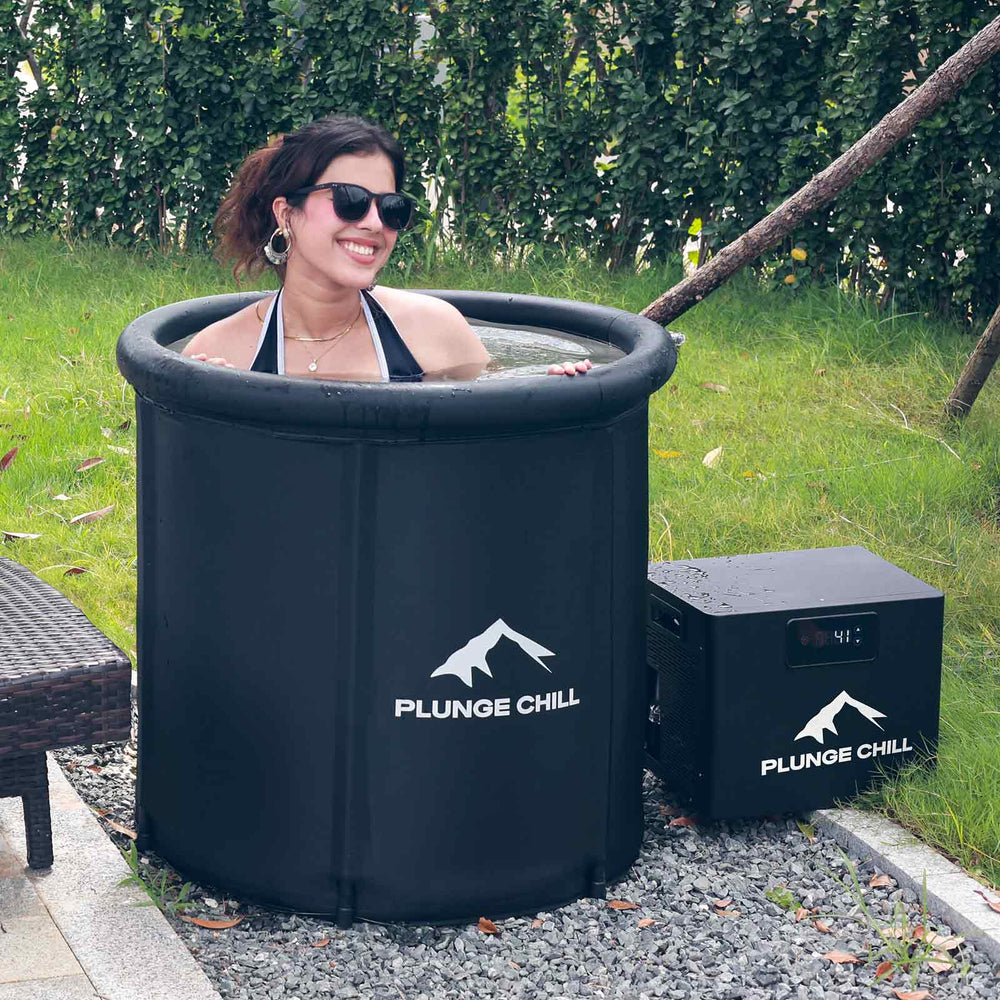
From a product reviewer’s seat, the two pivotal buying decisions for evening users are how you will control temperature and how you will manage water quality. A dedicated chiller provides precise, stable water in the 37–59°F range, circulates water, and, depending on the model, filters it. This is the low‑friction option if you plunge most nights. An ice‑plus‑hose approach works if you plunge intermittently, but it demands constant verification and top‑ups; typical users report needing about 40–100 lb of ice to pull a backyard tub into the target zone in warm weather. Either way, put the tub in shade, insulate as you can, and use a lid and cover between sessions to slow warming and reduce debris.
Hygiene and maintenance are non‑negotiable. Clean the tub regularly, and for simple home systems without robust filtration, plan to refresh the water roughly every four weeks or sooner if the load is high. That schedule keeps biofilm and odor in check. Rinse before you plunge if you trained outdoors, avoid the tub when you have open wounds, and be mindful that shared tubs demand stricter sanitation than single‑user setups.
Budget ranges are wide. A basic stock tank plus ice can be assembled inexpensively, while plug‑and‑play cold‑plunge tanks with integrated chillers and filtration can cost from the low thousands to well above $20,000, according to Mayo Clinic Health System. Money aside, evaluate noise, footprint, serviceability, filtration method, and whether the controller lets you schedule setpoints so evening water is ready at your preferred time.
If you are choosing between options, match the system to your routine rather than an abstract spec sheet. If you plunge three evenings per week on a set schedule, a chiller’s stability and convenience may justify the cost because it reduces the cognitive load at night. If you plunge sporadically or seasonally, ice might remain the smarter first step. In either case, a reliable immersion thermometer pays for itself.

Practical Pros and Cons of Evening Ice Baths
Used properly, an evening plunge at moderate cold can reduce soreness after long or intense aerobic days, create a strong downshift signal for breath and mood, and help some people fall asleep faster. It can also briefly increase subjective vitality, which is why the timing buffer before lights out matters. Unlike morning plunges designed to stimulate, the evening version works because you pair a controlled, short arousal with an unhurried cool‑down and low‑light environment. That pairing is the habit that turns a stressor into a sleep cue.
The downsides are equally real. If you lift for hypertrophy, clustering cold work around training can mute some of the molecular signals you are trying to amplify, so sequencing matters. If you are sensitive to cold or have vascular reactivity, over‑cooling late in the day can prolong shivering and leave you more wired than calm. And even for healthy users, the moment of cold shock is a genuine hazard if you rush entry or panic and hyperventilate. No evening routine is worth a safety shortcut.
Two overlooked considerations are worth adding here. First, short facial immersion or cold water on the face and back of the neck can rapidly activate parasympathetic pathways without the full‑body stimulation and is a legitimate option on nights when you are already close to lights out, based on work summarized by Stanford Lifestyle Medicine. Second, a large‑scale synthesis summarized by Harvard Health suggests that perceived stress reductions after ice baths may not be immediate; expecting a slowly emerging calm rather than an instant sedative effect can improve adherence and helps explain why the timing buffer before bed matters.

Product Setup and Care: A Simple Decision Framework
Evening users should prioritize quiet operation, stable water temperature, and low‑effort sanitation. A compact, insulated tub with a tight‑fitting lid and a chiller that circulates and filters water fits that brief. If you are in a warm climate, place the tub in shade and consider a UV‑resistant cover to hold temperature between sessions; both recommendations are echoed by manufacturers who see how quickly sun exposure degrades water and raises temperature. If you must use ice, add in stages while stirring and verify with a thermometer rather than guessing from how the water feels on your hand.
Finally, make care part of the ritual. Keep the area tidy, dry the deck after use, and build in a quick wipe‑down of handrails and the rim after each session. If the water looks off or smells off, change it rather than chasing chemistry. An impeccable environment is part of what makes an evening wind‑down feel like recovery rather than another task.
Short Notes on Conflicts and Uncertainties
The literature disagrees on the degree and time course of performance effects because definitions, samples, and protocols vary. Endurance training, which depends less on temperature‑sensitive hypertrophy signaling, appears less susceptible to cold‑related blunting than resistance training, which aligns with both mechanistic expectations and practical coaching experience. Likewise, sleep outcomes differ across studies; a review summarized by Harvard Health found sleep improvements in men but not women, while sleep‑oriented practice guides argue for benefits across users when timing is optimized. Differences in sample composition, ambient conditions, and outcome measures likely explain part of the gap. The pragmatic fix is to test your own response with the timing windows above, adjust temperature and duration upward or downward in small steps, and keep a simple sleep log for two to three weeks.
A further uncertainty involves the idea that cold near bedtime boosts melatonin. Some sleep‑focused practitioners claim this pathway contributes to drowsiness, but direct human evidence is not robust. A simple verification step would be to compare salivary melatonin or validated sleep onset tests on nights with and without a properly timed evening plunge while holding other variables constant.
FAQ
Q: What temperature should I target for an evening wind‑down ice bath? A: Most people do well between 50 and 59°F at night, starting closer to 57–59°F and deepening the dose gradually. Water much colder than 50°F raises risk and is rarely necessary for evening recovery.
Q: How long should I stay in, and how close to bedtime should I plunge? A: Begin with two to five minutes, then build toward five to ten minutes as you adapt. Run the plunge one to two hours before lights out so you can rewarm naturally and feel calm when you get into bed.
Q: Will an evening ice bath hurt my strength or muscle gains? A: If hypertrophy is a priority, keep cold exposure away from heavy lifting days, ideally by at least a day. When you do plunge, use warmer water for shorter durations. If endurance is your focus, evening plunges after long aerobic work are generally compatible with adaptation.
Q: Is a cold shower a good substitute at night? A: Showers can work but are less uniform than immersion. Chest‑level immersion changes core temperature and circulation more reliably, which is why short immersions at moderate cold often outperform long, very cold showers for wind‑down.
Q: What if a full plunge feels too stimulating before bed? A: Try brief facial immersion in cold water, which activates the diving reflex and can nudge the nervous system toward calm without the full‑body arousal. Pair it with slow exhalations and a dim, quiet room.
Q: How do I keep the water clean without making this a chore? A: Use a lid and cover between sessions, place the tub out of direct sun, rinse before you plunge if you were dirty or sweaty, and refresh the water about monthly for simple, non‑filtered setups. A chiller with filtration reduces effort but raises cost.
Takeaway
An evening ice bath can be an effective wind‑down and recovery tool when it is moderated in temperature, brief in duration, and run one to two hours before bed. The strongest benefits cluster around reduced soreness after aerobic work and a smoother transition to sleep for people whose physiology and routines respond well to a controlled cooling‑rewarming cycle. The main trade‑off is the possibility of blunting strength and hypertrophy signals if cold exposure regularly follows lifting, which is solvable with timing and dose adjustments. Build your protocol with safety margins, use the simplest gear that maintains temperature and cleanliness, and verify your own response over several weeks. That combination—appropriate dosing, precise timing, and sensible equipment—turns an ice bath from a nightly stunt into a reliable evening practice.
References
- https://case.edu/news/science-behind-ice-baths-and-polar-plunges-are-they-truly-beneficial
- https://www.health.harvard.edu/staying-healthy/research-highlights-health-benefits-from-cold-water-immersions
- https://www.mcphs.edu/news/physical-therapist-explains-why-you-should-chill-out-on-ice-baths
- https://lifestylemedicine.stanford.edu/jumping-into-the-ice-bath-trend-mental-health-benefits-of-cold-water-immersion/
- https://sncs-prod-external.mayo.edu/hometown-health/speaking-of-health/cold-plunge-after-workouts
- https://pmc.ncbi.nlm.nih.gov/articles/PMC2938508/
- https://health.osu.edu/wellness/exercise-and-nutrition/do-ice-baths-help-workout-recovery
- https://mcpress.mayoclinic.org/healthy-aging/the-science-behind-ice-baths-for-recovery/
- https://www.mayoclinichealthsystem.org/hometown-health/speaking-of-health/cold-plunge-after-workouts
- https://www.health.com/ice-baths-8404207