As a sports rehabilitation specialist and strength coach who also tests cold plunge products, I am often asked whether a pre‑bed ice bath can be a legitimate tool for better sleep. The short answer is that it can be, but the timing, dose, and context matter more than most headlines suggest. In this article I synthesize the best available evidence with on‑the‑ground experience from athletes and everyday users, and I translate that into practical guidance, safety considerations, and buying tips.
Why Cold Might Help Sleep
The body prepares for nighttime by allowing core temperature to drift downward while peripheral skin warms to dissipate heat. This thermoregulatory pattern supports the onset of drowsiness and the depth of early‑night sleep. Cold water immersion, if used thoughtfully, can accelerate a safe drop in core temperature and shift autonomic tone toward relaxation after the initial alerting jolt of cold exposure. Deep non‑REM sleep, also called slow‑wave sleep, is where much of the physical restoration occurs, including tissue repair and immune support. The Sleep Foundation has repeatedly emphasized that deep sleep is disproportionately important for next‑day physical and cognitive function.
Cold immersion can also modulate the autonomic nervous system. A brief cold shock triggers a sympathetic spike with norepinephrine release and heightened alertness. As you exit the water and rewarm, parasympathetic activity can rebound, which for many users feels calming and conducive to sleep readiness later in the evening. The key is allowing enough time for the arousal phase to pass before lights out.

What the Evidence Actually Says
The human data on cold exposure and sleep spans post‑exercise cold water immersion, whole‑body cryostimulation, and cold showers. A systematic review and meta‑analysis in PLoS One that pooled 11 studies and 3,177 adults found that cold exposure can reduce stress and may improve sleep outcomes, with several effects most prominent in the first 12 hours after exposure. The same review noted that much of the sleep benefit evidence was restricted to male samples, so generalization is limited.
A randomized crossover study in well‑trained male endurance runners tested a realistic evening scenario: 10 minutes of cold water immersion at about 56°F after a simulated high‑intensity run. Whole‑body immersion that included head and neck produced lower core temperature and a larger increase in slow‑wave sleep during the first three hours of the night than partial immersion to the waist. Both full and partial immersion reduced arousals across the night; only full immersion reduced limb movements. The gains in sleep architecture, however, did not translate into clearly faster neuromuscular recovery in the following 48 hours.
There is also evidence from whole‑body cryostimulation. A University of Poitiers study reported in Cryobiology and covered by ScienceAlert found that daily five‑minute sessions at about −130°F for five days increased slow‑wave sleep during the first two sleep cycles by an average of 7.3 minutes, with mood improvements and reduced anxiety, especially in women. Sleep latency and REM time were unchanged. Although these results align with a broader literature showing that cold exposure can settle the heart and reduce inflammation after exertion, the sample size was small and mechanisms remain to be fully characterized.
A number of practice‑oriented articles for athletes and wellness users converge on two themes. First, sleep benefits are more reliable when cold exposure is not right before lights out. Second, the “dose” you tolerate without feeling wired varies significantly. Several brands and coaches recommend ending plunges one to two hours before bedtime, while others extend that buffer to three to four hours for people who are highly sensitive to adrenaline. In my athletes, the sweet spot is usually a short, moderately cold immersion finishing about 90 minutes before bed on non‑lifting days.
An important counterpoint comes from sports performance guidance at academic and clinical centers. Cold water immersion can blunt hypertrophy and strength signaling when used immediately after resistance training. If your primary goal is building muscle or strength, avoid cold plunges within the first 24 to 48 hours after heavy lifting, or move the plunge earlier in the day. For endurance work or general recovery, the trade‑off is less concerning.
Timing and Dose: How to Structure Nighttime Cold
In practice, the time window between the plunge and lights out determines whether the alerting phase intrudes on sleep onset. Most people do well finishing their cold exposure one to two hours before bed. Highly arousal‑sensitive individuals may need three to four hours. Water temperature commonly used for recovery sits between 50 and 59°F; for sleep purposes, colder is not necessarily better. A couple of minutes can be enough to nudge core temperature down without provoking prolonged shivering or lingering chill.
Short exposures performed several times per week seem to accumulate benefits in both stress regulation and perceived sleep quality. One study using cold water immersion at roughly 50°F for 10 minutes, three times per week for four weeks, reported improvements in sleep quality and fewer disturbances. The PLoS One review likewise found that benefits tend to be short‑lived unless practice is sustained over weeks.
Here is a concise framework for translating research and field experience into an evening routine.
Typical Sensation After Exit |
Likely Effect on Sleep Onset |
Practical Use Case |
Source Examples |
|
0–30 minutes |
High alertness, cool skin, racing mind in some |
Often delays sleep; risk of restlessness |
Rarely recommended for sleep |
Plunge; Ice Barrel |
1–2 hours |
Initial alertness fades, then calm |
Often aids sleep onset and early‑night depth |
Most recreational users |
Chill Tubs; Ice Barrel |
3–4 hours |
Fully normalized arousal; no chill |
Suitable for highly sensitive users |
If cold feels “too stimulating” |
DiscoverMonk; practice logs |
This table reflects a balance between mechanistic expectations and user reports across athletics and wellness communities. When in doubt, start with the 1–2 hour window and adjust.
Mechanisms: Why Cold Can Help at Night
Three overlapping mechanisms appear to support sleep when cold exposure is timed properly. First, thermoregulation: brief immersion accelerates heat loss, then the body rewarms, leaving core temperature lower for a period that maps onto the natural evening decline. Second, autonomic rebalancing: the cold shock response spikes sympathetic activity and norepinephrine, but the rebound phase can favor parasympathetic “rest‑and‑digest” tone, especially if immersion is neck‑deep and the diving reflex is engaged. Third, neurochemical effects: cold is known to increase norepinephrine and can elevate dopamine and endorphins, which may lift mood and reduce pre‑sleep rumination.
There is a tantalizing hypothesis that cold‑driven norepinephrine may enhance melatonin activity at night. The animal literature and some translational discussions suggest a pathway, but direct human evidence is limited and heterogeneous.
Another subtle mechanism is thermal comfort in bed. A well‑designed bedroom environment remains more impactful than any single modality: a cool room, ideally near 60 to 68°F, supports the normal nocturnal core temperature decline. Laboratory work on thermal microclimate suggests that a bed environment that allows the skin to stay warm enough to offload heat while core temperature falls is optimal in the first hours of the night. For people who tend to overheat, a pre‑bed plunge can reduce the thermal load the body must shed.
Where Sources Disagree—and Why
Cold right before bed is where disagreement is most visible. Practice‑oriented sources aimed at daily users caution that immediate pre‑sleep plunges often backfire by making you feel wired; they emphasize the one to two hour buffer. Athletic studies that observe deeper early‑night sleep often test post‑exercise immersion with the night’s sleep occurring hours later. The discrepancy likely reflects definitions and methodology: whole‑body immersion after evening training with polysomnography versus ad‑hoc plunges minutes before lights out. The populations also differ; male endurance runners adapt differently than untrained, anxious sleepers.
Another divergence concerns how cold and how long to go. Recovery articles commonly cite 50 to 59°F for 10 to 20 minutes, whereas sleep‑focused routines often use shorter exposures. The goal matters. If you want a small thermal nudge without an extended stress response, the minimal effective dose is preferable.
Finally, the role of head immersion is nuanced. The runner study indicates that including the head and neck strengthens core cooling and early‑night slow‑wave sleep. In home practice, head immersion can be uncomfortable and increases acute gasp reflex risk.

Pros and Cons for Sleep and Training
The main benefits of well‑timed cold exposure are straightforward. People who feel overheated at night often fall asleep faster after a short, early‑evening plunge because core temperature has already started to fall. The early‑night deep sleep window can expand modestly, especially on days with vigorous exercise. Mood improves for many users, and stress feels lower during the 12 hours after exposure.
The trade‑offs are real. Cold exposure is a hormetic stressor and can spike norepinephrine and cortisol acutely. If you plunge too late, the alerting phase can intrude on bedtime and degrade sleep quality. Severe cold or prolonged exposure may shave time from REM sleep, particularly early in adaptation or in very cold environments, which could leave you feeling less mentally refreshed. For lifters, post‑session immersion can blunt muscle and strength adaptations; schedule around heavy training if gains are the priority.
A concise comparison is helpful.
Potential Benefit |
Evidence Snapshot |
Important Caveat |
Faster sleep onset when overheated |
Thermoregulatory alignment supports onset |
Too close to bedtime can backfire |
More early‑night deep sleep |
Runners after evening CWI; cryostimulation trials |
Small samples; effects context‑dependent |
Lower perceived stress and better mood |
Meta‑analysis; 12‑hour window most robust |
Effects can fade without regular practice |
Reduced awakenings, fewer limb movements |
Whole‑body immersion stronger than partial |
Head‑in protocols not practical for many |

Safety First: Who Should Be Cautious
Cold immersion carries risks, especially in water below about 65°F. The cold shock response includes involuntary gasping, rapid breathing, and spikes in heart rate and blood pressure. Hypothermia can develop within minutes in very cold water. Harvard Health and academic sports medicine groups recommend strict time and temperature limits, a partner nearby, and a clear rewarming plan. Individuals with cardiovascular disease, uncontrolled hypertension, neuropathies, diabetes, or Raynaud’s should speak with a clinician before trying whole‑body cold. Pregnancy is also a reason to avoid unsupervised extremes. If your primary aiming point is sleep, start conservative: make the option easier to stop than to push.
From a hygiene standpoint, showering before entry reduces bacterial load. Wearing swim shorts and water shoes can protect the skin and make entries and exits safer on slick surfaces. If you feel dizzy, numb, or excessively chilled, exit promptly, dry off, put on warm layers, and rewarm gradually.

Building a Night Routine Around Cold
A sustainable routine is simple. On non‑lifting days, perform a short immersion at about 50 to 59°F, finishing 90 minutes before lights out. Keep the exposure brief enough that you exit feeling alert but not shivering. As you rewarm, shift into your wind‑down: dim lights, read, practice relaxed nasal breathing, or do a few minutes of gentle mobility. If you are highly sensitive to stimulation, move the plunge three to four hours earlier and consider using evening heat instead of evening cold for the wind‑down period. Warm bathing has strong support for improving sleep onset when scheduled one to two hours before bed at comfortable hot‑bath temperatures near 104 to 108°F.
Consistency matters more than intensity. The sleep‑related effects of cold appear strongest when practiced several times per week across multiple weeks. If you use a wearable, log plunge time, water temperature, duration, sleep duration and staging estimates, and your subjective energy the next day. People vary widely; your own data helps you find your window.

Product Buying Tips: What Matters If You Plunge for Sleep
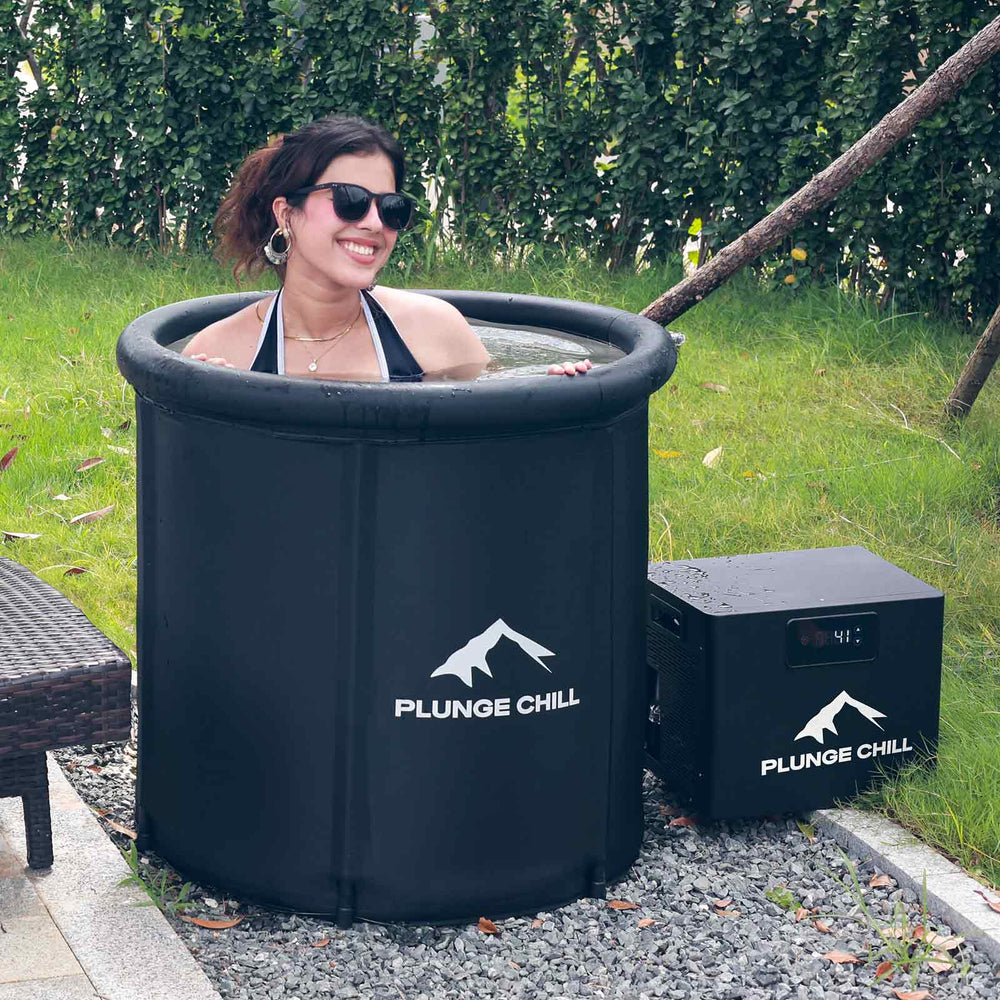
Purpose‑built cold plunge systems range from DIY tubs to pro‑grade tanks with active chillers. Fully featured home systems can cost as much as $20,000 according to major health system overviews, though there are reliable options at lower price points. If your aim is sleep support rather than maximal cold exposure, prioritize reliability, maintenance, and ease of scheduling over extreme temperature claims.
A few features deserve attention. Temperature control should be precise and easy to set, and units with Wi‑Fi or app controls make it simple to pre‑cool so you can finish at your target time. Capacity affects how quickly a chiller can pull down temperature and how stable it remains across back‑to‑back uses. Some compact chillers, such as units marketed for tanks up to roughly 132 gallons, can hold water near about 36°F; that is colder than most users need for sleep. For hygiene and convenience, aim for systems that are straightforward to drain and clean, and adopt habits such as showering before entry to keep the water clear. Place the unit in a location that keeps your bedroom quiet, because noise, even low‑level hums, can undermine the very sleep quality you are trying to improve.
Care and Maintenance
Basic care improves both safety and sleep outcomes. Keep a reliable thermometer on hand to verify actual water temperature. Shower before entry to reduce contaminants. Limit exposure time if you are new to cold or particularly tired or stressed; stress stacking rarely helps sleep. Dry off completely and dress warmly post‑plunge so you do not carry residual chill into bed. If you use a shared tub, adopt a simple log of water changes and cleaning. The practical details matter: the fewer friction points, the more consistent your routine—and consistency is what the best studies point to as the driver of sustainable benefits.
A Few Overlooked but Useful Insights
Two design variables tend to be ignored in casual advice. First, immersion depth matters. Neck‑deep immersion engages the diving reflex more strongly and cools the core faster than waist‑deep immersion, which is one reason full‑body protocols show larger early‑night slow‑wave sleep effects in athletes. Translating that to home practice must respect safety and comfort; many people will do best with chest‑deep immersion and head‑out breathing without forcing head‑in protocols.
Second, sex differences may influence dose. Cryostimulation data hint at stronger mood and sleep benefits for women in specific protocols. This could be due to differences in body composition, skin blood flow, or hormonal milieu, but the current evidence is preliminary.
A third nuance is the balance between cold and evening heat. A warm bath an hour or two before bed has one of the more robust evidence bases for helping sleep onset; pairing morning cold exposure with evening warmth often yields better sleep than trying to wedge cold directly into the pre‑sleep slot. When cold is used in the evening, treat it more like the “last loading dose” of your thermoregulation for the day, not the very last thing before lights out.
Takeaway
Cold exposure before bed can be a legitimate sleep tool if you get three levers right: timing, dose, and fit with your training. Finish your plunge one to two hours before bedtime, err short on exposure time at about 50 to 59°F, and avoid post‑lift plunges if strength and hypertrophy are your main goals. The best evidence shows small but meaningful improvements in early‑night deep sleep and next‑day mood, especially when you practice consistently. Keep the room cool, the routine simple, and the safety basics non‑negotiable. If you are buying a plunge for sleep use, favor control, sanitation, and convenience over sheer cold.
FAQ
Is it safe to take an ice bath before bed?
It is generally safe for healthy adults who dose conservatively and observe basic precautions. The main risks are the cold shock response and hypothermia in very cold water. People with cardiovascular disease, high blood pressure, diabetes, neuropathies, Raynaud’s, or those who are pregnant should consult a clinician first. Always have a rewarming plan, exit if you feel dizzy or numb, and avoid bodies of water that add environmental danger.
How cold and how long should I go if my goal is sleep, not toughness?
For most people, a practical sleep‑oriented dose is a brief immersion in the 50 to 59°F range, finishing about 90 minutes before lights out. A couple of minutes is often enough to nudge core temperature without creating a lingering chill. Longer exposures are not necessarily better for sleep and increase the chance of shivering or feeling wired. Track your response and adjust.
Will cold plunging at night hurt my strength or muscle gains?
Cold water immersion can blunt the cellular signaling that drives strength and hypertrophy adaptations if used immediately after resistance training. If muscle growth is the priority, avoid plunges in the first 24 to 48 hours after heavy lifting or move them to mornings or rest days. For endurance work or general recovery, the trade‑off is less concerning.
Does cold reduce REM sleep?
Extreme cold can slightly suppress REM in some contexts, especially early in adaptation. At typical recovery temperatures and short exposures, the predominant effect is a potential increase in early‑night deep sleep without clear systematic changes to REM in most users studied. If you notice consistently lower REM estimates on your wearable, shorten or move your cold session earlier and ensure your room is cool and dark.
Is there a best weekly dose?
Many coaches use a practical heuristic of about 11 minutes per week split across two to four sessions for general health and resilience, often earlier in the day. For sleep, consistency seems more important than total minutes. Practicing short sessions three times per week for several weeks is a reasonable starting point and aligns with studies showing fewer disturbances over time.
Should I immerse my head?
Including head and neck increases the cooling rate and strengthens the diving reflex, which may enhance early‑night deep sleep in some protocols. At home, most users will do best with chest‑deep immersion and head out, prioritizing comfort and safety. If you experiment, do so cautiously, and only after you are fully comfortable with chest‑deep exposures.
Sources Mentioned, In Brief
This article references evidence and guidance from PLoS One, Cryobiology, the Sleep Foundation, university sports science groups including the University of Poitiers and University of South Australia, practice summaries from athletic and recovery brands, and sports medicine advisories from academic health systems. Links will be added separately in the References.
References
- https://www.health.harvard.edu/staying-healthy/can-ice-baths-improve-your-health
- https://pubmed.ncbi.nlm.nih.gov/17706676/
- https://sncs-prod-external.mayo.edu/hometown-health/speaking-of-health/cold-plunge-after-workouts
- https://health.osu.edu/wellness/exercise-and-nutrition/do-ice-baths-help-workout-recovery
- https://journals.physiology.org/doi/abs/10.1152/jappl.1959.14.1.43
- https://www.sciencealert.com/intense-cold-exposure-might-actually-help-you-sleep-better-study-shows
- https://chilltubs.com/ice-bath-before-bed/
- https://th7bodylabs.com.au/ice-bath-for-sleep/
- https://www.healthline.com/health-news/health-claims-cold-water-immersion
- https://www.hubermanlab.com/newsletter/the-science-and-use-of-cold-exposure-for-health-and-performance