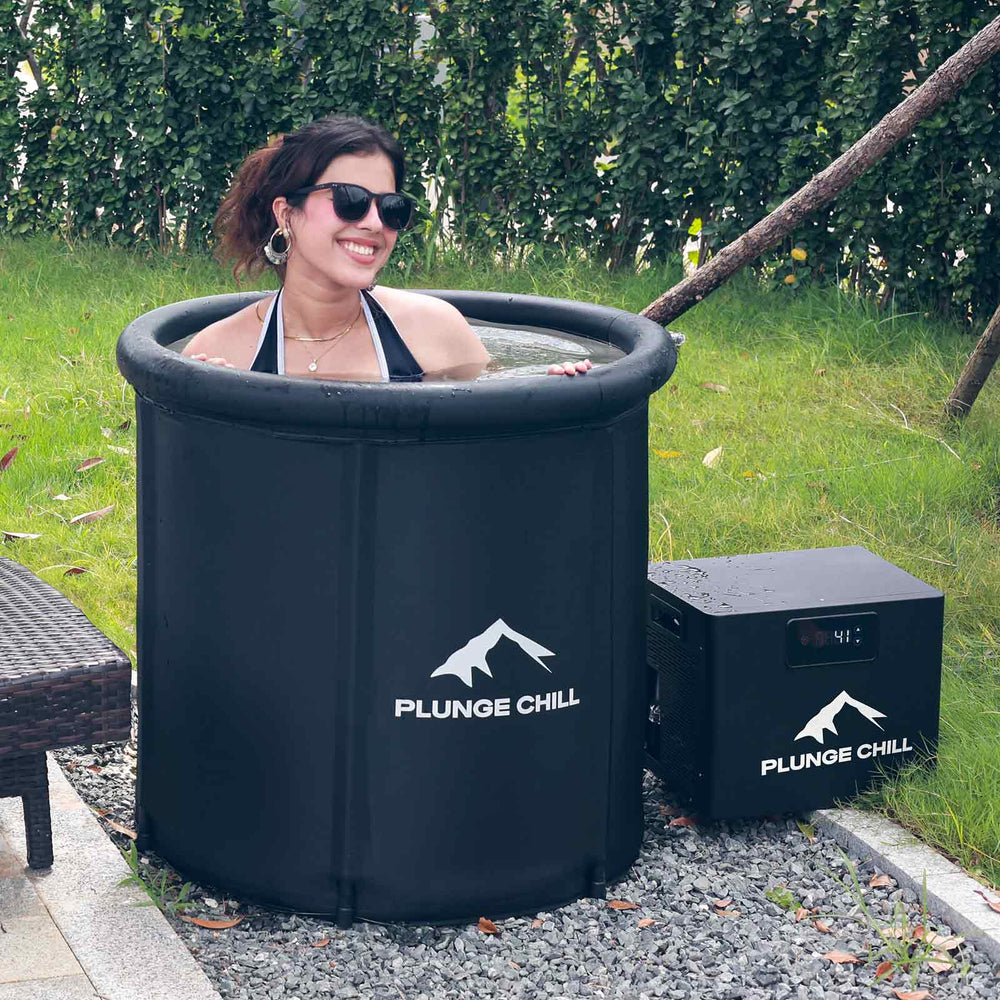
As a sports rehabilitation specialist, strength coach, and cold plunge product reviewer, I work with athletes, patients, and everyday trainees who are curious about cold-water immersion. This guide distills what actually matters for a safe, effective start, grounded in clinical guidance and research, along with first-hand practicalities from setting up and maintaining dozens of home and facility plunge systems.
What Counts as a Cold Plunge?
Cold plunging means deliberate immersion of most or all of the body in cold water to provoke a controlled stress response. In practice, that usually means getting into water between about 60°F and 40°F for a brief period, then rewarming. Cold showers and facial immersion can be part of the same spectrum, but immersion up to the neck produces a stronger and more consistent stimulus than sprinkling the skin with cool water. This distinction matters for both safety and expected outcomes.
Physiologically, cold causes blood vessels near the skin and in muscles to constrict, shunting blood centrally. When you exit and rewarm, blood flow returns with a flush that can help with perceived soreness. Hormonal and nervous system responses are also prominent. Epinephrine and norepinephrine surge, increasing alertness and energy, and some protocols yield prolonged dopamine elevations associated with mood and focus. These short-term changes are well documented in sports medicine and experimental physiology, although long-term health impacts remain less certain. Cleveland Clinic and Cedars-Sinai emphasize that plunging is a complement to training, sleep, and nutrition, not a replacement for them.

What the Evidence Really Says
If your goal is to reduce post-exercise muscle soreness, there is reasonable support. A meta-analysis of controlled trials available in the National Library of Medicine reports small-to-moderate reductions in soreness at 24 to 72 hours after exercise, with little to no immediate benefit and inconsistent effects on strength, sprint performance, range of motion, or inflammatory biomarkers. The estimated effects were largest in crossover designs and more variable in parallel-group trials, which suggests some risk of bias and underscores why your results may vary. Cedars-Sinai and Harvard Health both highlight that the strongest, most consistent outcome is reduced perceived soreness, not broad improvements in performance or immunity.
For mood and alertness, University of Utah Health, Stanford Lifestyle Medicine, and Mayo Clinic sources describe short-term boosts in energy, attention, and subjective well‑being, which match what many of my athletes report. These effects stem from cold-triggered stress responses and tend to be acute. Claims about immunity or longevity remain tentative; Harvard Health’s review of clinical studies notes heterogeneity and confounding that make firm conclusions difficult. Use cold exposure as a tool for specific goals rather than a cure-all.
One study from the University of Oregon’s Knight Campus evaluated a single 15-minute cold immersion and reported reductions in heart rate, blood pressure, and cortisol in college students afterward. That is an interesting physiological snapshot, but it is not a beginner recommendation nor a long-term training template. It does, however, illustrate the immediate, measurable impact of cold on the cardiovascular and endocrine systems.
The Biggest Safety Risks and Who Should Avoid It
The two early hazards are cold shock and loss of motor control. The initial gasp-and-hyperventilation response can spike blood pressure and heart rate; if you panic, coordination drops quickly. Hypothermia is the downstream risk if exposure is too long or the water is very cold, particularly in open water where currents and waves add danger. Cardiac stress is meaningful in susceptible people because vasoconstriction raises afterload and blood pressure. Cleveland Clinic, University of Utah Health, and University Hospitals all advise medical clearance if you have cardiovascular disease, uncontrolled hypertension, poor circulation, Raynaud’s phenomenon, diabetes, peripheral neuropathy, seizure disorders, or are pregnant. You should not plunge alone at the start, and never in open water without oversight and proper gear.
A practical clinical caveat is to avoid using cold to mask pain from an injury. If you are pushing through pain during training, cold may blunt the signal but risks delaying appropriate assessment and care. Acute injuries still call for a proper evaluation before any immersion protocol.
The Safe Start Protocol I Use with Beginners
In the clinic and weight room, I start with a temperature you can tolerate, not the coldest you can find. Cleveland Clinic suggests beginners may start warmer, near 68°F, then progress toward a common starting range around 59–50°F. Even 60°F feels surprisingly cold when you submerge to the neck. Aim for one to three minutes on the first sessions and build gradually. Most beginners do well capping any single immersion at about five minutes, with a clear exit plan and a warm, dry staging area within arm’s reach.
Breathing is the hinge of a successful first plunge. Before you enter, spend a minute on slow nasal inhales with longer, controlled exhales. On entry, keep the head above water, let the initial urge to gasp settle, and continue breathing slowly until you feel your cadence stabilize. If you cannot control your breathing within the first 30 to 45 seconds, exit, towel off, and warm up. That is not failure; it is data for the next attempt.
Frequency should be modest initially. Two to three sessions per week allows you to learn your response and adjust. Some educators and product guides suggest targeting around 11 total minutes per week spread across a few sessions. That weekly benchmark appears in Huberman Lab’s non-clinical guidance and in consumer content from Caldera Spas and similar vendors. Because it is not a clinical recommendation, treat it as a practical anchor rather than a rule. A sensible verification step is to log mood, soreness, sleep, and training performance weekly while adjusting toward or away from that dose.
To rewarm, dry off, layer clothing, sip something warm, and allow your body to come back toward baseline naturally. Cleveland Clinic mentions sauna rewarming for 15 to 30 minutes as an option if you have access, which I use for comfort with some athletes. In contrast, educators citing the Søeberg Institute argue for ending on cold and allowing shivering to support metabolic adaptation without immediate external heat. Both can be valid depending on your goal. If you prioritize comfort and rapid rewarming, a sauna is fine. If you are experimenting with metabolic stimulus and resilience, try natural rewarming occasionally and monitor how you feel. A simple verification step is to compare your perceived energy and sleep quality on sauna versus natural rewarming days.
Where Timing Fits with Strength and Endurance Training
A nuance most beginner guides miss is that post-lift immersion can blunt strength and hypertrophy signals. Mayo Clinic and University of Utah Health both flag this trade-off. Meta-analytic work summarized by Huberman Lab converges on the same caution. If building muscle or strength is your priority, avoid full-body immersion for several hours after lifting. Practically, I schedule cold before training on hypertrophy blocks, or on separate recovery days, or at least six to eight hours after strength sessions. Endurance training is less affected, and some athletes appreciate a brief plunge after hard aerobic work, though I still prefer to reserve it for races or periods of heavy cumulative fatigue.

Showers, Tubs, Cryochambers, and Facial Dips: What’s the Difference?
Cold showers are the low-friction entry point. They are great for learning breathing skills and accumulating short exposures but are less consistent than tubs for full-body stimulus. Cold-water immersion in a tub with neck-level depth provides a standardized dose and is better studied. Whole-body cryotherapy uses very cold, dry air for a few minutes. University Hospitals cites set points around minus 256°F, while other sources describe chambers closer to minus 160°F. The exact set point varies by device model and reporting conventions. Verify with the facility or manufacturer before use and follow their safety screening. Facial immersion deserves a special note. Stanford Lifestyle Medicine highlights that briefly immersing the face can engage the diving reflex to downshift arousal through the vagus and trigeminal pathways. When someone is anxious about full immersion, short facial dips in cool water offer a quick, practical way to practice nervous system control without the whole-body shock.
Practical Starter Ranges and How They Compare
The numbers below are not absolutes, but they align with how major clinical sources guide beginners and how I progress clients. Notice the recommendations cluster rather than match perfectly. That spread reflects different goals, populations, and settings.
Source or Context |
Starter Temperature (°F) |
Typical Single Bout (min) |
Notes |
Cleveland Clinic |
About 68 initially, then 59–50 |
1–3 to start; generally cap at 5 |
Emphasizes “start low and go slow” and listening to your body. |
University Hospitals |
Around 60 and progress; experienced as low as ~40 |
Keep under 15 for general use |
Advises supervision at first and careful screening for cardiac risk. |
HydroWorx (facility) |
50–59 |
Often near 10 in controlled settings |
Facility protocols trend longer with supervision; not a beginner-at-home template. |
My clinic protocol |
60–55 first week; 55–50 after |
1–3 early; rare need beyond 5 |
Two to three sessions per week while monitoring training, sleep, and mood. |
This table also illustrates a quiet disagreement between facility protocols and sports-medical caution. HydroWorx’s 10-minute guidance is typical in supervised recovery rooms, whereas Cleveland Clinic caps at five minutes for general safety. The likely cause is differences in oversight, water temperature accuracy, and athlete selection. In a home setting, I match the conservative side.
Outcomes You Can Expect in the First Month
Most beginners who follow a conservative build notice two patterns: the first sixty seconds get easier as breathing control improves, and perceived soreness after hard training sessions is somewhat lower at 24 to 48 hours. Sleep and mood responses vary. Harvard Health’s review notes that men reported better sleep in one dataset, a finding not mirrored in women. That sex difference is a good reminder to track your own response and avoid overgeneralizing early studies with small or uneven samples.
If you do not feel a clear benefit after a few weeks, it is reasonable to stop. Cold exposure should earn its slot alongside sleep, nutrition, and progressive training rather than consume recovery bandwidth on faith alone.
Three Overlooked Insights I Rely On
One practical detail rarely emphasized is that you can get much of the nervous system benefit with face-first or partial immersion when you are short on time or wary of cold. A minute of facial dips or a forearm bath in uncomfortably cold water can quiet reactivity through the diving reflex and still train breathing control, as outlined by Stanford Lifestyle Medicine. This approach is also useful as a warm-up to full-body plunging.
Another pattern I see with lifters is that eagerness to chase the coldest possible temperature backfires. The body treats extremely cold water and longer exposures as different stimuli than a crisp, tolerable dip. When hypertrophy is the goal, milder cold for shorter durations, scheduled away from lifts, preserves training signals and keeps adherence high. The mechanistic reasoning matches University of Utah Health and Mayo Clinic cautions about blunted anabolic signaling.
Finally, rewarming strategy probably matters less than consistency for most beginners. Cleveland Clinic mentions sauna rewarming for comfort, while educators referencing the Søeberg Institute advise ending cold and letting the body reheat itself to favor metabolic adaptation. My experience is that beginners stay more consistent if they rewarm in a way they enjoy. A fair verification step is to alternate weeks and compare your perceived energy and sleep metrics.
Buying Your First Plunge: What to Look For
If you are starting from zero, do not buy a high-end tub on day one. Learn your response with cool or cold showers, then try a portable tub or a simple stock tank before investing. Consumer units range from a few hundred dollars for seasonal or DIY setups to fully featured, chilled, and filtered plunge systems that can cost up to $20,000 according to Mayo Clinic Health System. A reasonable early purchase is a well-insulated portable tub that lets you hit and hold 55 to 50°F for a few minutes without hauling endless bags of ice.
When comparing products, check temperature control, filtration and sanitation, insulation and lid fit, footprint and capacity, electrical demands, and noise. Filtration matters more than it seems. Renu Therapy and similar manufacturers emphasize continuous, chemical-free filtration and covering the tank when not in use. Those simple steps keep water clearer for longer and reduce equipment strain. In team facilities, we layer in UV or ozone systems, but at home a reliable mechanical filter plus a cover goes a long way. Follow your manufacturer’s sanitation schedule precisely; it varies by system and region.
If you experiment with a chest freezer build—which some coaching blogs discuss at length—be aware that this is not a consumer appliance designed for human immersion. Safety practices commonly shared include unplugging the unit before entry and using ground-fault protection, heavy lids, and strict lockout habits. Verify with a licensed electrician, confirm a GFCI-protected circuit, and understand you are accepting elevated risk compared with commercial tubs.

Care and Maintenance That Actually Extends the Life of Your Setup
Clean water is not just about hygiene; it keeps your pump, seals, and chiller running longer. Simple routines make a difference. Keep the lid on whenever the tub is not in use, wipe down contact surfaces weekly, and adhere to your filter’s service interval. If your unit uses replaceable filters, stock extras before peak training season so you are never tempted to stretch a dirty filter. Many users cool with around 40 lb of ice when they do not have a chiller, as Ice Barrel notes from customer practice, but frequent heavy ice use can be cost-inefficient. If you plan to plunge year-round, a chiller with adequate capacity for your climate will be cheaper and simpler over time.
Rewarming should be gradual. A warm robe, layered clothing, light movement, and a warm beverage are simple and sufficient for most people. If you opt for contrast sessions in a spa circuit, treat the cold portion as a distinct stimulus rather than an excuse to stay cold much longer because a sauna awaits on the other side.
Conflicting Recommendations and How to Reconcile Them
There are real disagreements across sources, especially on temperature, time, and frequency. Cleveland Clinic emphasizes very short immersions and conservative temperatures for beginners, while HydroWorx facility guidance and Cedars-Sinai’s soreness-focused advice sometimes point toward longer immersions. The differences probably reflect definitions (how cold is “cold”), populations (college athletes versus new exercisers), environments (supervised facilities versus bathrooms at home), and timeframes (acute post-exercise recovery versus general wellness). When in doubt, bias toward the shorter, warmer end in a home setting, track your response, and move slowly.
Another discrepancy concerns reheating strategy. Cleveland Clinic mentions sauna after cold for comfort, while the Søeberg-inspired approach says end cold and let natural rewarming drive thermogenesis. The likely cause is different priorities: symptom relief and comfort versus maximizing metabolic stress. Neither is wrong; choose based on your goal and how you feel afterward.
A final contrast is the advice on frequency. Some vendor content suggests daily plunging is fine for healthy people once acclimated, while University of Utah Health and Mayo Clinic caution that daily post-lift immersions can blunt adaptation. The resolution is scheduling. If you care about muscle growth, separate cold from heavy strength training by several hours or move it to non-lifting days. Endurance athletes can be more flexible, but racing periods are still the most logical time for frequent immersions.
Starter Protocol Snapshot You Can Adapt
Here is a pragmatic template to begin safely. Treat it as a living plan and adjust to your responses and goals. Start the first week around 60 to 55°F for one to three minutes. Keep your head out of the water, focus on nasal breathing with longer exhales, and exit before your form or breathing frays. In week two, if you feel in control, drop toward 55 to 50°F and maintain one to three minutes, adding a second short bout only if you rebound quickly. Across the first month, two to three sessions per week are plenty. If you are also lifting for muscle growth, schedule cold on non-lifting days or at least six to eight hours away from your strength sessions. For sore legs after a hard run or ride, a short plunge within an hour can be useful, but it should still be brief and tolerable rather than extreme.
Goal |
Temperature (°F) |
Time per Bout (min) |
Sessions per Week |
Notes |
Learn the skill |
60 to 55 |
1 to 3 |
2 to 3 |
Breathe slowly, exit on loss of breath control. |
Manage soreness |
55 to 50 |
2 to 5 |
2 to 4 |
Keep away from heavy lifts by several hours. |
Mental reset |
60 to 50 |
1 to 3 |
3 to 5 |
Consider facial dips on busy days for a quick downshift. |
A Word on Open Water
Open water brings currents, limited exits, and rapidly changing conditions. University of Utah Health explicitly warns that drowning risk rises when cold shock, hyperventilation, or arrhythmia meets deep or moving water. For beginners, supervised tubs are safer and simpler. If you do swim in cold water later, never go alone, keep your head above water initially, and plan an exit route with warm clothing and dry towels staged on shore.

Takeaway
Cold plunges can be a powerful but simple tool for soreness management, arousal control, and resilience training when used conservatively. The safest path for beginners is to start warmer, keep sessions short, practice controlled breathing, and track how you feel afterward. For lifters chasing strength or hypertrophy, schedule cold exposures away from training to protect adaptation. When you are ready to buy, prioritize temperature control, filtration, and safety features before chasing extremes. The best program is the one you can sustain comfortably without sidelining your sleep, nutrition, and training—the real main course of performance and health.
FAQ
How cold should my first plunge be?
A practical starter range is closer to 60°F than to 40°F. Cleveland Clinic suggests beginning near 68°F for those new to cold, then progressing toward 59 to 50°F as you learn to control breathing. If you cannot calm your breath within the first minute, the water is too cold or you stayed in too long for that day.
How long should I stay in?
Begin with one to three minutes and cap near five minutes while you learn your response. Facility protocols sometimes run longer under supervision, but at home the shorter, conservative approach is safer. Cedars-Sinai’s soreness guidance and HydroWorx’s facility protocols trend longer; Cleveland Clinic hews shorter. The difference likely reflects supervision, setting, and population.
Will cold plunging after lifting hurt my gains?
Repeated full-body immersions immediately after strength training can blunt anabolic signaling. University of Utah Health and Mayo Clinic discuss this risk. If muscle and strength are priorities, move cold several hours away from lifting, use it on endurance or rest days, or keep immersions very brief and moderate in temperature.
Is a chest freezer setup safe?
DIY systems are common but carry unique electrical and entrapment risks. Coaching blogs describe unplugging the unit before entry and using GFCI outlets and secure lids, yet these do not make a chest freezer equivalent to a purpose-built tub. Verify with a licensed electrician and follow manufacturer and local code requirements if you proceed.
What is the best way to rewarm?
You can rewarm naturally with clothing, movement, and a warm drink, or use a sauna if comfort is the priority. Cleveland Clinic notes sauna use for 15 to 30 minutes is reasonable. Educators citing the Søeberg Institute suggest ending on cold and allowing shivering to support metabolic adaptation. Choose based on your goal and how you feel later that day.
Do cold showers work?
Cold showers are an efficient on-ramp and a useful maintenance tool for busy days. They are less standardized than a tub but still train breathing and mindset. Harvard Health and Mayo Clinic content describing brief cold exposures and showers aligns with using them as a low-barrier option, not a perfect substitute for neck-deep immersion.
References
Cleveland Clinic; University of Utah Health; Harvard Health; Cedars-Sinai; Mayo Clinic Health System; University Hospitals; Stanford Lifestyle Medicine; Huberman Lab; Journal of Thermal Biology (University of Oregon Knight Campus study); National Library of Medicine meta-analysis on cold-water immersion and delayed-onset muscle soreness; HydroWorx; Ice Barrel; Renu Therapy; Joseph Anew coaching article.
- https://knightcampus.uoregon.edu/plumbing-benefits-plunging
- https://www.health.harvard.edu/staying-healthy/research-highlights-health-benefits-from-cold-water-immersions
- https://lifestylemedicine.stanford.edu/jumping-into-the-ice-bath-trend-mental-health-benefits-of-cold-water-immersion/
- https://sncs-prod-external.mayo.edu/hometown-health/speaking-of-health/cold-plunge-after-workouts
- https://pmc.ncbi.nlm.nih.gov/articles/PMC6492480/
- https://healthcare.utah.edu/healthfeed/2023/03/cold-plunging-and-impact-your-health
- https://health.clevelandclinic.org/what-to-know-about-cold-plunges
- https://www.cedars-sinai.org/blog/cold-exposure-therapy.html
- https://mcpress.mayoclinic.org/healthy-aging/the-science-behind-ice-baths-for-recovery/
- https://www.mayoclinichealthsystem.org/hometown-health/speaking-of-health/cold-plunge-after-workouts