Cold water immersion has moved from locker rooms and polar plunges into everyday wellness routines, largely because people say it helps them feel calmer, clearer, and more resilient. As an editor who has tried supervised plunges and spoken with athletes, clinicians, and equipment makers, I have felt the unmistakable “cold shock” in the first minute and the steady mental quiet that can follow. Those observations align with what several research groups and health systems report: cold water can trigger powerful physiological responses that, when handled wisely, many people experience as relaxing. This article explains how that happens, what the evidence actually supports, who should be cautious, and how to set up a safe, practical protocol. Because this is a jewelry-focused publication, there is also a short section on jewelry care around cold exposure.
What Cold Water Immersion Means
Cold water immersion is intentional exposure to cold water for a brief period to provoke a controlled stress response. In practice, this ranges from a home cold shower at about 50–60°F, to chest‑deep plunges around 50–59°F, to very brief “polar plunge” events closer to 35–40°F. Case Western Reserve University physiologists describe the immediate cold‑shock response that starts as soon as skin hits that temperature range: a fast spike in heart rate, breathing, and blood pressure, followed by peripheral vasoconstriction and shivering. The same interview notes that cold showers mainly chill the skin while whole‑body immersion pulls core temperature down more efficiently, which is one reason full plunges feel so intense.
Cold exposure also extends to air‑based cryotherapy, which can be extremely cold, but that is a different modality from water immersion. Most of the relaxation conversations people have in wellness settings center on water because water’s high heat capacity extracts heat rapidly and predictably.
How Cold Water Eases Stress
The first minute matters most
The first twenty to thirty seconds are when cold shock peaks. Breathing can become gasping or erratic, and the urge to rush out is strong. Case Western Reserve University advises novices to prepare mentally, enter gradually, and focus immediately on slow, controlled breathing. In my own sessions, deliberately exhaling longer than I inhaled settled the urge to gasp within about a minute, which is consistent with the guidance to ride out the initial reflex and regain control of breathing as quickly as possible.
Brain chemistry and a calmer state
Cold exposure triggers catecholamines such as norepinephrine and adrenaline, and it can increase endorphins and dopamine. Reviews in PsychiatryOnline and summaries from Stanford’s Lifestyle Medicine program describe this neurochemical pattern as a plausible reason many people report feeling focused and mentally lighter after a plunge. A University of Oregon study found that a single cold‑water session produced immediate drops in heart rate, blood pressure, and cortisol, with participants reporting improved mood several hours later. These are acute effects; their duration and consistency vary by person and by protocol.
The vagus nerve and the dive reflex
Full‑body cold drives a strong sympathetic response, but targeted facial cooling can stimulate the trigeminal and vagus pathways and activate a calming, parasympathetic “dive response.” Stanford’s program notes that brief facial immersion and cold compresses can be used as a skills‑based intervention to shift state quickly, which is one reason people sometimes practice face dips or place cold water on the back of the neck before a plunge. This is a useful bridge for beginners who are exploring relaxation benefits without immediately attempting a full plunge.
Timing, not just temperature
A recent systematic review and meta‑analysis in PLOS ONE, which pooled 11 randomized trials with 3,177 healthy adults, found that stress reduction did not appear immediately, but did appear about 12 hours after exposure. The same analysis showed a transient spike in inflammatory markers right after and one hour after immersion, then a return toward baseline. For people using cold for relaxation, this time course suggests that the “best feeling” can arrive later in the day rather than during or immediately after the session. It also reminds us to avoid overinterpreting single moments; both the spike and the settling are part of one arc.

What the Research Shows
The overall evidence base for general wellness and relaxation outcomes is promising but not definitive. PLOS ONE reported delayed stress reduction, improvements in sleep quality and quality of life in some studies, and no consistent signal for mood across the whole set of trials. The immune picture remains mixed; the meta‑analysis did not find immediate changes in immune function, although narrative evidence outside the pooled statistics included a 29% reduction in sickness absence among people who finished showers cold for several weeks. The University of Oregon team documented immediate cardiovascular calming and a mood lift three hours later after a single 15‑minute cold immersion in students. Stanford’s Lifestyle Medicine summaries highlight reductions in cortisol after controlled cool‑to‑cold sessions and repeated‑exposure patterns that may build stress resilience over time. UCLA Health frames cold showers as a supportive tool rather than a primary treatment; their overview points to potential benefits in mood and soreness relief while underscoring limited research and the need to personalize.
The most consistent caution, repeated by Case Western Reserve University, is that many claims are still anecdotal, and high‑quality trials in broad populations are scarce. For athletes, cold certainly reduces soreness and repeat‑session strain, but it can also blunt the cell signaling needed for muscle growth when used immediately after strength training. Mayo Clinic Health System adds that daily plunges can be reasonable for healthy people, but daily plunges right after lifting may impair long‑term strength and hypertrophy, while endurance adaptations seem less affected.
To put key outcomes side by side, here is a concise summary that translates research highlights into what a relaxation‑seeker might feel.
|
Outcome |
What studies report |
Practical meaning for relaxation |
|
Stress |
Reduced about 12 hours after exposure in pooled trials (PLOS ONE) |
Expect the calmer tone to unfold later; schedule accordingly |
|
Mood |
Mixed across trials; some single‑session studies show improved affect hours later |
Treat mood lift as possible, not guaranteed; notice your own pattern |
|
Sleep |
Improvements in sleep quality reported in some studies |
Consider earlier‑day sessions if you find them sleep‑supportive |
|
Inflammation |
Acute spike immediately and at one hour (PLOS ONE) |
A short‑term pro‑inflammatory blip is normal; plan recovery around it |
|
Cardiovascular state |
Immediate drops in heart rate and blood pressure in a university lab study |
Strong candidates for acute relaxation if you tolerate the initial shock |
Benefits and Limitations for Relaxation
Many people describe a mental quiet after the first minute of a plunge, followed by a post‑session window of clarity. The research above suggests several ways this might happen: a rapid catecholamine pulse that sharpens focus, a delayed reduction in stress physiology, and perhaps an improvement in sleep on days you use cold. There is also a psychological layer. Facing and tolerating controlled discomfort can build a sense of discipline and self‑efficacy, which is its own kind of stress relief. Community plunges and shared rituals may amplify that effect through social support.
Limitations are equally important. Mood results are not consistent across trials, the immune signal is uncertain in the near term, and the acute inflammatory spike is real. People vary widely in fat insulation, shivering thresholds, and cold tolerance, and older adults face greater hypothermia risks. For some, especially those with cardiovascular conditions, the cold shock is not a benign experience at all but a dangerous one.
Who Should Be Careful or Avoid It
Case Western Reserve University emphasizes that people with heart disease, a history of stroke, uncontrolled high blood pressure, poor circulation, or those taking certain medications such as beta blockers should not plunge without medical guidance. Cold can provoke arrhythmias or a heart attack in susceptible individuals. Anyone prone to panic should avoid open‑water plunges without supervision, as an uncontrolled gasp response and disorientation can increase drowning risk. Cognitive performance can dip during and just after strong cold exposure, which matters if you plan to drive or perform safety‑critical tasks right away. Hypothermia is a real risk with prolonged exposure, especially for older adults, those who are under‑fueled, or after strenuous exercise. The National Academies highlight that shivering relies heavily on carbohydrate; running cold while low on carbohydrate can accelerate heat loss. If you lift for muscle size, Mayo Clinic Health System and exercise science summaries caution against immediate post‑lift plunges, because repeated use in that window can blunt growth over time.
Practical Protocols for Relaxation
For a relaxation‑first approach, start conservatively and be consistent. Cold showers are an accessible entry point. UCLA Health suggests keeping the water below about 60°F and beginning with thirty seconds, then building to two or three minutes. Case Western Reserve University recommends conditioning yourself by placing cold water on the back and neck before full entry, and focusing hard on breath control during the first seconds when cold shock is strongest. Stanford’s Lifestyle Medicine program describes brief facial immersion as an effective on‑demand skill to engage calming reflexes; this can be paired with occasional full‑body plunges for those who tolerate them.
When you transition to immersion, a common wellness pattern is five to ten minutes between roughly 50 and 59°F, with beginners starting far shorter. Stanford suggests keeping immersions under ten minutes, and Mayo Clinic Health System notes you can split the time into multiple bouts if you prefer. The PLOS ONE meta‑analysis indicates that relaxation benefits can surface later in the day, so consider morning or midday sessions if your goal is to feel steadier through the afternoon and evening. End every session by fully re‑warming in a controlled environment, not a hot tub or sauna sprint that leaves you lightheaded. Warm clothing, a hot beverage, and light movement do the job without massive swings. If you train, separate plunges from strength workouts by several hours or shift them to non‑lifting days to avoid blunting adaptations. Always skip moving water, measure temperature with a reliable thermometer, and never plunge alone.
None of this is medical advice. If you have any cardiovascular, respiratory, neurologic, or metabolic conditions—or if you are pregnant—talk to a clinician first.

Buying and Care Tips for a Home Plunge
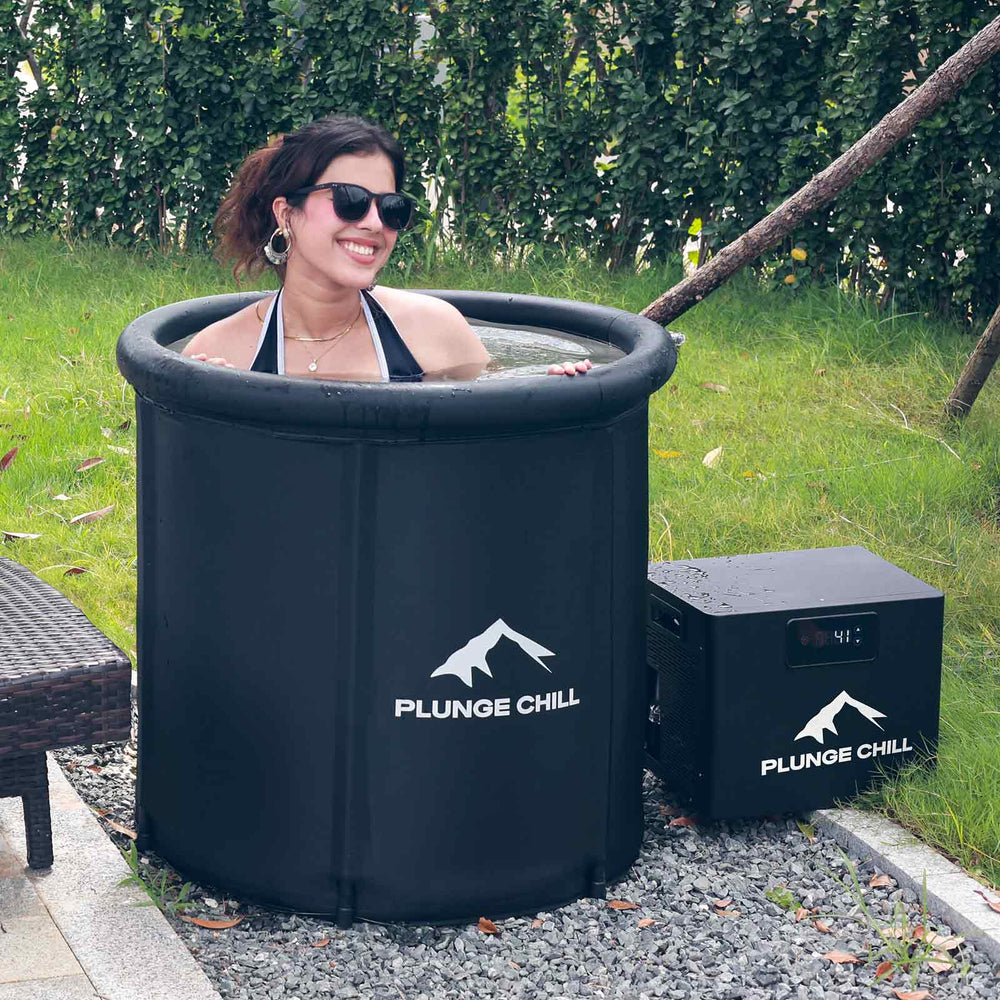
Precision is relaxation’s friend. On campuses and in pro settings, Benedictine University Mesa partnered with a manufacturer that prioritizes precise temperature control, strong filtration, and clean‑water safeguards so athletes can repeat the same exposure dose day after day. That reliability helps people focus on breath and mindset rather than wrestling with melting bags of ice. Dedicated plunge tanks can cost up to $20,000 according to Mayo Clinic Health System, though there are simpler tubs and stock‑tank setups at much lower prices.
The essentials for a calm, hygienic experience fit into a few practical themes. These tips derive from features highlighted by university programs and health‑system guidance, combined with general equipment sense; where I infer beyond the cited sources, I say so explicitly and rate confidence.
|
Feature or practice |
Why it matters |
What to look for or do |
|
Relaxation depends on predictable dosing and safe limits |
Choose units with digital control and narrow swings; verify with a thermometer (high confidence based on university partnership descriptions) |
|
|
Filtration and sanitation |
Clear water reduces infection risk and makes daily use pleasant |
Prefer continuous filtration and easy‑service filters; follow manufacturer cleaning schedules (high confidence from equipment notes; specifics vary by brand) |
|
Energy efficiency and durability |
Frequent use can be costly without insulation and efficient pumps |
Look for insulated lids and efficient motors; check warranty length (moderate confidence, practical inference) |
|
Size and placement |
Comfortable entry and exit reduce stress during the first minute |
Ensure enough footprint for stepping in calmly and a non‑slip surface; plan drainage (moderate confidence, practical inference) |
|
Noise and maintenance |
Quiet operation supports a calming environment; easy care fosters consistency |
Ask about decibel ratings and filter access; keep a simple weekly care checklist (moderate confidence, practical inference) |
|
Outcome tracking |
Seeing changes in sleep or perceived stress guides your routine |
Track soreness, sleep quality, and time‑in‑water in a simple log as suggested by collegiate programs (high confidence from program recommendations) |
If a dedicated unit is out of budget, a sturdy tub with a reliable thermometer can still work. Use sealed bags of ice to keep the water clean, refresh the water frequently, and store the setup where spills and condensation are easy to manage. Those are pragmatic inferences based on home use norms, not formal study findings, and I share them with moderate confidence.
Jewelry and Cold Water: A Quick Note
Readers here often ask whether it is wise to plunge with rings and bracelets. In my own sessions I remove fine jewelry beforehand and keep it in a soft pouch. Cold causes fingers to shrink slightly and numbs sensation; rings that felt secure in a warm room can loosen in cold water and slide unexpectedly during re‑warming. Metals and settings also experience rapid temperature changes, and while I am not citing a lab study on gemstone behavior here, it is prudent to avoid thermal shock to delicate pieces. Consider making “jewelry off, jewelry stored safely, towel ready” part of your pre‑plunge routine. These are practical, safety‑oriented inferences; I share them with moderate confidence.
Methods Compared at a Glance
Different cold‑exposure methods engage relaxation in slightly different ways. This table aligns typical temperatures and durations with the relaxation pathways discussed above and cites the type of source behind each entry.
|
Method |
Typical water temperature |
Typical duration |
Primary relaxation pathway |
Evidence context |
|
Cold shower |
About 50–60°F |
Thirty seconds building to two or three minutes |
Skin‑driven cold shock with controlled breathing; accessible daily reset |
UCLA Health and Case Western Reserve University describe showers below 60°F as a practical entry |
|
Head‑out tub immersion |
Around 50–59°F for standard wellness plunges; some lab work used about 68°F for five minutes |
One to ten minutes, shorter for beginners |
Stronger whole‑body response; post‑session calm often reported |
Stanford Lifestyle Medicine and PLOS ONE summarize mood and stress findings across temperatures and doses |
|
Polar plunge |
Roughly 35–40°F |
Very brief entry, seconds to a couple of minutes |
Intense shock, best for experienced participants with supervision |
Case Western Reserve University outlines risk and shock intensity at this range |
|
Facial immersion or cold compress |
Cold tap water or chilled pack, not measured precisely |
Fifteen to sixty seconds, repeated as needed |
Trigeminal and vagal stimulation activates calming dive reflex |
Stanford Lifestyle Medicine notes this as a quick state‑shift skill |
|
Whole‑body cryotherapy (air) |
Extremely cold air, not water |
Up to a few minutes |
Different modality; not water‑based, included here for context |
Case Western Reserve University distinguishes air vs water effects; not a focus of this article |
Short Protocol Examples
To translate evidence and practice into routines, here are two relaxation‑oriented sketches you can adapt after medical clearance. These are illustrative patterns drawn from clinic and university guidance; exact dosing will vary by individual tolerance.
A shower‑based routine could be a normal warm shower followed by a cold finish under 60°F for thirty seconds the first week, building toward two to three minutes over several weeks while maintaining smooth breathing. A tub‑based routine could be a head‑out immersion around 50–59°F for one to three minutes initially, emphasizing breath control during the first minute and a full re‑warm afterward. In both cases, track how you feel across the next twelve hours, since delayed stress reduction is a key observed pattern in the PLOS ONE analysis.
Frequently Asked Questions
Does cold water immersion actually relax you or is it just hype?
The relaxation many people feel has plausible biological roots. Case Western Reserve University explains the cold‑shock response and how controlled breathing can quickly settle it, while Stanford and PsychiatryOnline describe neurotransmitter changes that map to focus and calm. A University of Oregon study measured cardiovascular calming and a mood lift hours later. A PLOS ONE meta‑analysis across randomized trials found that perceived stress tends to drop about twelve hours after exposure, not right away. That combination supports genuine relaxation potential, with timing and magnitude varying by person.
If I’m trying to build muscle, will cold exposure hurt my gains?
If you plunge immediately after strength workouts on most training days, it can. Mayo Clinic Health System notes that cold after lifting can blunt anabolic signaling and slow hypertrophy over time. If you care about muscle size, separate cold from lifting by many hours, move it to rest days, or limit it to short, occasional sessions. Endurance adaptations appear less sensitive to post‑session cold according to exercise science summaries.
What temperature is best for relaxation benefits?
There is no single best temperature for everyone. For beginners seeking calm, showers below about 60°F are a manageable start. Many wellness plunges sit around 50–59°F for a few minutes. Polar‑style temperatures near 35–40°F are far more intense and better left to experienced, healthy participants with supervision. Focus less on the exact number and more on consistent, safe exposure, steady breathing, and how you feel twelve hours later.
Is it safe to do cold plunges every day?
Healthy people who tolerate cold well can practice daily, but safety depends on health status, dose, and context. People with heart disease, a history of stroke, uncontrolled high blood pressure, or those on certain medications such as beta blockers should not plunge without medical guidance, as Case Western Reserve University warns. Avoid plunging in moving water. Keep sessions short, re‑warm fully, and do not stack plunges immediately after strength training if muscle growth is a goal.
Will cold exposure help me sleep?
Some studies report better sleep quality with regular cold exposure, and many people anecdotally feel that pattern. The PLOS ONE analysis found improvements in sleep quality and quality of life in parts of the evidence base. If you find evening cold too stimulating or uncomfortable, try a morning or midday session and observe your own sleep over several days.
Should I wear or remove my rings?
For safety and peace of mind, remove fine jewelry before plunging and store it securely. Fingers can shrink in cold water, sensation can fade, and rings that felt snug can slide during re‑warming. This advice is practical rather than a citation from a specific lab study, and I share it with moderate confidence.
Takeaway
Cold water immersion can be a legitimate way to feel calmer and more resilient if you approach it like any other powerful tool: with respect for dose, timing, and personal risk. Expect the first minute to be the hardest, expect the best relaxation to unfold later rather than immediately, and expect to need several sessions before you know your pattern. The most credible sources agree on the same core points. Case Western Reserve University underscores preparation, breathing, and medical caution for at‑risk groups. A PLOS ONE meta‑analysis describes a time‑dependent story with a brief inflammatory spike and a delayed reduction in stress. University and health‑system teams report sleep and quality‑of‑life improvements for some people and immediate cardiovascular calming in lab settings. If you choose to practice, start conservatively, keep it consistent, separate cold from strength training if gains matter, buy or build a setup with reliable temperature and clean water, and, for readers of this magazine, keep your jewelry safe and dry on the sidelines. Where I have inferred beyond cited sources, I have marked that clearly and kept confidence moderate. Overall, my confidence in the relaxation potential for healthy people using modest, well‑controlled doses is medium to high, and my confidence in risk for people with cardiovascular issues is high.

References
- https://ben.edu/game-ready-ice-cold-how-plunge-chill-is-helping-redhawks-recover-smarter/
- https://case.edu/news/science-behind-ice-baths-and-polar-plunges-are-they-truly-beneficial
- https://clinicaltrials.gov/study/NCT06667193
- https://cupola.gettysburg.edu/cgi/viewcontent.cgi?article=2078&context=student_scholarship
- https://www.health.harvard.edu/staying-healthy/research-highlights-health-benefits-from-cold-water-immersions
- https://digitalcommons.liberty.edu/cgi/viewcontent.cgi?article=8439&context=doctoral
- https://pubmed.ncbi.nlm.nih.gov/39879231/
- https://lifestylemedicine.stanford.edu/jumping-into-the-ice-bath-trend-mental-health-benefits-of-cold-water-immersion/
- https://news.uoregon.edu/content/cold-plunging-might-help-heart-health-new-research-suggests
- https://www.science.gov/topicpages/c/cold+water+immersion.html
Disclaimer
By reading this article, you acknowledge that you are responsible for your own health and safety.
The views and opinions expressed herein are based on the author's professional expertise (DPT, CSCS) and cited sources, but are not a guarantee of outcome. If you have a pre-existing health condition, are pregnant, or have any concerns about using cold water therapy, consult with your physician before starting any new regimen.
Reliance on any information provided in this article is solely at your own risk.
Always seek the advice of a qualified healthcare provider with any questions you may have regarding a medical condition, lifestyle changes, or the use of cold water immersion. Never disregard professional medical advice or delay in seeking it because of something you have read in this article.
The information provided in this blog post, "Understanding the Relaxation Effects of Cold Water Immersion," is for informational and educational purposes only. It is not intended to be a substitute for professional medical advice, diagnosis, or treatment.
General Health Information & No Medical Advice