As a sports rehabilitation specialist and strength coach who also reviews cold‑plunge products, I’m often asked a simple question that hides a complex decision: which ice bath brands are truly reputable? The right answer depends on safety, sanitation, temperature control, durability, service, and how well a product’s design supports evidence‑based use. This guide distills the science on cold‑water immersion and the most credible product details into a practical, brand‑agnostic framework, then profiles leading options with an eye toward real‑world training, recovery, and hygiene.
What “Reputable” Should Mean in an Ice Bath
Reputation in recovery gear is earned by consistent safety and temperature accuracy, transparent claims, robust sanitation, durable materials, strong warranty support, and user‑friendly design. A reputable brand makes it easy to hold water near the target 50–59°F range, includes filtration or water‑care provisions that are simple and reliable, uses non‑porous materials that resist biofilm and staining, and supplies clear protocols aligned with research rather than trends. It also stands behind its equipment with dependable service and documented safety guidance for at‑risk users.
The Evidence in Plain Terms
Cold‑water immersion is not magical; it is a targeted stressor with specific use cases and trade‑offs. After intense exercise, immersion near 50–59°F for generally 5–10 minutes can reduce soreness and perceived fatigue for many athletes. Ohio State Health notes mixed evidence overall, with endurance and high‑intensity interval training showing more consistent short‑term recovery benefits, while post‑strength plunges may blunt long‑term muscle size and strength gains if used routinely (Ohio State Health; Journal of Physiology; Journal of Strength & Conditioning Research). Syntheses accessible to consumers, including GoodRx and Nike, similarly report reduced delayed‑onset muscle soreness compared with passive rest, while also emphasizing that active recovery, warm baths, massage, and sufficient sleep remain foundational alternatives.
Physiology explains both the appeal and the caveats. Immediate immersion drives a cold‑shock response, then vasoconstriction that lowers tissue temperature and slows damaging cascades. After exit, vasodilation and a circulation rebound correlate with pain relief and the feeling of freshness reported by many athletes (Ice Barrel training articles). Hydrostatic pressure also matters: immersion shifts fluid into the circulation and can reduce localized swelling without additional effort (PMC review). The Mayo Clinic Health System and Stanford Lifestyle Medicine also summarize benefits in mood and stress regulation for some people, including reductions in perceived tension and a post‑immersion cortisol decline in certain protocols.
Safety is not optional. Risks include cold shock and cardiac stress, hypothermia, nerve and skin injury, and rare frostbite. Individuals with cardiovascular disease, hypertension, circulatory issues, diabetes, neuropathies, or cold sensitivity should talk with a clinician before starting. Across sources, consistent safety rules emerge: do not plunge alone, enter gradually with controlled breathing, limit exposure to roughly 2–10 minutes for most sessions, avoid extending beyond 15 minutes, and rewarm gradually rather than jumping straight into high heat (Mayo Clinic Health System; Ice Barrel training and education notes).
A critical detail for lifters deserves special emphasis. Repeated cold plunges immediately after resistance training can dampen hypertrophy and strength adaptations over time. When building muscle is the priority, delay the plunge by roughly 24–48 hours after lifting and rely on low‑intensity cooldowns, mobility work, and sleep in the early post‑session window instead (Ohio State Health; PMC review; GoodRx). For endurance and team‑sport athletes facing tight turnarounds, using a cold bath between efforts or during high‑load microcycles can help maintain session quality and perceived readiness, especially when training volume is the limiting factor rather than maximal muscle protein synthesis (Sports Medicine review summarized by Ice Barrel; Science for Sport).
Overlooked Realities and Practical Nuance
Many buying guides gloss over an important contradiction between marketing and training science. Consumer messaging often encourages daily cold immersion as a general wellness ritual, yet strength athletes may see diminished growth if they do this right after lifting. The likely cause of confusion is that studies focus on different outcomes: endurance performance, soreness ratings, or biochemical markers versus long‑term muscle accretion. Interpreting those endpoints together suggests a simple plan: periodize your cold exposure. Use it liberally in competition phases or during high‑load weeks when recovery speed matters most, and pull back or time it away from key hypertrophy sessions when long‑term gains are the goal (Ohio State Health; Journal of Physiology; PMC review; Mayo Clinic Health System).
Another under‑discussed factor is sanitation and infection control in shared tubs. Traditional steel whirlpools and ad‑hoc ice baths have historically faced MRSA and other contamination risks, driving higher maintenance burdens and frequent drain‑and‑disinfect cycles. Modern multi‑user systems highlighted in Training & Conditioning magazine integrate mechanical filtration and antibacterial coatings, with some vendors claiming self‑cleaning performance that reduces turnover between users. In team environments with constant throughput, this design change can matter more than any single degree of water temperature for actual athlete access and safety (Training & Conditioning).
One more practical nuance concerns dose control, not just temperature display. Body size, body fat, and surface area alter cooling rates, so two athletes sitting in the same 50°F water are not receiving the same effective stimulus. Smaller and leaner athletes cool faster, and intermittent immersions or splitting time can deepen muscle cooling versus one continuous bout of equal total duration (Science for Sport). Products that hold temperature tightly during entry and exit reduce dose variability, but even then, the same readout can produce meaningfully different exposures across athletes and water volumes. Suggested verification step: log skin and water temperatures minute‑by‑minute in your specific tub across athletes of different sizes to quantify real cooling rates.

Product Formats and Features That Matter
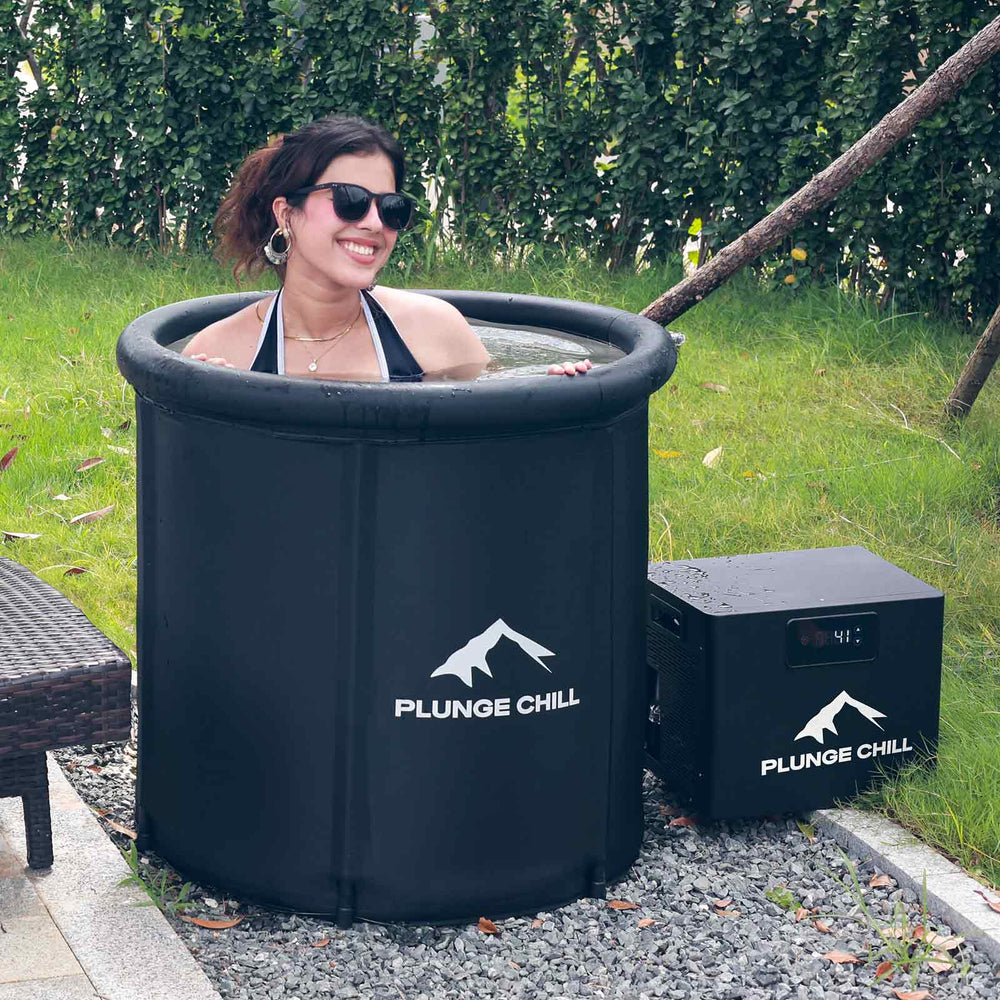
Ice baths take three common forms. Upright barrels are space‑efficient, encourage a stacked posture, and cover the torso easily. Rectangular tubs and lounge‑style tanks enable full horizontal immersion, easier leg extension, and sometimes better head‑out positioning for breathing control. Inflatable and portable options reduce cost and storage burden but rely on manual ice and have less predictable temperature stability. Plug‑in chillers and integrated tanks maintain precise temperatures for daily use without hauling ice. Materials and sanitation differ widely: non‑porous medical‑grade plastics resist oil and biofilm buildup, while stainless shells pair well with UV and ozone sanitation systems; brands also offer mechanical filtration and lids to minimize debris.
Water management is not a footnote. Some vendors claim multi‑month water life when filtration, ozone, and UV are used as directed; others tout four‑stage purification with minimal chemical reliance; multi‑user systems in training rooms emphasize antibacterial coatings and self‑cleaning claims that reduce drain‑and‑refill cycles. In home settings, I recommend aligning care practices with the brand’s specific sanitation hardware rather than importing spa chemical routines. Explore Ice suggests adding Epsom salts or essential oils to DIY setups. Suggested verification step: review the manufacturer’s owner’s manual for chemical compatibility, as some seals and pumps degrade with additives that were intended for bathtubs, not filtration systems.

Temperature Targets and Session Dosing
Across sources, practical ranges converge around 50–59°F for short exposures with a strong caution not to exceed about 15 minutes. Beginners often tolerate warmer water initially, working down toward the low 50s as comfort improves, and many will build up from 30–60 seconds to a few minutes across sessions (Mayo Clinic Health System; GoodRx; Ice Barrel training and education notes). Some product literature and athletic guides mention lower temperatures, including chilled systems capable of the 30s, but colder is not inherently better and increases risk. Experience shows that consistent adherence to the basic playbook—enter slowly, keep head above water, breathe deliberately, use a timer, and rewarm gradually—matters more than chasing extra degrees.

Brand Profiles and How They Compare
The table below consolidates key details from the notes to help you evaluate reputable brands clearly. Where a value is not stated in the provided sources, it is left as not specified rather than inferred.
Brand/Model |
Design |
Cooling/Sanitation |
Temperature Capability |
Capacity/Weight |
Materials/Warranty |
Notable Details |
Best For |
Ice Barrel 300 and similar |
Upright barrel |
Manual ice or paired chiller; non‑porous, medical‑grade; company notes lifetime warranty; made in USA |
User‑set via ice; chiller adds precision |
About 77 gallons; approximately 55–61 lb empty depending on model and source |
Recycled, medical‑grade, non‑porous; lifetime warranty reported |
Space‑efficient; upright posture aids full torso coverage; shipped within typical windows; financing noted (Ice Barrel) |
Home users with limited space who want upright immersion and simple maintenance |
Horizontal tank |
Integrated chiller; 20‑micron filtration; ozone sanitation; 110V plug‑in |
Down to about 39°F as claimed |
Water can last up to about 3 months between changes per brand materials |
Not specified in notes beyond integrated sanitation |
Plug‑and‑play daily use; strong sanitation stack; includes lid and accessories |
Daily plungers who value minimal water maintenance and precise temps |
|
Sun Home Cold Plunge Pro |
Horizontal stainless tub |
Self‑cooling; UV sanitation plus ozone; insulated lid |
Roughly 32–48°F as claimed |
About 150 gallons; forged wheels for mobility |
Stainless build; insulation; warranty not specified in notes |
Marketed as outdoor‑rated; LED lighting; headrest |
High‑end buyers seeking outdoor durability and a larger format |
RENU Therapy tanks |
Horizontal; multiple styles |
Four‑part purification; brand claims no chemicals needed; self‑cleaning emphasis |
Down to about 39°F as claimed |
Not specified in notes |
Handmade in USA; strong warranty coverage noted |
Always‑ready, low‑hassle sanitation; emphasis on ease of use |
Users prioritizing minimal manual care and US build |
Cold Tub/PolarPool |
Multi‑user cold tub |
Mechanical filtration; antibacterial coating designed to resist MRSA; self‑cleaning claims |
Maintains set cold range; specific numbers not stated |
Seats multiple athletes |
Industrial materials; facility‑grade |
Reported to reduce drain/refill between users; adopted by pro/college teams (Training & Conditioning) |
Athletic training rooms needing throughput and infection control |
Wilder Ice Bath Tub |
Portable, vertical footprint |
Manual ice; includes lid and hand pump |
User‑set via ice |
About 86 gallons; fits users up to about 6'7"; footprint about 29.5 × 31.5 in |
Portable construction; warranty not specified |
Space‑efficient; includes carry case |
Renters or travelers prioritizing portability |
The Cold Pod Ice Bath Tub |
Portable upright |
Manual ice; cover and easy‑drain tap |
User‑set via ice |
About 85 gallons; upright format |
Portable construction; Amazon‑style convenience |
Budget‑oriented; easy drain; top cover |
Entry‑level buyers testing the habit |
Hydragun Supertub |
Compact plug‑in |
Integrated filtration and cooling |
Controlled via unit |
Not specified in notes |
Compact, low‑maintenance; user feedback praised in editorial |
Small footprint; simple routine integration |
Indoor users wanting a compact, tidy setup |
Notes: The empty weight range for Ice Barrel reflects discrepancies across sources, with approximately 55 lb noted in an Ice Barrel training article and about 61 lb in Rolling Stone’s editorial listing. That spread likely reflects model versions, accessories included, or dry‑weight reporting conventions. Figures such as temperature ranges and water‑life claims reflect each brand’s published material in the provided notes and should be validated on the product spec sheet before purchase.
How to Choose by Use Case
Start with your primary training goal and constraints, then select design and sanitation to match. Strength and hypertrophy athletes should avoid routine immediate post‑lift plunging; an upright barrel or a compact chilled tub used on non‑lifting days or at least a day after heavy sessions fits better with long‑term progress. Endurance and mixed‑sport athletes coping with stacked training days will benefit more from a plug‑in chiller that locks in temperature without lugging ice, along with filtration that keeps water clear during high‑frequency use. Households and small studios may lean toward horizontal tubs with ozone and UV to extend water life and reduce daily upkeep. Athletic departments and performance clinics handling back‑to‑back sessions should evaluate multi‑user systems with antibacterial coatings and mechanical filtration, prioritizing sanitation workflows and throughput over consumer aesthetics.
Budget and space steer many decisions. If you are testing commitment, a portable upright tub with a lid and easy drain lets you learn how your body responds without a high up‑front cost. For apartment dwellers, upright barrels save floor space and weigh far less when empty, which makes placement and maintenance more feasible. High‑end buyers and heavy users in hot climates will appreciate the reliability of outdoor‑rated, self‑cooling stainless systems with robust sanitation stacks.

Care, Sanitation, and Lifespan Management
A hygienic ice bath is an intentional system, not just cold water. Non‑porous, medical‑grade interiors resist oils and film; lids keep debris out; filters, ozone, and UV handle what you cannot see. The Plunge emphasizes a filtration stack that can keep water fresh for weeks to months when maintained properly, while RENU describes four‑stage purification and an always‑ready tank that avoids daily ice. Team‑oriented Cold Tubs and similar systems emphasize mechanical filtration and antibacterial coatings to cut down on turnover between users. Whatever the brand, follow the manufacturer’s water‑care steps precisely. If additives are appealing, verify compatibility first, since some spa or bath products can foam, gunk filters, or degrade seals. Suggested verification step: confirm allowable chemicals and concentrations with the brand’s service documentation and support team.
Make the rewarming routine part of your protocol. Across medical and coaching sources, the best practice is to exit carefully, dry off, add warm layers, and let your body return toward 98.6°F gradually. Avoid jumping straight to a very hot shower, which can feel startling and is discouraged by multiple coaching guides that recommend smoother transitions after immersion (Ice Barrel education; Mayo Clinic Health System). On cold days, set up warm clothing, a towel, and a warm drink before you plunge.
Pros and Cons of Home Ice Baths Versus Alternatives
A home plunge provides dose control, consistency, and a psychologically clean ritual that many athletes rely on for resetting between sessions. That said, cost and complexity vary widely. The Mayo Clinic Health System notes that dedicated tanks range from relatively affordable portable options to units that can approach tens of thousands of dollars once chilling and sanitation are integrated. Cold showers are a valid lighter option when you want a modest stimulus without setup, though full‑body immersion is more physiologically potent for lowering tissue temperatures and shifting fluid. Warm baths fit well after the most acute soreness subsides and can improve relaxation and sleep on lighter days (Runner’s World). A practical, periodized plan balances these tools rather than relying solely on any single modality.
Putting the Research Into Brand Selection
Taken together, the literature and practical experience point to a few simple rules. First, safety, sanitation, and temperature control are the non‑negotiable pillars of a reputable system. Second, match the product to your training and schedule, not the other way around. Third, periodize cold exposure like you periodize training: use more when rapid recovery matters and less, or later, when you are chasing long‑term strength and muscle. Fourth, hold brands to their claims. If a manufacturer promises long water life, a tight temperature band, or self‑cleaning performance, ask for their maintenance schedule in writing, check for warranty details, and request customer support documentation before buying.
Takeaway
If you keep your evaluation grounded in the science and aligned with your training goals, the short list gets clear quickly. Upright barrels such as Ice Barrel make sense when space is tight and simplicity matters. Horizontal chilled tubs like The Plunge or RENU Therapy shine for daily, precise dosing with less water turnover. Facility‑grade systems from Cold Tub and similar vendors solve real sanitation and throughput problems for teams. High‑end outdoor stainless units such as Sun Home deliver durability and power for heavy users and hot climates. Portable tubs like Wilder or The Cold Pod are the right entry point when you are testing the habit. In every case, insist on safety guidance, sanitation clarity, and temperature stability that match the published evidence rather than social media bravado.
FAQ
What temperature and duration should most athletes use? Most evidence‑based protocols center around 50–59°F with exposures of about 2–10 minutes, avoiding more than roughly 15 minutes per session. Beginners can start warmer and shorter and build tolerance gradually with a timer and controlled breathing, then rewarm slowly with dry clothes rather than jumping straight into very hot water. This approach is consistent across Ohio State Health, GoodRx, Ice Barrel training guidance, and the Mayo Clinic Health System.
Do ice baths hurt long‑term strength gains? They can if used immediately and routinely after lifting. Studies summarized by Ohio State Health and a Journal of Physiology paper report blunted hypertrophy and strength adaptations with frequent post‑lift cold immersion. The simplest fix is to delay cold exposure by about 24–48 hours after resistance sessions during growth phases, while still using cold strategically during competition or high‑load weeks when short‑term readiness matters most.
How does a reputable home unit differ from a DIY tub of ice? Precision, sanitation, and consistency are the three big differences. Plug‑in units maintain temperature without guesswork, pair with filtration and ozone or UV to extend water life, and include lids and non‑porous surfaces that resist buildup. DIY setups are fine for trial runs, and Explore Ice even suggests simple batching methods, but they require more manual ice, more frequent water changes, and careful monitoring to keep the dose and hygiene consistent. If you go the DIY route, verify any additives with the manufacturer of your vessel and filter. Suggested verification step: consult the owner’s manual and perform a small‑volume test before full‑tub dosing.
Is it safe for everyone to cold plunge? No. People with cardiovascular disease, uncontrolled hypertension, circulatory disorders, diabetes, neuropathies, or cold sensitivity should speak with a clinician first. Cold shock, cardiac stress, hypothermia, and nerve or skin injuries are real risks. All users should avoid plunging alone, enter gradually, use a timer, and have warm layers ready for rewarming. These points are emphasized by the Mayo Clinic Health System and Ice Barrel’s safety materials.
Which brands are best for teams and clinics? Multi‑user systems that emphasize mechanical filtration and antibacterial coatings, such as those profiled in Training & Conditioning, are designed specifically for throughput and infection control. They reduce drain‑and‑refill cycles and help standardize sanitation between athletes. For smaller clinics, horizontal chilled tubs with UV and ozone can also maintain water quality well when maintained as directed. Proper facility protocols remain essential regardless of brand.
Can cold exposure help in heat or during events? Pre‑cooling can support performance in hot environments, and a long Massachusetts marathon dataset reported 100% survival for exertional heat stroke when treated with ice baths, as summarized in Ice Barrel’s training article. That is a medical protocol for emergencies rather than a training tool, but it underscores how precise cold exposure, used appropriately, can be lifesaving in extreme circumstances.

Sources Acknowledged
This guide synthesizes consumer‑facing summaries and training articles along with medical and sport science commentary, including Ohio State Health, Ice Barrel training and education posts, Stanford Lifestyle Medicine, the Mayo Clinic Health System, a PMC review of immersion physiology, Runner’s World, GoodRx, Nike, On Running, Training & Conditioning, Science for Sport, Rolling Stone editorial product notes, and additional brand‑specific materials included in the research notes.
References
- https://www.academia.edu/97291714/Comparison_of_Ice_Massage_versus_Cold_Water_Immersion_on_Muscle_Damage_and_DOMS_Levels_of_Elite_Wrestlers?uc-sb-sw=96985334
- https://digitalcommons.cedarville.edu/cgi/viewcontent.cgi?filename=1&article=1539&context=research_scholarship_symposium&type=additional
- https://lifestylemedicine.stanford.edu/jumping-into-the-ice-bath-trend-mental-health-benefits-of-cold-water-immersion/
- https://ideaexchange.uakron.edu/cgi/viewcontent.cgi?article=3606&context=honors_research_projects
- https://www.marquette.edu/innovation/documents/arora_ice_bath_recovery.pdf
- https://pmc.ncbi.nlm.nih.gov/articles/PMC2938508/
- https://health.osu.edu/wellness/exercise-and-nutrition/do-ice-baths-help-workout-recovery
- https://mcpress.mayoclinic.org/healthy-aging/the-science-behind-ice-baths-for-recovery/
- https://www.mayoclinichealthsystem.org/hometown-health/speaking-of-health/cold-plunge-after-workouts
- https://www.garagegymreviews.com/best-cold-plunge-tub