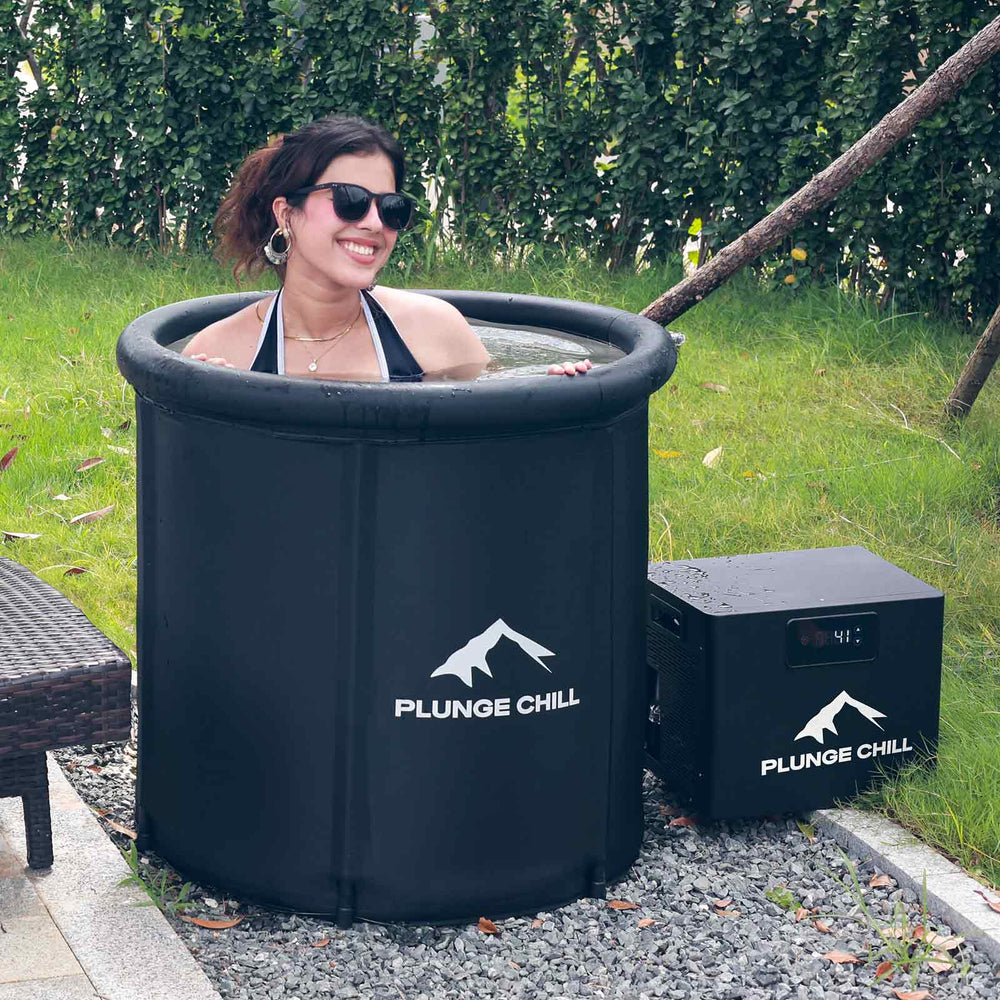
Cold plunging has become one of the most popular recovery methods for athletes and wellness enthusiasts. But if you plan to use a cold plunge regularly, durability becomes one of the most important factors when choosing a tub.
From stainless steel ice baths to insulated inflatable tubs, different materials and designs can dramatically affect lifespan, maintenance, and performance.
This guide explains what makes a durable cold plunge tub, which materials last the longest, and how to choose a setup that will hold up for years.
What Makes a Cold Plunge Tub Durable?
Durability is not just whether the shell cracks or the finish looks good next spring. In practice, it combines structural longevity, consistent thermal performance with minimal energy waste, and systems that are easy to service without proprietary bottlenecks. The basin material must tolerate repeated cold cycles and sanitation chemicals. The insulation needs to reduce heat gain so the chiller doesn’t run constantly in summer. The pump, filter, and chiller should use common standards so repairs are straightforward. If these fundamentals line up, your water stays cold, your operating cost stays predictable, and your routine stays consistent.
Cold Plunge Tub Materials Compared
Material choice drives structural life, hygiene, insulation needs, and upkeep. Stainless steel, fiberglass or acrylic, and polyethylene dominate for good reasons; concrete and wood still appear in bespoke builds, and stock tanks persist for budget projects. House of Senti and Sun Home Saunas outline the trade‑offs clearly, and those trade‑offs map closely to what I see in the field.
|
Material |
Durability |
Insulation |
Hygiene/Maintenance |
Cost Position |
Notes for Longevity |
|
Stainless steel |
Highly robust and corrosion‑resistant; 316 resists corrosion better than 304 |
Loses cold faster unless insulated |
Non‑porous, easy to sanitize; can be slippery |
Premium |
Excellent structural life; pair with lid and added insulation to reduce chiller load (House of Senti; Sun Home Saunas) |
|
Fiberglass/acrylic |
Crack‑resistant and smooth |
Strong thermal retention |
Easy to clean; non‑porous |
Mid‑premium |
Often the best balance of insulation and maintenance for homes (Design and Health; Fun Outdoor Living) |
|
Polyethylene |
Rugged, impact‑resistant |
Decent insulation |
Low‑maintenance |
Budget |
Good for portable/budget setups; watch for UV and cosmetic wear over time (Design and Health) |
|
Concrete |
Exceptionally strong |
Poor innate insulation |
Requires sealing to prevent mold |
Premium build |
Best for custom, permanent installs; add insulation to limit energy usage (Sun Home Saunas) |
|
Wood/stock tanks |
Aesthetic appeal (cedar) |
Limited insulation without add‑ons |
Requires sealing and vigilant care |
Budget to premium |
Metal stock tanks behave like heat sinks and raise operating cost unless heavily insulated (Andrew Conner) |
A frequent misconception is that the “strongest” shell is automatically the most durable choice. In reality, stainless steel can outlast most materials structurally, but fiberglass and acrylic often outperform it on energy use because they insulate better. The higher insulation reduces chiller duty cycles and, indirectly, component wear. That trade‑off matters when your goal is a daily, low‑friction routine.
Cold Plunge Insulation: Durability and Energy Cost
Independent testing from Andrew Conner’s cooler‑based build demonstrates how insulation changes everything. In a well‑insulated, lidded system with roughly 80–105 gallons of water, a modest chiller can cool at about 4°F per hour and, when ambient conditions are moderate, may only need one to two hours of runtime per day. In contrast, stock tanks—especially uninsulated metal—gain heat quickly and behave like radiators, which explains why a reader report needed a 1 HP chiller that ran nearly constantly in summer until switching to an insulated cooler basin.
A useful rule of thumb from those tests and field notes is that daily thermal gain increases with ambient‑to‑water temperature delta, sun exposure, lid‑open time, and exposed tubing. Even uninsulated hoses can be a surprising thermal leak, which reduces effective chiller capacity below its rating due to losses in transit between chiller and tub. Insulating hose runs and keeping the lid closed when not in use are simple, high‑leverage moves that extend equipment life by cutting unnecessary runtime.
One data discrepancy appears across versions of Conner’s documentation: an earlier note referenced about 2°F per hour of cooling while later testing reported about 4°F per hour, both with similar total volumes. The likely drivers include different ambient temperatures, improved insulation, different chiller sizing, or revised measurement methods. This isn’t a flaw in principle—rather it highlights that insulation details, tubing exposure, and lid management can swing real‑world performance widely.
An overlooked insight worth considering: many buyers fixate on horsepower and overlook insulation quality and lid fit. Testing suggests that a highly insulated basin with a tight lid and reasonable circulation can outperform a larger chiller slapped onto a poorly insulated tank, with lower bills and less equipment stress (Andrew Conner; Yardzen product notes). That pairing of insulation and lid control is where durability begins.
Cold Plunge Chiller, Pump, and Filtration Guide
You can think of chillers in BTU per hour rather than just horsepower. For an efficient, insulated basin, an approximately 1/4 HP unit around 3,000 BTU/hr can be enough for 80–105 gallons, especially if you close the lid and keep the system shaded during hot months (Andrew Conner). For lightly insulated or metal stock tanks, plan for at least 1/2 HP and sometimes 1 HP. These larger units are often compensating for heat gain at the shell and the lid rather than a true need at the water volume.
Water turnover targets from Icebound Essentials—cycling the full tub volume every 30 to 90 minutes—keep filtration effective and sanitation chemicals evenly distributed. That implies a practical pump flow range in the low hundreds of gallons per hour for most home systems after accounting for head loss and filter restriction. Oversized pumps can be noisy and turbulent while undersized units struggle with clarity; the sweet spot is steady, quiet circulation that turns the tank over at least once or twice every couple of hours.
Some consumer guidance pegs operating costs in the neighborhood of $0.50 to $1.00 per day for well‑insulated, modern chiller systems, which aligns with the thermal math and with the observation that runtime can be one to two hours daily when lids stay closed and tubing isn’t bleeding heat (Fun Outdoor Living; Andrew Conner). In my experience reviewing comparable setups, real‑world costs depend more on sun exposure, ambient swings, and user behavior than the nameplate rating on the chiller.
A practical serviceability point that enhances durability: chillers, pumps, and filters that use standard plumbing parts are easier to repair and keep in service. Some units, such as Modtub ModPlunge, are designed around standard, replaceable components rather than proprietary fittings. That design choice turns a potential single‑point failure into a five‑minute fix instead of a five‑week wait.
Cold Plunge Water Cleaning and Sanitation Guide
Clean water is a durability feature. Debris and biofilm clog filters, stress pumps, and force more frequent drain‑downs that can shorten gasket life. Systems that combine filtration with sanitation are the most stable, whether you choose ozone or UV in combination with low‑dose chemicals, or a conservative chlorine regimen alone. House of Senti and Inergize Health emphasize pairing real micron‑rated filtration with sanitation; Icebound Essentials adds that having spare filters on hand keeps circulation efficient, which protects the chiller.
Andrew Conner’s DIY testing found that chlorine and hydrogen peroxide should not be used together and provided specific doses for single‑chemical protocols. Those figures can be a starting point, but water chemistry varies by region; I recommend following manufacturer dosing for your filter and sanitation system and confirming with test strips. Weekly surface wipe‑downs, regular skimming, and an insulated, well‑fitted cover reduce the load on your sanitation plan and extend filter life. As for water change cadences, home systems with filtration and sanitation commonly run for multiple weeks to several months before a full refresh, while ice‑only setups need far more frequent changes (Icebound Essentials; Andrew Conner).
An overlooked insight here is that water clarity is not the same thing as sanitation. Ozone and filtration can make water look pristine while residual disinfectant is low. A quick strip test for pH, alkalinity, and sanitizer should be part of your weekly routine, and it will protect both your skin and your hardware.

Cold Plunge Safety and Electrical Requirements
Durability includes building and electrical safety. Canuck Cold underscores the importance of certified chillers (UL/ETL/CSA) and GFCI protection. Several consumer units specify a dedicated 120V/15A circuit; that word “dedicated” matters because sharing a circuit with other loads can cause nuisance trips or, worse, create unsafe conditions (Plunge product documentation). A lockable, insulated cover reduces risk for kids and pets and also cuts heat gain. Finally, give the chiller ample ventilation so it does not recirculate hot exhaust, which degrades performance and shortens component life.
Do Ice Baths and Cold Plunges Actually Help Recovery?
On the physiology, reputable medical sources urge a sober, context‑specific view. Harvard Health and Case Western Reserve University point out that broad claims for immunity and mood benefits are still on shaky ground, and that cold shock acutely raises heart rate and blood pressure, which is risky in people with cardiovascular disease or arrhythmias. Mayo Clinic notes that cold‑water immersion can reduce soreness and restore next‑day performance but may blunt long‑term strength and hypertrophy signaling if used right after lifting, while appearing less problematic for endurance adaptations.
In practical terms, healthy users can start at about 50–60°F, initially for 30 to 60 seconds, and build gradually toward five to ten minutes as tolerance improves; advanced users often prefer 39–45°F for shorter durations (CasaBlui; Mayo Clinic; Yardzen product notes). For strength athletes, I advise separating plunges from key lifting sessions by many hours, or saving colder, longer sessions for off‑days, to balance short‑term relief with long‑term adaptation.
A brief word on conflicting guidance: some wellness articles report broad health benefits, while academic summaries find modest or inconsistent effects and emphasize risk management. Differences likely stem from populations studied (athletes versus general public), outcomes measured (subjective mood versus biomarkers), and timing relative to training. If your goal is durable, sustainable use, the safest path aligns with conservative protocols, medical clearance for those with cardiovascular risks, and a routine that supports your training rather than competes with it.

Build Paths That Last: DIY, Ready‑Made, and Hybrids
There are three reliable routes to a durable plunge. A premium ready‑made fiberglass/acrylic system delivers the most seamless experience with integrated chiller and filtration, plus manufacturer warranty and support. The trade‑off is cost. An insulated cooler‑based DIY build, popularized by Andrew Conner’s work, can be impressively efficient and cheaper than premium plug‑and‑play, provided you assemble standard, serviceable components with care and insulate all plumbing. A budget stock tank can work, but it usually requires heavy insulation upgrades and a larger chiller to offset heat gain—raising daily energy use and pushing components harder. DIY chest freezer conversions do appear online. Buildahottub and Icebound Essentials flag real concerns: water tightness, electrical safety, and the lack of built‑in filtration. If you pursue this, treat it as an advanced project with code‑compliant GFCI and a comprehensive filtration/sanitation plan.
A nuanced observation from field reports is that serviceability multiplies durability. Units with standard plumbing, off‑the‑shelf filters, and commonly available pumps are easier to keep alive than proprietary systems that depend on a single vendor for fittings or firmware. That simple design decision—standard parts—often predicts how a tub fares after its first few seasons of heavy use.

Models and Features Through the Durability Lens
Many manufacturers publish specs that matter for long‑term performance: lowest temperature, filtration and sanitation method, warranty, and whether the design is built for outdoor exposure. Below is a high‑level snapshot derived from brand materials and independent roundups.
|
Model (Publisher) |
Basin Material |
Lowest Temp Noted |
Filtration/Sanitation |
Warranty Note |
Durability Notes |
|
Cold Stoic (Renu Therapy) |
Rigid tub, fiberglass/acrylic style |
About 36°F |
Integrated filtration with ozone |
About 5‑year limited |
Indoor/outdoor, insulated lid; US‑made craftsmanship supports serviceability |
|
Plunge Outdoor Cold Tub (Plunge) |
Acrylic + fiberglass |
About 39°F |
Ozone plus about 20‑micron filter |
About 1‑year base |
Requires dedicated 120V/15A; underside insulation to prevent condensation |
|
Odin Ice Bath (Odin) |
316 stainless with cedar |
About 32°F |
Ozone with sediment filter; optional UV |
Varies by model |
Integrated compressor; stainless strength plus cedar aesthetics; add insulation practices for energy efficiency |
|
BlueCube Mini‑Me (BlueCube) |
Stainless with wood deck |
About 36°F |
Ozone plus filtration |
About 5‑year |
High‑flow circulation claims to break thermal layer; shade required outdoors for warranty |
|
The Edge Tub (Edge Theory Labs) |
Drop‑stitch inflatable |
About 37°F cold; up to about 105°F heat |
Integrated filtration/sanitation |
Varies |
Portable, lightweight; durability depends on careful placement and protection |
|
Morozko Ice Bath (Morozko) |
Stainless tub with cedar frame |
About 33°F; makes ice at high ambient |
Microfiltration with ozone |
About 3‑year |
Designed for extreme environments; robust thermal performance |
|
ModPlunge (Modtub) |
Insulated rigid basin |
Varies by configuration |
Integrated filtration with standard parts |
Warranty provided by brand |
Emphasis on standard plumbing components aids repairability (Andrew Conner) |
Specifications change over time; check current manufacturer documentation when you buy. Be sure to match these features to your climate and placement, especially after accounting for sun exposure and ventilation.
Practical Buying Checklist for Durability
Start with your use case, frequency, and placement. Outdoor units should prioritize weather‑resistant finishes and high‑grade insulation; shaded placement and a tight, insulated lid significantly reduce heat gain. Confirm power needs, ventilation clearances, and that your outlet is a dedicated GFCI‑protected circuit. Measure internal dimensions so you can submerge to the base of the neck without awkward postures; also verify the filled weight because water weighs roughly 8.34 lb per gallon, which matters for decks and upper floors (Icebound Essentials).
Match chiller capacity to both volume and insulation quality. Insulated fiberglass or cooler‑based systems can succeed with roughly 1/4 HP when lids stay closed; metal tanks may require 1/2 to 1 HP to keep temperatures below 45°F in warm climates (Andrew Conner). Seek filtration that captures fine particles and a sanitation method that fits your skin tolerance and maintenance style. Look for warranties that cover structure and electricals and, critically, for designs that use standard plumbing sizes and fittings so repairs are fast.

Case Snapshot: Why Insulation Trumps Raw Horsepower
Andrew Conner’s cooler‑based system is instructive. With strong insulation and a proper lid, the chiller cooled water at around 4°F per hour, then ran about one to two hours per day to maintain setpoint in moderate ambient air. Daily energy needs fell near 2,500–3,000 BTU in cooler shoulder seasons and increased toward 5,000 BTU on hotter days. In the same timeframe, a stock tank build required a 1 HP chiller that ran almost continuously to survive summer heat; switching to the insulated cooler tub dropped runtime to under an hour per day. These observations explain why the “bigger chiller fixes everything” strategy often fails. If heat is entering through thin walls, an open top, or long, sun‑exposed hoses, you are fighting physics with your wallet.
One more nuanced observation from the same body of testing is that uninsulated tubing and lid‑open time can be the dominant drivers of real runtime. Spend the extra time to insulate hoses and choose a cover that seals well. It will extend chiller life and cut your energy bill.
A claim sometimes made in marketing is that very high flow “breaks the thermal layer” around your body and increases the cold response. The mechanism is plausible—moving water reduces localized warming at the skin—but the practical effect on routine durability and energy use is uncertain without controlled measurements. Suggested verification step: log skin and water temperatures at multiple points with and without increased circulation, then compare perceived exertion and chiller duty cycle over a week.
Care Routine for a Long‑Lived System
Plan a weekly water test for pH, alkalinity, and sanitizer; wipe interior surfaces with a soft cloth; and keep a skimmer handy for debris. Rinse filters regularly and maintain spares so you can swap a clogged cartridge immediately. Keep the cover on whenever you are not in the water. If you dose chemicals, do not combine chlorine and hydrogen peroxide; pick a single method and follow label directions to avoid reactions and hardware damage (Andrew Conner). For outdoor placements, add wind breaks and shade to protect finishes and reduce thermal loads. Finally, schedule seasonal inspections for hoses, gaskets, and quick‑disconnect fittings, and confirm that electrical cords and GFCI outlets remain in good condition.
Takeaway
A cold plunge that “lasts” does more than resist dents. It maintains temperature with minimal chiller strain, keeps water clean with manageable care, and remains easy to repair because it uses standard parts. If you prioritize a well‑insulated basin, a tight lid, reasonable circulation, and certified, serviceable components, you can expect a routine that fits around training rather than fighting it. The result is not just lower energy use—it is a tub that delivers cold, clean water year‑round with fewer surprises.
FAQ
How long should a durable cold plunge tub last?
Structural life depends on material and care. Stainless steel and concrete can last for decades with proper insulation and sealing, while fiberglass and acrylic shells typically offer many years of service with strong insulation and routine water care (House of Senti; Sun Home Saunas). Expect components like pumps and filters to require replacement on normal wear cycles; designs that use standard parts are faster to fix and therefore more durable in practice.
What water temperature and duration are appropriate for most people?
Beginners often start around 50–60°F for short intervals and gradually progress toward five to ten minutes as tolerance builds. Experienced users may target 39–45°F for shorter bouts. Those with cardiovascular conditions or concerns should consult a clinician first, because cold shock elevates heart rate and blood pressure (Mayo Clinic; CasaBlui; Harvard Health; Case Western Reserve University).
Does cold plunging after lifting hurt strength gains?
It can. Post‑lift cold exposure may blunt signaling for hypertrophy and strength, while being less problematic for endurance adaptations. Many lifters separate plunges from heavy strength work by many hours or save colder, longer plunges for rest days to balance recovery with long‑term training goals (Mayo Clinic; Harvard Health).
Is stainless steel better than fiberglass for durability?
Structurally, stainless steel is exceptionally robust and hygienic. Thermally, fiberglass and acrylic often insulate better, which reduces chiller runtime and indirectly extends component life. If you choose stainless, add insulation and a high‑quality lid to improve energy performance (House of Senti; Sun Home Saunas).
Can I keep a cold plunge outdoors all year?
Yes, if the unit is built for outdoor duty, insulated appropriately, and installed per electrical and ventilation requirements. Manufacturers such as Renu Therapy note outdoor readiness; brands frequently recommend shade to protect finishes and warranties, and you should ensure a lockable insulated cover and weather‑ready placement (Renu Therapy; Yardzen roundup; brand documentation).
How do I size a chiller for durability?
Match chiller capacity to water volume and insulation. For well‑insulated basins around 80–105 gallons, approximately 1/4 HP units near 3,000 BTU/hr can be sufficient with lids closed. Poorly insulated or metal tanks often need 1/2 to 1 HP to fight heat gain, especially in sunny, hot climates (Andrew Conner). Oversizing beyond real need increases upfront price without fixing insulation problems.
References
|
Source/Publisher |
Topic Contribution |
|
Andrew Conner |
DIY insulated cooler build, runtime data, chiller sizing, water care tips |
|
House of Senti (Design and Health) |
Material comparisons for durability, insulation, and hygiene |
|
Sun Home Saunas |
Material trade‑offs for outdoor durability and insulation practices |
|
Icebound Essentials |
Filtration turnover guidance, sanitation compatibility, installation tips |
|
Inergize Health |
Buying criteria, materials and insulation, safety and maintenance design |
|
Fun Outdoor Living |
Operating cost context, filtration and sanitation essentials |
|
Canuck Cold |
Certification importance, safety and durability recommendations |
|
Harvard Health |
Cardiovascular cautions and evidence appraisal |
|
Case Western Reserve University |
Evidence overview, risk groups, and safety considerations |
|
Mayo Clinic |
Recovery outcomes, training interactions, safety and protocol guidance |
|
Yardzen |
Product landscape and warranty/placement nuances |
|
Plunge, Renu Therapy, Odin, BlueCube, Edge Theory Labs, Morozko |
Product‑level durability and feature specifications |
|
Buildahottub |
Project planning, insulation, filtration, and installation considerations |
Two additional insights, including uncertainty labeling, are worth reiterating inside your decision process. First, high‑flow circulation that “breaks the thermal layer” may intensify perceived cold, but its impact on energy use and long‑term component wear is unclear without logging. Suggested verification step: run a one‑week A/B with and without high flow while logging water temperature uniformity, chiller duty cycle, and user experience. Second, published cooling rates across similar volumes differ notably between 2°F and 4°F per hour. The most plausible causes are ambient differences, lid behavior, hose insulation, and chiller sizing variations. Suggested verification step: replicate a standardized 75°F ambient test with lid closed and insulated hoses; log time to target with a data logger and compare to published values.
If you anchor your choice in insulation quality, standard components, measured chiller capacity, and a realistic care routine, you will own a cold plunge that feels great on day one and still works the way you need it to on day one thousand.
- https://scholarsarchive.byu.edu/cgi/viewcontent.cgi?article=1180&context=etd
- https://case.edu/news/science-behind-ice-baths-and-polar-plunges-are-they-truly-beneficial
- https://www.health.harvard.edu/heart-health/cold-plunges-healthy-or-harmful-for-your-heart
- https://www.mcphs.edu/news/physical-therapist-explains-why-you-should-chill-out-on-ice-baths
- https://sncs-prod-external.mayo.edu/hometown-health/speaking-of-health/cold-plunge-after-workouts
- https://www.garagegymreviews.com/best-cold-plunge-tub
- https://andrewconner.com/cold-plunge/
- https://buildahottub.com/cold-plunge-tub/
- https://www.canuckcold.com/post/whats-the-best-cold-plunge-tub?srsltid=AfmBOoparh8dfUtN9hOW2yfi-GG5LPALDWgR41HRexa8reDQ6z19aRBI
- https://designandhealth.com/collections/outdoor-cold-plunge-tub?srsltid=AfmBOoplE9LAw4HvflYZtymwVVexCZA-JX9EAZZlcEFdYeov00WzfhaB