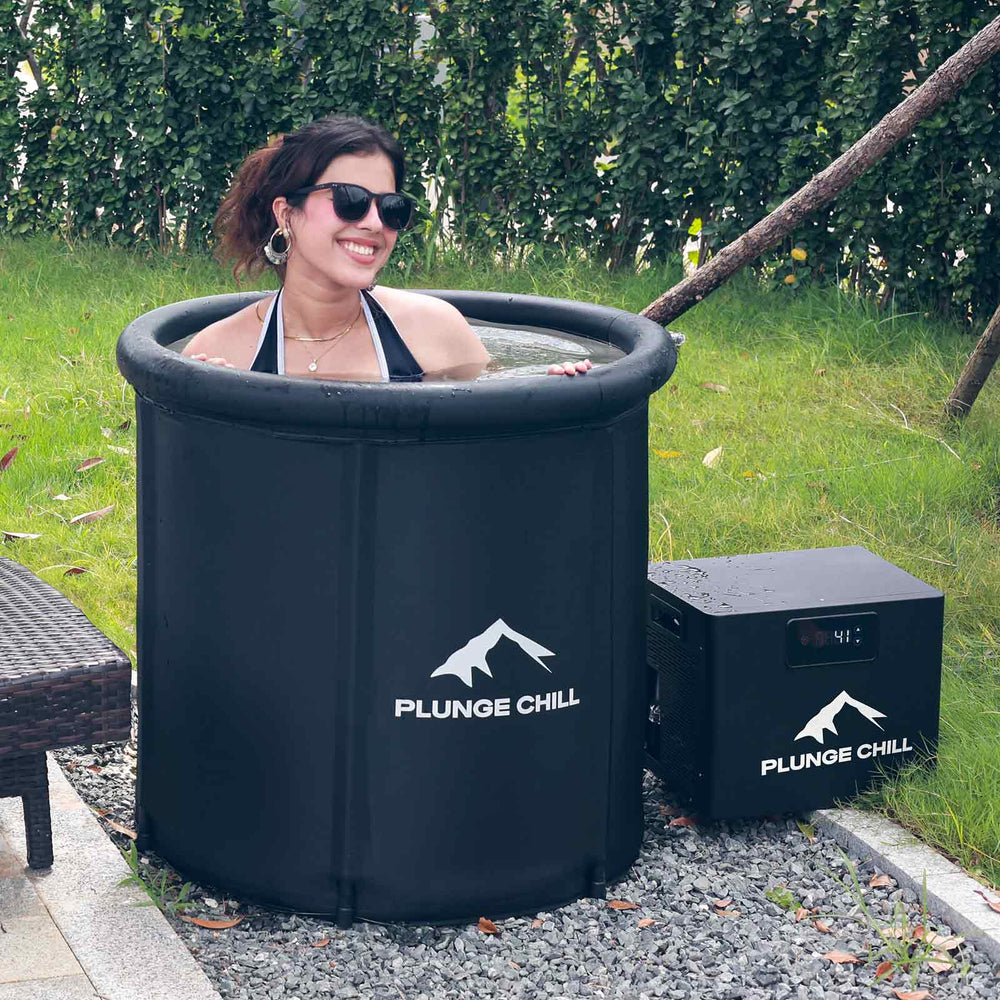
Cold plunges have moved from fringe therapy to mainstream tool in locker rooms, gyms, and even suburban backyards. Alongside that popularity, I now hear questions not just about temperature and time, but about the “quality” of the water itself: is a rainwater ice bath somehow more therapeutic than a tap water plunge because of “negative ions”?
As a sports rehabilitation specialist and strength coach who helps athletes integrate cold immersion into high‑performance programs, and as a product reviewer who has tested everything from DIY barrels to professional chillers, I want to separate marketing language from what the current evidence actually supports.
The short version is that temperature, duration, timing, and safety are clearly important. Negative ion concentration in the water, at least based on the research we have, is not. Before deciding whether to sit in a rain barrel or a filtered plunge tub, it is worth understanding what has been studied, what has not, and how water source affects risk more than recovery.
What Actually Drives Cold Plunge Effects?
When you step into cold water, the first thing that happens is not mystical; it is physiology.
Research summarized by Case Western Reserve University describes a classic cold shock response: heart rate, breathing, and blood pressure spike, peripheral blood vessels clamp down, and shivering ramps up to protect core temperature. That stress response is intense for the first seconds to minutes and is the primary risk window for panic or cardiac events in vulnerable people.
Across multiple medical and sports science sources, several consistent mechanisms emerge.
Cold water immersion in the range most athletes use, roughly 50–59°F, narrows blood vessels and lowers tissue temperature. Cleveland Clinic and Ohio State University note that this can reduce acute swelling, slow metabolic activity in muscle, and temporarily limit tissue breakdown after hard efforts. As the body rewarms, blood flow increases again, which can help move byproducts like lactate out of the muscle.
Meta‑analyses in sports science and physiology add more nuance. A large meta‑analysis of randomized trials on cold water immersion after exercise reports modest reductions in muscle soreness and perceived fatigue in the first 24 hours, small reductions in creatine kinase and lactate at specific time points, but little consistent benefit for explosive performance or systemic inflammatory markers. Another review summarized in Health and Harvard sources shows time‑dependent effects: inflammation and stress markers actually rise acutely, while stress ratings can drop several hours later.
In practice, that lines up with what athletes report in the training room. After a congested tournament schedule or a heavy week of conditioning, a short plunge often leaves them feeling less sore and more “reset” the next day, even though it is not a magic eraser for muscle damage.
Recovery vs Long‑Term Adaptation
For strength and power athletes, the bigger question is not “Does this feel good tomorrow?” but “Does this blunt my gains over the season?”
Several sources, including Ohio State, Mayo Clinic, Pliability, Mayo Clinic Press, and a Peloton‑summarized meta‑analysis in Sports Medicine, converge on the same pattern:
Cold immersion soon after resistance training can reduce long‑term increases in muscle mass and strength. Cooling appears to dial down some of the molecular signaling that drives hypertrophy and power adaptations.
For endurance work, the picture is different. Pliability and other sports sources point out that cold exposure may actually amplify some mitochondrial signals after endurance sessions, and long‑term endurance outcomes do not seem to be impaired in the same way.
That leads to a practical rule I use with teams: for pure strength and size, avoid post‑lift plunges in the first several hours; for tournaments, back‑to‑back games, or hard endurance blocks, use cold strategically to stay functional, accepting that you might sacrifice a bit of strength adaptation for short‑term readiness.
Throughout all of this research, one detail is striking. Trials define cold water immersion by temperature, time, body coverage, and timing relative to exercise. None of the summaries from PLOS One, Mayo Clinic, Cleveland Clinic, Ohio State, or major narrative reviews highlight water chemistry or negative ion concentration as a driver of outcomes.
That silence does not prove ions never matter, but it is strong evidence that, in controlled experiments, other variables dominate.

Negative Ions 101 – And The Evidence Gap
When people ask about negative ions in water, they are usually blending two ideas.
One is basic chemistry: water contains charged particles (ions). The other comes from popular wellness claims about “negative ions” in air near waterfalls or the ocean supposedly improving mood or energy.
In the scientific literature used to design cold plunge protocols, those concepts rarely appear. The randomized trials and meta‑analyses referenced by PLOS One, Harvard, Mayo Clinic Press, and sports‑science journals describe cold water as a temperature and time exposure. They do not stratify results by rainwater versus tap water, or by mineral or ion profile. There are no large trials comparing “high negative ion” water to “low negative ion” water for recovery.
Instead, psychological and neurobiological benefits of cold exposure are linked to stress‑hormone dynamics and nervous system activation. Stanford’s lifestyle medicine review, for example, attributes mood changes after cold immersion to shifts in cortisol, noradrenaline, dopamine, and endorphins, not to the water’s ionic content. Psychiatry literature on “neurohormesis” treats cold as a hormetic stressor that engages brain, endocrine, and immune systems; again, the emphasis is dose of cold, not composition of the water.
As a clinician, I care about what variables I can adjust that are actually supported by data. Right now, temperature, duration, and timing are in that category. Negative ion concentration in the water is not. If a manufacturer claims that a particular source (like rainwater) is superior solely because of negative ions, they are out ahead of the evidence base.

Rainwater Ice Baths: Romantic Idea, Real‑World Risks
From a product and facility standpoint, rainwater is attractive. It is free, it collects naturally into barrels or outdoor tanks, and it fits the “natural recovery” narrative. Many home cold plunge guides highlight rain barrels or outdoor tubs as space‑saving, low‑cost setups that can double as ice baths.
However, the water quality story is less idyllic.
A detailed technical article on rainwater harvesting from a water treatment company makes several points that matter any time athletes repeatedly immerse themselves in that water:
Untreated rainwater is not clean. As it runs off roofs and gutters, it picks up viruses, bacteria, bird droppings, insects, dust, and metals such as lead and copper. More recently, testing has detected PFAS “forever chemicals” in rainwater worldwide, compounds associated with cancer risk and metabolic and immune issues. The article’s conclusion for drinking is clear: untreated rainwater is unsafe to consume regularly.
Making rainwater safe to drink requires robust treatment, usually a sequence of sediment filtration, reverse osmosis, and ultraviolet disinfection, or energy‑intensive distillation. Even then, the treated product is not inherently superior to city‑treated or properly filtered well water; the main advantage is financial or environmental when rain replaces tap water for non‑drinking uses.
An ice bath is not a drinking glass, but the same microbes and contaminants contact skin, open scrapes, and, realistically, small amounts of water inevitably reach the mouth and nose. For most young, healthy athletes, infection risk from occasional immersion in untreated rainwater may be low, but it is not zero, and it is certainly higher than in a cold tub that uses filtered tap water with active sanitation.
From a facility management perspective, outdoor rainwater baths also come with practical downsides that show up quickly during a season. Outdoor barrels and improvised tanks are hard to keep free of debris and biofilm. They are exposed to temperature swings and sunlight, which can warm the water into a range that is neither safe for storage nor cold enough for recovery. Draining and refilling large volumes frequently is not efficient.
That is before we even consider negative ions. The one domain where we do have data about rainwater is contamination. There is no parallel body of data showing that any beneficial ion profile in rainwater outweighs those drawbacks for athletes.
Example: The Backyard Rain Barrel Plunge
Consider a common scenario I see when visiting home gyms. An athlete sets up a 55‑gallon plastic rain barrel on the patio, collecting runoff from the roof. In cooler months, the water is naturally cold; in summer, they buy ice to bring it down nearer 50°F.
In the short term, this is a cost‑effective way to get cold exposure, especially for recreational use. Over weeks, though, the barrel accumulates leaves, pollen, algae, and whatever was on that roof. Unless the water is filtered and disinfected, the athlete is repeatedly immersing in a biologically active soup. For some people that may never cause a noticeable problem. For others, especially those with skin issues or lower immune resilience, this is not a risk I can recommend when better options exist.
Tap Water Ice Baths: Consistency, Control, And Real‑World Use
By contrast, most of the research on cold water immersion and nearly all of the professional setups I have worked with rely on tap water that is then cooled and filtered.
Medical guidance from Cleveland Clinic, Mayo Clinic, and other health systems describes home ice baths simply as filling a bathtub halfway with cold tap water and adding bags of ice until the water reaches about 50–59°F. Recommended immersion times for general recovery are typically in the 5–15 minute range, with beginners starting at 1–2 minutes. Professional sport and rehab protocols often use similar temperatures but shorter durations, around 10 minutes, especially when the water is at the colder end of that range.
High‑end cold plunge systems, such as the units used at Benedictine University Mesa in their partnership with Plunge Chill, or commercial tubs like the Michael Phelps Chilly GOAT, refine this approach. They provide:
Precise temperature control, often down to the degree, across a range that can reach into the low 40s°F.
Active filtration and disinfection to maintain clean, clear water over many sessions.
Stable operation in hot conditions, with chillers designed to keep water cold even when air temperatures climb into the 90s°F.
In athletic settings, that consistency matters more to me than theoretical differences in ion content. When I send a player into the tub after a playoff game, I want to know that the water is, for example, 52°F, that it has been filtered and sanitized, and that the unit is not going to fail mid‑tournament.
Example: A Simple Tap‑Water Ice Bath Calculation
For athletes training at home, a standard bathtub remains one of the most pragmatic tools. Home design articles on cold tubs note that a small tub might hold around 200 liters of water, which is about 53 gallons; a larger tub may hold closer to 300 liters, or roughly 79 gallons.
In practice, a useful rule of thumb is to fill the tub mostly with cold tap water and then add ice to bring the temperature down into the therapeutic range. One practical guide suggests using roughly three‑quarters cold tap water and one‑quarter ice by volume for a medium tub to reach around 41°F from a starting point near 59°F in cooler seasons. That typically translates to on the order of 60–70 pounds of ice for a half‑full tub in summer conditions, enough that the water chills within about 15 minutes.
None of that depends on whether the water fell from the sky or came out of a faucet. It depends on basic thermodynamics and, critically, on starting temperature and ambient conditions.
Rainwater vs Tap Water: Side‑By‑Side Comparison
To focus the decision on what is actually known, it helps to compare rainwater and tap water ice baths along dimensions that have been studied or clearly affect safety and practicality.
Dimension |
Rainwater Ice Bath |
Tap Water Ice Bath (Tub or Chiller) |
Evidence/Notes |
Water safety |
Untreated rainwater often carries microbes, droppings, dust, metals, and PFAS; unsafe to drink regularly. |
Municipal tap water is treated and monitored; commercial tubs add filtration and sanitation. |
Rainwater treatment article emphasizes contamination; health systems assume treated water for plunge guidance. |
Negative ion concentration |
No controlled trials linking rainwater ion profile to better recovery or mental effects. |
Same: trials focus on temperature and time, not ion composition, and use standard cold water. |
PLOS One meta‑analysis, Mayo, Cleveland Clinic, and others do not identify ions as outcome‑relevant variables. |
Temperature control |
Depends on weather; outdoor barrels swing with seasons and sunlight, harder to hold a set temperature. |
Tap plus ice or a chiller allows precise targeting (for example, 50–59°F) session after session. |
Home and commercial setup guides highlight chillers and ice quantities; professional teams favor controlled systems. |
Cost and accessibility |
Low cost if you already collect rainwater and have a suitable container. |
Very low for a basic tub plus ice; higher for dedicated cold plunge units with integrated chillers. |
Chief Ice Officer and similar guides favor barrels and tubs as the most cost‑effective starting point. |
Maintenance and hygiene |
Outdoor barrels are prone to debris, algae, and biofilm; treatment requires filtration and disinfection. |
Tubs can be drained and cleaned easily; pro units include filtration, UV, and often chemical dosing. |
Water‑treatment guidance stresses filtration/UV for stored water; product literature stresses clean, filtered water. |
Suitability for high‑performance recovery |
Harder to standardize and sanitize; better for occasional personal use if treated properly. |
Better suited to routine, repeatable protocols for teams and serious trainees. |
Collegiate and professional setups, like Benedictine Mesa’s Plunge Chill units, rely on controlled tap water. |
From a rehabilitation and coaching standpoint, the table points to a simple conclusion. Temperature and exposure are what move the needle for recovery and stress adaptation; water source matters mainly through its impact on cleanliness, consistency, and ease of control. On those fronts, tap water, properly filtered and cooled, is the more reliable choice.

How I Advise Athletes To Choose
The right setup depends on your goals, your environment, and your tolerance for risk and maintenance, not on chasing an unproven negative ion advantage.
When an athlete’s main priority is hypertrophy or maximal strength, I downplay cold water immersion altogether in the immediate post‑lift window. Evidence from sports science and summaries by Ohio State, Pliability, Peloton’s review, and others shows that repeated post‑strength plunges can meaningfully blunt strength and muscle gains. In that scenario, whether the bath is rainwater or tap water is irrelevant compared with the timing mistake.
When an athlete is heading into a dense competition schedule or a training camp where recovery between days is at a premium, I am much more willing to deploy cold immersion after hard sessions. The studies and meta‑analyses suggest short‑term reductions in soreness, perceived fatigue, and some markers of muscle damage and metabolic byproducts. For a soccer team with three matches in seven days, that can be the difference between jogging on day three and barely moving.
In those settings, I will always choose a controlled tap water system over an improvised rain bath, because I need:
Known temperatures, usually in the 50–59°F range.
Tight control over exposure time, commonly around 8–12 minutes.
Clean water that will not introduce infection risk in a roster where leg cuts and turf burns are routine.
For recreational athletes and wellness‑oriented users at home, the calculus is more flexible. A well‑maintained outdoor tub, even one that occasionally uses collected rainwater, can offer the same stress‑relief and mood benefits described in Stanford’s mental health review and in Mayo and Harvard summaries, as long as the water is kept clean and sufficiently cold, and the person respects the usual safety guidelines: start with short exposures, avoid near‑freezing extremes, and be cautious if there is any cardiovascular or circulatory disease.
In that context, if someone feels a psychological boost from the idea of plunging in “natural” rainwater, I do not dismiss it out of hand. I simply encourage them to treat the water with at least a sediment filter and disinfection step, to rotate the water regularly, and to recognize that the benefits they are feeling are almost certainly coming from the cold itself, not from any special negative ion content.

Does Negative Ion Concentration Ever Change My Recommendation?
Right now, no. None of the sources that I trust most in this space—PLOS One’s meta‑analysis, clinical reviews from Mayo Clinic, Cleveland Clinic, and Harvard, or physiology and psychiatry reviews on cold stress—treat water ion composition as a meaningful variable in cold plunge outcomes.
If a future randomized trial directly compared, for example, athletes using a mineral‑rich cold bath versus a deionized cold bath at the same temperature and exposure and found clear differences in performance, inflammation, or mental outcomes, that would be worth re‑examining. But in the current literature, water chemistry is essentially a controlled background condition, not a manipulated factor.
The one aspect of ions that does matter clinically is not their charge, but their identity as contaminants. Metals like lead, industrial compounds like PFAS, and microbial toxins are all present concerns in untreated rainwater. The rainwater treatment article makes clear that, for drinking, these require substantial filtration and disinfection. For immersion, they are still not something I want my athletes repeatedly exposed to without necessity.
Until the evidence shows otherwise, I treat the negative ion argument as a distraction from the variables we know are important: safe, cold, clean water; controlled exposure; and smart integration with the training plan.
Short FAQ
Q: Is there any evidence that rainwater ice baths improve recovery more than tap water baths because of negative ions?
A: No controlled study in the current summaries compares rainwater to tap water on that basis. Trials and meta‑analyses from sports science and health systems define cold exposure by temperature, duration, and timing. They report benefits such as reduced short‑term soreness and stress, but none attribute those effects to negative ion concentration.
Q: If I only have a rain barrel, can I still use it for cold plunges?
A: It is possible, but you should treat the water like any other untreated source that picks up contaminants. The rainwater treatment article warns that roof runoff can contain microbes, droppings, metals, and PFAS, and is not safe to drink without filtration and disinfection. For immersion, clean the barrel regularly, filter visible debris, and strongly consider adding a proper disinfection step. If you have cardiovascular or immune issues, or open wounds, a filtered tap‑water setup is a safer choice.
Q: Does the “natural” feel of rainwater change the mental benefits of cold exposure?
A: The psychological benefits seen in research—improved alertness, reduced tension, better stress resilience—are tied to the cold as a controlled stressor and its impact on hormones like cortisol and noradrenaline. Whether the cold comes from a lake, a rain barrel, or a chilled acrylic tub matters far less physiologically than consistent, safe exposure. If an outdoor, natural setting makes you more likely to use cold exposure regularly, that can certainly matter, but it is a behavioral advantage, not an ionic one.
Cold immersion is a powerful tool when it is used on purpose rather than on hype. For athletes and serious trainees, focus your decisions on what the data and real‑world experience both support: control your temperature, time, and timing, keep your water clean, and match your cold plunge habits to your performance goals. If you get those fundamentals right, whether your bath starts as rainwater or tap water will matter far less than how you use it.
References
- https://ben.edu/game-ready-ice-cold-how-plunge-chill-is-helping-redhawks-recover-smarter/
- https://case.edu/news/science-behind-ice-baths-and-polar-plunges-are-they-truly-beneficial
- https://digitalcommons.cedarville.edu/cgi/viewcontent.cgi?filename=1&article=1539&context=research_scholarship_symposium&type=additional
- https://www.health.harvard.edu/staying-healthy/research-highlights-health-benefits-from-cold-water-immersions
- https://lifestylemedicine.stanford.edu/jumping-into-the-ice-bath-trend-mental-health-benefits-of-cold-water-immersion/
- https://sncs-prod-external.mayo.edu/hometown-health/speaking-of-health/cold-plunge-after-workouts
- https://pmc.ncbi.nlm.nih.gov/articles/PMC2938508/
- https://health.osu.edu/wellness/exercise-and-nutrition/do-ice-baths-help-workout-recovery
- https://digitalcommons.wku.edu/ijes/vol12/iss1/7/
- https://health.clevelandclinic.org/what-to-know-about-cold-plunges