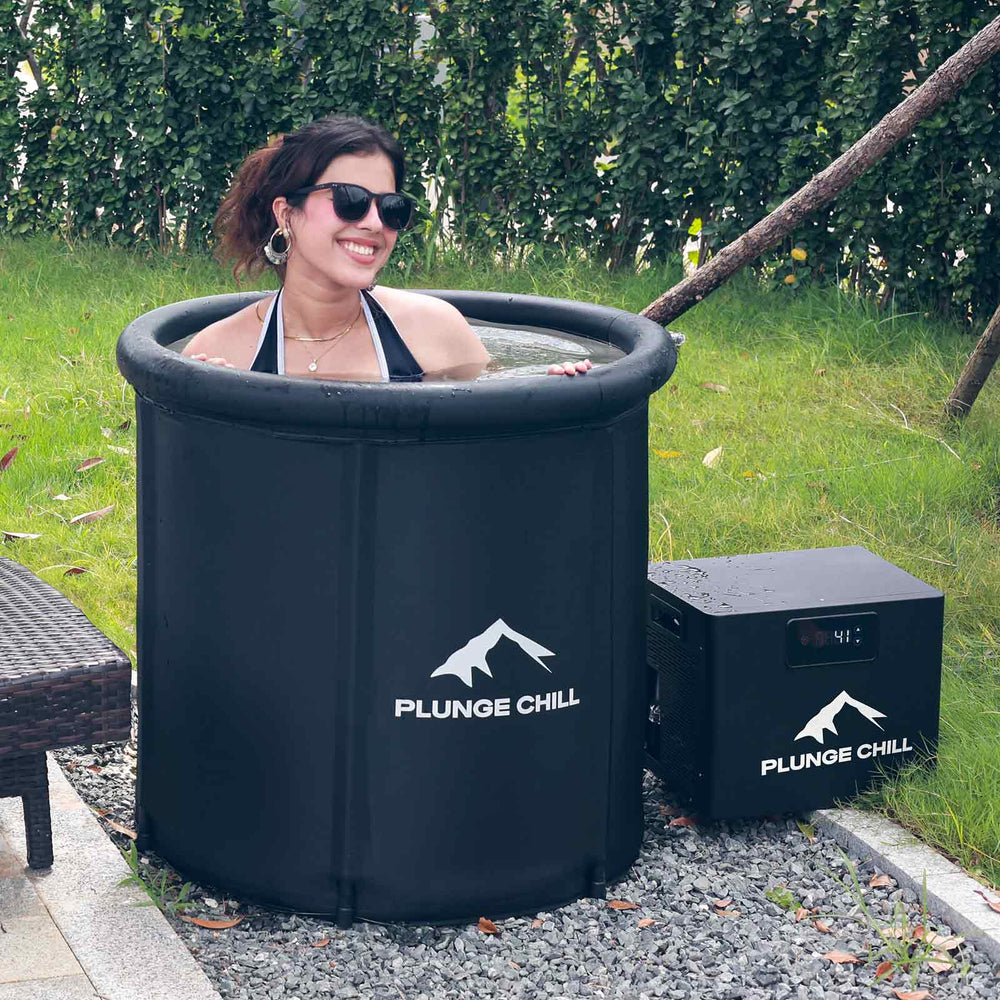
As a sports rehabilitation specialist and strength coach, I have supervised hundreds of post‑practice and post‑competition cold plunges in training rooms, athletic labs, and home gyms. Cold‑water immersion can be a valuable recovery tool when it is matched to the specific goal, applied with a sensible protocol, and used with clear expectations. This guide distills the clinical and field experience I rely on with athletes, alongside what the best available evidence and reputable clinical sources say about benefits, risks, and smart purchasing.
What Is a Cold Plunge?
A cold plunge is a short, intentional immersion in cold water to reduce post‑exercise soreness, manage body temperature, or prepare for subsequent sessions. At its simplest, it can be a bathtub filled with cold tap water and ice. Purpose‑built plunge systems maintain precise water temperatures, circulate and filter the water, and can be used in apartments, garages, or performance facilities. Cold showers are an accessible alternative, but immersion tends to provide a more uniform and controllable thermal stimulus than water falling over the skin, and multiple clinical sources note that showers are a practical but generally less comprehensive option than immersion. Cleveland Clinic provides straightforward ranges that work in most gyms: beginners favor 50–59°F for one to a few minutes and experienced users progress toward 39–50°F in short bouts while avoiding prolonged exposure below 40°F. Mayo Clinic Health System echoes the practical approach of starting with 30–60 seconds and working up to 5–10 minutes, with the reminder that fully featured tanks can be costly and that daily plunges immediately after training may compromise long‑term performance adaptations for strength.

How Cold Plunges May Help
The primary mechanisms are straightforward and consistent across clinical guidance. Cold narrows skin and peripheral vessels and temporarily reduces metabolic activity and nerve conduction. That combination can blunt swelling, dampen pain signaling, and make sore tissue feel better. When you step out and rewarm, circulation rebounds, which often feels relaxing and may accelerate clearance of by‑products associated with hard efforts. The hydrostatic pressure from water also shifts fluid centrally, which can help move edema and may increase cardiac output during immersion without additional energy cost; this pressure effect is one reason immersion behaves differently than showers even when temperatures match. These textbook physiological responses line up with what athletes report, especially reduced soreness and a quick sense of being “reset.”
What the Evidence Shows
Short‑term soreness and fatigue
The most consistent effect is immediate relief. A meta‑analysis of cold‑water immersion after exercise reports moderate reductions in perceived soreness and perceived fatigue immediately after immersion, with biochemical signs such as creatine kinase and lactate trending lower within about a day. That same synthesis notes that benefits at 24 to 48 hours are small, inconsistent, or disappear once study differences are accounted for. In practice, this means a plunge can help you feel better today, but it is not a guarantee of better performance tomorrow. It also means protocol precision matters less than matching temperature and time to the goal and the individual’s tolerance.
Adaptation trade‑offs for lifters
The tension between recovery and adaptation is crucial. Evidence reviewed by clinical programs at major universities and sports medicine groups shows that routine, immediate post‑lift immersion can blunt molecular signals associated with muscle growth and strength gains across a training season. Importantly, mechanistic biopsy work comparing cold immersion with low‑intensity active recovery after resistance sessions found no meaningful differences in intramuscular inflammatory or stress‑gene responses; however, longer‑term training studies still observed smaller strength and hypertrophy gains with habitual post‑lift cold. The practical read is that the long‑term dampening of gains is probably not because cold “shuts down” inflammation inside the muscle, but because cooling changes the broader training environment in ways that reduce the temperature‑dependent processes underpinning growth and remodeling. For strength or size blocks, separating cold exposure from the lifting session by a day or at least many hours is a prudent default.
Endurance and back‑to‑back efforts
For endurance athletes, cold immersion tends to be better tolerated in‑season because the core adaptation targets are different. Some controlled work suggests hot‑water immersion can outperform cold for restoring short‑term jumping power within an hour of a punishing interval session, while cold remains useful for alleviating soreness and heat stress. In endurance events held in hot conditions, cold‑water immersion is also a proven acute treatment for exertional heat illness and should be in the emergency plan for on‑site care. The takeaway is to match the modality to the next demand: if you need maximum near‑term power between closely spaced efforts, heat can be advantageous; if you need to get the legs to feel serviceable and keep core temperature in check, cold is the right tool.
Mind, mood, and the cardiovascular system
A controlled study in college students reported that a single 15‑minute immersion was followed by lower heart rate and blood pressure, a reduction in cortisol, and better self‑reported mood. Harvard Health highlights larger reviews showing enhanced parasympathetic activity via heart rate variability after cold exposure or cryostimulation, but emphasizes that heart‑specific benefits are not established. A recent analysis across multiple studies found reduced stress emerging about 12 hours after immersion and a sleep improvement signal among men but not women, with inconsistent effects on mood and immunity. The sex‑specific sleep finding is a good example of why generalizations are risky. Samples in these studies are often small, skew male, and combine very different protocols. My practical recommendation is to treat psychological effects as a possible bonus, not the reason to plunge.
Metabolic and immune claims
Cold activates brown fat and increases calorie burn, but reputable academic sources frame the real‑world impact as modest, roughly in the range of a snack’s worth of calories per session. Doctors at a large integrated health system point out an observational reduction in sick‑day use among people who added brief cold blasts to showers, but they note that immune markers were not measured. Harvard Health similarly concludes there is no consistent signal for mood or immunity benefits. Disagreements often trace back to definitions and protocols: ice baths versus showers, temperatures ranging from the upper 40s to the upper 50s Fahrenheit, exposures from seconds to 15 minutes, and study populations varying from office workers to college athletes. It is reasonable to enjoy a mood lift and to observe fewer colds during a consistent routine, but it is not rigorous to infer a direct immune enhancement without randomized, biomarker‑tracked trials.
Two under‑discussed nuances that change practice
A first nuance is that cold immersion does not reliably suppress the intramuscular inflammatory signaling you might expect after heavy resistance exercise compared with a simple active cooldown. The muscle still shows stress responses either way, yet the long‑term training studies show smaller strength and hypertrophy gains with routine post‑lift cold. The more likely explanation is that cooling interferes with heat‑sensitive remodeling steps rather than turning off inflammation. That should reframe decisions for lifters: use cold to feel better when needed, but keep it away from the sessions designed to create adaptation.
A second nuance is that hot‑water immersion can be the superior choice if the immediate goal is to restore explosive power for a second bout within an hour or so. A controlled comparison in recreational athletes showed lower jump power after cold than hot immersion, with no clear biomarker differences. That suggests temperature itself is shaping neuromuscular readiness even when muscle damage markers look similar. In a congested schedule—tournaments, doubleheaders, or back‑to‑back heats—heat immersion may be the sharper tool for the next effort while cold can be reserved for end‑of‑day comfort.
A third nuance is that cold showers, while convenient, are not equivalent to full immersion for recovery. Academic sources that compare modalities note that immersion is the more uniformly effective method, likely because it cools a larger surface area evenly and adds hydrostatic pressure. Cold showers still have a role, especially for beginners and in travel scenarios, but expectations should be scaled accordingly.

Protocols I Use With Athletes
The right protocol depends on the primary goal, the timing relative to the session, the athlete’s training block, and individual tolerance. Temperatures and times below come directly from clinical guidance and peer‑reviewed work, and the table includes quick source cues so you can cross‑reference with your medical team.
There is real protocol variability across reputable sources. Cleveland Clinic emphasizes very short, cold but tolerable immersions capped near five minutes for general use, while academic labs sometimes test 10–20 minute exposures at similar temperatures for endurance athletes. This disagreement is mostly about definitions and populations, not about physiology; the clinical ranges reduce risk for the general public, whereas lab studies have close monitoring and narrow inclusion criteria. If you are outside a supervised setting, staying within the clinical guardrails is prudent.
Safety, Contraindications, and Risk Management
Cold plunges create a sharp sympathetic surge with spikes in breathing, heart rate, and blood pressure. People with cardiovascular disease, especially those with arrhythmias, peripheral artery disease, or poorly controlled hypertension, should seek individualized medical advice before plunging. Major health systems also flag diabetes, neuropathy, Raynaud’s, venous stasis, and cold agglutinin disease as reasons for extra caution or avoidance. The first rule in my rooms is to measure the water, not guess. The second is to avoid plunging alone or intoxicated, and to have warm clothing and towels ready for controlled rewarming. In open water, currents and cold shock hazards multiply risk and should be treated as a separate sport with separate safety protocols; for most trainees, a tank in a controlled environment is simply safer.
A general heuristic that integrates updates to traditional first‑aid practice is to keep cold for the immediate hours after acute trauma when pain and bleeding control matter, and to transition toward gentle motion and heat once swelling subsides. If you suspect a structural injury, do not use cold to mask pain. Seek evaluation.
Cold, Heat, or Contrast: Matching Modality to the Moment
Heat and cold are not adversaries. They are different tools. A college‑aged study that compared heat and cold immediately and again at 24 hours after a squat protocol found heat winning on immediate strength recovery and cold winning at 24 hours for strength and pain. Harvard Health’s clinical overview of pain care points out that heat raises pain thresholds and reduces spasm after the acute phase, while cold excels in the hours right after injury or manual treatment. Cold‑then‑hot alternation, sometimes called contrast therapy, is popular in locker rooms and can reduce blood lactate and heart rate in some small studies; it also offers a middle ground when athletes want the subjective benefits of both. In terms of adaptation, the major caveat remains: for athletes chasing long‑term strength and muscle growth, routine, immediate post‑lift cold is a poor fit. For endurance athletes and in‑heat competition, cold belongs earlier and more often.

Integrating a Plunge Into a Training Week
In an endurance microcycle, I typically place immersion within an hour after the key long or high‑intensity session, especially in warm climates, and keep it away from strength‑focused days. If training density is high, I will shorten the cold and favor either a quick cool‑down or a brief contrast bout to reduce perceived heaviness without compromising the next lift. For strength microcycles, I protect the 24–48 hours after the biggest hypertrophy stimulus and move cold toward lighter or recovery days. Cold showers are acceptable placeholders on the road, but I do not treat them as equivalent to immersion for post‑race recovery.
As add‑ons, low‑intensity cycling or walking, sleep, and nutrition still do the most work for recovery. Compression—either garments or intermittent pneumatic boots—can be added on separate days or many hours from cold. Device makers argue that intermittent compression paired with controlled cooling enhances fluid clearance beyond cold alone; this is plausible but relies heavily on brand‑sponsored data rather than large comparative trials.
Buying a Cold Plunge: What Matters
Across dozens of installs, three practical themes determine whether a plunge becomes a durable tool rather than a short‑lived novelty: stability, sanitation, and service.
Temperature stability is the first test. A system that drifts several degrees during use or during summer afternoons undermines both safety and benefit. Insulation quality, a well‑matched chiller, and a fitted lid make the difference.
Sanitation determines whether you will actually use the tub in month three. A simple cartridge filter plus an integrated ozone or UV system makes water care dramatically easier, though you will still need periodic water changes and a routine cleanser suitable for the interior finish. If you prefer chemical sanitation, follow the manufacturer’s compatible ranges for chlorine, bromine, or hydrogen‑peroxide products and confirm that gaskets and fittings are rated for your regimen.
Service is the reality check. In the United States, power requirements and protection matter. A GFCI‑protected circuit, correct amperage, and, where required, a dedicated 120 V or 240 V feed are not optional. Ask who services the chiller in your region and how long parts take to arrive. A good warranty without responsive service does not keep the water cold during peak training.
From a usability standpoint, I look for a drain that does not require moving the tank, an accurate and readable thermometer, a cover that actually seals, comfortable ingress and egress for larger athletes, and noise levels that will not ruin a small apartment. In‑app controls, preset temperatures, and scheduling are nice‑to‑have features once the basics are met. Mayo Clinic Health System notes that fully featured tanks can run to $20,000. In my experience, there are reliable options below that level if you are willing to trade some convenience for value.
Care and Maintenance
Plan on a quick daily skim and lid‑on policy, a weekly filter check or rinse, and a scheduled water change based on bather load and your sanitation method. Keep a log of measured temperatures, sanitizer levels if used, and any error codes. Replace filters on time rather than squeezing out extra weeks; clogged filters stress chillers. Shoes‑off policies and a quick foot rinse cut down on carry‑in contaminants and extend water life. Recheck temperature with a separate thermometer during the first month to ensure the onboard sensor reads accurately. Finally, keep electrical connections dry and professionally installed, and periodically inspect hoses and fittings for leaks.
Overlooked or Conflicting Points, Resolved
Cold is not an anti‑inflammatory “off switch” inside muscle. Biopsies after resistance exercise show similar inflammatory and stress signaling whether you performed cold immersion or a low‑intensity cooldown, yet long‑term strength and size gains still drop when cold is routine post‑lift. The likely cause is a temperature‑driven interference with adaptation rather than suppression of beneficial inflammation, which is why changing when you plunge—not just how long—improves outcomes for lifters.
Hot can beat cold between tightly spaced efforts when jump power matters. This surprises people until they consider that muscle temperature has a strong relationship with power output. When biomarkers fail to show a difference but jump height does, it is a reminder that performance is not governed by a single blood test.
Cold showers are not the same as immersion. Multiple clinical reviews and academic sources describe showers as a workable option when immersion is unavailable, but more variable in effect. The differences likely come from uneven surface cooling and the lack of hydrostatic pressure. If showers are what you have, start there, but treat immersion as the more potent tool for recovery blocks.

Frequently Asked Questions
How cold should my plunge be, and how long should I stay in?
General‑use ranges from major clinical sources converge around 50–59°F for several minutes. Beginners should start with one to two minutes and increase gradually. Experienced users sometimes dip into the 39–50°F range, but colder is not necessarily better, and prolonged exposures add risk without proven added benefit. Avoid water below about 40°F outside of closely supervised settings.
Will cold plunges make me stronger or faster in the long run?
Cold can help you feel better quickly and may reduce soreness today. For long‑term strength and size, make room between lifting and cold, ideally 24–48 hours, because routine, immediate post‑lift cold is linked to smaller gains across seasons. For endurance performance, cold is less likely to conflict with adaptations and can be used more freely, especially in heat.
Are cold showers good enough?
They are a reasonable on‑ramp and useful when traveling. Immersion tends to be more consistent because it cools uniformly and adds hydrostatic pressure. Showers can still improve how you feel, and some observational work suggests general well‑being benefits, but if you have access to immersion and are preparing for big events, immersion is the better bet.
Is cold plunging safe for heart health?
Cold triggers a stress response that spikes heart rate and blood pressure. People with cardiovascular disease, arrhythmias, or peripheral artery disease should speak with their clinician before plunging. Reviews from cardiology sources caution against assuming heart benefits from cold and recommend evidence‑based cardiovascular training as the foundation. If cleared, start conservatively, measure water temperature, and never plunge alone.
Does cold exposure boost immunity or burn meaningful calories?
There are hints that people who add cold exposure to daily routines take fewer sick days, but direct immune markers are not consistently improved in randomized trials. Brown fat activation and calorie burn increase with cold, but reputable academic estimates peg the effect per session as modest. Use cold for recovery, comfort, and mental clarity, and keep exercise, nutrition, sleep, and stress management as your core health strategies.
Should I alternate heat and cold?
Contrast therapy is popular and can feel excellent. Some small studies suggest reductions in lactate and heart rate with contrast. For lifters, I still avoid cold right after key hypertrophy work. For endurance athletes, contrast on heavy weeks can be a good compromise, with the final bout cold if soreness is the primary complaint.

Takeaway
Cold plunges are a useful, versatile tool when deployed with purpose. The strongest benefits are immediate reductions in soreness and perceived fatigue and an efficient cool‑down after hard or hot sessions. The biggest pitfall is routine use right after heavy lifting, which can erode long‑term strength and size gains even when muscles still show the expected stress responses. Match the modality to the moment, respect safety guardrails from reputable clinical sources, and treat cold as a garnish on top of the foundations that matter most: sound programming, adequate sleep, smart nutrition, and appropriate active recovery. When it is time to invest in hardware, prioritize temperature stability, sanitation, and service. When it is time to recover, use cold deliberately—enough to help today without costing you tomorrow.
Sources cited in this guide include Cleveland Clinic, Mayo Clinic Health System, Harvard Health, Ohio State Health, the University of Oregon Knight Campus in the Journal of Thermal Biology, PLOS One analyses, peer‑reviewed studies on cold‑water immersion and training adaptation, and practice‑based guidance from sports medicine programs.
References
- https://knightcampus.uoregon.edu/plumbing-benefits-plunging
- https://www.health.harvard.edu/heart-health/cold-plunges-healthy-or-harmful-for-your-heart
- https://news.hss.edu/5-possible-health-benefits-of-cold-water-therapy/
- https://www.rutgers.edu/news/what-are-benefits-cold-plunge-trend
- https://sncs-prod-external.mayo.edu/hometown-health/speaking-of-health/cold-plunge-after-workouts
- https://pmc.ncbi.nlm.nih.gov/articles/PMC2938508/
- https://health.osu.edu/wellness/exercise-and-nutrition/do-ice-baths-help-workout-recovery
- https://www.wau.edu/wp-content/uploads/2020/06/ContrastShower.pdf
- https://health.clevelandclinic.org/what-to-know-about-cold-plunges
- https://mydoctor.kaiserpermanente.org/mas/news/health-benefits-of-cold-water-plunging-2781939