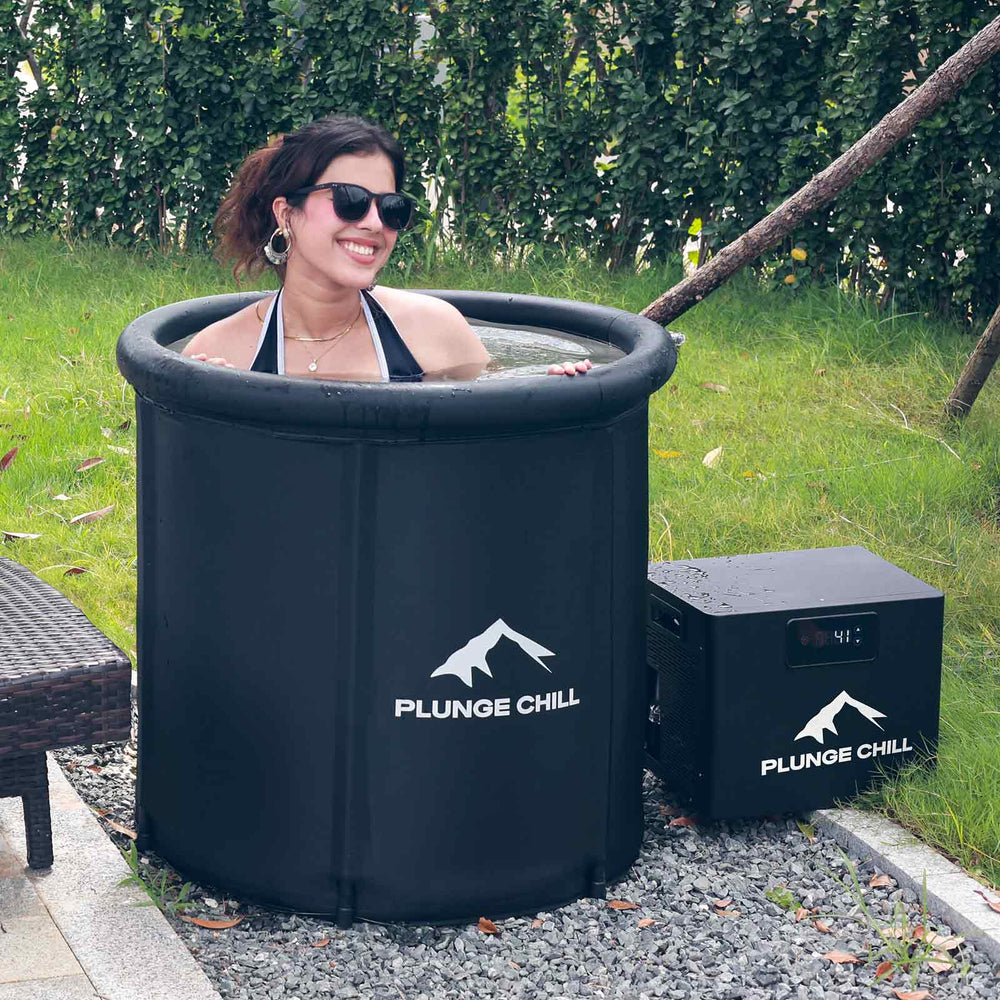
Cold exposure is a powerful tool when the goal is faster recovery, steadier energy, or simply building stress resilience. Bringing that stimulus into your backyard introduces variables most indoor guides skip: sun, wind, rain, freeze–thaw cycles, electrical safety, and biosecurity in colder water. Writing as a sports rehabilitation specialist and strength coach who also reviews cold‑plunge products, this guide focuses on what matters when a tub lives outside year‑round: materials that tolerate weather, insulation that holds target temperatures without runaway energy costs, filtration and disinfection that stay effective in cold water, and a placement plan that protects both the tub and the user. The emphasis is neutral and evidence‑based, with practical maintenance routines, buying criteria, and short comparisons grounded in manufacturer and public‑health sources.
Outdoor Cold Plunging: Why Water and Weather Matter
Water transfers heat far faster than air, which is why a two‑minute plunge can feel profound even when a cold shower feels manageable. Industry explainers note that immersion outperforms air exposure by a wide margin because conductive heat loss in water is dramatically greater; the upshot is that a weather‑resistant outdoor tub can deliver consistent doses without daily ice or guesswork (BlueCube Baths). That consistency can save time compared with ice baths, which often spike colder early and then warm quickly across successive uses.
From a training perspective, the target stimulus depends on the goal. Practical temperature ranges around 50–60°F often suit soreness reduction and post‑workout recovery; slightly warmer ranges closer to 55–65°F can help many people settle the nervous system in the evening. Shorter, colder exposures in the 37–49°F range are better reserved for experienced users with a clear protocol and medical clearance (Fun Outdoor Living; Haven of Heat). Across those options, the outdoor environment is not a passive backdrop. Sunlight, wind, ambient temperature swings, and precipitation all influence water temperature stability, chiller runtime, and sanitation demands. Choosing a tub and setup that explicitly account for those variables is the difference between a reliable tool and a maintenance project.

What “Weather Resistant” Really Means
The phrase is more than a marketing badge. True weather resistance for an outdoor cold plunge brings together several domains: a shell and frame that tolerate UV exposure, precipitation, and freeze–thaw cycles; plumbing and fittings rated for outdoor use; a finish that stays non‑slippery when wet; fasteners and seals that do not degrade quickly in sunlight; and insulation that resists moisture intrusion while keeping conduction and convection in check. A fitted, insulated cover that actually blocks solar gain and debris is part of that system, not a nice‑to‑have.
Placement influences whether those features can do their job. Some premium manufacturers specifically require shade to keep warranties intact, a stipulation that is easy to overlook in online roundups. One example cited by outdoor design sources: shade placement is a warranty requirement for certain high‑flow systems to limit solar loading on the tub and components (Yardzen). Bringing power outdoors should consider a dedicated, code‑compliant circuit with ground fault protection and suitable weatherproofing, a point consumer‑facing pages also emphasize for their plug‑and‑plunge models that call for a 120V 15A dedicated outlet (Plunge).

Materials and Construction for Outdoor Durability
The shell material sets the baseline for longevity, cleaning ease, temperature stability, and the level of insulation and framing you will need to add. Stainless steel, fiberglass/acrylic, and polyethylene are proven options for outdoor use; wood, concrete, and tile can work with the right sealing and insulation plan. Manufacturers outline trade‑offs clearly: stainless steel is corrosion‑resistant and hygienic but can shed temperature quickly without added insulation; fiberglass and acrylic hold temperature better and resist cracking when properly supported; polyethylene is rugged and budget‑friendly with decent insulation and low upkeep (Design & Health; Sun Home Saunas). Wood‑clad tubs look natural and can insulate reasonably well but need diligent sealing and drying; seals and exterior finishes degrade faster outdoors if water is left to pool, so wiping exteriors and protecting against standing moisture extends their life (ColdChiller).
Material |
Weather Resistance |
Temperature Hold (baseline) |
Cleaning & Hygiene |
Cost Tier |
Notes for Outdoor Use |
Stainless steel (304/316) |
Excellent structural durability; needs UV‑stable trim |
Loses heat faster unless insulated |
Non‑porous, easy to sanitize |
Premium |
Add insulation to shell and lid; specify slip‑resistant textures or mats (Sun Home Saunas; ColdChiller) |
Fiberglass/acrylic |
Very good; stable with proper support |
Strong inherent insulation |
Smooth, non‑porous; easy cleaning |
Mid to premium |
Good for indoor/outdoor; underside insulation helps prevent condensation indoors (Design & Health; Yardzen) |
Polyethylene |
Good impact resistance; UV stability varies by grade |
Decent insulation |
Low‑maintenance; can show wear over time |
Budget to mid |
Durable for portable setups; check UV rating and cover consistently (Design & Health) |
Wood‑clad with liner |
Aesthetically strong; needs diligent care |
Varies with liner and added insulation |
Exterior must be kept dry; liner easy to wipe |
Mid to premium |
Seal, dry after rain, and cover; protect seams and deck boards from pooling (ColdChiller) |
Concrete/tile |
Structurally durable |
Poor inherent insulation |
Tile/grout need periodic upkeep |
Premium custom |
Requires liner/insulation to control temperature and energy cost (Design & Health) |
As a rule of thumb, prioritize smooth, non‑porous surfaces in the water path to simplify disinfection and reduce biofilm risk, choose UV‑stable exterior finishes, and spec fasteners and seals rated for outdoor duty.
Insulation and Thermal Control in the Real World
Insulation drives two outcomes that matter outdoors: holding a narrow temperature band despite ambient swings and keeping chillers from cycling excessively. Layering closed‑cell foam on the shell, rigid foam boards around an enclosure, reflective foil as an outer radiant barrier, and pipe wrap on hoses reduces heat gain in summer and heat loss in winter while cutting condensation that can drip onto decks and create slip hazards. Insulating the lid and sealing the rim are as important as insulating the walls; an uninsulated lid is often the largest heat path (Design & Health).
A few product categories and field examples underscore the practical effect. Thick, multi‑layer shells marketed to daily plungers can keep water colder for longer with less ice in ice‑assisted setups, though duration still varies by climate and exposure; checking water before adding ice prevents waste and overshooting the goal temperature (SaunaBox). Budget DIY tanks wrapped in reflective foil with foam inserts and a snug lid can hold water in the high‑40s to low‑50s °F during mild weather with periodic ice top‑ups; a builder report described adding a 20‑lb ice bag every couple of weeks and rotating frozen water jugs every few days around 70°F ambient to stabilize a 100‑gallon stock tank, with plunges several times per week (Functional Decor). Refrigeration‑based systems simplify all of this: high‑quality chillers commonly hold water between about 37–50°F with digital controls, and built‑in insulation reduces duty cycles and operating cost when the tub is shaded and covered (Haven of Heat; Design & Health).
Two outdoor nuances rarely covered in product pages deserve attention. First, sunlight can push water several degrees warmer by midday. Covers with UV‑reflective outer layers and strong tie‑downs reduce that solar gain and debris load; consumer listings commonly showcase zip‑up, multi‑layer covers sized for round and barrel‑style tubs, with silver outer layers to reflect heat. Second, housing chillers in cramped storage boxes to hide them can backfire by starving airflow and forcing thermal shutdowns; manufacturers and insulation guides alike emphasize keeping ventilation clear around condensers to preserve efficiency and avoid overheating (Design & Health).
A practical caution about uncertainty is warranted here. Wind likely increases convective heat loss at the water surface, which can change how quickly a tub warms or cools on exposed patios, but quantitative data are scarce in consumer sources. A simple verification step is to log water temperature drift on windy and still days with and without a portable windbreak in the same location.

Hygiene and Public‑Health Considerations Outdoors
Cold helps but does not sanitize. Public‑health briefings point out a counterintuitive reality: colder water can inhibit disinfectant efficacy, so relying on temperature alone is risky. Common filters around 20 microns will remove hair and skin cells, but protozoa such as Cryptosporidium and Giardia are smaller and require far finer filtration—on the order of about a micron or less—to be reliably captured. Biofilms, especially Pseudomonas, can establish in recirculating systems when flow is intermittent or disinfection is incomplete (NCCEH). For shared or commercial contexts, continuous recirculation with a residual sanitizer such as chlorine or bromine is preferred even if UV or ozone is also used. Public‑health frameworks for cold plunge pools treat them similarly to spas in requiring rapid turnover and explicitly advise against systems that rely on UV plus hydrogen peroxide without a residual disinfectant in the water (NCCEH; CDC).
Home users with stand‑alone, non‑filtered tubs should treat them like hydrotherapy tanks: drain, clean, and disinfect between users, and adopt pre‑plunge showering, exclusion of participants with diarrhea or open wounds, and strict time and temperature limits with clear cold‑shock warnings (NCCEH; CDC). That approach reduces the risk of waterborne pathogens and balances the reduced disinfectant efficacy at lower temperatures.
For private outdoor use, an effective routine blends mechanical filtration, a sanitizing method that leaves a measurable residual in the water, and a simple schedule. Manufacturer guidance often targets filter changes every one to two months depending on use and water quality, with periodic liner wipes and full cleanings on a consistent cadence (Haven of Heat; ColdChiller). Avoid harsh agents like chlorine bleach on sensitive liners and exterior woods; mild soapy water with a soft cloth is usually sufficient for post‑use wipe‑downs (ColdChiller).
Performance Benchmarks: Temperatures, Time, and Safety
There is no single perfect temperature. For most recovery goals, practical water temperatures around 50–59°F with sessions of about two to five minutes are an evidence‑informed starting point; advanced users who want deeper chills below 50°F should cap time more conservatively around one to three minutes and progress gradually. Beginners often do well starting near 60–65°F for a minute or less before stepping down a few degrees or adding time, one variable at a time. Across all categories, the signs to exit immediately include sharp pain, dizziness, or uncontrollable shivering, and anyone with cardiovascular disease, uncontrolled hypertension, diabetes, Raynaud’s, or other medical concerns should consult a clinician first (Fun Outdoor Living). A broad target range used by chiller makers and practice guides is roughly 37–50°F for effective cold plunging, with the lower end appropriate only for experienced users who are medically cleared (Haven of Heat).
Editorial summaries of the science remain mixed. Balanced overviews note that acute mood and alertness effects are common, soreness reduction is supported in many contexts, and metabolic and immune claims are promising but not conclusive. The quality of evidence varies across outcomes; treating cold immersion as one component of a broader recovery and stress‑management program rather than a cure‑all remains prudent (Field Mag).

Power, Placement, and Weatherproofing the Setup
An outdoor plunge is a small installation project. Plan for a dedicated, properly grounded circuit sized to the chiller’s draw; many consumer systems specify a 120V 15A dedicated line and expect no other devices to share that circuit. Where possible, route power through outdoor‑rated, covered receptacles with ground‑fault protection and avoid running long extension cords. Position the tub on a flat, well‑drained, and wind‑sheltered surface with enough clearance to access filters, drains, and the chiller’s air path. Provide easy ingress and egress with non‑slip steps or rails, adequate lighting for night use, and a cover solution that can be secured against wind gusts (Plunge; RH Tubs; Garage Gym Reviews).
In four‑season climates, freezing needs specific attention. Keeping water moving, insulating lines, and using an insulated, well‑sealed cover reduce freeze risk. Where a chiller or pump provides freeze‑protection cycles, enable them before the first hard freeze and keep ventilation paths clear so the condenser does not overheat during protective runs. The idea of adding a small auxiliary circulation pump when the main chiller cycles off to limit ice formation sounds plausible but is not validated by manufacturers. Verify by consulting your model’s manual or customer support before adding devices to a closed system.
A Practical Buying Framework for Outdoor Use
One helpful way to evaluate outdoor tubs is to combine a features checklist with a value lens. A clinic‑style rubric that echoes the “5 Cs” proposed by one retailer—cleanliness, cooling efficiency, construction and craftsmanship, cosmetics, and cost—maps well to what outdoor buyers need (ReGen Total Wellness). Independent roundups add recurring criteria: active chilling versus ice only, minimum achievable temperature, size and capacity, insulation quality, filtration and sanitation approach, power and drainage logistics, and warranty and service support (Garage Gym Reviews; Inergize Health).
Across those lenses, the essential question is not how cold a system can go but how well it holds your intended temperature in your actual location. Shaded placement with a fitted, insulated cover and ventilated chiller enclosure nearly always yields a better daily experience than a bare tub in full sun, regardless of the headline horsepower or minimum temperature on the spec sheet. While aesthetics and footprint matter—particularly on apartment patios or compact decks—do not trade away filtration access, drain reach, or power safety to achieve a tight visual.
Outdoor Feature |
Why It Matters |
What Good Looks Like |
Source examples |
Insulated shell and lid |
Cuts chiller runtime and energy use |
Thick, multi‑layer shell with snug, insulated cover that blocks solar gain |
Design & Health; SaunaBox |
Filtration and sanitation |
Keeps water clear and reduces pathogen risk |
Mechanical filtration plus a residual sanitizer; UV/ozone as adjuncts |
NCCEH; Haven of Heat |
Dedicated power and ventilation |
Prevents nuisance trips and chiller overheating |
120V 15A dedicated circuit with clear condenser airflow |
Plunge; Garage Gym Reviews |
UV‑stable exterior |
Slows cosmetic and material degradation |
UV‑resistant finishes and covered placement in sunny regions |
Sun Home Saunas; Yardzen |
Service and warranty |
Reduces downtime and lifetime cost |
Multi‑year structural coverage with accessible parts and filters |
Yardzen; Inergize Health |
Capacity, Ergonomics, and Fit
Outdoor tubs float between compact upright barrels and long horizontal forms. A comfortable fit reduces bracing and helps you relax breathing. Taller users benefit from extended length or deeper upright designs; some premium models advertise accommodating individuals around 6 ft 6 in and above, while compact barrels make efficient use of space and pair well with backyard saunas (Yardzen). For shared outdoor spaces, prioritize a lid height and handle scheme that makes opening and closing smooth for different users, and verify the step or bench geometry supports safe entry and exit when surfaces are wet.
Filtration and Water‑Care Schedule
Even in cold water, a simple plan keeps the tub pleasant. A workable pattern for outdoor home use is to wipe the liner after sessions as needed with a soft cloth and mild soapy water, inspect and clean the skimmer or pre‑filter weekly, replace main filters every one to two months depending on use and water quality, and fully drain and disinfect on a cadence that matches your sanitizer approach and bather load. Several manufacturers suggest changing water after roughly 10–15 uses for non‑filtered setups and more extended intervals for fully filtered systems; avoid strong acids, alkalis, or bleach on liners and wood exteriors to preserve seals and finishes (Haven of Heat; ColdChiller). When using chemical sanitizers, keep pH in a typical spa range such as 7.2–7.8, monitor sanitizer residuals, and log results along with filter changes, seasonal inspections, and any winterizing steps. Simple recordkeeping is underrated outdoors because weather conditions, pollen, and leaf litter vary fast through the year (RH Tubs).
Warranty, Shipping, and Service Reality
Outdoor use stresses components, so warranty specifics matter. Some premium models back structural components for multiple years, while entry options may offer around one year, often with a separate policy on chillers. Outdoor delivery details also vary. Consumer‑friendly offerings sometimes include first‑level placement and debris removal but do not include setup or electrical connection. Before purchasing, verify lead times, power requirements, dimensions through doors and gates, and any warranty conditions tied to placement—such as shade requirements or cover use when the tub is not in use (Yardzen; Plunge; Garage Gym Reviews).
When DIY Outdoors Makes Sense
A budget build can be surprisingly effective in the right climate and with careful insulation and a well‑fitted lid. Reports from makers show that a 100‑gallon stock tank wrapped in reflective foil with foam inserts and an insulated, flush lid can maintain water in the high‑40s to low‑50s °F during mild seasons with periodic ice and frozen‑jug rotation, coupled with regular drainage and sanitization (Functional Decor). For hot summers, dedicated water chillers outperform bags of ice on both consistency and convenience; experienced DIY users repeatedly note that chillers reach and hold water in the 50s and 40s °F even in hot weather, while ice requires frequent manual intervention and warms unpredictably between sessions. Community forum and group discussions align on this practical point. If you go the DIY route outdoors, plan for a weatherproof location with a rain‑sheltered, ventilated chiller stand, a GFCI‑protected circuit, a cover that ties down in wind, and a clear, written sanitation routine.

Reconciling Conflicting Advice
Guides occasionally disagree on ideal temperature and time. Retailer and practice guides often emphasize a therapeutic sweet spot around 50–59°F for a few minutes, while some safety briefs and editorial recaps cite broader durations ranging up to the low‑teens minutes across a week. Differences typically come from definitions and contexts: whether time refers to weekly totals versus single dips, whether participants are novice or experienced, and whether the recommendation targets elite athletes post‑exercise or general users seeking stress management. Methodologies, climates, and water movement also vary across sources, making exact comparisons tricky (Fun Outdoor Living; Haven of Heat; Field Mag; NCCEH).
Another place sources diverge is sanitation emphasis. Retail pages sometimes present UV or ozone systems as complete solutions, while public‑health guidance insists on a measurable residual disinfectant in the water and rapid turnover in commercial or shared settings. This difference reflects different settings, risk thresholds, and regulatory frameworks; when in doubt—and especially when multiple users share an outdoor tub—err toward a conservative approach with both filtration and a residual sanitizer (NCCEH; CDC).
A final under‑the‑radar consideration is sun exposure and warranty coverage. Outdoor design roundups note that at least some manufacturers stipulate shade placement as a warranty condition. Verify by reading warranty PDFs and contacting support before you site a tub in full sun; add a shade sail or pergola if needed (Yardzen).

Outdoor Use Cases and Setup Priorities
A small city patio with neighbors nearby favors a quiet, well‑insulated, plug‑and‑plunge unit with a fitted cover, a ventilated chiller that does not exhaust toward a seating area, and a sanitation approach that minimizes chemical odors. A suburban backyard that sees winter snow should put freeze‑protection logic, lid insulation, and shaded placement near the top of the list, with a drainage route that will not ice over walkways. Clinic or team patios with back‑to‑back sessions need active chilling with a documented residual sanitizer, faster turnover and filter access, non‑slip ingress with rails, lighting for evening use, and staff training on records and testing (Inergize Health; NCCEH; Garage Gym Reviews).
Frequently Asked Questions
How cold should an outdoor cold plunge be for recovery rather than shock training? A practical range for post‑workout recovery is often near 50–59°F for two to five minutes. Beginners can start warmer, around 60–65°F, and step down or extend time gradually, one variable at a time. Advanced sub‑50°F exposures belong to experienced users with medical clearance and a clear protocol (Fun Outdoor Living; Haven of Heat).
Do I need a chiller outside, or can I use ice? Ice can work in mild shoulder seasons with a well‑insulated tub and lid, but outdoor temperature and sun make results inconsistent. Dedicated chillers maintain setpoints in the 40s and 50s °F reliably, even in hot weather, and reduce daily setup time. Experienced DIY communities consistently report stronger outcomes with chillers compared with bagged ice once the weather warms (Haven of Heat; community reports).
What filtration and sanitation approach is reasonable for a backyard tub? For private, repeated use, mechanical filtration with regular filter changes and a sanitizer that leaves a residual in the water work well. UV or ozone can be valuable adjuncts, but public‑health sources caution that residual disinfectants remain important, especially when more than one user shares the tub. Drain and disinfect between users if your setup does not recirculate and sanitize water continuously (NCCEH; CDC; Haven of Heat).
How often should I change filters and water outdoors? Many manufacturers suggest filter changes about every one to two months depending on use and water quality, with ongoing wipe‑downs and periodic deep cleanings. Some care guides advise changing water every 10–15 uses in non‑filtered setups. Adjust that cadence when pollen, dust, or debris load spikes outdoors, and keep a simple log so you can see patterns (Haven of Heat; ColdChiller).
What electrical and placement details should I check before delivery? Confirm a dedicated, code‑compliant circuit sized to the chiller with ground‑fault protection, adequate shade if the warranty requires it, and a ventilated location that keeps condenser airflow clear. Plan a flat, well‑drained footing, safe ingress and egress with non‑slip steps or rails, and a secure cover that can be tied down in wind. Some delivery services include first‑level placement and debris removal but do not do electrical setup (Plunge; Yardzen).
Can I leave my plunge outside through winter? Many outdoor‑rated systems can remain outside year‑round if you keep water moving, enable freeze‑protection logic, insulate plumbing, and use a sealed, insulated cover. If you plan to winterize and drain, follow the manufacturer’s sequence to protect pumps and seals. The idea of adding a small auxiliary circulation pump when the main chiller is idle to prevent ice formation is plausible but not manufacturer‑validated. Check your model’s manual or support line before modifying circulation.

Takeaway
Weather‑resistant outdoor plunges reward a systems mindset. The winning combination is not a single spec but the way materials, insulation, filtration, disinfection, power, and placement work together to keep water at a reliable temperature and quality in your real climate. Start by matching material and insulation to sun and wind exposure, insist on a filtration and sanitation plan that remains effective in cold water, power the system safely with a dedicated outdoor circuit and ventilated chiller location, and protect the investment with shade and a fitted, insulated cover. For training outcomes, choose temperatures and times that fit your goal—steady doses at moderate cold beat sporadic extremes—and build a maintenance routine you can sustain. With those pieces in place, an outdoor plunge can become a dependable part of recovery and stress‑management rather than an ongoing project.
References
BlueCube Baths; ColdChiller; Design & Health; ReGen Total Wellness; RH Tubs; Haven of Heat; Fun Outdoor Living; NCCEH; CDC; Plunge; Sun Home Saunas; SaunaBox; Yardzen; Garage Gym Reviews; Field Mag; Desert Plunge; Amazon Marketplace Listings.
- https://interactive.cornish.edu/virtual-library-Documents/chest-freezer-cold-plunge-diy.pdf
- https://old.ntinow.edu/uploaded-files/FvYHkD/1S9025/BenefitsOfHotColdTherapy.pdf
- https://admisiones.unicah.edu/uploaded-files/FvYHkD/1OK025/benefits__of_hot_cold-therapy.pdf
- https://www.highpoint.edu/blog/2025/02/hpu-alumni-launch-business-with-support-from-professional-athletes-veteran-nonprofit/
- https://desertplunge.com/?srsltid=AfmBOoo7Is-Dx-BjCfPaKbI3f_-d6A-WTZzSHh4zmedntIDrs3HG04ne
- https://www.garagegymreviews.com/best-cold-plunge-tub
- https://coldchiller.com/cold-plunge-bathtubs-insulation-design/
- https://www.fieldmag.com/articles/cold-plunge-guide
- https://plunge.com/products/plunge-all-in?srsltid=AfmBOoou3w5emJWZIIeuMCUlIUXEcdEYQCVmT71dPzfUgTCyzRU8gISf
- https://saunabox.com/products/plungebox-pro?srsltid=AfmBOorVKctYS6dNooI9ClZjCruwZRzl0UfEK7jDnmpn5No31V7TKKR_