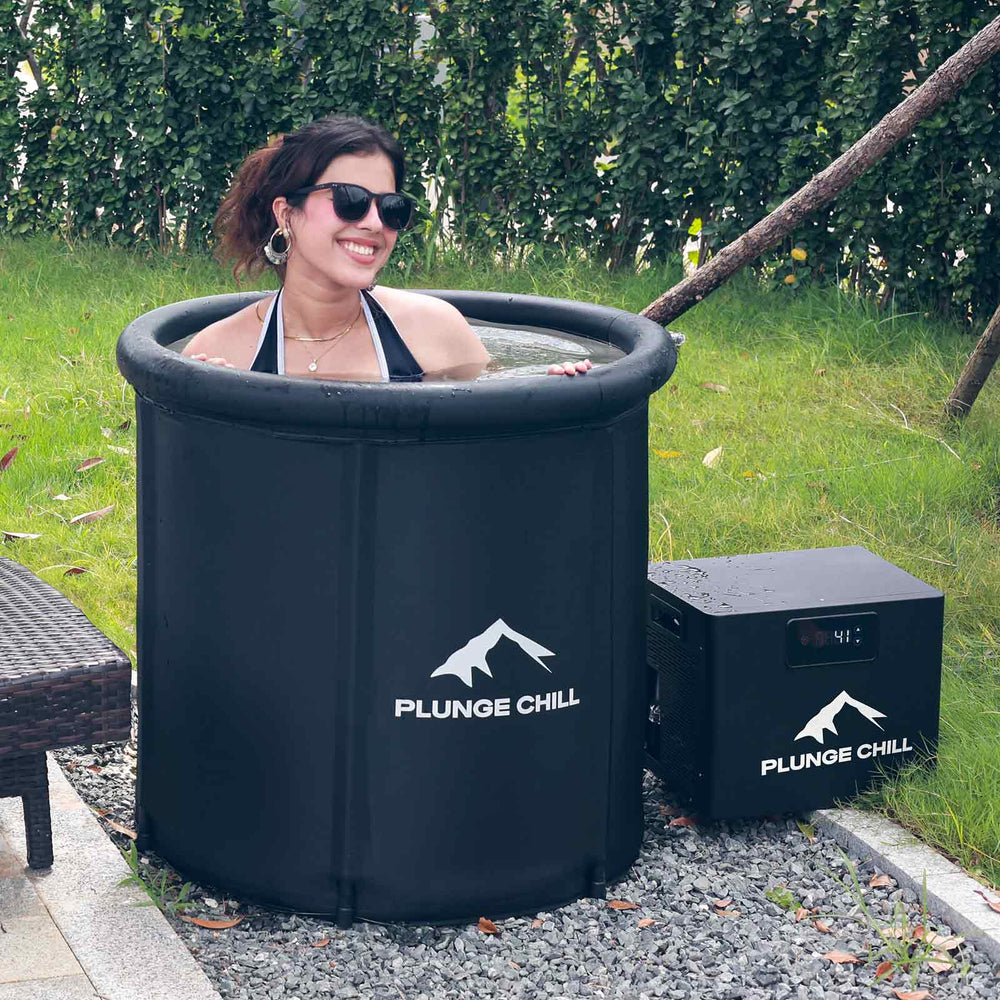
Cold plunges and ice baths have quickly moved from elite training rooms to everyday fitness routines. Athletes, gym-goers, and wellness enthusiasts are using cold water immersion to reduce soreness, speed up recovery, and improve mental resilience.But with so many options available—from DIY ice baths to full cold plunge systems with chillers—it can be difficult to know which setup is right for you.In rn how to choose the best ice bath or cold plunge based on this guide, you’ll leayour goals, budget, space, and recovery needs.
Ideal Ice Bath and Cold Plunge Temperatures
People often use the terms ice bath and cold plunge interchangeably, but they usually refer to different ice bath temperatures and experiences. In most recovery routines, a cold plunge is kept slightly warmer, typically around 50–59°F, allowing for longer and more comfortable sessions. An ice bath, on the other hand, usually targets colder ice bath temperatures of about 40–50°F, creating a stronger stimulus and requiring shorter exposure times.
This difference matters more than many people think. Lower ice bath temperatures mean the body cools faster, which affects how long you should stay in the water, how carefully the temperature needs to be controlled, and how often you can safely repeat the session. In practice, most coaches and recovery specialists recommend starting conservatively and adjusting based on tolerance.
Typical guidelines follow a similar pattern across many training programs. Beginners often start at the warmer end of common ice bath temperatures—around 55–59°F for two to five minutes. More experienced users may stay five to ten minutes, while most experts suggest keeping a single session under 15 minutes regardless of temperature.
Research summaries from organizations such as the Mayo Clinic and The Ohio State University note that the benefits of cold water immersion can vary depending on the workout, timing, and recovery goals. However, the commonly recommended ice bath temperature ranges above remain practical guidelines for most people exploring cold therapy.
When Ice Baths and Cold Plunges Help Recovery
The physiology is straightforward. Cold shock hits first with a gasp, an autonomic jolt, and vasoconstriction. Tissue temperature drops, metabolic activity slows, and pain can be muted. When you exit, rewarming drives vasodilation; circulation rebounds and perceived soreness often improves. Multiple summaries (Ice Barrel, Ohio State Health) acknowledge these mechanisms alongside caveats. Endurance‑oriented athletes sometimes report better next‑day legs with post‑session immersion, while consistent use immediately after lifting can dampen muscle‑building signals and long‑term strength or hypertrophy gains according to Ohio State Health and Mayo Clinic Press.
Timing relative to training is where many guides contradict each other. Some practical sources suggest plunging immediately or within two hours after hard work for perceived soreness reduction, while others advise waiting four hours or more—and up to 24–48 hours—after strength sessions to preserve adaptive inflammation. The discrepancy likely reflects different definitions of “recovery,” varied training status, and the endpoints measured across studies. Studies emphasizing molecular signaling and hypertrophy adaptations often find blunting effects when cold follows lifting too closely. Summaries focused on endurance or tournament scheduling favor perceived soreness reductions and performance preservation the next day.
One underappreciated nuance from Science for Sport: immersion can reduce ankle and joint stiffness for up to 48 hours. In sports where reactive stiffness powers rapid ground contacts and elastic return—think sprints, jumps, and striking—this can trade off against quickness even if jump height metrics look fine. For late‑stage peaking or pre‑competition days where “snap” matters, that stiffness detail should factor into timing.
Another overlooked detail is body size and composition. Smaller, leaner athletes tend to cool faster than larger athletes with more insulation, which means equal time and temperature do not equate to equal dose. Science for Sport highlights this body‑type effect, which is rarely addressed in consumer recommendations and should inform both your target temperature and your session length.

Modalities at a Glance
|
Modality |
Typical Water Temperature |
Typical Duration |
Primary Use Case |
Notes |
|
Cold plunge |
50–59°F |
5–15 minutes |
Soreness relief, repeatable recovery, mood/focus |
Accessible starting point; good for regular use when programmed well (Exinda Group, Ohio State Health). |
|
Ice bath |
40–50°F |
5–10 minutes |
Deeper stimulus when athletes tolerate colder water |
Shorter exposures; advanced users sometimes approach high 30s°F but should be cautious (Coldture). |
|
Hot bath |
100–108°F |
15–45 minutes |
Relaxation, stiffness relief, late‑phase discomfort |
Useful ≥72 hours after muscle damage; may worsen swelling if used too soon (IceTubs). |
|
Contrast hot/cold |
Alternating hot and cold |
Short cycles, total 20–30 minutes |
Circulation stimulus, soreness relief |
Comfort‑oriented; evidence mixed but pragmatic for perceived recovery (IceTubs, Ice Barrel). |
How to Choose the Best Ice Bath Setup
Selecting a tub is part physiology, part logistics. Define your primary use case, then choose hardware that makes that use case effortless.
Temperature Control and Consistency
As a reviewer, I see temperature control determine whether a plunge becomes a sustainable habit. A chiller‑integrated tub holds a precise setpoint across seasons and allows fast turnover between users without hauling ice. Exinda Group and Coldture emphasize that chillers deliver repeatability you cannot get with bags of ice, especially in warm climates. If you rely on ice, plan for active management. A one‑part‑ice to three‑parts‑water mix is a common starting point, stirring periodically for uniform temperature and adding larger blocks for slower melt. Shade matters outdoors; direct sun elevates water temperature, accelerates ice consumption, and forces more water changes (Coldture).
One practical note from Urban Ice Tribe is that water quality influences the subjective feel of cold and the stability of your temperatures day‑to‑day. Cleaner water appears to “hold cold” more consistently than dirty water, presumably via better heat transfer across the boundary layer. To check this at home, log your setpoint drift over a week before and after a deep clean using the same starting temperature, and record how fast the water warms after each plunge.
Size, Ergonomics, and Placement
Fit matters for coverage and safety. Submerging to the collarbone maximizes systemic effects; a well‑sized tub prevents awkward limb positions. A practical minimum internal footprint for average adults is roughly 65 inches long by 33 inches wide by 25 inches high, giving room to settle, rotate, and exit safely without cramping (Wellbeing Magazine). Indoor placement favors tighter temperature control and longer equipment life, while outdoor placement offers more space and a pleasant environment but demands better insulation and sun management. Plan for a dry, non‑slip entry and exit path and ensure steps or a platform if the rim height is tall.
Materials and Build
Materials influence insulation, durability, and aesthetics. Fiberglass‑reinforced acrylic insulates well and cleans easily with minimal maintenance. Stainless steel resists rust, looks premium, and excels outdoors when paired with good insulation; cold steel can feel sharper at first contact. High‑density plastics (HDPE) balance cost and durability and are common in hard‑sided plunges. Eco‑forward designs, including cork components, add insulation with a warm touch and reduce environmental footprint (Recover; Wellbeing Magazine). Double‑walled, fully insulated shells reduce condensation indoors and buffer ambient heat or cold outdoors.
Filtration, Sanitation, and Maintenance
Sanitation dictates daily friction. Some chiller systems ship with filtration and sanitation solutions so you can change water less often while keeping clarity high (IceTubs notes systems that pair temperature control and sanitation). Certain consumer units tout self‑cleaning or multi‑stage purification to minimize water changes (Renu Therapy). Regardless of branding, you will need to keep the water clean to maintain consistent cooling and to avoid skin irritation. A cover or lid reduces debris and heat gain, and a reliable floating thermometer helps verify that setpoint equals reality.
Portability and Power
Your travel and space constraints lead the choice. Foldable and inflatable tubs are easy to store and set up, and they work well when paired with ice. Hard‑sided builds are heavier but more durable and heat‑stable. Fully integrated chiller tubs sacrifice portability for consistency: if you have dedicated space and want set‑and‑forget operation, they are the simplest way to create a repeatable protocol.
Setup Types Compared
|
Setup Type |
Temperature Control |
Maintenance |
Portability |
Best For |
Limitations |
|
Foldable/portable tub + ice |
Manual; varies with ice and weather |
Simple; frequent water changes |
High |
Beginners, travel, occasional use |
Inconsistent temps; labor and ice costs add up (Recover). |
|
Inflatable tub + ice |
Manual; slightly better heat retention with covers |
Moderate; watch punctures and seams |
High |
Indoor/outdoor flexibility |
Temperature swings; durability depends on build (Recover). |
|
Hard‑sided HDPE/FRP |
Holds cold better; can pair with chiller |
Low to moderate; easy cleaning |
Medium |
Daily users who want durability |
Needs ice without a chiller; heavier footprint (Wellbeing Magazine). |
|
Stainless tub + chiller |
Precise setpoint in all seasons |
Moderate; filtration and sanitation reduce water swaps |
Low |
High‑frequency use, teams, clinics |
Higher upfront cost; heavier install (Exinda Group; IceTubs). |
|
DIY stock tank + ice |
Manual and seasonal |
Low; simple hardware |
Medium |
Budget setups, garages |
Temperature variability; more ice logistics. |
|
Natural cold water |
Seasonal; nature sets the temp |
Minimal gear |
Variable |
Cold climates, open‑water access |
Safety risks; currents and uncontrolled temperatures (Mayo Clinic Health System). |
Feature Priorities by Goal
|
Goal |
Priority Features |
Temperature Target |
Protocol Notes |
|
Tournament blocks or back‑to‑back training days |
Fast, precise temperature control; easy sanitation |
50–59°F |
Use post‑session for pain control and next‑day readiness; consider brief daily use during dense blocks (Ohio State Health; Ice Barrel). |
|
Strength and hypertrophy phases |
Adjustable setpoint and timer; scheduling flexibility |
50–59°F or defer |
Delay immersion 24–48 hours after lifting or use on rest days to avoid blunting adaptations (Ohio State Health; Mayo Clinic Press). |
|
Endurance blocks and heat management |
Reliable full‑body coverage; quick turnover |
50–59°F |
Use after sessions to reduce soreness; pre‑cooling for hot conditions can help comfort and performance (Ice Barrel referencing marathon data). |
|
Mood/focus and resilience |
Comfortable entry/exit; stable temperature |
50–59°F |
Brief morning exposures aim for alertness; non‑training days are simplest (Coldture; Mayo Clinic Press). |
|
Rehab or high pain days |
Gentle temperatures; safe ergonomics |
54–59°F |
Start warm and brief; never force duration; monitor skin and sensation (Ice Barrel; Ohio State Health). |
Safety, Contraindications, and Aftercare
Risk management is straightforward. Never plunge alone when you are new to cold-water immersion. Cold shock triggers a sharp rise in breathing rate, heart rate, and blood pressure, and these reactions matter if you have cardiovascular disease, hypertension, neuropathy, or other medical conditions; clinics recommend speaking with a healthcare professional before starting if you have any concerns (Ohio State Health; Ice Barrel). Stay within the basic duration limits noted earlier, keep your head above water, and exit slowly since numbness can reduce strength and coordination.
Aftercare should be gradual. Dry off, get dressed, and rewarm naturally. Immediate hot showers can be jarring and may briefly worsen lightheadedness; many coaches prefer ambient rewarming with warm clothing and a warm drink, then normal movement over the next 20 minutes (Ice Barrel, TH7 BodyLab). Breathing control makes the first minute more tolerable. Slow nasal breathing—steady inhales and longer exhales—tempers the stress response and helps you stay present without tensing against the cold.
Protocols and Timing Without Guesswork
Competing protocols can be reconciled with a few anchors. Ohio State Health’s educational guidance endorses immersion around 50–59°F for 10–20 minutes when the goal is post‑exercise recovery, while consumer‑side summaries and coaching practice often settle nearer to 10–15 minutes. Coldture points out that as little as approximately 11 total minutes per week, split across sessions, can be effective for some users. When strength or hypertrophy matter most, delay immersion for at least several hours and up to a day or two after lifting sessions. When next‑day readiness is the priority—tournament weeks, training camps, or consecutive matches—post‑session cold exposure is reasonable even on multiple days, especially if you keep temperatures moderate and durations brief.
One advanced detail from Science for Sport is that intermittent exposures—shorter bouts separated by short breaks—can reduce muscle temperature more than a single continuous bout at the same total time. That pattern is relevant if your goal is a robust local cooling effect. If your goal is simply a consistent, tolerable whole‑body dose for mood or soreness, a steady single immersion remains the simplest option.

Care, Cleaning, and Water Quality
Care requirements scale with your setup. Chiller‑integrated systems with built‑in filtration and sanitation keep daily friction low; you still need to wipe surfaces, monitor filter life, and follow the manufacturer schedule for water refresh. Ice‑based setups should adopt a simple hygiene routine: keep a lid on when not in use, rinse before and after sessions, and schedule regular water changes to avoid biofilm and skin irritation. Urban Ice Tribe’s practical emphasis on water quality is worth repeating. Cleaner water appears to deliver steadier temperatures and more predictable subjective cold; at minimum, it reduces the temptation to overcorrect with ice. To validate this at home, compare temperature stability across a week with and without fresh water and document your ice usage and perceived cold for the same starting setpoint.

Buying Considerations and Value
A straight cost comparison between ice and a chiller favors ice at checkout and a chiller over time. Chillers shift your cost into the initial purchase and modest ongoing power and filter costs, while ice‑only setups impose a recurring expense in time and materials, particularly in warm climates. Warranty and service support matter for chiller units, pumps, and electronics; reputable vendors publish coverage terms and parts availability (Recover; Renu Therapy). Accessories save headaches. Covers limit debris and heat gain, steps allow safe entry and exit, and a clear, water‑resistant floating thermometer eliminates guesswork. Indoors, double‑wall insulation reduces condensation; outdoors, a shaded footprint reduces heat gain and ice consumption (Coldture; Wellbeing Magazine).

Two Places Sources Disagree—and How to Think About It
Disagreement one: whether daily post‑workout cold plunges are desirable. High‑level summaries from Mayo Clinic Press and Ohio State Health warn that frequent post‑lift immersion can blunt muscle and strength gains. Practical guides from coaching and consumer brands emphasize reduced soreness and next‑day readiness. The difference likely stems from endpoints. If your target is long‑term hypertrophy or maximal strength, the caution applies. If your target is a dense training block or rapid turnaround, the soreness‑focused logic applies. Periodize accordingly.
Disagreement two: how cold counts as “best.” Consumer sources sometimes imply “colder is always better.” Research and practical coaching converge on the idea that colder water amplifies stress without linearly adding benefit. Most users gain more total benefit from consistent exposures near 50–59°F than from sporadic plunges in the 40s°F. The “dose makes the poison” framing fits here, with temperature, duration, and frequency all components of total dose.
Product Selection Examples
Use these examples to translate your goals into hardware without overbuying.
If you are a powerlifter in a mass‑gain phase who enjoys cold exposure for mood benefits on off days, a hard‑sided tub you fill with cold tap water and a few bags of ice once or twice per week may be perfect. Keep temperatures around 54–59°F and sessions five to ten minutes, and avoid plunging immediately after lifting to preserve hypertrophy signals (Ohio State Health; Mayo Clinic Press).
If you coach a soccer team during summer two‑a‑days and need predictable, quick‑turn sessions for squads, a chiller‑integrated tub with built‑in filtration is the time‑saving choice. Hold 50–55°F, rotate athletes through five‑ to eight‑minute immersions post‑practice, and emphasize controlled breathing to reduce cold shock. When strength development is the day’s priority, delay immersion or skip it for that group and use it with athletes who need pain control today to train tomorrow.
If you are building an outdoor recovery corner, plan for a shaded footprint, a protective cover, and sufficient clearance for safe entry and exit. Stainless with robust insulation looks premium and tolerates weather well. If you prefer an eco‑focused interior aesthetic, cork‑accented designs offer natural insulation and lower environmental impact, with the caveat that you still need a chiller or diligent ice management to stay consistent (Recover; Wellbeing Magazine).
Frequently Asked Questions
Q: What temperature is best for general recovery if I am new to cold exposure? A: Start at the upper end of the standard recovery range, roughly 54–59°F, and keep sessions brief at two to five minutes. As tolerance improves, extend toward five to ten minutes without chasing extreme cold. Several educator and clinical sources agree on this practical range, including Coldture and Ohio State Health.
Q: Do cold showers work as well as full immersion? A: Cold showers are convenient and can reduce perceived stress and improve alertness, but they generally underperform full‑body immersion for tissue cooling and recovery effects. Ohio State Health notes cold showers can be helpful when immersion is not available, with less reliable physiological impact than a tub at a true setpoint.
Q: How often should I plunge? A: Many people succeed with one to three sessions per week, accumulating roughly 11–30 minutes across the week at moderate temperatures. If you are in a dense training block and need day‑to‑day relief, more frequent brief sessions are reasonable. If you are prioritizing hypertrophy, avoid routine post‑lift immersions and either delay by a day or reserve cold for non‑lifting days (Coldture; Ohio State Health; Mayo Clinic Health System).
Q: Is a chiller worth the cost compared with buying ice? A: If you plunge weekly year‑round, the chiller’s repeatability and time savings usually justify the upfront expense. Chillers hold temperature through seasons and across users, and they reduce the day‑to‑day labor and the variability that undermines protocols. Consumer and practitioner sources emphasize that precise control improves adherence and safety (Exinda Group; Coldture).
Q: What about using colder water for fat loss or metabolic benefits? A: Preliminary evidence suggests cold exposure can influence brown fat activity and glucose control, but strong human trials are limited. Consider any metabolic benefit a possible bonus rather than a primary reason to plunge. To explore responsibly, track body composition and glucose metrics over several months while keeping training and nutrition consistent (Mayo Clinic Press; Ohio State Health).
Q: Are there times when cold exposure is actually a bad idea? A: Yes. People with cardiovascular disease, uncontrolled hypertension, neuropathies, or cold sensitivity should consult a clinician before plunging. Do not plunge alone early in your practice. Avoid very cold open‑water environments with currents, and respect duration limits to reduce hypothermia and frostbite risk (Mayo Clinic Health System; Ohio State Health).
Takeaway
Selecting an ice bath is simpler when you decide what problem you are solving. If you need reliable soreness relief during dense training and you value predictable routines, prioritize a chiller‑integrated tub with solid insulation, basic filtration, a clear thermometer, and a safe entry and exit path. If you are curious, budget‑conscious, and not in a heavy block, start with a portable or hard‑sided tub, keep water in the 50s°F, and build tolerance slowly. Program cold around your training phase rather than on top of it. For hypertrophy and maximal strength, delay immersion after lifting; for tournament turnarounds or heat stress, use cold strategically when the goal is to feel and perform better tomorrow. Clean water, shade, and sensible durations make every setup work better. The best ice bath is the one that fits your goals, your space, and your daily reality well enough that you use it consistently and safely.
Reference Notes
This guide integrates practitioner and clinical summaries from Coldture, Exinda Group, Ohio State Health, Ice Barrel, Mayo Clinic Press, and Mayo Clinic Health System, plus coaching and brand guidance from IceTubs, Recover, Renu Therapy, Urban Ice Tribe, McMillan Running, and Soothing Company. Body composition, intermittent exposure effects, and joint stiffness insights are summarized from Science for Sport, and older case‑driven cautions about extremely cold protocols and performance trade‑offs are noted from PubMed Central. The tool will append links in a References section separately.
References
- https://www.mcphs.edu/news/physical-therapist-explains-why-you-should-chill-out-on-ice-baths
- https://www.marquette.edu/innovation/documents/arora_ice_bath_recovery.pdf
- https://sncs-prod-external.mayo.edu/hometown-health/speaking-of-health/cold-plunge-after-workouts
- https://pmc.ncbi.nlm.nih.gov/articles/PMC2938508/
- https://health.osu.edu/wellness/exercise-and-nutrition/do-ice-baths-help-workout-recovery
- https://mcpress.mayoclinic.org/healthy-aging/the-science-behind-ice-baths-for-recovery/
- https://th7bodylabs.com.au/how-long-should-you-ice-bath-for-optimal-recovery/
- https://www.mcmillanrunning.com/the-runners-guide-to-ice-baths/
- https://www.networldsports.com/buyers-guides/guide-to-ice-baths?srsltid=AfmBOoo22XuAFwqQ1p7deScx-K9EvZyPQGFiOuxwiK3BXqccIYztf6IT
- https://www.scienceforsport.com/science-of-ice-bath-recovery-for-fighters-in-depth-guide/?srsltid=AfmBOoq-7xSTnquWil31DfrKFnSxsyz3hKmuFJdichwlhFe5hRnaG40N