Summary: Targeted cold exposure to just one part of the body can still drive powerful whole-brain responses for alertness, mood, and stress control, but most evidence comes from whole-body cold-water studies, so protocols should be used cautiously and deliberately.
How Cold Water Rewires Brain Networks in Minutes
As a rehab specialist, what interests me most is not the goosebumps; it’s the brain.
In a controlled fMRI study of 33 adults, a single 5‑minute head‑out immersion up to the collarbones in about 68°F water led to a clear rise in positive affect—participants felt more active, alert, and inspired, with less distress and nervousness. Resting‑state scans before and after showed tighter communication between three major networks:
- default mode (self‑reflection and internal narrative)
- salience (threat detection and emotional tagging)
- frontoparietal (attention and executive control)
Instead of a vague “brain boost,” the study showed a specific integration between medial prefrontal, anterior cingulate, and parietal areas linked to attention and emotional regulation. Positive and negative affect shifted independently, supporting the idea that cold can selectively turn up “energized positivity” without simply dialing down negativity.
For athletes, that pattern maps well to what we want on game day: a brain that is switched on, present, and emotionally steady, not just “less tired.”

Why One-Sided Cold Still Hits the Whole Brain
Most lab work uses whole‑body or chest‑deep immersion, but neurobiology suggests that asymmetric or “one‑sided” cold (one arm, leg, or side of the torso) can still drive global brain effects.
Cold thermoreceptors in the skin—especially in the hands and face—are dense and highly sensitive. A psychiatry review highlights TRPM8 channels as key cold sensors, with far more cold than warm receptors in these regions. When you plunge just one forearm or one lower leg into 50–59°F water, those receptors send powerful afferent signals into the spinal cord, brainstem, and higher centers.
Stanford Lifestyle Medicine notes that even facial immersion alone can strongly activate the parasympathetic system via the diving reflex, slowing heart rate and promoting calm. In contrast, limb or torso cooling tends to drive a sympathetic surge (norepinephrine and adrenaline), which sharpens focus and vigilance.
Neurohormesis research and Huberman Lab–style protocols converge on the same picture: even relatively small skin areas in cold can produce large increases in norepinephrine and dopamine, along with β‑endorphin release. That means a “one‑sided bath” can be enough to:
- spike alertness and reaction readiness
- trigger a controlled stress response
- train prefrontal “top‑down” control as you choose to stay in the discomfort
Clinically, that’s why I often start anxious or pain‑limited patients with unilateral limb immersion rather than full plunges—it is neurologically meaningful but easier to tolerate.

Cognition, Mood, and Sleep: Separating Hype from Data
A recent systematic review in PLOS ONE pooled 11 randomized trials (3,177 adults) using chest‑level cold exposure at 45–59°F. The findings are more nuanced than social media claims:
- stress markers dropped meaningfully about 12 hours after cold exposure, not immediately
- inflammatory markers actually rose acutely right after and one hour post‑immersion
- evidence for broad cognitive and mood benefits from RCTs remained weak
A separate Physiology & Behavior study used 50°F waist‑to‑chest immersion for 10 minutes, three times per week for four weeks in 13 young adults. Results were promising but specific:
- faster processing speed and mental flexibility on Trail Making Tests
- fewer sleep disturbances and less worry
- no major change in overall happiness or well‑being scores
On the flip side, a systematic review of 18 experiments found that cold environments impaired cognition in most cases, especially during intense or prolonged cooling—processing speed and executive function tended to slow.
Nuance: almost all of these data come from bilateral or whole‑body immersion; applying them to one‑sided baths is a reasoned extrapolation, not a direct evidence base.
Programming One-Sided Cold into Training and Recovery
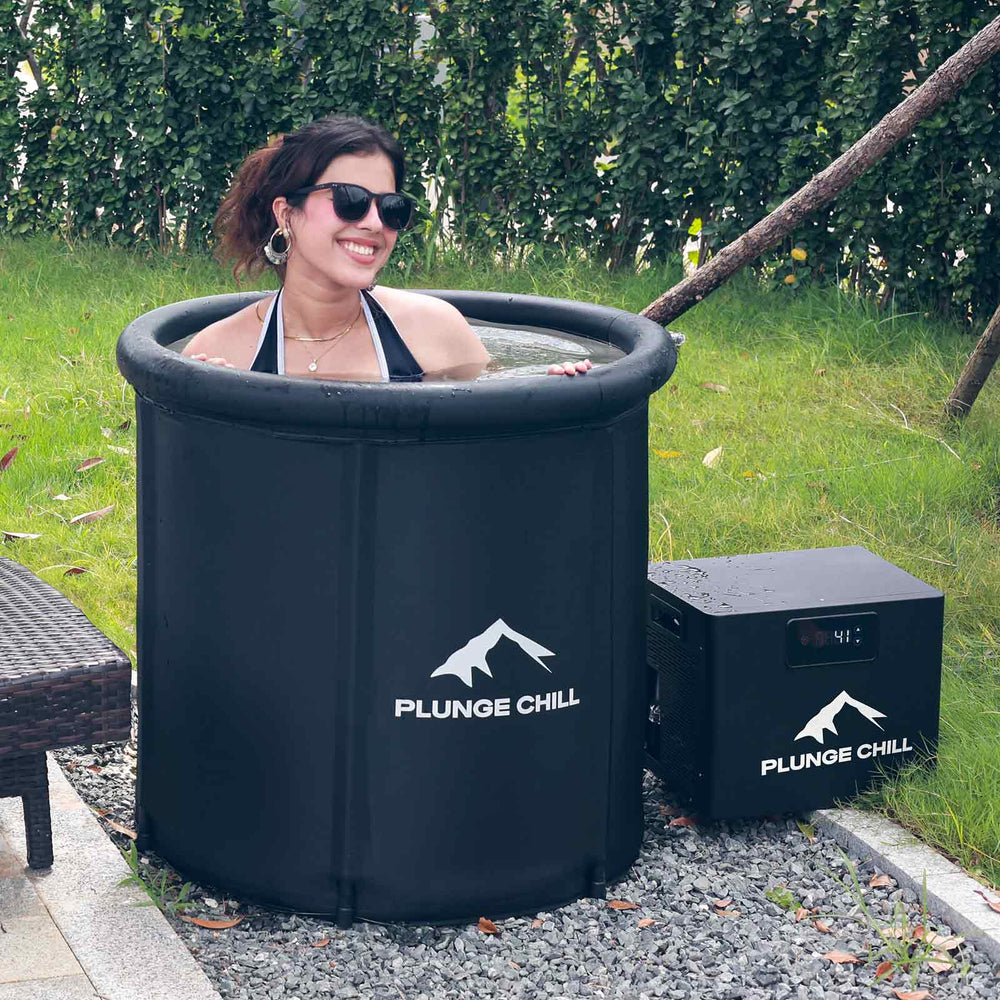
From a strength and rehab standpoint, one‑sided cold is a useful tool when you want brain and mood benefits with less whole‑body load. It also pairs well with modern plunge hardware that offers shallow, side‑entry designs or localized jet zones.
Key principles I use with athletes and clients:
- choose intensity, not misery: aim for water that feels “uncomfortably cold” yet tolerable for 1–3 minutes (around 50–59°F is usually sufficient)
- keep it short and targeted: one limb or one side of the lower body at a time; rotate sides if desired rather than staying in for long continuous bouts
- protect strength gains: avoid cold immersion—one‑sided or full—immediately after heavy lifting, as chronic post‑lift cold can blunt hypertrophy and strength adaptations in long‑term trials; use it before skills/film work or at least 6–8 hours after lifting
- respect medical red flags: anyone with cardiovascular disease, uncontrolled blood pressure, arrhythmias, Raynaud’s, or significant neuropathy should clear cold exposure with a physician first
Quick‑start one‑sided “brain activation” protocol I actually use with players on busy weeks:
- 2–3 sets of 1–2 minutes: one lower leg or forearm in 50–59°F water, 30–60 seconds rest in between
- pair with slow exhales: in for 3–4 seconds, out for 6–8 seconds to anchor the stress response
- schedule: morning or early afternoon on non‑max‑strength days, 2–3 times per week
Used this way, one‑sided cold becomes a precise neural stimulus—less about macho shock, more about strategic activation of the brain networks that govern focus, composure, and long‑term resilience.

References
- https://digitalcommons.liberty.edu/cgi/viewcontent.cgi?article=8439&context=doctoral
- https://lifestylemedicine.stanford.edu/jumping-into-the-ice-bath-trend-mental-health-benefits-of-cold-water-immersion/
- https://ui.adsabs.harvard.edu/abs/2024NatCC..14..760G/abstract
- https://jewlscholar.mtsu.edu/bitstreams/fd7420d9-3c3f-4289-926f-fb0a397228f8/download
- https://pmc.ncbi.nlm.nih.gov/articles/PMC9953392/