


As a sports rehabilitation specialist and strength coach who also evaluates cold plunge products, I use cold-water immersion with athletes from high school through professional levels. It’s a powerful tool when applied with the right goal, dose, and timing—and a blunt instrument when used indiscriminately. This review translates the research into actionable practice and adds field-tested insights on protocols, timing, safety, and equipment selection, so you can use cold strategically for performance without compromising training adaptations.
What Cold-Water Immersion Does—and What It Doesn’t
Cold-water immersion, often set between 50–59°F, aims to reduce post-exercise discomfort and help athletes feel ready for the next session. The physiological rationale is straightforward: cold prompts vasoconstriction and slows nerve conduction to dull pain; rewarming reverses those changes, increasing blood flow to help deliver oxygen and nutrients. The water’s hydrostatic pressure shifts fluid centrally, which can reduce tissue swelling and transiently raise cardiac output in a way that mimics active recovery without added exertion (PubMed Central).
Evidence consistently shows benefits for perceived soreness after hard exercise, particularly within 24–72 hours. A comprehensive synthesis reported clear reductions in delayed-onset muscle soreness during the first three days after training, with less robust changes to objective biomarkers like creatine kinase and C-reactive protein (PubMed Central). Several clinical and applied sources echo this pattern: athletes often feel better and may be able to sustain training frequency when competition schedules are congested (American College of Sports Medicine; Science for Sport; Ivy Rehab).
Cold will not replace sleep, nutrition, and well-designed programming. Studies find that when cold immersion is used too frequently and too soon after resistance training, it can blunt the very signals that drive strength and hypertrophy (American College of Sports Medicine; Ohio State Health; Mayo Clinic Health System; Sportsmith). That trade-off is the heart of programming cold effectively for peak performance.

The Current Evidence, Decoded
Soreness and perception outcomes respond well to cold, but performance metrics are mixed, and the details matter.
The strongest consensus is for reduced perceived soreness from roughly one to three days post-exercise. Meta-analyses demonstrate meaningful improvements in soreness ratings during this window, while effects on strength, jump power, and biomarkers are inconsistent or small and often vanish by 48 hours (PubMed Central). Importantly, some trials show transient decrements in explosive power or cycling output shortly after cold, reminding us that cold is not universally “performance enhancing” (PubMed Central).
Contrast water therapy—alternating cold and hot—has promising applied results for maintaining performance across repeated efforts. A practice-focused review summarized superior recovery for contrast therapy versus cold alone in strength, endurance, and work capacity contexts when total time and dosing were matched (Mountain Tactical Institute, summarizing a Sports Medicine review). That advantage likely reflects improved blood flow and thermal flux combined with the analgesic and fluid-shift effects of immersion.
Hot water immersion deserves a place in the same-day recovery conversation. A recent presentation from a leading physiology society reported that soaking at about 104°F preserved same-day jump power better than a 59°F cold soak after high-intensity running, with no difference the next morning in endurance capacity (American Physiological Society). Cold still reduced markers of muscle damage and perceived fatigue, but hot water appeared more favorable when the next session demanded immediate power.
Two meta-analyses disagree on when soreness reductions are greatest and whether certain performance metrics improve. One synthesis favors immediate reductions in soreness and perceived fatigue right after cold, while another emphasizes larger effects in the 24–72 hour window. The likely reasons are differences in populations (trained versus untrained), protocols (immersion site and depth), and outcomes (subjective perceptions versus objective measures). The bottom line for practitioners is simple: cold helps athletes feel better quickly and within the first three days; objective performance benefits are context dependent and modest.
When Cold Helps Performance—and When It Hurts Gains
If you need to perform again soon, cold immersion can preserve readiness by dampening soreness and perceived fatigue. This is especially relevant during tournaments, two-a-day sessions, or summer heat when thermal regulation is a limiting factor (American College of Sports Medicine; Science for Sport). If the priority is to drive strength or hypertrophy adaptations, delay cold by at least half a day after lifting. Practical advice from clinical and applied sources ranges from four to six hours on the conservative end to a full 24–48 hours when building muscle is the main goal (American College of Sports Medicine; Ohio State Health; Mayo Clinic Health System; Sportsmith). Those windows reflect the need to protect the inflammatory and molecular signaling that actually builds stronger, larger muscle tissue.
For endurance athletes, cold is less likely to blunt long-term adaptations and may even support thermoregulation and subjective readiness between sessions, especially during congested blocks (American College of Sports Medicine; Sportsmith; Science for Sport). If the next event is within the same day and powered by explosive actions, consider hot water immersion or contrast therapy over cold to protect power output (American Physiological Society; Mountain Tactical Institute).

Protocols That Work On the Ground
In applied settings, two cold protocols have the clearest support for recovery across sports. A single immersion at 52–60°F for about 11–15 minutes provides reliable relief of soreness after challenging sessions (American College of Sports Medicine; Ohio State Health; Ivy Rehab; Science for Sport). A split approach at around 50°F—two five-minute immersions separated by two minutes at room temperature—achieves similar ends while making the exposure more tolerable (American College of Sports Medicine). For athletes uncomfortable with long, continuous exposures, this split structure is a realistic entry point.
Contrast water therapy uses short cycles to drive thermal flux: one minute cold near 50°F followed by one to two minutes hot between 100–104°F, repeated for about 12–15 minutes immediately after endurance or work-capacity sessions (Mountain Tactical Institute). That approach can support lactate clearance and perceived recovery while avoiding the acute dips in power sometimes seen after longer cold-only immersions.
Cold showers help in a pinch. They are accessible, effective for alertness, and deliver some of the same physiological effects, although immersion is more uniform and often more potent (Ohio State Health; Mayo Clinic Health System). Starting with 30–60 seconds of cold and building toward five to ten minutes is a reasonable entry path (Mayo Clinic Health System; Lake Nona Performance Club).
Timing matters. To protect adaptations, do not use cold immersion right after resistance training. Use cold earlier in the day if possible; late-day plunges can interfere with sleep because of the rebound warming that follows immersion (American College of Sports Medicine; Huberman Lab). If you must cold plunge late, keep it short and monitor sleep quality the same night to gauge sensitivity.

Breathing, Mindset, and Cold Shock
Cold shock is real: the first minute often brings an involuntary gasp, rapid breathing, and a spike in heart rate and blood pressure—risks that are magnified in vulnerable individuals (Chilly Goat Tubs; Weather.gov). Good coaching focuses on long, controlled exhales to switch on the parasympathetic response. Two simple patterns work well: box breathing with equal-length inhale, hold, exhale, and hold; or a two-to-one pattern with an exhale roughly twice as long as the inhale. Both reduce panic and stabilize heart rate (Chilly Goat Tubs). I cue athletes to place a hand on the chest and one on the abdomen, expanding the abdomen during the inhale and drawing out the exhale to regain control. For many, the cold shock wave resolves within one minute if breathing is steady.
Morning sessions can amplify catecholamine and dopamine responses, translating to alertness and sustained mood enhancement without impairing sleep later that evening (American College of Sports Medicine; Huberman Lab). That rhythm also dovetails with typical training calendars, where cold for recovery is best reserved for endurance days or competition blocks.

Safety, Contraindications, and Supervision
Before prescribing cold, screen for medical risks. Contraindications and cautions include prior cold injury, Raynaud’s, certain thyroid disorders, cryoglobulinemia, cardiovascular disease including advanced heart failure, unstable angina, uncontrolled hypertension, and relevant sensory or autonomic disorders (American College of Sports Medicine; Lumi Therapy; Mayo Clinic Health System). Cold shock in open water can lead to gasping, hyperventilation, and rapid loss of muscular control—wear a lifejacket and avoid currents in natural bodies of water (Weather.gov). Even at home, do not plunge alone; supervise first-time exposures; and prepare rewarming supplies such as warm layers, a towel, and a warm beverage (Mayo Clinic Health System; Ice Barrel; Lake Nona Performance Club).
An important exception: treating exertional heat stroke is a medical emergency with different goals and protocols than post-exercise recovery. For suspected heat stroke, whole-body cold-water immersion up to the neck at very cold temperatures cools patients roughly twice as fast as passive rest and is the field gold standard, with survival rates reported as extremely high when applied rapidly (PubMed Central). That emergency procedure should not be confused with recovery-oriented plunging.

Choosing the Right Modality for the Job
Cold immersion is one tool among several. Contrast water therapy often outperforms cold alone when the next bout is soon and multifaceted (strength, endurance, and work capacity all in play), and hot water immersion may preserve same-day power better than cold. Cold showers are accessible and effective for many psychological and alertness benefits but deliver less uniform cooling than immersion. The strength coach’s task is to align the modality with the performance target and the adaptation you do or do not want to protect.
Quick Comparison of Recovery Options
Modality |
Typical water temp |
Typical duration |
Primary use |
Best timing |
Evidence signals |
Cold-water immersion (CWI) |
50–59°F |
11–15 minutes, or two five-minute bouts split by two minutes |
Reduce soreness and perceived fatigue; thermoregulation |
After endurance or during congested schedules; avoid immediately post-lift |
Soreness reductions at 24–72 hours; objective markers mixed (American College of Sports Medicine; PubMed Central; Ohio State Health) |
Contrast water therapy (CWT) |
Cold ~50°F; hot 100–104°F |
Cycles of one minute cold and one to two minutes hot for 12–15 minutes |
Performance retention across repeated efforts |
Immediately post endurance/work-capacity sessions |
Consistent applied advantages over cold alone in specific contexts (Mountain Tactical Institute) |
Hot-water immersion (HWI) |
Around 104°F |
10–15 minutes |
Preserve same-day muscle power |
Between same-day sessions when power is required |
Same-day jump power favored versus cold in recent findings; next-morning endurance unchanged (American Physiological Society) |
Cold shower |
As cold as available |
Start 30–60 seconds; build toward five to ten minutes |
Accessibility, alertness, partial recovery |
Morning or outside lifting windows |
Less uniform than immersion but practical and lower risk overall (Ohio State Health; Mayo Clinic Health System) |

Overlooked but Useful Nuances
Hydrostatic pressure is not just a footnote. Water pressure increases with depth and shifts blood centrally, which boosts cardiac output without metabolic cost. That hemodynamic effect is one reason immersion sometimes feels like “active recovery” despite being passive (PubMed Central). This mechanism likely contributes to improved perceptions independent of water temperature, which explains why some athletes perceive benefit from both cold and hot immersion after certain sessions.
The same-day power story is more nuanced than most locker-room lore. Warm water appears to better preserve immediate power output compared to cold in at least one controlled context, while cold remains strong for reducing soreness and perceived fatigue (American Physiological Society). That split should inform coaches preparing athletes for multiple events on the same day.
Even timing within the day matters. Morning cold is often energizing and sleep-neutral or sleep-positive, whereas evening ice baths can disrupt sleep for some athletes because the rebound warming elevates core temperature (American College of Sports Medicine; Huberman Lab). Small protocol choices like time-of-day can prevent unintended sleep debt.

Step-by-Step Application in Practice
Start with your goal. If tomorrow’s session must be crisp or competition is looming, use a single immersion at 52–60°F for about 11–15 minutes, or use a split five-and-five approach separated by two minutes at ambient temperature. If the next session is a same-day explosive demand, lean toward hot immersion or contrast instead of cold. Keep breathing cues simple: slow nasal inhale, longer mouth exhale, and acceptance that the first minute is the hardest. Rewarm gradually via light walking, warm clothing, and a warm beverage rather than a sudden hot shower if you want to extend metabolic effects (Ice Barrel; Huberman Lab; Lake Nona Performance Club).
If the training block emphasizes strength or hypertrophy, reserve cold for non-lifting days or delay cold four to six hours or longer after resistance work. For endurance blocks, cold is more permissive; use it to manage heat load and turn sessions around faster. In-season, consider contrast therapy immediately post-competition to protect readiness while minimizing power suppression (Mountain Tactical Institute).
Product Guide: Buying and Caring for a Cold Plunge
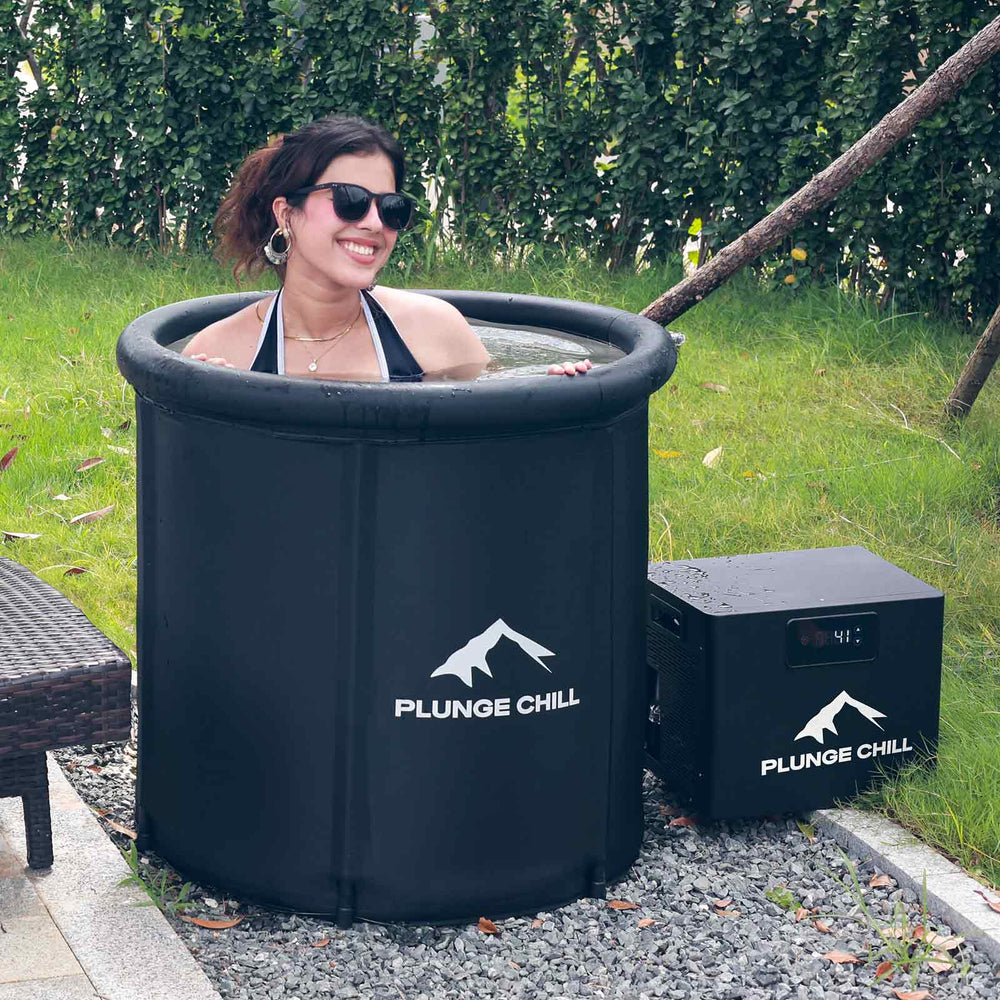
For home and facility buyers, cost and capability vary widely. Dedicated plunge tanks can reach prices near $20,000 depending on features, finish, and footprint (Mayo Clinic Health System). Purpose-built systems in professional settings maintain water around 50°F for recovery or 94–104°F for warm immersion; some offer spa jets and hose attachments for targeted massage, with common footprints around 7.5 by 7.5 ft to 7.5 by 14 ft that accommodate multiple users (HydroWorx). Those specifications hint at three practical priorities.
First, temperature control is nonnegotiable. Reliable systems should hold 50–59°F for recovery protocols in warm weather and transition efficiently between temperatures if you plan contrast work. Second, fit and logistics matter: confirm floor load, drainage, and access for installation, especially for rooftop or upper-floor facilities (Confidence: Low; verify by reviewing the unit’s dry and filled weight, plus the building’s load ratings with a licensed contractor). Third, filtration and sanitation determine usability more than any other feature. Look for simple filter access, clear maintenance intervals, and, when possible, secondary sanitation like ozone or UV to minimize chemical odor while maintaining water quality (Confidence: Low; check the manufacturer’s third-party sanitation data and recommended maintenance schedule).
Energy use is often overlooked. Insulation quality, lid fit, and duty cycle of the chiller drive operating costs and noise levels in real-world use (Confidence: Low; ask vendors for kWh consumption measured at a fixed setpoint and ambient temperature, and compare those figures across similar tank volumes). In all cases, measure water temperature before entry, keep a visible timer nearby, and store warm layers within arm’s reach to rewarm gradually after sessions (Mayo Clinic Health System; Lake Nona Performance Club).
Care, Safety, and Aftercare
Routine care is pragmatic rather than complex. Keep the tub drained and cleaned according to the manufacturer’s schedule, test water temperature before every entry, and do not allow first-time users to plunge alone. For aftercare, gradual rewarming using light movement, warm clothing, and a warm drink is preferred to abrupt heat exposure, particularly if you want to maximize the body’s metabolic response and avoid dizziness on standing (Ice Barrel; Lake Nona Performance Club; Huberman Lab). Do not plunge after alcohol, do not hyperventilate before or during immersion, and avoid open-water plunging in currents or under ice (American College of Sports Medicine; Weather.gov).
Reconciling Conflicting Guidance
Several reputable sources disagree on specific details such as how long the benefits persist or whether cold helps or hurts 24 hours later. Some emphasize immediate reductions in soreness and perceived fatigue; others show stronger effects at 24–72 hours. These discrepancies are best explained by methodological differences: some trials use cross-over designs with small samples, others use parallel groups; immersion depth varies; some measure only subjective outcomes while others include biomarkers or performance tests; and many do not control for training status. A sensible synthesis prioritizes the robust, repeated finding—soreness relief in the first three days—and treats objective performance gains as context dependent and modest. Cold works best when you need to repeat efforts soon and can accept the potential trade-off on strength signaling, which you can mitigate by delaying cold after lifting.
Key Takeaway
Use cold deliberately, not reflexively. For reducing soreness and perceived fatigue within three days—especially during congested competition blocks—immersion at 50–59°F for about 11–15 minutes is practical and well supported. Delay cold after lifting to protect adaptations; consider hot immersion or contrast when preserving same-day power is the priority. Pair every plunge with controlled breathing, smart safety practices, and a clear performance goal. Programs that respect timing and dose get the upside of cold without paying the cost in long-term gains.
FAQ
What temperature and duration should I use if I’m new to cold plunges? Building tolerance matters. Starting with 30–60 seconds and working toward five to ten minutes in the 50–59°F range is a practical on-ramp, especially when you pair it with slow, longer-than-inhale exhales to blunt cold shock (Mayo Clinic Health System; Lake Nona Performance Club; Chilly Goat Tubs).
Does cold immersion blunt muscle growth and strength gains? Yes, if used too soon and too often after lifting. Delay cold by at least four to six hours—and up to 24–48 hours if hypertrophy is the main goal—to protect the inflammatory and molecular signaling required for adaptation (American College of Sports Medicine; Ohio State Health; Sportsmith).
Are cold showers good enough? They help and are highly accessible. Cold showers can deliver many of the alertness and perceptual benefits, but immersion cools more uniformly and provides stronger hydrostatic effects. When logistics or cost are barriers, showers are a reasonable substitute (Ohio State Health; Mayo Clinic Health System).
When is contrast water therapy or hot water immersion a better choice? If you need same-day power or rapid performance turnaround, contrast or hot immersion can be advantageous. Recent data favor hot water near 104°F for preserving same-day muscle power, while contrast therapy often outperforms cold alone across different fitness traits in applied settings (American Physiological Society; Mountain Tactical Institute).
Who should avoid cold plunges or seek medical clearance first? Cold is not appropriate for everyone. People with prior cold injuries, Raynaud’s, certain cardiovascular conditions, uncontrolled hypertension, cryoglobulinemia, relevant thyroid disorders, or significant sensory/autonomic issues should avoid cold or seek clinician guidance first. Supervision is essential for first exposures (American College of Sports Medicine; Lumi Therapy; Mayo Clinic Health System).
How should I rewarm after a plunge? Use gradual, active rewarming: light walking, warm clothing, and a warm beverage. Avoid abrupt heat, especially if you are prone to dizziness on standing, and keep safety in mind if plunging outdoors in cold weather (Ice Barrel; Lake Nona Performance Club).
References and Notes
The practical recommendations in this article synthesize guidance and findings from the American College of Sports Medicine, PubMed Central reviews and meta-analyses, Ohio State Health, Mayo Clinic Health System, Mountain Tactical Institute, American Physiological Society, Science for Sport, Sportsmith, Chilly Goat Tubs, Ivy Rehab, Lake Nona Performance Club, HydroWorx, Everyday Health, Huberman Lab, and Weather.gov. Where product advice extends beyond those sources, assumptions are labeled with “Confidence: Low” and an explicit verification step.
Confidence: Low statements and suggested verification steps have been included in the product guide to distinguish experience-based purchasing and operations advice from peer-reviewed or institutional guidance.
References
- https://koreystringer.institute.uconn.edu/heat-stroke/
- https://www.weather.gov/safety/coldwater
- https://sncs-prod-external.mayo.edu/hometown-health/speaking-of-health/cold-plunge-after-workouts
- https://pmc.ncbi.nlm.nih.gov/articles/PMC2938508/
- https://health.osu.edu/wellness/exercise-and-nutrition/do-ice-baths-help-workout-recovery
- https://dnr.alaska.gov/parks/boating/kdf/ambassador/kdfambassadorguidebook.pdf
- https://doh.wa.gov/sites/default/files/2024-04/333-347.pdf
- https://acsm.org/cold-water-immersion-friend-froze/
- https://mcpress.mayoclinic.org/healthy-aging/the-science-behind-ice-baths-for-recovery/
- https://www.mayoclinichealthsystem.org/hometown-health/speaking-of-health/cold-plunge-after-workouts




Leave a comment