As a sports rehabilitation specialist and strength coach who works with fighters, I understand the appeal of ice baths. When you are deep into a hard camp or in a tournament format with minimal turnaround, anything that promises faster recovery and sharper rounds is tempting. Cold plunges are now standard in many high-performance gyms, and the boxing world is increasingly asking a very specific question: can we push that idea all the way into the one‑minute break between rounds?
To answer that, we have to separate what cold water immersion actually does, what the evidence shows in combat sports and other high‑intensity disciplines, and how those findings translate to the unique demands of twelve three‑minute rounds with sixty seconds of chaos in the corner. Only then can we talk about realistic “between‑round” techniques and the role of modern cold plunge products in a boxing environment.
What An Ice Bath Really Does To A Fighter’s Body
Cold water immersion, in most of the research, means sitting in water around 50–59°F for roughly 10–15 minutes after hard exercise. Multiple sources in sports medicine and strength and conditioning describe similar parameters and mechanisms.
When you immerse in cold water, skin and superficial muscle temperatures drop quickly. Blood vessels in the cooled tissues constrict, which limits blood flow into those areas and slows local metabolism. This vasoconstriction is one of the main reasons cold helps control swelling and acute inflammation after intense bouts or sparring sessions. When you get out and re‑warm, vessels dilate again and blood flow rebounds, which helps deliver oxygen and nutrients while clearing metabolic byproducts such as lactate. This “squeeze then flush” effect is described consistently in strength and conditioning and rehabilitation literature and underpins most of the recovery claims.
The nervous system response is just as important. Cold slows the speed at which pain signals travel along peripheral nerves. Athletes feel this as genuine analgesia rather than placebo; several clinical and gym‑based reports show reduced delayed‑onset muscle soreness and lower pain ratings in the first 24 hours after cold immersion compared with doing nothing or just sitting at room temperature. A recent meta‑analysis of cold water immersion after exercise found that muscle soreness scores and perceived exertion both drop acutely after an ice bath, even though longer‑term performance measures change very little.
There are systemic effects too. Cold exposure triggers an initial “cold shock” with spikes in breathing rate, heart rate, and blood pressure, followed by a shift toward parasympathetic activity as you settle and breathe. Work from Stanford Lifestyle Medicine and others shows that brief cold exposures can lower cortisol after the session and maintain robust noradrenaline responses, which may support stress resilience and perceived mental clarity. Even short exposures, on the order of seconds to minutes at relatively modest cold, have been shown to improve self‑reported mood and alertness.
In simple terms, ice baths buy you three things in the short term: somewhat less soreness, somewhat lower perceived fatigue, and a sharper, more energized mental state. What they do not reliably provide is a big increase in objective performance when you test sprint speed, jump height, or maximal strength in the day or two after. Reviews consistently find small or no performance gains, even when soreness and subjective freshness improve.

The Trade‑Off: Recovery Versus Adaptation
For fighters, recovery is only half the story. The other half is adaptation: getting faster, stronger, more explosive, and more resilient from week to week. This is where cold immersion becomes a double‑edged tool.
Several studies now show that taking ice baths directly after strength training can blunt the molecular signals for muscle growth and strength gains. Repeated post‑lifting immersions at around 50°F for 10–20 minutes dampen mTOR signaling, satellite cell activity, and muscle protein synthesis for up to 48 hours. In at least one 10–12 week strength‑training trial, athletes who used regular post‑workout cold water immersion achieved substantially smaller increases in muscle size and strength than those using active recovery.
This trade‑off shows up in practical reviews from Mayo Clinic, sports medicine clinics, and performance centers: ice is excellent for managing pain and soreness during congested competition periods or short, brutal training blocks, but chronic use after every strength session can slow long‑term gains, especially for hypertrophy‑focused phases and less‑trained athletes.
For boxing, that means the timing matters. If you are in a block where the goal is to add lean mass or build new strength, especially early in a camp, heavy cold exposure immediately after lifting is likely a bad idea. On the other hand, when you are deep into fight‑specific conditioning with dense workloads and the main job is to stay able to perform, ice baths become a more attractive tool.
What We Know From Fighters And Other High‑Intensity Sports
While there are no controlled trials of full‑body ice baths literally between boxing rounds, we do have data in combat athletes and team sports that look a lot like fight weeks in terms of muscle damage and schedule density.
An in‑depth guide on ice bath recovery for fighters highlights how hard sparring and fights can drive muscle damage markers such as creatine kinase very high. In semi‑professional mixed martial artists, post‑match ice baths reduced soreness, cortisol, and fatigue while preserving jump performance compared with control conditions. That pattern is echoed in elite rugby and volleyball data, where players who used 10 minutes of immersion at about 50°F after the hardest sessions in a three‑week high‑volume block reported less soreness and showed smaller drops in jump performance across the week than teammates who did not use cold water immersion.
Mechanistic work supports this. A laboratory study using 10 minutes in 54–59°F water between two bouts of fatiguing leg exercise found that cold immersion lowered heart rate and skin temperature and modestly improved muscle oxygenation in the second bout. Performance in that second bout did not improve significantly compared with passive recovery, but participants reported less soreness the next day.
Meta‑analytic data across many sports show a similar pattern. Compared with passive or light active recovery, cold water immersion right after exercise tends to reduce muscle soreness and perceived exertion in the first few hours and at about 24 hours. Creatine kinase and lactate levels are also modestly lower at 24–48 hours, suggesting slightly less or more quickly cleared muscle damage and metabolic stress. However, jump height, sprint times, and other performance metrics usually do not improve meaningfully.
The fighter‑specific guide also warns about an effect that matters a great deal in boxing: joint stiffness. Ice baths can reduce ankle and joint stiffness for up to 48 hours while still maintaining or slightly improving jump performance. For a sport that relies heavily on elastic stiffness for fast footwork, sharp cuts, and efficient force transfer from the floor to the fist, that reduction in stiffness is not automatically a positive. The authors argue that because stiffness is so central to bouncing, switching stance, and punching explosively, heavy ice bath use in the 48 hours before a fight may slow movement and slightly increase injury risk. Their recommendation is to avoid full‑body ice baths in that 48‑hour pre‑fight window.
That advice lines up with broader periodization guidance: in preseason or early camp phases where adaptation is the priority, cold exposure should be limited and heat‑based strategies or simple active recovery may be a better default. In mid‑camp heavy load phases and congested competition periods, cold water immersion becomes more useful for preserving day‑to‑day performance, provided it is applied intelligently.
Why Full Ice Baths Between Rounds Are Usually A Bad Idea
When you take the evidence above and overlay it on the realities of a boxing match, the limitations of a true “between‑round ice bath” become obvious.
First, the time constraint. The protocols that reliably reduce soreness and influence physiology use 8–15 minutes at 50–59°F, sometimes in two short bouts separated by a few minutes. A boxing break gives you about 60 seconds from bell to bell. By the time the fighter is back on the stool, the coach has delivered key tactical cues, the cut person has done their job, and gloves, wraps, and shoes are checked, there is almost no time left. A 10–30 second dunk in cold water is fundamentally a different stimulus from a 10‑minute immersion and has not been studied in the context of consecutive rounds.
Second, the stiffness trade‑off. Evidence in fighters and field sports shows that cold immersion can reduce joint stiffness for up to two days. While that seems beneficial on paper, stiffness in the tendons and musculotendinous structures of the ankle, knee, and hip is a major determinant of how quickly you can spring off the canvas, cut angles, and rotate the hips into punches. Reducing stiffness significantly during a match may make you feel “lighter” but can also slightly dampen elastic recoil and timing, especially if legs or hips are heavily cooled.
Third, the cold shock response. Harvard Health and Mayo Clinic both emphasize that sudden immersion in cold water around 50–60°F can provoke rapid breathing, involuntary gasping, and spikes in heart rate and blood pressure. In a rested person that is manageable with coaching and practice. In a fighter who has just finished a high‑intensity round, with an already elevated heart rate and sympathetic drive, adding cold shock on top is not a trivial stressor. Even if the total risk is small for a medically cleared athlete, it runs against the goal of using the break to normalize breathing and settle the nervous system.
Finally, there are practical and safety concerns. Wet shorts, wraps, and boots on a canvas that must stay as dry as possible are a recipe for slipping and skin breakdown over a long fight. In my own work in boxing and other combat sports, I have never implemented a full‑body plunge between rounds for these reasons, even in facilities that had high‑end plunges available. The theoretical upside does not outweigh the risk to footing, equipment, and concentration.
So, as an evidence‑based recommendation, a true full‑body ice bath between rounds is not advisable for most boxers. That does not mean all cold exposure between rounds is off the table. It just means we have to be more precise and conservative.
Smarter Cold Techniques For Boxing Match Breaks
When we shrink the recovery window down to 60 seconds, the goal of any cold strategy shifts. You are no longer trying to deeply cool muscles or alter biochemical markers by the next day. Instead, you want to support three things for the next round: a manageable core temperature, calmer breathing, and a clear, focused mind.
Facial Immersion For Rapid Nervous System Reset
One of the most practical tools here borrows from psychological treatment rather than sports science. Stanford Lifestyle Medicine describes how immersing the face in cold water for brief periods can activate the so‑called diving reflex through the trigeminal nerve and vagus nerve, shifting the autonomic nervous system toward parasympathetic dominance and rapidly lowering heart rate. This technique is used clinically as part of dialectical behavior therapy skills to help patients regain control during emotional surges.
In boxing, a small bowl or flexible container of cold water in the corner can be used in a similar way. Rather than dunking the whole head, which is messy and potentially unsafe with cuts and Vaseline, the fighter can lean forward and submerge just the face for a few seconds while the coach supports the back and cues slow breathing. The water does not need to be extreme; temperatures in the challenging but tolerable range, roughly around the lower end of cool tap water down toward 50–59°F, are sufficient to trigger strong sensory input.
From a practical standpoint, this can be done in five to ten seconds, leaving plenty of time for instructions and other corner work. The goal is not to cool the brain or muscles directly but to interrupt runaway sympathetic arousal and help the fighter feel more centered before the bell.
Controlled Breathing With Mild Cold Exposure
Across multiple articles, including guidance from endurance athletes and cold‑plunge practitioners, controlled breathing is emphasized as the key to harnessing cold rather than being overwhelmed by it. One commonly used pattern is to inhale slowly for about seven seconds, hold for two, and exhale for seven. The exact timings are less important than the intent: long, deliberate breaths that counteract the short, shallow breathing that accompanies both hard fighting and cold shock.
In a boxing corner, even without any water immersion, coaching a fighter into these longer breaths can improve carbon dioxide clearance, normalize heart rate, and provide a sense of control. If you layer in light cold exposure, such as a cool towel on the neck or a brief facial dip as described above, the combination of skin cooling and controlled breathing is often enough to reduce the subjective feeling of overheating and panic without introducing the downsides of full immersion.
Local Cooling Of Hands And Forearms
Research notes emphasize that cold water immersion works by cooling the skin and superficial tissues and constricting local blood vessels. While we do not have direct studies of hand‑only immersion in boxers between rounds, partial immersion of hands and forearms in cold water is a reasonable extrapolation with lower risk than full‑body plunges.
In practice, this might mean a small tub or bucket at approximate ice‑bath temperatures, positioned so the fighter can rest gloved hands and forearms in the water for 15–30 seconds while seated. The goal is primarily perceptual: reducing the feeling of heat in the upper limbs and giving a mild systemic cooling signal without significantly lowering stiffness in the legs or trunk.
Because the evidence base here is indirect, this should be tested cautiously in training, not debuted on fight night. If a fighter reports that hand and forearm cooling makes them feel sluggish or interferes with glove feel, the plan can be adjusted or abandoned.
How Cold And How Long In The Corner?
The published protocols for recovery use 50–59°F water and 8–15 minutes of immersion. That is not possible between rounds, so any “ice bath” in the corner is, by definition, a brief cold exposure. From a safety perspective, it makes sense to keep water in roughly the same temperature range that athlete recovery centers already use and to keep contact times to seconds rather than minutes.
A pragmatic starting point in camp is to test short exposures in controlled conditions: for example, facial immersion for about five to ten seconds or forearm immersion for fifteen to thirty seconds in 50–59°F water, combined with deliberate breathing. If a fighter tolerates this well in intra‑gym sparring and reports feeling calmer rather than shocked, it may be a viable addition to their corner routine in extreme heat or particularly grueling fights. If they report feeling stiff, disconnected, or distracted, that feedback should take precedence and the cold exposure should be dialed back or removed.
The most important point is that the corner break is not the place to chase the same physiological effects you get from a full post‑fight plunge. Between rounds, cold is a tool for perception and nervous system control, not deep tissue recovery.

Full Ice Baths Around Fights: When They Make Sense For Boxers
Although full‑body plunges between rounds are not recommended, traditional post‑exercise ice baths still have a clear role in a boxer’s week, especially under tournament conditions or in high‑volume camps.
Cold water immersion at 50–59°F for 10–15 minutes, used after the last hard session of the day, has been shown to reduce next‑day soreness and moderate the decline in neuromuscular performance across dense training blocks in rugby and volleyball athletes. Fighter‑specific data point in the same direction after matches and hard sparring. For advanced boxers who are already relatively well adapted and whose priority is to sustain high‑quality outputs across several days, post‑session plunges can therefore be justified, particularly during three‑ or four‑day stretches of heavy sparring and conditioning.
On the other hand, several lines of evidence and expert reviews suggest that using ice baths immediately after every strength session, especially over months, can dampen muscle growth and strength gains. Articles aimed at strength and hypertrophy training recommend delaying cold exposure 24–48 hours after lifting or reserving it for non‑lifting days when muscle gain is the priority. In my own programming for fighters, this means that in phases where we are pushing heavy squats, presses, and loaded jumps to build a base, I keep ice baths away from those sessions and rely on active recovery, mobility work, and sleep instead.
One useful way to think about timing is to match ice bath use to the main goal of the week. When the goal is adaptation, especially in early camp or off‑season blocks, cold exposure is used sparingly and usually separated from lifting. When the goal shifts to performance and recovery between repeated events or intense sparring days, ice baths become a more central tool, but still not a mandatory everyday ritual.
A simple way to visualize this balance is in the following table.
Scenario |
Primary aim |
Role of full ice bath at 50–59°F for 10–15 min |
Practical recommendation |
Early camp strength and hypertrophy block |
Long‑term adaptation |
May blunt strength and muscle gains if used after lifting |
Avoid right after strength sessions; use on rest days |
Heavy sparring microcycle (3–4 days) |
Maintain output day‑to‑day |
Reduces soreness and limits performance drop across days |
Use after hardest days, away from heavy lifting |
Tournament or back‑to‑back fight nights |
Short‑term recovery priority |
Helps manage soreness and fatigue between events |
Use post‑bout if medically cleared and logistics allow |
Fight day within 48 h of main event |
Maximize sharpness and stiffness |
May reduce joint stiffness important for footwork |
Avoid full‑body immersion within about 48 h before fight |
This table blends research findings with practical coaching judgment. The key is that ice baths are never the “big rock” of preparation; they are a fine‑tuning tool that you periodize alongside load, sparring intensity, and taper strategies.

Choosing A Cold Plunge Setup For A Boxing Gym
Once the decision has been made to use cold water immersion in camp or between tournament bouts, equipment matters. A clumsy, poorly controlled setup will be underused; a practical, predictable system becomes part of the recovery culture.
At the simplest end of the spectrum is a standard bathtub or large stock tank filled with tap water and bags of ice. Several athlete‑oriented guides recommend a rough three‑to‑one water‑to‑ice ratio to reach 50–59°F within about 10 minutes. This approach is low‑cost but demands daily set‑up, heavy lifting of ice, and careful temperature monitoring with a thermometer.
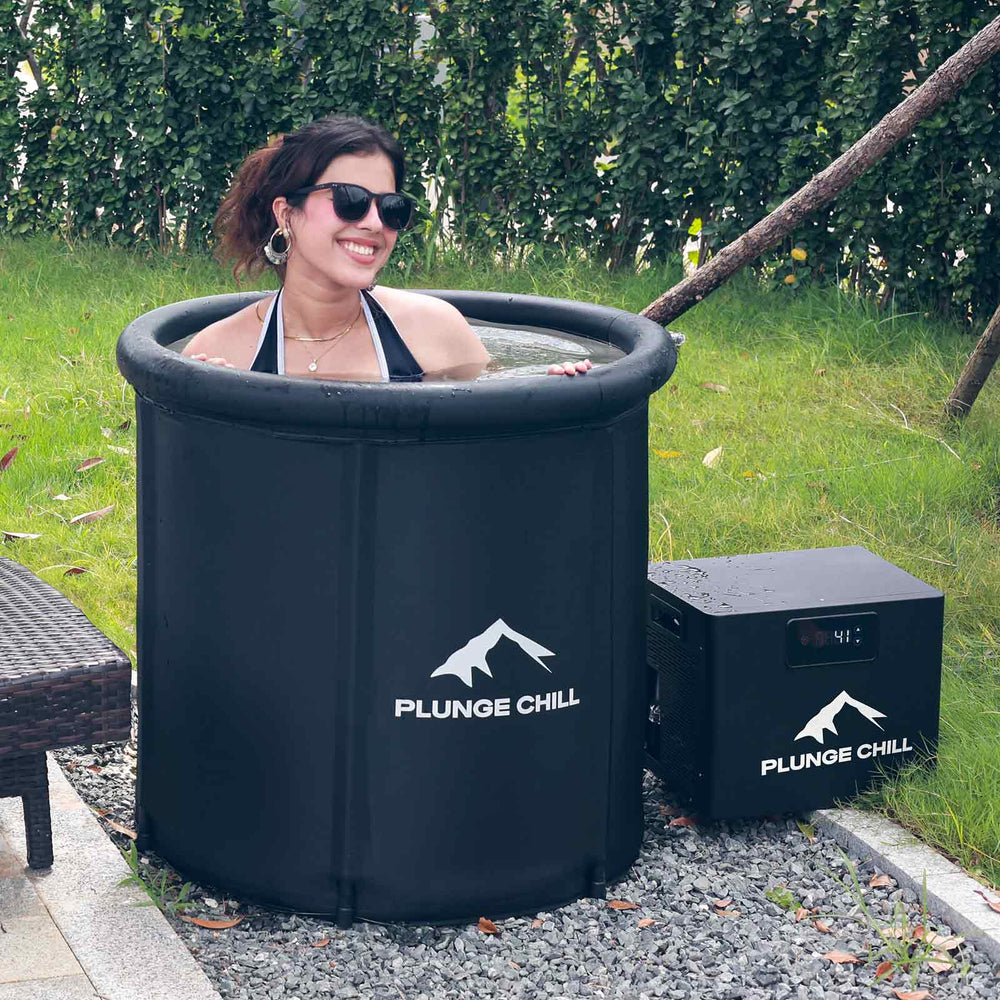
Dedicated barrel‑style plunges, like those promoted by some cold‑exposure companies, aim to solve part of that problem. A typical upright barrel weighs only around 55 lb when empty, occupies roughly 5 square feet of floor space, and can hold up to about 750 lb of water and athlete. The standing or seated‑upright posture is often more comfortable for fighters used to being on their feet, and well‑designed barrels use non‑porous materials that are easier to keep clean between users.
The next step up is an integrated tub with an external chiller unit. One manufacturer, for example, describes a compact chiller capable of maintaining water as low as about 41°F in tubs up to roughly 130 gallons, with one‑touch start and remote control. Another brand emphasizes thick insulation, precise temperature control, and ergonomic full‑body positions. These systems allow you to set a stable temperature in the 50–59°F recovery range and maintain it with minimal ice, which is particularly valuable during fight weeks where consistency is critical.
From a boxing‑specific standpoint, the decision usually comes down to three questions: space, throughput, and control. Small urban gyms may favor a single barrel that can live in a corner of the strength area and be filled manually. Larger facilities or teams traveling for tournaments may justify a chiller‑equipped tub that stays at a set temperature for multiple fighters across the day. In all cases, stable footing around the plunge, a clear path from the training area, and a strict cleaning protocol matter just as much as brand or aesthetic.

Safety Considerations For Fighters Using Ice Baths
Every discussion of cold exposure has to grapple with safety. Even though brief plunges at 50–60°F in a home or gym environment are much less risky than open‑water winter swimming, the combination of hard exercise and cold still deserves respect.
Harvard Health and Mayo Clinic both emphasize the cold shock response as the primary acute risk. Sudden immersion can cause an involuntary gasp and hyperventilation along with sharp rises in heart rate and blood pressure. For most healthy, medically cleared athletes this response is manageable, especially if they enter slowly and focus on controlled breathing. However, fighters with undiagnosed cardiovascular issues, uncontrolled hypertension, or certain arrhythmias could be at higher risk. Several recovery‑focused articles urge anyone with cardiovascular or circulatory disease, Raynaud’s phenomenon, significant neuropathy, or poorly controlled diabetes to consult a physician before using ice baths.
Hypothermia and frostbite are far less likely at the temperatures and durations used for athletic recovery, but they are not impossible if protocols are ignored. Most expert guidance caps sessions at around 10–15 minutes and advises exiting immediately if shivering becomes uncontrollable, dizziness appears, or the athlete feels “off” in any way. There is also broad agreement that no one should use a cold plunge completely alone. Even in a gym setting, having staff or teammates present adds a layer of safety in case of fainting or cardiac events.
For boxing corners considering cold techniques between rounds, safety means keeping interventions small and simple: brief facial immersion rather than head‑first dunks, light forearm cooling instead of whole‑body hoses, and cold towels rather than ice‑water showers. All of these strategies should be trialed in training, not improvised during a televised main event.
Finally, it is important to keep cold exposure in its proper place. Multiple expert groups, including Mayo Clinic and sports medicine practices, stress that cryotherapy should be treated as an adjunct, not a replacement, for the fundamentals of recovery: adequate sleep, appropriate nutrition and hydration, intelligent programming, and honest communication about fatigue and pain. In my own work with fighters, the biggest performance swings almost always trace back to those basics, with ice baths providing at best a modest edge when the foundations are already solid.
Closing Thoughts
Used wisely, ice baths can help boxers manage soreness and stay ready through heavy camps or tournament schedules. The physiology is clear enough: short‑term pain relief, modest reductions in muscle damage markers, and meaningful effects on how fresh an athlete feels. At the same time, the evidence around strength adaptations and joint stiffness makes it clear that more cold is not always better, and that plunging between rounds is far more likely to disrupt performance than improve it.
For most fighters, the optimal strategy is straightforward. Reserve full‑body plunges in the 50–59°F range for post‑session recovery in congested blocks and after fights when you must be ready again within a day or two. Keep them away from heavy strength sessions and from the final 48 hours before a main event. In the one‑minute break between rounds, think in terms of controlled breathing and brief, targeted cooling rather than dramatic ice‑bath stunts.
If you build those habits in training and match them with the right cold plunge setup for your gym, you will get the genuine benefits of cold exposure without sacrificing the power, stiffness, and sharpness that win rounds.
References
- https://digitalcommons.cedarville.edu/cgi/viewcontent.cgi?filename=1&article=1539&context=research_scholarship_symposium&type=additional
- https://www.health.harvard.edu/staying-healthy/can-ice-baths-improve-your-health
- https://www.mcphs.edu/news/physical-therapist-explains-why-you-should-chill-out-on-ice-baths
- https://thewell.northwell.edu/healthy-living-fitness/ice-bath-benefits
- https://lifestylemedicine.stanford.edu/jumping-into-the-ice-bath-trend-mental-health-benefits-of-cold-water-immersion/
- https://sncs-prod-external.mayo.edu/hometown-health/speaking-of-health/cold-plunge-after-workouts
- https://pmc.ncbi.nlm.nih.gov/articles/PMC2938508/
- https://health.osu.edu/wellness/exercise-and-nutrition/do-ice-baths-help-workout-recovery
- https://mcpress.mayoclinic.org/healthy-aging/the-science-behind-ice-baths-for-recovery/
- https://www.mayoclinichealthsystem.org/hometown-health/speaking-of-health/cold-plunge-after-workouts