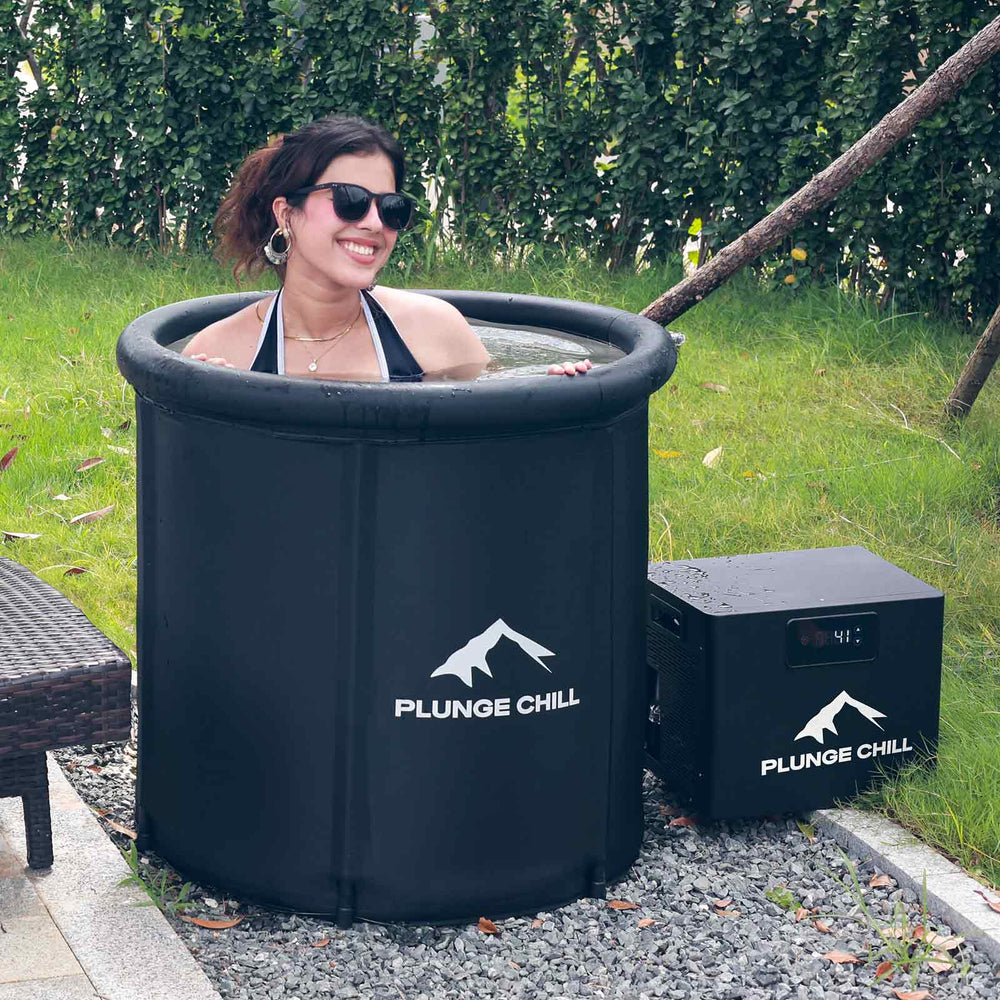
Cold plunges are no longer a fringe recovery trick reserved for pros. As a sports rehabilitation specialist and strength coach who has installed and overseen dozens of systems in clinics, weight rooms, and home garages, I’ve learned that the “best” ice bath is the one matched to your goals, your space, your climate, and your tolerance. The science is mixed in places, but the practical playbook is clear: if you use cold intelligently—right dose, right time, right product—it can be a safe, effective tool for soreness management, quick turnarounds, and overall resilience.
What An Ice Bath Is—and How It Works
An ice bath, or cold‑water immersion, is deliberate submersion in cold water to the chest or shoulders for a brief period. Physiologically, the water’s hydrostatic pressure and low temperature drive vasoconstriction that helps limit fluid accumulation, slow metabolic activity, and reduce acute tissue irritation. When you rewarm afterward, vasodilation and heightened circulation help move byproducts away while bringing fresh blood back to working tissues. Laboratory reviews have also highlighted changes in cardiovascular preload and cardiac output during head‑out immersion that likely contribute to the “lighter legs” feeling many athletes report afterward (National Library of Medicine, open‑access review).
The core idea is simple: cold is a stressor. Use it judiciously, and you can nudge the inflammatory response and your nervous system in directions that make next‑day training feel more manageable without pretending cold is a cure‑all.

Evidence Snapshot: What The Research Actually Says
Systematic evidence for cold-water immersion is strongest for short‑term relief. A recent meta‑analysis synthesized dozens of trials and found that ice baths tend to reduce immediate post‑exercise soreness and perceived fatigue, with modest reductions in creatine kinase at 24 hours and lower lactate at 24–48 hours. These effects often fade by 48 hours, and jump performance benefits are inconsistent under stricter random‑effects models (National Library of Medicine meta‑analysis).
Clinical and editorial sources—Cleveland Clinic, Scripps—concur that benefits are plausible but not universal, emphasizing screening and safety, particularly for people with heart disease, high blood pressure, diabetes, neuropathies, or poor circulation. At the same time, practitioner‑facing pieces from Nike’s training team and Healthline highlight real‑world use for doms relief and faster readiness.
Conflicts arise around comparators. A Journal of Physiology paper argued that ice baths were no better than active recovery for some outcomes, while a Sports Medicine meta‑analysis favored ice over passive rest. The likely cause of disagreement is that active recovery itself confers meaningful benefits; studies that benchmark against cycling or light movement will shrink the apparent advantage of cold compared with studies that benchmark against sitting still. Differences in temperature, immersion depth, session length, sample size, and training status add further noise.
There are also targeted cautions from the performance literature. Researchers and applied sport scientists have documented instances where cold exposure shortly after heavy sprint or strength work blunted power or hypertrophy signaling. Conversely, endurance blocks show fewer downsides and sometimes modest advantages when the priority is rapid repeatability rather than long‑term size or strength (National Library of Medicine; Science for Sport).

When To Use It—And When To Skip It
Use cold baths after competitions, two‑a‑day practices, tournament weekends, or hard endurance sessions when the priority is feeling better sooner and holding output across dense schedules. In that context, soreness and perceived fatigue matter as much as marginal physiological markers.
If you are in a muscle‑building block—or the first six to eight weeks of a strength phase—plan cold exposure away from the immediate post‑lift window. Ohio State Wexner Medical Center suggests delaying 24–48 hours after lifting if strength and size are the primary goals, while other coaching resources suggest a shorter delay of 4–6 hours for a more practical compromise. A sensible middle path is to save plunges for off‑days or endurance days during hypertrophy phases and bring them back toward competition peaks or travel weeks (Ohio State Wexner Medical Center; TH7; Mayo Clinic Health System).
Pre‑event cold is a special case. For hot conditions, cooling before a race or match can lower core temperature by a few degrees and help perceived effort (Healthline). For power sports performed in temperate conditions, cooling the lower legs too close to game day can leave joints feeling stiff for up to 24–48 hours and sap elastic “pop” (Science for Sport). The decision hinges on environment and sport demands.
How Cold and How Long? A Practical Matrix
Evidence and expert guidance don’t perfectly agree on “the” protocol. Medical sources that prioritize safety start shorter, while performance groups often use longer immersions at controlled temperatures. The common ground is modest cold, modest time, and progressive acclimation.
Goal or Context |
Suggested Temperature |
Typical Time |
Frequency Guidance |
Source Cues |
Safety‑first acclimation or new users |
About 50–59°F |
Start with 1–3 minutes and build toward 5 minutes |
Two to three times weekly at first |
Cleveland Clinic; Scripps |
Post‑competition or dense endurance blocks |
About 50–59°F, occasionally toward 46–50°F for veterans |
About 5–10 minutes; some use up to 10–15 minutes with supervision |
After hard sessions or multi‑event days |
National Library of Medicine meta‑analysis; Nike training; Mayo Clinic Health System |
Strength/hypertrophy phases |
Same temperatures if used |
Delay use 6–48 hours post‑lift depending on goals |
Reserve for off‑days or non‑lift days |
Ohio State Wexner Medical Center; Science for Sport |
Power events in temperate conditions |
Avoid cold legs within 24–48 hours when “spring” matters |
N/A |
N/A |
Science for Sport |
These are starting points. What actually works best for you depends on sport, body size, past cold exposure, and your training calendar.
A Simple, Field‑Tested Protocol
In practice, I cue athletes to set the environment so their physiology—not their willpower—does the work. Confirm temperature with a reliable thermometer, step in smoothly rather than inching in, keep shoulders down and breathing through the nose, and stay still enough to let the water do the compressive job. The first 30 to 60 seconds are the hardest; the perception of cold usually stabilizes once breathing settles. When time is up, stand carefully, towel dry, throw on warm layers, and rewarm by moving, not just by blasting yourself with a scalding shower. You do not need to shiver for an hour to get the benefit.
Cold showers have a place when you are traveling or don’t have a tub. They can provide a bracing nervous‑system reset and a quick cool‑down, but they do not produce the same hydrostatic effects or uniform cooling as immersion. My experience mirrors the literature: showers help for convenience, but they are not equivalent for targeted recovery outcomes (Cleveland Clinic; Science for Sport).

Risks, Contraindications, and Safe Setup
Cold plunges are generally well tolerated when you respect your medical context and the environment. People with heart disease, high blood pressure, diabetes, peripheral neuropathy, or poor circulation should consult a clinician first. If you have a history of cold‑induced urticaria or Raynaud‑type symptoms, be cautious and test under supervision. In the field, the issues I see most often are simple: poor footing leading to slips on wet decks, unmeasured temperatures that are far colder than intended, and prolonged sessions that drift from “dose” to “dare.” Use a thermometer, set a timer, have a partner nearby the first few times, and keep towels and warm clothing at arm’s reach (Cleveland Clinic; Scripps; Mayo Clinic Health System).
Overlooked Insights Woven Into Practice
One pattern that rarely makes it into quick guides is how body size and composition change cooling rates. Lower body mass and body fat cool faster, while larger athletes cool more slowly. Lighter athletes usually “feel” the dose sooner; heavier athletes sometimes need slightly longer exposure at the same temperature to achieve comparable effects. This aligns with applied sport observations in fighters and rugby squads, where tailored dosing was superior to one‑size‑fits‑all prescriptions (Science for Sport).
It is also easy to miss that comparator matters when interpreting research headlines. Trials that compare ice baths against active recovery tend to show smaller or no benefits relative to trials that compare against passive rest. That is not proof that cold “does nothing”; it is a reminder that light movement is already a good recovery tool, and cold should be judged against the realistic alternative you would otherwise choose after training (Journal of Physiology; Sports Medicine).
Finally, evening cold means different things for different goals. Cold is stimulating for most people, and morning plunges often feel best for mood and alertness. That said, when you are finishing a scorching double‑day, an evening immersion may still be the practical choice to blunt heat load—just rewarm well and watch sleep quality. One straightforward verification step is to track sleep duration and efficiency for two weeks with and without evening plunges while holding training load constant.

Buying Guide: Choosing An Ice Bath You’ll Actually Use
The right unit is the one that fits your space, budget, and tolerance for maintenance. In teams and clinics, I evaluate units the same way I evaluate equipment for a home gym: safety first, then durability, then ease of use. The table below summarizes common options.
Product Type |
Best For |
What I Like |
What To Watch |
Stock tank or basic tub with bagged ice |
Beginners, renters, budget, seasonal use |
Low cost, easy to drain and move, quick to set up |
Manual ice runs, wider temperature swing, more frequent water changes |
Soft‑wall portable tub or barrel with lid |
Small patios, apartments, travel |
Compact footprint, lids help keep water cleaner and colder |
Insulation varies; seams and valves need periodic checks |
Year‑round use, precise temperature control |
Set‑and‑forget temperature, filtration options, better insulation |
Upfront cost, chiller noise, requires GFCI power and ventilation |
|
All‑in‑one commercial “plunge” system |
Teams, clinics, boutique at‑home setups |
Fast cooling, robust filtration, integrated lids, good ergonomics |
Highest cost; top systems with options can approach the price of a small used car (Mayo Clinic Health System notes tanks can cost up to $20,000) |
When reviewing units, I look at the lid fit, drain location and speed, tub stiffness under load, chiller capacity relative to your climate, hose and quick‑disconnect quality, and whether the unit ships with a GFCI‑protected plug. If you plan to place a chiller indoors, confirm noise ratings and airflow requirements to avoid heating a small room. Outdoors, a simple deck mat and overhead shade drastically extend equipment life and keep the water cleaner.
Care and Maintenance That Keeps Water Safe
Clean water keeps skin happy and equipment working. In clinics, we combine mechanical filtration with regular refresh cycles and a modest sanitizer plan dictated by the manufacturer. At home, a simple way to think about it is to keep the water covered, skim debris after every use, and change the water at a cadence that matches your volume. As a rule of thumb, many users find a four‑week refresh interval workable with consistent lid use and light daily bather load; heavy use demands more frequent changes (Urban Ice Tribe). Chemical approaches range from low‑dose chlorine and bromine to oxygen‑based and UV/ozone systems. Because tubs and liners vary, follow the manufacturer’s water‑care guidance and test strips rather than guessing. Verify by reviewing your unit’s manual and checking manufacturer‑approved chemistries before dosing.
I also recommend a quick quarterly inspection: verify the integrity of seams and valves, check the GFCI, vacuum sediment from the basin, and wipe down surfaces with a mild, manufacturer‑approved cleaner. A $10 floating thermometer solves most dosing debates before they start.

Programming Examples From The Field
During a collegiate soccer tournament, daily immersions around 50–59°F for about 8 minutes after matches helped players feel fresher for next‑day warm‑ups. We paired plunges with aggressive sleep and nutrition, and the cold was there to control doms and thermal load. In contrast, during winter hypertrophy blocks, we move plunges to off‑days or skip them entirely for two to three weeks while emphasizing heavy protein and consistent bedtime. For track sprinters, I avoid cold legs within 24–48 hours of meets and rely on compression, massage, and light mobility.
Cold showers become a travel stand‑in when the schedule and hotel room conspire against us. Standing under the coldest available water for two to three minutes with nasal breathing is enough to get the nervous system effects and psychological reset, then we go straight to a high‑carb snack and a nap.
Short Disagreements, Explained
You will see duration recommendations everywhere from one to five minutes to ten to fifteen. Cleveland Clinic’s safety‑first framing emphasizes shorter exposures to reduce risk in general populations, while sport‑specific protocols often run longer at moderate temperatures with supervision. This discrepancy is less about the “true” number and more about whose risk profile and outcome you care about: general health screening versus performance‑oriented recovery.
Another difference is timing after lifting. Ohio State’s longer 24–48‑hour delay is conservative and aligned with an adaptation‑first philosophy, whereas strength coaches may accept a shorter 4–6‑hour delay on heavy training camps because the trade‑off favors feeling better tomorrow. These are not contradictions so much as competing priorities.
Takeaway
Ice baths are a tool, not a magic trick. They consistently help with immediate soreness and perceived fatigue and can be periodized to protect power and growth when those are the priority. If you are healthy, screened, and clear on why you are getting in the water, a modest dose at a measured temperature is enough. If you are choosing an at‑home unit, pick the simplest product you will actually use and maintain. Above all, anchor your recovery around the fundamentals—sleep, nutrition, and intelligent training—then let cold fill the gaps on the days where those things aren’t perfect.
FAQ
Q: What temperature is best for most people starting out? A: A practical starting range is about 50–59°F. That is cold enough to get the physiologic effects without jumping into extremes, and it aligns with medical and sport sources. Use a thermometer rather than guessing, and build tolerance gradually.
Q: How long should a session last? A: For new users and safety‑first setups, start around one to three minutes and progress toward five minutes. In performance contexts with supervision, sessions around five to ten minutes are common. Longer is seldom necessary and can create more problems than benefits. Differences in advice often reflect whether the source is speaking to patients or athletes (Cleveland Clinic; National Library of Medicine meta‑analysis).
Q: Will ice baths hurt my gains? A: They can if you put them right after lifting on a regular basis. To protect hypertrophy and strength signaling, move the plunge to endurance days, off‑days, or at least several hours away from the lift. If you’re in a peaking phase and soreness control matters more than growth, you can bring them back in without losing sleep over it (Ohio State Wexner Medical Center; Science for Sport).
Q: Are cold showers “good enough” if I don’t have a tub? A: They are helpful for a nervous‑system reset and a quick cool‑down, and they can feel great. They do not provide the same uniform pressure and temperature load as water immersion, so expect smaller effects on doms. Use them when you travel, or when time and space are tight (Cleveland Clinic; Science for Sport).
Q: How often should I change the water? A: The answer depends on your bather load, lid use, filtration, and sanitizer. Many users find that changing the water about every four weeks works for light daily use with a lid. Heavy use demands more frequent refreshes. Verify by following your unit’s manual, adding a basic filter routine, and monitoring water clarity and odor (Urban Ice Tribe).
Q: How much do “real” systems cost? A: Prices vary widely. A simple stock tank plus ice is inexpensive, while integrated systems with precise chillers and robust filtration can be a significant investment. Premium tanks with all the options can cost up to $20,000, particularly in commercial or clinic settings (Mayo Clinic Health System).
References Mentioned In Text
Cleveland Clinic; Scripps; Mayo Clinic Health System; Ohio State Wexner Medical Center; National Library of Medicine meta‑analysis on cold‑water immersion after exercise; Journal of Physiology (active vs cold recovery); Sports Medicine (systematic review); Science for Sport; Nike Training content; Healthline; Urban Ice Tribe.
References
- https://ert-test.latech.edu/athletic-recovery-techniques
- https://digitalcommons.csp.edu/cgi/viewcontent.cgi?article=1000&context=kinesiology_doctorate
- https://commons.erau.edu/cgi/viewcontent.cgi?article=1434&context=discovery-day
- https://www.canr.msu.edu/news/the_importance_of_rest_and_recovery_for_athletes
- https://sochi.edu/recovery-techniques-in-sports-rehabilitation-therapy/
- https://aquila.usm.edu/cgi/viewcontent.cgi?article=21812&context=fac_pubs
- https://www.hss.edu/health-library/move-better/overtraining
- https://pmc.ncbi.nlm.nih.gov/articles/PMC2938508/
- https://health.osu.edu/wellness/exercise-and-nutrition/do-ice-baths-help-workout-recovery
- https://www.open.edu/openlearn/health-sports-psychology/recovery-strategies-sport-and-exercise/content-section-0