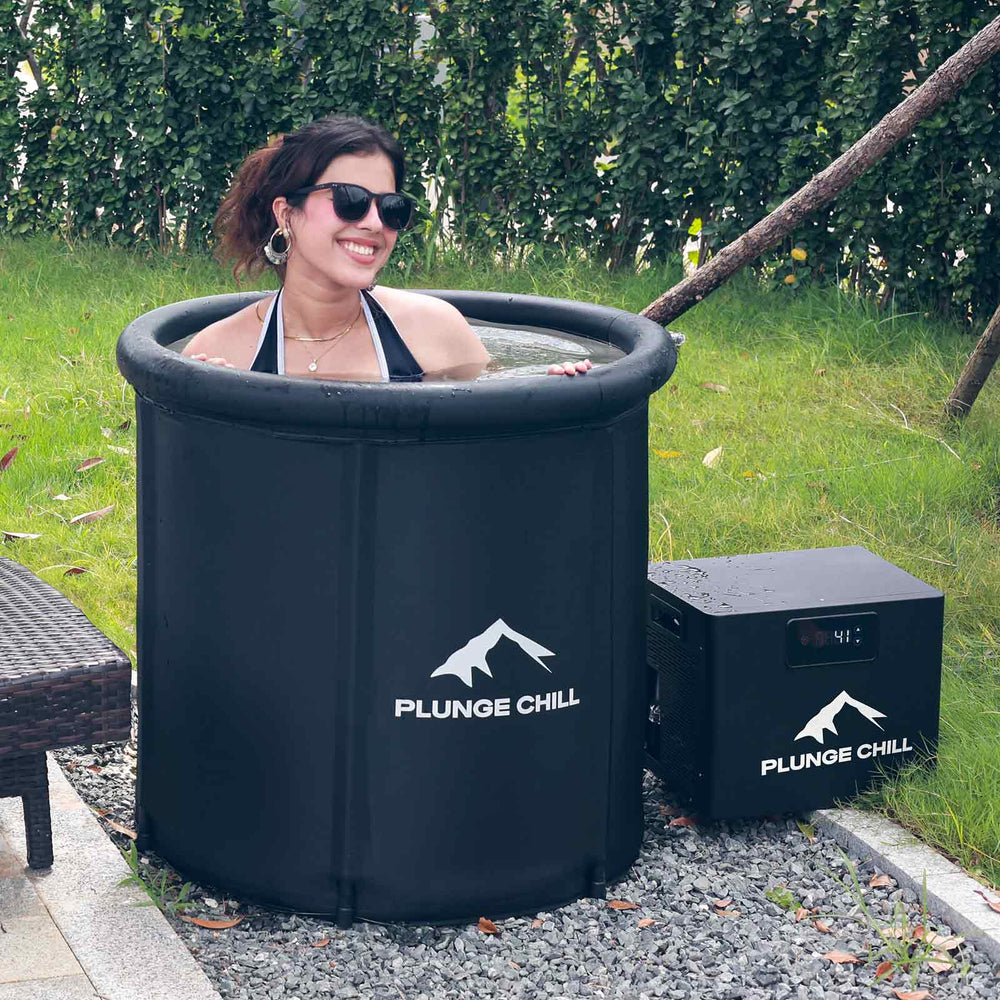
As a sports rehabilitation specialist and strength coach, I have used cold-water immersion with professional athletes and everyday lifters through tournament weekends, endurance events, and congested training blocks. Ice baths are not a cure-all, but when matched to the right goal, dose, and timing, they can be an effective recovery tool. This guide synthesizes clinical practice and current research to help you decide whether, when, and how to use ice baths safely and effectively, and how to choose and care for at‑home cold plunge equipment.
What an Ice Bath Is—and What It Isn’t
An ice bath, also called cold‑water immersion, is a short, deliberate submersion of the body in cold water. Practical protocols often sit in the 50–59°F range for a few minutes, using a bathtub with ice or a dedicated plunge tub. Clinical and consumer guidance from Cleveland Clinic and Mayo Clinic Health System converges on brief exposures, careful temperature monitoring, and gradual progression from seconds to minutes rather than pushing extremes. In contrast to cryotherapy chambers that cool with cold air, immersion cools tissue more rapidly and uniformly because water pulls heat much faster than air.
It is important to separate what a cold plunge likely does—rapid vasoconstriction, lowered tissue temperature, slower nerve conduction, and reduced perceived soreness—from what many people assume it does. Ice baths can make sore muscles feel better, and they can accelerate “readiness” between efforts, but their effects on deep intramuscular inflammation and long‑term adaptation are more nuanced than many headlines suggest.

How DOMS Happens and How Cold Exposure Interacts with It
Delayed‑onset muscle soreness, or DOMS, is the dull, diffuse pain and stiffness that peaks about one to three days after unaccustomed or high‑load eccentric exercise. It reflects microtrauma, temporary strength deficits, and local chemical signaling that drives eventual adaptation. Immersion in cold water rapidly constricts vessels and slows metabolic activity. That can blunt the sensation of soreness and reduce local swelling, but soreness relief and swelling are not the same as down‑regulating the body’s inflammatory machinery inside the muscle.
Two controlled lines of evidence illustrate this distinction. A randomized trial using very cold, brief immersions immediately after eccentric work found no meaningful reductions in pain, swelling, or strength loss compared with tepid water; sit‑to‑stand pain at 24 hours was actually higher in the cold group, suggesting protocol and population matter (British Journal of Sports Medicine via PubMed Central). In parallel, biopsy‑based work in resistance exercise shows that cold‑water immersion does not reduce intramuscular inflammatory or cellular stress markers compared with active recovery, even though people may feel better (PubMed Central).

What the Evidence Says: Relief, Recovery, and Performance
Current research supports targeted, short‑term benefits with important caveats.
A meta‑analysis focused on fatigue and performance indicates that cold‑water immersion can reduce perceived soreness and effort immediately after exercise, lower creatine kinase at 24 hours, and reduce blood lactate at 24–48 hours, while showing little effect on inflammatory markers like CRP or IL‑6 and inconsistent effects on explosive performance tests (PubMed Central). A Cochrane review reported a reduction in soreness versus passive recovery, but individual responses and study quality vary, and not all outcomes persist beyond the first day. Meanwhile, a randomized trial in untrained individuals using three one‑minute immersions around 41°F immediately post‑exercise did not improve DOMS markers versus tepid water, underscoring that protocol details and training status affect results (British Journal of Sports Medicine via PubMed Central).
In broader wellbeing research outside sport, a systematic review and meta‑analysis suggests time‑dependent effects: acute increases in inflammatory markers shortly after cold exposure, reductions in perceived stress at roughly 12 hours, and narrative evidence for improved sleep quality and a lower rate of sickness absence among cold shower users (PLoS ONE). The authors emphasize that evidence is limited by few randomized trials and non‑athlete samples.
Two patterns emerge from these findings. First, immediate subjective relief and markers of “readiness” often improve, which is useful between tightly scheduled efforts. Second, the biological story is not simply “cold reduces inflammation.” In fact, acute inflammation may rise transiently, and intramuscular inflammation after resistance training appears similar between cold immersion and active recovery. That distinction helps reconcile why cold plunges can feel good now without necessarily shifting the molecular signals we rely on to get stronger later.
Strength and Hypertrophy: Timing Matters
For athletes chasing muscle gain or strength, timing and frequency of cold exposure are critical. Evidence in resistance training shows that routine post‑workout cold immersion can blunt long‑term increases in strength and muscle size (Journal of Physiology; Journal of Strength & Conditioning Research; Ohio State Health). Biopsy‑based work suggests this is not primarily due to reductions in inflammatory signaling inside muscle; other pathways—such as blunted anabolic signaling or temperature‑dependent processes—are likely at play (PubMed Central).
In practical terms, if your priority is hypertrophy or maximal strength, delay cold plunges 24–48 hours after lifting so the adaptive signaling you trained for can unfold. Conversely, if you are in a competition window or a two‑a‑day scenario and feeling fresh matters more than marginal long‑term gains, a short plunge soon after the session can be a strategic recovery choice.

Cardiovascular and Safety Considerations
Cold water produces a rapid spike in breathing, heart rate, and blood pressure—called the cold shock response—especially in the first minute after immersion. This response increases drowning risk and places acute stress on the cardiovascular system (American Heart Association; Harvard Health). Hypothermia can begin in water below about 65°F, and water removes heat roughly twenty‑five times faster than air, which is why short exposures and rewarming logistics matter.
People with heart disease, uncontrolled hypertension, diabetes, peripheral neuropathy, Raynaud’s phenomenon, venous stasis, poor circulation, or cold agglutinin disease should consult a clinician before trying cold plunges (Cleveland Clinic; Scripps Health; Mayo Clinic Health System). No one should plunge alone. Outdoors, avoid water with a current or overhead ice, keep towels and warm layers within reach, and transition to a warm environment promptly.
Practical Protocols by Goal
Most of the reputable clinical guidance aligns on starting warmer and shorter, progressing gradually, and monitoring both temperature and total time. Beginners commonly start between 50 and 59°F for one to three minutes, building tolerance before considering additional time. Advanced users sometimes explore colder ranges, but more is not better here; the safest guidelines cap sessions short and emphasize comfort, breathing control, and exit readiness (Cleveland Clinic; Mayo Clinic Health System). Some consumer sources endorse longer immersions up to 10–20 minutes in the 50–59°F range, but clinical sources caution against long durations and advise erring on shorter exposures, especially without direct supervision (Ohio State Health; Harvard Health).
To help reconcile these differences, match the protocol to the objective. Post‑competition cool‑downs, heat stress, and quick turnarounds favor a short plunge for perceived soreness and readiness. Heavy lifting and hypertrophy phases favor delaying or skipping cold exposure for a day or two. Evening plunges are frequently reported to aid sleep, but this is largely anecdotal; proceed based on your own response and keep exposures brief (Cleveland Clinic; PLoS ONE).
Practical Temperature and Time Ranges
Experience/Goal |
Water temperature |
Time per session |
Notes |
New to cold immersion |
50–59°F |
1–3 minutes |
Start warmer, exit early if breathing is uncontrolled; progress slowly (Cleveland Clinic). |
Experienced, targeted recovery |
39–50°F |
Up to 5 minutes |
Use for tight turnarounds after hard efforts; shorter is safer (Cleveland Clinic). |
General wellness or alertness |
50–59°F |
30–120 seconds |
Brief exposures suffice for most; reassess sleep and stress responses over weeks (Mayo Clinic Health System; PLoS ONE). |
Hypertrophy/strength focus |
50–59°F (if used) |
1–3 minutes, delayed 24–48 hours after lifting |
Avoid immediate post‑lift immersion to prevent blunting adaptations (Ohio State Health; Journal of Physiology; Journal of Strength & Conditioning Research). |
Evidence Snapshot: What Improves, What Doesn’t
Outcome |
Ice bath effect vs. control |
Context and source |
Perceived soreness (immediate) |
Lower immediately post‑exercise |
Meta‑analysis shows immediate reductions in DOMS and RPE; effects fade by 24–48 hours for many outcomes (PubMed Central). |
Creatine kinase (24 h) |
Lower at 24 hours |
Suggests reduced circulating muscle damage marker at 24 hours; not consistent at 48 hours (PubMed Central). |
Blood lactate (24–48 h) |
Lower at 24–48 hours |
May reflect faster clearance or redistribution; mechanism not fully established (PubMed Central). |
Inflammatory markers |
No clear reduction vs. active recovery; acute increases reported |
Biopsies show no intramuscular advantage over active recovery; broader review shows acute inflammatory rises with later stress reduction (PubMed Central; PLoS ONE). |
Explosive performance (e.g., jumps) |
Inconsistent |
Signals depend on protocol; single‑study hints at very cold water benefits are uncertain (PubMed Central). |
Sleep and stress |
Potential improvements |
Sleep quality and stress reductions appear time‑dependent, with limited RCT data (PLoS ONE). |
Two under‑appreciated details deserve emphasis inside practice conversations. First, inflammation, swelling, and pain are related but distinct. Feeling better after a plunge does not prove lower intramuscular inflammation; biopsy studies do not show that advantage versus active recovery in resistance training (PubMed Central). Second, the most dangerous minute of cold exposure is the first. The cold shock response peaks early, so your breath control strategy and safe exit plan matter more than adding extra minutes at the end (American Heart Association; Harvard Health).
Reconciling Conflicting Guidance
You will encounter different recommendations for temperature and session length. Clinical sources often recommend three to five minutes with conservative temperature caps and emphasize cardiovascular safety (Cleveland Clinic; Harvard Health). Some sport performance articles reference ten to twenty minutes at 50–59°F, reflecting endurance‑focused cooldowns and historical practice patterns (Ohio State Health). These differences likely stem from definitions, populations, and outcomes: athletes in endurance blocks versus general wellness users, immediate readiness versus long‑term adaptation, and mechanistic versus applied endpoints.
When in doubt, default to the conservative end of clinical guidance, shorten the dose, and place cold exposure away from the training sessions where you most want adaptation.
Product Buyer’s Guide and Care Tips
As a product reviewer and rehab coach, I prioritize safety, simplicity, and hygiene. A bathtub with ice works for experimentation; a dedicated plunge tank becomes valuable if you use cold exposure regularly. High‑end systems can cost up to $20,000.00 and offer more precise temperature control, filtration, and better insulation, which lowers ice and electricity costs over time (Mayo Clinic Health System). Collapsible tubs are an economical middle ground and can still deliver full‑body immersion when placed on a balcony or in a garage (Cleveland Clinic).
Depth matters more than length or width in practice. You want to submerge to the chest comfortably, not fight to stay down or sink awkwardly. A reliable thermometer is non‑negotiable; “feels cold” is not good enough. For indoor setups, consider drainage and splash management; water is heavy and a wet floor in an apartment can quickly become a building problem.
Water quality is the hidden workload of cold plunges. Filtration and sanitation features reduce the need for frequent draining, especially if multiple family members are using the tub. In my experience, a basic filter combined with routine surface cleaning keeps odors and films at bay, but sanitation protocols vary by manufacturer.
Compressor noise and energy draw are frequently overlooked. Plunge chillers hum like a small appliance and will cycle more in warm climates; seek published noise ratings and ask for energy consumption estimates at your target temperature.
If you plan to move soon, weight and portability matter. A hard‑plumbed in‑ground tub is a project; modular units with quick‑disconnect hoses make relocation easier.

What I Recommend in the Clinic
I use a simple decision tree. When the goal is to feel better for tomorrow’s effort—back‑to‑back games, a long run the next morning, or training camp—short plunges in the 50–59°F range for one to three minutes provide quick relief, followed by gentle rewarming and light movement. I avoid post‑lift plunges for lifters chasing hypertrophy; we schedule any cold exposure that day in the evening or the next morning. Before major competitions in hot weather, we sometimes use a short plunge after the final hard session to accelerate cooldown and readiness. After all of these, athletes sit with a strength coach or athletic trainer to reflect on subjective responses, sleep, and performance because individual variability is real.
If an athlete presents with sharp, localized pain, numbness, or motor loss, I do not use cold plunges to mask it; I evaluate for injury and escalate care when indicated (Cleveland Clinic). Cold is a recovery adjunct, not a substitute for diagnosis and treatment.
Safety, Rewarming, and Combining Modalities
Set the thermometer first, then set a timer, and practice calm, nasal‑first breathing during the initial immersion. As you exit, dry quickly, dress warmly, and move lightly to restore temperature. A sauna session of about fifteen to thirty minutes after a plunge can help normalize core temperature; this pairing is common in practice and discussed in clinical guidance, though individual tolerance varies (Cleveland Clinic). If your priority is adaptation to training, avoid building a habit of cold exposure immediately after every session; periodize it like any other recovery modality (Ohio State Health; PubMed Central).
Two Points of Disagreement and Why They Happen
Some sources equate soreness relief with reduced inflammation, while controlled studies suggest that intramuscular inflammation after resistance exercise is not lower with cold immersion than with active recovery. This disagreement likely reflects different definitions and measurements—subjective soreness and swelling are not the same as cellular inflammatory signaling—and different comparators (ice versus tepid water versus active cycling) (PubMed Central; PLoS ONE).
Another disagreement concerns how long to stay in the water. Clinical outlets tend to cap sessions at a few minutes, citing safety and adequate dose for relief, while some sport performance notes describe ten to twenty minutes at higher temperatures as commonplace. This likely reflects differences in population, risk tolerance, supervision, and goals. A conservative, safety‑first interpretation is warranted for home users without medical oversight (Cleveland Clinic; Harvard Health; Ohio State Health).
A single‑study subgroup signal suggests that very cold water under about 50°F might improve jump performance at twenty‑four hours, but this remains uncertain.
Claims that routine cold exposure meaningfully increases brown fat and burns a significant number of calories are often extrapolated beyond current applied sport contexts.
A report of a roughly twenty‑nine percent reduction in sickness absence among cold shower users appears in narrative synthesis but not as a pooled randomized effect.

Quick Product Care Notes
Rinse or shower before you plunge to reduce skin oils, keep the lid on between sessions to limit debris, and maintain whatever filter schedule the manufacturer specifies. Temperature stability depends on ambient conditions; expect longer chiller cycles in summer and plan for energy use accordingly. If your system lacks built‑in filtration, be prepared to drain and clean more often and to sanitize the surfaces by hand.
FAQ
Is an ice bath better than an active cooldown after lifting? For resistance exercise, intramuscular inflammatory and cellular stress markers do not appear lower with cold immersion than with active recovery, and regular post‑lift cold exposure can blunt long‑term strength and hypertrophy. If muscle growth is the goal, favor an active cooldown and delay any cold plunge by a day or two (PubMed Central; Journal of Physiology; Journal of Strength & Conditioning Research).
How cold should the water be for recovery without unnecessary risk? Beginners do well in the 50–59°F range for one to three minutes while building tolerance. Experienced users can explore slightly colder water, but shorter exposures are safer, and many clinical sources advise capping sessions around five minutes in unsupervised settings (Cleveland Clinic; Mayo Clinic Health System; Harvard Health).
Can ice baths help me sleep? Some people report better sleep after brief evening plunges, and broader wellbeing research notes improvements in sleep quality, though the evidence is limited and not uniform. Keep exposures short, monitor your own response, and prioritize overall sleep hygiene (PLoS ONE; Cleveland Clinic).
Are ice baths safe if I have high blood pressure or heart disease? Cold immersion acutely spikes breathing, heart rate, and blood pressure and can be dangerous in cardiovascular disease. People with heart conditions, uncontrolled hypertension, poor circulation, neuropathy, Raynaud’s, venous stasis, diabetes, or cold agglutinin disease should consult a clinician first. No one should plunge alone (Cleveland Clinic; American Heart Association; Scripps Health).
Should I combine ice baths with sauna? Alternating cold and heat is common and can help restore core temperature and comfort. Many people enjoy a fifteen to thirty minute sauna session after a short plunge. As with cold immersion, build tolerance gradually and monitor for light‑headedness or excessive fatigue, especially after intense training (Cleveland Clinic).
Takeaway
Ice baths can reduce perceived soreness right away, lower some blood markers of muscle damage by the next day, and help you feel ready for another session. They do not reliably damp down intramuscular inflammation after lifting and can blunt long‑term strength and hypertrophy if overused immediately post‑workout. The safest and most effective approach is specific: keep water in the 50–59°F range to start, begin with one to three minutes, never plunge alone, and time your sessions so they support your training priorities. For competition turnarounds, a short cold plunge can be an excellent tool; for muscle gain phases, delay or skip it after lifting. If you decide to buy a plunge system, prioritize depth, sanitation, and temperature control, and verify care and energy requirements with the manufacturer. As with any recovery modality, you will get the best results when cold exposure is integrated thoughtfully into a broader plan that also protects sleep, nutrition, and training quality.
Sources referenced in this article include Cleveland Clinic, Mayo Clinic Health System, PLoS ONE, PubMed Central trials and meta‑analyses, Ohio State Health, Harvard Health, the American Heart Association, Scripps Health, and Cochrane.
References
- https://digitalcommons.cedarville.edu/cgi/viewcontent.cgi?filename=1&article=1539&context=research_scholarship_symposium&type=additional
- https://www.health.harvard.edu/staying-healthy/can-ice-baths-improve-your-health
- https://www.mcphs.edu/news/physical-therapist-explains-why-you-should-chill-out-on-ice-baths
- https://ideaexchange.uakron.edu/cgi/viewcontent.cgi?article=3606&context=honors_research_projects
- https://www.marquette.edu/innovation/documents/arora_ice_bath_recovery.pdf
- https://sncs-prod-external.mayo.edu/hometown-health/speaking-of-health/cold-plunge-after-workouts
- https://pmc.ncbi.nlm.nih.gov/articles/PMC2465319/
- https://health.osu.edu/wellness/exercise-and-nutrition/do-ice-baths-help-workout-recovery
- https://www.unh.edu/unhtoday/news/release/2013/08/19/unh-research-post-run-ice-baths-not-beneficial-strength-soreness
- https://health.clevelandclinic.org/what-to-know-about-cold-plunges