As a sports rehabilitation specialist and strength coach who also reviews cold plunge products, I get the timing question every week: should you plunge before or after training? The honest, evidence-based answer is that both can be useful, but they serve different purposes and come with trade-offs. This guide distills what peer‑reviewed research, clinical guidance, and on‑the‑ground coaching practice actually support, and it shows you how to tailor cold-water immersion to your goals without undermining your training.
What a Cold Plunge Does: The Physiology That Matters
A cold plunge—also called cold-water immersion—is deliberate submersion in cold water for a short period to induce specific physiological effects. The immediate response is rapid vasoconstriction in skin and muscle that limits swelling, reduces local temperature, and slows nerve conduction, which can blunt pain. When you get out and rewarm, blood vessels dilate and circulation rises. The combined effect can reduce perceived soreness and help you feel ready sooner, even though downstream inflammatory markers often change little or not at all across studies. Reviews in Sports Medicine and a meta-analysis covering jumps, soreness, perceived exertion, creatine kinase, and lactate consistently show small to moderate improvements in how sore and fatigued people feel right away, with more mixed objective changes over the next one to two days (Sports Medicine; Frontiers in Physiology; Journal of Strength and Conditioning Research).
Immersion also imposes hydrostatic pressure that pushes fluid centrally, increasing preload and cardiac output without extra muscular work, which can mimic some “active recovery” benefits while you are essentially resting. That helps explain why many athletes report less heaviness and stiffness after a plunge even when blood tests look unchanged (National Center for Biotechnology Information review). On the autonomic side, several studies and reviews show a short-term rise in sympathetic activity during exposure followed by increased parasympathetic tone, often captured as higher heart rate variability; Harvard Health notes that these HRV shifts do not automatically equate to better long‑term cardiovascular outcomes, so they should be interpreted as short‑term regulation rather than a guarantee of heart health.
Finally, cold can activate brown fat and increase thermogenesis during rewarming, which has become part of the modern narrative around resilience and metabolism. Clinical sources note this effect but caution not to overstate weight-loss claims because the energy burn per session is modest in most people (Rutgers; University of Utah Health audio transcript). In practice, the recovery effects, not calorie burn, are why performance athletes use cold.

The Timing Question: Before vs After Training
The right time depends on your goal, environment, and the training stimulus. Cold before exercise changes the “readiness” state you take into the session; cold after exercise changes the recovery signal your tissues receive from that session. Those are not the same thing.
Cold Before Workouts
Pre‑workout cold is a targeted tool when heat is the enemy. Pre‑cooling in hot, humid conditions lowers core temperature and can help sustain output in events where overheating caps performance. Evidence summarized by coaches and sport scientists points to cold-water immersion as one of the stronger pre‑cooling methods for hot conditions, outperforming ice-fluid ingestion in some studies (European Journal of Sport Science; BMC Medicine, referenced in Peloton editorial). A small study reported short‑term increases in alertness following five minutes of relatively cool water, which aligns with athlete reports, but the performance carryover remains uncertain and context‑dependent. One verification step would be to review the original trial protocol and sample from the cited Biology paper rather than secondary reporting.
There are real trade‑offs. Cooler muscle is less explosive, and several lab studies have documented transient decreases in strength, jump height, power, and sprint ability after cold exposure, with handgrip and cycling power among the outcomes affected in the short term (National Center for Biotechnology Information review). If your session emphasizes heavy lifting, high-velocity power, or sprint mechanics, a pre‑workout plunge can impair immediate output. In contrast, athletes facing heat stress, prolonged efforts, or technical sessions where overheating is the limiter can benefit from brief pre‑cooling when it is thoughtfully dosed and followed by adequate rewarming and activation.
Cold After Workouts
Post‑workout plunging is the classic recovery play. Meta-analyses show that cold after training reduces immediate soreness and perceived exertion and can lower creatine kinase at 24 hours, with modest or inconsistent effects on jump performance the next day and little change in systemic inflammatory markers such as C‑reactive protein and interleukin‑6 (Frontiers in Physiology; Sports Medicine). That is exactly how it feels in the clinic: athletes report less ache, and they move easier sooner, even if objective strength is not dramatically different on day two.
The trade‑off is the adaptation signal. Repeatedly cooling muscles right after lifting can blunt temperature‑dependent pathways tied to hypertrophy and strength gains. A series of studies and meta-analyses suggest smaller long‑term increases in muscle size and strength when cold immersion follows resistance training session after session, whereas endurance adaptations appear less affected or unaffected (Journal of Physiology; Sports Medicine; Mayo Clinic Health System; Ohio State University Wexner Medical Center). If building muscle and strength is your top priority, delay cold exposure for many hours, keep it off your heaviest days, or confine plunges to deloads and competition windows. For endurance athletes managing dense training blocks, or team sports with back‑to‑backs, the soreness relief and readiness benefits can justify using cold more often.

Pre vs Post at a Glance
Scenario |
Likely Benefit |
Potential Drawback |
Best Practice |
Key Sources |
Pre‑workout in heat |
Lower core temperature; better thermal tolerance |
Transient loss of power and strength |
Brief pre‑cooling before hot sessions; rewarm and activate before sets |
European Journal of Sport Science; BMC Medicine; NCBI review |
Pre‑workout for strength/power |
Little; may feel alert |
Reduced jump, sprint, and grip output immediately |
Avoid pre‑plunge for heavy lifts, jumps, or sprints |
NCBI review |
Post‑workout for soreness |
Less immediate soreness and perceived exertion; lower CK at 24 hours |
Mixed effect on next‑day performance; may blunt hypertrophy |
Use when soreness/readiness matters, avoid after key hypertrophy sessions |
Frontiers in Physiology; Sports Medicine; Journal of Physiology |
Between same‑day events |
Faster subjective recovery |
Power may remain suppressed vs. heat |
Consider warm water immersion for short‑term power, cold for swelling |
American Physiological Society/Physiology.org |
General well‑being and sleep |
Mood and stress benefits in some groups |
Evidence heterogeneous; heart conditions require caution |
Short, tolerable sessions; never alone; medical clearance if needed |
Harvard Health; Cleveland Clinic; Mayo Clinic Health System |
An overlooked insight here is that hot water immersion can preserve muscle power between close bouts better than cold. A controlled comparison in recreational athletes found lower immediate jump height after cold vs hot, while muscle damage markers did not differ across conditions; that suggests heat is preferable when you must produce power again soon, whereas cold is better when reducing soreness and swelling is the priority (American Physiological Society/Physiology.org). This runs counter to the common “cold is always better” recovery meme and is a useful nuance for meet-day choices.
Dosing That Works in the Real World
There is no single magic protocol, and credible sources present slightly different ranges because goals, tolerance, and populations differ. A practical, evidence‑aligned window looks like this.
Beginners do best at 50–59°F for about three minutes and can cap at roughly five minutes as they adapt. That aligns with clinical guidance to “start low and go slow,” using a thermometer and exiting if the sensation moves from tolerable cold to pain, numbness, or dizziness (Cleveland Clinic). Experienced users who are chasing stronger recovery effects after hard sessions may use 41–50°F for about 10–15 minutes, especially if they are healthy and acclimated, as suggested by network meta‑analysis groupings that favor 41–50°F for soreness and creatine kinase reduction when tolerated (Frontiers in Physiology). Team and collegiate protocols also commonly use 50–59°F for 10–20 minutes post‑exercise, which Ohio State University reiterates; however, that longer end is not necessary for most recreational athletes, and much of the benefit accrues in the first several minutes.
Frequency depends on training density. During congested competition weeks, you may plunge after key sessions several times in the same week. During strength blocks, delay cold for 24–48 hours after heavy lifting or skip it entirely on hypertrophy days to protect the adaptive signal (Ohio State University Wexner Medical Center; Mayo Clinic Health System). If you simply enjoy cold for mood or sleep, two or three brief sessions each week at tolerable temperatures work for most people. Claims that exactly eleven minutes per week is a threshold are based on specific winter‑swimming cohorts and should not be treated as a universal dose. One verification step would be to examine cohort demographics and cold exposure specifics in those winter‑swimming papers to judge relevance for non‑acclimated adults.
Goal‑Based Recommendations You Can Use
Primary Goal |
When to Plunge |
Target Temperature |
Typical Duration |
Rationale and Notes |
Maximize strength and hypertrophy |
Delay by 24–48 hours after heavy lifting; avoid immediately post‑lift |
50–59°F if used on rest days |
3–8 minutes for general well‑being |
Protects anabolic signaling; enjoy cold on rest days without blunting gains (Journal of Physiology; Sports Medicine) |
Build endurance and handle volume |
After key aerobic sessions or during congested periods |
41–55°F depending on tolerance |
6–12 minutes |
Reduces soreness and perceived exertion; mixed biomarker changes but helpful for readiness (Frontiers in Physiology) |
Two events in one day |
Prefer heat if you need power again soon; use cold for swelling |
Hot water at about 104°F for brief soak; cold at 50–59°F if needed |
5–8 minutes (either) |
Heat preserved jump power vs cold in controlled testing; cold still helps soreness and swelling (American Physiological Society/Physiology.org) |
Train in heat |
Pre‑cool before long or intense work |
50–59°F |
3–6 minutes; then active warm‑up |
Lowers thermal strain; re‑activate muscles before performance (European Journal of Sport Science; BMC Medicine) |
General wellness, mood, sleep |
Any time not adjacent to crucial strength work |
50–59°F |
2–5 minutes |
Stress and sleep benefits show up hours later in some cohorts; keep it enjoyable and safe (Harvard Health; University of Oregon, Journal of Thermal Biology) |
Another overlooked nuance is that cold immersion might influence how your body handles protein over the hours after training. A registered clinical trial is examining whether plunging after resistance exercise alters post‑meal amino acid appearance in blood—essentially, the nutrient kinetics athletes care about for repair and growth. Results are not yet published; until they are, it is prudent to separate plunges from immediate post‑lift feeding when hypertrophy matters. A simple verification step is to check the ClinicalTrials.gov entry for updates and look for peer‑reviewed publication from that protocol.

Safety First: Who Should Be Cautious or Avoid Cold Plunges
The initial cold shock spikes breathing, heart rate, and blood pressure. That makes cold exposure risky for people with cardiovascular disease, arrhythmias such as atrial fibrillation, uncontrolled hypertension, significant circulation problems including peripheral artery disease or Raynaud’s, uncontrolled diabetes or neuropathies, or anyone on cardio‑active medications that blunt normal responses. Harvard Health and Cleveland Clinic both urge medical clearance for these groups. Pregnancy safety is not established in controlled research; large health systems recommend caution and consultation. Dizziness, hyperventilation, and fainting can occur, especially with near‑freezing water, so beginners should choose controllable environments, stay shallow, and never plunge alone (Cleveland Clinic; Ohio State University; Mayo Clinic Health System; Kaiser Permanente).
Cold shock passes in the first minute for most people when breathing is controlled. Practice long, slow exhales to minimize hyperventilation, keep your head above water, and exit early if you become numb, disoriented, or short of breath. Rewarm with light movement, dry clothing, and a warm environment; a sauna for 15–30 minutes is reasonable if you are healthy and acclimated (Cleveland Clinic).

Product and Buying Advice from the Field
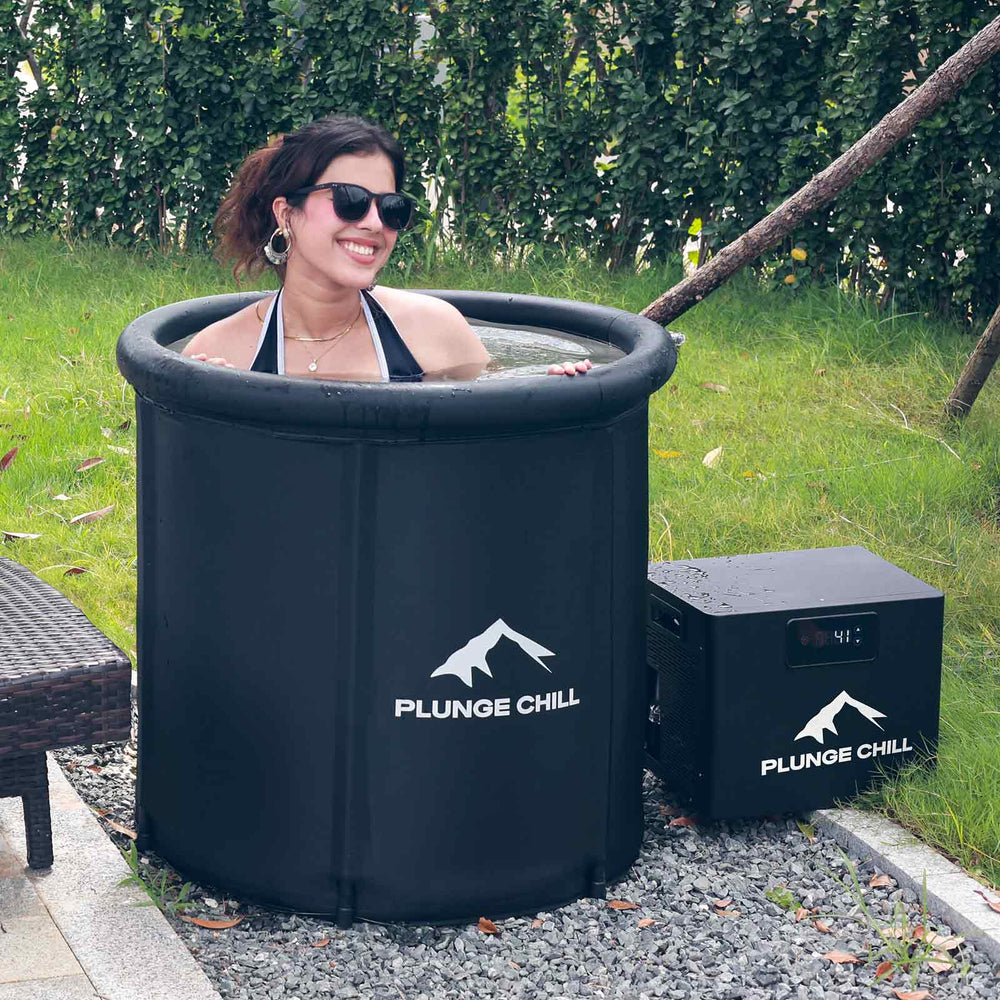
The right hardware depends on your space, budget, and how often you use it. For beginners and apartment dwellers, a basic inflatable tub under $100 paired with ice and a handheld thermometer gets you into the therapeutic range. A stock tank from a farm store for about $100 plus ice is a durable middle ground. Dedicated plunge units that chill and filter water continuously run from a few thousand dollars up to about $20,000 for full‑featured systems, which makes sense for teams, clinics, or serious home gyms that value convenience and consistency (University of Utah Health; Mayo Clinic Health System).
From evaluating dozens of units in weight rooms and clinics, the features that matter most are reliable temperature control into the 39–50°F range, effective filtration with easy‑to‑change filters, a sanitation solution that fits your facility’s standards, a drain system that does not fight you, and a chiller that is quiet enough for your space. Compact footprint, insulated lids to reduce energy costs, and hoses or quick‑disconnects that do not leak are practical differentiators when you use the system multiple times per day. One verification step is to confirm each feature against the manufacturer’s manual and, if possible, run a trial to check noise and recovery time to the set temperature in your actual room.
If you are staying DIY, keep it simple: a tub you can step out of safely, a reliable thermometer, enough ice to bring water to 50–59°F, and a plan for a gradual cooldown of your breath. Collapsible plunge tubs can be a smart compromise because they are portable and easy to store, and a careful rewarming plan keeps the experience safe and repeatable (Cleveland Clinic).

Setup, Care, and Hygiene Basics
The simplest setup is to fill a tub halfway with cold tap water, add ice until the bath is within your target range, and keep a towel and warm clothes within reach so you do not have to walk across a cold floor when you exit. Do not plunge in natural bodies of water if current, waves, or ice create entrapment or drowning risk; many adverse events come from uncontrolled environments rather than the cold per se (Mayo Clinic Health System; Kaiser Permanente). Measure temperature every time you plunge. If you use a sauna for rewarming, sit upright, hydrate, and step out if you feel lightheaded.
Daily maintenance depends on your system. Integrated plunge tanks with filtration and sanitation can run for weeks between full drains when maintained as directed; ice‑based setups should be drained and refilled frequently because the water warms and becomes contaminated more quickly. One verification step is to follow the manufacturer’s water‑care schedule and test strips to confirm sanitizer levels before use.

Evidence Snapshot and Where Sources Disagree
Two independent themes emerge from modern analyses. First, cold clearly helps how people feel right away. Meta-analyses show lower immediate soreness and perceived exertion after plunges and reductions in creatine kinase at 24 hours, with little to no consistent effect on inflammatory markers and mixed results for neuromuscular performance such as jump height the next day (Frontiers in Physiology; Sports Medicine). Second, frequent post‑lift plunges can blunt strength and hypertrophy signaling across weeks to months, which is why strength‑focused athletes should time or limit cold use around key sessions (Journal of Physiology; Sports Medicine; Mayo Clinic Health System; Ohio State University).
A Harvard Health summary of a PLOS One analysis highlights stress reduction and improved sleep quality in men after ice baths, with little evidence for immunity or mood improvements and broad heterogeneity that limits precision. That contrasts with strong athlete anecdotes about mood and resilience; likely reasons include different definitions of “mood,” short versus long follow‑ups, sex differences, and protocol heterogeneity. A University of Oregon team reported that a single 15‑minute plunge in college students reduced heart rate and blood pressure afterward and improved mood three hours later, a pattern that reinforces short‑term recovery and autonomic shifts while saying nothing definitive about chronic outcomes (Journal of Thermal Biology).
Finally, a registered clinical trial is testing whether post‑lift plunges alter the time course of amino acids in the blood after protein intake. If cold meaningfully changes nutrient appearance, the best‑practice window for post‑workout feeding and plunging may narrow further for lifters. That question remains open and is worth monitoring through publication rather than changing practice preemptively.

Practical Parameters and Guardrails
The most defensible starting parameters are straightforward. For new users, 50–59°F for roughly three minutes is safe and effective; build to about five minutes if comfort allows. For experienced users chasing stronger analgesia after brutal sessions, 41–50°F for about 10–15 minutes is a realistic ceiling when medically cleared and acclimated. For most recreational athletes, short, frequent, tolerable sessions beat heroic exposures. If your training goal is muscle growth, delay cold after lifting by a day. If your goal is to show up fresher for a second effort the same day, consider warm water immersion for power and cold for soreness, and choose deliberately.
Short FAQ
Is it better to cold plunge before or after a workout?
It depends on the goal. Use pre‑cooling before sessions in the heat to control thermal strain, then actively rewarm and mobilize. Use post‑workout plunging to reduce soreness and perceived fatigue when readiness is the priority. Avoid cold immediately after heavy lifting if you are trying to maximize hypertrophy and strength.
How cold should the water be, and for how long?
A practical evidence‑aligned range is 50–59°F for three to five minutes when you are starting and 41–50°F for about 10–15 minutes if you are experienced and medically cleared. The lower and longer you go, the more cautious you must be. Many of the perceived benefits occur in the first several minutes.
Will cold plunges hurt my muscle gains?
They can if you plunge right after lifting on a regular basis. Multiple analyses show blunted strength and hypertrophy gains when cold follows resistance training session after session. Separate cold from your heaviest strength work by 24–48 hours or keep plunges for deloads, taper, and competition.
Can a cold shower replace a plunge?
Cold showers provide some benefit and are a workable alternative when tubs are impractical, but full‑body immersion produces more uniform cooling and hydrostatic pressure effects. Showers are useful for general well‑being; tubs are better when you specifically want immersion‑driven recovery effects.
How often should I plunge?
Frequency should match your training phase. During dense competition weeks, plunge after key efforts for soreness and readiness. During strength blocks, reduce frequency and avoid plunging after heavy lifting. For general wellness, two or three brief sessions per week at tolerable temperatures are sufficient for most.
Who should not cold plunge?
Anyone with cardiovascular disease, arrhythmias such as atrial fibrillation, uncontrolled high blood pressure, significant circulation problems including Raynaud’s, uncontrolled diabetes or neuropathy, or anyone who is pregnant without clinician guidance should avoid or seek medical clearance first. If you feel dizzy, short of breath, confused, or painfully cold, exit immediately and rewarm.
Takeaway
Cold plunges are a powerful tool when used with intent. Before training, they are best reserved for pre‑cooling in hot conditions, followed by an active warm‑up to restore power. After training, they reliably reduce soreness and perceived fatigue and can help you feel ready sooner, but routine use right after lifting can dampen the very adaptations strength athletes are chasing. Most people do well starting with 50–59°F for three to five minutes, a couple of times per week, and adjusting by training phase. Keep safety non‑negotiable, especially if you have heart or circulation issues. If you are shopping for a plunge, match features and cost to your use case; a simple tub with ice and a thermometer is enough to get started, while high‑end systems add convenience for frequent users. Above all, make timing a strategic choice rather than a habit, and your cold exposure will enhance—rather than compete with—your training.
References
- https://clinicaltrials.gov/study/NCT06565468
- https://www.health.harvard.edu/heart-health/cold-plunges-healthy-or-harmful-for-your-heart
- https://www.rutgers.edu/news/what-are-benefits-cold-plunge-trend
- https://news.uoregon.edu/content/cold-plunging-might-help-heart-health-new-research-suggests
- https://sncs-prod-external.mayo.edu/hometown-health/speaking-of-health/cold-plunge-after-workouts
- https://pmc.ncbi.nlm.nih.gov/articles/PMC2938508/
- https://health.osu.edu/wellness/exercise-and-nutrition/do-ice-baths-help-workout-recovery
- https://www.tcu.edu/news/2024/cold-plunge-tcu-faculty-share-the-cold-truth-of-cold-therapy.php
- https://healthcare.utah.edu/healthfeed/2023/03/cold-plunging-and-impact-your-health
- https://health.clevelandclinic.org/what-to-know-about-cold-plunges