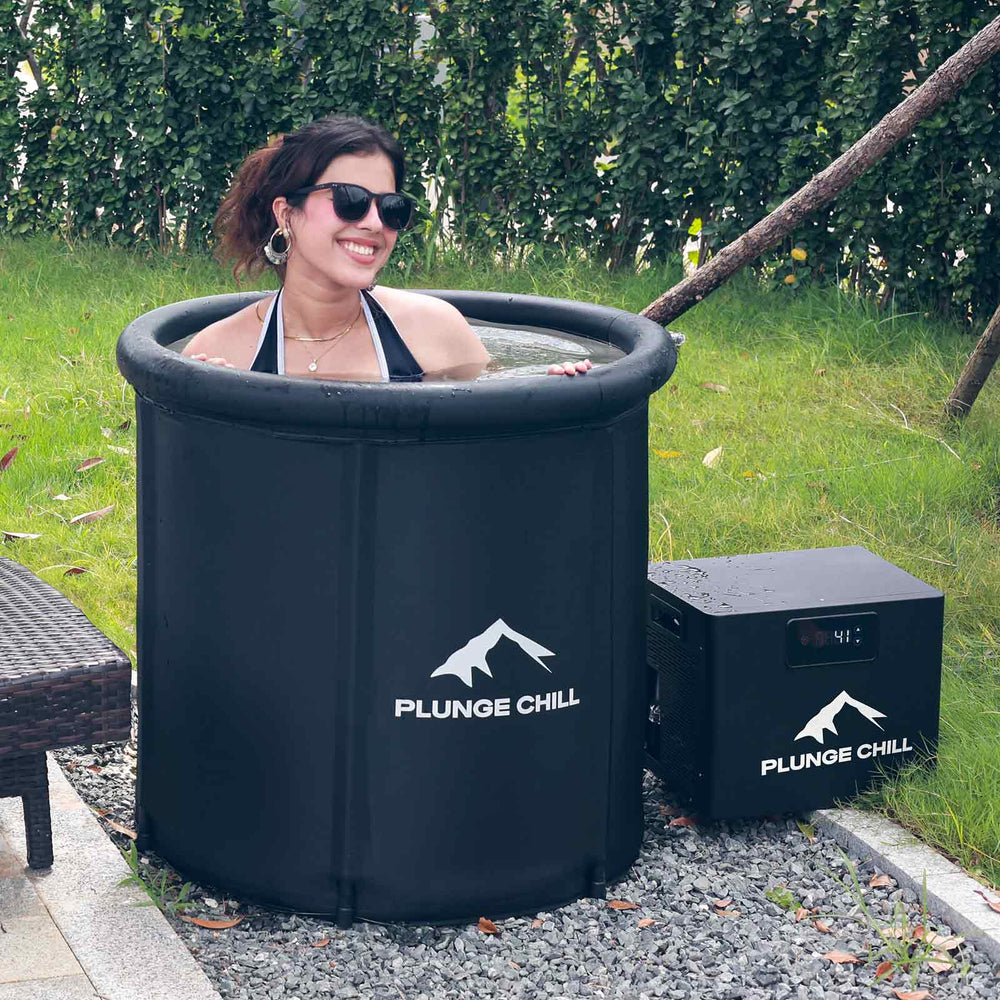
As a sports rehabilitation specialist and strength coach who also reviews cold plunge products, I spend a lot of time helping athletes, weekend warriors, and renters translate cold-water immersion into tight, real‑world spaces. The good news is that you do not need a dedicated spa room or a sprawling deck to build a safe, effective ice bath routine. The key is to choose a compact format that fits your footprint, power, drainage, and noise constraints while maintaining safe temperatures and straightforward water care.
This guide consolidates findings from medical and performance sources with hands‑on product research to show what actually works in apartments, balconies, bathrooms, and garage gyms. You will find practical configuration advice, pros and cons of common small‑space options, specific buy‑smart tips, care routines, and a short FAQ—including timing guidance for lifters who are worried about blunting hypertrophy and renters who must avoid permanent installations.
What “Ice Bath” Means in a Small Space
In sports medicine, cold-water immersion typically means chest‑deep or full‑body exposure in roughly 50–60°F water for a few minutes to drive controlled, short‑term stress that can dampen soreness, modulate mood, and build resilience. Stanford Lifestyle Medicine describes this range with mood and stress‑regulation context. Harvard Health places most consumer “ice baths” at 50–60°F despite the name. A review summarized by Harvard Health of studies in PLOS One describes exposures in the 45–59°F zone with durations from 30 seconds up to 15 minutes depending on protocol. Mayo Clinic Health System notes many people start with 30–60 seconds and work toward 5–10 minutes, emphasizing that optimum timing is still being studied and that water at 50°F or colder is sufficient for strong physiological effects. I coach beginners to start warmer and shorter, and to progress only as breathing control and recovery goals allow.
Two caveats matter for small‑space athletes. First, daily cold immersion immediately after strength training can blunt long‑term muscle‑building signals; this shows up consistently in Mayo Clinic Health System guidance and is echoed in Everyday Health and Women’s Health coverage of exercise physiology papers. Second, short exposures can still trigger a cold‑shock response in the first minute—rapid breathing, spikes in heart rate and blood pressure—so entry should be deliberate, breathing should be paced, and beginners should not plunge alone. Harvard Health and Mayo Clinic Health System stress these safety fundamentals.

Planning a Compact Setup: Constraints That Matter
Cold tubs fit in bathrooms, laundry rooms, garage corners, shaded balconies, and patios if you respect a few hard constraints: filled weight, power, ventilation, door and hallway clearance, and drainage.
Filled weight is the sleeper issue in apartments. The Spruce’s test unit (a self‑contained tub holding about 105 gallons) weighed roughly 1,020 lb when filled. In practice, many compact setups that hold 80–105 gallons will land in the 700–1,000 lb range once you account for water, the tub, and a person. That is my rule‑of‑thumb planning envelope for small spaces.
Power and electrical safety are also non‑negotiable. Plug‑and‑play integrated units commonly require a dedicated 120V, 15A circuit; Plunge’s All‑In documentation is explicit about using a dedicated outlet. Ground‑fault protection is essential, and you should not share a circuit with high‑draw appliances. Chillers need airflow. Renu Therapy’s small‑space guidance highlights ventilation as a performance factor; in a closet‑like nook, lack of airflow can increase duty cycle, reduce chiller efficiency, and add noise.
Drainage and water management make or break compact installs. The most functional small‑space setups either live near a bathtub/shower drain or use a short run to a utility sink. For balcony or patio use, plan a pump‑out path that does not damage landscaping, and protect surfaces with a waterproof mat. Freeze‑proof connectors and outdoor volume compensators from Chief Ice Officer’s guidance help avoid cold‑weather damage if you run outdoor plumbing spurs.

Small‑Footprint Options That Actually Work
Several formats can deliver effective cold immersion in tight quarters. Each has advantages and tradeoffs for renters, budgets, and training goals.
Inflatable and Collapsible Portable Tubs
Inflatables and soft‑sided tubs shine for renters because they store under a bed or in a closet and can be filled via a faucet‑to‑hose adapter. Chilly GOAT’s apartment guidance outlines exactly this approach, including using a small utility pump to drain back into a shower. Portable tubs typically need draining after one or two uses unless you add filtration; even so, the insulated cover helps retain cold between sessions, reducing ice needs. The Spruce’s testers report five‑minute assembly and quick fills for inflatable pods, but you should expect frequent ice top‑ups and routine cleaning every two to three weeks to prevent biofilm.
A recurring question is whether reusable ice packs help. Andrew Conner’s DIY cold plunge testing found reusable packs do not perform well because they retain cold as the tub warms, while Chilly GOAT mentions them as a stopgap when freezer space is tight. The discrepancy likely reflects the difference between highly insulated containers (where slow‑melting blocks help maintain low temperatures) and lightly insulated inflatables, where total heat gain outpaces the packs.
Vertical Barrels and Compact Barrels
Vertical barrels maximize immersion depth on a tight footprint. The Ice Barrel 300 offers about 77 gallons in a tough recycled plastic shell and was cited by Men’s Health for daily usability, with the 400 holding about 105 gallons. Barrels are durable outdoors and insulate better than inflatables, but the height often requires a step for entry and exit, which can be a safety consideration in slick conditions. Without a chiller they require ice and more frequent water changes. Some brands are working on attachable chillers for barrel models; timelines vary.
Compact Integrated Plunges
If you want one unit with chilling, filtration, and a lid inside a balcony‑friendly rectangle, compact integrated systems are increasingly capable. PlungeSage highlights a compact unit at roughly 57 × 25 × 24 inches that chills to about 39°F on a standard 110V plug with filtration and ozone. The Spruce’s testing shows both external‑chiller portables and fully integrated designs from Sun Home that reach 32–37°F, with some pro‑grade models forming floating ice. Integrated units are the most convenient and quietest, and for indoor use their lids and insulation make water care straightforward. Their tradeoff is higher upfront cost and freight logistics, so measure doorways carefully and confirm in‑home positioning with the vendor.
DIY Cooler + External Chiller
For tinkerers, a large, ultra‑insulated rotomolded cooler paired with a chiller and a small pump creates a compact, energy‑efficient system with outstanding cold retention. Andrew Conner’s build uses a cooler of roughly 105 gallons with 3/4‑inch tubing and a 1/4 HP chiller, cooling about 2°F per hour and warming only 1–2°F per day with the lid closed at 40°F water in 75°F ambient air. Because insulation is excellent, you can run a smaller, quieter chiller on a standard outlet without leaving it on constantly. Upfront costs are meaningful, but the design uses standard plumbing parts that are easy to service and scale.
Chest Freezer Conversion
Chest freezer conversions are often marketed as the “cheapest chilling” route, and Andrew Conner observes they can work for a few years if you are careful with sealing and willing to add filtration. However, ready‑made vendors such as Plunge argue the first‑year cost can be high once you include insulation, sealing, drainage, GFCI, filtration, and sanitation, with safety concerns around electrical and entrapment risk. The disagreement likely stems from different bill‑of‑materials assumptions and whether labor, filtration, and safety upgrades are counted. The freezer’s compressor is not designed to chill a large water mass continuously, so reliability and repairability can be weak points for daily use.

A Compact Buyer’s Comparison
Below is a quick snapshot of small‑space‑friendly formats based on the sources cited in this guide and field observations from coaching setups in apartments and garage gyms.
Option |
Footprint fit |
Temperature capability |
Power and noise |
Upfront cost (approx.) |
Strengths |
Tradeoffs |
Inflatable/collapsible tub |
Excellent; stows in closet |
Ice‑dependent; cold tap plus ice often reaches mid‑40s to 50s°F |
No chiller; very quiet |
700.00 (tub only) |
Lowest cost; ultra‑portable |
Frequent draining; more ice; puncture/tear risk |
Vertical barrel |
Small footprint; taller profile |
Ice‑dependent unless adding chiller |
No chiller by default; quiet |
Around $1,000.00 for durable models |
Outdoor‑durable; better insulation than inflatables |
Harder entry/exit; needs step; frequent ice without chiller |
Compact integrated plunge |
Apartment‑friendly rectangle |
32–39°F on many models; heating optional |
120V dedicated circuit typical; quiet |
10,000.00+ |
Set‑and‑forget; filtration and lid; quiet |
Higher cost; freight and doorway logistics |
DIY cooler + chiller |
Compact if planned |
Down to ~40°F; cools ~2°F/hour; excellent retention |
1/4 HP often sufficient; moderate noise |
Around 2,500.00 for parts |
Energy‑efficient; serviceable parts |
Build time; drilling; external hoses |
Chest freezer conversion |
Medium footprint |
Capable of cold; retention depends on lid and sealing |
Compressor hum; not purpose‑built |
Highly variable; parts add up |
Lowest chilling cost if DIY savvy |
Sealing, safety, filtration, reliability concerns |
Numbers reflect reported ranges from The Spruce, PlungeSage, Michael Kummer, and Andrew Conner, combined with brand documentation where relevant. Always confirm current specifications.

Temperature, Time, and Training: What the Evidence Supports
When recovery is the goal, the middle ground often works best: water in the 50–59°F range for a few minutes. Stanford Lifestyle Medicine summarizes mood and stress‑regulation benefits at these temperatures and cautions against very cold exposures. Harvard Health reiterates that most ice baths sit well above freezing but still feel intensely cold, with exposure capped to avoid hypothermia. Everyday Health suggests a weekly total exposure of roughly 11–15 minutes across multiple dips for many healthy adults, with per‑session limits under two minutes when water is below 59°F. Rutgers’ overview is even more conservative about risks below 50°F for the general population, aiming for around five minutes and advising that going much colder provides diminishing returns for general wellness.
Evidence is strongest for short‑term reductions in soreness and perceived fatigue after hard sessions. The longer‑term story is nuanced. Daily post‑training cold plunges may dampen hypertrophy signaling and slow muscle gain; Mayo Clinic Health System and multiple coaching‑level summaries point in the same direction. Endurance adaptations appear less affected. If your priority is muscle gain, separate cold immersion from lifting by many hours or do it on rest days; if soreness reduction is paramount during a dense competition schedule, a brief post‑session dip may still be worth it.
Water Care, Filtration, and Energy
Filtration and sanitation matter even more in small, warm spaces. Michael Kummer’s long‑term testing highlights sediment filtration plus ozone/UV disinfection as a low‑chemical path to clear water. The Spruce’s test crew found that a well‑filtered, continuously circulating integrated system kept water usable for many months, while turning the system off invited rapid biofilm growth. That observation aligns with what I see in small gyms—if you want the water to last, run circulation and keep the lid on.
For portable tubs, a predictable routine keeps hygiene simple: pre‑shower, skim debris, keep a fitted lid on between sessions, and either swap water every one to two uses (as Chilly GOAT notes for simple setups) or add a small inline filter and sanitizer. Pod Company specifies 20‑micron filtration in its chiller bundles; that is sufficient for particulates but should be paired with disinfection if you hold water longer than a few days.
Energy costs hinge on insulation quality and lid discipline. Andrew Conner’s data show that a heavily insulated cooler loses only one to two degrees per day at 40°F with the lid closed in warm ambient conditions, allowing a smaller chiller and shorter run times. Poorly insulated basins act like heat sinks, forcing larger chillers to run longer. That is not a sales claim—it is basic heat transfer and plays out in reader reports where stock tanks required 1 HP chillers that ran almost constantly in summer, while the insulated cooler build ran under an hour per day.
Placement Playbook for Apartments and Balconies
Renters can cold plunge without permanent alterations. Chilly GOAT’s apartment guide recommends a faucet‑to‑hose adapter to fill a portable tub indoors and a small pump to drain back to a bathtub or shower. Deflate and store under a bed when space is tight. A waterproof mat under the tub protects floors and catches splashes. Place the tub near a window or greenery to make the routine more inviting; small environmental touches keep adherence high.
For compact integrated units, confirm a dedicated 120V, 15A circuit, verify door and hallway clearances, and allow airflow around the chiller intake and exhaust. Renu Therapy emphasizes sturdy, level surfaces such as tile or concrete and proximity to a drain for easy cleaning. For outdoor use, shade the basin, secure the lid, and protect the deck from overflow. Chief Ice Officer’s note about freeze‑proof connectors is helpful in cold regions if you run hoses outside.
A quick note on dimensions from brand blogs: one inflatable model’s listed footprint of roughly 34 inches long by 13 inches wide seems extremely narrow for full‑body immersion.

Buying Tips for Tight Spaces
When I evaluate small‑space options, I look for predictable control of temperature and hygiene with minimal friction. For integrated systems, my minimums are a verified cold floor of 37–39°F, a quiet chiller running on 120V, and filtration with either ozone or UV in the loop. I ask about warranty lengths for both the tub shell and the chiller, delivery to the intended room, and service access in the event of a pump swap. For portable setups, I prioritize a fitted insulated cover, a drain you can route to a tub or sink, and an easy way to add a small filter if you want to stretch between water changes. For DIY cooler builds, proper bulkhead fittings, non‑hardening thread sealant, and clean hose routing keep leaks at bay.
Noise and airflow are often underestimated. A “quiet” chiller can still be intrusive in a studio apartment at night. Plan placement so that the fan exhaust is not pointed at bedding or a desk, and expect warmer rooms to demand longer duty cycles.
Overlooked Pitfalls and Mismatched Advice
Insulation’s effect on operating cost is bigger than many buyer’s guides admit. Andrew Conner’s measurements with an ultra‑insulated cooler show minimal temperature drift with the lid closed, while reader reports on uninsulated stock tanks required oversized chillers that ran most of the day in summer. That gap in advice typically comes from showcasing up‑front prices while ignoring heat gain through the basin and lid.
The “cheapest route” debate around chest freezers is another mismatch. Makers like Plunge emphasize total system cost and safety upgrades, while DIYers emphasize the raw appliance price. The truth is both can be correct depending on definitions, climate, and whether you count filtration and GFCI work. If you cannot tolerate downtime or tinkering, a ready‑made compact plunge with standard plumbing parts and a warranty looks smarter despite a higher price.
Finally, timing advice is inconsistent across general wellness pieces. Everyday Health proposes a weekly budget of roughly 11–15 minutes across sessions, while Mayo Clinic Health System focuses on per‑session durations up to 10 minutes and warns lifters about daily post‑training use. The difference likely reflects different target populations and methods: general wellness readers vs athletes, and water temperatures from low‑50s°F to near‑40°F. If in doubt, favor the shorter end, build slowly, and time sessions away from hypertrophy workouts.

Care and Maintenance in Small Spaces
A reasonable routine balances clarity, cost, and convenience. For inflatables and barrels used with ice, drain and clean every one to two uses, rinse before plunges, and consider a mild oxidizer if water sits more than a day. For integrated or DIY units with filtration, keep the lid secured, circulate daily, skim debris, and replace filters as directed. The Spruce’s testers found that leaving systems off leads to fast biofilm growth; keeping them on avoids a bigger cleaning job later. If you pause use for a week, either run a short daily circulation cycle or drain, wipe down, and leave the lid open to dry fully.
Product Snapshots for Small Spaces
For renters who want the lowest friction and the smallest footprint, an inflatable or collapsible tub with a faucet adapter is hard to beat. Chilly GOAT’s portable model is designed to inflate and deflate quickly and includes a buckled cover to reduce ice needs between dips. The Pod Company offers portable tubs with optional chillers rated to around 41–39°F and 20‑micron filtration; the no‑chiller path remains the lightest, cheapest, and most stowable.
For durability and outdoor use, the Ice Barrel 300 and 400 deliver robust construction with real insulation, at the cost of steeper entry and exit. The 300’s capacity around 77 gallons still allows most users to submerge to the neck; the 400 holds about 105 gallons, often requiring a step. Men’s Health highlights ease of daily use and an upgrade path to attachable chillers.
If you want plug‑and‑play chilling inside a tight rectangle, compact integrated units around 57 inches long by 25 inches wide can chill to roughly 39°F on 110V with ozone or UV filtration. PlungeSage’s current small‑space picks, and The Spruce’s integrated and external‑chiller tests from Sun Home, represent what’s now feasible with quiet operation. For DIY‑inclined owners who want maximum efficiency, the cooler‑plus‑chiller route that Andrew Conner documents can outperform stock tanks on energy draw thanks to superior insulation.

Safety and Medical Considerations
Cold immersion is generally safe for healthy people when done appropriately, but it is still a strong stressor. Harvard Health underscores the risk of cold shock even near 60°F and urges people to limit exposures and have someone nearby. Mayo Clinic Health System warns against plunging in icy water with currents and emphasizes short, progressive exposures. Everyday Health suggests protecting extremities with neoprene in water below 59°F to reduce the risk of non‑freezing cold injury. People with cardiovascular disease, uncontrolled hypertension, breathing issues, or Raynaud’s phenomenon should seek medical clearance; Rutgers echoes this caution and suggests that general wellness protocols stay around 50–70°F with conservative durations. If muscle growth is a priority, avoid cold immersion for many hours after lifting or save it for rest days. If mood regulation or soreness relief is your priority, keep exposures short and controlled and focus on breathing mechanics rather than time bravado.

Takeaway
Compact, apartment‑ready ice baths are absolutely feasible when you respect load, power, ventilation, and drainage. If your budget is tight or you need seasonal portability, an inflatable with a faucet adapter and disciplined cleaning can provide meaningful recovery and mood benefits. If you crave consistency with minimal friction, compact integrated units on a dedicated 120V circuit deliver cold, filtration, and quiet operation with a small footprint. For tinkerers, the insulated cooler plus chiller build is hard to beat on efficiency and serviceability. Across formats, the best results come from moderate temperatures, short exposures, lids that stay on, and water that keeps moving.
FAQ
Can I put an ice bath in a small apartment without landlord approvals?
Yes, if you use a portable tub that inflates and deflates, fills from a faucet via an adapter, and drains back into a bathtub or shower with a small utility pump. Chilly GOAT outlines this apartment‑friendly workflow, and Renu Therapy’s guidance on sturdy surfaces and ventilation helps you pick the right corner. Choose a waterproof mat and verify that filled weight is acceptable for your building.
How cold and how long should I go?
Most healthy adults do well starting in the 50–59°F range for very short exposures and building gradually. Stanford Lifestyle Medicine and Harvard Health frame this as a safe, effective zone for mood and resilience, with Mayo Clinic Health System recommending a start at 30–60 seconds and building toward several minutes as tolerated. Advanced users sometimes target the low 40s°F for brief exposures, but colder is not always better for general wellness.
Will cold plunges after lifting hurt my gains?
They can if you do them immediately and frequently. Mayo Clinic Health System notes cold immersion can blunt the molecular signaling that drives hypertrophy, and coaching summaries cited by Everyday Health and Women’s Health reach the same conclusion. If strength and size are priorities, separate cold immersion from lifting by many hours or save it for rest days.
Do I need a dedicated electrical circuit?
If you choose a self‑contained plunge with an integrated chiller, very likely yes. Plunge’s All‑In requires a dedicated 120V, 15A circuit. External chillers also draw continuously and benefit from their own protected line. Confirm GFCI protection near water and avoid sharing the circuit with other appliances.
How long can I keep the same water?
With a portable ice‑only tub, plan to drain every one to two uses and clean routinely. With integrated systems that filter and circulate continuously, The Spruce’s testers kept water usable for months, but that assumes tight lids, clean feet, and steady filtration. Regardless of format, skim debris, replace filters on schedule, and avoid shutting down circulation for long periods.
Is buying a chest freezer the cheapest way to get a cold plunge?
It can be, but only if you accept DIY sealing, add reliable filtration and sanitation, and manage electrical and safety risks. Andrew Conner has seen conversions work for years, but vendors such as Plunge argue that once you add insulation, sealing, GFCI, filtration, and labor, first‑year costs rise and you still have repairability concerns. The difference in claims comes down to whether you count total system costs and safety upgrades or only the appliance.
A Note on Conflicting Claims and Verification
Portable brand blogs sometimes list compact dimensions that seem too small for realistic immersion, such as a footprint near 34 inches by 13 inches.
Reusable ice pack effectiveness is another conflicting area. Andrew Conner found them underwhelming in warm rooms, while some renter guides recommend them when freezer space is limited. The likely cause is container insulation and total heat gain. A simple data log with a kitchen thermometer over 30 minutes, with and without packs, will clarify what works in your room.
Finally, chest freezer cost and safety varies with assumptions. DIY estimates ignore some safety and sanitation lines that vendor comparisons include. To resolve the gap, build a full bill of materials (including GFCI, sealing consumables, filtration, sanitizer, and hoses) and compare it to a compact integrated unit that ships ready to use.
References
- https://www.health.harvard.edu/staying-healthy/can-ice-baths-improve-your-health
- https://www.rutgers.edu/news/what-are-benefits-cold-plunge-trend
- https://lifestylemedicine.stanford.edu/jumping-into-the-ice-bath-trend-mental-health-benefits-of-cold-water-immersion/
- https://www.marquette.edu/innovation/documents/arora_ice_bath_recovery.pdf
- https://sncs-prod-external.mayo.edu/hometown-health/speaking-of-health/cold-plunge-after-workouts
- https://coldture.com/?srsltid=AfmBOorCIIi_C_GNS_lR5TikmNHBFP1xd2UJ4GK7Ug7n5mJPTKWw0UqM
- https://www.garagegymreviews.com/best-cold-plunge-tub
- https://podcompany.com/
- https://www.thespruce.com/best-cold-plunge-tubs-7550015
- https://andrewconner.com/cold-plunge/