Trail running punishes muscle, tendon, and connective tissue in ways that road running rarely can. Steep grades, long descents, unstable footing, heat, altitude, and race logistics all add up to a unique recovery puzzle. As a sports rehabilitation specialist and strength coach who crews ultra events, leads return‑to‑run programs after injury, and tests cold‑plunge products, I rely on cold therapy as one part of a periodized recovery plan. The goal is not heroics in an ice barrel. The goal is repeatable training quality across the week and the season.
Cold therapy is not a cure‑all. The strongest evidence supports short‑term relief of soreness and perceived exertion, modest reductions in muscle damage markers within the first day, and faster subjective readiness between hard efforts. Evidence is mixed for performance outcomes and long‑term adaptations, especially after strength training. Used with intention—based on terrain, timing, and training phase—cold can be a practical lever for trail runners to turn.
What “Cold Therapy” Means for Trail Runners
When coaches and athletes say cold therapy, they typically mean a few distinct modalities. Cold‑water immersion is full or partial body immersion in water kept around 50–59°F for roughly 10–15 minutes. It is the classic ice bath or modern cold‑plunge tub. Localized cryotherapy is targeted cold applied to a knee, ankle, calf, or foot using gel packs or phase‑change materials; it is convenient when full immersion is impractical after a mountain run. Contrast water therapy alternates a warm phase and a cold phase in repeated cycles; the alternation appears to mimic a circulatory “pump.” Whole‑body cryotherapy uses ultra‑cold air in a chamber for a strictly timed 2–4 minute session; it is typically run in supervised facilities.
Each option plays a different role. Cold‑water immersion is best when global lower‑body soreness and swelling dominate after long, technical descents. Localized packs are ideal for a hotspot—think peroneals after a rocky traverse or a cranky patellofemoral joint after steep work. Contrast therapy can help with stiffness and general fatigue when a bath or shower is available. Whole‑body cryo is a specialized service that may reduce soreness but adds cost and logistics; it is not required for trail racing success.

What the Evidence Actually Says
For delayed onset muscle soreness, several randomized trials and meta‑analyses converge on a practical message. Cold‑water immersion reduces soreness and perceived exertion immediately after use and into the next day, and it lowers creatine kinase at roughly the 24‑hour mark compared with passive recovery; these benefits do not reliably translate into improved jump or power performance, and effects beyond 48 hours are small or inconsistent. These findings appear repeatedly across analyses published on PubMed Central. Lactate levels at 24–48 hours can be lower after cold compared with control, but immediate lactate removal is similar to passive recovery.
Heat should not be dismissed. A comprehensive network meta‑analysis found that hot packs ranked highest for early pain relief within the first 24–48 hours, with cryotherapy ranking better as soreness persisted beyond 48 hours. That ranking is a meaningful counterweight to “cold everything immediately” habits and suggests that for late‑day stiffness after a morning mountain effort, gentle heat might be the better first move for pain if swelling is not present, followed by cold later for lingering soreness. The analysis and ranking framework come from a PRISMA‑compliant meta‑analysis (PubMed Central).
The study landscape is not perfectly aligned. Some randomized work shows no clear benefit of a very cold bath for classic soreness markers, and some cyclists had impaired short‑term power after cold immersion compared with controls. These conflicts likely reflect different exercise models, temperatures, and timing. Ultra‑low temperatures for very short exposures are common in practice but diverge from evidence‑based ranges around 50–59°F for 10–15 minutes; methodology and the proximity of a subsequent test bout also influence results. Small sample sizes and varied protocols further explain why outcomes disagree (PubMed Central).
Mechanisms help explain where cold fits. Cold causes vasoconstriction and slows nerve conduction, which reduces pain perception and can limit secondary tissue damage; rewarming improves perfusion and metabolite clearance. Hydrostatic pressure during water immersion shifts fluid into the vascular space, reduces exercise‑induced edema, and can increase cardiac preload and output without energy cost; head‑out immersions have even doubled cardiac output in lab settings, a reminder that immersion has cardiovascular effects aside from temperature changes (PubMed Central). These responses look a lot like active recovery, which partly explains why simple immersion can feel restorative even when temperatures are not extreme.
Three practical insights deserve emphasis inside this mixed evidence. First, timing is powerful. Applying cold within the first hour after a taxing session is associated with better short‑term soreness relief than a late start, and a roughly two‑hour post‑run window shows advantages for recovery markers; those windows come through in clinical and coaching guidance from True Sports Physical Therapy and Runner’s World. Second, strength versus endurance adaptations are not equal. Regular cold immediately after resistance work can blunt anabolic signaling and hypertrophy over time, yet post‑endurance cold may support mitochondrial and vascular signaling in some contexts. This split argues for using cold liberally in stage races and high‑volume trail blocks while holding it back after heavy gym days if building strength is the priority (Sportsmith; Mayo Clinic Health System). Third, proximity to the next bout matters. Using cold in the four hours before a quality workout can modestly depress acute performance for some athletes; preserving the next session’s quality is usually worth more than a few minutes of extra cold exposure, so plan sessions accordingly (Sportsmith).

Practical Protocols After Rugged Terrain
Over technical descents and loose surfaces, eccentric loading soars in the quadriceps and calves. After a long hilly run where soreness and swelling are the issue, a cold‑water immersion at 50–59°F for 10–15 minutes soon after finishing is a reasonable default. If you cannot get into a tub, use compression with cold to improve skin contact and heat transfer; cold plus compression often beats cold alone for swelling control. Shorter exposures of five minutes can help, but most evidence clusters around the 10–15 minute mark. As a weekly target, eleven total minutes of cold exposure is a useful benchmark many runners hit across two to three sessions; this weekly “sweet spot” has been popularized by coaches and discussed in Runner’s World coverage of Susanna Søberg’s work. For stage races or back‑to‑back long runs, spreading minutes across multiple short immersions within a single day is often better tolerated than one long plunge; total contact time matters more than breaking it into sets.
When your next hard session is within four hours, avoid cold therapy so you do not dampen acute neuromuscular performance. Move the cold to that evening or the day’s end. Conversely, if the next key workout is more than a day away and soreness is high, a plunge the same afternoon can make sense.
After strength or hill sprint sessions, prioritize adaptation. Skip the cold tub for 24–48 hours after heavy lower‑body lifting or power work if building strength is a goal, because repeated immediate cooling can suppress the intracellular signals you want from that training. If pain or swelling requires attention, use brief localized cold instead of whole‑body immersion.
Breathing and rewarming are part of the protocol. Cold shock drives rapid shallow breathing. Counter this with long, slow inhalations and extended, steady exhalations to keep the nervous system calm; many athletes find a seven‑second inhale, short pause, and a seven‑second exhale rhythm sustainable. Exit carefully, rewarm slowly with layers or a warm shower, and allow roughly twenty minutes to feel “normal” again. Hydration and a modest carbohydrate‑protein meal afterward support the recovery that cold enables.
Contrast therapy is a viable option when you have both tub temperatures available and no acute swelling. Many protocols alternate three to four minutes of warm water around 98–109°F with one minute around the mid‑50s°F for twenty to thirty minutes total, finishing on cold. The alternation amplifies circulatory changes and can expedite lactate clearance, although not all studies show performance advantages over simpler strategies (PubMed Central).

Risks, Contraindications, and Safety
The environment matters more than most people think. Natural waters carry currents, debris, and temperature uncertainty; measure temperature before entering and avoid moving water. Hypothermia and frostbite risks are low when water is above freezing and exposure is brief, but they are not zero if you overstay or the wind chill is severe. Dizziness and blood pressure shifts can occur on exit. Have towels and warm clothing within arm’s reach and avoid slippery floors.
Medical history guides your plan. People with cardiovascular disease, arrhythmias, uncontrolled hypertension, Raynaud’s phenomenon, neuropathy, impaired sensation, or pregnancy should consult a clinician before using whole‑body methods. This caution appears consistently in guidance from GoodRx and is echoed by Mass General Brigham. Whole‑body cryotherapy is not an FDA‑approved medical treatment; any chamber exposure should be precisely timed and supervised in a controlled setting, and many organizations suggest building tolerance with water‑based methods first.
These cautions are not theoretical. Small lab studies have documented short‑term decrements in power or maximal heart rate after cold exposure in some athletes, and one randomized trial found a very cold bath did not reduce soreness compared with tepid immersion. Given the heterogeneity of protocols and participants, those findings likely reflect differences in water temperature, exposure duration, and test timing rather than a blanket indictment of cold therapy (PubMed Central).
Product Guide: Picking a Cold Plunge for Trail Runners
I test gear with three scenarios in mind: a home base for consistent recovery, a transportable setup for road trips to races, and targeted tools for the car trunk after big vertical days. Your choice should match your training phase, climate, and space.
At home, the critical features are temperature accuracy, insulation, filtration, and sanitation. A tub with an integrated chiller that reliably holds water around the mid‑50s°F will reduce ice runs and keep your protocol consistent. Look for an insulated tub body and lid, a filter that is easy to replace, and a sanitation system you are willing to maintain. Ozone or UV systems can supplement basic chemical sanitation but do not replace it. Water volume influences cooling time and energy cost; a smaller tub chills faster but may feel cramped for taller athletes.
Noise and electrical needs are not trivial. Chillers and pumps generate a constant hum; if you place your unit near a bedroom, ask the manufacturer for decibel ratings. Most consumer units run on standard 120V household circuits, but a dedicated GFCI outlet is a smart safety investment.
Drainage and cleaning are weekly realities on a dirt‑covered trail calendar. Mud, pine needles, and sunscreen load water quickly. A bottom drain that reaches a hose bib reduces mess. Showering before using the tub, skimming debris, and swapping filters on the schedule you set will determine how often you need a full drain and refill. Many athletes change water every one to four weeks, but actual cadence hinges on use and sanitation discipline. If your schedule does not support maintenance, consider cold showers, packs, or short immersion at a gym instead.
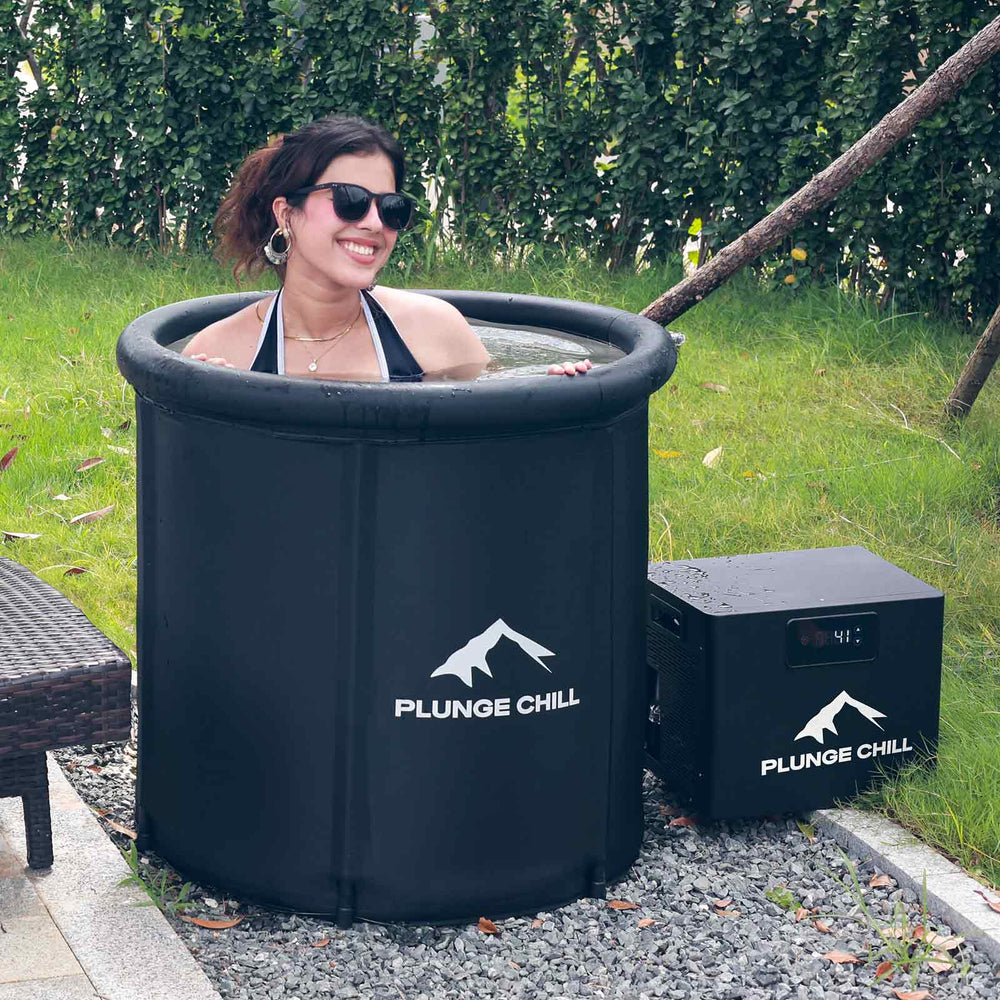
On the road, portability is king. For race weekends, an inflatable or foldable tub that packs into the trunk and can be filled with bags of ice in a hotel bathroom is often the simplest answer. If you choose this path, prioritize puncture‑resistant materials, fast‑drain designs, and a cover to keep the water usable for a second day. Localized packs and phase‑change wraps fill the gap when tubs are unavailable. Phase‑change materials hold a near‑constant cool temperature for hours and cover a larger area than gel packs, making them useful for long drives home after an ultra without stopping for ice, a point noted in applied recovery guidance for teams (Sportsmith). Gel packs are still useful for immediate, short sessions around 20 minutes.
Budget expectations vary widely. Fully featured cold‑plunge tanks can cost up to $20,000 according to Mayo Clinic Health System’s overview. Portable options and DIY stock‑tank builds are widely discussed among runners, and many appear to be available at lower cost, but exact ranges fluctuate.S. retailer and two specialized fitness equipment sites before purchasing.

Care and Maintenance
Cold tubs are more like small pools than bathtubs. Follow the manufacturer’s sanitation plan, keep a log for filter changes, and test water regularly with the strips or digital tools they recommend. Rinse sweat, dirt, and sunscreen off in a quick shower before entering. Keep the lid on when not in use. Place the tub on a level, load‑rated surface and secure cords away from splash paths. In winter, ensure the chiller has freeze protection if the tub is outdoors and consider partially draining if you will not use it during a deep freeze. Keep pets and small children away; a locking lid is a worthwhile safety feature.
How Cold Therapy Compares Across Modalities
|
Modality |
Typical Temperature |
Typical Duration |
Best Timing |
Primary Goal |
Watch‑outs |
|
Cold‑water immersion |
About 50–59°F |
About 10–15 minutes |
Within about 0–2 hours post‑run or later that day |
Reduce soreness and perceived fatigue, control swelling |
Avoid within roughly 4 hours of a key session; can blunt strength adaptations if used immediately after lifting |
|
Contrast water therapy |
Warm around 98–109°F alternated with cold around mid‑50s°F |
About 20–30 minutes in cycles, finish cold |
Later the same day when swelling is minimal |
Circulatory “pump,” stiffness relief, possible faster lactate clearance |
Logistics heavy; not always superior to simpler methods |
|
Localized gel or phase‑change packs |
Cool surface contact |
About 10–20 minutes per area |
Any time for focal pain or swelling |
Targeted analgesia and swelling control |
Protect skin; avoid impaired sensation areas |
|
Whole‑body cryotherapy |
Very cold air as low as roughly −200°F |
About 2–4 minutes |
As scheduled in a supervised center |
Short‑term soreness and mood relief; convenience |
Not an FDA‑approved medical treatment; screen for cardiovascular risk; cost and access |
A Terrain‑Specific Blueprint
On a rocky, 3,000‑foot descent day that leaves your quads buzzing, I prioritize a plunge at about 55°F for around twelve minutes within an hour of finishing, then rewarm, refuel, and rehydrate. If a hill‑sprint session awaits the next morning, I shift the plunge to that evening and keep it short to leave the door open for adaptation. For a heavy strength day in the gym, I skip whole‑body cold for at least a full day and rely on a short calf or knee gel‑pack session if a specific area is irritated. During a stage race, I reduce each session to roughly eight to ten minutes and stack two if needed, spreading the total time across the afternoon and evening rather than sitting through a single long exposure.
Two additional nuances are worth weaving into trail‑specific plans. First, compression and cold are synergistic; if you have to choose between a lukewarm bath or a high‑quality cold‑compression wrap after a day on talus, choose the wrap. This combination improves heat transfer and swelling control compared with cold alone in applied practice summaries (Cryon‑X; Sportsmith). Second, heat can be an ally in the first two days if pain, not swelling, is your main problem. The network meta‑analysis ranking hot packs highest for early analgesia suggests you can use gentle heat for pain relief, then introduce cold the following day as soreness persists (PubMed Central). Many runners report that this sequence reduces the urge to over‑ice everything on day one.

Reconciling Conflicting Advice
It is common to hear that cold “reduces inflammation,” that contrast therapy “flushes waste,” and that “more minutes are always better.” The data are more cautious. Inflammatory markers such as CRP and IL‑6 are not consistently changed by cold within the first day, and performance outcomes are variable even when soreness is reduced. A brief dip in the mid‑50s°F appears as effective as much colder exposures, and there are plausible reasons why an extremely cold five‑minute plunge can be less effective for deeper muscle cooling than a moderate ten‑minute soak in evidence‑based ranges. Many disagreements come down to definitions of recovery, the timing of the next test, and whether the goal is short‑term readiness or long‑term adaptation (PubMed Central; Sportsmith; Mass General Brigham).
One debated claim is that cold reliably improves sleep. Some coaching articles and practitioner reports note that evening cold showers can lower core temperature and aid sleep latency, while clinical sources focus on overall sleep hygiene first.
Another debated point is whether endurance adaptations are helped or harmed by post‑session cold. Some physiology papers suggest post‑endurance cold may augment mitochondrial and vascular signaling, while a broader coaching consensus warns about blunting any training signal.
Takeaway
Cold therapy is a tool, not a badge. For trail runners, the sweet spot is consistent use at about 50–59°F for around 10–15 minutes within the first couple of hours after your hardest terrain days, shifting timing to protect the next quality session, and deferring whole‑body cold after heavy lifting to preserve strength gains. Early pain relief may even come faster from gentle heat before switching to cold the next day. Compress when you can, rewarm gradually, and adopt simple water‑care habits if you own a tub. Whole‑body cryo can help with soreness and mood, but it is optional, expensive, and best done under supervision. When you match the modality to the goal—pain relief, swelling control, or next‑day readiness—cold becomes a reliable part of trail training, not a ritual you suffer through.
FAQ
Q: How cold should the water be, and for how long? A: Most studies and clinical guidance cluster around about 50–59°F for roughly 10–15 minutes. For weekly planning, many runners accumulate around eleven total minutes across sessions. These ranges appear in performance medicine coverage and coaching summaries from Cryon‑X and Runner’s World.
Q: Will cold therapy blunt my strength gains? A: It can, if you use whole‑body cold immediately after resistance training and do so repeatedly. Cooling can dial down molecular signals that drive muscle growth. For trail runners who are building strength, keep cold away from the 24–48 hours after gym sessions. Guidance from Mayo Clinic Health System and Sportsmith aligns on this trade‑off.
Q: Is whole‑body cryotherapy better than a cold tub? A: Not necessarily. Whole‑body cryotherapy uses very cold air for a short period and can reduce soreness and improve perceived recovery, but it is not an FDA‑approved medical treatment, requires screening for cardiovascular risk, and adds cost and logistics. Water‑based immersion is accessible, precise, and at least as effective for many recovery goals according to practice summaries from Mass General Brigham and Sportsmith.
Q: Should I use heat or cold after a brutal descent? A: If swelling is minimal and pain is the primary complaint, a hot pack can provide stronger pain relief in the first day or two. As soreness persists, cryotherapy tends to rank better. That sequence comes from a network meta‑analysis of dozens of trials published on PubMed Central. If swelling is present, prioritize cold first.
Q: Does contrast therapy help more than a straight cold bath? A: Alternating warm and cold phases can enhance a circulatory “pump” and speed lactate decline in some protocols, with warm phases around the upper‑90s to low‑100s°F and cold phases around the mid‑50s°F. Not all studies show superior performance effects compared with simpler strategies, and logistics can be challenging. PubMed Central reports show benefits for certain markers, with mixed performance carryover.
Q: I can’t haul a tub to the trailhead. Are packs worth it? A: Yes. Localized gel packs are useful for focused pain or swelling and typically work well in around 10–20 minute blocks. Phase‑change wraps hold a steady cool temperature for hours and cover larger regions, which helps on long drives after a race. These tools are highlighted in applied recovery guides used by teams (Sportsmith) and in consumer health sources.
Buying Snapshot for Trail Runners
|
Option |
Best Use |
Temperature Control |
Setup and Transport |
Cost Notes |
Cautions |
|
Insulated tub with chiller |
Consistent at‑home recovery |
Precise to the mid‑50s°F |
Fixed footprint; needs GFCI outlet |
High; premium units can reach $20,000 (Mayo Clinic Health System) |
Maintenance and water care required |
|
Portable foldable tub, ice‑assisted |
Race travel or temporary setups |
Manual with ice |
Packs into trunk; fills in bathroom |
Lower; ice expense per use |
Temperature varies; meltwater dilution |
|
Localized gel or phase‑change packs |
Targeted hotspots |
Fixed by pack design |
Toss in a gear bag; car‑friendly |
Low to moderate |
Protect skin; re‑cool time between uses |
|
Whole‑body cryotherapy session |
Supervised quick soreness relief |
Chamber‑controlled |
Requires clinic or facility |
Per‑session fee; cumulative cost |
Screen for cardiovascular risk; not a medical treatment |
This table does not list brand names to keep the focus on features. If you are unsure about whether a given chiller or tub meets your needs, ask for verified temperature accuracy, filter type and change intervals, and decibel levels at a set distance.
Final Word on Terrain‑Specific Timing
Steep technical days and long descents justify a deliberate cold plan because eccentric damage and swelling can compromise your next session. Use cold in the mid‑50s°F for about twelve minutes within the first two hours, pair with compression when possible, and save contrast or gentle heat for stiffness without swelling. Move cold away from strength days. Skip cold in the hours before your next quality run. These small shifts let you train the way trail running demands—hard, often, and without unnecessary soreness stealing quality.
Sourcing note: Evidence and practice advice referenced from PubMed Central reviews and trials, Cryon‑X’s applied protocols, Mass General Brigham’s athlete recovery guidance, GoodRx’s clinical overviews, Sports Medicine of the Rockies’ recovery guide, Sportsmith’s practitioner recommendations, Mayo Clinic Health System’s safety guidance, Runner’s World’s reporting on cold exposure timing, and related endurance coaching discussions.
References
- https://pmc.ncbi.nlm.nih.gov/articles/PMC2938508/
- https://www.mayoclinichealthsystem.org/hometown-health/speaking-of-health/cold-plunge-after-workouts
- https://www.massgeneralbrigham.org/en/about/newsroom/articles/cryotherapy-for-athletes
- https://www.runningwarehouse.com/catpage-INJHEATICE.html?srsltid=AfmBOorxpT4ik1QIiqaU7t6UYFNd2121qRbJwx0GaQATK-vshVN3OyIa
- https://www.amazon.com/Running-Ice-Packs/s?k=Running+Ice+Packs
- https://cryon-x.com/cold-therapy-for-athletes/
- https://www.fleetfeet.com/blog/ice-baths-versus-epsom-salt-baths?srsltid=AfmBOooyFHEOW_M0IKf2z6187IVKl0-9cw2Dl7Is7jm-dqej-eU4daPi
- https://www.rentakneewalker.com/stories/a-beginners-guide-to-ice-therapy-for-runners?srsltid=AfmBOoriWgxy9pHudldKvcE3T0vogA_ndSOkjKZdqr-S30f7yYdhOc2l
- https://sportsmedrockies.com/top-recovery-techniques-for-athletes-ice-baths-compression-and-more/
- https://trailandkale.com/the-benefits-of-ice-baths-for-runners/
Disclaimer
By reading this article, you acknowledge that you are responsible for your own health and safety.
The views and opinions expressed herein are based on the author's professional expertise (DPT, CSCS) and cited sources, but are not a guarantee of outcome. If you have a pre-existing health condition, are pregnant, or have any concerns about using cold water therapy, consult with your physician before starting any new regimen.
Reliance on any information provided in this article is solely at your own risk.
Always seek the advice of a qualified healthcare provider with any questions you may have regarding a medical condition, lifestyle changes, or the use of cold water immersion. Never disregard professional medical advice or delay in seeking it because of something you have read in this article.
The information provided in this blog post, "Trail Running Cold Therapy: Cooling Down After the Toughest Terrains," is for informational and educational purposes only. It is not intended to be a substitute for professional medical advice, diagnosis, or treatment.
General Health Information & No Medical Advice