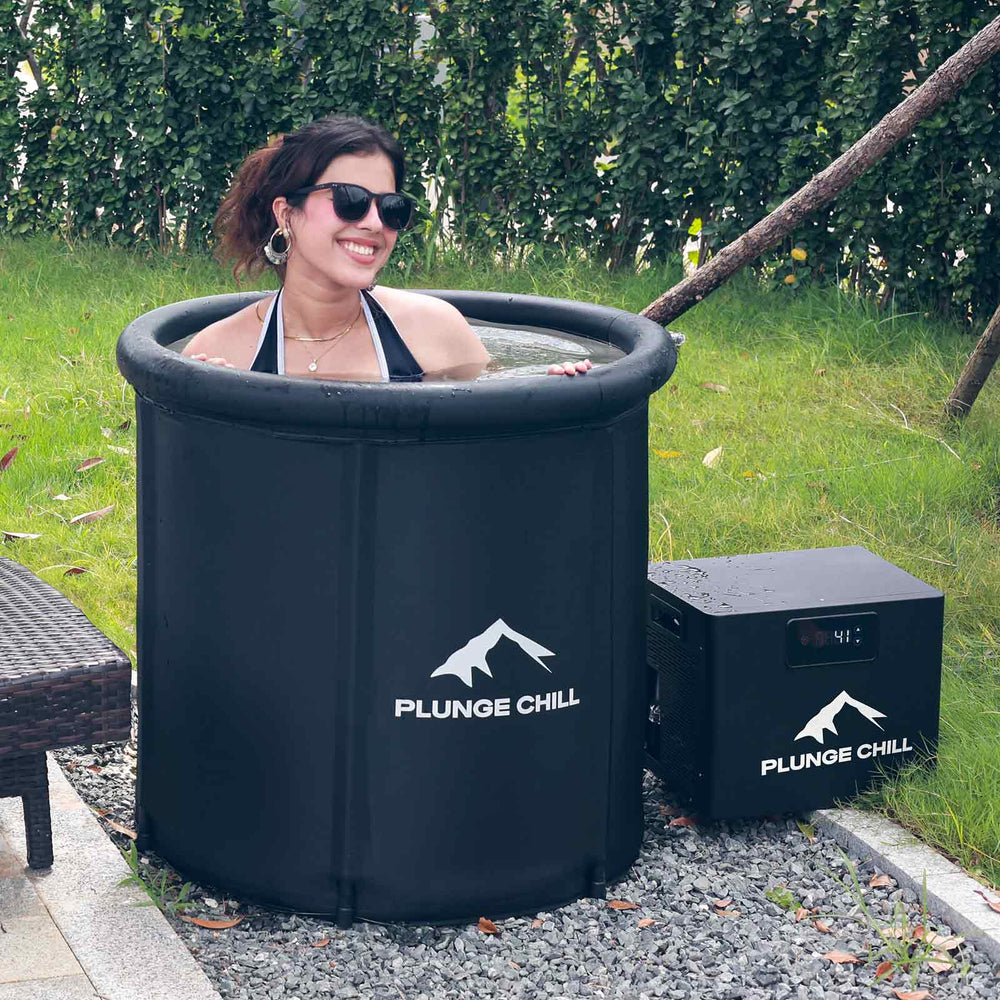
Cold plunges belong in garages more often than most people realize. With a clean plan for space, airflow, power, and water care, a garage can host a highly efficient recovery station that supports hard training without interrupting daily life. As a sports rehabilitation specialist and strength coach who reviews cold plunge products, I approach garage installs like any performance system: define requirements, match components to the goal, and reduce friction so use becomes automatic. This guide distills rigorous, practical lessons for getting a high‑quality plunge into a tight garage footprint while keeping noise, moisture, and running costs under control.
Garage Cold Plunge Requirements: What You Need Before Installation
A cold plunge system has three interdependent subsystems: water chilling, filtration and sanitation, and the basin itself. That framing comes from hands‑on builders and reviewers and aligns with DIY engineering walkthroughs (Andrew Conner) and consumer testing overviews (BarBend, Garage Gym Reviews). The chiller maintains temperature, the pump drives flow through filters and any ozone or UV sanitation you choose, and the vessel holds heat (or releases it) depending on insulation. Cold water immersion, or CWI, means deliberate exposure to cold water for short durations, typically between 39°F and 55°F, to support recovery, perceived soreness reduction, and mental resilience (Ice Cap; BarBend).
Two definitions are critical in tight garages. First, total dynamic head, or TDH, is the total resistance the pump must overcome. It combines vertical lift, pipe friction, and component losses. A practical rule of thumb is to add roughly 1 foot of head per 10 feet of horizontal run, then add component losses such as 5–10 feet for a chiller and 4–8 feet for a dense filter (DC Water Pump). Second, turnover rate describes how quickly the pump circulates all the water through filtration. A solid target in small tubs is four to six turnovers per hour; estimating gallons per minute by multiplying tub gallons by about five, then dividing by sixty, puts you in the right range for pump selection and sanitation stability (DC Water Pump).

Garage Cold Plunge Space Planning: Layout, Size & Clearance Guide
Garages introduce constraints that affect everything from ergonomics to maintenance. Footprint is the most obvious variable. Vertical barrels save floor space but restrict legroom; reclined tubs allow a lie‑down posture but need more length. BarBend’s measurements illustrate the trade: a compact barrel like the Nordic Wave Viking Gen 2 sits around 53 inches by 30 inches by 24 inches with about 85 gallons, while a reclined tub such as the Plunge runs roughly 67 inches by 43 inches by 24 inches and holds about 100 gallons. Vertical cedar or stainless barrels such as Redwood Outdoors Alaskan reduce footprint further but limit posture options and may require a chiller add‑on to hit target temperatures consistently.
Clearance and workflow matter more than many buyers expect. Plan a working side where you can service filters and pull the chiller for maintenance without moving the tub. Allow open floor around the drain pathway, and place towels, robes, and sanitation kits so they do not encroach on your training lanes or vehicle paths. If you are pairing a sauna with your plunge, cluster both near an exterior wall to simplify venting and to localize moisture.
Humidity control is not optional in garages. Chillers shed heat and add to the need for airflow. Ensure cross‑ventilation, run a dehumidifier if your climate requires it, and keep the cover on when not in use. Avoid carpet remnants and unfinished MDF shelves near the plunge; elevated humidity accelerates mold and warps low‑grade wood products.

Garage Cold Plunge Layout Ideas That Actually Work
Three patterns consistently succeed in single‑bay and two‑bay garages. First, the against‑the‑wall run places the tub parallel to the wall with the chiller immediately adjacent on the cool air intake side. This minimizes hose length and TDH, which improves pump efficiency and chiller performance. Second, the corner L pairs a tub along one wall with the chiller perpendicular on the shorter leg; the turn reduces hose length while making room for a small prep bench or towel station. Third, the exterior lean‑to or covered alcove along a back or side door keeps water and condensation out of the main garage. One homeowner report notes that the chiller’s warm exhaust made a lean‑to zone hover near about 70°F, which improved comfort during transitions; this is a plausible outcome if exhaust is confined and ambient temperatures are mild, but it is an anecdote and strongly environment‑dependent.
Choosing the Right Cold Plunge Size for Garage Space Efficiency
The right form factor balances footprint, ergonomics, and thermal retention. The comparison below synthesizes product testing notes (BarBend, The Spruce), hands‑on DIY performance observations (Andrew Conner), and consumer feature priorities from mainstream reviews.
|
Option |
Typical Capacity |
Space Efficiency |
Ergonomics and Notes |
Maintenance and Energy |
|
Vertical barrel (e.g., Redwood Outdoors Alaskan) |
~85–105 gal |
Small footprint; ~30 in tall barrels save floor area |
Fast immersion and exit; restricted legroom; seat/steps often included |
Cold‑only without add‑on chiller; insulated wood/steel holds temp well; chiller add‑on increases precision |
|
Compact barrel (e.g., Nordic Wave Viking Gen 2) |
~85 gal |
Very good for one‑bay garages |
Recline limited; suits shorter sessions |
Quarter‑horsepower chillers can suffice; thick insulation reduces runtime |
|
Reclined tub (e.g., Plunge) |
~100 gal |
Larger footprint |
Comfortable lie‑down posture; easy shoulder submersion |
Integrated filtration and ozone common; plug‑and‑play; indoor/outdoor capable |
|
Insulated cooler DIY (Andrew Conner design) |
~105 gal |
Moderate |
Seated posture; lid seals tightly |
Demonstrated slow warm‑up (about 1–2°F/day off) and steady 2°F/hour pull‑down to about 40°F with a 1/4 HP chiller; high insulation lowers energy use |
|
Stock tank DIY |
~100–150 gal |
Moderate to large |
Simple and durable; minimal insulation |
Often needs 1/2–1 HP chiller and runs more; acts as a heat sink; higher operating cost in warm months |
|
Portable inflatable |
~79–100+ gal |
Good when stored deflated; larger when deployed |
Quick setup and move; entry height can challenge shorter users |
External chiller may cool to ~32°F; frequent filter changes; some models note 2–3 week water changes (The Spruce) |
The overlooked factor in many footprint discussions is thermal efficiency. DIY insulated coolers have reported shorter chiller duty cycles than stock tanks of similar volume. In reader reports summarized by Andrew Conner, a well‑insulated cooler with a 1/4 HP chiller could run under an hour a day at moderate ambient temperatures, while a stock tank often required a 1 HP unit that ran nearly continuously in summer. Insulation is space‑neutral yet energy‑decisive.

Garage Cold Plunge Setup: Electrical, Ventilation & Moisture Control
Most consumer plunges and compact chillers run on a standard grounded household outlet. However, aggressive cooling profiles and continuous duty can trip shared circuits. BarBend and several brand guides encourage planning a dedicated circuit. Ground‑fault circuit interrupter protection is essential near water. Keep all electrical components off the splash line and use drip loops on hoses and power cords to prevent water from running into electronics. Ventilation is a safety and durability issue. Chillers push warm exhaust that must be cleared. Provide free air on the intake side, avoid sealing the unit in cabinets, and, for interior garages, run mechanical ventilation or a dehumidifier to keep humidity under control. A clear roof lean‑to or covered exterior bay can deliver fresh air while protecting from rain; if you build one, select moisture‑tolerant materials and pay special attention to flashing and floor slope around the drain path.

Garage Cold Plunge Water Management: Filling, Drainage & Splash Control
Garages rarely have floor drains exactly where you want them, so you must plan fill and drain paths. Filling with a garden hose is straightforward; using an inline sediment filter reduces particulates that prematurely load your cartridge filter. Draining can be either manual or automated. Real‑world drain times reported in a homeowner checklist (Titan Plunge) are a useful benchmark.
|
Drain Method |
Approximate Time |
Effort |
|
Automated drain system |
~5–10 minutes |
Low |
|
Submersible pump |
~10–15 minutes |
Low |
|
Standard drain hose |
~30–40 minutes |
Moderate |
Splash control protects floors and reduces slip risk. Place waterproof mats or trays along the entry side and under hose connections, use a fitted cover, and consider a low splash guard if the tub sits adjacent to sensitive storage. Regularly inspect for drips, especially at barbed fittings and clamps, because even tiny leaks can accumulate in a closed garage.

Garage Cold Plunge Equipment Sizing: Pump, Chiller & Filtration Guide
Stable flow is the backbone of cold and clean water. Poorly matched pumps create noise, sanitation dead zones, and premature chiller wear. The core compatibility checklist from DC Water Pump translates well to garage installs. Match the pump’s gallons per minute at your calculated TDH to the chiller’s minimum flow specification. Target four to six turnovers per hour in roughly 80–110 gallon tubs, which usually lands around eight to ten gallons per minute. Confirm that filters and any UV/ozone systems work within that flow envelope so contact time is adequate.
Brushless DC, or BLDC, pumps are often the best fit for garages because they are much quieter and more efficient than typical AC pond pumps. Many AC pumps run around 60–70 dB, which is comparable to a busy room or vacuum. Acoustically engineered BLDC pumps can operate under 35 dB, which is quieter than a library (DC Water Pump). Over months of training cycles, that difference determines whether you actually enjoy the space. Energy matters too. In a 12‑hour per day duty cycle at about $0.17 per kilowatt‑hour, a 500‑watt AC pump can cost about $372 per year to run, while a 200‑watt BLDC model may come in around $149. The savings of roughly $223 per year can repay a higher pump purchase price in one to two years (DC Water Pump). Place the pump low, use short, smooth plumbing runs, and avoid sharp ninety‑degree bends to reduce head loss. Prime the pump before first start and troubleshoot noise by checking for suction side air leaks or clogged filters.
Chiller sizing should reflect both volume and insulation. In insulated 100–105 gallon DIY coolers, a 1/4 HP chiller has achieved about a 2°F per hour pull‑down and could hold about 40°F with a sealed lid and decent ambient conditions (Andrew Conner). Poorly insulated vessels such as stock tanks may require a 1/2 to 1 HP chiller in warm seasons and still run more often. That difference is invisible in floor space but dominates long‑term energy cost and noise.
Hygiene and Water Chemistry in Compact Spaces
Small tubs concentrate contaminants quickly, yet cold temperatures slow sanitizer reactions. This paradox makes discipline with testing, dosing, and circulation more important in garages than in outdoor installs. Icebound Essentials recommends testing every one to two weeks or at each water change and targeting a pH between 7.2 and 7.8, total alkalinity between 80 and 120 parts per million, and calcium hardness between 100 and 250 parts per million. For sanitizer, either maintain free chlorine between 1 and 3 parts per million or bromine between 3 and 5 parts per million. Bromine is more stable in cold water; chlorine works but carries more odor and can be less stable. Ozone and UV can reduce chemical demand and improve clarity; ozone’s byproduct is oxygen and it can inactivate most microorganisms effectively.
If you prefer a low‑chlorine approach, pairing ozone with food‑grade hydrogen peroxide is common in cold plunge circles. Icebound Essentials suggests maintaining about 30–50 parts per million of hydrogen peroxide, adding small, carefully measured amounts, circulating 15–20 minutes, and testing until the level stabilizes. Always run circulation when dosing, keep the cover off during chemical additions, and adjust in the sequence that stabilizes water: alkalinity first, pH second, hardness third, and sanitizer last. Physically, protect your filters with routine care. Rinse every couple of weeks, soak them in a dedicated filter cleaner or dilute bleach, rinse thoroughly, and let them dry before reuse. Rotate a spare to avoid downtime and replace the cartridge if pleats are torn or flow stays poor after cleaning.
Water change intervals vary by device and sanitation approach. A frequent recommendation for open tubs and inflatables is every two to three weeks, while one product’s testing claims water can last up to six months when equipped with robust integrated filtration and ozone and when left running to circulate continuously (The Spruce). Some brand checklists say one to two weeks for non‑chilled setups or tubs with minimal sanitation (Titan Plunge). These differences likely stem from definitions of “clean,” user load and hygiene, the presence of ozone or UV, ambient temperature, and whether circulation is continuous. In practice, clarity, odor, and biofilm on walls are the decision makers. If water turns cloudy, smells off, or walls feel slippery, clean and refresh regardless of the calendar.

Performance Trade‑offs and Conflicts Across Sources
Conflicting advice often reflects differences in methods and sample conditions rather than errors. Water change frequency and energy expectations illustrate this. Titan’s homeowner checklist suggests frequent changes for simple setups, Icebound Essentials maps maintenance to chemistry control and filtration runtime with a three to four‑week drain/refill cadence, and The Spruce reports a six‑month water lifespan claim for a highly integrated model used as designed. The likely causes are sanitation technology, use patterns, and whether the chiller and circulation run continuously. Similarly, space claims can look contradictory until you distinguish footprint from posture. BarBend testers rate vertical barrels high on small‑space fit but note constrained legroom for taller users, while reclined tubs take more floor length but improve comfort and head‑to‑toe submersion. When you normalize for user height, session duration, and whether you prefer quick dips or longer soaks, the recommendations converge.
One more trade‑off matters for athletes. There is a difference between recovery sessions and pre‑performance timing. Reviews of cold exposure and performance indicate that cold water immersion can acutely depress strength, power, and speed if used immediately before those efforts, likely via reduced muscle temperature and altered nerve conduction. For maximal lifting or speed work, avoid plunging right before and allow sufficient re‑warm and activation if cold exposure is part of your day. For recovery after training, CWI remains popular for perceived soreness and sleep‑adjacent relaxation (summarized across academic reviews and sports practice notes; see Garage Gym Reviews and academic overviews of cold exposure effects).
Buying Considerations for Garage Installations
Start with where the plunge will live and work backward. If you want a truly small footprint and quick in‑and‑out sessions, vertical barrels like the Redwood Outdoors Alaskan conserve space and feel fast, though you will need a chiller add‑on for precision and may accept tighter legroom. If you prioritize comfort and indoor aesthetics, an integrated rectangular tub like the Plunge keeps the garage tidy, hides plumbing, and commonly includes ozone and filtration that reduce hands‑on upkeep. If you are cost‑sensitive and willing to build, an insulated cooler with a 1/4 HP chiller, whole‑house filter, and a quiet BLDC pump can deliver excellent energy performance and low noise, provided you seal the lid well and route hoses cleanly (Andrew Conner). Inflatable or drop‑stitch options with external chillers are compelling for renters because they set up quickly, can cool into the 30s in some models, and move with you (The Spruce).
Across all options, verify these points before you buy. Capacity and external dimensions must fit your garage plan with room to service the chiller and filters. Insulation quality and cover fit directly affect energy use. Filtration and sanitation features like ozone or UV cut labor and can extend water clarity intervals. App control, heaters for contrast therapy, and ergonomic steps or seats are nice to have but should not displace core performance. Finally, weigh warranty and service access. Retailers who provide in‑house support and parts reduce friction when something needs attention (Fun Outdoor Living).
Cost and Energy: What to Expect
Total cost of ownership combines upfront device price, electricity, water, and consumables. Electric chillers and quiet pumps matter more than the tub material for long‑term expenses (Fun Outdoor Living). Efficient chillers paired with good insulation reduce runtime significantly. From a pump standpoint, BLDC technology can save meaningful money over AC pumps, with an example savings near $223 per year in moderate daily duty cycles at average residential power rates (DC Water Pump). DIY reports of highly insulated coolers show daily chiller runtimes dropping under one hour in favorable conditions, while stock tanks may require larger chillers that run more frequently and sound louder (Andrew Conner). In real garages, those differences show up as both lower bills and fewer interruptions to training from fan and compressor noise.

Care Plan: A Calendar That Actually Works
A reliable garage routine keeps water clean, equipment healthy, and the zone pleasant to use. Keep the cover on whenever the tub is idle to reduce dust and to hold temperature. Run filtration for several hours daily at a stable flow and circulate during any dosing. Once or twice a month, rotate filter cartridges so one can dry while the other works; a quick rinse every couple of weeks maintains flow, and deeper soaks remove oils before reinstalling. Test chemistry broadly every one to two weeks. Adjust alkalinity, then pH, then hardness, then sanitizer. If you use ozone or UV, expect to use less sanitizer overall, but keep testing, since cold slows reaction timing and overdosing is easy in small volumes. Plan a drain and wipe‑down at intervals that reflect your sanitation tools and load. Some integrated tubs can stretch months between drains when continuously circulated and treated, while simple setups need refreshes every few weeks. The moment you feel slippery walls or see cloudy water, reset ahead of schedule. Many garages benefit from a quick weekly wipe of adjacent floor mats and a two‑minute inspection of hose clamps, unions, and chiller vents to catch small problems before they grow.
Safety Considerations for Athletes
Set temperature and time based on your goals and tolerance. A common range for cold therapy is 39°F to 55°F, and beginners should err on the warmer side and shorter durations, working up gradually. As a general ceiling, do not exceed about ten minutes in a single session (Ice Cap). Recover fully and warm naturally after exiting. When maximal strength or speed is on the agenda, avoid plunging in the immediate pre‑performance window because acute cold exposure can reduce force, power, and nerve conduction velocity based on controlled studies of cold‑water immersion and icing. For recovery days or evening routines, CWI can support perceived soreness reduction and mood via mechanisms like norepinephrine release noted by strength and conditioning sources (BarBend). Always consult a clinician if you have cardiovascular or respiratory conditions, and install GFCI protection near water.
Quick Comparison: Space‑Savvy Picks and Notable Specs
The table below gathers footprint‑relevant details from hands‑on testing outlets for readers trying to fit a plunge into a single‑bay garage. Dimensions and capacities are approximate and presented to inform space planning.
|
Model |
Form |
Dimensions (L × W × H) |
Capacity |
Notable Features |
|
Nordic Wave Viking Gen 2 (BarBend) |
Compact barrel |
~53 in × 30 in × 24 in |
~85 gal |
1/4 HP chiller; multi‑stage sanitation; plugs into standard outlet; quick setup |
|
Plunge (BarBend) |
Reclined tub |
~67 in × 43 in × 24 in |
~100 gal |
Integrated ozone and filtration; indoor/outdoor; adjustable ~39–60°F |
|
Redwood Outdoors Alaskan (BarBend) |
Vertical barrel |
Small footprint; ~30 in tall |
Varies by kit |
Cold‑only by default; seat and steps; chiller add‑on available |
|
Insulated Cooler DIY (Andrew Conner) |
Rectangular cooler |
Depends on cooler |
~105 gal |
Holds about 40°F with 1/4 HP; about 2°F/hour pull‑down; very low warm‑up rate with lid closed |
One more overlooked insight for garages is acoustic planning. Most “best of” lists prioritize temperature range and app control but underweight noise. In a hard‑surfaced garage, a 60–70 dB AC pump can echo, while a sub‑35 dB BLDC pump may be imperceptible over a dehumidifier (DC Water Pump). Prioritize manufacturer‑published decibel data and keep the pump and chiller on vibration‑dampening pads.

Takeaway
A well‑installed garage cold plunge is a compact performance system. Treat space, airflow, and noise like you would treat barbell clearances and spotter paths. Choose insulation and quiet flow over flashy materials, match pump flow to TDH and chiller requirements, and install GFCI with real ventilation. For hygiene, test and dose with discipline and let the presence of ozone or UV dictate your water change interval more than the calendar. When you integrate the plunge into the daily training rhythm and eliminate friction—cover on, water clear, temperature ready—you will use it more, recover better, and protect the rest of your garage from moisture and noise.
FAQ
Can I put a cold plunge and sauna in a garage without mold issues?
Yes, if you prioritize ventilation, drainage, and surface protection. Position both near an exterior wall, include mechanical ventilation or a dehumidifier, and isolate electrical components from splash zones. Use waterproof mats, keep covers on when idle, and wipe surfaces regularly. Anecdotal reports suggest chiller exhaust can slightly warm a covered lean‑to zone and reduce perceived dampness; this depends on climate and layout and should be verified locally.
How big a chiller and pump do I need for a 100‑gallon garage tub?
In insulated, lidded tubs around 100–105 gallons, a 1/4 HP chiller has demonstrated approximately a 2°F per hour pull‑down and stable holds near 40°F in DIY tests with strong insulation (Andrew Conner). Match your pump so it delivers about eight to ten gallons per minute at the system’s TDH and meets the chiller’s minimum flow. For poorly insulated stock tanks, a 1/2 to 1 HP chiller is often necessary in warm months and will run more frequently (Andrew Conner; DC Water Pump).
How often do I need to change the water in a garage plunge?
Intervals range from roughly one to two weeks for simple setups with limited sanitation, to two to three weeks for many portable systems, to several months for integrated units with continuous filtration and ozone that are kept running as designed. The differences arise from sanitation tech, user load, and whether circulation is continuous (Titan Plunge; The Spruce; Icebound Essentials). Let clarity, odor, and wall feel make the decision—if water clouds, smells, or feels slick, drain and refresh.
How loud will my plunge be in a hard‑walled garage?
Pump and chiller choice decides this. Typical AC pumps operate around 60–70 dB, while many BLDC models are engineered under 35 dB (DC Water Pump). In a reflective garage, that gap is significant. Ask for published decibel data, place equipment on vibration‑dampening pads, and keep hose runs short to reduce head noise. When comparing chillers, prioritize insulation quality of the tub and cover to cut compressor duty cycles.
What temperature and duration are safest for regular training use?
A common working range is 39°F to 55°F. Start warmer and shorter, progress as tolerance improves, and cap individual sessions around ten minutes to reduce risk (Ice Cap). Avoid plunging immediately before maximal strength, power, or speed sessions because acute cold can depress performance in the short term; if you cold plunge earlier in the day, allow for re‑warm and dynamic activation before lifting or sprinting.
Which features matter most when space is tight?
Insulation, cover fit, and quiet, compatible flow trump almost everything else in a garage. A compact barrel or insulated cooler saves floor space, efficient chillers reduce runtime and heat spill, and BLDC pumps keep the soundscape workable. Integrated ozone or UV reduces chemical load and hands‑on time, which indirectly protects the training environment from spills and odors (BarBend; DC Water Pump; Icebound Essentials; Fun Outdoor Living).
References
- https://www.academia.edu/41555012/The_effect_of_cold_water_immersion_on_physical_performance
- https://digitalcommons.liberty.edu/cgi/viewcontent.cgi?article=8439&context=doctoral
- https://prodigy.ucmerced.edu/browse/ZFkOo4/7OK143/ColdTherapyAndrewHuberman.pdf
- https://libres.uncg.edu/ir/asu/f/Ellis_Brandon_Spring%202023_Thesis.pdf
- https://admisiones.unicah.edu/uploaded-files/FvYHkD/1OK025/benefits__of_hot_cold-therapy.pdf
- https://in.nau.edu/wp-content/uploads/sites/202/TIP-Skills.pdf
- https://scholarworks.uark.edu/context/etd/article/3030/viewcontent/Luhring_uark_0011O_12037.pdf
- https://uwi.edu/sport/sites/sport/files/Ice%20Baths%20Vs%20Cold%20.pdf
- https://www.garagegymreviews.com/best-cold-plunge-tub
- https://www.thespruce.com/best-cold-plunge-tubs-7550015