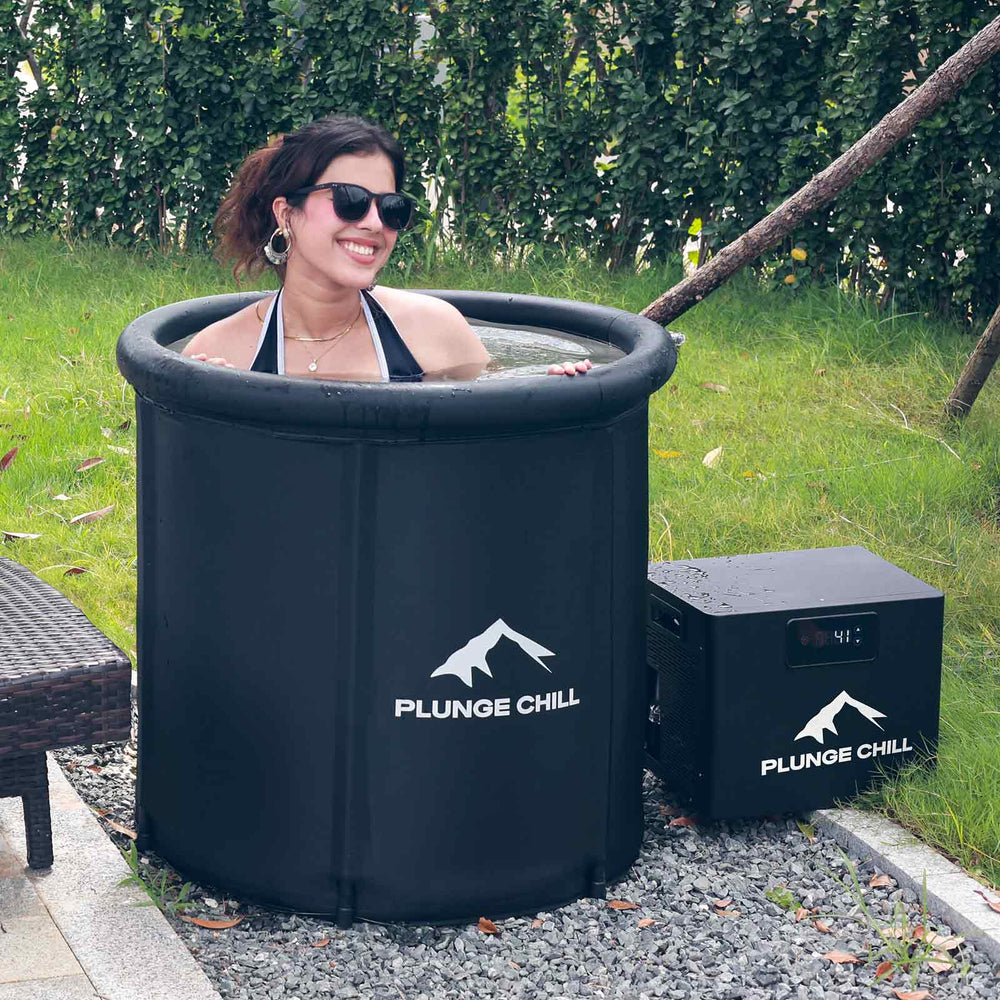
As a sports rehabilitation specialist and strength coach who also tests cold plunge products, I use ice baths selectively with distance runners to accelerate readiness between hard sessions, manage soreness during high-mileage weeks, and help athletes feel subjectively “reset” after heat or hills. The goal of this guide is to translate the research into clear, practical parameters you can trust on long-run days, without glossing over limitations or risks.
What Counts as an Ice Bath After a Long Run
An ice bath for run recovery is a short bout of cold‑water immersion, typically from the waist down to full body, using water held between about 50°F and 59°F for minutes rather than seconds. Immersion differs from a cold shower in one essential way: the hydrostatic pressure and consistent water contact around the limbs and torso produce stronger circulatory and thermal effects than droplets striking skin. A comprehensive review hosted on the National Library of Medicine (PMC) describes common parameters in sport as 54–59°F for 5–10 minutes, sometimes extending to 20, and notes that brief exposures in the range of a minute do not meaningfully lower muscle temperature once you are warmed from training. Runners sometimes alternate hot and cold water, a method called contrast therapy, although optimal hot‑cold ratios remain unsettled and most protocols finish cold to promote vasoconstriction.
How an Ice Bath Helps a Runner After a Long Effort
Several plausible mechanisms matter to endurance athletes. Cold induces vasoconstriction, which can reduce exercise‑induced swelling and slow local tissue metabolism; immersion raises cardiac preload by shifting blood from the periphery toward the core, which can markedly increase cardiac output and circulate byproducts more efficiently while you rest. The PMC review reports that head‑out immersion can nearly double cardiac output, a striking systemic effect without additional energy cost. These processes do not “flush lactic acid away” in the simplistic sense often claimed, but they may reduce the accumulation of edema and dampen some inflammatory signaling that accompanies long, eccentric‑heavy runs on pavement or trail.
Perceptually, many runners feel less sore and more ready for the next day. Evidence summarized by Nike.com references a Sports Medicine meta‑analysis showing cold‑water immersion reduced muscle soreness versus passive rest. At the same time, a Journal of Physiology study found no superiority over active recovery for reducing post‑exercise inflammation, suggesting the main benefit may be improved perception and short‑term function when turnaround time is tight. This tension in the literature explains why many coaches reserve ice baths for long runs, back‑to‑back training days, or summer heat blocks rather than using them indiscriminately.
Timing: When to Take the Plunge After a Long Run
For runners targeting next‑day usability rather than long‑term hypertrophy, the sensible window stretches from shortly after finishing to later the same afternoon. SportsMed Rockies suggests within about two hours post‑exercise, which aligns with practical experience in marathon and ultra build phases. Do not race to the tub before you rehydrate and normalize your breathing; get out of the sun, take on fluids and a small carb‑protein snack, then set up the session.
One claim you will see is that there is a strict two‑hour window to maximize recovery signaling. Because this timing appears in consumer‑facing sources and not consistently across higher‑quality trials, treat it as a useful heuristic rather than a rule. A reasonable verification step would be a randomized trial in runners comparing perceived soreness and next‑day performance after cold immersion at 30 minutes, 2 hours, and 6 hours post‑run.
Duration: How Long to Stay In
Across sources, five to ten minutes is the sweet spot for long‑run recovery. PMC lists 5–10 minutes as typical with some protocols extending to 20; Mayo Clinic Health System suggests starting at 30–60 seconds and building to 5–10 minutes as tolerance develops. For most recreational and competitive runners, I rarely exceed 12 minutes after a long run, because longer exposures incrementally increase discomfort and hypothermia risk without clear added benefit. A useful signal that you are at the upper limit is vasomotor shivering that becomes difficult to control even with steady breathing.
If you are new to cold exposure, think in terms of accumulating time across short bouts within the same session. Two to three immersions of two to four minutes each, separated by one to two minutes standing or sitting on the rim, replicate the total dose while improving tolerance. The PMC review notes that very brief exposures around a minute are insufficient to cool muscle tissue meaningfully after a workout, so brief dips are best considered acclimation rather than recovery doses.

Temperature: How Cold Is Cold Enough
You do not need ice to get the benefits. For run recovery, hold the water between 50°F and 59°F. This range is supported by SportsMed Rockies and consistent with the 54–59°F band described in the PMC review. Experienced athletes or those acclimated to cold can go cooler when needed, but use caution below about 46–50°F because discomfort rises quickly, and behavior becomes less predictable if you hyperventilate. Some consumer plunge systems can reach 39°F; I reserve that territory for short exposures or late‑stage competitive taper when we are chasing subjective pop without training stress.
Cold showers are less effective than immersion for cooling, and this matters after a long run. Science for Sport highlights a study where a 15‑minute, approximately 59°F shower did not lower core temperature or cortisol immediately compared with control, though heart rate and perceived recovery improved later. Immersion remains the better recovery tool when available; showers are an acceptable fallback when convenience is the priority.
A Simple Parameter Table for Long‑Run Recovery
|
Scenario |
Temperature (°F) |
Duration (min) |
Suggested timing |
Frequency guidance |
|
Standard long run recovery |
50–59 |
5–10 continuous or 2–3 short bouts totaling 6–12 |
Within the same afternoon once fed and hydrated |
Weekly or as needed in high‑mileage blocks |
|
Back‑to‑back hard days |
50–55 |
8–12 total |
Same day post‑run |
Use strategically during dense weeks |
|
Heat or hills emphasis |
52–59 |
6–10 |
Same day |
Consider slightly longer duration if overheating was prominent |
|
Race week, taper |
54–59 |
4–8 |
Early in the week to protect freshness |
Limited to one or two sessions |
|
Heavy strength block overlap |
54–59 |
4–8, lower body only |
Not within the anabolic window after lifting |
Prefer off‑days or separate from strength |
Where the Evidence Agrees and Where It Does Not
The Sports Medicine meta‑analysis cited by Nike.com supports soreness reduction versus rest, while the Journal of Physiology study shows no advantage over active recovery for inflammation. Mayo Clinic Health System further notes that post‑training cold can dampen molecular signaling needed for strength and hypertrophy. One likely reason for these differences is what outcome is measured. Soreness and perceived readiness improve reliably in many studies; biochemical and long‑term adaptation markers are inconsistent, and the mode of training matters. Resistance training is heat‑dependent for vasodilation and protein synthesis; endurance training tolerates post‑session cooling better, and some athletes even report improved sleep and mood. Methods also differ: water depth, exact temperatures, and whether the exposure is whole body or legs only can all shift results.

Overlooked but Useful Nuances
Short dips seldom change muscle temperature after a long run, even though they may feel invigorating. That conclusion is emphasized in the PMC review, and it explains why thirty seconds on social media rarely matches five to ten minutes in the tub for next‑day readiness.
Cold showers are not equivalent to immersion. The Science for Sport analysis points out that showers fail to produce the same thermal and hydrostatic pressure effects, a gap that is easy to miss in consumer guidance where the terms are used interchangeably.
Weekly cold exposure “targets” such as a total of about 11 minutes are discussed in lifestyle media and echoed by Runner’s World for general health. These thresholds are not validated specifically for post‑long‑run recovery in runners and should not be treated as universal prescriptions. A reasonable verification step is to study runners across a build phase, randomizing total weekly cold exposure and tracking time‑loss injuries, sleep, and performance.
Risks, Contraindications, and Aftercare
Cold exposure is uncomfortable and can cause hyperventilation, numbness, and temporary strength loss that makes egress hazardous. Prolonged exposure risks frostbite in subfreezing environments and hypothermia when sessions run too long or when you remain wet and underdressed after finishing. Mayo Clinic Health System advises basic precautions that are especially relevant outdoors: avoid currents, measure water temperature before you enter, and have towels and warm clothing within reach. People with cardiovascular disease risk factors, uncontrolled high blood pressure, reduced sensation, or certain neurological conditions should seek medical clearance before trying cold immersion.
Aftercare should be gradual. Resist the urge to jump straight into a hot shower. Dry off, put on warm layers, and sip a warm drink. Both Brooks’ editorial guidance and product‑side instructions from cold plunge makers encourage rewarming slowly; in practice, most athletes feel thermally normal again within about twenty minutes. Claims that hypothermia generally requires half an hour or more of exposure depend on body size, fat mass, and water movement and should not be counted on as a safety margin. Verifying this would require controlled cooling‑curve studies that stratify runners by body composition and immersion conditions.
How to Fit Ice Baths Into a Training Week
Cold immersion is a tool, not a lifestyle. During base mileage with a single long run weekly, I use it sparingly, usually after the longest day of the week or after long runs layered with significant downhill. In heat blocks or cumulative fatigue weeks where long runs buttress tempo or marathon‑pace work, I use ice baths more liberally to preserve quality. When strength emphasis is the priority, I separate cold exposure from lifting days and keep the water warmer and the duration shorter if recovery is still needed. If you are chasing strength or muscle size, accept some delayed soreness and let the heat‑dependent anabolic processes do their work; this caution appears in both the PMC review and Mayo Clinic Health System guidance.
Practical Protocol Walkthrough for a Long‑Run Day
Finish your long run and walk for a few minutes to cool down, then rehydrate and take in a small snack containing carbohydrates and protein. Fill the tub or set your plunge to about 54–59°F. Enter calmly, control your breathing with slow exhales, and settle the legs and hips first. Stay for three to four minutes, step out for a minute to regroup, and repeat once or twice until your total time falls in the six‑to‑ten‑minute range. When you are done, dry off, layer up, and warm from the inside with soup, tea, or cocoa while you keep moving lightly around the house. If you feel lightheaded rising from the tub, kneel or sit again and stand more gradually.
Care and Buying Tips for Cold Plunge Products
If you are shopping for a plunge tank, start with temperature capability and reliability. The ability to hold a stable range from 39°F to the upper 50s and to maintain temperature outdoors in warm weather separates dedicated systems from DIY tubs. Filtration and sanitation matter more than most runners realize when mileage climbs and usage increases; look for multi‑stage filtration, UV or ozone support, and easy‑to‑maintain filters rather than heavy chemical regimes. Capacity should fit your height and preferred immersion depth without forcing awkward joint angles; a longer runner needs enough tub length to relax the hips and avoid excessive spinal flexion. Consider operating noise, power draw, and drainage, especially if the plunge sits in an apartment or on a balcony where neighbors will hear compressor cycling. A well‑insulated cover reduces energy use and evaporation. Warranty and parts availability are a meaningful differentiator in a product category where some units cost as much as $20,000. If space or budget are limiting, a standard bathtub plus ice can still deliver the recommended 50–59°F for recovery, but plan for water changes and time to reach target temperature.

Pros and Cons for Long‑Run Recovery
On the plus side, runners consistently report lower soreness and better perceived readiness the day after a long run when they use the parameters described here. The physiological plausibility is strong, with immersion‑driven circulatory shifts and vasoconstriction that limit edema and slow tissue breakdown. For dense training weeks, ice baths can preserve session quality, as performance data in team‑sport studies summarized by Science for Sport suggest.
Against these benefits, there are tradeoffs. Post‑exercise cold can blunt strength and hypertrophy signaling, which argues for caution if you are in a lifting phase or early in a new stimulus. Some trials show no advantage over active recovery for inflammatory markers, reinforcing that the edge may be perceptual or context‑dependent. Risks concentrate in those with cardiovascular disease or in natural waters with hazards; even healthy runners should approach with respect, measure temperatures, and rewarm gradually.
Frequently Asked Questions
Should I ice‑bath after every long run?
Most runners do not need an ice bath after every long run. I use it when the long run is unusually long, especially hilly, performed in heat, or when the next day must be high quality. Weekly use during peak mileage is reasonable; otherwise, emphasize sleep, nutrition, and gentle movement before layering cold exposure.
How cold should the water be to help recovery?
A practical and safe range for long‑run recovery is 50–59°F. Start nearer 59°F and progress colder only as your tolerance and needs justify it. You do not need to reach the upper 40s to benefit, and many runners find mid‑50s with eight to ten minutes is both tolerable and effective.
How long is long enough?
Accumulate six to ten minutes per session. This can be one continuous bout or two to three shorter immersions with brief breaks. Evidence cited in the PMC review suggests that very brief dips around a minute are insufficient to cool muscle tissue once warmed from training.
Are ice baths better than active recovery?
For soreness, cold‑water immersion outperforms passive rest in a Sports Medicine meta‑analysis referenced by Nike.com. For inflammatory markers, a Journal of Physiology study found no advantage versus active recovery like swimming or foam rolling. In practice, active recovery and cold immersion can be complementary; on days when you need to feel better fast, a short plunge is a useful lever.
Do ice baths harm strength or muscle gains?
They can, especially when taken immediately after lifting. Mayo Clinic Health System and the PMC review both caution that cooling can suppress molecular pathways that support hypertrophy. Runners who are emphasizing lifting should separate cold exposure from strength sessions or skip the plunge on heavy days.
Are cold showers a good substitute?
Cold showers help with mental refreshment and can lower heart rate later, but they do not produce the same core cooling or hydrostatic effects as immersion. Science for Sport summarizes evidence showing limited immediate physiological impact from showers compared with a tub.
Key Takeaways
Ice baths are a targeted tool for runners, not a badge of toughness. After a long run, aim for water between 50°F and 59°F and a total exposure of six to ten minutes, preferably within the same afternoon once you have eaten and rehydrated. Use the method more frequently during hot weather and dense training weeks, and less when your priority is strength or muscle gain. Respect the risks, especially if you have cardiovascular concerns, and rewarm gradually. The most reliable benefits are lower soreness and improved perceived readiness, while objective biological measures and long‑term adaptation effects are mixed and depend on training context. If you are buying a plunge, prioritize stable temperature control, sensible filtration, capacity that fits your body, and a warranty from a reputable maker.
References and Source Notes
This guide synthesizes findings and practice guidance from the National Library of Medicine (PMC review on post‑exercise immersion), Mayo Clinic Health System, SportsMed Rockies, Nike.com’s review of Sports Medicine and Journal of Physiology studies, Science for Sport, Runner’s World, and product‑side documentation from cold plunge manufacturers. Differences across sources likely reflect variations in protocols, outcomes measured, and the interplay between endurance and resistance training adaptations.
References
- https://digitalcommons.cedarville.edu/cgi/viewcontent.cgi?filename=1&article=1539&context=research_scholarship_symposium&type=additional
- https://www.mcphs.edu/news/physical-therapist-explains-why-you-should-chill-out-on-ice-baths
- https://sncs-prod-external.mayo.edu/hometown-health/speaking-of-health/cold-plunge-after-workouts
- https://pmc.ncbi.nlm.nih.gov/articles/PMC2938508/
- https://health.osu.edu/wellness/exercise-and-nutrition/do-ice-baths-help-workout-recovery
- https://health.clevelandclinic.org/what-to-know-about-cold-plunges
- https://mcpress.mayoclinic.org/healthy-aging/the-science-behind-ice-baths-for-recovery/
- https://www.mayoclinichealthsystem.org/hometown-health/speaking-of-health/cold-plunge-after-workouts
- https://adrenalinespt.com/how-long-to-ice-bath/
- https://www.masterclass.com/articles/ice-bath-at-home-explained
Disclaimer
By reading this article, you acknowledge that you are responsible for your own health and safety.
The views and opinions expressed herein are based on the author's professional expertise (DPT, CSCS) and cited sources, but are not a guarantee of outcome. If you have a pre-existing health condition, are pregnant, or have any concerns about using cold water therapy, consult with your physician before starting any new regimen.
Reliance on any information provided in this article is solely at your own risk.
Always seek the advice of a qualified healthcare provider with any questions you may have regarding a medical condition, lifestyle changes, or the use of cold water immersion. Never disregard professional medical advice or delay in seeking it because of something you have read in this article.
The information provided in this blog post, "Ice Bath After a Long Run: Timing, Duration, and Temperature Guide," is for informational and educational purposes only. It is not intended to be a substitute for professional medical advice, diagnosis, or treatment.
General Health Information & No Medical Advice