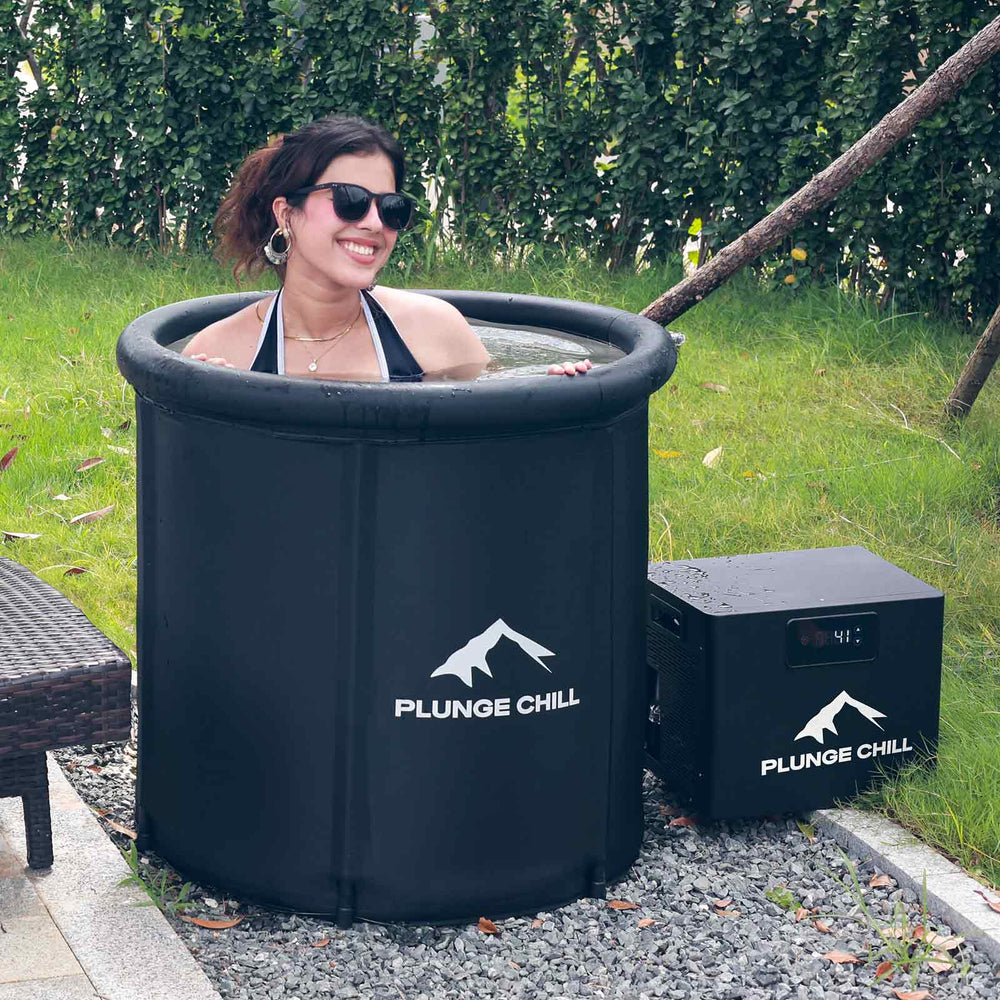
Cold showers have surged from a fringe wellness habit to a mainstream curiosity, but the physiology behind that first bracing splash is older than any trend. As someone testing lifestyle practices that intersect with daily routines, I spent several weeks finishing showers cold while reviewing medical and physiology sources. The upshot is straightforward: cold exposure does increase heat production and can train aspects of thermoregulation, but its metabolic contribution is modest in isolation and highly dependent on dose, modality, and timing. Below, I explain the mechanisms, what the research actually shows, how to try it safely, and where cold showers fit alongside dedicated cold plunge tubs, nutrition, sleep, and recovery.

PLUNGE CHILL PLUS
Table of Contents
- What “Cold Shower” Means in Physiology Terms
- The Metabolic Mechanics
- What Changes With Practice
- Where Cold Showers Fit in Metabolism and Weight Management
- Practical Ways to Try Cold—Safely and Strategically
- Pros and Cons You Can Expect
- Safety, Contraindications, and Aftercare
- Choosing a Modality: Showers, Plunges, or Cool Rooms
- Gear, Care, and Buying Tips
- My Test Drive: Three Weeks of “Finish Cold”
- Frequently Asked Questions
- Key Takeaway
- References
What “Cold Shower” Means in Physiology Terms
In clinical and coaching contexts, “cold exposure” is a broad label. Cold showers sit at the accessible end of a spectrum that also includes dedicated cold-water immersion and mild ambient cooling in a cool room. Cleveland Clinic frames a cold shower as a brief exposure to cold water, often after a warm wash and typically lasting a few minutes. The key physiological triggers are sudden skin cooling, a surge in sympathetic activity, and the body’s heat-saving vasoconstriction response. That mix provokes thermogenesis—your body’s way of making heat—through two channels. Shivering thermogenesis is the involuntary muscle activity that can multiply your resting metabolic rate by roughly two to four times during exposure, according to the National Academies Press. Non-shivering thermogenesis relies more on brown adipose tissue (BAT), a heat-producing depot that burns energy to keep you warm; repeated cold can increase BAT activity and even volume in adults.
Cold water deserves special respect because heat flows out of you far faster in water than in air. The National Academies Press notes that water conducts heat roughly twenty-five times faster than air at the same temperature. While cold showers deliver a brief burst, full-body immersion in an ice bath tub creates a far more uniform thermal load across all muscle groups, producing stronger metabolic and recovery responses.

The Metabolic Mechanics
Cold shock, skin sensors, and the first minute
The first one to three minutes after cold exposure begins—what physiologists call the cold-shock phase—matter disproportionately. Skin thermoreceptors trigger a gasp reflex, hyperventilation, peripheral vasoconstriction, and a racing heartbeat. This surge protects core temperature, but it also raises immediate cardiovascular load. The Conversation emphasizes that the body responds more to rapid skin cooling than to slow core changes, and that cold showers can reduce skin blood flow so effectively that, paradoxically, core temperature may drift upward after the shower ends as vasoconstricted skin conserves heat. That paradox explains why a warm shower around 33°C often feels better for staying cool in summer, while a cold shower tends to heighten alertness.
Shivering versus non-shivering thermogenesis
Shivering is the fast-acting heater, trading comfort for calories. Non-shivering thermogenesis is the more sustainable route and the one people usually want to cultivate. BAT is central here. A systematic review and meta-analysis of randomized trials reported that acute mild cold at roughly 16–19°C increased energy expenditure by about 188 kcal per day on average while also increasing BAT activity and fatty-acid uptake (PubMed). While the exact calorie figure comes from controlled protocols rather than household showers, it gives a sense of magnitude: cold can move the metabolic needle, especially when sustained in a temperature-controlled cold plunge system.
Brown fat, insulin sensitivity, and longer-term adaptation
Over weeks, the pattern shifts from shock to adaptation. A small but carefully controlled study conducted at a federal clinical center found that four weeks of sleeping in a 66°F bedroom approximately doubled brown fat volume and improved insulin sensitivity in lean men, while a warmer month reversed those effects. The work, led by investigators later associated with VCU and published in the journal Diabetes, used temperatures common in everyday climate-controlled buildings, which makes it appealing from a practicality standpoint. The sample was small—five healthy males—so generalization is limited, but the direction of change aligns with cold-induced non-shivering thermogenesis.

What Changes With Practice
Habituation reduces the severity of cold-shock symptoms across repeated exposures. People often report less involuntary gasping and more manageable breathing after a week or two, which matches classic findings on ventilatory and cardiovascular habituation in the cold literature (National Academies Press). On the metabolic side, repeated mild cold skews heat production toward non-shivering mechanisms and BAT, while early exposures can rely more on carbohydrate oxidation and temporarily blunt insulin action during the acute stress of cold. The longer-term improvements in insulin sensitivity observed after weeks of mild cold suggest that dose and chronicity matter: initial responses may not predict steady-state adaptation.
Cold also has neurochemical effects that feel very tangible. Short cold bouts raise epinephrine and norepinephrine, increasing alertness and drive; a neuroscience newsletter has popularized a pragmatic weekly target of roughly eleven minutes total across several sessions, emphasizing water that feels “uncomfortably cold yet safe.” Verywell Health, summarizing older research, notes that dopamine can rise substantially after cold exposure, which aligns with the subjective mood lift many people feel. These are plausible mechanisms, though the magnitude and persistence of neurotransmitter changes will vary by modality, water temperature, and individual tolerance.
Where Cold Showers Fit in Metabolism and Weight Management
It is tempting to equate “burning calories” with “losing weight,” but the relationship is not that simple. Cleveland Clinic underscores that while cold exposure increases calorie burn to maintain body temperature, the effect of brief showers is small and temporary, and not a standalone weight-loss strategy. The randomized-trial synthesis that found about 188 kcal per day of added expenditure did so under controlled mild cold that is longer and steadier than most household showers. In real life, cold showers can complement, not replace, the heavy hitters of energy balance: nutrition quality and quantity, regular exercise, sufficient sleep, and stress management. If your goal is maximizing cellular adaptation and recovery, transitioning from brief showers to deliberate sessions in a dedicated cold plunge tub offers the steady, whole-body cooling needed for consistent results.

Practical Ways to Try Cold—Safely and Strategically
Cleveland Clinic’s practical advice is a good starting point. Begin warm and ease the handle down over days rather than jumping to the coldest setting on day one. Finish the last part of the shower cold rather than making the entire session cold, at least early on. Aim for a few minutes total exposure and consider mornings, because the alerting effect can make it harder to fall asleep later. If you feel intense stress, dizziness, or can’t control your breathing, step out and rewarm.
For lifters and anyone pursuing muscle growth or strength, timing matters. Mayo Clinic Health System notes that post-exercise cold can reduce soreness and perceived fatigue for the next day, but frequent cold exposure immediately after resistance training may blunt the cellular signaling that drives hypertrophy and strength gains. A neuroscience-focused guide converges on a similar point and suggests placing cold well before training or several hours after if adaptation is the priority. Endurance training appears less susceptible to this blunting effect, though context still matters.
For real-world cooling comfort, The Conversation offers a counterintuitive tip rooted in thermoregulation: a warm shower near skin temperature can increase skin blood flow, improving heat loss after you step out, whereas a cold shower may clamp skin blood flow and reduce sustained cooling. This is useful if your aim is to feel cooler on a hot evening rather than to practice deliberate cold exposure.

PLUNGE CHILL PRO
Pros and Cons You Can Expect
A cold finish tends to sharpen alertness and can lift mood for many people, which matches Cleveland Clinic’s and Verywell Health’s summaries of the literature around sympathetic activation and neurotransmitter shifts. Repeated cold exposure can train thermoregulation and, in some settings, improve insulin sensitivity by expanding or activating brown fat. For athletes, cold immersion has solid evidence for reducing soreness and perceived fatigue within the next day or two, which is why many recovery rooms keep a cold plunge tub with chiller on hand.
The trade-offs are equally clear. Cold is uncomfortable by design; adherence wanes without a strong “why.” The metabolic boost from a short shower is real but modest and easy to negate with a single calorie-dense snack. Cardiovascular load spikes during the cold-shock window, which is why Cleveland Clinic advises avoiding cold showers if you have heart disease or arrhythmias and to talk to a clinician first if you have concerns. Recovery benefits can come at the cost of blunted strength and hypertrophy signaling when cold is used right after lifting. Skin can also feel tighter and drier after frequent hot-to-cold transitions; dermatology guidance summarized by Verywell Health favors lukewarm water for skin integrity and moisturizing afterward.
Safety, Contraindications, and Aftercare
Respect the first minute. That is when gasp, hyperventilation, and tachycardia peak, and when the risk of arrhythmia is most relevant. End exposure and rewarm if you experience chest pain, dizziness, prolonged shortness of breath, or disorientation. Cleveland Clinic highlights that people with heart disease or rhythm disorders should avoid cold showers, and anyone unsure should consult a clinician. Verywell Health notes that pregnancy safety is unclear, which justifies a conservative, physician-guided approach. In open water or any immersion, do not enter currents, respect ice and wind, and keep warm clothing within reach; Mayo Clinic Health System specifically warns about frostbite and hypothermia with too-long or poorly chosen exposures.
Aftercare depends on your goal. If you are practicing cold for metabolic adaptation, a neuroscience newsletter proposes ending with cold and allowing your body to rewarm on its own, even permitting a little shivering, to enhance endogenous heat production. Treat this as experimental guidance rather than a medical directive. If comfort is the goal, dry off, dress warmly, and sip a hot drink. For skin care, lukewarm showers and a moisturizer afterward help protect the barrier, particularly in dry climates or during winter, consistent with dermatology advice cited by Verywell Health.
Choosing a Modality: Showers, Plunges, or Cool Rooms
While showers provide an accessible introduction, full-body immersion in a dedicated plunge tub delivers a consistent, hydrostatic cooling effect that showers simply cannot match. Cool rooms offer longer, subtler nudges to thermoregulation. The comparison below summarizes the trade-offs using clinical evidence and recovery guidance.
| Modality | Typical temperature | Typical session/frequency | Primary metabolic target | Evidence highlights | Practical notes and cautions |
|---|---|---|---|---|---|
| Cold shower | About 50–60°F water at the tap; start warm then finish cold | From tens of seconds toward a few minutes; several times per week | Acute sympathetic surge; mix of shivering and non-shivering thermogenesis | Increased alertness and small, temporary metabolic uptick summarized by Cleveland Clinic and Verywell Health | Easiest entry; avoid if heart disease or arrhythmias; morning is often best to protect sleep; uneven surface cooling |
| Cold-water immersion (Cold Plunge) | About 39°F–50°F controlled via chiller | Start around 30–60 seconds; progress to 2–5 minutes; not directly after lifting for hypertrophy | Strong thermal load; robust BAT activation; comprehensive systemic recovery | Recovery benefits supported; proven reduction in muscle soreness and systemic inflammation (Mayo Clinic Health System) | Delivers uniform 360-degree cooling; automated chillers maintain precise therapeutic temperatures effortlessly |
| Mild cool-room exposure | Around 66°F for hours daily or overnight | Consistent daily or nightly exposure over weeks | Non-shivering thermogenesis; BAT expansion; insulin sensitivity | Four weeks at 66°F doubled brown fat volume and improved insulin sensitivity in lean men; warm exposure reversed effects (Diabetes/VCU) | Comfortable and practical; small study in lean males limits generalization; sustained routine is key |
If you're ready to move beyond the fluctuating water flow of a shower and experience true, automated cold therapy, investing in a home cold plunge setup provides exact temperature stability every session.

Cold Plunge Chiller + Tub (MAX)
Gear, Care, and Buying Tips
A few simple tools make cold exposure safer and more consistent. A shower thermometer helps you quantify what “cold” means in your bathroom; a kitchen timer or a watch with a countdown keeps you honest about dose without staring at the clock; and a non-slip mat reduces fall risk during the first gasp reflex. A handheld showerhead makes it easier to adjust the stimulus to large muscle areas or to finish with a neck-down rinse. When looking to upgrade to full-body immersion, modern all-in-one cold plunge chillers eliminate the ongoing cost and hassle of buying ice while providing built-in filtration for clean, reusable water.
If you wear fine rings or bracelets, consider removing them before a plunge or extended cold shower. Fingers can temporarily shrink in the cold and soapy, cooled skin is slick; the combination increases the chance that a ring slips off. This is a practical inference from everyday physiology and jewelry handling rather than a published clinical finding; confidence is moderate.
My Test Drive: Three Weeks of “Finish Cold”
To understand the adaptation curve, I adopted a simple routine for three weeks: warm showers most mornings with a gradual dial-down to uncomfortably cold water for the last minute or so. I used a basic shower thermometer to keep my cold finish consistent within a small range and a countdown timer to avoid bailing early. The first week was dominated by the classic cold-shock pattern: an involuntary gasp, a strong urge to step back, and noticeable shivering for several minutes after stepping out. By the second week, breathing control improved and the gasp reflex softened. The most consistent effect was a reliable surge in alertness comparable to a brisk walk, which mirrors what Cleveland Clinic and Verywell Health describe. While cold showers built mental resilience, stepping into a full cold plunge tub provided a far deeper and more uniform recovery sensation across lower and upper body muscle groups.
Frequently Asked Questions
Do cold showers help with weight loss?
Cold exposure raises calorie burn to defend core temperature, but brief showers provide a small, transient bump that is unlikely to move the scale by itself. A randomized-trial synthesis reported an average increase of about 188 kcal per day under controlled mild cold that lasted longer than household showers (PubMed). The most reliable path to fat loss remains dietary intake, consistent activity, and sufficient sleep, with cold exposure acting—at most—as a complementary tool.
Is a cold plunge tub better than a cold shower?
Yes, for metabolic and recovery goals. A cold shower cools only parts of your skin as water flows off, whereas a cold plunge tub immerses your entire body simultaneously. The hydrostatic pressure and uniform 360-degree temperature exposure in an ice bath stimulate deeper vasoconstriction and brown fat activation much more effectively.
Can cold exposure improve insulin sensitivity?
There is evidence that several weeks of mild ambient cold can improve insulin sensitivity and expand brown fat volume, as shown in a small clinical study in lean men sleeping at 66°F, with warm exposure reversing the effect (Diabetes/VCU). Consistent cold exposure protocols over time provide the necessary stimulus for metabolic adaptation.
How cold and how long should cold exposure be?
Cleveland Clinic recommends starting warm and easing down. For dedicated cold immersion, standard protocols suggest aiming for 2 to 5 minutes in water between 39°F and 50°F, achieving roughly 11 minutes total per week across multiple sessions for sustained wellness and recovery benefits.
Is it safe to use cold exposure after workouts?
Cold water can reduce soreness and help you feel recovered the next day. However, Mayo Clinic Health System notes that frequent post-workout cold immersion can blunt the molecular signals that drive strength and hypertrophy. If building muscle or strength is your priority, place cold several hours before training, many hours after, or on rest days.
Key Takeaway
Cold showers and other forms of deliberate cold exposure are potent signals to your thermoregulatory system. They can boost alertness, nudge metabolism upward for a short window, train non-shivering thermogenesis and brown fat with consistent practice, and assist recovery when used judiciously. While cold showers are an accessible gateway, transitioning to an ice bath tub with a chiller provides the continuous, whole-body cooling needed for optimal recovery and wellness. If you are healthy and curious, start warm and finish cold, progress gradually, prioritize mornings, avoid currents and extremes, and coordinate timing with your training.
References
- https://news.stonybrook.edu/?press_clips=can-being-cold-help-you-lose-weight
- https://digitalcommons.georgefox.edu/cgi/viewcontent.cgi?article=1039&context=dmsc
- https://cupola.gettysburg.edu/cgi/viewcontent.cgi?article=2078&context=student_scholarship
- https://pubmed.ncbi.nlm.nih.gov/35837014/
- https://www.rutgers.edu/news/what-are-benefits-cold-plunge-trend
- https://news.vcu.edu/article/cooler_bedroom_temperatures_may_boost_metabolic_activity
- https://www.nap.edu/read/5197/chapter/12
- https://health.clevelandclinic.org/are-cold-showers-good-for-you
Disclaimer
By reading this article, you acknowledge that you are responsible for your own health and safety.
The views and opinions expressed herein are based on the author's professional expertise (DPT, CSCS) and cited sources, but are not a guarantee of outcome. If you have a pre-existing health condition, are pregnant, or have any concerns about using cold water therapy, consult with your physician before starting any new regimen.
Reliance on any information provided in this article is solely at your own risk.
Always seek the advice of a qualified healthcare provider with any questions you may have regarding a medical condition, lifestyle changes, or the use of cold water immersion. Never disregard professional medical advice or delay in seeking it because of something you have read in this article.
The information provided in this blog post, "Understanding How Cold Showers Influence Metabolism and Adaptation," is for informational and educational purposes only. It is not intended to be a substitute for professional medical advice, diagnosis, or treatment.
General Health Information & No Medical Advice