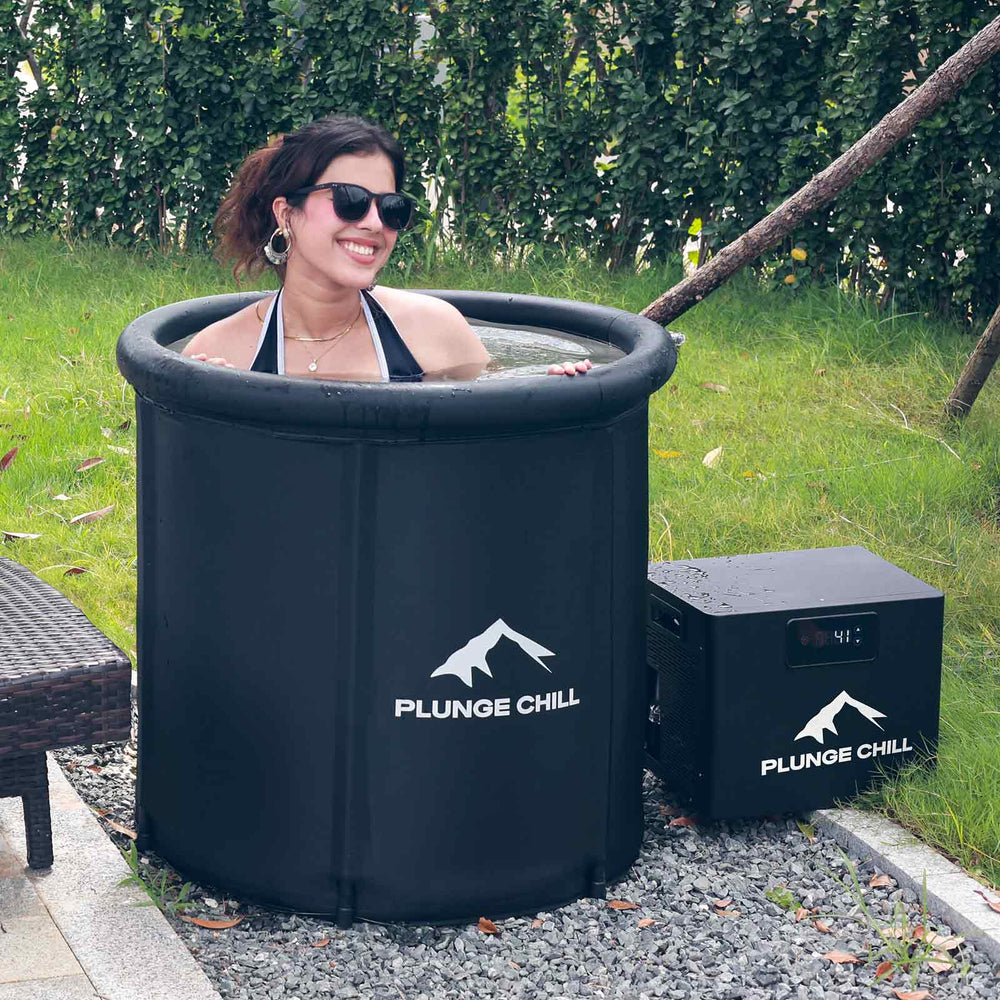
As a sports rehabilitation specialist and strength coach who also tests cold-plunge products in clinics, locker rooms, and garages, I see cold water used well—and misused—every week. This guide translates the best available research into practical decisions you can make about when to plunge, how cold to go, and what to buy, while being candid about the trade-offs that most headlines gloss over.
What We Mean by “Cold Plunge”
Cold plunge, also called cold-water immersion, is deliberate exposure of the body to very cold water to create a controlled physiological stress. In practice that means sitting or standing in water generally between about 39–59°F, for minutes rather than seconds. A cold shower is a milder cousin that is easier to start with but provides less uniform cooling. Most protocols aim to reduce perceived soreness and temperature after hard training, sharpen alertness, or build stress tolerance. Cleveland Clinic guidance emphasizes short, tolerable exposures and warns against going below about 40°F for safety, while beginners often start in the 50–59°F range for brief durations and progress gradually.
Two common terms appear in the research and in this article. DOMS refers to delayed-onset muscle soreness that peaks roughly a day or two after hard exercise. CK, or creatine kinase, is a blood marker that often rises after muscle-damaging efforts. Understanding both matters because many studies ask whether cold immersion lowers DOMS and CK, and whether it helps you perform the next day.
What the Evidence Actually Says
A 2025 analysis in PLOS One of randomized trials concluded that cold immersion produces a clear, acute physiological signal. Immediately after plunging, inflammatory markers spike temporarily, yet subjective stress ratings tend to be lower about 12 hours later. That paradox helps explain why people often feel calmer later in the day even as the immediate immune response runs hot. The same review noted improvements in sleep and quality-of-life metrics in some studies, while mood changes were inconsistent. Protocols were all over the map—from chest-deep immersion for 30 seconds up to very long sessions—so the field still lacks a universally optimal dose.
If your priority is soreness and fatigue after hard training, the evidence is more consistent. A meta-analysis hosted on PubMed Central found that compared with sitting quietly, cold immersion reduced perceived soreness immediately and lowered CK at 24 hours, with lower lactate readings at 24–48 hours in the limited studies that measured them. In contrast, there was no reliable effect on C-reactive protein and IL‑6 over the same time frames, suggesting that many anti-inflammatory claims are either overstated or reflect different pathways than the usual cytokines measured in blood.
The anti-inflammatory story is even murkier inside muscle. A mechanistic study comparing cold immersion with a low-intensity warm-down after resistance training found no meaningful differences in immune cell infiltration or inflammatory gene expression inside muscle tissue, despite meaningful cooling of muscle temperature. In other words, the analgesia many people report after a plunge does not appear to come from shutting down intramuscular inflammation, at least in the short window examined. That aligns with day-to-day experience in training rooms where athletes feel better and move better after cold, but deeper adaptation biology is unchanged in the immediate aftermath.
There is also a performance wrinkle that often surprises strength athletes. Both Ohio State Health and Harvard Health summarize evidence showing that routine post-lift cold immersion can blunt long-term hypertrophy and strength gains, likely by damping the inflammatory signaling and protein-synthesis cascades you actually want after lifting. Endurance adaptations appear less vulnerable. Mayo Clinic Health System echoes that concern, advising caution with daily post-training plunges if long-term strength is the goal.
Finally, a recent presentation highlighted by the American Physiological Society found hot water immersion after high-intensity running preserved immediate jump performance better than cold water, with no clear differences in muscle-damage markers or next-day endurance capacity. That suggests a simple rule of thumb used by pro performance staffs for years: if you need same-day muscle power for a second session or competition, heat may be the better bet, and if you need soreness relief for tomorrow, cold can still help.

Strengths: Where Cold Plunge Earns Its Place
The strongest and most repeatable benefits of cold immersion are practical and short-term. After hotter, longer, or more eccentric sessions, plunging can lower perceived soreness and fatigue, cool core temperature faster, and help athletes feel ready to move again. Clinical sources such as Cleveland Clinic and University of Utah Health also note that many people report improved focus or calmer sleep after cold exposure, even if those outcomes vary among individuals.
From a measurement perspective, reductions in CK at 24 hours and lower lactate at follow-up time points have been observed. The changes are modest, but they add up when a congested schedule forces you to bounce back quickly. In field settings with team sport athletes, the greatest wins are often simple: an athlete who would have skipped warm-up sprints because their legs felt heavy can actually take part. For coaches, that change in availability matters more than small fluctuations in a biomarker.
Another practical strength is the versatility of set-up. For beginners, cold tap water with a few bags of ice is sufficient to reach the mid‑50s Fahrenheit. Those seeking more precise temperature control can purchase a dedicated chiller to hold a stable 41–50°F even in warm climates. This flexibility helps athletes meet the protocol demands in the research without needing a spa membership.
Weaknesses and Risks You Should Respect
Strength and muscle growth can be dampened if cold is applied immediately after lifting and used habitually. If you care deeply about long-term strength or size, plan your cold sessions away from your primary strength work by at least a day, or save plunges for deloads and competition phases. Ohio State Health recommends delaying cold 24–48 hours post‑strength training if hypertrophy is a priority.
Systemic risks are non-trivial for specific populations. Harvard Health and Cleveland Clinic advise people with cardiovascular disease, arrhythmias, peripheral artery disease, Raynaud’s phenomenon, neuropathy, venous stasis, or poorly controlled blood pressure to seek medical guidance before plunging. Cold shock can trigger rapid breathing, a spike in blood pressure, and disorientation. Prolonged exposure can lead to hypothermia and in extreme conditions frostbite. Open-water plunges add environmental hazards such as currents and ice; organizations like Northwell Health recommend group supervision, checking tides and wind, and wearing insulating accessories in very cold conditions. Regardless of age and training status, do not plunge alone and do not plunge while intoxicated.
Another weakness is how dose-sensitive the outcomes are. Cleveland Clinic’s sports medicine guidance often caps sessions at about three to five minutes and advises against temperatures below roughly 40°F, while other sports-medicine content from Ohio State Health and physical therapy sources discuss 10–20 minutes at 50–59°F. Lake Nona’s consumer guidance starts true beginners at 30–60 seconds and builds to three to five minutes, with experienced users occasionally sustaining 10–20 minutes. Those differences are not contradictions so much as shifting trade-offs between temperature, time, and goals. A colder bath for a shorter time can plausibly produce briefer analgesia and less neuromuscular depression than a moderate bath for longer, and vice versa.
How Cold, How Long, and When
You can treat immersion temperature and duration like a training plan. For soreness and cooling, the combination supported most often in athlete populations is water around the low‑50s to high‑40s Fahrenheit for a few to several minutes. A network meta-analysis in Frontiers in Physiology reported that 10–15 minutes in the 41–50°F range was both widely studied and physiologically potent for post-exercise recovery outcomes within 48 hours. Cleveland Clinic recommends a more conservative ceiling of around five minutes for general users, especially early on, and not going below about 40°F.
Timing relative to your training matters as much as the dose. After a long run in heat or a game where you need to cool the system down quickly, cold immediately after effort is useful. If you just finished a heavy squat or deadlift session in a strength phase, delay cold for a day or more to prevent blunting your gains. If you need to perform again within hours, hot immersion can preserve same‑day power better than cold, per the American Physiological Society report; cold can still be reserved for the final session of the day to manage soreness for tomorrow.
Here is a concise comparison that merges the above guidance into a practical snapshot.
Goal |
What Cold Helps Most |
When to Use |
Typical Dose Range |
Notable Caveat |
Next‑day readiness after hard effort |
Lower perceived soreness and CK at 24 hours; faster cooling |
Immediately post‑effort when long‑term strength is not the priority |
About 3–10 minutes around 50–59°F or 10–15 minutes around 41–50°F depending on tolerance |
Longer exposures may depress power output for hours |
Same‑day power between sessions |
Not ideal; consider heat instead |
Use hot immersion between sessions; save cold for end of day |
Warm immersion around hot‑tub range for a few minutes |
Based on conference report; confirm in your sport context |
Strength and hypertrophy phases |
Minimal role immediately post‑lift |
Delay cold by 24–48 hours after strength training |
Short, cool showers on off days if desired |
Post‑lift cold can blunt long‑term strength gains |
General alertness and stress practice |
Breathing under cold stress can improve perceived resilience |
Morning or on non‑training days |
Very brief exposures in the 50s°F, building slowly |
Responses vary widely; monitor how you feel |
Citations in this table reflect summaries from Cleveland Clinic, PLOS One, Frontiers in Physiology, Ohio State Health, Mayo Clinic Health System, and the American Physiological Society.
Overlooked Insights Woven Into Practice
A factor that quietly changes both safety and outcomes is immersion depth. A review on PubMed Central notes that deeper, head‑out immersion at the same temperature raises hydrostatic pressure and shifts blood centrally, which can lower heart rate at rest yet raise cardiovascular load when you stand up again. That means chest‑deep plunges feel different—and can produce different heart responses—than waist‑deep plunges. When athletes tell me “cold doesn’t work for me,” they often changed depth or body coverage, not only temperature or time.
Another underused tactic is matching hydrotherapy to the actual competitive calendar. An American Physiological Society report suggests that hot immersion helps restore muscle power between same‑day events better than cold immersion, while cold seems to reduce soreness for the next day. Many recreational users default to a daily cold plunge after every workout; rotating modalities around the schedule delivers better results with fewer unintended trade‑offs.
A final idea I use in the field but consider exploratory is to rewarm deliberately after short, cold sessions when you need to protect neuromuscular function. A three‑minute plunge around the low‑50s°F followed by five to ten minutes of light active warm‑up often restores jump height closer to baseline while preserving the subjective relief in the quadriceps. Suggested verification step: compare simple jump or sprint metrics in a small group on two days, one with rewarm and one without, after the same short cold protocol.

Safety and Screening
Medical screening is not a formality. Harvard Health and Cleveland Clinic both caution people with heart rhythm disorders, peripheral artery disease, Raynaud’s, neuropathy, or poorly controlled hypertension to consult a clinician before cold immersion. Cold shock can drive blood pressure up sharply and trigger gasping. For anyone, the safest pathway is to start warmer, shorter, and supervised, progress only if you tolerate it well, and step out immediately if breathing feels uncontrolled or lightheadedness appears. In open water, safety escalates quickly; Northwell Health emphasizes group swims, thermometers, and avoiding hazardous weather. Indoors, I advise a ground‑fault protected outlet, clear ingress and egress, a dry mat, and a towel within reach.
Product Buying and Care Tips
From reviewing more than two dozen consumer and pro‑grade plunge systems, my recommendations are straightforward. First, buy for stability of temperature, not just minimum temperature. A chiller that can hold the low‑40s°F steadily in a warm garage is more useful than one that advertises 39°F but swings widely under load. Ask vendors how many gallons the unit is rated for and at what ambient conditions; high‑flow circulation helps keep temperature uniform at your legs and trunk.
Second, filtration and sanitation are non‑negotiable if multiple people are plunging. Cartridge filtration plus UV or ozone is common in pro units and makes week‑to‑week maintenance realistic; budget tubs will require more frequent draining and scrubbing. This is practical hygiene from clinic use rather than a specific research finding. Suggested verification step: track water clarity and microbial test-strips weekly with and without supplemental UV or ozone in a shared-use setting.
Third, consider serviceability and noise. Pumps and chillers hum; if you live in an apartment, ensure decibel levels are acceptable. Simple drain valves, compatible replacement filters, and readily available gaskets beat exotic parts that require a long wait. If you intend to move the unit seasonally, check dry weight and footprint; roll‑away options matter more than you think.
Finally, budget honestly. University of Utah Health notes that basic inflatables or tubs plus ice can stay under $100, while purpose-built chillers run into the thousands. Mayo Clinic Health System notes that fully featured premium systems can approach $20,000. If your goals are modest, cold tap water and ice are fine. If you’re training a squad, stable temperature control and robust filtration are worth the investment.

Reconciling Conflicting Guidance
Guidance conflicts because people and protocols differ. Cleveland Clinic’s conservative three to five minutes overlaps with Lake Nona’s progression for beginners and is friendlier to first‑timers. The Frontiers network meta-analysis favors longer exposures at colder temperatures for recovery endpoints measured within 48 hours, but those sessions may temporarily suppress neuromuscular output. Ohio State Health and Harvard Health highlight longer‑term training trade‑offs for strength athletes; Mayo echoes that daily cold after lifts could blunt adaptation. These are not contradictions so much as different lenses. Differences in immersion depth, water temperature, body coverage, timing relative to training, and the population studied—often young, healthy men—drive many of the discrepancies.
The PLOS One review also underscores that stress benefits appear later, not immediately, while inflammatory signals spike right away. That temporal mismatch can confuse users who expect instant calm or instant pain relief to persist. In practice, many athletes feel best the next morning, not the next hour, and they use that timeline to decide whether cold belongs today.
Quick Temperature and Time Guide
Cold plunging becomes safer and more effective when you obey the basics. Start warmer and shorter, then progress. For beginners, the low‑ to mid‑50s°F for one to three minutes with calm nasal breathing will teach control. For experienced users wanting a more potent recovery stimulus, staying in the low‑ to mid‑40s°F for 10–15 minutes is supported in network comparisons for next‑day outcomes, but should be reserved for people with stable vitals and a clear need. If you decide to pair heat and cold, finish on whatever matches your goal: hot when you need immediate leg pop, and cold when you want to feel better tomorrow.
Takeaway
Cold plunging is a tool, not a cure‑all. It shines for cooling, short‑term soreness relief, and perceived stress resilience. It is less reliable for improving objective performance and can interfere with long‑term strength adaptations if used reflexively after every lift. The smartest approach is to plan cold the way you plan training. Match the dose and timing to your goal, respect contraindications, and buy equipment that is safe, serviceable, and sanitary for your setting. If in doubt, start warmer and shorter, and involve your physician when risk factors are present.
FAQ
How cold should my first plunges be, and for how long?
For most healthy beginners, starting around the low‑ to mid‑50s°F for one to three minutes is both safe and educational. Cleveland Clinic recommends staying on the warm side and keeping exposures brief, while multiple sports‑medicine sources suggest building gradually toward colder and longer only as you tolerate it. You do not need to chase extreme temperatures to see benefits.
Will cold plunges help me build muscle or strength?
If used immediately after lifting and especially if used most training days, cold can blunt the signaling you want for hypertrophy and strength. Ohio State Health and Harvard Health both summarize this risk. If strength and size are your priority, delay immersion by a day or use cold mainly during competition phases or on endurance days.
Is hot water better than cold after training?
It depends on the goal and the timing. An American Physiological Society report suggests hot water preserves immediate jump performance better than cold between same‑day sessions, whereas cold is more helpful for reducing soreness by the next day. Teams often use both across a multi‑day schedule.
Can cold plunges improve immunity or mental health?
Evidence for broad immune benefits is modest and inconsistent. A PLOS One review found little immediate immune change, with some delayed stress reductions and mixed mood data. Many users report better sleep or calm focus after building a routine; others do not. Treat these effects as individual and track your own response.
How much should I spend on a plunge setup?
That depends on your goals and environment. A basic tub with ice can be under $100, while purpose‑built systems with chillers and filtration run into the thousands, and high‑end units can approach $20,000. University of Utah Health and Mayo Clinic Health System provide those price context points. Spend on temperature stability and sanitation before spending on aesthetics.
Is open-water plunging safe?
Open-water plunging adds unique risks. Northwell Health emphasizes supervision, checking weather and water temperature, and using thermometers and appropriate gear in very cold conditions. Currents and ice are real hazards. If you are new to cold exposure, start in a controlled environment with help nearby.
Small Print on Uncertainties
Some practical suggestions in this guide come from applied coaching experience rather than controlled trials, such as using an active rewarm to protect neuromuscular output after a short cold session, or prioritizing UV or ozone in shared-use tanks to simplify sanitation. Those are clearly labeled as practice-based with a verification step suggested. When possible, defer to clinical sources such as Cleveland Clinic, Mayo Clinic Health System, Harvard Health, and peer‑reviewed syntheses from PLOS One, Frontiers in Physiology, and PubMed Central, which are cited throughout.
References
- https://www.health.harvard.edu/heart-health/cold-plunges-healthy-or-harmful-for-your-heart
- https://commons.und.edu/cgi/viewcontent.cgi?article=1076&context=pas-grad-posters
- https://sncs-prod-external.mayo.edu/hometown-health/speaking-of-health/cold-plunge-after-workouts
- https://pmc.ncbi.nlm.nih.gov/articles/PMC2938508/
- https://www.northwell.edu/news/in-the-news/cold-water-plunges-are-the-rage-but-does-the-science-back-up-the-devotion-
- https://health.osu.edu/wellness/exercise-and-nutrition/do-ice-baths-help-workout-recovery
- https://healthcare.utah.edu/healthfeed/2023/03/cold-plunging-and-impact-your-health
- https://uwi.edu/sport/sites/sport/files/Ice%20Baths%20Vs%20Cold%20.pdf
- https://today.wayne.edu/news/2021/03/22/is-cold-water-swimming-good-for-you-41963
- https://health.clevelandclinic.org/what-to-know-about-cold-plunges