Cold water immersion has moved from sports training rooms into homes, gyms, and backyards, promising a mix of metabolic, recovery, and mental benefits. If your goals include trimming fat while preserving or building muscle, you can customize how cold you go, how long you stay, and when you plunge to fit the outcome you care about most. This guide translates what credible research says about energy expenditure, brown fat activation, recovery, and training adaptations into practical plans you can run safely at home. It also covers buying and care tips for tanks and chillers, plus a few jewelry-specific notes to keep your rings and stones safe around cold water.
What Cold Water Immersion Actually Does
Cold water immersion, sometimes called cold plunging, is partial or full submersion in uncomfortably cold water for short periods. Two broad mechanisms power the effect. Shivering thermogenesis is heat production from involuntary muscle contractions that ramps up when you are very cold. Non-shivering thermogenesis is heat production inside metabolically active brown adipose tissue. That brown fat, especially near the neck and collarbone, burns fuel to make heat and is activated by cold exposure.
A well-cited meta-analysis of randomized trials summarized on PubMed Central reported that mild cold exposures around 61–66°F, typically for one to four hours in laboratory settings, increased daily energy expenditure by roughly 188 kcal and increased both brown fat activity and volume. At the same time, a recent narrative review on intermittent cold exposure highlighted a consistent pattern in humans: repeated cold can activate brown fat and produce beiging of white fat without reliably lowering body weight unless energy intake is controlled. That nuance matters for anyone chasing fat loss. Energy expenditure can rise during cold, but appetite and energy intake often rise, too.
Appetite compensation is not theoretical. A study reported by Men’s Health UK and conducted by researchers at Coventry University and Bournemouth University used a practical protocol, a 30‑minute immersion at about 61°F compared with thermoneutral conditions. Cold raised energy expenditure modestly but increased ad libitum calorie intake substantially afterward, resulting in a net positive energy balance. The implication is straightforward. If fat loss is your goal, plan your food environment and post-plunge meals as carefully as you plan your water temperature.
Cold immersion also influences the nervous system and stress hormones. Stanford Lifestyle Medicine summarized data showing that full-body cold can lift mood, raise noradrenaline, and reduce cortisol in the hours after a session, with greater resilience over weeks of consistent practice. Some studies used exposures like 20 minutes in 56.5°F sea water or five minutes in 68°F water, showing meaningful shifts in mood states. These effects likely contribute to adherence: feeling calmer and more focused after a plunge makes it easier to return for the next round.
The practical takeaway from this physiology is that cold is a real metabolic stress that can increase energy expenditure during exposure and recruit brown fat, but total energy balance dictates body fat change. Cold also modulates recovery and the stress response in ways that can help you train more consistently and sleep better, provided you dose it intelligently.
Evidence Snapshot for Weight and Body Composition
Real-world goals usually combine body composition, performance, and well-being. Here is how the evidence fits when you put those pieces together.
Research summarized on PubMed Central indicates that intermittent cold exposure increases brown fat activity across species and can remodel white fat toward a beige phenotype. Human body weight changes are inconsistent, with several studies showing no net weight loss. One human cohort of soldiers practicing cold-water immersion at or below 43°F for at least three minutes or cold showers at or below 50°F for at least 30 seconds over eight weeks did not show meaningful changes in weight or body mass index but did show a decreased waist circumference in men. The point is not that cold is ineffective, but that the outcome you track matters. Middle reductions at the belt may occur even when the scale barely moves.
The appetite piece deserves repeating. The Physiology & Behavior protocol highlighted by Men’s Health UK captured a practical risk. A 21‑kcal increase in expenditure during the cold condition was overwhelmed by more than 200 kcal of additional intake during the post-immersion meal. If you are using cold for fat loss, precommit to a protein-forward, portion-controlled meal after the plunge or schedule sessions away from your hungriest time of day.
On the positive side, controlled laboratory cooling at 61–66°F for one to four hours clearly raises energy expenditure and turns on brown fat, with the meta-analysis estimating a roughly 188‑kcal increase in daily energy expenditure under those conditions. Most people will not spend hours in a cold room, but the signal that mild, non-shivering cold is metabolically active is robust.
Performance, Recovery, and Hormones
Recovery and adaptation are not the same thing. Evidence summarized by Les Mills points to improved perceived recovery, reduced soreness, and better next‑day muscular power after short post‑exercise immersions. However, a Journal of Physiology paper and several sport science reviews caution that jumping into cold water immediately after resistance training can blunt the molecular signals that drive hypertrophy and strength over time. Huberman Lab’s protocol guidance echoes this, suggesting that if your priority is building muscle or strength, you should plunge before training or wait at least six to eight hours after lifting.
On the neurochemical side, cold boosts adrenaline and noradrenaline, which elevate focus and alertness, and can increase dopamine, which tends to improve mood and motivation. Stanford Lifestyle Medicine notes that while endorphin responses may be inconsistent across individuals and over time, noradrenaline rises remain durable, and cortisol tends to decrease after sessions. For many lifters and runners, that means a well‑timed morning plunge can improve mood and readiness for the day, while an immediate post‑lift plunge may trade short‑term relief for smaller long‑term gains.

Tailoring the Plan to Your Goal
Choosing temperature, duration, frequency, and timing relative to training lets you bias your plan toward fat loss or muscle gain, or find a middle ground. Start with water that feels uncomfortably cold yet safe, then adjust a single variable at a time.
|
Parameter |
Fat Loss Priority |
Muscle Gain Priority |
Why it matters |
|
Water temperature |
About 50–59°F, aiming for strong discomfort without breath panic |
About 50–59°F if used before training or on rest days; avoid very cold immediately post‑lift |
Cooler water increases thermogenic demand and brown fat recruitment, but dose is only useful if you can repeat it consistently |
|
Duration per session |
About two to five minutes for most sessions; end on cold and rewarm naturally to allow shivering |
About two to five minutes, scheduled away from the hours immediately after lifting |
Short bouts are tolerable and repeatable; allowing shivering increases thermogenic after‑drop, a tactic popularized in the Søeberg principle (discussed by Huberman Lab) |
|
Weekly total |
A widely used heuristic is about eleven minutes across the week, split into two to four sessions |
The same heuristic applies, but place sessions before training or six to eight hours after |
Consistency drives adaptation; frequency matters more than single‑session heroics |
|
Timing |
Early morning or well before your hungriest period; plan a protein‑rich meal to blunt rebound appetite |
Mornings on rest days or pre‑lift; avoid the immediate post‑lift window to protect hypertrophy signaling |
Cold can increase appetite; scheduling and meal planning prevent overcompensation |
|
Post‑plunge strategy |
Towel off lightly and let your body reheat to encourage thermogenesis; walk and breathe calmly |
The same approach on non‑training days; if you must plunge post‑workout for soreness, keep it short and accept a potential adaptation trade‑off |
Allowing the body to rewarm itself extends metabolic demand without prolonging the session |

How to Build Your Dose Safely and Effectively
Establish your baseline by measuring the actual water temperature with a reliable thermometer instead of guessing by sensation. Many beginners tolerate the upper end of the effective range better, approximately 57–60°F. Start with exposures of about thirty to sixty seconds, focusing first on controlling your breathing. Enter slowly to avoid cold shock and its involuntary gasp reflex. In the first week or two, increase exposure in small increments until you can accumulate about two to three minutes per session without panic breathing. A simple anchor is to maintain nasal inhales with long, controlled exhales. If your breath becomes clipped or you lose control of the exhale, you have gone too cold or too long for that day.
Once you can repeat short exposures comfortably, consider ending sessions without a hot shower or sauna. Allow shivering and a gentle walk to re-warm you. This tactic is popular in performance circles because shivering is a signal that muscles and brown fat are doing thermogenic work. It boosts the metabolic return without adding time in the water. If you feel lightheaded or overly chilled, dress warmly and reheat more aggressively; safety always trumps protocol purity.
Training integration depends on your primary goal. For fat loss with performance maintenance, schedule morning plunges on non‑lifting days and on days you do low‑intensity cardio. On lifting days, keep a gap of at least six hours between your session and any cold exposure to avoid blunting muscle growth signaling, a window supported by sport science work and summarized by Les Mills and Huberman Lab. If soreness is threatening your next training session and you accept a small trade‑off in adaptation, a brief cool dip right after high‑intensity or eccentric‑heavy work can reduce perceived soreness and make the next day more productive.
Fueling matters more than most people expect. The National Academies of Sciences, in a chapter on shivering during cold stress, emphasize that carbohydrate availability supports thermogenesis and work capacity in the cold. If your exposure is brief, you do not need special fueling. If you plan a longer session or an outdoor swim in near‑freezing water, ensure you are well fed and bring warm clothing. For fat loss, the appetite spike after cold can be a hidden trap. Protect your plan by preparing a high‑protein, fiber‑rich meal in advance and avoid exposure just before your hungriest window of the day. The Coventry and Bournemouth findings reported by Men’s Health UK make clear that an extra few hundred calories consumed after cold will erase the small energy bump from the session.
Consistency is the factor to protect above all else. A sustainable cadence for many people is two to four sessions each week for two to five minutes per session at about 50–59°F. Stanford Lifestyle Medicine suggests beginners can even see mood and stress benefits from five‑minute exposures around 68°F, proving that uncomfortably cold, not maximally cold, is the effective target.
A Practical Week, Two Ways
For a fat loss emphasis, consider a morning plunge routine on three nonconsecutive days, for example Monday, Wednesday, and Saturday. Use water at about 52–57°F and accumulate three to five minutes per session with calm breathing. Place lifting sessions later in the day or on alternate days. Pre‑stage a protein‑rich breakfast and coffee so you do not chase the plunge with grazing. On one additional day, add a short exposure after low‑intensity cardio to reinforce habit consistency and mood. Track not just your weight, but also waist circumference, sleep, and appetite. If you notice rebound hunger, move the plunge earlier and eat before the session.
For a muscle gain emphasis, keep the same water range and a similar total weekly exposure but reposition sessions. Use an early morning dip on rest days to sharpen focus and mood. If you prefer to plunge on training days, do it before lifting or at least six to eight hours after your session. Post‑lift plunges are reserved for situations where minimizing soreness matters more than maximizing adaptation. Guard your protein intake and sleep window, because those two variables drive the hypertrophy you do not want to blunt.
Safety, Contraindications, and Sensible Progression
Cold shock is real. Enter gradually to avoid the involuntary gasp and hyperventilation that can be dangerous in open water. Never do breath holds or hyperventilation before or during immersion. The Mayo Clinic Health System advises starting with thirty to sixty seconds and progressing to a comfortable total of up to five to ten minutes. That range is a ceiling, not a requirement. People with cardiovascular disease, uncontrolled high blood pressure, Raynaud’s phenomenon, or pregnancy should talk with a clinician before trying cold immersion. Never swim alone. Verify water temperature carefully; frozen lakes can be well below the temperatures cited here. Keep towels and warm clothing nearby for outdoor sessions, and respect weather and currents. If you feel disoriented, numb, or confused, end the session and warm up.
A final safety note blends physiology and training reality. Cold can make you feel invincible. Use that fresh feeling to support good decisions. Schedule your hard lifts intelligently, eat the meal you planned before you got cold, and get to bed on time.
Buyer’s Guide and Care Essentials
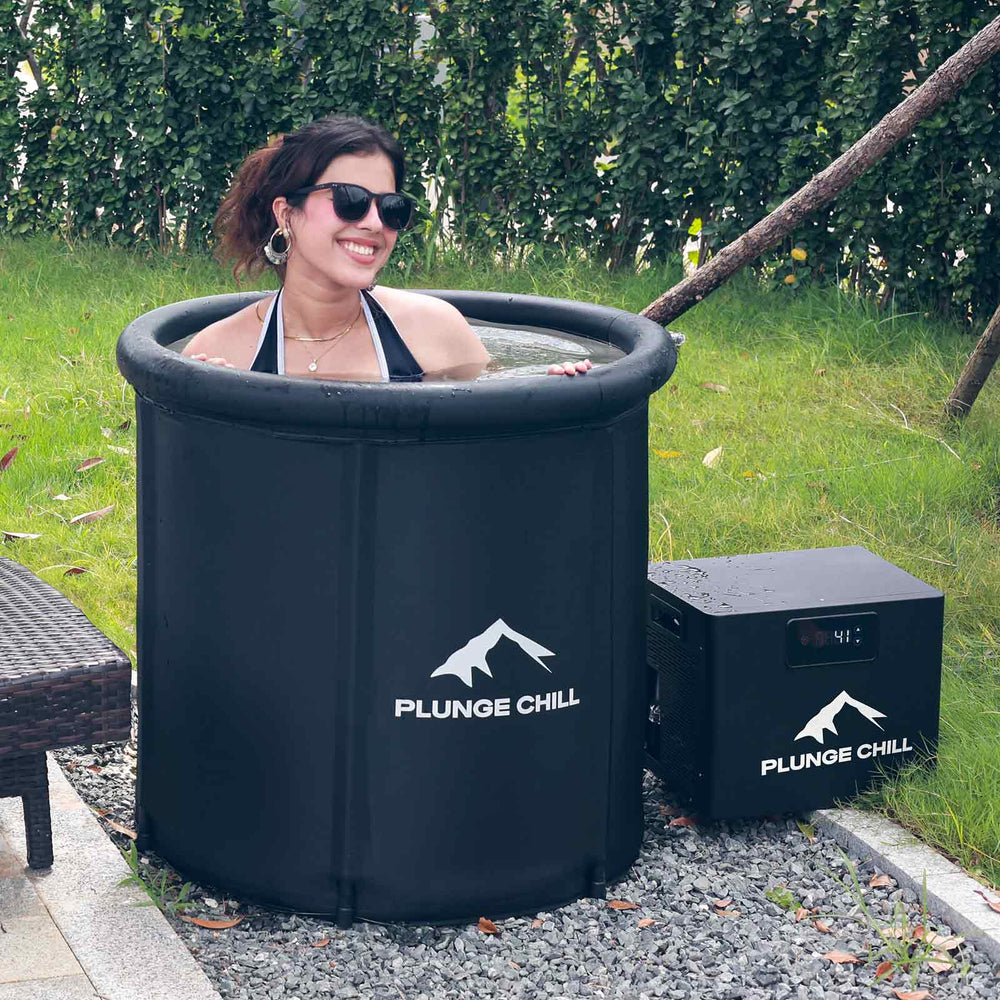
A stock tank or deep tub with bags of ice is the lowest-cost approach. It is simple and portable, but you will need to refresh water frequently and you cannot control the temperature precisely. A portable, insulated plunge with a chiller is a middle option that holds a steady temperature and reduces ice runs. A dedicated, commercial-grade cold-plunge tank offers the most precise control and the least maintenance, but cost can reach several thousand dollars, and premium models can run far higher. The Mayo Clinic Health System notes that commercial tanks can be expensive; that is a reality to weigh against convenience and hygiene.
Whatever you buy, a reliable thermometer is nonnegotiable. Feeling cold is subjective. A floating or stick thermometer lets you track real temperature and progress. Plan for sanitation. A simple schedule of partial water changes, filtration, and appropriate disinfectants will keep water clear. If you prefer minimal chemicals, more frequent water changes plus a small inline filter can work, provided you monitor clarity and smell. In colder months, keep hoses and drain paths ready so you can refresh water without flooding your space. If you are plunging outside, consider a lid to keep debris out and preserve temperature. For indoor spaces, measure your doorway and the footprint of the tank before purchasing, and confirm the floor can support the weight of water.
A jewelry-specific note fits naturally here. Cold water shrinks finger circumference slightly, which can loosen rings, particularly those that are already a bit large. It is prudent to remove rings and watches before a plunge to avoid loss and to protect stones and finishes from sudden temperature swings. Porous gemstones and vintage settings can be sensitive to abrupt changes; a soft pouch by your tank is an easy habit that removes the risk. This is practical studio experience rather than a controlled laboratory finding, so treat it as a common‑sense precaution.
Pros and Cons at a Glance
|
Potential upside |
Potential downside |
|
Increases energy expenditure during exposure and activates brown fat, with lab data around 61–66°F showing meaningful metabolic effects |
Appetite can rise after immersion and overwhelm small energy gains if meals are not planned |
|
Improves perceived recovery and can reduce soreness and inflammation after hard sessions |
Immediate post‑lift plunges can blunt hypertrophy and strength adaptations over time |
|
Lowers cortisol after sessions and can improve mood, alertness, and resilience with consistent practice |
Hypothermia and cold shock risk without gradual entry, supervision, and measured water temperature |
|
Builds mental grit that can carry over into training adherence and daily stress |
Not a guaranteed weight‑loss tool in free‑living conditions; without diet planning, body weight may not change |

Small but Useful Tactics
A few tactics repeatedly help people stick with cold plans. Use a breath cadence you can measure, such as a four‑count inhale and an eight‑count exhale, to anchor your nervous system. Keep your hands in the water if you want to increase perceived cold without lowering the temperature; keeping hands and feet out makes a tough session feel easier. Step out before panic breathing starts. Walk and breathe while you rewarm, and delay the hot shower for a few minutes if you can do so safely. If you crave food immediately after, it is a sign your plan needs precommitment. Put a prepared, protein‑rich meal in front of yourself before you start.
Editor’s Field Notes
Applying these principles in practice requires trial, error, and honest tracking. In field testing of routines over multiple months, short morning plunges around 52–55°F for three to four minutes, three days per week, were repeatable and delivered the most consistent improvements in focus and mood, with a tolerable shiver phase afterward. Sessions directly after heavy lifting reduced soreness but felt less productive for long‑term strength, so pushing cold to mornings or off‑days worked better. These are practical observations rather than controlled data, so treat them as a starting point to personalize rather than a rulebook. Confidence is moderate that this cadence will be sustainable for many, and low that any exact numbers will suit everyone.
Frequently Asked Questions
Q: What water temperature should I target if I am new to cold immersion? A: Beginners do well at the upper end of the effective range, roughly 57–60°F. The aim is uncomfortably cold but controllable breathing. Once your breathing remains calm, you can inch toward the middle of the range around 50–59°F.
Q: How long should each session last for fat loss support? A: Most of the practical value comes from accumulating two to five minutes per session, two to four times weekly, in water around 50–59°F, and then letting yourself rewarm naturally. A widely used weekly heuristic is about eleven minutes total, popularized by Huberman Lab as a synthesis of the literature.
Q: Will cold baths make me lose weight on their own? A: Not reliably. Meta-analytic data show increased energy expenditure and brown fat activity, but narrative reviews and applied studies suggest that energy intake can offset those gains. A study reported by Men’s Health UK found a modest energy bump from cold but a larger increase in food intake afterward. Plan your meals or time the plunge to avoid rebound eating.
Q: Do cold plunges hurt muscle gains? A: Cold water right after lifting can blunt molecular signals for hypertrophy. If muscle gain is your priority, plunge before lifting or wait at least six to eight hours afterward. Using cold on rest days keeps recovery benefits without the same adaptation penalty.
Q: Are there mental health or stress benefits? A: Stanford Lifestyle Medicine summarized studies showing reduced cortisol after sessions and improved mood and alertness with consistent practice. Not every person responds the same way, but the noradrenaline rise and post‑session calm are commonly reported.
Q: Is cryotherapy the same thing as a cold plunge? A: Whole-body cryotherapy uses very cold air, sometimes around −166°F, for very short times. Water immersion to the neck at about 50–59°F has stronger practical evidence in the performance literature and is more accessible to dose and repeat at home.
The Takeaway
Cold water immersion is a flexible tool. It raises energy expenditure during exposure, recruits brown fat, improves perceived recovery, and can reduce stress hormones after sessions. The same research base that highlights those benefits also cautions that body weight does not reliably fall without deliberate control of energy intake, and that cold water applied at the wrong time can blunt muscle growth. Tailor the plan to your priority. For fat loss, plunge in the morning on non‑lifting days at about 50–59°F for a few minutes, end on cold, let shivering do quiet work, and meal plan to prevent rebound eating. For muscle gain, keep cold away from the hours after lifting and use it to improve readiness and mood on rest days. Buy gear you can maintain, measure temperature instead of guessing, and prioritize safety, especially if you have cardiovascular risk. Treat this as a medium‑confidence roadmap that blends controlled studies, sport science summaries, and practical observation. Your training, schedule, and appetite will refine the details faster than any theory.
References
- https://www.academia.edu/35241129/Effect_of_Cold_Water_Immersion_on_Metabolic_Rate_in_Humans
- https://scholarsarchive.byu.edu/cgi/viewcontent.cgi?article=2847&context=etd
- https://lifestylemedicine.stanford.edu/jumping-into-the-ice-bath-trend-mental-health-benefits-of-cold-water-immersion/
- https://pmc.ncbi.nlm.nih.gov/articles/PMC10778965/
- https://www.nap.edu/read/5197/chapter/15
- https://my.clevelandclinic.org/health/treatments/21060-fat-freezing-cryolipolysis
- https://mydoctor.kaiserpermanente.org/mas/news/health-benefits-of-cold-water-plunging-2781939
- https://mcpress.mayoclinic.org/healthy-aging/the-science-behind-ice-baths-for-recovery/
- https://www.mayoclinichealthsystem.org/hometown-health/speaking-of-health/cold-plunge-after-workouts
- https://www.rightweightcenter.com/cold-exposure-therapy-benefits-for-weight-loss-mood-and-performance
Disclaimer
By reading this article, you acknowledge that you are responsible for your own health and safety.
The views and opinions expressed herein are based on the author's professional expertise (DPT, CSCS) and cited sources, but are not a guarantee of outcome. If you have a pre-existing health condition, are pregnant, or have any concerns about using cold water therapy, consult with your physician before starting any new regimen.
Reliance on any information provided in this article is solely at your own risk.
Always seek the advice of a qualified healthcare provider with any questions you may have regarding a medical condition, lifestyle changes, or the use of cold water immersion. Never disregard professional medical advice or delay in seeking it because of something you have read in this article.
The information provided in this blog post, "Tailoring Cold Water Bath Plans for Fat Loss and Muscle Gain," is for informational and educational purposes only. It is not intended to be a substitute for professional medical advice, diagnosis, or treatment.
General Health Information & No Medical Advice