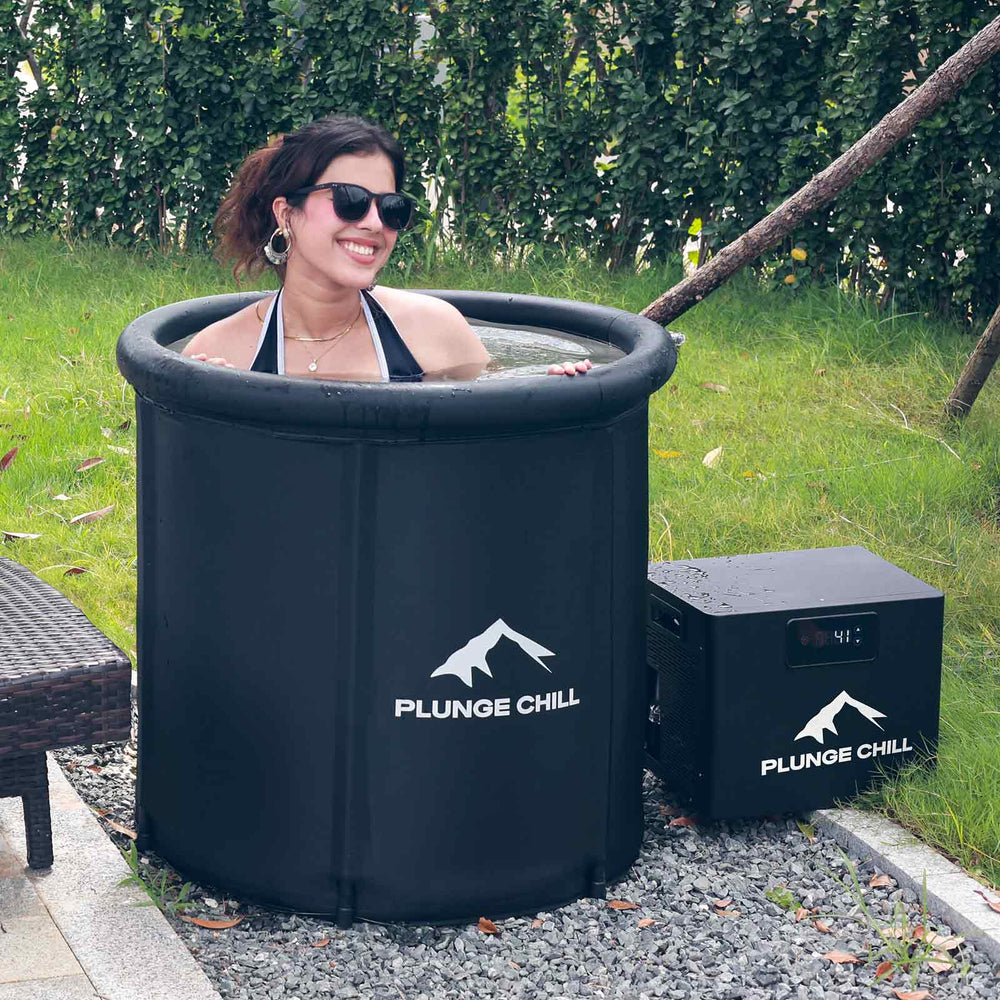
Cold-water immersion has evolved from a locker-room ritual to a deliberate tool for biohackers who want measurable recovery, resilience, and performance gains. As a sports rehabilitation specialist and strength coach who also reviews cold plunge hardware, I approach cold exposure the way I program strength cycles: define the goal, match the dose to the goal, control the environment, and respect the biology. This guide translates current evidence and on-the-ground coaching practice into precise, adaptable strategies for energy, recovery, sleep, and mental performance—without hype.
What Cold Plunge Is—and Why It Works
A cold plunge is deliberate immersion of most or all of the body in chilled water, typically in the mid‑40s to mid‑50s °F. The water’s high thermal conductivity pulls heat away far faster than air. Two rapid reactions follow. First, blood vessels constrict and redirect blood toward the core. Second, as you exit and rewarm, vessels dilate and circulation surges. This cold-then-warm rhythm dampens local swelling and perceived soreness while moving oxygen and nutrients back into tissues. Cleveland Clinic and Mayo Clinic Health System both emphasize that these vascular changes, combined with reduced metabolic activity in cooled tissues, explain much of the short‑term relief many athletes report. Controlled studies summarized by Everyday Health and Ohio State Health suggest the most consistent benefits are reduced soreness after endurance work, with more caution warranted when strength and muscle growth are the primary goals.
Immersion also changes autonomic tone. The cold shock reflex spikes breathing, heart rate, and stress hormones; learning to manage that response through slow, extended exhales is one reason cold training can build composure under stress. The neck-deep immersion many coaches prefer is not just bravado. Experience Life’s expert guidance notes that submerging to the base of the neck increases the sympathetic stimulus and likely engages pathways linked with stress regulation in ways partial dips may not match.
Two overlooked details matter more than most guides admit. Gentle movement during the plunge breaks the thin warm boundary layer that can form around your skin and maintains a consistent stimulus; Experience Life highlights this as a simple way to sustain thermoregulation and, by extension, the training effect. And after you get out, waiting before applying external heat can increase the body’s own thermogenesis. Coaches and some clinicians point to this period as a pragmatic way to nudge brown fat activity and calorie burn during rewarming; Experience Life explains the rationale, while Ohio State Health describes the broader metabolic upside of maintaining core temperature. This is plausible but not definitively quantified for typical home protocols

Evidence Snapshot: What Holds Up, What Doesn’t
The broad picture is both encouraging and nuanced. For soreness and next‑day function after high-intensity or endurance efforts, cold immersion reliably helps in the short term. A 2022 review summarized by Everyday Health found reduced soreness and fatigue and better perceived recovery within 24 hours. In runners, coverage in Runner’s World highlights improvements in sprint recovery at 24 hours after plunges. Cleveland Clinic and Mayo Clinic Health System both describe reduced post‑exercise muscle damage signals and swelling as realistic outcomes.
For strength and hypertrophy, several lines of evidence indicate a tradeoff. Ohio State Health notes that regular plunging soon after lifting can blunt the inflammatory signaling and temperature-dependent processes that help muscle fibers adapt and grow, a caution echoed in Experience Life. This fits with earlier physiology papers (as summarized on PubMed Central in a case report and review) showing that cooling can attenuate some training adaptations when applied too aggressively or too soon. If your top priority is muscle size or strength, delaying immersion for a day—or using heat instead—better respects those signals.
For mood, stress, and sleep, the science is mixed but promising in specific windows. Harvard Health’s review of a 2025 analysis in PLOS One reported stress reduction that becomes apparent about 12 hours after immersion. It also noted an intriguing sex difference: men, but not women, reported better sleep after ice baths. This divergence could reflect protocol heterogeneity, sample composition, or timing relative to circadian cues rather than a true sex-specific effect; future standardized trials should stratify by sex and evening versus morning use. For now, it argues for personal experimentation rather than blanket rules. Everyday Health and NPR also describe short‑term mood gains, with the caveat that evidence for durable immunity or long‑term mental health effects is limited.
Cardiovascular and endocrine responses can be meaningful acutely, but effect sizes and best practices remain unsettled. University of Oregon researchers observed lower heart rate, blood pressure, and cortisol after a single 15‑minute immersion in healthy young adults, suggesting a plausible cardiovascular upside in the short term. The study summary did not report water temperature or detailed effect sizes, which limits generalization
Conflicts in recommended dose largely reflect different goals, subjects, and definitions. Life Time’s coaching guidance via Experience Life favors mid‑50s °F for two to five minutes, prioritizing alertness, resilience, and everyday recovery. Cleveland Clinic urges conservative dosing—about one to three minutes and not more than five—especially for beginners. Ohio State Health discusses ten to twenty minutes at 50–59°F in laboratory recovery contexts, but simultaneously recommends delaying cold after lifting if muscle gain is the goal. Runner’s World popularized Dr. Susanna Søberg’s threshold of roughly eleven minutes per week as a workable floor; this is a practical planning anchor rather than a mechanistic cutoff and requires replication in broader samples
When performance is imminent, pre‑event plunging is double‑edged. A brief cold exposure can boost alertness through a sympathetic surge, which is useful for some athletes. However, physiology work summarized on PubMed Central found that cold immersion can acutely reduce power output and strength for a period afterward. For strength, sprinting, or any sport needing high force development, keep cold well away from the final warm‑up. For endurance in heat, using cold to reduce core strain between bouts is more defensible.
Goal-Based Protocols You Can Actually Use
The most effective cold exposure plan begins with a clear objective and a realistic weekly schedule. The following ranges reflect converging guidance from Cleveland Clinic, Mayo Clinic Health System, Ohio State Health, Experience Life, Temple Health, and Runner’s World, balanced against how athletes actually tolerate the stimulus in the field.
Goal |
Best Timing |
Water Temp (°F) |
Time per Bout |
Weekly Volume |
Notes |
Morning energy and focus |
Shortly after waking or before low‑stakes tasks |
About 50–55 |
About 2–3 minutes |
About 6–11 minutes |
Expect a sympathetic surge; keep breathing slow and exits controlled. Pre‑lift use can dull power and should be avoided. |
Endurance or conditioning recovery |
Within about 30–60 minutes post‑session |
About 50–59 |
About 3–8 minutes |
About 8–15 minutes |
Helps perceived soreness and next‑day efforts. Longer exposures are better tolerated after long aerobic work than after heavy lifting. |
Strength or hypertrophy support |
About 24–48 hours after lifting, or on rest days |
About 50–55 |
About 2–5 minutes |
About 6–11 minutes |
Delay cold to preserve anabolic signaling; consider sauna or heat immediately after lifting instead. |
Heat stress cooldown |
Immediately post‑event in hot conditions |
About 45–55 |
About 5–10 minutes |
As needed around events |
Used in sports medicine to reduce core temperature; monitor for shivering and exit before numbness. |
Sleep priming |
About 2–4 hours before bed, if tolerated |
About 55–60 |
About 1–3 minutes |
About 3–9 minutes |
Some people unwind as heart rate falls; others become too alert. Test timing and stop if sleep worsens. |
Mental resilience training |
When mentally fresh, 3–4 times per week |
About 45–55 |
About 2–5 minutes |
About 8–15 minutes |
Emphasize calm nasal inhales and long exhales; neck‑deep immersion strengthens the stimulus. |
These ranges intentionally err on the conservative side for home practice. If you are new, begin warmer than you think—Temple Health recommends about 68°F for the first attempts—then progress by either lowering temperature or increasing time, but not both simultaneously.
Technique: Breathe, Enter, Move, Exit
Across hundreds of athlete sessions, the same coaching cues determine whether an immersion session is a productive stressor or a panicky struggle. Enter decisively and submerge to the base of your neck rather than hovering at the waist; lingering in partial immersion prolongs the gasp reflex and increases the chance of quitting. During the first thirty seconds, put your attention onto slow nasal inhales and extended, quiet exhales. A gentle hum or whisper on the exhale is a useful tool to lengthen the breath and reduce the drive to hyperventilate. Every twenty to thirty seconds, move your hands and legs just enough to pull colder water toward the skin and disrupt any warm boundary layer that may form around you; this maintains a consistent dose response. When time is up, stand slowly, stabilize your footing, towel off thoroughly, and let your body rewarm with light movement and layers. If you plan to use heat as part of contrast work, consider waiting a period before entering a sauna so you can capture some of the body’s own thermogenesis; Cleveland Clinic notes that sauna can also be used to rewarm and normalize body temperature if heat is the goal rather than metabolic training.

Safety, Contraindications, and Risk Management
Cold-water immersion is a stressor, and inappropriate dosing can cause problems ranging from painful after‑drop to more serious events. Major centers including Cleveland Clinic and Mayo Clinic Health System advise avoiding or seeking medical guidance if you have heart disease, high blood pressure, diabetes, peripheral neuropathy, Raynaud’s, venous stasis, poor circulation, cold agglutinin disease, or a history of arrhythmias. Temple Health warns against plunging into icy rivers or lakes where currents and extreme temperatures increase the risk of breathing difficulties, dizziness, or loss of motor control.
Even without pre‑existing conditions, respect early warning signs. If you lose the ability to control breathing, feel numbness rising, or experience lightheadedness upon exit, cut sessions shorter and warm gradually. Do not use cold to mask pain from acute injuries, fractures, or tendon tears; clinical care and graded loading, not numbness, drive tissue healing. If you practice outdoors, measure temperature with a reliable thermometer because frozen lakes can be colder than expected, and always have warm clothing and towels within reach. Early sessions are safer with someone present. These are not scare tactics; they are the same guardrails we use with teams so cold becomes training, not trauma.

Cold vs. Showers vs. Contrast: Pick the Right Tool
Different modalities bias different outcomes. Full-body immersion delivers more uniform cooling and hydrostatic pressure than showers, which is why Ohio State Health considers it more effective for recovery than cold showers alone. That said, cold showers still produce a clear sympathetic jolt and can be a convenient on‑ramp to colder immersions. Face-only immersions are a simple stress reset and can be surprisingly effective for calming in high-anxiety moments, as Temple Health notes.
Alternating hot and cold—contrast therapy—supercharges circulation changes. A PubMed Central review describes lower blood lactate and heart rate during contrast sessions in athletes, with common warm-to-cold time ratios of three or four to one, ending on cold. HydroWorx outlines how teams use warm and cold plunge pools sequentially across long seasons to manage soreness, while Cleveland Clinic and Runner’s World also discuss pairing sauna with cold. The evidence base remains heterogeneous, and durations should be individualized, but for seasoned trainees contrast cycles can be a useful layer to accelerate recovery between dense training days.

Buying a Cold Plunge: What Matters and Why
Product choice shapes both compliance and outcomes. In my reviews, the units athletes actually use the most are the ones that set up quickly, hold temperature accurately, stay clean with minimal tinkering, and fit the space and noise budget.
Feature |
Why it matters |
What to look for |
Dosing depends on degrees, not guesswork |
Digital control with reliable readout, stable mid‑40s to mid‑50s °F, minimal drift across seasons |
|
Water quality drives skin comfort and equipment life |
Multi‑stage filtration plus ozone or UV options, easy filter access, clear manufacturer maintenance schedule |
|
Build and footprint |
Frequent use demands durable, space‑aware designs |
Corrosion‑resistant materials such as 304 stainless or fiberglass, insulated lids, compact footprints that fit planned location |
Compliance drops if the unit drones or vibrates |
Published noise figures, vibration damping, indoor/outdoor suitability and drainage compatibility |
|
Reliable chilling requires adequate power |
Clear electrical requirements, realistic operating cost estimates, safe outdoor operation if needed |
|
Support and warranty |
Downtime kills routines |
Responsive customer service, straightforward parts availability, warranty terms that match expected use |
Dedicated plunge tubs maintain set temperatures and sanitation better than makeshift ice baths, which is why many facilities and serious home users gravitate to purpose‑built units. Plunge-focused brands report that some options are eligible for health spending accounts, and mainstream coverage has noted quality units under about $5,000, while high‑end systems can exceed $20,000 according to Mayo Clinic Health System and industry reporting. Those figures are context, not prescriptions; if your budget is lean, a stock tank, a home bathtub, or a lower‑cost barrel can still deliver the training effect if you control temperature and keep the water clean.
Care, Sanitation, and Water Quality
Good water is a performance variable. Regardless of price point, set a recurring schedule to change filters, clean surfaces, and shock or sanitize according to the manufacturer’s protocol. Keep a cover on when not in use to reduce debris and heat loss, and avoid lotions or body products before sessions. If the unit uses ozone or UV, understand the maintenance intervals for those systems and track them like you track lifting volume. Renu Therapy recommends continuous filtration and a night cover for sanitation and longevity in its guidance, and that advice generalizes well. In practice, most weekly issues I see are not from the cold itself but from neglected water.
Troubleshooting and Adaptation
If you feel wired for hours after morning plunges and focus suffers, shorten the bout by a minute, raise the temperature by a few degrees, or move the session earlier so alertness aligns with work blocks. If sleep deteriorates after evening plunges, shift cold earlier in the day or keep it to a brief, warm‑edge exposure around 60°F; Harvard Health’s mixed sleep findings and Experience Life’s caution to experiment both point toward individual titration. If soreness remains unchanged week over week despite plunges, reassess the training plan first, then progress toward the higher end of the endurance recovery ranges while monitoring how you feel the next day. If strength stalls and you have been plunging right after lifting, push cold to the following day and consider a short sauna instead post‑lift. These are small dials, not resets, and they are how biohackers turn cold exposure from a stunt into a system.
Modality Snapshot for Quick Choices
Modality |
Excels at |
Limitations |
Best use-case |
Full-body plunge |
Uniform cooling, robust autonomic training, reliable soreness relief for endurance |
Requires space and sanitation; can transiently reduce power |
Stand-alone recovery and resilience training when time allows |
Cold shower |
Convenience, entry‑level stimulus, quick alertness |
Uneven dosage; less hydrostatic effect |
Morning arousal, travel days, habit formation |
Localized immersion |
Targeted anti‑inflammatory effect |
Limited systemic response |
Focal soreness when full immersion isn’t feasible |
Contrast (hot↔cold) |
Circulation, perceived recovery, potentiated relaxation after heat |
Adds complexity; protocol variance in literature |
Between-session recovery blocks for experienced trainees |

Key Optimization Insights Woven Through the Plan
Several practical subtleties are easy to miss. One is that movement in the water enhances the cold signal by stripping the warm boundary layer. Another is that rewarming naturally for a period after exit appears to support brown fat activity and thermogenesis, which can be useful for metabolic goals; this is plausible and consistent with coaching experience and explanations from Experience Life and Ohio State Health but still needs more direct measurement
Takeaway
Cold plunging is a versatile tool, not a magic trick. If your goal is soreness relief and consistent training, immersive water in the 50s °F for a few minutes within an hour of endurance work is a high‑yield starting point. If your goal is muscle size or strength, save cold for the next day and lean on heat immediately after lifting. If you want sharper mornings or better stress tolerance, keep bouts short, breathe long, and integrate gentle movement in the water. Keep temperatures and times conservative at first, verify the response you care about—sleep, soreness, heart rate, or mood—against your own data, and build from there. Respect safety, keep the water clean, and buy for reliability over novelty. The biology is robust enough to reward thoughtful practice and humble enough to punish bravado.
FAQ
How cold is cold enough to matter, and how long should a session last?
For most healthy adults, water in the low‑to‑mid 50s °F for two to five minutes provides a strong stimulus without excessive risk. Cleveland Clinic and Experience Life both support short exposures as the sweet spot for non‑elite users. Longer durations up to about ten minutes are used in endurance contexts per Ohio State Health and Runner’s World coverage, but beginners should progress gradually and never chase time and colder temperatures at once.
Will cold plunges help me build muscle or could they hurt gains?
Cold is excellent for soreness management but can blunt some of the molecular signals that grow muscle if applied right after lifting. Ohio State Health and Experience Life recommend delaying cold exposure by roughly a day after strength training when hypertrophy is the goal. If you love the ritual after heavy days, consider swapping in a short sauna or gentle compression instead.
Can cold plunges improve sleep and mood in a reliable way?
Short‑term mood improvements are common, and Harvard Health summarized stress reductions that show up about twelve hours after immersion. Sleep responses vary, and one analysis reported benefits in men but not women. The most practical approach is to test timing; many people do better placing cold at least two hours before bedtime or earlier in the day if evening use disrupts sleep.
Do cold plunges boost immunity or help with weight loss?
Evidence for durable immunity changes is mixed, and experts summarized by Everyday Health and Harvard Health do not find consistent long‑term effects. Cold does increase calorie burn while you rewarm, and NPR reports metabolic rate can rise substantially in the short term, sometimes with shivering. This is not a fat-loss strategy by itself. Diet quality, sleep, and training volume still do the heavy lifting.
Is there a weekly target I should hit?
You will see the figure of roughly eleven minutes per week repeated in media coverage of Dr. Susanna Søberg’s work and summarized for runners. Treat it as a practical planning anchor rather than a biological threshold, then adjust based on recovery markers and tolerability
What are the biggest safety mistakes to avoid?
The most common errors are going too cold too fast, using cold to mask injuries, plunging alone outdoors, and pairing cold immediately after heavy lifting when muscle growth is the goal. Major medical centers including Cleveland Clinic and Mayo Clinic Health System advise medical clearance if you have cardiovascular conditions, diabetes, neuropathies, or conditions that impair circulation or temperature regulation. Indoors with measured water, conservative times, and a buddy is a better path than heroics in a river.
References
- https://www.health.harvard.edu/staying-healthy/research-highlights-health-benefits-from-cold-water-immersions
- https://www.rutgers.edu/news/what-are-benefits-cold-plunge-trend
- https://news.uoregon.edu/content/cold-plunging-might-help-heart-health-new-research-suggests
- https://sncs-prod-external.mayo.edu/hometown-health/speaking-of-health/cold-plunge-after-workouts
- https://pmc.ncbi.nlm.nih.gov/articles/PMC2938508/
- https://health.osu.edu/wellness/exercise-and-nutrition/do-ice-baths-help-workout-recovery
- https://health.clevelandclinic.org/what-to-know-about-cold-plunges
- https://mcpress.mayoclinic.org/healthy-aging/the-science-behind-ice-baths-for-recovery/
- https://www.mayoclinichealthsystem.org/hometown-health/speaking-of-health/cold-plunge-after-workouts
- https://www.templehealth.org/about/blog/cold-water-immersion-cold-plunge-benefits-athletes-what-you-should-know