Summary: Singing or humming in a cold plunge turns a basic ice bath into a targeted lung and breathing workout by forcing longer, controlled exhales under stress—if you keep the water, duration, and vocal load in a safe zone.
How Cold Plunges Stress the Breathing System
As a rehab specialist and strength coach, I see the same pattern every time an athlete first hits a 50–60°F plunge: heart rate spikes, breathing becomes shallow and fast, and the chest tightens. That “cold shock” response is well documented in sports science.
Reviews from the American College of Sports Medicine and others show that cold immersion boosts catecholamines (dopamine, norepinephrine), raises metabolic rate, and constricts blood vessels. Done properly and briefly, it’s a potent but manageable stressor.
From a lung-training standpoint, that stress is useful. If you can learn to control your breathing and phonation (sound production) while your system is trying to panic, you’re building respiratory control that carries over into sprint finishes, long sets, and high-pressure performances.
The key is to keep the water cool, not brutal: around 50–60°F for a few minutes is enough for breathing work. Going colder or much longer adds risk without clear added benefit for lung capacity.

Why Singing and Humming Supercharge Lung Training
Humming and light singing change the way air moves through your lungs. A speech therapist writing on ice-bath humming describes how bringing the vocal folds together on a soft “mmm” increases resistance on exhale. That naturally lengthens the breath and promotes a calmer, parasympathetic state.
Mechanistically, three things matter for lung work:
- Longer exhales, higher resistance. Humming creates a semi-occluded vocal tract, similar to straw phonation or lip trills. That trains controlled, laminar airflow and challenges the expiratory muscles without brute force.
- Nitric oxide boost. Resonant humming increases nitric oxide in nasal airflow. Nitric oxide acts as a bronchodilator and vasodilator, helping airways open and improving oxygen uptake. The icetubs humming article highlights this as a plausible route to more efficient ventilation.
- Vagus and arousal control. Cold plus humming hits the vagus nerve from two angles: controlled breathing and vocal vibration. Work from mood and neuroscience groups (including fMRI studies of cold immersion) shows improved positive affect and network-level regulation after short cold exposures. Better state control means more consistent breathing under pressure.
Direct trials on “singing in ice baths” and lung capacity don’t exist yet. The rationale here extrapolates from cold-immersion research, humming physiology, and established respiratory training principles.
Step-by-Step Ice-Bath Singing Protocol
In my practice, I treat this as a breathing drill with water added, not a toughness contest. A simple starting protocol for healthy, cleared athletes and vocalists:
- Set the environment
- Water: 50–60°F, chest-deep when seated.
- Time: 1–3 minutes total for lung work. Never go to uncontrollable shivering.
- Pre-bath warm-up (3–5 minutes)
- Out of the tub: nasal inhale 3–4 seconds, soft “mmm” hum 6–8 seconds.
- Keep volume modest; think warm-up, not belting.
- First 30 seconds in the plunge
- Step in, hands on the rim for stability.
- Do nothing but nasal breathing until the gasp reflex settles—aim for steady, quiet inhales in 10–15 seconds.
- Singing/humming block (about 1–2 minutes)
- Use cycles like: nasal inhale 3 seconds, hum 7–8 seconds on one comfortable pitch.
- Once steady, you may sing very simple patterns (e.g., “ma–ma–ma” on one note) while prioritizing smooth airflow and relaxed shoulders.
- Post-bath recovery (5–10 minutes)
- Exit, towel off, dress in dry layers, walk around calmly.
- No heavy lifting or hard intervals immediately afterward if you are in a strength-building phase, given evidence that frequent cold immersion can blunt hypertrophy gains.
Two to four sessions per week are plenty for most athletes; place them away from maximal strength work or do them earlier in the day.
Safety, Voice Care, and Equipment Tips
Cold exposure is not for everyone. Sports medicine and wellness reviews consistently warn people with cardiovascular disease, uncontrolled blood pressure, significant arrhythmias, Raynaud’s, or prior cold injury to avoid unsupervised plunges and to clear any protocol with a physician first. Stop immediately if you feel chest pain, extreme dizziness, or can’t control your breathing.
Your voice also needs protection. Voice clinics at major centers and Ohio State’s voice program highlight that:
- Cold, dry air and overuse drive vocal strain. Keep singing volume moderate in the tub.
- Hydrate well in advance; aim for roughly 8 cups of fluid per day adjusted for size and workload.
- Skip ice-bath singing if you’re hoarse, sick, or recovering from a vocal injury; rest plus medical evaluation beats “pushing through.”
From a product standpoint, a plunge that supports lung and voice work should:
- Hold a stable 50–60°F without big swings.
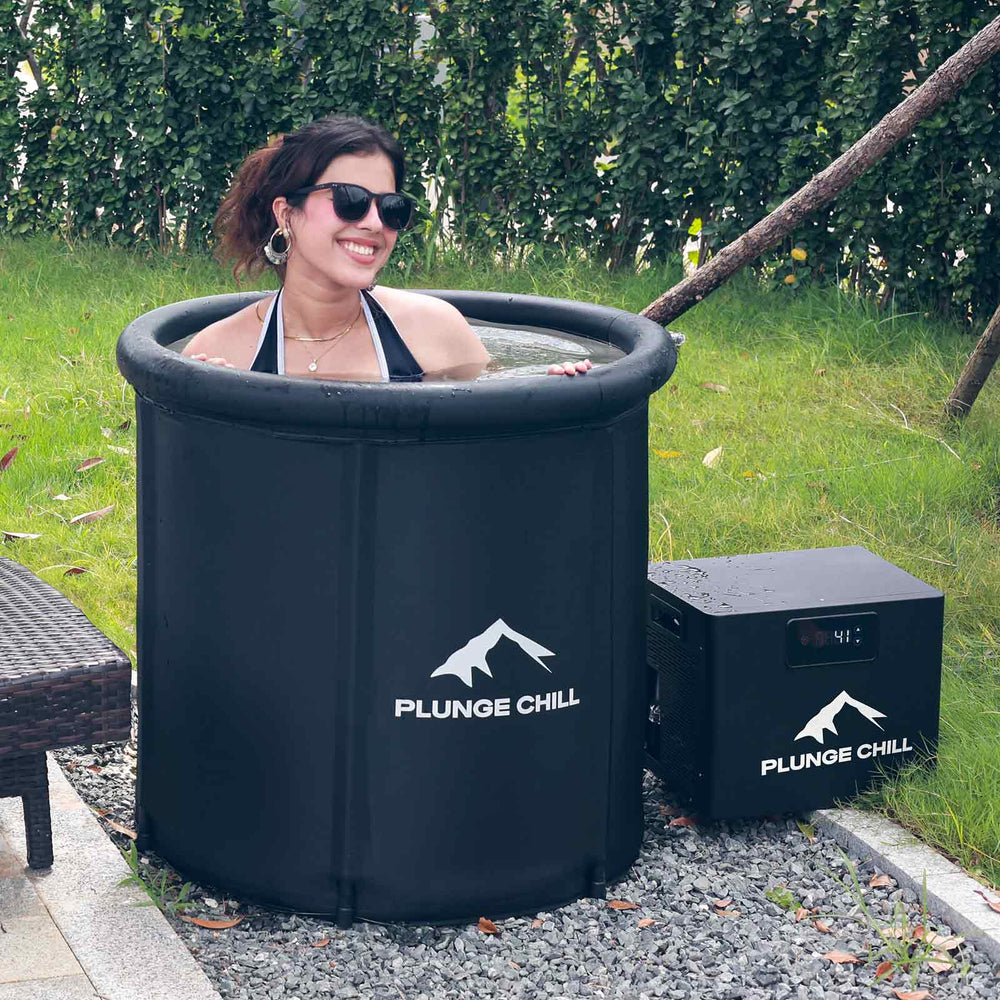
- Allow an upright, relaxed position with the water at mid-chest so the rib cage can expand.
- Offer a non-slip floor and solid handholds for safe, calm breathing and phonation.
- Use reliable filtration and sanitation—irritated sinuses and throats from dirty water will set your training back fast.
Used this way, singing or humming in an ice bath becomes more than a fad: it’s a structured, evidence-informed way to practice long, efficient breathing and composure—core ingredients in real-world lung capacity.

References
- https://dc.etsu.edu/cgi/viewcontent.cgi?article=4866&context=etd
- https://pubmed.ncbi.nlm.nih.gov/26778328/
- https://rave.ohiolink.edu/etdc/view?acc_num=ucin1307441963
- https://health.osu.edu/wellness/prevention/protect-your-voice-when-cheering-on-your-team
- https://wp.stolaf.edu/musician-health/staying-hydrated/