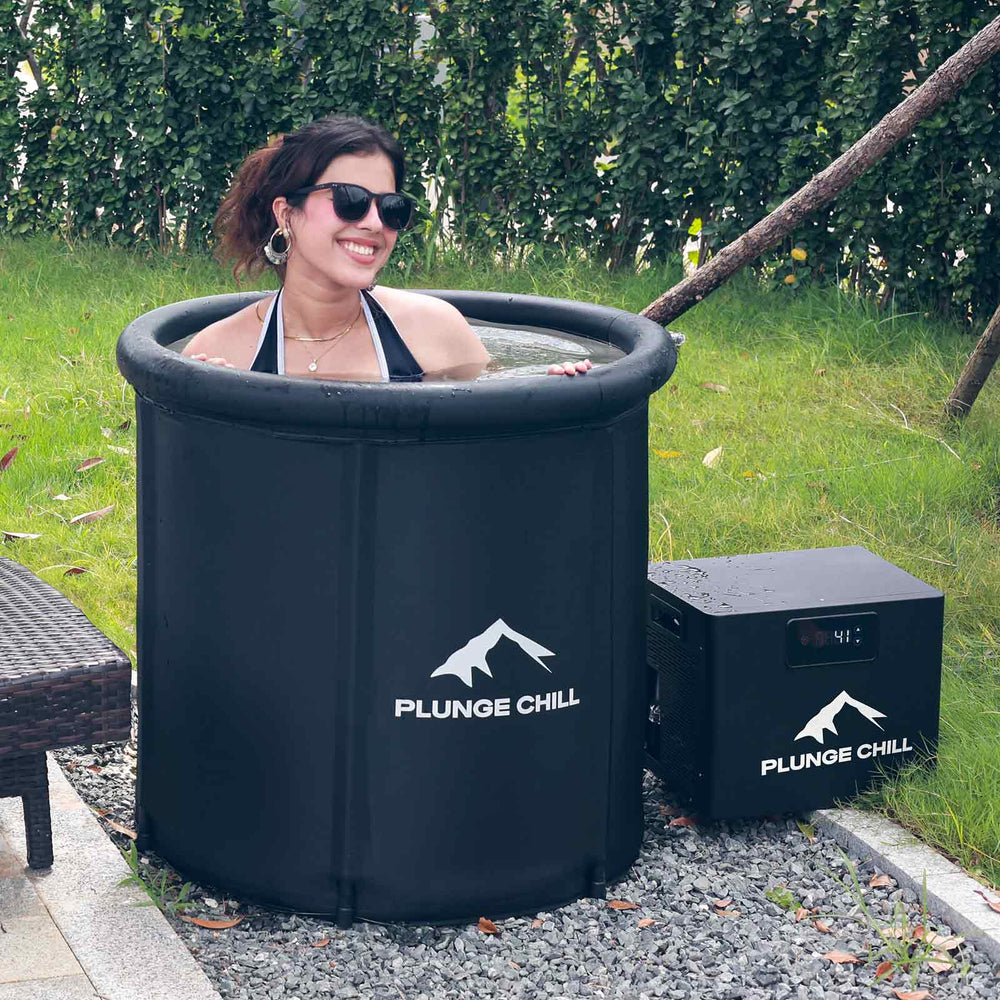
Summary: For most athletes, a properly chilled pure-water plunge is safer, simpler, and just as effective for recovery as a salted bath; adding minerals mainly changes freezing behavior, corrosion risk, and skin feel—not performance outcomes.
How Salt Really Changes the Cold
From a physics standpoint, the water—not the salt—is doing almost all the thermal work.
Data discussed in Straight Dope forums show that a 20% salt solution has a lower specific heat per pound, but once you account for the extra mass, the total heat capacity is almost identical to pure water. In plain language, moderate salt does not dramatically increase or decrease how much heat your tub can absorb.
Salt’s main effect is lowering the freezing point and changing how ice forms. Chemistry discussions and practical cooling tests show:
- A cold brine (all liquid) can feel brutally cold at the start because there is no ice to buffer the temperature.
- An ice + salt slurry stays colder longer because the ice must melt (latent heat) before the temperature rises much. That phase change is a powerful “cold reservoir.”
In commercial and chest-freezer plunges, when you dump in a lot of salt (magnesium or sodium), you create a true brine. As Morozko Forge report, that can push water down around 31°F or even into the high 20s, where skin and even superficial tissue start flirting with frostnip and frostbite risk—long before your core is in danger.
For athletes, that means: salted water is mostly a way to make the same plunge dangerously colder, not magically “more therapeutic.”

Minerals, Skin, and Recovery: Evidence vs Hype
As a rehab specialist, I care less about how dramatic a plunge feels and more about what it does for muscle recovery and long-term adaptation.
Large overviews from Cleveland Clinic, Mayo Clinic, and university sports labs converge on a few points:
- Cold plunge or ice bath around 50–59°F for a few minutes can reduce soreness and help you feel more recovered in the next 24 hours.
- Used chronically right after lifting, cold immersion can blunt muscle growth and strength gains, as shown by Roberts and colleagues and echoed by Ohio State and Pliability summaries.
Where do minerals fit into this?
Epsom salt (magnesium sulfate) and sea salt are often added for claims like “better magnesium absorption,” “detox,” or “extra anti-inflammatory power.” But:
- Chest Freezer Cold Plunge notes there is no solid evidence of meaningful magnesium absorption through the skin in short, cold plunges—especially when cold constricts blood flow.
- The Morozko Forge team highlights magnesium, potassium, zinc, and copper as important for cold-exposure metabolism, but even they frame transdermal repletion as speculative and emphasize this is not medical advice.
Nuance: lab data on magnesium and brown fat are interesting, but current human evidence does not support salts in a cold plunge as a reliable recovery or performance enhancer.
In practice, minerals change water feel (a bit “silkier”) and may slightly affect skin irritation, but they do not turn a cold plunge into a different recovery modality.

Hardware, Corrosion, and Water Quality Risks
As soon as you add salt, you are also engineering the inside of your tub.
Chest freezer and DIY plunge builders now consistently report:
- Even “food grade” salts are not sanitizers at the concentrations people actually use; you would need roughly 10% or more salt by weight to meaningfully inhibit microbes.
- Dissolved salts dramatically accelerate corrosion of metal parts: hinges, drains, heat exchangers, any exposed steel. Even enamel-lined freezers are seeing rust, which is why liners are now considered best practice.
The Morozko Forge guidance adds more detail:
- Chloride-based salts (sea salt, Dead Sea salt, anything sodium chloride) plus ozone or chlorine can rust stainless welds and generate unwanted chlorinated by-products.
- Only certain sulfate salts (like Epsom) are tolerated in specific stainless designs, and even then within manufacturer limits.
From a product-review lens, that means:
- Pure, filtered water plus a proven sanitizer (chlorine, hydrogen peroxide, or a dialed-in ozone system) is far more predictable and cheaper long-term than salted water in most consumer plunges.
- If you own a premium stainless tub that explicitly supports Epsom or other sulfate salts, follow those specs carefully—and still assume you’re trading off some maintenance complexity for “feel.”
Salt also increases buoyancy, which seems minor until you are trying to relax in a deep plunge and have to actively fight to stay under.

Practical Recommendations for Athletes
For most serious trainees I work with, here is how I program cold plunges and salt use:
- Use pure water for performance: Aim for 50–59°F, 2–5 minutes, 2–4 times per week, mainly after tournaments, brutal conditioning blocks, or heat-stress events—not after every strength session.
- Be cautious with extreme salt and sub‑32°F targets: If your tub can hit freezing with plain water, you do not need salt to make it colder. Below about 40°F, risk climbs faster than benefits for most people.
- Keep minerals in your nutrition plan, not your plunge: Correct magnesium, potassium, zinc, and copper mainly through diet and supplements under medical guidance. Treat “mineral plunges” as a comfort preference, not a therapeutic necessity.
- Protect your equipment and skin: If you must use salts, avoid chloride salts in metal or chest-freezer builds, plan for more aggressive maintenance, and watch closely for skin redness or burning in very cold brine.
- Save Epsom salt for warm recovery baths: The best place for a relaxing, magnesium-rich soak is a warm bath after training, not a 3–5-minute cold plunge where vasoconstriction and limited contact time make any added benefit unlikely.
Bottom line: for recovery, strength, and long-term durability, the smartest default is a well-controlled pure-water plunge. Salt is a tool for niche setups and specific tubs—not a must-have performance upgrade.

References
- https://www.mcphs.edu/news/physical-therapist-explains-why-you-should-chill-out-on-ice-baths
- https://pmc.ncbi.nlm.nih.gov/articles/PMC2938508/
- https://health.osu.edu/wellness/exercise-and-nutrition/do-ice-baths-help-workout-recovery
- https://health.clevelandclinic.org/what-to-know-about-cold-plunges
- https://mcpress.mayoclinic.org/healthy-aging/the-science-behind-ice-baths-for-recovery/