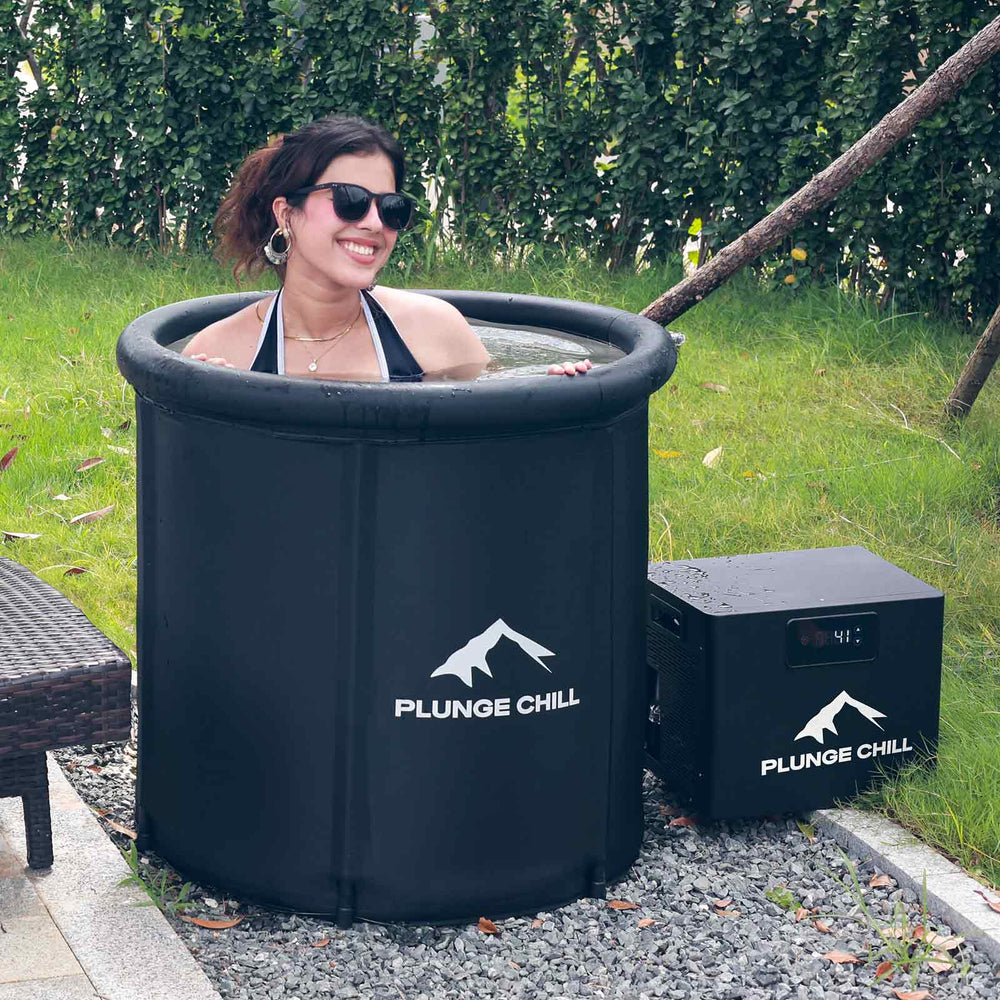
Cold plunging works, but consistency, safety, and hygiene determine whether it helps recovery or creates new problems. As a sports rehabilitation specialist and strength coach who also reviews cold plunge products, I’ve learned that temperature control is only half the equation. The “mineral” side—how hardness, metals, and sanitizers behave in cold water—quietly drives user experience, equipment life, and even the therapeutic feel of each plunge. This guide explains the physiology and evidence, then shows how mineral management, sanitation choices, and buying decisions compound into better outcomes.
What Exactly Is a “Mineral” Cold Plunge Tub?
A cold plunge tub is a dedicated vessel that keeps water in the cold range, typically around 50–59°F, for brief immersion aimed at recovery and mental reset. Compared with a DIY ice bath, a modern plunge tub adds a chiller, filtration, and often UV or ozone. A “mineral” cold plunge tub is not a separate category so much as a tub managed with attention to minerals in the water. That includes hardness (calcium), dissolved metals, and the use of “mineral” purification approaches such as copper or silver cartridges. These factors influence sanitation performance, scale formation, pump and chiller longevity, and the overall feel of the water. Brands may also market “mineral” benefits if the tub sits in a spa offering hot mineral soaks alongside a cold plunge, but the cold itself drives most physiological effects.

Benefits and What the Evidence Supports
Cold plunging triggers vasoconstriction during immersion and reactive vasodilation after you rewarm. In practice, you experience less soreness and swelling after hard training, and many athletes report a quicker cooldown and mental clarity. Clinical voices like Cleveland Clinic describe plausible recovery benefits when immersion is brief and moderate, with added caution for people who have cardiovascular risks. A university hospital review highlights the cold-shock response—rapid breathing and a spike in heart rate and blood pressure—followed by a settling period as the nervous system rebalances. In my practice, a short plunge is one of the most reliable ways to reduce subjective soreness and get athletes moving sooner.
At the same time, the heart-specific evidence remains limited and mixed. Harvard Health notes a lack of consensus on optimal time and temperature, and a meta-analysis summarized there reports small gains in stress and sleep with weak signals for mood or immunity. Reviews of heart rate variability suggest increased parasympathetic activity after cold exposure, but better HRV does not automatically translate into fewer cardiac events. Performance research is also nuanced: cold immersion reduces soreness yet may blunt some muscle power and strength adaptations if used immediately after heavy lifting. Because of that, I schedule post-strength plunges several hours later when hypertrophy or maximal strength is the priority, a position consistent with sports cardiology caution from Harvard Health and pragmatic timing guidance from strength-focused coaches.

Safety, Contraindications, and Practical Temperature Targets
Cold plunging is not for everyone. People with heart disease, arrhythmias, uncontrolled hypertension, peripheral artery disease, Raynaud’s syndrome, diabetes with neuropathy, or cold agglutinin disease should seek medical guidance first. During exposure, cold shock can provoke hyperventilation and loss of coordination, so never plunge alone and avoid alcohol or sedatives. Keep your head above water, enter and exit slowly, and rewarm steadily with dry clothing, towels, light movement, and warm fluids. These safety points align with recommendations from Cleveland Clinic and University of Utah Health.
For temperature and duration, a conservative protocol works best. New users can start near the high 60s and stay for one to two minutes to learn their breath control. Once acclimated, most people settle into the 50–59°F range for two to five minutes. Advanced users sometimes go colder, but practical guidance from Cleveland Clinic emphasizes avoiding near-freezing water and capping sessions around five minutes for routine use. After high-intensity sessions, shorter and colder bouts can calm overheating; after endurance training, slightly longer, moderate-cold immersions feel more comfortable. When strength gains are the priority, wait several hours post-lifting to avoid blunting adaptations noted by Harvard Health.

Why Minerals Matter More Than Most People Think
Two chemistry realities distinguish cold plunges from warm pools and hot tubs. First, cold water slows chemical reactions, which can reduce the speed at which sanitizers work. Second, mineral content in the source water—especially calcium—raises the risk of scale at cold temperatures because the Langelier Saturation Index (LSI) shifts with temperature. Professional pool training (CPO Class) targets pH, alkalinity, calcium hardness, and free chlorine in specific ranges and uses the LSI as an indicator of scaling or corrosion risk. In a cold plunge, keeping pH approximately 7.2–7.8, alkalinity roughly 80–120 ppm, calcium hardness in the neighborhood of 200–400 ppm, and free chlorine around 1–3 ppm, while monitoring LSI, is a practical framework. Enzymes, phosphate removers, and stain/scale preventatives are optional tools when test results indicate a need.
Hard water does not just leave stains. The Plunge warns that high calcium can damage pumps over time, and CPO Class notes that algae can persist even near 50°F. Cold water reduces chlorine’s speed of action, which means secondary disinfection like UV or ozone often carries more weight than owners expect. This is why mineral-aware management—pre-filters at fill, sequestering agents where appropriate, and a reasonable sanitizer residual—changes outcomes dramatically.
Overlooked insight: Hard water can erase your temperature advantage
Even light scale on chiller plates and plumbing reduces heat exchange efficiency, causing slow cooldowns, warmer-than-intended water, and longer compressor runtimes. The Plunge support channel and pool-operator guidance independently highlight calcium hardness as an equipment risk area and a temperature-performance variable. The practical fix is simple: pre-filter at fill, keep calcium hardness in range, and add a sequestering agent where metals or high hardness are expected. This protects the pump and keeps the chiller working efficiently. If you sense longer cooldowns over time, check for scale before assuming the chiller is underpowered.
Overlooked insight: Ozone can help—until it harms in small systems
Haven of Heat describes ozone as a strong oxidizer with broad disinfection, and many spa techs value ozone as part of a sanitation stack. However, Chilly GOAT cautions that in small cold-plunge units, ozone can increase water corrosivity and damage components while offering limited benefit when the overall chemical demand is low and UV is installed. The disagreement likely comes from differences in water volume, materials, ozone concentration, and contact time. In compact systems with thin-walled fittings and brief contact chambers, the corrosion risk may outweigh the microbial upside; in larger commercial loops with controlled contact and off-gassing, ozone can be beneficial.
Overlooked insight: “Mineral” purifiers are additives, not replacements
Copper or silver cartridges can reduce microbial growth and may help lower chemical demand, but they do not replace a measurable sanitizer residual or thorough filtration. In cold water where chlorine acts more slowly and algae can survive, relying solely on “mineral” approaches invites cloudy water or biofilm. CPO Class and multiple manufacturer guides emphasize maintaining a proper chlorine residual even with UV or mineral supplements. Owners who switch to mineral-only often experience odor, film, and rising maintenance time, especially outdoors or with high bather loads.
Practical Protocols for Training and Recovery
Recovery requires matching temperature and timing to the goal. For basic cooldown and soreness relief after competition or high-intensity conditioning, a two to five minute plunge around the low-to-mid 50s quickly stabilizes core temperature and reduces perceived soreness, consistent with Cleveland Clinic’s practical recommendations and athlete reports summarized by Icebound Essentials. The mental “reset” effect—heightened alertness, calmer nerves—often follows competent breath control and consistent practice. To preserve strength adaptations, move post-lift plunges later in the day; Harvard Health’s summary of potential blunting of power and strength fits what coaches observe when cold immersion follows immediately after heavy sessions.

Water Care That Protects Health and Equipment
Clean, balanced water is the foundation for every benefit in this space. BubbyShine, Haven of Heat, and Chilly GOAT converge on several habits that keep cold tubs safe. Keep a cover on when not in use, rinse off sweat and lotions before entry, and test water regularly. Balance pH first, then adjust sanitizer to a target residual. In small, home systems, modest chlorine dosing split across the week is a simple, reliable baseline; a non-chlorine oxidizer once weekly helps burn off organics without raising chlorine. UV adds a strong secondary barrier without leaving chemicals in the water. Filters must be rinsed often and deep-cleaned monthly; a neglected filter undermines every chemical decision you make. If you fill from a well or hard municipal source, use a pre-filter and consider a sequestering agent at start-up to keep metals and calcium in check, a point emphasized by The Plunge and Chilly GOAT.
Here is a concise, mineral-aware maintenance cadence you can adapt to your tub, usage, and climate:
Task |
Recommended frequency |
Notes and sources |
Quick rinse before entry, skim, cover on when idle |
Every use |
Reduces organics and debris; improves sanitizer efficiency (BubbyShine, CPO Class). |
Test pH and sanitizer; adjust to target ranges |
Multiple times weekly |
Aim for pH roughly 7.2–7.8 and free chlorine around 1–3 ppm; balance pH before sanitizer changes (Chilly GOAT, CPO Class). |
Rinse cartridge filter; inspect for flow |
Weekly |
Rinse under running water; replace when performance drops (Chilly GOAT, Haven of Heat). |
Non-chlorine oxidizer dose |
Weekly |
Helps oxidize contaminants without raising chlorine (Chilly GOAT). |
Scrub waterline and floor; check for film |
Bi-weekly |
Prevents biofilm and scale; descaler if needed for deposits (BubbyShine, CPO Class). |
Deep-clean filter with cleaner; inspect pump seals |
Monthly |
Maintain flow and clarity; look for cold-induced seal hardening (Chilly GOAT, CPO Class). |
Drain and refill interval |
Two weeks to four months |
Barrel-style or outdoor, high-use tubs skew toward two to four weeks; systems with filtration, UV, and disciplined chemistry can extend to roughly three to four months in light-use contexts (Haven of Heat, Chilly GOAT). |
Service chiller, clean condenser coils, verify refrigerant |
Seasonally |
Ensures cooling efficiency; check manufacturer schedule (CPO Class). |
Variation is normal. Outdoor setups, higher bather loads, and warmer climates shorten intervals; sophisticated filtration and UV lengthen them. Chilly GOAT cites three to four months in a controlled system, whereas Haven of Heat suggests two to four weeks with heavy daily or outdoor use. The difference likely reflects system design, water volume, environment, and usage hours.
Sanitization Choices in Cold, Mineral-Rich Water
Cold water changes the sanitation math. You need mechanical removal of debris, a reliable disinfectant residual, and secondary disinfection that thrives in cold circulation.
Approach |
Primary role |
Advantages |
Cautions and fit |
Chlorine (e.g., dichlor) |
Residual disinfectant |
Simple testing and dosing; proven in cold water |
Maintain roughly 1–3 ppm free chlorine; cold slows reaction rate; dose in small increments and retest (Chilly GOAT, CPO Class). |
Bromine |
Residual disinfectant |
Stable over a wider pH range |
Less commonly supported in plunge-specific guides; follow label and manufacturer compatibility (Haven of Heat). |
Hydrogen peroxide (food-grade) |
Oxidizer |
Non-chlorine option to reduce organics |
Not a standalone sanitizer; pair with UV and/or a residual; compatibility varies (Haven of Heat). |
Mineral purifiers (copper/silver) |
Supplemental antimicrobial |
May reduce chemical demand |
Not a replacement for a measurable residual; watch for staining and metals management (Haven of Heat, CPO Class). |
UV |
Secondary disinfection |
Disables microbes without adding chemicals |
Replace bulbs on schedule, often around 12–18 months; protects loops well in cold (Haven of Heat, Chilly GOAT). |
Ozone |
Oxidizer/secondary disinfection |
Oxidizes a broad spectrum of contaminants |
Corrosion risk and limited benefit in small systems per Chilly GOAT; can be valuable in larger or well-engineered loops per spa operators (Haven of Heat). |
In a mineral-aware program, set your target chemistry first, then use UV as a dependable, cold-friendly secondary layer. Add ozone only if your manufacturer supports it for your specific loop and materials.
Buying Guide: Choosing a Mineral-Ready Cold Plunge Tub
Focus on three pillars: stable cold, clean water, and chemistry control. Stable cold means a chiller sized to your volume and climate with insulation that holds temperature between sessions. Clean water means a cartridge filter that is easy to access and rinse, with a UV unit in the circulation loop to reduce microbial load. Chemistry control means the ability to test and adjust pH, alkalinity, calcium hardness, and sanitizer, plus a fill strategy that accounts for minerals in your source water.
If you use well water or live with high hardness, plan to fill through a pre-filter and keep a sequestering agent on hand. The Plunge specifically cautions that high calcium harms pumps over time. Systems designed with good turnover—filtering the full volume roughly every 30–60 minutes—tend to have clearer water and fewer dead zones, which is the standard framing from pool-operator training. Ask about turnover rate, not just pump horsepower, and confirm whether the circulation path passes through UV with every cycle. Covers, easy drains, and straightforward access to filters cut maintenance time, which increases compliance and cleanliness.
Here is a practical comparison to decide between formats:
Format |
Temperature control |
Hygiene control |
Upfront cost |
Operating cost |
Ideal user |
DIY ice bath |
Variable, drifts quickly |
Manual drain/refill, no filtration |
Low |
Ongoing ice expense and frequent water changes |
Occasional use, tight budgets |
Regulated plunge with filtration/UV |
Precise and stable |
Continuous filtration, measurable residual, UV secondary |
Moderate to high |
Electricity for chiller, chemicals and filters |
Daily users, teams, shared environments |
Spa-based contrast setup |
Controlled hot and cold access |
Professional operations, signage, and turnover |
Visit-based |
Entry fee |
First-timers, people wanting guided contrast sessions |
Troubleshooting and Mineral-Focused Fixes
Cloudy water typically reflects overloaded filtration or insufficient oxidizer. Begin by rinsing or replacing the filter, dosing a non-chlorine oxidizer, and verifying that free chlorine returns to the target. Odors often stem from organics in the waterline; scrub surfaces, run an enzyme cleaner if supported, and partially drain if the smell persists. Algae can appear even in cold water; treat visibly affected areas, refresh sanitizer, and use the cover consistently. Scale presents as white film or gritty deposits; add a descaler compatible with your system and rebalance pH, alkalinity, and calcium hardness, using a sequestering agent at the next fill to prevent recurrence. These actions align with the cleaning workflows described by BubbyShine, Haven of Heat, and CPO Class.
My Clinic Playbook
In the clinic and team settings, we keep the water between the low and mid 50s and limit novice immersions to a few minutes with coached breathing. We pre-filter every fill, test pH first and adjust toward mid-7s, then dose sanitizer in half-teaspoon steps with a 15-minute circulation and retest before allowing entry. We maintain a one to three ppm free chlorine residual and add a non-chlorine oxidizer weekly. Filters are rinsed weekly and deep-cleaned monthly. We log test results, dosing, and maintenance, and we post maximum immersion times and rewarming instructions near the tub. For strength blocks, we schedule cold exposure later in the day to respect the performance adaptation concerns highlighted by Harvard Health.
Takeaway
The cold creates the stimulus; the minerals and sanitation make it sustainable. Keep temperature stable, water balanced, and filtration continuous. Treat calcium hardness and dissolved metals as performance variables, not just cosmetic concerns. Favor UV as a cold-friendly secondary barrier and use ozone only when your manufacturer specifically supports it for your system size and materials. Schedule plunges to match your training goals, and protect your heart by screening for contraindications. With these practices, a mineral-aware cold plunge tub becomes a reliable, low-friction tool for recovery and mental clarity.
FAQ
How cold and how long should I plunge?
Most users do well between 50 and 59°F for two to five minutes, with beginners starting warmer and shorter to practice breath control. Advanced protocols sometimes go colder, but clinical guidance from Cleveland Clinic emphasizes avoiding near-freezing water and capping routine sessions around five minutes. Always exit if numbness, dizziness, chest pain, or confusion appear.
Do minerals in the water improve recovery benefits?
Mineral content primarily affects water feel, scale risk, and maintenance, not the core physiological effects of cold. The recovery benefits come from temperature-driven vasoconstriction and subsequent rewarming. It is possible that trace minerals change perceived skin comfort, but that has not been established as a driver of recovery outcomes.
Is UV enough, or do I still need a sanitizer residual?
UV is an excellent secondary disinfectant that works well in cold water because it treats microbes as they pass the lamp, but it does not leave a lasting residual in the tub. Maintain a measurable residual—often one to three ppm free chlorine—while keeping pH, alkalinity, and calcium hardness in range, consistent with Chilly GOAT and CPO Class guidance.
Should I add ozone to my system?
It depends on system size and design. Haven of Heat notes ozone’s broad disinfection benefits, but Chilly GOAT warns that in small cold plunges, ozone can increase corrosivity and damage components with limited added benefit when UV is present. The difference likely stems from water volume, contact time, and materials. Confirm your manufacturer’s position and inspect fittings for oxidation early in the ownership cycle.
How often should I change the water?
Intervals vary widely with design and bather load. Haven of Heat suggests two to four weeks for daily or outdoor use, while Chilly GOAT cites about three to four months for systems with strong filtration, UV, and disciplined chemistry in lighter-use contexts. Outdoor exposure, heavy use, and minimal filtration shorten intervals; covers, UV, and consistent testing extend them. Aim for clarity without odor and stable chemistry; when in doubt, drain and refill.
Can I fill a cold plunge with well water?
Yes, but treat hardness and metals. The Plunge cautions that high calcium can damage pumps over time, so pre-filter at fill and consider a sequestering agent. Test pH, alkalinity, calcium hardness, and sanitizer after circulation, then adjust toward the target ranges used by pool professionals for cold plunge maintenance.
If you want help tailoring a mineral-aware maintenance plan to your tub, usage, and water source, I can outline a weekly testing and dosing routine and a seasonal service checklist that fits your setup.
References
- https://www.health.harvard.edu/heart-health/cold-plunges-healthy-or-harmful-for-your-heart
- https://healthcare.utah.edu/healthfeed/2023/03/cold-plunging-and-impact-your-health
- https://doh.wa.gov/sites/default/files/2024-04/333-347.pdf
- https://health.clevelandclinic.org/what-to-know-about-cold-plunges
- https://mcpress.mayoclinic.org/healthy-aging/the-science-behind-ice-baths-for-recovery/
- https://www.mayoclinichealthsystem.org/hometown-health/speaking-of-health/cold-plunge-after-workouts
- https://chillygoattubs.com/pages/water-care-guide?srsltid=AfmBOor4BL2UsdY5olumwYaRIOXTw0oMutl7GYFIrGTajfaKhAqHgH0r
- https://coldchiller.com/how-often-to-change-cold-plunge-water/
- https://cpoclass.com/cold-plunge-pool-maintenance/
- https://rawathletic.club/how-to-use-a-cold-plunge-tub/