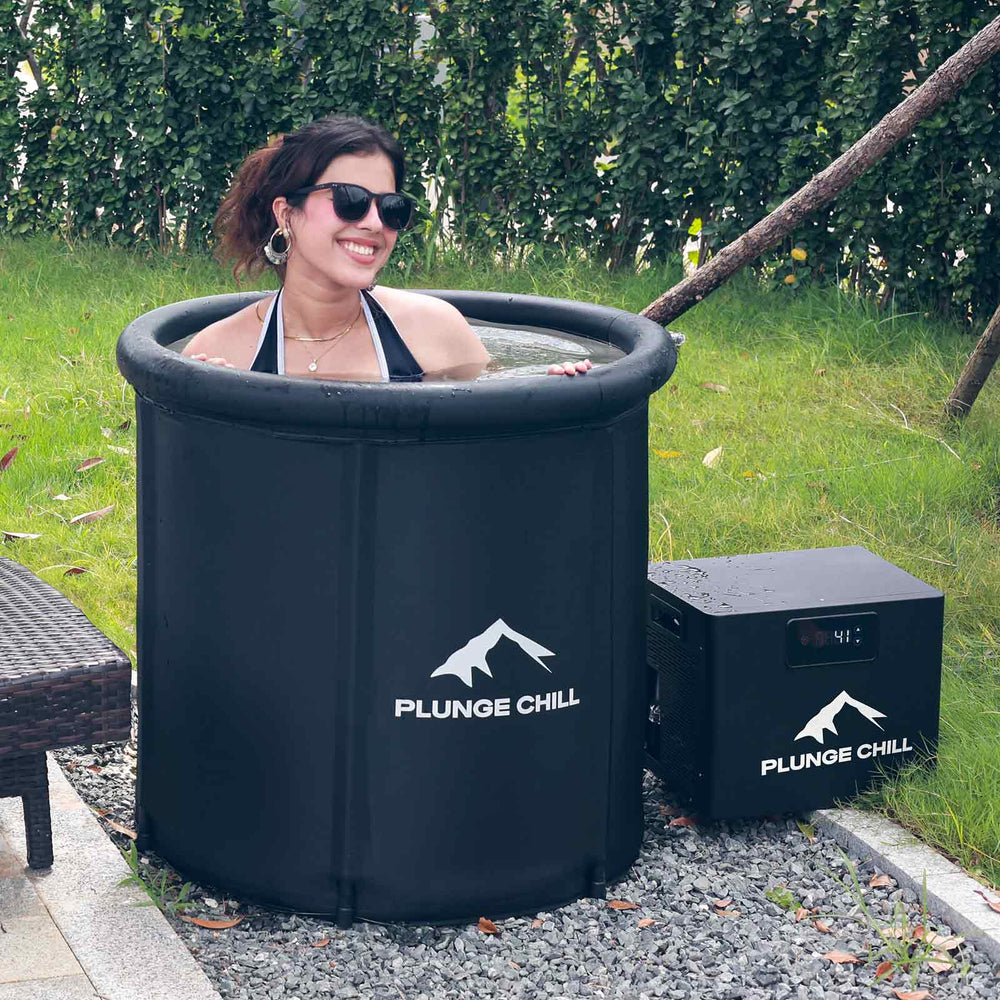
Cold water immersion has moved from elite training rooms into American homes and wellness spaces. When the stakes are daily adherence, safety, and performance, luxury cold plunge tubs earn their place by delivering precise temperatures, clean water with minimal hassle, and durable builds that respect your time and your body. As a sports rehabilitation specialist and strength coach who programs cold exposure for recovery and resilience, I’ll walk you through the features that matter, what the evidence actually says, and how to choose and maintain a high‑end tub that fits your goals and your space.
What Makes a Cold Plunge “Luxury”
At the high end, it is no longer a barrel of ice. Luxury means a tub that reaches and holds cold in the 32–39°F range, often with optional heating to 104°F for contrast therapy, and does so quietly, cleanly, and reliably throughout the year. These systems pair an efficient chiller with continuous circulation, real filtration, and sanitation such as UV or ozone so you are not chasing chemistry or draining water every few days. Ergonomic shells, non‑slip interiors, insulated cabinets and lids, well‑placed steps and handholds, and modern controls (app scheduling, Wi‑Fi, lockouts) turn a daunting habit into a comfortable ritual. Several brands embody these priorities. Fire Cold Plunge highlights internal chillers that reach near‑freezing temperatures, while Plunge.com offers app‑controlled temperatures down to 39°F with optional heating. Polar Monkeys emphasizes style variety with external chillers, and Sun Home markets 32°F capability alongside sauna pairing. Chilly GOAT emphasizes manufacturer pedigree, with shells and insulation built by Master Spas in Indiana, and details like nonslip flooring and jets that prevent thermal layering. When those elements come together, day‑to‑day use feels effortless—and consistency is where results are made.
Physiology and Performance: What the Evidence Supports
Cold‑water immersion constricts blood vessels, reduces metabolic activity, and shifts fluid out of swollen tissue; the rewarming phase reverses course, driving fresh, oxygenated blood back into the areas that were stressed. Ohio State Health summarizes that the net effect can blunt swelling, ease soreness, and improve next‑day performance after endurance‑type work. The evidence is mixed overall, especially when the goal is strength and hypertrophy. Harvard Health cautions that cold exposure shortly after resistance training can blunt molecular signaling that underpins long‑term strength and muscle growth. In strength blocks, I program cold exposure at least 24–48 hours away from heavy lifting so athletes keep the performance benefit without muting the adaptive signal.
Cardiovascular and stress outcomes are also nuanced. A University of Oregon study reported favorable acute changes such as reduced heart rate and blood pressure after a single 15‑minute immersion and lower cortisol several hours later. Harvard Health’s review of broader literature notes increases in parasympathetic activity but no consistent link to long‑term cardiovascular outcomes, and it advises caution for people with heart rhythm disorders, peripheral artery disease, or Raynaud’s. My practical takeaway is to use cold exposure as a complementary tool rather than a cure‑all: dose it based on training goals, screen for medical risks, and keep monitoring subjective and objective responses as the habit matures.
Two practical protocol anchors are widely cited. Dr. Susanna Soeberg’s guidance of roughly 11 minutes per week split into several short sessions helps new users build consistency without chasing extreme cold. Ohio State Health suggests 10–20 minutes per session at 50–59°F, though for performance athletes I start warmer and shorter and progress as tolerance improves. Reconciling those differences likely comes down to definitions and populations: general wellness versus athletic recovery, steady immersion versus varied contrast routines, and the differing endpoints these sources prioritize.

High‑End Features That Actually Matter
Chilling Architecture: Internal vs. External
Built‑in chillers integrate compressor, pump, filtration, and sanitation within the cabinet. They reduce footprint, simplify setup, and tend to run quieter, a pattern echoed in product roundups and buyer guides from Fire Cold Plunge and Icebound Essentials. External chillers add bulk and plumbing complexity but can simplify service and upgrades. If you are putting a tub in a compact indoor gym, built‑in makes life easier; if you prefer modularity or anticipate swapping components, an external chiller can make sense.
Temperature Range and Stability
For consistent adaptation, the water should be what you set every time you open the lid. Many luxury units maintain the high‑30s to low‑40s°F with enough power to hold temperature in summer. Sun Home and Fire Cold Plunge advertise 32°F capability, while Plunge.com and Polar Monkeys report upper‑30s targets. A heater expands use cases to 104°F for contrast or winter spa‑like soaks. Expect the first cool‑down from tap temperature to take 12–24 hours, and understand that lower ambient temperatures, better insulation, and a tight lid reduce runtime and energy spend.
Filtration and Sanitation
Circulation is nonnegotiable: moving water is filtered water. Look for turnover that cycles your total volume within a practical window and a filter rated in microns rather than a simple strainer. Icebound Essentials highlights 5–20‑micron filtration as a solid target, while Science for Sport lists 20‑micron filters among top picks. Ozone and UV systems cut bacterial load and reduce chemical demand; they are favored by premium manufacturers such as Plunge.com and Chilly GOAT. When the system is designed well, you clean or replace filters on schedule and test pH and sanitizer levels as you would a small spa rather than draining constantly.
Build Materials and Ergonomics
Acrylic and fiberglass shells are rigid, insulative, and easy to clean. Stainless steel offers industrial durability and a clean look, but it conducts heat more readily and demands vigilant chemistry; higher grades such as 316 resist corrosion better than 304. Quality wood exteriors deliver spa ambiance but need care at seams and with sun exposure. Ergonomics matter more than most buyers expect: a sloped back and integrated arm rests help you relax your neck and shoulders, nonslip floors and secure steps reduce entry/exit anxiety, and wider shoulder widths let larger athletes settle in without floating. Chilly GOAT’s SoftTread flooring and wide interiors are examples of those design details.
Controls, Noise, and Energy
Luxury controls should feel as dependable as a home thermostat. App scheduling, temperature lockouts, and simple error reporting all help adherence. Internal compressors generally run quieter; well‑insulated cabinets and lids reduce cycle time and noise. Fun Outdoor Living estimates operating costs near the range of a small freezer for well‑insulated units, translating to roughly pocket‑change per day; because electricity pricing and ambient conditions vary widely, this figure should be treated as directional rather than absolute. One verification step is to plug the chiller into a consumer energy monitor for one week and average daily consumption.

Luxury Models at a Glance
Model/Brand |
Chiller Type |
Coldest Temp |
Heating Option |
Notable Strengths |
Approximate Price |
Fire Cold Plunge |
Internal compressor |
About 32°F |
Not listed as hot+cold in the overview |
Ergonomic shell, plug‑and‑play simplicity |
Around $4,000.00 |
Plunge All‑In (largest) |
Integrated chiller |
Around 37°F |
Available |
Spacious single‑user, app control, ozone + filter |
About $8,990.00 to $9,590.00 depending on heater; see brand notes |
Polar Monkeys (e.g., Brainpod 2.0) |
External chiller (ChillX) |
About 37°F |
Available |
Multiple styles, smartphone control |
Tub about 10,590.00 plus separate chiller around $5,290.00 |
Sun Home Cold Plunge Pro |
Internal |
About 32°F |
Pro line emphasizes cold; heater varies by model |
Indoor/outdoor build; sauna pairing |
About $8,899.00 to $12,400.00 depending on size/features |
Morozko Forge |
Internal |
Creates surface ice |
Not emphasized |
Extreme cold rituals, rugged finish |
Up to $35,900.00+ |
Ice Barrel 400 |
No built‑in chiller |
Ice‑dependent |
Add‑on available |
Upright, small footprint |
About $1,199.99; chiller add‑on around $4,000.00 |
Prices are indicative snapshots from brand and marketplace roundups and can vary with promotions, shipping, and configurations. Fire Cold Plunge and Science for Sport list slightly different numbers for certain models; differences likely reflect model options (with vs. without heater), timing of publication, and whether pricing includes bundled accessories.
Space, Power, and Installation Planning
Planning keeps your plunge inspiring rather than intrusive. A filled 100–150‑gallon tub adds roughly 834–1,251 lb of water to the load before the shell and a person step in. Upper‑story installs should be assessed against floor load ratings, and outdoor slabs should be level and nonslip. Most high‑end units are designed for a dedicated 120V 15A household circuit in the United States, although some heavy‑duty systems may require more. Plunge.com explicitly recommends a dedicated 120V 15A line and markets a fast setup that amounts to placing the chiller, connecting two hoses, filling, and plugging in. Provide ventilation around chiller intake and exhaust so hot air does not recirculate and spike noise. Pre‑plan drainage; a short‑run gravity drain or a small pool‑cover pump with a garden hose simplifies indoor and outdoor water changes. Freight delivery is typically curbside with appointment scheduling, as summarized by Redwood Outdoors, which means you are responsible for moving the unit to its final position. Verifying the address and tracking both legs—depot to carrier and carrier to curb—helps avoid re‑routing fees or missed appointments.

Care and Water Management for Low‑Maintenance Luxury
Daily and weekly care keeps the water crystal clear and extends component life. A quick daily glance at water level and clarity, a weekly wipe‑down with a non‑abrasive cleaner, and timely filter rinses or replacements cover most use. An insulated cover prevents debris, slows evaporation, and reduces runtime, and strong insulation in the shell and cabinet preserves temperature through seasons. Ice Bath Reserve’s maintenance guidance stresses seasonality: inspect outdoor units for weather wear, winterize fully if you will not use the tub in freezing climates, and confirm heater operation if you plan warm use in winter. For chemistry, aim for pool‑like pH and sanitizer levels appropriate to your chosen system; UV and ozone reduce but do not eliminate the need for residual sanitizer. Icebound Essentials notes that turnover time—the time for the pump to circulate the full volume—should be credible for the tub’s size; efficient filtration falls in the 5–20‑micron range for the primary filter. Some retailers suggest changing water every one to two weeks absent filtration; with robust filtration and sanitation, many owners change less frequently, but your schedule should reflect bather load, climate, and test‑strip data rather than a calendar alone.
An overlooked insight is that small mechanical details can affect maintenance as much as headline features. Wanderlux’s long‑term test of the Plunge All‑In noted that the filter must seat precisely to avoid leaks, that carbon filters require pre‑activation to prevent dust discharge, and that the tub’s app resets temperature settings after power outages. None of these are showstoppers, but they are the kinds of realities that differentiate ownership experiences among otherwise similar luxury products. Planning for a GFCI‑protected circuit and a simple outage‑recovery routine goes a long way.

Pros and Cons of Luxury Units vs. Alternatives
Compared with DIY stock tanks or inflatables filled with ice, high‑end systems deliver stability, sanitation, and convenience that make daily plunges more sustainable. You gain consistent cold, clean water without frequent drain‑and‑fill cycles, precise temperature targeting for safe progression, and a durable shell and cabinet that hold up to year‑round use. You also add cost, both upfront and in modest ongoing energy use, and you commit space that could host a rack or a bike. The market spreads from roughly $1,000 for simple upright tubs to beyond $30,000 for artisanal builds with ice‑forming chillers. For most home athletes and busy professionals, the trade is time and adherence: the unit you will use four days a week beats the “bargain” that turns into a chore.

Buying Framework: Match Features to Goals
Your training emphasis dictates your feature list. If you prioritize strength and hypertrophy, choose a tub with stable app scheduling and plan exposures at least a day after heavy sessions to avoid blunting adaptation, in line with Harvard Health guidance. If you do large blocks of endurance or volume work, cooler temperatures in the upper‑30s to mid‑40s°F with shorter immersions can reduce soreness without compromising long‑term gains. If your climate is hot, select an insulated cabinet and a chiller with capacity to maintain setpoints in summer; Sun Home and Fire Cold Plunge emphasize extreme cold capability that can hold up under heat load. For tall or broad‑shouldered users, internal dimensions matter more than footprint. Science for Sport notes a model from The Plunge line that accommodates users up to about 6 ft 9 in, illustrating that some builds are truly full‑body while others are best as seated or upright plunges. For families and shared spaces, lockable covers and child‑proofing are essential, and for year‑round outdoor use, heater options and a proven winterizing plan reduce risk.
A subtle but important insight is that heaters can be as valuable for winterizing as they are for contrast therapy. Wanderlux describes challenges keeping a non‑heated unit safe in freezing weather and resorting to aftermarket pipe heating. If winters dip below freezing, either choose a model with integrated heat or plan for thorough drain‑down and dry storage between sessions. One verification step is to confirm with the manufacturer how the unit handles freezing risk, including pump drains and heat tracing.

Safety, Contraindications, and Protocols I Use in Practice
Screening comes first. Anyone with a history of cardiovascular disease, arrhythmias, peripheral artery disease, or Raynaud’s should consult a clinician prior to cold exposure, as emphasized by Harvard Health and Ohio State Health. For healthy adults, start conservatively near 55–59°F, breathing calmly with full control of immersion depth. Build time over weeks rather than days, keeping most sessions in the 2–5 minute range at the start, and only extending duration after you have demonstrated good rewarming and no adverse effects. Avoid post‑lift plunges during hypertrophy phases, and consider contrast therapy with saunas as a separate tool for relaxation and recovery rather than a default pairing. Always rewarm safely with towels and warm clothing available when plunging outdoors, and do not plunge alone until you have established tolerance and a routine.
Reconciling Conflicting Claims and Stats
You will see one source suggest daily plunges for 10–20 minutes at 50–59°F and another advocate for a weekly total of about 11 minutes in much colder water. The discrepancy almost always reflects different endpoints, different populations, and different methods. Ohio State Health’s consumer guidance centers on comfort, safety, and broad recovery, while Dr. Susanna Soeberg’s weekly target helps beginners anchor consistency and progression. Similarly, Fire Cold Plunge and Science for Sport list 32°F capability for certain models, yet their price snapshots differ by hundreds of dollars. Those differences come from configurations (heater included or not), model sizes, and update dates rather than from disagreement about core features.
Where there is true tension—such as the University of Oregon reporting acute heart‑rate and blood‑pressure improvements after a single plunge while Harvard Health cautions against counting on heart benefits—assume the gap is methodological. A single controlled session in young, healthy adults is not the same as a sustained program across diverse populations, and measures such as heart rate variability are notoriously sensitive to measurement noise and context. In practice, the safest posture is to use cold exposure for stress management, recovery, and mental resilience while you keep exercise, sleep, and nutrition as your cardiovascular foundation.
Takeaway
Luxury cold plunge tubs earn their keep by making recovery and resilience doable every day. The right unit will hit and hold your temperature target, keep water clean with sane maintenance, and fit your space and routine cleanly. The science supports real benefits for soreness and next‑day readiness, especially for endurance‑type stress, and it counsels against careless use after lifting when you are chasing muscle and strength. Focus your buy on internal versus external chiller architecture, true cold capability, filtration and sanitation that match bather load, materials and ergonomics that fit your body, and controls that make daily practice almost automatic. If you respect safety screens and dose the cold intelligently, the tub becomes a tool you look forward to, not a chore you avoid.
FAQ
How cold should a luxury cold plunge be?
For most healthy adults, effective exposure begins around 50–59°F and progresses toward the upper‑30s to mid‑40s°F as tolerance builds. Units that can reliably hold 39–45°F give advanced users the range they want, while heater options up to about 104°F add versatility for contrast therapy. Ohio State Health and brand materials such as Plunge.com and Sun Home frame those ranges for home use; how you dose the cold should match your training and health status.
How long should each session last?
Beginners do best with one to three minutes, building gradually as breathing control improves. Once acclimated, many users settle into 3–10 minute bouts depending on temperature and goals. With strength and hypertrophy, it is prudent to avoid plunging immediately after lifting; Harvard Health points out the risk of blunting long‑term adaptations when cold follows resistance training too closely.
Are integrated heaters worth it?
For indoor contrast therapy, a heater is a luxury that enhances use. For outdoor installs in freezing climates, it can be the difference between year‑round use and seasonal drain‑downs. Wanderlux’s field notes on winterizing a non‑heated unit highlight the logistics of piping and freeze protection. If you regularly see freezing temperatures, a heater or a manufacturer‑approved winterization plan is worth the investment.
How often will I change the water?
With proper filtration, ozone or UV sanitation, and steady sanitizer levels, many owners go weeks between changes, testing water as they would a small spa. Without robust filtration, expect far more frequent changes, sometimes every one to two weeks. Ice Bath Reserve recommends aligning change frequency with actual clarity and chemistry rather than a fixed calendar, and Icebound Essentials emphasizes credible turnover times and real filter ratings as the backbone of clear water.
Do cold plunges hurt strength gains?
Cold exposure right after lifting can blunt cellular signaling for strength and muscle growth, a caution summarized by Harvard Health and echoed in sports science. If you value hypertrophy, plunge on non‑lifting days or wait 24–48 hours after heavy sessions. For endurance recovery, cold‑after‑workout is less problematic and can help reduce soreness and restore next‑day performance, as outlined by Ohio State Health.
What are the hidden installation gotchas?
Weight load, ventilation, and drainage planning are the big three. A 100–150‑gallon system adds hundreds of pounds to a floor or deck, so verify load capacity. Provide clear intake and exhaust paths for the chiller to prevent heat recirculation and noise, and plan a safe drain path—indoors you may rely on a small utility pump and hose. Freight delivery is usually curbside and by appointment, so confirm the address and path to the final location. Redwood Outdoors’ shipping overview underscores these logistics, which are easy to manage if you plan ahead.
References
- https://lms-dev.api.berkeley.edu/cold-tub-therapy
- https://www.health.harvard.edu/heart-health/cold-plunges-healthy-or-harmful-for-your-heart
- https://news.uoregon.edu/content/cold-plunging-might-help-heart-health-new-research-suggests
- https://digitalcommons.liberty.edu/doctoral/7380/
- https://sncs-prod-external.mayo.edu/hometown-health/speaking-of-health/cold-plunge-after-workouts
- https://health.osu.edu/wellness/exercise-and-nutrition/do-ice-baths-help-workout-recovery
- https://healthcare.utah.edu/healthfeed/2023/03/cold-plunging-and-impact-your-health
- https://www.garagegymreviews.com/best-cold-plunge-tub
- https://goodallpools.com/cold-plunge-near-me-why-you-should-have-one-at-home/
- https://hamptonshappiness.com/cold-plunge-tubs-wellness-routine/