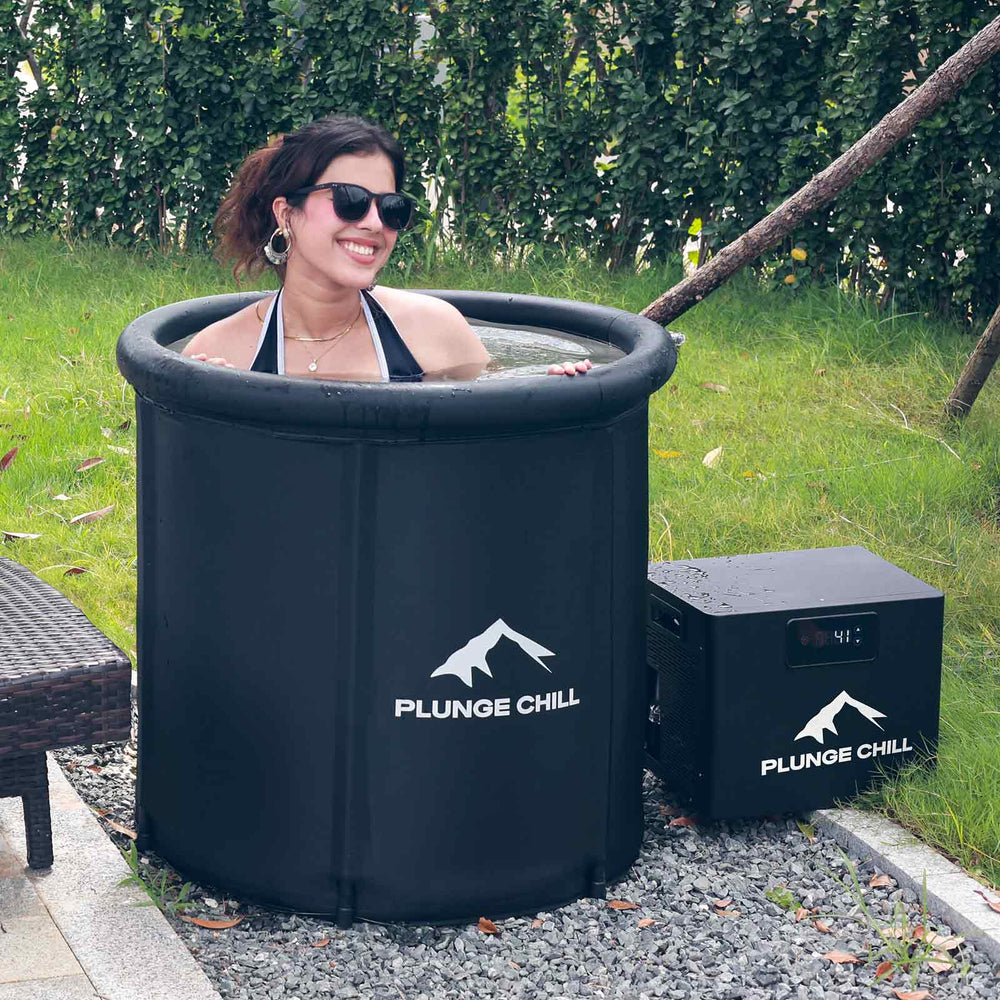
A semi-inground cold plunge combines the built-in look of a permanent installation with the flexibility of a freestanding tub. Partially recessing the tub can make entry easier, reduce visual clutter, and help it blend with decks, stone, and landscaping. The main priorities are a level base, reliable drainage, safe electrical service, good chiller ventilation, and easy access for maintenance.
- 1What “Semi-Inground” Means—and Why It Looks and Works Better
- 2The Physiology—Cold Water, Recovery, and Where the Evidence Lands
- 3A Practical Protocol I Use With Athletes
- 4Semi-Inground vs Above-Ground vs Fully In-Ground
- 5Site Planning and Structural Basics
- 6Equipment Choices: Ice-Based, External-Chiller, or Integrated-Chiller
- 7Water Quality and Care for Semi-Inground Installs
- 8Energy, Noise, and Operating Cost
- 9Pros and Cons of Semi-Inground Cold Plunges
- 10Buying Checklist and Red Flags
- 11A Week-One Plan That Works
- 12Quick Model Snapshot for Semi-Inground Looks
- 13Frequently Asked Questions
- 14References
What “Semi-Inground” Means—and Why It Looks and Works Better
Semi-inground means a freestanding tub or compact pool is set partially below grade, with the rim sitting close to bench height. This approach can make entry easier and help the plunge blend into decks, stone, and landscaping without the excavation required for a fully inground pool.It also gives the raised rim a practical role: it can create a cleaner approach, provide some separation from surrounding debris, and make the tub feel more like part of the outdoor space.
For athletes and homeowners, the biggest advantage is the combination of appearance and access. A semi-recessed rim can reduce the awkward step-over of a tall tub, while a built-in surround gives you room for privacy screens, lighting, seating, and a more organized splash zone.
Unlike a fully inground installation, the tub and its equipment can still remain accessible for service. That makes the format useful when you want a clean, spa-like appearance without turning the project into a full custom pool build.

The Physiology—Cold Water, Recovery, and Where the Evidence Lands
Cold plunges are commonly used after hard training because cold water causes rapid vasoconstriction and can temporarily reduce soreness and swelling. Cleveland Clinic suggests that beginners start conservatively, around 50–59°F for one to three minutes, then gradually increase exposure as they adapt.People may also experience a temporary increase in alertness after cold exposure, although individual responses vary.
Mayo Clinic adds an important training consideration: frequent cold immersion immediately after heavy strength training may interfere with some long-term strength and hypertrophy adaptations. If muscle growth is the main goal, placing the plunge later in the day or on a different day can help separate the two training signals.
Cold exposure is not appropriate for everyone. People with cardiovascular disease, high blood pressure, diabetes, circulation problems, peripheral neuropathy, or cold-sensitive conditions should speak with a clinician before using a plunge. Cold shock, rapid breathing, dizziness, cramps, and hypothermia are possible with excessive exposure, so beginners should use conservative temperatures and durations.
Some consumer products can reach temperatures well below the beginner ranges recommended in medical guidance. That difference is mainly about purpose: product testing demonstrates what equipment can achieve, while medical guidance focuses on safer starting points for a broad population.
A Practical Protocol I Use With Athletes
For healthy adults without contraindications, short sessions can be incorporated several times per week during demanding training periods. A practical starting point is around 55°F for about two minutes, with attention to calm breathing rather than simply trying to tolerate the cold.
As you adapt, add small amounts of time rather than making large jumps. Around three to five minutes is enough for many experienced users. When strength gains are a priority, avoid making an immediate post-lifting plunge a daily habit; later-day or rest-day exposure is a more cautious approach.
Semi-Inground vs Above-Ground vs Fully In-Ground
A semi-inground plunge sits between a portable above-ground tub and a fully inground pool. Above-ground units are generally the simplest to install and move, while fully inground designs provide the most seamless appearance but require more excavation and infrastructure.Semi-inground installations offer a middle ground: a built-in appearance, easier entry, and continued access to pumps, filters, and chillers.
|
Aspect |
Semi-Inground |
Above-Ground |
Fully In-Ground |
|
Visual impact |
Built-in, spa-like |
More exposed |
Cleanest line |
|
Excavation/time |
Moderate |
Minimal |
Deep excavation |
|
Debris/cleanliness |
Raised rim helps |
More exposed |
Good with cover |
|
Access/safety |
Seat-height entry |
Higher step-in |
Ground-level entry |
|
Service access |
Side access with hatches |
Full exterior access |
Vaults or trenches |
|
Cost envelope |
Mid |
Low to mid |
High |
The right format depends on how permanent you want the installation to be, how much excavation your property allows, and how important equipment access is. Semi-inground designs are particularly useful when appearance matters but you still want easier access to the equipment than a fully buried system provides.

Site Planning and Structural Basics
A reliable semi-inground installation cold plunge tub with chiller starts with four basics: a stable base, proper drainage, safe electrical service, and enough ventilation around the chiller. Water is heavy, so the tub should sit on a properly prepared, level surface rather than relying on soil or an uneven foundation.A concrete pad set at the correct height can help maintain a comfortable rim position while directing splash water away from the equipment area.
Cold plunge chillers also need room to breathe. An external unit should not be sealed inside a small underground vault where hot air becomes trapped. Provide cross-ventilation or a short path to open air, and leave enough clearance to reach filters, pumps, connections, and controls.
Electrical work should follow local codes and use appropriate GFCI protection. Add non-slip surfaces and secure handholds where needed, and use a well-fitting cover to reduce debris and heat gain. In colder climates, plan winterization before installation rather than trying to retrofit it later.
Outdoor placement can also affect warranty requirements. If a manufacturer requires shade or specific environmental conditions, plan for a pergola, canopy, or landscape structure during the design stage.

Equipment Choices: Ice-Based, External-Chiller, or Integrated-Chiller
There are three common equipment approaches. Ice-based tubs have simple hardware but require regular ice, while external-chiller systems circulate water through a separate cooling unit and can provide more consistent temperatures, filtration, and sanitation.Integrated-chiller tubs hide the cooling system inside the cabinet for a cleaner appearance, but service access depends more heavily on the manufacturer's design.
|
Model |
Chiller Type |
Temperature |
Price |
Key Features |
|
External |
Model-dependent |
Varies |
Home use; flexible setup; easy service |
|
|
Redwood Outdoors Alaskan Tub |
Add-on optional |
Ice-based |
$1,999 tub-only; ~$4,598 with chiller |
Thermowood; bench; sauna-friendly |
|
Plunge (Standard/XL) |
External |
About 39°F |
$4,990 |
Fiberglass/acrylic; ozone; 20-micron filter |
|
Renu Therapy Cold Stoic |
Integrated |
About 36°F |
$9,699.99 |
Ozone; insulated lid; 5-year warranty |
|
Sun Home Cold Plunge Pro |
Integrated |
About 32°F |
Premium tier |
Quiet compressor; near-freezing |
|
BlueCube Mini-Me |
Integrated high-flow |
About 36°F |
$15,999.99 |
High-flow circulation; US-made |
|
Polar Monkeys The Portal |
External |
Model-dependent |
From $2,640 |
Steel tank look; 0.5–1 HP |

Cold Plunge Tub with Chiller
Published temperatures and prices can vary by model revision and test conditions, so use comparison tables as a starting point rather than a final specification sheet.
For most buyers, the more useful question is not simply how cold a tub can get, but whether the system can maintain your target temperature while providing reliable filtration, ventilation, and convenient service access.
Water Quality and Care for Semi-Inground Installs
Small volumes of water can change quickly, so simple maintenance habits matter. Skim leaves and debris regularly, brush the waterline and corners, clean the filter as recommended, and keep the cover on whenever the tub is not being used.These small steps reduce the amount of debris and organic material entering the filtration system.
For water chemistry, maintaining a pH around 7.2–7.8 is a common recommendation. Filtration combined with ozone sanitation can help keep frequently used tubs cleaner, but it does not replace routine testing and cleaning.
For heavy use, establish a simple maintenance schedule: check water chemistry weekly, clean or inspect the filter regularly, and drain and scrub the tub when water quality can no longer be maintained efficiently. After storms or parties, check the water promptly instead of waiting for problems to develop.
In freezing climates, follow the manufacturer's winterization instructions. Depending on the system, this may involve draining water, protecting plumbing and pumps, and securing a suitable cover before ice bath temperatures fall below freezing.
Energy, Noise, and Operating Cost
Outdoor tubs generally lose heat faster than indoor setups, especially when exposed to direct sun and wind. Good insulation, a tight-fitting lid, shade, and an appropriately sized chiller can all reduce how often the system needs to run.The exact operating cost depends on climate, target temperature, tub size, insulation, electricity rates, and how often the tub is used.
If the tub will sit unused for several days, follow the manufacturer's guidance on standby temperature, circulation, and filtration rather than simply switching everything off. Water that sits without proper circulation may require more attention when you return.
Noise is another factor worth checking before installation. Instead of relying only on terms such as “whisper-quiet,” look for actual noise specifications when available and consider where compressor noise will be heard from nearby seating areas, bedrooms, or neighbors.
Most importantly, do not trap an external chiller in a sealed equipment bay. Chillers reject heat into the surrounding air, so proper ventilation helps maintain performance and protects the equipment.
Pros and Cons of Semi-Inground Cold Plunges
The main attraction of a semi-inground plunge is the balance between appearance and practicality. A tub recessed into a deck, stone surround, or planting area can look much more integrated than a freestanding unit, while a raised rim can make entry and exit more comfortable.You also retain easier access to equipment than with many fully inground installations.
The tradeoff is that semi-inground installations still require planning and construction. Excavation, drainage, concrete work, electrical service, ventilation, and access panels all need to be considered before the tub is positioned.
The design is also less portable than a standard above-ground tub. Local requirements for electrical work, fencing, drainage, and installation may apply, so checking the rules before construction can prevent expensive changes later.

Buying Checklist and Red Flags
Start with the installation environment. Outdoor year-round use requires a system that can maintain the desired temperature through seasonal changes, while indoor installations need good ventilation, drainage, safe electrical service, and enough insulation to limit condensation.In either setting, make sure the chiller, filter, and plumbing remain accessible after the tub is surrounded by decking or landscaping.
Look for filtration and sanitation that you can realistically maintain. Check the availability and cost of replacement filters, understand the recommended cleaning schedule, and confirm what the warranty covers.
Size the tub by its usable interior dimensions and water volume rather than exterior measurements alone. Taller users should pay particular attention to internal length and legroom, especially if the goal is a comfortable full-body position.
Temperature capability should also match your intended routine. Beginners generally have no need to start at near-freezing temperatures, so prioritize reliable temperature control, filtration, insulation, and serviceability over the lowest advertised temperature.
Finally, plan how the tub will reach its final location. Gates, stairs, landscaping, and narrow access paths can turn delivery into a major challenge if they are not considered beforehand. When in doubt, have a local professional review the base, electrical setup, drainage, and equipment access.

Cold Plunge Chiller + Tub (MAX)
A Week-One Plan That Works
The first week should focus on getting the system stable before increasing exposure. Start with placement, leveling, power, filling, and a leak check. Then confirm that the chiller, filtration, and sanitation systems are operating normally before your first session.For a first cold plunge, around 55°F for one to two minutes is a conservative starting point for healthy adults without contraindications.
During the rest of the week, keep sessions short while you learn how your body responds. Refine simple habits such as closing the cover, positioning towels and mats, checking water chemistry, and keeping the equipment area clear.
If you experience uncontrolled gasping, significant dizziness, or unusual symptoms, exit the water and reassess before continuing. A consistent routine is more useful than trying to tolerate increasingly cold or longer sessions too quickly.
Quick Model Snapshot for Semi-Inground Looks
This table summarizes several models that may suit a semi-inground surround. Use it for initial comparison, then verify current dimensions, chiller specifications, pricing, and installation requirements before purchasing.Manufacturers can update equipment and controls over time.
|
Model |
Semi-Inground Friendly |
Indoor/Outdoor |
Capacity/Size |
Standout Features |
|
Yes |
Both |
About 148 gal.; 47 in. |
External chiller; 7-layer insulation |
|
|
Plunge Standard/XL |
Yes |
Both |
About 105 gal.; 66–73 in. |
Ozone; filtration; insulated underside |
|
Renu Therapy Cold Stoic |
Yes |
Both |
About 80 gal. |
Integrated chiller; ozone |
|
Sun Home Cold Plunge Pro |
Yes |
Both |
Long footprint |
Integrated chiller; near-freezing |
|
BlueCube Mini-Me |
Yes |
Both |
Compact depth |
High-flow circulation |
|
Polar Monkeys The Portal |
Yes |
Outdoor preferred |
120–170 gal. |
External chiller; stock-tank look |
|
Redwood Outdoors Alaskan + chiller |
Yes |
Both |
Compact round |
Thermowood; add-on chiller |

1HP Cold Plunge Chiller + Tub(Pro)
Temperature figures can differ between sources because of model generations and testing conditions. Treat advertised minimum temperatures as equipment capabilities rather than a recommendation for everyday use.
In short, a well-planned semi-inground cold plunge combines a built-in look with practical access, reliable cooling, and manageable long-term maintenance.
Frequently Asked Questions
What temperature and time should beginners use?
A: For most healthy adults, a conservative starting point is about 50–59°F for one to three minutes, following Cleveland Clinic guidance. Start at the warmer end if needed and increase exposure gradually as you become comfortable with the cold.
Can cold plunges hurt strength gains?
A: Cold immersion immediately after heavy strength training may reduce some long-term strength and hypertrophy adaptations. If muscle growth is a primary goal, consider moving the plunge later in the day or to a rest day.
Is a semi-inground installation harder to maintain than above-ground?
A: Daily water care is similar, but the installation itself requires more planning. Leave accessible panels or clear space around pumps, filters, plumbing, and chillers so routine maintenance does not require removing decking or landscaping.
What kind of water care system should I pick?
A: For frequent use, filtration combined with ozone sanitation can simplify water care. Maintain pH around 7.2–7.8, test regularly, clean the filter as recommended, and drain and clean the tub when water quality can no longer be maintained efficiently.
Do I need a building permit to install a semi-inground cold plunge?
A: In many municipalities, plug-and-play freestanding tubs do not require a permit, but partially recessing one into custom decking, pouring a permanent concrete pad, or trenching new dedicated electrical lines often triggers local building or electrical codes. Furthermore, depending on your local regulations and HOA guidelines, pools or sunken water bodies over a certain depth may require safety barrier fencing or lockable covers. It is always best to check with your local building department before starting excavation.